Novel Journey

ONE OF WRITER'S DIGEST 101 MOST VALUABLE WEBSITES FOR WRITERS, 2008.

Saturday, September 30, 2006

ACFW Contest Awards & Barbour Contract Awarded

Novel Journey would like to congratulate all the finalists in the Genesis and Book of the Year contests. The winners of each contest are:

Marian Merrit won the Genesis. For the complete list of the winners,
click here

and Colleen Coble won the Book of the Year. For the complete list of the winners,
click here
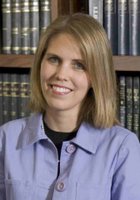

One tradition Barbour Publishing started in 2003 is to award a contract at the conference to a first time author for their debut novel. This year, the recipient was Cara Putman.

Cara, you received your first contract live at the ACFW conference with 400 of your fellow writers in attendance. How did that feel?

It was incredible to receive that first contract in such a public way. The best part was being able to share it with so many of the people who have helped me along the way since I started writing last year. And Colleen Coble’s excitement and hug made it so real! She and so many others have encouraged me and believed in me when I wasn’t sure why I was writing.

Tell us about this particular journey with Barbour.

At the 2005 ACFW conference, I had the privilege of hosting Jim and Tracie Peterson’s workshop. As Jim and I chatted prior to the worship, I realized we had a lot in common. He’s from Kansas; I’m from Nebraska. He was a history major; I’m a history minor. We both love WWII history. Because of that love, I asked if he’d ever heard of the North Platte canteen that served over 6 million service people between December 1941 and April 1946.

The wheels started turning. The next night I ended up at his table for dinner, and not because I planned to pitch a novel idea to him. But wouldn’t you know, the words popped out of my mouth. He sent me to talk to Tracie, and Jim said he’d like to see a proposal. This story poured from my heart for two reasons: 1) I believe the WWII generation made sacrifices that would be difficult to duplicate, and 2) the love story is based on my maternal grandparents. So it became a way to honor a generation and one very special couple from that generation.

I turned the proposal in to Jim in October, the complete manuscript in January, and made a couple requested additions in February or March. Then the waiting began in earnest. I really didn’t hear anything until Thursday night at conference.

I signed the contract this morning. And my mind is already plotting two more WWII stories from Nebraska that I hope to pitch to Barbour as additional books.

What was your family's reaction?

I called my husband while I was still hyperventilating. He was thrilled. He’s been such a support and encouragement to me. My six-year-old daughter was very excited, but my two-year-old was oblivious. My parents and siblings have been thrilled. I haven’t told my grandparents yet though I really need to since I’m using their names!

My dad did say one interesting thing. I kept saying “God is so good.” While he agreed, he also said, “But you sat down and you wrote the story He told you, too.” And he’s right. I could very easily have focused on my other books, but when God said write, I did. And now I can say He is so good regardless of whether I have a contract or not.

Has anything changed for you?

There have been two changes. The first is that I’ll get to see my first book in print in October 2007. But it’s only the first book, so I still have much to learn and do before I see a second contract.

The other change is that this confirmed I am right where God wants me for this season in my life. I went to conference desperate to hear from Him. I’ve spent sixteen months writing in the evenings after work once the kids are in bed. And I went to conference exhausted. Now I know that God approves of my efforts, and though I have no guarantees about what the future holds, I know who holds the future. And as I press hard after Him, I can’t wait to see what He has for me next.

Thursday, September 28, 2006

The Rumblings of Revolution

This week PW announced the price for the long-awaited, long-anticipated Sony Reader. I confess, I tend to be more enthusiastic about this product than the average person. I've been lurking in a Sony Group, so as not to miss any of the gossip. I've spent hours online trying to learn about its Japanese counterpart. Why? It's my opinion that the entire market is about to change, like music did with MP3 players.

So I am dying to know what you guys think. I've heard predictions that the product is doomed to fail , while I'm certain it's going to revolutionize publishing.

Here are some of my thoughts:

1.) I love that you can take ten books or more on vacation. Do I need ten books or more on vacation? Absolutely.

2.) I have waited a year and three months to read Elizabeth Kostova's The Historian because it's not available in paperback until October 3rd (yes, I know the exact date.) I just spent over $50 on fiction in Barnes and Noble, and even though The Historian is at the top of my 'wish list,' I was not willing to pay $25.95 for the hardcover. If publishers are willing to convey the savings to me (as in they have no printing cost, no shipping, and whatever else is saved) I am willing to read on a device. And, if I love the book (Jonathan Strange and Mr. Norrell,) I'll most likely go out and buy the real version as well.

3.) As a writer, don't we all dread people passing around novels? While I might not hesitate to share a book, there's no way I'm going to lend out my $350 Sony Reader. This has potential to increase sales.

4.) Recently, a woman told me that she only buys e-books because she can't see print like she used to. She told me about an online group of senior citizens who read e-books and discuss them. Why only e-books? They make the font larger and see the words. I imagine there's a good-sized market here.

5.) Editors, agents, reviewers, and authors ought to love this--we can take Word documents and read them on the Reader. Reviewers won't have to wait for the galley that the publisher won't have to pay for. I'd be able to download all my campaigns into memory stick and read them quicker. Imagine how compact a slush pile could become.

I've spent some time this afternoon talking to a Sony customer rep. I've learned quite a bit about the Sony Reader and am expecting more information soon. While we wait for that…. What do you guys think?

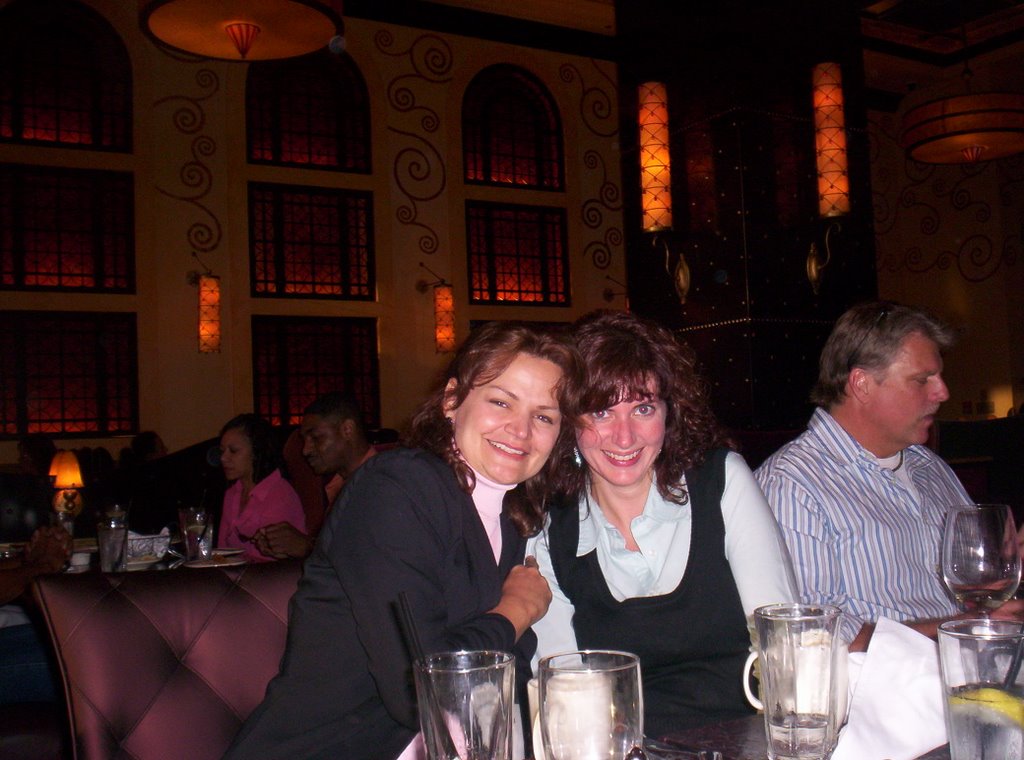
And yet more ACFW Pics


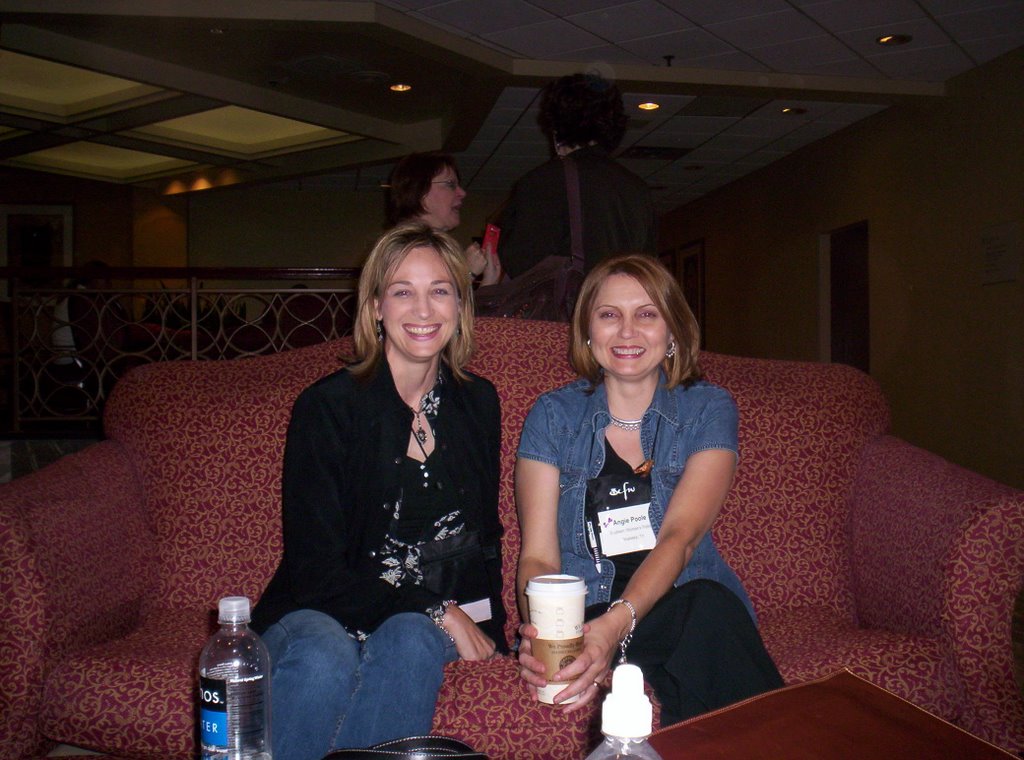
Jennifer Tiszai and Angie Poole


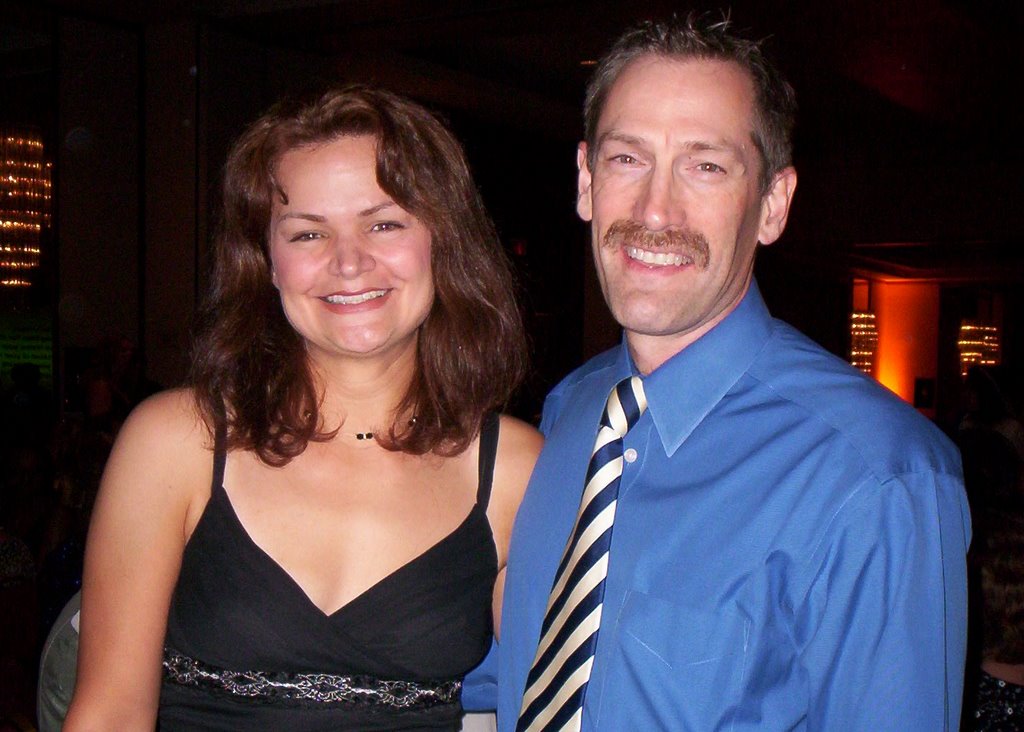
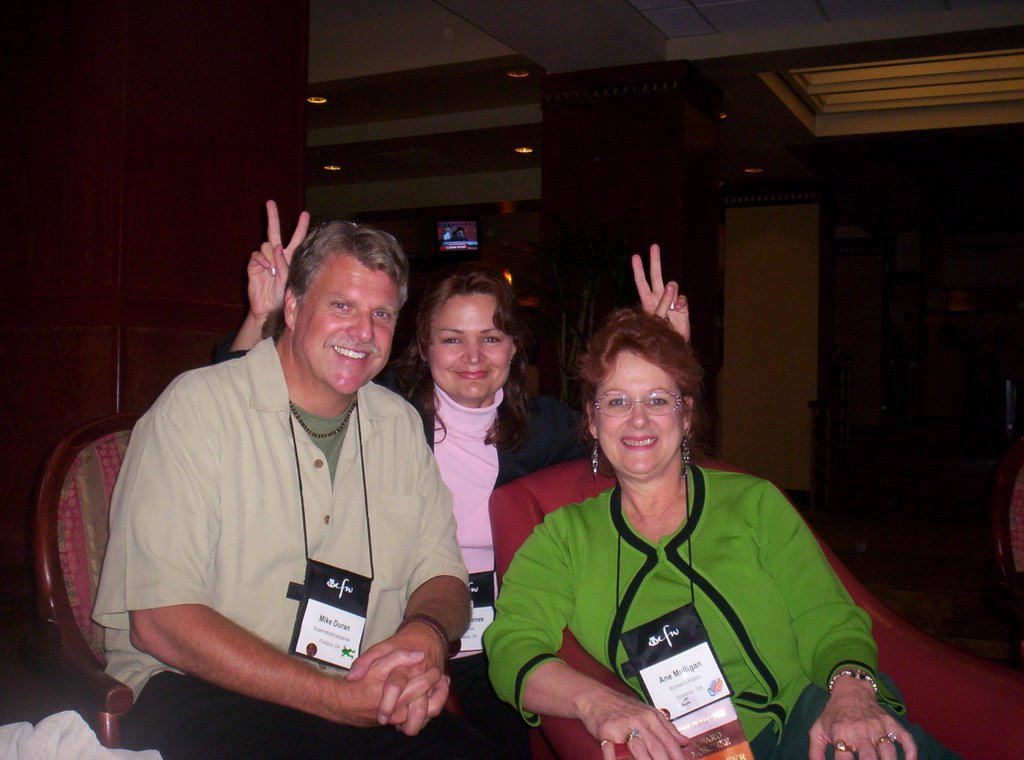
Mike Duran and his harem.


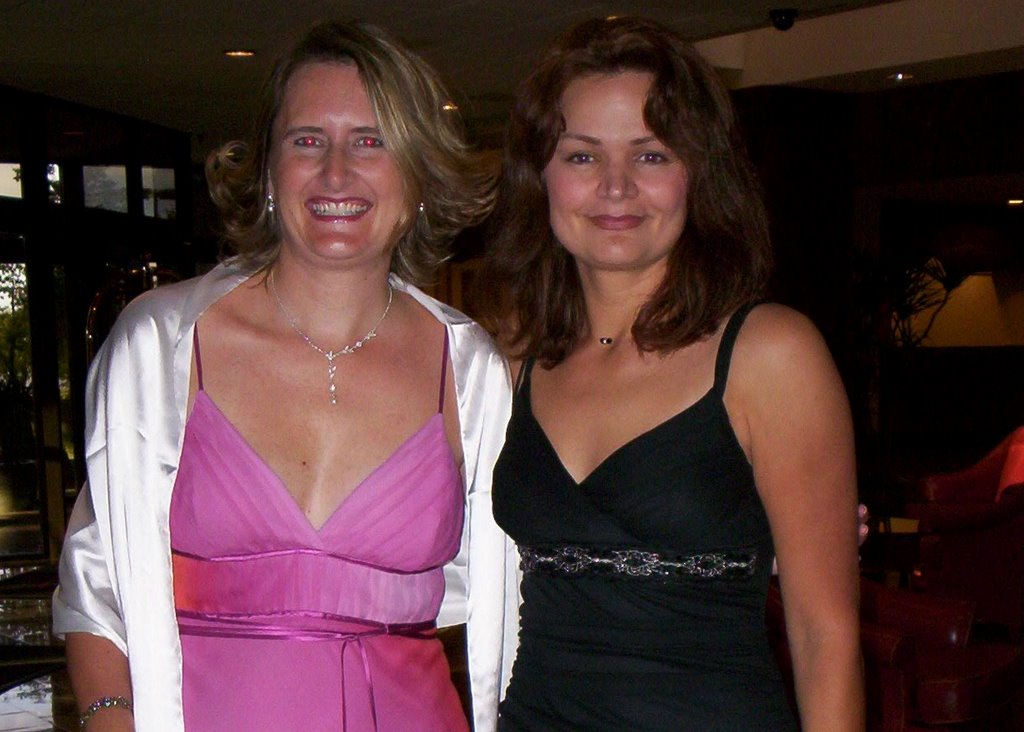
Mary DeMuth ... isn't she beautiful? Inside even more so.


Chip takes Gina to prom? No, just stopped for a quick pic at the award's banquet.

Returning Home

Gina is as good a friend as there can be. She still loves me. I don't deserve it, though. Not after what I did to her. I don't really know how it happened. Call it Sometimers.

I made the flight reservations for Reni, Gina and me, so we could all fly together. Reni was already in Atlanta for another conference, and Gina drove to my house from Virginia on Tuesday. Therein lies the problem. I think I was thinking about her state, and listed her as Virginia Holmes on the reservations.

Well ... it's possible for Gina to be a nickname for Virginia! Okay .. maybe not. Anyway, we had no inkling of trouble on the way to Dallas. But coming home ... well that was another story.

After arriving in the nick of time at the airport, Reni and I sailed through security, but not Gina: V. Holmes did not match her drivers license. They made her go to a security desk elsewhere. Then, to add insult to injury, she never knew Ane is a nickname. Not too many people do. So when they asked her about it, she said her friend, Ane Mulligan, made the reservations. They said there is no Ane Mulligan.

They finally straightened it out, but poor Gina was near tears with sleep deprivation. Add to that thunderstorms over Atlanta which delayed our flight 4 1/2 hours. Two of those hours were spent sitting on the tarmac. Well, we sat on the plane. The plane sat on the tarmac. We were supposed to get to Atlanta at 7:15, time to have a nice dinner when we got to the house. Right. We landed at 11:00 P.M.

Dinner? Oh, certainly. A nice cup of ice water and a pretzel.

But thankfully, Gina still loves me. Don't know why. :o)


Mwaa!!

Wednesday, September 27, 2006

We'll be back to author interviews next week. More from the conference to come.

Memories Are Made of This


Deb and Colleen worked so hard for us. Thank you ladies!


Pennies, Gina and Janet Rubin (these girls both have a wacky sense of humor, definite trouble together).


Our critique group, The Penwrights, aka pennies. Gina, Janet, Mike Duran, Kelly Klepfer, (from the back right) Michelle Griep, Vicki Cato, Ane, Reni Bumpas and Terri Thompson). A few members are missing. What a love fest we had. We bonded big time.


(Gina snuck this one up). Reni was thinking of writing Muslim chick-lit. Ane didn't like the idea by her expression. We had a lot of fun in the room too. We're a bunch of weirdos.


This year's conference theme was New Beginnings. I found it to be quite appropriate - for me, especially. Gina has been telling me for months, no for years, that I write suspense. I argued with her, refusing to see it.

I love women's fiction. Deb Raney is my favorite women's fiction author, and a mentor. She's taught me so much. Then on Friday evening, Deb shot me down. She had a cohort. Colleen Coble. They both told me what I write is romantic suspense. Me. The Queen of the Big Honkin' Chicken Club. Sheesh. I guess when you have the Divas of Women's Ficiton and Romantic Suspense tell you that you don't write WF but RS, you gotta believe them. But does this mean I have to turn in my crown?

Of course, Gina, being the wonderful crit partner she is, didn't gloat - too much. *wink*

I really do have to thank Deb and Colleen, though. During the brainstorming session we had Friday evening, they gave me some wonderful ideas and encouragement - to soften the startling genre news. ;o) Both are wonderful mentors. It's hard to find words to fully thank you.

Deb, I've known you and learned from you for four conferences. Each one has taken my work up another notch.

Now I'm pulling out some of Colleen's novels to learn more from. :o)

And then there is my separated-at-birth-sister, Diann Hunt. Her critique encouraged me further, and gave me some wonderful new ideas! Thanks, Diann!!

I had a blast doing the conference preparedness course, but was unprepared for the sweet things so many said at the conference about it. One person gave me chocolate and another a hand made pair of earrings - coffee cups no less! She sure has my number. :o)

But for me, the highlight of the conference was when they were announcing the names of the people who had been nominated for Mentor of the Year and I heard my own name mentioned. I had told the Lord that if nothing else, this year I wanted to go as a servant to help others. I've been on a two year journey with the Lord about priorities. I learned it's all about Him and not about me. So I came to Dallas asking Him to make it about Him. I received so much more.

The wonderful worship brought us right into God's throne room. That was awesome. And all the wonderful Loopers whom I've gotten to know over the last year online, I got to hug and look into their eyes ... and when I did, I saw Jesus.

There are so many of you who I grew close to recently and feel like I've known you for years. Robin, Heather, Alice and Betsy - how much fun to burn up cyberspace with you!

So to everyone I hugged, I can't wait to hug you again in 07 in Dallas! And Lena, I'm hot on your trail, redhead! :o)

Tuesday, September 26, 2006

More ACFW Conference Pics

Gina Squared.

For those of you who get me and "the other Gina" confused.

Gina Holmes on left.
Gina Conroy on right.

Gina's are cool!


Me with my friend Camy Tang. Camy did a GREAT job on the Genesis contest this year.

Her Asian chick lit book is coming out with Zondervan next year and I can't wait. If the book shows her personality, it's going to be fantastic!


Ane and the very sweet Diann Hunt.
(Ane is seldom seen without her coffee)

Monday, September 25, 2006

More ACFW Conference Pics

Michelle Griep bit me, then kissed the boo-boo. She's a freak but writes killer speculative time travel novels, so we put up with the weird "bite your cheek then kiss it better" thing she's got going. We're pretty sure it's a phase. Last year it was stomp your toe and then tickle you. I liked that a little better.


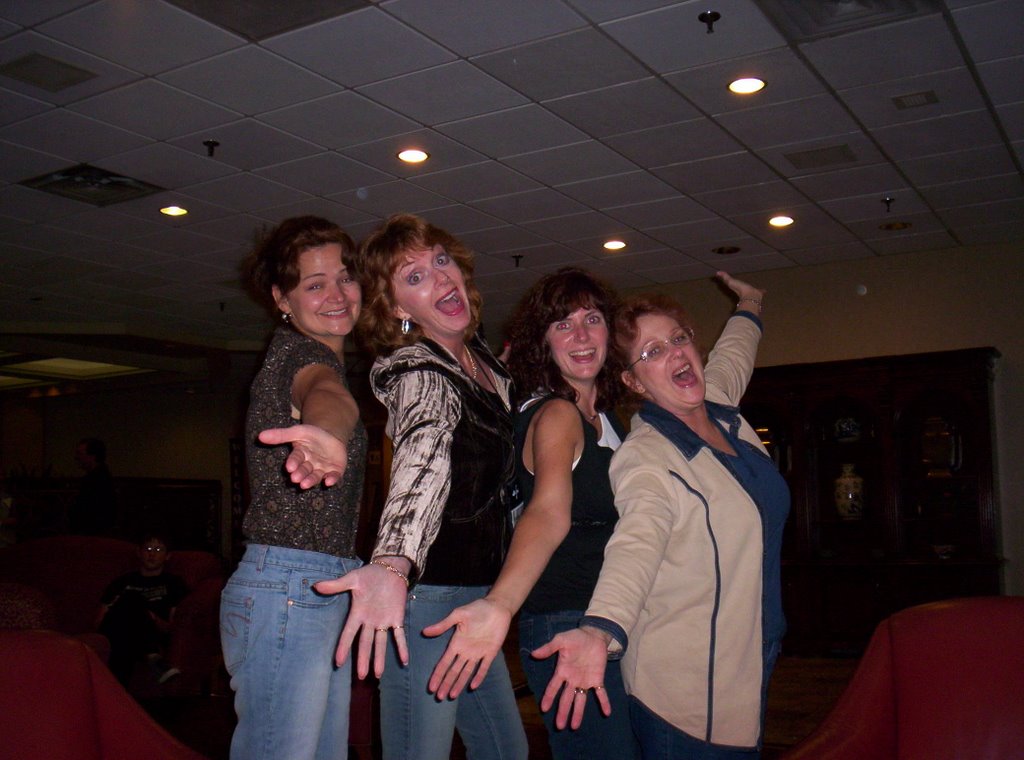
TA-DA!!

Gina, Brandilyn Collins, Janet Rubin and you know the crazy red-head on the end.

We did this every time a bell-boy held out his hand for a tip. We figured a smile was better than the couple of bucks he normally gets and you know how we hate cliches.


Awards ceremony. Liz Curtis Higgs and me.
I was going to wear a cute purple dress I had but Liz demanded we match, so I had to run out and buy the black one at the last minute. What a diva. (wink)


Two beautiful ladies, inside and out:
Dee Stewart and Mary DeMuth (I'd do a joke on this one but frankly Mary's claws digging into the back of your neck feels even more painful than it sounds.)


Freaky demon chicks:
Claudia Mair Burney & me.


(You have read Murder, Mayhem and a Fine Man by now surely. It's an amazing book!)

ACFW Conference Pics

Heather Diane Tipton, Robin Miller, Dineen Miller, Ronie Kendig


Mike Snyder, Me, Jeanne Damoff


David Gregory and yours truly


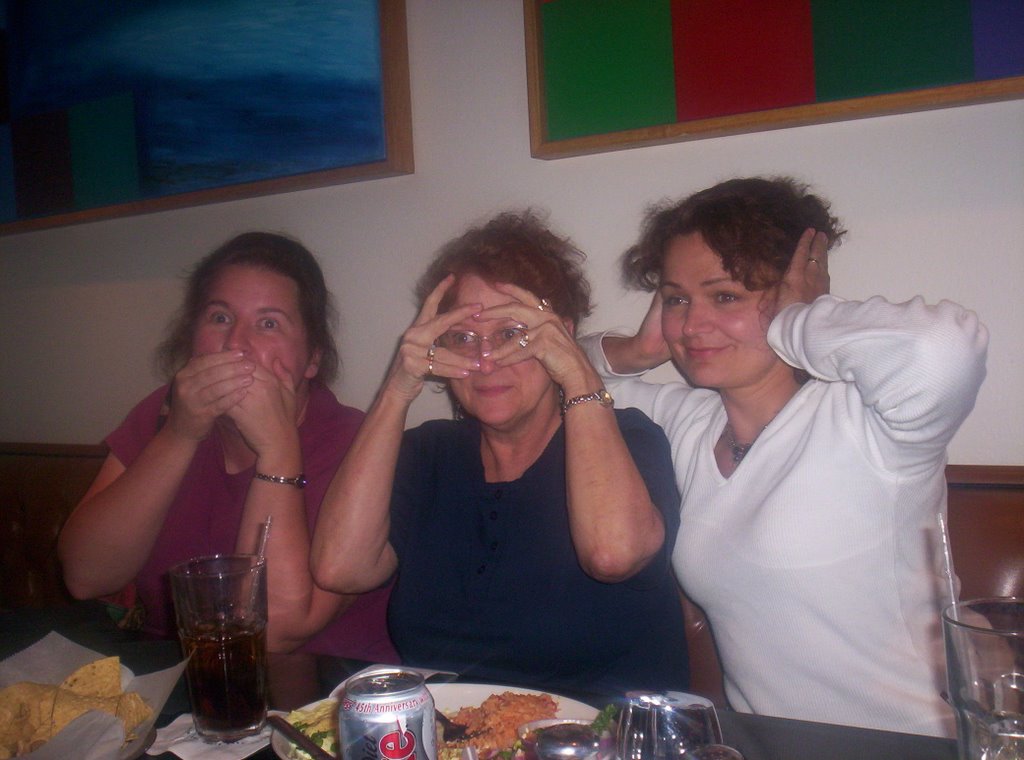
I think I was trying to give Mike Duran and Ane Mulligan horns, but in my sleep deprived state was a bit off. Nothing new.

ACFW Conference Notes Part I

Hi everyone! My apologies for not blogging from the conference as I said I would. Ane and I just couldn't do it. For one we were seriously sleep deprived, getting about two hours a night of slumber. We were goofy tired the whole time so we weren't very coherent.

But that wasn't the main reason we didn't blog from the conference. We have spent the last two to four years in on-line critique groups. Ane pulled me from the one she was in because she saw talent and the willingness to learn and apply what I was taught. I saw that in others and so on. Over the years we've pulled together a critique group of talented folks who actually use what we teach them and at least try not to argue. This group has become more than just writing partners, we've become prayer partners, shoulders to cry on, encouragers and some of the best-friends in my life.

It's an odd thing to call people you've never met close friends but most if not all of you will know what I'm talking about. So, to have the rare opportunity to touch these people, look into their eyes, share a glance and that sort of thing was something that Ane and I held on to and didn't want to let go. Not even to blog.

There is so much to share as usual from this amazing conference. One of the highlights was sitting in Mary DeMuth's class. I thought I knew Mary from our on-line relationship. I like Mary in cyberspace. I love Mary in person. Her sweet heart and hunger to serve God in an authentic way was awesome. She made me cry and made me think and made me want to go home and pour my soul out onto a piece of paper, without worrying about "pimping my soul" but as a sacrifice to my Lord. Thank you Mary.

I got to spend some time chatting with Brandilyn Collins who I know online and have met in person but I saw a side of her that touched me and inspired me. Most of you know she has the Scenes and Beans blog which is a clever publicity tool to promote her Kanner Lake series. Her bloggers, me included, knew she would promote us to the editors/agents we met with, but she went above and beyond, chiming in when a blogger was standing with an editor and really talking up that writer's talent. She didn't have to do that of course. She did it because it came natural to edify others. That's what I love about Christian writer's conferences and ACFW in general.

It's like a candidate for congress bringing their competition around a fundraising party and asking everyone to vote for THEM. That's what these authors do. They are (as my buddy Alton Gansky says) raising up their competition. All for the glory of God.

Wow.

I have much more to say of course. And though it's embarrassing, I want to share with you how God dealt with my pride issue, because I'm guessing I'm not the only one who struggles with this.

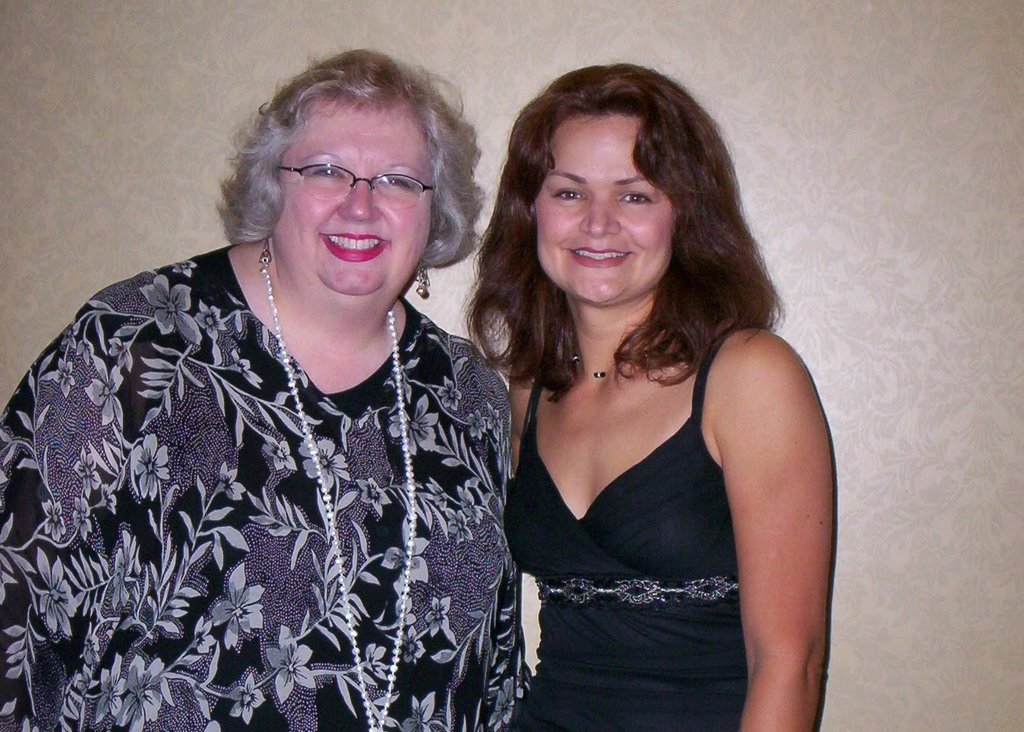
The picture at the top of this post is me and Ane of course, and our friend "S. Dionne Moore" (aka Sandra) a critique partner of ours and a dear friend. (Her cozy mystery will be coming out with Barbour soon. We'll be interviewing her, so you'll get a chance to get to know her more.)


Our friend and critique partner, Mike Duran of www.mikeduran.com has signed with agent, Janet Kobobel Grant. Janet is an awesome agent and Mike is blessed to get her but she is just as blessed because Mike is ridiculously talented, really fun to hang out with, has the heart of servant and a passion for the Lord. Congratulations to Janet and Mike for finding each other!

Another highlight was meeting Faith In Fiction's, Dave Long. He's even cooler than I thought he'd be. I actually sat down with him and pitched my story, which is always nerve-wracking. I always try to look and seem professional but I felt so comfortable I may have even said "dude" in my pitch.

I also got to sit down with my friend Claudia Mair Burney (Murder, Mayhem and a Fine Man). This woman is an angel online. She takes down her mask in her writing in a way I aspire to. We hugged and talked and shared with each other how we've been blessed by one another. She's so special that my words are inadequate.

I also had opportunity to hang out with the folks from The Master's Artists. How cool am I? They made me feel like family. We ribbed each other and laughed a lot. Phenominal group!

Dee Stewart and I spent a lot of time together praying, listening to each other, crying and brainstorming story ideas. She's another one I really liked online but I love in person. A very talented, very sweet lady.

Yet another highlight was hanging out with my conference mentee, David Gregory (Dinner with a Perfect Stranger). He's a best-selling author but as humble as can be. He was such a joy to get to know and I was honored beyond words that he let me show him around a little.

Stay tuned, we have so much to share and lots more pics.

Friday, September 22, 2006

Contest -- Win a Free Blog Design

Tonight, I stumbled across this blog: http://bluebirdblogs.blogspot.com and saw there was a contest to win a free blog design. I found her because of this blog (http://thewordstudio.blogspot.com/) which she designed.

If you want to enter, you have to hurry. The deadline is 11:49 EST tonight.

Look soon for a publicity post about what author blog and websites should contain.

Just in from Dallas

With the majority of our readers attending the ACFW conference, I'm going to take a night off and not post about publicity. I spoke with Gina earlier this evening and she hasn't yet accessed the Internet, so I have the privilege of passing on the conference news.

Here are the highlights so far:

I'm excited to announce that veteran of the publishing industry Chip MacGregor is forming his own literary agency—MacGregor Literary. Hopefully when Gina is back online she'll be able to tell us what, when and the where.

Cara Putnam, ACFW member and fellow blogger, received a surprise contract during an announcement. Her debut novel will release with Barbour. [
Click here] to drop by her blog and offer congratulations.

That's all the news I have so far. Stay tuned for more updates.

Wednesday, September 20, 2006

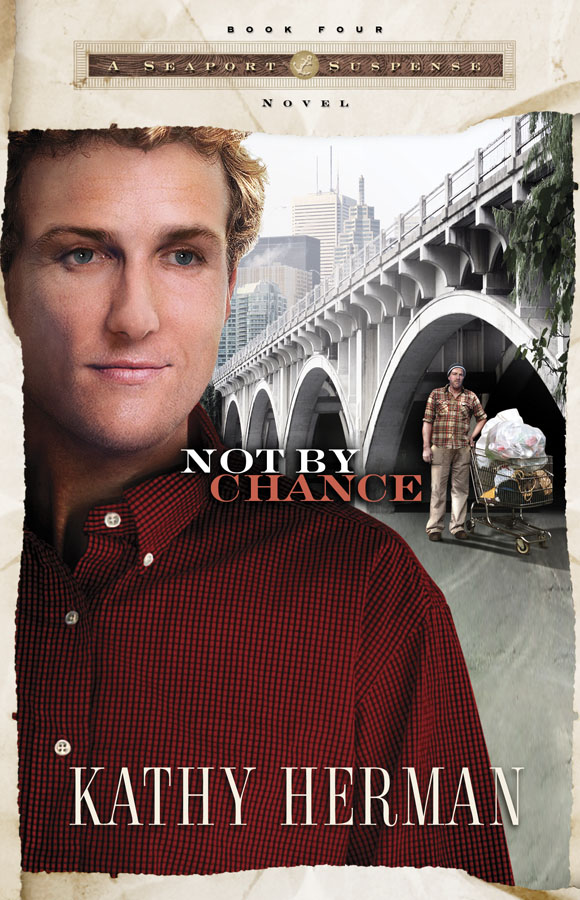
Author Interview ~ Kathy Herman


Kathy Herman, the bestselling author of the Baxter series, Poor Mrs. Rigsby, and the Seaport Suspense novels, is at home in the Christian industry. She spent five years on staff at the Christian Booksellers Association and eleven years as a retailer at Better Books Christian Center in Tyler, Texas, where she specialized in children’s products. Not By Chance is her tenth novel. Kathy and her husband, Paul, have three grown children and five grandchildren. They enjoy world travel, deep sea fishing, and bird watching—often all at the same time!

What new book or project would you like to tell us about?


I’d like to introduce you to Not By Chance, the 4th and final book in the Seaport Suspense Series, which released in August 2006.

Not by Chance is the story of thirty-year-old Brandon Jones who walks away from a six-figures job in search of significance and loses his fiancée in the process. He goes to live with his parents in Seaport (a fictitious town in the Florida panhandle) until he can decide what he wants to do with his life.

He befriends Weezie Taylor, an African American woman who offers a good listening ear and intriguing spiritual insights. But when their relationship is misread by a group of racists, he finds himself in the middle of the worst hate crimes since the 60’s.

He develops a strong attachment to a biracial adolescent named Caedmon Nash, who mysteriously disappears just before a dangerous hurricane is predicted to make landfall. Brandon risks his life to find Cade, unaware that the divine appointment that awaits him will answer the deepest question of his heart and teach them both what true significance is.

Not by Chance is fast-paced and suspenseful and touches the hot button of racial prejudice, though on a spiritual level, this story makes us confront the realization that God has a specific plan for every person; and that none of us is here just by chance.

Tell us about your publishing journey. How long had you been writing before you got a contract? How did you find out and what went through your mind?

I always knew I had a knack for writing. I aced every essay test in school and used my writing skills in every job I had. Though I never once considered writing a novel, I did hope to write a children’s book.

At age 50, I retired from working in our family-owned Christian retail store due to joint problems. I decided to take a stab at writing a children’s book. I had specialized in them for the previous eleven years and thought for sure I could write them. After two weeks of staring at a blank laptop screen, I got depressed. My husband told me to write something—anything—it didn’t have to be a children’s book.

So I wrote a scene: a detective sitting on a park bench, a lake in front of him and a quaint little town behind him. He was waiting for something to surface in the lake…I had no idea what it was and was intrigued that I didn’t! The next day I wrote the prologue to Tested By Fire, which was my first suspense novel. When it was finished, I let my husband’s employees read it, and they got really excited.

I honestly thought it was a fluke, and that I could never do it again. But the next day I wrote the prologue for Day of Reckoning, and ten weeks later, it was finished. Same reaction from his employees. Then I wrote Vital Signs—same reaction. We decided maybe it was time to seek a publisher.

Long story short, we contacted someone we knew at my publisher of choice simply to find out the “process,” and was given an hour-long interview with their pub board at the Christian booksellers convention. We presented them with all three manuscripts. Two weeks later on a Saturday morning, we got a call at home from the VP of Editorial, who said he’d have a contract for the three novels out to us within ten days. My husband said, “Oh, Kathy’s got at least two more in her.” And believe it or not, the VP said, “Well, then, we’ll give her a contract for five.”

My reaction? Tears, joy, utter disbelief. When we hung up, Paul and I hugged and just thanked the Lord. After it all hit me, I realized I was about to get a contract for two books I hadn’t yet written and hadn’t even thought about. That was a little scary. I think it’s important to add that this simply isn’t the usual and almost never happens.

Do you still have self-doubts about your writing?

Sure. I can’t imagine there’s an author alive who doesn’t. In my case, it might have to do with the sense that I didn’t “pay my dues” by going to all those writer’s conferences before I got published. I didn’t have a chance to learn all the lingo writers use—or the in’s and out’s of writing a novel. I just jumped in and did it. And though I’ve had two CBA national bestsellers, Tested by Fire and All Things Hidden, and a significant reader following, I don’t think I can view my own work objectively.

The one surprise I’ve enjoyed with each of my novels is when reading the galleys. At that point, I’ve been away from the book for about two months—and I’m always shocked at how good it sounds. When I’m in the throes of the writing, I’m too close to my work to tell if it’s good or not.

Was there ever a time in your writing career you thought of quitting?

Not quitting, but certainly doing less. Though I’m thrilled to be able to put out two novels a year, it is sometimes hard to manage overlapping deadlines, which involves a lot more than just writing—everything from promotion to cover design to proofing galleys.

What mistakes did you make while seeking a publisher or agent?

None, really. My husband was my agent in the beginning, and once I got established, getting picked up by a reputable agent wasn’t an issue. But I will say that I think it’s very important for authors to look for publishers that seem to be a good match for the type of writing they do.

I felt I was a good match with my publisher, and that’s why I submitted my manuscripts there. Same holds true when seeking an agent. If an agent truly likes your work, he/she will do a much better job for you than if you’re just another client. Unless an agent is excited about your work, I don’t think he/she will represent you well.

What’s the best writing advice you’ve heard?

Stay teachable. I think the most dangerous thing an author can do is get too full of him or her self and stop listening to the advice of other professionals.

What’s the worst piece of writing advice you’ve ever received?

Write what you know. I think our work would be boring if we did that exclusively. It’s certainly a benefit to use what you know, but I think it’s important to research and learn as you go.

Do you have a pet peeve having to do with this biz?

It bugs me that novels that are deemed “Christian” are often immediately assumed to be irrelevant to the majority of the population. Neither the characters in my novels, nor the problems they face are irrelevant. They deal with contemporary issues that could be right off the front page of the news. And they leave the reader with lots to think about.

What do you wish you’d known early in your career that might have saved you some time and/or frustration in writing? In publishing?

I wish I had understood that an abundance of beautiful, flowery words doesn’t necessarily make a novel good. I had to learn the idea of less is more—that the fewer words I can use to make the point, the better it reads. I can’t tell you how many words my editor cut in my early novels—paragraphs! They sounded pretty, but they did little or nothing to further the storyline.

Was there ever a difficult set back that you went through in your writing career?

My first editing experience caused me to question whether or not I had what it takes to write professionally. I was a newbie that needed a lot of direction, and my editor’s comments were tough on my delicate ego. It didn’t take long for me to learn to respect and trust his years of experience. In essence, I feel as though I “paid my dues” that first year after I got published.

What are a few of your favorite books?

A Nest of Sparrows, by Deb Raney; The Oath, Frank Peretti; Walking on Water, Madeline L’Engle; Leota’s Garden, Francine Rivers; Les Miserables, Victor Hugo; Blood of Heaven, Bill Myers; Your God is Too Safe, Mark Buchannan; Bettye, Lyn Cote; Cape Refuge, Terri Blackstock. The Gospel of the Second Chance, Max Lucado. Usually whatever I’m reading at the moment is my favorite. Right now I’m enjoying The Novelist by Angela Hunt.

What work have you done that you’re especially proud of and why?

I’m very satisfied with All Things Hidden, #3 in the Seaport Suspense Series. I think it was the best written, had the tightest storyline, and was the most emotionally moving novel I’ve written. I loved the characters, especially a little four-year-old girl who will be with me forever. This book had all the components I like in a novel: strong characters, suspense, emotion, spiritual challenge.

Do you have a scripture or quote that has spoken to you lately in regards to your writing?

Not just lately, but all the time: I Corinthians 1:18: For the message of the cross is foolishness to those who are perishing, but for us who are being saved, it is the power of God.” I am never ashamed to weave the Good News into my stories. It IS the power of God, and it’s surprising how many readers have told me how my books have drawn them back to God—or to God for the first time.

Can you give us a look into a typical day for you?

After I get my husband off to work around 8:00 AM, I sit down and write till about 6:30 PM. Depending on how much into “the flow” I am, I may not take much of a break. Some days it’s harder to get in the flow, and I take several breaks or go do something else for a while. On Saturday, I get up at 5:00 AM and work until about 1:00. Writing professionally is a full-time job.

Do you have a word or page goal you set for each day?

The actual count varies each day, but the goal is always 2,000 words.

Are you an SOTP (seat of the pants) writer or a plotter?

SOTP by nature, plotter to the extent that I must give my publisher the storyline a year ahead of pub date. But it always changes for the better as the story develops.

What author do you especially admire and why?

Angela Hunt. She can juggle dozens of projects at the same time and still produce wonderful novels multiple times a year. And she’s always growing and learning. I think she’s amazing.

What is your favorite and least favorite part of being a writer?

Most favorite: the element of surprise. I don’t have an outline to work from, but even the few times I’ve tried nailing down the story ahead of time, my characters invariably decide they’re going to do it their way. I just get inside them and let my fingers do the talking. It’s great fun!

Least favorite: Balancing my time and arranging my life around deadlines.

How much marketing do you do? What's your favorite part of marketing?

Truthfully, I don’t do much marketing myself. My husband manages a LifeWay Christian Store and is the marketer in our family. I do put out a quarterly online newsletter to my mailing list. And my publisher does a great job of promoting my books to retailers and consumers. I am always willing to do radio interviews and book signings and public appearances.

Do you have any parting words of advice?

If you have a passion for writing, don’t stop trying to get published. But don’t stop writing in the process! Keep those fingers moving and those ideas flowing. Your writing muscle can only be developed by using it.

Tuesday, September 19, 2006

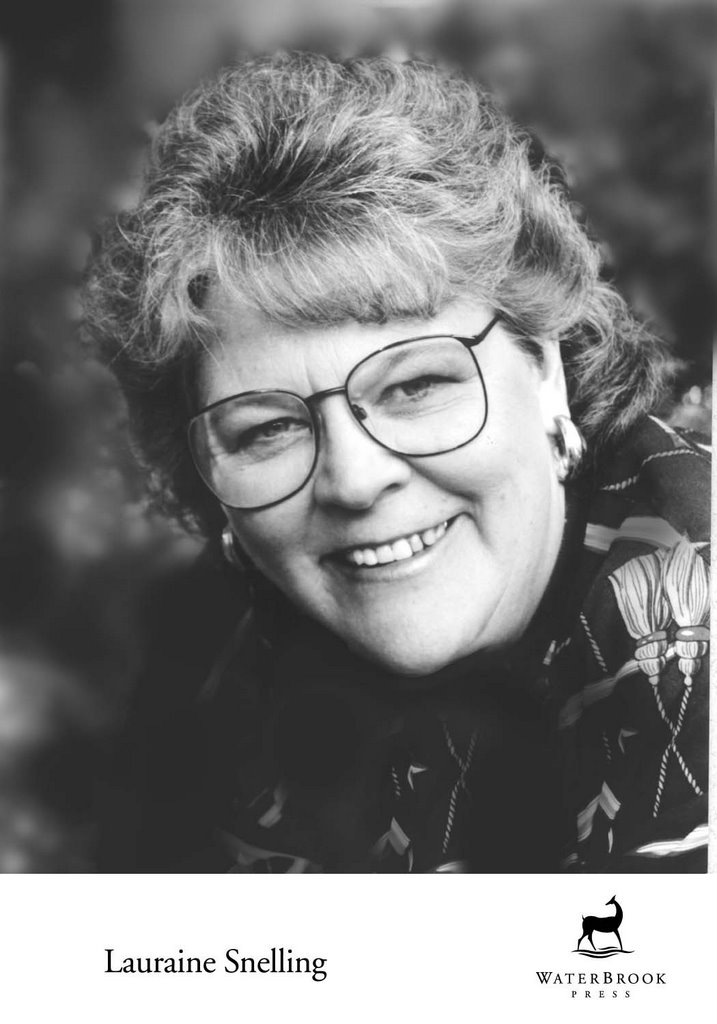
Author Interview ~ Lauraine Snelling

Lauraine Snelling is known for writing about real issues within a compelling story, addressing topics such as forgiveness, loss, domestic violence, and cancer. She has published more than fifty books, including The Healing Quilt, The Way of Women, and Saturday Morning. The recipient of the Silver Angel Award and a Romance Writers of America Golden Heart, Snelling teaches at writers’ conferences across the country and at her home in California’s Tehachapi Mountains. She and her husband, Wayne, have two grown sons and a beloved Basset hound named Chewy.


What book or project is coming out or has come out that you’d like to tell us about?

The Brushstroke Legacy is a new venture for me in that it combines my two loves of writing both contemporary and historical. With three generations of women, the earliest in 1906, with great grandmother Nilda, an adult woman of today, Ragni and teen Erika, all are artists in hiding, I covered the gamut. I absolutely love this book.


Tell us about your journey to publication. How long had you been writing before you got the call you had a contract, how you heard and what went through your head.

I attended a write
r’s conference in 1980, writing had been a dream of mine since high school, and that propelled me into learning how to write for publication. For a change I did as I was taught and started out with query letters all over the place. My first contract was for an article, not a phone call but a letter, and I was ecstatic. I thought, this is it, I’m on my way. I followed the process with my first novel proposal too, again a dream of writing horse books for young girls. Baker Book House bought it. I sent it to them on the recommendation of my teacher, Colleen Reece, again starting with query, then proposal and finally the entire manuscript. It worked! They bought it. I wish all submissions had been as easy. Persistence is a necessary trait for writers to develop.

Do you still experience self-doubts regarding your work?

Every time I finish a book, I’m sure it is the worst I’ve ever written. I’ve learned that by the time I complete the rewrites, I have no sense of good or bad. I’m tired, tired of the book and so thankful I work with wonderful editors who not only help me see what works and what doesn’t, but remember to tell me that the book is good. We all need encouragement, no matter what stage we are in our writing career.

What mistakes have you made while seeking publication?

Not being consistent enough. Getting a good idea and not acting on it at the time. Then when I see someone else had the same idea published, even in the same magazine I’d thought about, I really wanted to kick myself. I think God has a big shaker of ideas, He sprinkles them out over the world and anyone can take one that comes to them and go with it. The smart ones do, the rest of us kick ourselves.

What’s the best advice you’ve heard on writing/publication?

Hang in there. Too many people give up too soon. Do your homework re improving your craft and your marketing. I lived by “sell it before you write it.” I still do, although now I write mostly novels, they are still sold before I write them.


What’s the worst piece of writing advice you’ve heard?

You have to get up early and write first thing in the morning. I am a swing shift person, more an owl than an early bird. When our children were still at home, I did most of my writing after ten at night. People are different and you need to learn what works best for you. The trick is to experiment until you figure it out. I’ve also learned that as the years go by, things can change and you need to adapt to that.


What’s something you wish you’d known earlier that might have saved you some time/frustration in the publishing business?

I am not by nature an organized person. Discipline has always been a four letter word to me. I have had to learn both. Or rather am still learning both. I had never worked in an office so all those skills needed to be instilled in my brain. I am so grateful for friends and teachers who have helped me on this track. I read articles and books on organization, on building good habits, on systems that can help me. There have been helpful speakers on the same topics. Sheer desperation is a good motivator. Imagine my shock when I learned the people alphabetize their spices. Never entered my mind.

Is there a particularly difficult set back that you’ve gone through in your writing career you are willing to share?

The hardest set back was when our daughter died of cancer at age twenty-one. I didn’t write for three years, other than for the job I had. Finally at the insistence of the counselor I was working with, I wrote Marie a letter. Then I wrote God a letter and after that a small article called, “Gifts for the Griever.” Within six months I was aching to write full time again and left my job to be able to do so. By the end of the six months I gave myself to see if I could get going, I had one non fiction book contract and a three book contract for a series of horse books for young girls. Live gets in the way of our dreams at times and there are things we have no control over. A major lesson for me.

What are a few of your favorite books? (Not written by you.)

Peace like a River by Leif Enger, The Ragamuffin Gospel by Brennan Manning, The Power of One, don’t remember the author. Soundings by Hank Searles, My Sister’s Keeper by Jody Piccoult, Soul Survivor by Phillip Yancey, Five Smooth Stones by Grown, To Kill a Mockingbird by Harper Lee, The Crosswicks Journals and Walking on Water by Madelyne L’Engle, The Power of Positive Thinking by Norman Vincent Peale, I could go on and on.


What piece of writing have you done that you’re particularly proud of and why?

This is a hard question to answer because I have written sixty books, plenty of articles, plays, some poetry, lessons and I’m proud of it all. That’s quite a piece of work. Writing is not an easy thing, especially a book, any book. What comes to mind is that I finished them. I am an excellent starter but I can look at all this and say, I finished each one of those pieces. Are they all the best that I can do? Perhaps not, but they were the best I could do at the time and within the time. My goal is for each book to always be better than the last.

Do you have a pet peeve having to do with this biz?

That those of us who write commercial fiction are looked down on by those who write literary, and that many of the reviewers prefer the literary and take pot shots at the rest of us. However, there is justice. We sell a whole lot more copies of our books. Both romance writers and those who write for children are frequently asked, “And when will you write a “real” book?” argggg.

Can you give us a view into a typical day of your writing life?

That all depends on how close to deadline I am. I like writing about ten pages a day and if I would do that every day, I’d not hit the dreadful deadline despair days. Sometimes I have to run away from home to get the writing done, too many distractions here. My best days are when I get up, go for a walk and stretch, do my devotions, eat breakfast, write from ten until two, work on promo stuff, read, knit or cross stitch, fit email in around things, write a couple of hours in the evening, read, and turn out the light about 10:30. Hard for me to believe that routine is actually helpful.

If you could choose to have one strength of another writer, what would it be and from whom?

That I could write faster. I have so many stories I want to tell. Karen Kingsbury is my hero in this regard.

Do you have a dream for the future of your writing, something you would love to accomplish?

Two dreams: hitting the New York Times best seller list. Have one of my books made into a movie. I don’t ask for much.

Was there ever a time in your writing career you thought of quitting?

Every time the writing isn’t going well, meaning fighting for every word, I threaten to go flip hamburgers at MacDonald’s. The thought of that usually gets me back on track. When the story is flowing, I could not be happier.

What is your favorite and least favorite part of being a writer?

Favorite: hearing that people enjoy my books and that reading my books can make a difference in someone’s life. How awesome is that? Also the euphoria when the story takes hold so that I lose track of time. I love “having written.”

Least favorite: being behind on deadlines.

How much marketing do you do? Any advice in this area?

I do a lot of marketing and publicity because I enjoy it. I am an idea person and love having other people do the work on it. What I find is that it takes a tremendous amount of time and energy that draws against my writing. My best advice: if you don’t like doing it, hire an expert; if you do like doing it but are short of time, hire an expert.
There are also a lot of good books out there and sites online to learn from. But instead of getting overwhelmed by it all, pick a couple of things and do them well.

Parting words?


I thank all the people who read and enjoy my books. Without faithful readers I would not be able to keep on writing. When people ask me what are my dreams, I tell them, I am living my dream. I am doing what I most love to do and I am making a living at it. What a privilege and delight. Thanks is such a small word but I want to always live a life of love and gratitude. God is so gracious and faithful.

Sunday, September 17, 2006

Author Interview ~ John Anderson


John Aubrey Anderson grew up in Mississippi cotton country. After graduating from Mississippi State, he received an Air Force commission and has recently retired after flying twenty-eight years for a major airline.


What book or project is coming out or has come out that you’d like to tell us about?


My first-ever effort, a novel, is arriving in the bookstores as I write this.

Abiding Darkness initially anchors itself in the relationship between two children.
Junior Washington is an eleven-year-old black child. He lives in a small cabin out on Cat Lake; his parents work for the Parker family. He’s loyal, compliant beyond what would normally be expected of an eleven-year-old boy, and he’s a committed Christian.


Missy Parker, who lives on the other side of the lake, is the crown princess of the Parker family. At seven years of age she’s beautiful, wealthy, willful, and tough as a tractor tire. And, in the midst of the most defined segregation in our nation’s recent history, this little white girl and Junior Washington are best friends.

Like so many novels set in the South, Abiding Darkness has warmth, humor, and truth in it . . . but because it’s about an on-going war, it has blood on it.

It’s a thriller.

Tell us about your journey to publication. How long had you been writing before you got the call you had a contract, how you heard and what went through your head.

Maybe the story behind Abiding Darkness would read better if it were filled with words about the personal cost of the process, but the converse is closer to the truth.

Compared to what most authors have to go through to get their words in print, what has happened to me is nothing short of a miraculous gift. Some of you will understand the last three words in this sentence, some won’t . . . God did this.

The journey of Abiding Darkness, from its inception to its release date, amounts to a twenty-year walk in the park. Initially, it was a two-thousand-word short story I wrote for our children—a thing about the impact of a person’s choices. I filed a copy away, and it lay dormant for ten years. I pulled it out about the time I retired from flying for a major airline—sometime in the mid-nineties—and “piddled” with it for five or seven years.

In the fall of 2002, I found myself surrounded by a few hundred thousand words and felt a need to become more focused. In the spring of ’03, on the advice of a friend, I took three chapters and a synopsis to my first-ever writers’ conference and submitted them to my first-ever editor. As it happens, that editor, Gary Terashita, wasn’t looking for a fiction project, but his critique sheet is framed and hanging in our home . . . his handwritten note at the bottom says, “We need to talk.”

And talk we did. We arranged to meet for coffee, and I told Gary I was at the conference trying to trim the odds against my getting published—hopefully down to 10,000 to 1. I’ll never forget his response: “Well, right now, you’re sitting on about 50-50.”

The Black or White Chronicles were born in that little coffee shop . . . and I thank God everyday for Gary, the man who has become my friend and editor.
My appreciation for what God has done for me is too shallow, but I ask Him often to help me more fully understand what He has chosen to give me . . . the gift of getting published.

Do you experience self-doubts regarding your work?

That may be something that will come in the future. For now, I’m too busy writing to give it much thought.

What mistakes have you made while seeking publication?

The only thing that stands out is . . . I initially bit off more than I could chew. I put together an idea that spanned a time period of about a hundred years. My editor caught what I’d done as soon as he looked at the synopsis, and the one book became a series, The Black or White Chronicles. With that said . . .

I don’t track past mistakes well . . . my memory doesn’t work that way . . . and I wasn’t seeking to be published long enough to foul up much.

What’s the best advice you’ve heard on writing/publication?

“If you’re serious about being published, you need to go to a writers’ conference.”

What’s something you wish you’d known earlier that might have saved you some time/frustration in the publishing business?

What are a few of your favorite books?

In the fiction realm . . . C. S. Lewis’ The Lion, The Witch, and The Wardrobe is probably my favorite. I think John Grisham’s A Time To Kill is a great book, and I’ve read it several times. Harper Lee’s To Kill A Mockingbird is, in my humble opinion, a near perfect book. Watchers, by Dean Koontz, is another favorite.

In the non-fiction department . . . I started out to say great things about the Bible, but my words are inadequate. The Bible is the word of God . . . that says it all.

What piece of writing have you done that you’re particularly proud of and why?

This may come off sounding self-righteous, but I hope I never get proud of something I get to do with this writing thing.

Your site does not have sufficient space for me to record the myriad things God has done to bring me to this point in my life. The circumstances that propelled this project are saturated with the miraculous. Anything special that happens in my life because I choose to situate myself in front of a computer screen will be only by God’s grace . . . my job is to bang on the keyboard.

Do you have a pet peeve having to do with this biz?

At the risk of sounding eccentric, I think harboring a pet peeve is not unlike deciding what you dislike the most and then posturing yourself to react poorly when you encounter it. It makes better sense to me that I would take things one-at-a-time. Some will be good, and I’ll enjoy them—other things won’t be all that great, and I’ll get over them.

Can you give us a view into a typical day of your writing life?

I’m coming up on four years of meeting deadlines associated with writing (some self-imposed), so I’ve been more time constrained than at any other time in my life. However, there are some things that take precedence over my writing schedule.

Because I have a totally supportive wife . . . and we do have a life . . .
I start each day with my quiet time—studying my Bible, taking notes, praying, and usually reading something from a devotional book while I have breakfast.

I try to get to the gym three times a week (I ride a bike on alternate days), we do some socializing with close friends, we have children and grandchildren with whom we enjoy spending time, and we do church stuff. Thereafter . . .

I disappear into the room we’ve set aside for my writing space, and—except for brief excursions—I stay there all day and most nights until ten o’clock or later. Some days I only get in eight hours, others sixteen. For now, that schedule takes up seven days a week, and I seem to be thriving on it.

I’ll be finished with Book Three within the next few weeks, and I plan never to sign another three-book contract. If I can, I’ll generate one book at a time and play an occasional round of golf.

If you could choose to have one strength of another writer, what would it be and from whom?

I’m afraid this is one of those questions that calls for more knowledge of the craft than I possess because (a) I don’t know anything about other writers’ strengths and (b) I know precious little about my own. However, if there is one attribute I’d like to cultivate, it would be the ability to write faster (see answer to previous question). Words come slowly to me. If I could get them on paper faster, I’d have time to go play golf, take banjo lessons, or wash my own car.

Do you have a dream for the future of your writing, something you would love to accomplish?

Finishing The Black or White Chronicles will be no small task. I see it as a six-book series, and I would like for every book to be better than the one before. Thereafter, I would like to be able to do an effective devotional book for men . . . something along the lines of 365 attributes a real man should cultivate as a part of his makeup.

Was there ever a time in your writing career you thought of quitting?

Not hardly.

What is your favorite and least favorite part of being a writer?

Having a least favorite thing would be presumptuous on my part. A person does not have to be in the writing industry to know that a million people would cut off one of their fingers to swap places with me. I’ve been given this unbelievably great opportunity to work for long hours in a role that gives me energy . . . why would I voice a whisper of complaint?

My favorite? Having people I don’t know come up to me and say things like, “Oh, my gosh! I stayed up all night reading your book. When is the next one coming out?” Or even better, “Let me tell you what I learned when I read your book.”

How much marketing do you do? Any advice in this area?

My website is nearly up and running. I would like to use it as a tool to reach fans, but so far answering interview questions is the closest I’ve come to doing any marketing per se.
Advice? Not yet.

Parting words?

Absolutely.
I’m honored that you would invite me to give my answers to your questions . . . and I appreciate your letting me show up on your site.
And in the to-the-readers vein . . .

For those who cannot be turned aside from the pursuit of being published: Think less about being a writer . . . and more about writing.


Saturday, September 16, 2006

Question for ACFW conference attenders

What is everyone wearing for the awards banquet? I've heard some ladies are wearing sequins, others not getting quite as dressed. I hate being over or under dressed.

S'up Saturday

Today, I, and I guess the rest of you all who will be attending the ACFW (American Christian Fiction Writers) upcoming writers conference, will be rushing to get ready.

I've been working a lot and haven't had a chance to do much. This weekend I'm packing, primping and writing my pitch. I also had a last minute idea, well it was really a friend of mine's, that I want to pitch also, so I'll be working hard to pull something together in time.

Monday morning I'll be driving to Atlanta to spend a little bit of time with Ane Mulligan at her house, and then she, I and another critique partner, Reni, will fly out together.

That's the best part of the conference. I have something like ten critque partners who will be attending this year. We are a close group and a few of us have followed each other through several critique groups over the last few years. It'll be nice to see them in person and thank them for their help, encouragement and friendship.

Monday and Tuesday, we'll be posting author interviews: John Anderson and Lauraine Snelling. Wednesday, and Thursday we'll be blogging from the conference and Friday will either be a publicity post from Jessica or another conference post.

Gotta run and get some pages printed, business cards tucked away, batteries for the camera, etc.

Can't wait to see you there!

Friday, September 15, 2006

Product Placement—A Two Way Street

With the upcoming ACFW conference, I considered writing a post about publicity and conferences. However at this point in the game, the best advice I could give is: network, network, network.

Hopefully, everyone already knows this. If you do not, find Gina, follow her, and do what she does. (In a worse-case scenario, she can be bought—cheap too.)

So instead, I'm going to post about an article that grabbed my interest this week. It deals with product placement in books for publicity and marketing purposes.

[
Click Here] to read said article.
[
Click Here] to read an article by Bill Fitzhugh and how he used this tactic to gain publicity for his novel.

So far, product placement in books hasn't leapt to the point where M&M's and Pepsi are clambering to be partnered with upcoming best sellers. Nevertheless, the concept can work in reverse for writers. Placing specific names or products in your novel can help you gain attention.

Example:

--I've seen television and radio producers take interest in an author just because their show was either in a scene or mentioned in the novel.

--Or, let's say you’re writing mom-lit and your character relies on a real network of mom's called "Mom's Can Do." When you publish, there's a good chance "Mom's Can Do" will be willing to send an e-mail telling their members there is a novel that features them.

--Setting your novel in a real location can spark interest with local media and residents.

There is opportunity to add elements to your novel that will make it easier to publicize. Of course, in a society where we are bombarded with advertisements and messages, there's also the possibility of turning your readers off. So, plant carefully.

I hope everyone has a great conference!

Thursday, September 14, 2006

Author Interview ~ Allie Pleiter


Enthusiastic but slightly untidy mother of two, Allie Pleiter writes both fiction and non-fiction. An avid knitter, harp player, and non-reformed chocoholic, she spends her days writing books, doing laundry, running carpools, and finding new ways to avoid housework. Allie grew up in Connecticut, holds a BS in Speech from Northwestern University, spent 15 years in the field of professional fundraising, and currently lives in suburban Chicago, Illinois. The “dare from a friend” to begin writing eight years ago has blossomed into a career that includes numerous public speaking engagements, two books on parenting; BECOMING A CHIEF HOME OFFICER and FACING EVERY MOM'S FEARS, and four novels: BAD HEIRESS DAY and QUEEN ESTHER AND THE SECOND GRADERS OF DOOM, MY SO-CALLED LOVE LIFE out now, and THE PERFECT BLEND in 2007. She has been married for 15 years, is the mother of two children and, most recently, a Havanese dog named Bella. Visit her website at www.alliepleiter.com

What new book or project would you like to tell us about?

I’ve been having a grand time working on THE PERFECT BLEND, my Fall 2007 Love Inspired. It’s in the first person, mouthy style that so many readers enjoyed from MY SO-CALLED LOVE LIFE, which is great fun for me. Plus, it’s about a coffee bar, so I’ve had to visit lots of coffee bars to get the details right (Wow, I love my job…).

Tell us about your publishing journey. How long had you been writing before you got a contract? How did you find out and what went through your mind?

Well, this is the wrong question to ask me. I sold the first book I ever wrote. Please, don’t hate me—it was all God’s idea and he made the journey so fantastic because He knew if I could take credit for it, I would. It took me three years to finish my first book, mostly because I had little children underfoot. I tell people 90% of my first book was written on a laptop in McDonald’s with my kids in the ball pit (ba-a-a-a-d mommy). It took me another year to sell it. As for the sale, I jumped up and down, screamed, and then came back to Earth when my daughter said “That’s nice, Mom. Are you going to be on the phone long?”

Do you still have self-doubts about your writing?

Are you kidding? Absolutely. Actually, I waiver somewhere between “I’m absolutely brilliant” and “this is absolute drivel” on a daily basis. Sometimes on an hourly basis. Even on my eighth book, I still wonder when someone will politely tap me on the shoulder and say “the jig is up—you’re outta here.”

Was there ever a time in your writing career you thought of quitting?

No. There was a very scary time when I wasn’t sure I’d get another opportunity to write professionally, but even then I knew I’d probably just write for my own enjoyment. There’s no denying this is a brutal business, though. I tell people “the good is very, very good, but the bad is really, really bad.” A writer who hasn’t entertained the idea of throwing in the towel probably hasn’t been a writer for much longer than a week.

What mistakes did you make while seeking a publisher or agent?

It all happened so quickly and so wonderfully that the whole process seemed like a miracle. Sure, it was bumpy, and it took soooo much longer than I thought, but I have no regrets about how it all took place. Mostly because I feel like I had so little to do with it. I did go with my gut, and I think that’s important because so many times in this business you must make decisions without all the information you’d like to have. I’m a product of divine intervention meeting undiscovered talent (and by that I mean a talent I didn’t even know I had).

What’s the best writing advice you’ve heard?

“Shut up and write the book.” Really. Don’t whine, don’t make excuses about not knowing enough or needing more craft skills. Do it. Get out of your own way and just tell the story. It was the first piece of advice I ever got, and it’s still the best.

What’s the worst piece of writing advice you’ve ever received?

The whole concept of writing a “breakout” novel paralyzes me. I know it’s very important to take your writing to the next level, but I shoot myself in the foot when I try too hard. And it’s not that it’s bad advice—it’s very good advice—it just takes me to a very bad place where no good work happens. You’ve got to honor that. You’ve got to trust your own system, your own style, and honor what works for you while letting the rest go.

Do you have a pet peeve having to do with this biz?

I wish it had more to do with worthiness. Great writing goes unnoticed, mediocre writing meeting with outstanding success, your best work may have your worst sales and vice versa. Wouldn’t it be wonderful if inspirational fiction was the one place in life where good work always got you good results?

What do you wish you’d known early in your career that might have saved you some time and/or frustration in writing? In publishing?

That “shut up and write the book” really is good advice. That you should take concepts and skills and styles that work for you, and not feel guilty about leaving things that either don’t work or work against you. The author who cranks out 10 pages a day is no less a professional than the one who writes one perfect page. I also wished I’d realized early on that you need to work hard to keep an even keel. It takes effort not to let the huge ups and downs of this industry take you up and down with it. My first years were a roller-coaster emotionally, and that wasn’t much fun for anyone. Jesus will not love you one shred less if you never publish another word—or one shred more if you hit the Times Bestseller list.

Was there ever a difficult set back that you went through in your writing career?

I do think it’s very important to share the setbacks. They humanize this business by allowing us to see both sides. I had one episode where I was blindsided by an inexplicable failure. It wasn’t anything anyone could explain, but it just happened and became a huge threat to my career. It was a very dark place, and it lasted far longer than I would have liked. The strongest lessons, however, often cost you the most. I’m so much more stable now, so much aware of the fragility of what we do, and how I will not be any less of a person without published books. It probably won’t surprise anyone that I believe my best work came out of that season. I’m glad to have survived it and always blessed when I share it.

What are a few of your favorite books?

My all-time favorite novel, hands down, is Diana Gabaldon’s Outlander. I’ve read every book in the series—and they’re enormous.

What work have you done that you’re especially proud of and why?

LOVE LIFE presented a huge change in style and format for me, as well as several risks (a book that talks to you? What was I thinking?!?). I feel like it goes deeper and farther than lots of my books even though it is funnier and smaller. Does that make any sense?

Do you have a scripture or quote that has spoken to you lately in regards to your writing?

I ran across a verse this week (Romans 2:7)that told us to “patiently do good.” I like that. That’s my everyday—patiently do good. The rest—especially in this business—is up to God.

Can you give us a look into a typical day for you?

Typical?!? Ha! I’ll try. Up at the inhuman hour of 5:45 am, crawling to coffeemaker to down the first cup with addict-like zeal. Then two hours of getting various children onto various school busses, after which God and I sit down for some time together over a bit more coffee. I weave my writing work into my day, so my to-do list (I’m a huge list-maker) might read: “laundry, chapter 6, schedule book signing, walk the dog (often to the coffee bar—sense a theme here?), get the oil changed, find red shirt for daughter’s French skit, rewrite synopsis, carpool, attend church committee meeting, vacuum, check email, find name of local rugby team for book research, etc.” I try to wrap things up by the time my kids come home from school, and spend my evenings reading or knitting if I’m lucky, in school or church meetings if I’m not. I probably spend 2-3 hours a day in writing or writing related tasks. If I’m on a tight deadline, then all bets are off (and the coffeemaker’s on….)

Do you have a word or page goal you set for each day?

Yes. I’m very specific about what needs to get done each day. It’s even calculated on a spread sheet. I write in short bursts, so it’s usually somewhere between 3 and 7 pages a day. I wish I could write in big, luxurious chunks, but I just can’t.

Are you an SOTP (seat of the pants) writer or a plotter?

A synopsis is right up there with a root canal for me. I understand the need for them, I know they make me a better writer, but I live for the surprise of not knowing what happens next. I couldn’t write from an outline with a gun to my head. So definitely the SOTP kind of author—that’s me.

What author do you especially admire and why?

Diana Gabaldon. She’s such a talent—rich, deep characters you never forget, huge, sweeping stories, and…rather enviable sales.

What is your favorite and least favorite part of being a writer?

Favorite: those letters that make you cry and thank God for your gift. And those moments where it’s just singing out of your fingers and you love every word of what you’ve just written.

Least Favorite: I’m an extrovert, so the solitary task of banging it out at my keyboard is a challenge. That and those pesky sales figures—if I wanted to live and die by numbers I’d have been an accountant!

How much marketing do you do? What's your favorite part of marketing?

I love public speaking, so the workshops I give related to my non-fiction books and the events related to my fiction are very energizing for me. I do only as much marketing as I can, however, without detracting from my writing. I do what I like, what’s fun, and what’s wise, but I don’t let it take me away from finishing Chapter 16. I think that’s especially important. For your own personal, professional, and creative health, you have to set your own boundaries—no one’s going to do that for you,

Do you have any parting words of advice?

“Shut up and write the book.” You probably saw that coming. Only, I’d probably soften it to “hush up and write the book,” because that makes me sound more compassionate.

Wednesday, September 13, 2006

Author Interview ~ Leigh Bale

Award-winning author Leigh Bale writes contemporary inspirational romance. Her works have won and finaled in numerous contests including the Duel on the Delta, the Orange Rose, and the Finally A Bride. In 2006, she won the prestigious Golden Heart Contest sponsored by Romance Writers of America for best Inspirational. A member of the American Christian Fiction Writers, Leigh also belongs to various chapters of RWA, including the Faith, Hope and Love Chapter. She resides in Nevada with her husband and a Siamese fighting fish named Oscar. She has two children and one unbelievably smart grandchild, and she firmly believes there is more to life than the happy jingle of slot machines and bright casino lights. Visit her website at www.LeighBale.com

What new book or project would you like to tell us about?

I am delighted to announce that I have a new contemporary Inspirational coming out from Steeple Hill Love Inspired. The book won the prestigious Golden Heart Contest for best Inspirational for 2006 and is a poignant story of faith and healing, both the physical body as well as the heart and spirit. The title will be THE HEALING PLACE and it is scheduled for an October 2007 release.

Tell us about your publishing journey. How long had you been writing before you got a contract? How did you find out and what went through your mind?

Oh, boy! Have you got an hour? Truly my journey has been long and difficult. I wrote my first book on a typewriter in 1981, the year I married my husband. (Yeah, and we’re still going strong! ) I had no outline, no writing plan, no idea what I was doing. I just started writing out of boredom. We were poor college students and had only one car, so I was stranded at my place of employment all day long. I took my brown bag and sat in the office during the lunch hour and got this crazy idea for a book. I’d always been telling stories since I was a child, but this was my first attempt at a full-length novel. That book will never see the light of day, it’s so horrible, but it was so pleasurable to write and the finished product convinced me I could do it again.

Over the years, I continued to write historicals and my skill level increased. I finally discovered Romance Writers of America, joined a local chapter, got involved in a critique group, and started winning contests. It wasn’t until I’d written my first contemporary that I sold, though. When I stopped writing historicals, my “writing voice” changed. The effect was delightful.

In March 2006, my book finaled in the Golden Heart Contest. Later, I received a call from RWA stating that one of my final judges had requested the full manuscript. I was in Europe with my husband and daughter to celebrate our 25th wedding anniversary, specifically in the town of York, England, when I asked my husband to call our son back in the U.S. just to check in. (Okay, I confess I really wanted to know how our little granddaughter was doing. ) He checked his voicemail and told me my then-agent had called and said she had an offer and I had better call her back. It took me twenty minutes before I believed him. I tried to call the agent back, but I got her voicemail. It was agony waiting two more hours for her to call. She laughed and said it served me right because she had been trying to reach me for two days!!! Melissa Endlich of Steeple Hill had been the final judge in the Golden Heart Contest who requested the full manuscript and she bought my book! A month later, the book won the Golden Heart and, needless to say, I was swinging from Cloud Nine!

Do you still have self-doubts about your writing?

More so than ever. Now that I’ve succeeded in selling, I have the dreaded “can I do it a second time?” syndrome. But, I know the skill level is within me. I just need to pull it out, put my fanny in the chair, strap my muse next to me with duct tape, and force her to write. I’ll provide the fingers for typing.

Was there ever a time in your writing career you thought of quitting?

Yesterday. Not kidding. Seriously. Even with selling, you have good and bad days and ask yourself if it is worth it. Writing is such a solitary, thankless job. Rejection, professional jealousy, poor critique partners, bad agents, ignoring other activities that could possibly give you more positive reinforcement, all make for a lot of sludge every writer has to wade through. I remember once a multi-published friend told me that, after writing and serving deadlines for some time, she no longer enjoyed the process. In fact, she had come to hate writing! Gasp!

She decided then that if she stopped writing, it wasn’t that she had “quit” writing, but rather she had “finished” her writing. Many people never “finish” writing and keep going until they die. Others write and publish numerous times before they “finish” their writing. Some “finish” for awhile, leave it, and then return later on in life. It is a process of growth and learning. Each of us needs to dig deep inside and put aside all the other voices in our heads and decide what is best for us and our family. What will make us happiest.

I always ask myself, “If I quit writing now, will I regret it in five years and feel that I was not “finished” with it?”

If the answer to this question is a resounding “Yes!” then I keep on writing and find ways to work around the yuck stuff. Endurance is a virtue in this field.


What’s the best writing advice you’ve heard?

Write. Until your fingers are nubs. When you reach the bone, use your toes. (Okay, yes, you can tell I’m a serious writer and have been doing this a loooong time, right?)

The only way you can get to the point that you are writing really strong fiction is by writing. Your great website, your writing memberships, your contest wins, and your critique partners, cannot sell your book if it’s no good. And no matter what your writer friends are doing or what others say, they aren’t there with you during the lonely hours when you’re putting your story down in black and white. There are just you and your computer or typewriter. So, remember to be true to yourself and learn to shut out the other voices of doubt and professional jealousy or other negative things around you. And write.

What’s the worst piece of writing advice you’ve ever received?

The worst piece of writing advice I ever heard was that entering writing contests is a waste of time. If you keep contests in perspective, they can really work for you.

I sold off of the Golden Heart Contest. I had logged a lot of finals and wins in other writing contests, that helped me learn where my story flaws were. From that advice, I was able to strengthen my books. I loved entering contests that provide feedback from the judges.

Now, a word of caution: Some judges are horrible. Some don’t know what they’re doing. Some have never even written a book themselves and really have no idea what writing a complete book entails. Good writers make the craft look easy, so judges who haven’t tried it themselves really don’t fully understand good skills when they see them. The just go off of whether they like a book or not. In my opinion, this is poor judging. What one person likes, another might hate, but when you judge in a contest, you should put your personal preferences aside. So, yeah, judging isn’t always fair.

You also don’t want to be writing so much for the first 3 chapters of your book to enter contests that you ignore the rest of your book. Take all this in stride and learn what to throw out and what to pay attention to. Be honest with yourself. If your writing is junk, throw it out and do it better. Come on! I know you can do it.

An editor won’t ignore the sagging middle and weak ending of your book. They’ll just reject it. So, keep contests in perspective. But if you know the final judge is going to be an editor or agent you’d love to be involved with, then hit it and hit it hard. You can be nice and still be rabidly competitive. Then, after you send off your contest entry, focus on the rest of the book so it isn’t junk and it’s ready when that editor you’d love to sell to requests the full book.

Do you have a pet peeve having to do with this biz?

Professional jealousy. Period.

What do you wish you’d known early in your career that might have saved you some time and/or frustration in writing? In publishing?

In writing, I wish I had sought out help from other experienced authors years earlier. I was always too shy to ask others if they would critique with me. I thought I had nothing to offer, and I realize I probably didn’t early on. But this industry is a “pay it forward” industry. It’s like age. There’s always someone older or younger than you are. Well, there’s always someone more experienced and someone less experienced than you are. So, try to jump in with both feet, seek out help, and then turn around and help someone else in return. But if you don’t ask, you’ll end up floundering around on your own when you could have someone mentor you a bit and you wouldn’t have to learn everything the hard way, like I did. Boy, do I ever regret not asking for help earlier on.

In publishing, I wish I had switched from writing Historicals over to Contemporary earlier. All these years I loved writing and reading Historicals so much, I just couldn’t see that I didn’t have as strong a voice for it as I did with Contemporaries. I was too stubborn and my academic background is in history. So, it took me way too long to get over that niche I had chosen for myself.

My advice is that, if you’re in a rut and what you’re doing is not working, try switching to something else just to see if you like the results. If you don’t, you can always go back. But it may open up a freshness to your “voice” and also open some doors. Jayne Krentz suggested this during an RWA Pro-Retreat at a National Conference a couple of years ago, and that’s when I grudgingly tried it out and voila! It worked for me. I am still amazed at the difference.

Was there ever a difficult set back that you went through in your writing career?

I do have a very personal experience I would rather not share. Yes, we all have those traumatic situations we’d rather not relive.

I can say that I had an agent whom I worked so well with and over a two-year period, I sent her six books and she didn’t sell them for me. I was SO exhausted and discouraged. Then, my daughter who was seven years old at the time was diagnosed with an inoperable brain tumor. I quit writing for about four years while we worked to save her life. It was one of those times when I had to “finish” writing for a time, because I was too drained physically and emotionally to do any more writing for awhile and I had come to hate it by then, and I also needed to put my own desires on hold in order to help my child.

That was ten years ago. Now, my daughter still has health issues we are dealing with, but she is currently the top child in the world for survivorship of her type of brain tumor. Unfortunately, the year of chemo has taken its toll on her liver and she has some other serious problems. But it isn’t so overwhelming that I can’t still write. But I learned that NOTHING should take precedence over family. Nothing!

What are a few of your favorite books?

Wow! So many books, so little time. I am a voracious reader and could never name even just a few of my favorite books. My stack of “to be read” books is enormous and my husband rolls his eyes every time I buy another one. I guess I’m planning early for retirement.

I love mysteries, suspense, and truly romantic historicals and inspirationals. I have enough reality in my own life that I crave happy endings just because that’s the way I think life should be.

Currently, I’m reading In His Eyes by Gail Gaymer Martin.

What work have you done that you’re especially proud of and why?

My first sale was a real push for me. Because of the topic, it cut deep into my heart and I often felt as though I was pulling some of the words up through my tonsils.

Also, because of my own personal values, I have tried to avoid writing a lot of sex in my books. In today’s market, that’s tough because so many readers want Historicals with lots of sex in them. I didn’t have it in my books and I think that hurt me as far as selling was concerned.

When I wrote my first Contemporary Inspirational, all of a sudden I was thrown into a world where I had to find a way to fill the pages of my story with an enthralling tale without using sex as filler. Other writers may be different in this, but for me, it pushed me hard to expand my skill as a writer and really delve deeper into the characters of my story. I had to rely on their internal angst to carry the scenes, not physical acrobatics that would not be appropriate for the type of book I was writing. It was an epiphany for me to discover that I could do it successfully without having a sagging middle. No matter what, I will always be grateful for the opportunity to expand myself as a writer because of this book.

Do you have a scripture or quote that has spoken to you lately in regards to your writing?

Psalms 3 has brought me great comfort over the years, wherein David cries unto the Lord. I find a bit of humor in these verses, yet I believe David was entirely serious when he said, “Lord, how are they increased that trouble me! Many are they that rise up against me. Many there be which say of my soul, There is no help for him in God. But thou, O Lord, art a shield for me; my glory, and the lifter up of mine head.”

In my darkest moments, I have known that some people think I am utterly lost in God, and yet I know God lives and loves me. I have felt him in my life, always there, guiding and directing every facet of the road I travel, in spite of my failings.

Can you give us a look into a typical day for you?

Well, I’m a middle-aged grandmother who happens to still be taking college classes, so life is one thrill after another. (Or you could just call me a zoo keeper. ) I still have one teenager at home, so I have laundry, cooking, taxi driving, cleaning, church lessons to prepare, and a yard to tend. I am driven, so I spend the bulk of my day writing, planning, outlining, and dealing with the business end of my chosen profession. I have oodles of homework, classes to attend, and lots of doctor office visits because I have a daughter with some serious health issues constantly hanging over our heads.

When I feel overwhelmed by my life, I remember my mother teaching me to sew. If I was overly tired and making a mess out of my project, she would say, “It’s time to put it away now and come back to it later, or you’ll just mess it up and have to pick it all out later on.”

I’ve learned that this lesson applies to everything in my life. Sometimes, if I’m making an absolute mess out of something, it’s often because I’m exhausted and grumpy and I just need to put it away and rest and come back to it later on.

Try this sometime when you think you never want to write again. Put it away and come back to it tomorrow. You’ll feel better after you’ve been away from it for awhile. (Just don’t put it away so much that you don’t ever write your book!)

Do you have a word or page goal you set for each day?

No, but I do shoot for 25 pages per week. Sometimes I write 50 pages in a week, sometimes I write 6 pages.

With my personal life, I’m doing the best I can. I remember that if I don’t write, I have nothing to submit for publication. But I also do not have the luxury of telling my daughter to take care of herself, even though she is a teenager. For me, the focus is to never, ever quit writing once I’ve started a new project. Somehow, the pages get written. Later in life, things will undoubtedly change and I’ll have more time to myself. But I refuse to feel guilty because I cherish the moments I spend with my granddaughter, children and husband. When it’s my time to go, that’s what I’ll care about the most and I want no regrets.

Are you an SOTP (seat of the pants) writer or a plotter?

Both. I’ve written books I’ve really plotted out and planned, and I’ve written books that I only knew some basic scenes, goal, motivation and conflict for. My first book was a mixture. I didn’t know what the ending should be until it came time for me to deal with it, other than the fact that I wanted it to be a recognition that we are stronger in our relationships when we unite to face the problems life throws are ways than we are apart.

What author do you especially admire and why?

Why, Nora Roberts, of course. Good, bad, or indifferent, that girl has “been there” and it must be a lonely road for her to walk at times. Who does she trust? How many mistakes has she made along the way? Did she ever feel like quitting? Did she ever have a bad agent, or a cruel critique partner? I’ll bet she did. And somehow, she prevailed and continued to write. What an icon. Truthfully, I’ve only read one of her books, but I respect her work ethic and accomplishments.

What is your favorite and least favorite part of being a writer?

My least favorite part is the business end of the industry, when we have to put aside our emotions, be professional, and act like an intelligent, knowledgeable author. I’d rather hide in my office writing and never face anyone except my family. Unfortunately, that isn’t realistic, so I shower, get dressed and face the day with a smile on my face.

My favorite part is researching a new project, and then revising a new project after the hard labor of putting the book down in black and white is completed. I love cleaning up books after they’re finished because now I can shuffle and move scenes and “see” how to make the story stronger.

How much marketing do you do? What's your favorite part of marketing?

I am self-taught in HTML and Dreamweaver and learned to design and maintain my own website. That was a major victory for me and I’m very proud of it.

Currently, I’m building a data base of people who are interested in hearing about my projects and receiving my newsletter. If anyone out there is interested, I’d love to include you. To sign up, just go to my website at:
www.LeighBale.com

I actively send out Press Releases on what I have going on to newspapers, and I print business cards and book marks and am working to submit advanced reader copies (ARC’s) for reviews of my book by reputable reviewers.

Because I lived the research for my book THE HEALING PLACE, I love to give motivational talks and enjoy the opportunity to work with Make-A-Wish on talk shows and in various interviews.

My favorite part of marketing is meeting all the wonderful people out there who are genuinely interested in the core message of my stories. It is a pleasure to touch someone else’s life for good.

Do you have any parting words of advice?

See above where I talked about putting your work away when you’re making a mess out of it, and also my words about writing until your fingers are nubs.

Get mule stubborn and tough-skinned. Really tough-skinned. That doesn’t mean you should be mean or cruel or vindictive.

Don’t quit unless you are absolutely certain you can feel satisfied that you are “finished” writing. And set goals for yourself. Write them down. Written goals always seem more real and concrete, even if they are simple. Planning how to meet your goals gives you a roadmap to follow. You don’t have to show it to anyone, so shoot high. It’s just for you. Remember, “If you build it, they will come.” Build your roadmap and write the best book possible, and it will sell eventually. Only you can decide when you are “finished” writing. Until then, you never have to stop.

Tuesday, September 12, 2006

Author Interview ~ Mary Demuth ... Take II

What book or project is coming out or has come out that you’d like to tell us about?

Wishing on Dandelions, the sequel to Watching the Tree Limbs. In it, I take the character Marnatha to the age of 17 where she encounters suitors, a possible move, and a really obnoxious character named Georgeanne Peach. Though this one doesn’t deal specifically with the same subject matter as the last book (childhood sexual abuse), the reader will see the character grapple with its ramifications. Racism is hit pretty hard as well.

In terms of this book, the cool thing was that NavPress bought Watching the Tree Limbs and another yet unnamed book. I was able to convince them that Maranatha needed to live on to another book. I’m hoping that someday, she’ll live to see another book, but that’s out of my hands. (Maybe we should start a campaign… call it “Let Maranatha live!”)

Even with the high praise you received on your first novel, Watching the Tree Limbs, do you still experience self-doubts regarding your work?

Yes, particularly in novel writing. Now that I’m published, particularly with Watching the Tree Limbs, publishers are a bit freaked out by me. They call me edgy, which is funny to me. They think I write too darkly. I would contend that in order to shine redemption, you have to show life as it is, and that, my friends, can be dark. Plus, the whole idea of story is conflict, conflict, conflict. Yeah, sometimes I wish I could write all sweetness and light, but then the world we live in collides with my characters, making a great big hairdo of a mess.

What mistakes have you made in this business?

Not understanding how very much an author must promote her books. Although I have found I really enjoy it, I didn’t realize how nutty it would be to promote three books in one year. So, I doubt I’ll try to do that again.

What’s the best advice you’ve heard on writing/publication?

Write from your passion.

What’s the worst piece of writing advice you’ve heard?

Write what you know. (There are all sorts of things I don’t know. I’m thankful for that. If I only wrote what I knew, I wouldn’t grow intellectually.)

What’s something you wish you’d known earlier that might have saved you some time/frustration in the publishing business?

That this is a business. I was one of those idealistic writers with eyes wide open, thinking nostalgically that everything would just plain happen once editors saw my “brilliance.” Ha! You need more than good writing to make it in this business. I remember in college someone asking me what I would major in. I’d scoff and say, “Well, I know it won’t be business.” Now, I’m a businesswoman—and oddly, I love it. But I didn’t expect to do so much on this side of the desk.

Is there a particularly difficult set back that you’ve gone through in your writing career you are willing to share?

This waiting period right now as I wonder if my fiction will be published again.

What are a few of your favorite books?

I just finished (I know, I’m slow) the Poisonwood Bible. I heard that Kingsolver wrote EVERY scene from EVERY POV and then chose the right one that worked for the story. That’s like writing five books, folks. Utterly amazing. Great prose. A wonderful study in creating obvious difference in POVs.

What piece of writing have you done that you’re particularly proud of and why?

Currently it’s Building the Christian Family You Never Had (WaterBrook, 2006). I sweat blood while I wrote that book. I almost put it down, but Jesus kept at me to keep writing it. And now it’s been blessing readers who don’t want to duplicate the homes they were raised in. I heard of one gal who is not married yet (and determined not to get married). She read the book and said, “Now I have hope that I can overcome my past.” She’s now open to marriage and having children. That’s why I wrote that book—to show readers that Jesus can heal them so they don’t have to parent the way they were parented.

Do you have a pet peeve having to do with this biz?

All this shuffling around gets to me. One week you have a champion at a publishing house, the next week they’ve decided to move on to a “better place.” Why oh why do people keep moving around? Makes me crazy.

Do you have a dream for the future of your writing, something you would love to accomplish?

I’d like to see my first novel, Crushing Stone, be published by an ABA house. It’s out there right now, and I’m in that anxious waiting mode.

Was there ever a time in your writing career you thought of quitting?

As the French say, “Pas de tout” (not at all). I love this job!


How much marketing do you do? Any advice in this area?


I read this from www.raintoday.com and it really helped me: “The most effective way to promote a book, the survey found, was through the Internet, followed by coverage in trade magazines that report on an author's particular field. Book signings were far down the list . . .” So I have worked hard at establishing my web presence. I keep my website (www.relevantprose.com ) updated. I blog regularly at www.relevantblog.blogspot.com and www.pioneerparenting.blogspot.com . I’m a guest blogger at the Masters Artist (http://tpr.typepad.com/themastersartist/). And soon, I’ll be joining eleven of my Christian Author’s Network friends in doing a blog exclusively about how to market and promote books at http://canblog.typepad.com/ . This one goes live September 1st. I’m really excited about how corralling a group of crazy authors to speak about one subject. Be sure to check it out.

Parting words?

It’s a marathon, this writing journey. Don’t rest on your laurels if you’ve been published once or twice or ten times. Always, always improve the craft with each project. Stay teachable. Be humble. Give Jesus ALL the glory.


In stores now.

Monday, September 11, 2006

Risk, Faith, and September 11

“As the body without the spirit is dead, so faith without deeds is dead.” (James 2:26, NIV)

James oft-repeated words about the linkage between works and faith should have a corollary in this season of remembrance as we approach the fifth anniversary of the September 11th attacks. That corollary would read: “faith without risk is dead.”

In a sense, risk defines faith. Without the risk of failure, disease, trials, tribulations, and temptation—or the chance that we could perish apart from Christ—there is no need for faith. The two exist hand in hand, risk and faith.

Do you remember what you were doing on September 11, 2001? Were you there in person, or was your heart in your throat as you learned of the devastation early that morning? Now take yourself back to Monday, September 10, 2001. What were your prayers that day, your concerns and your dreams? I can’t remember September 10th. You probably have the same response. Yet the risk of Tuesday, September 11th, defines much of my faith walk during that period of my life. I lost three friends at the Pentagon that day, and I landed in Washington in the midst of the attack.

On Sunday September 10th take the time to reflect on how you would respond if you knew that a repeat of September 11th was imminent the next day. Would that risk of devastation challenge and inspire your faith? Would it bring you to your knees? For many of us, the answer is “yes.”

Risk brings us to the foot of the Cross every day, seeking God’s guidance, His ministering spirit, His forgiveness and His strength. Don’t run away from risk. Put on the full armor of God, take up the shield of faith, and wade into each day’s battle smiling . . . with absolute confidence that God has you in His hand.

Austin Boyd


Austin Boyd is a decorated Navy pilot, spacecraft engineer and an astronaut candidate finalist. He lives with with his wife and four children in Huntsville, Alabama where he directs business development for a NASA and defense contractor. His latest novel, THE PROOF, is in stores now.

Saturday, September 09, 2006

S'up Saturday

This will probably be the last of this sort of interview that I do because even I'm getting sick of me at this point. Thea Rodriguez asked for an interview and when I saw her most excellent questions, I agreed.

She's a natural at this interview thing. I think you'll agree.

Click here to read.

On a different topic, per advice of super cool suspense author Tony Hines (TL), I started a myspace blog for further networking. Yes, there are freaks-a-plenty but there are a lot of normal people there too, and some old friends and I have reconnected, which is always cool.

Basically it's a networking decision to further build up the list of folks who may be interested in my future books or may know someone who is. And of course to promote the authors we feature here by directing further traffic to this site. We'll see what comes of it if anything.

I'd love to know everyone's thoughts on myspace and networking in general.

And if you have a myspace page, and want to connect, you can reach me by the link under my profile information on the side bar.

Thanks everyone. How many days til Dallas?

Friday, September 08, 2006

Part Two -Interview with Pat Durham, Image Coach

Last week we featured the first part of an interview with Pat Durham, image coach. This week we finish.

"For 13 years, Pat has been assisting her clients develop to their fullest potential. As an image coach, Pat deals in all areas of personal appearance, voice, developing the content and delivery of presentations and instruction in business and social etiquette."

I want to thank Pat again for her graciousness in giving this interview. Don't forget to bookmark her site [Diversity Unlimited]

Enjoy!


Speaking of what you're selling, what do you think about authors looking like their genre? For example, a suspense author, looking suspenseful? Or a romance author looking very feminine?

I believe that people who write mysteries have a deep sense of drama within themselves. If they did not, I do not believe they could write their genre convincingly. So there's nothing wrong with adding a bit of drama to what they are wearing. And for the person who is writing for the feminine market, I believe that a little bit of lace, perhaps something that looks antique, makes a wonderful soft touch. We shouldn't pass up the opportunity.

If someone hired you as a personal shopper, what would that consist of?

I recommend that we start by analyzing their color. Let's make sure they are in the right color family. Then we'd look at their fashion personality. Maybe because of their mom, older sister, etc., they've been dressing in a style that is not them. Maybe someone has told the person how to dress and they look like they're wearing somebody else's clothing. We'd also do a figure analysis. Perhaps they are wearing clothing that doesn't present them in the best possible way.

Once we've corrected those things, we are well on our way. Then I would suggest they come in and we do a makeover. I show them the proper way to care for their skin, the best way to apply their daytime makeup, and I'll give tips as to what the camera likes and what it does not.

After that, I take them to a master hairstylist. They will be looking in the mirror while the hairstylist and I are talking about what I see. I'll tell the stylist what I think will compliment the person, and she'll tell me whether it will work with their hair type. Sometimes I think their hair should do something that I find out can't be done. My client has a choice at that point in time. They can go back to their hairstylist and say "this is what I want to have done," or they can work with the hairstylist I have taken them to.

Then, I would suggest they go through their closest and take out everything they haven't worn in the last year. Either give those items a new home or give them a decent burial. One of the two. Get rid of it. You're not using it. Don't keep it in your closet. You think you have clothing but you don’t. If it doesn't fit, for heaven sake get rid of it. Once you have your wardrobe pared down, I will tell you how you should put it in your closet so you can get dressed in the best time. (Now having said that, if you've got a system that works for you, by all means do that.)

It's a lot cheaper for them to do this step on their own. I charge an hourly fee and I charge a lot. This saves them money. Then I can come in and look through their closet and tell them, "I know you like this but this is not a good choice for you," or "Be sure to keep this."

Usually one of the things I suggest is buy a good quality, tailored blazer—that will cover a multitude of sins.

What mistakes do you most commonly see with hair and makeup?

The most common mistake is that people are using the wrong color on their hair—a color that is not complimentary to their skin tone and therefore washes them out. That I would say is the number one mistake. The number two mistake is not having the best hairstyle for the shape of their face. I see that over and over again.

Give an example of what hairstyles match different faces.

The face has three different sections to it, if you're looking at it as an artist looks at it. You want it to be balanced.

So if you have a very prominent forehead you would be sure to want the hair to come down onto the forehead, in a wispy sort of way. That breaks up that long line taking place between the eyebrow and the hairline. Now if you have a very short area between the eyebrow and the hairline, then you would want to take the hair away from the face and pull the eye upwards.

A person who has a round face would not want to have a round hairdo. They would want a hairdo that softens the roundness of their face—something that is complimentary as opposed to recreating the same form all over again.

You have the same problem if you were decorating a living room. If you have a room filled with round things, you need to compliment it with square, rectangular, perhaps even triangular objects. It's the same thing with a face. I am in my sixties, and when a person hits my age, usually long hair is not a good option. We need to think about how we can visually pull the face upwards. It's an optical illusion, that's what all this is—dressing, the hair, and the makeup. An optical illusion.


Tell me about coaching someone through a television interview.

First of all they have to start with knowing their subject. They must know their subject inside and out. I also encourage them to know their interviewer. What is the age of this person? What is the gender? Where is this person coming from—in other words, is this a Midwest prospective? East coast? Is it from Texas, as we're a whole nation unto ourselves? Prepare. Prepare. Prepare.

Then when the interview comes you will feel as comfortable as possible.. Let's face it, it's always a little unnerving.

Also, the way you sit is extremely important. Our mother's and aunties were right. Sit up straight, and for heaven sakes, if you're a woman, don't cross your legs. If you're going to wear a skirt, make sure it covers. That is so distracting. Your audience will not be able to concentrate on what you are telling them, because they're looking at other areas of your body.

If it's a live presentation, there is a way I teach you to approach the camera.

Let's talk radio interviews. Your services help people with their inflection and tone of voice. Some people grow tense waiting for the interview to start. What tips do you give clients to help?

One of the things that I do myself, and I recommend this for everyone, is that I have this little diction ditty that I go through. What it does is helps me to focus. It also helps me with my diction, my inflection, my breath control. I have other diction exercises like: yellow lilies, yellow lilies, yellow lilies, and just say that over and over. If you concentrate on those type of things, it helps to keep your mind off of what is about to take place.

So you advise not focusing on the interview itself?

I do because you've already done your preparation. Sometimes it's good to relax. It's all there. You know you've got it. Now you need to get your thoughts focused. It's being able to center yourself.

Just remember you're the expert. You have to remember who you are. You're it. The person must have thought you were worth having at an interview or they wouldn't have asked you. They're going to ask you questions, and you just need to answer them as truthfully as you can.

I believe we have to prepare, we have to dress up, we have to show up, and we have to smile. After that, it's really out of our hands. There are just some things we cannot control.

How do you prepare someone for the big one-- public speaking?

Yes, this is the big one.

Well first, you must be in character before you arrive. I tell people this all the time. When I'm on my way to a presentation, I am getting in character. When that door opens, I am not Grandmamma, not mom, not wife, and I'm not sister. I am Pat Durham, image coach. That's who I am. And I walk in with that confidence. I am the person that they have asked to come and are paying handsomely to speak.

You arrive in character. You don't wait until you walk through the door because then it's too late. You've already lost it, because who knows who you will meet in the parking lot. They are part of your audience.

I try to connect with every person I can. I want to garner as many friends as possible before I go up on stage. I think that's the most wonderful thing you can do for yourself—and for them, because that makes them very open and waiting for what you have to say. They may have said to someone else, "Oh I met her out in the parking lot and she's just going to be dynamite. I can't wait to hear her speech."

And then, the first thing you must do is engage your audience. You want to connect and engage them. If you find your fears are getting away from you, then I suggest you look somewhere else, the very back of the room. I know some people pretend that their audience is naked, if that works for you, go ahead. (Laughing) But to me, that's very distracting.

You cannot just walk in and be a bump on the log. You have got to network.

If someone wants to hire you, do they fly in? Do you have workshops?

I do have workshops and they post on my website. The most cost effective way would be to look at upcoming workshops, what their focus is going to be about, and then deciding what would best suit them. That's one way.

It's best to have a one-on-one. That is absolutely the ultimate. For someone out of state, this can be a challenge but they can fly in and work with me. I can come to them, but of course, they would be paying for my travel and lodging expenses.

It is a working progress. It's not going to happen over night. It's not a one-hour shot. I do have a lot of clients who are working to move to the next level. That's the whole deal. They want to move to the next level, and they know they are not equipped to get there, but they're so close they can taste it.

The minute someone says "Will you work with me?" I go into overdrive. It's just ridiculous. I can't shut it off. This is the most exciting thing to do. Nothing could be more rewarding. It's just like painting a beautiful painting. They're just these wonderful works of art in progress and I get to help put some of those splashes of paint on the canvas. It's just wonderful.

Thursday, September 07, 2006

Author Interview ~ Lenora Worth


Lenora Worth decided she wanted to write in the fourth grade. While the other children moaned and groaned, Lenora went to work and wrote her first story. In 1993, she sold her first book, “River’s Call”, to Avalon Books. Since then, Lenora has written 25 books for Love Inspired, many of them award winners, including “The Reluctant Hero,” nominated for the 2000 RT Reviewers Choice for Best Love Inspired. Before writing full-time, Lenora worked in marketing and public relations for a cable company and a credit union. She is active in RWA (Romance Writers of America), and served as President of Faith, Hope, and Love, the inspirational chapter of RWA. She currently writes a monthly opinion column for a local magazine. Originally from Georgia, Lenora has lived in Louisiana for over twenty-five years.

What new book or project would you like to tell us about?


I’m working on several projects right now. I just got a three book contract with Love Inspired for one romance and two romantic suspense stories. Also, I have a book out in October 2006 from Harlequin’s Next—Once In A Blue Moon. It was fun to write and it’s sweet rather than steamy.

Tell us about your publishing journey. How long had you been writing before you got a contract? How did you find out and what went through your mind?

I have been writing most of my life. I wrote for several years before I got serious about trying to sell. I worked in marketing for years, but quit after my second child came along. I started writing full-time then. In 1993, I sold my first book to Avalon. I had the flu so when the editor called, I thought I was dreaming. I almost hung up on her. That call made me feel much better, though!

Do you still have self-doubts about your writing?

I always have self-doubts. I have this thing—we call it the Elnora Syndrome. Whenever I get a new contract or a nice royalty statement, I am shocked and amazed and wonder if they “just feel sorry for me.” That’s the joke amongst my writing friends. But the work is never as good on paper as we seem to see it inside our heads. And I wonder when someone is going to shout out that I’m a complete fraud!

Was there ever a time in your writing career you thought of quitting?

Never. I always have to write, even when I’m not selling. It’s just part of my being. There have been times when I get frustrated or when I wonder why I thought writing a certain book was a good idea. But I have never thought of quitting. Not yet, anyway. It’s too much fun.

What mistakes did you make while seeking a publisher or agent?

I guess my biggest mistake was not learning how to write a great synopsis before submitting. Then the second mistake, not having a book completely fleshed out and plotted before sending it in. I’ve learned since the early days to work hard on the dreaded synopsis and to work even harder on the complete manuscript. I try to send in the very best of both, and yet, I still fall short (in my mind.)

What’s the best writing advice you’ve heard?

Writers write. That’s it. You write through bad days and good days. You write through stress and family issues. You have to make yourself write—because this is a real job. It’s hard sometimes, but we have to just do it.

What’s the worst piece of writing advice you’ve ever received?

A judge once told me that my contest entry “sucked.” That really hurt. Couldn’t she have worded that a little more diplomatically? I learned from her heavy-handed critique that not all writers write the same way. She had a different style from me. I also learned to give gentle, constructive advice to new writers. I still remember the pain of her words.

Do you have a pet peeve having to do with this biz?

That’s it—the biz. The business side of writing sometimes drives me crazy. But it is necessary and we have to learn how to deal with that—the deadlines, the promotions, the setting up of book signings, the let-downs, the rejections, and the cash flow that sometimes almost dries up between books. The bottom line is always this—publishers need to make a profit. And that sometimes means they can’t be nice or be your best friend. But … all of that aside, it is still the best job in the world!

What do you wish you’d known early in your career that might have saved you some time and/or frustration in writing? In publishing?

I wish I’d learned to listen to editors without taking their suggestions so to heart. I’ve had some wonderful editors, but a couple really put me through the ringer. I tried to do what they asked, and still got insulted and fussed at. Since then, with the great editors I have now, I’ve learned how to be firm but professional. I can beat my head against the wall, but when I talk to an editor it will be with a smile on my face and the overall good of the story in the back of my mind.

I’ve also learned to be careful when whining. Words of compliant can come back to haunt you in this business. We have to always walk inside the light, so to speak. Never say anything you wouldn’t want someone to repeat. Know who you can trust when you just need to vent a little bit.

Was there ever a difficult set back that you went through in your writing career?

It started out as a set back, but turned into an answered prayer. I had sold five books and had sent in what I hoped would be number six to a certain publisher. I had a new editor and this editor didn’t like anything I sent in. I thought I was finished, but in the meantime my agent told me about the new inspirational line at Harlequin/Silhouette.

So after two rejections from my current publisher, I went on to sell immediately to Steeple Hill. It was a match made in heaven, literally. I am now where I want to be and I’m very pleased about that. So …. We have to always look for the opportunity in set backs!

What are a few of your favorite books?

Favorite books—Gone With The Wind (I was born and raised in Georgia). Rebecca—love that whole premise. Flowers In The Storm—who wouldn’t love that book about a tormented duke and the woman who saves him with her gentle love! I have many, many more. I read a lot of Christian fiction now since that’s the area in which I write. I love all the works of my fellow Love Inspired writers and try to read amongst them as often as I can.

What work have you done that you’re especially proud of and why?

I’m especially proud of my very first Love Inspired—The Wedding Quilt. That book was based on the death of my sister because of a drunk driver. Writing the book helped me to forgive and heal and it’s helped others, too. It remains one of my best-selling books ten years later. (It was released in 1997.)

Do you have a scripture or quote that has spoken to you lately in regards to your writing?

I keep this by my desk and read it at least once per day: “Show yourself in all respects a model of good deeds, and in your teaching show integrity, gravity, and sound speech that cannot be censured, so that an opponent may be put to shame, having nothing evil to say of us.”—Titus 2: 7 - 8

Can you give us a look into a typical day for you?

Typical day—get up, exercise, read the paper over coffee, read e-mail, then get to work. I usually write from ten in the morning until around 2 or 3 in the afternoon. Then peanut-butter-and-jelly sandwich and a nap to rest my brain. I might go back at night and proof and edit or do research. I don’t work much on weekends unless I have a deadline approaching.

Do you have a word or page goal you set for each day?

I try to get about ten to twelve pages in per day, or two chapters per week.

Are you an SOTP (seat of the pants) writer or a plotter?

Definitely seat of the pants. I get the basic premise full-blown in my brain, then I work from there.

What author do you especially admire and why?

I admire Nora Roberts for her tenacity and her sage advice to other writers. I admire Deb Raney for her sweet grace and her ability to make me see that things I might consider set-backs are really blessings. I admire most any writer, regardless of the path they might choose, simply because writing is very hard work and I respect the artist in all of us.

What is your favorite and least favorite part of being a writer?

Favorite—being alone in a room with books all around me and a blank page waiting for me. Least favorite—having to leave that room to actually promote the books I write! I don’t like jealousy and pettiness and we see a lot of that out there. I don’t like people who jump to conclusions about Christians. Christians are humans, too!

How much marketing do you do? What's your favorite part of marketing?

I don’t do a lot of heavy marketing. I run a couple of ads here and there, have notepads stamped with my name and titles, send out reader letters and updates once a year, do signings as often as possible and hand out books wherever I go. My favorite part of marketing is meeting readers who really do like my books. That’s worth all the effort!

Do you have any parting words of advice?

Words of advice. Keep your eye on the prize and never give up. If you want to write commercial fiction, learn to be professional and assertive, but never let the writing take over your entire life. It has to be fun and rewarding, not so stressful that you begin to dread your dream. And remember, goals are just dreams with deadlines. You can dream big, but set little workable goals to get you where you want to be. Oh, and always pray. That is the best advice!

Wednesday, September 06, 2006

Author Interview ~ Leisha Kelly


Leisha Kelly is the author of four best-selling historical fiction books, including Julia's Hope, Emma's Gift, Katie's Dream, and Rorey's Secret. She is also the author of Tahn and Return to Alastair. She has served many years on her local library board, continuing to bring good reads and educational opportunities to her community. Once a waitress, café manager, tutor, and EMT, Leisha is now a busy novelist and speaker who is active in the ministries of her church. She lives with her family in Clayton, Illinois.

What new book or project would you like to tell us about?


We are in the editing stages for my third “Tahn” book, to be called “The Scarlet Trefoil”. That book will be released by January, 2007. And I have just completed the next in the “Wortham” stories, entitled “Sarah’s Promise”, due out in August of 2007.

Tell us about your publishing journey. How long had you been writing before you got a contract? How did you find out and what went through your mind?

I’ve actually been writing since I was a kid, but I didn’t get brave enough to try to sell one of my novel ideas until just a few years ago with my husband’s encouragement. My first attempts on my own were completely fruitless, and I soon decided I was starting with the wrong story. I tried again with a completely different manuscript (I always have more than one going), and that story netted the interest of an agent. But he sold another of my stories first.

When Fleming H. Revell, a division of Baker Publishing Group, asked for “Julia’s Hope”, I had only the first three or four chapters completed. I learned about it over the phone and I was excited, of course. Speechless, maybe. But I was also thinking, “Oh, man - now I have to hurry up and finish this thing and it had better be good”. So it was some degree of pressure right from the start.

Do you still have self-doubts about your writing?

Absolutely. With every single story. Frequently, and most of the way through, I am thinking: “is this really working?” But oh, it is joyous to get caught up in a scene, or to come to the end of a manuscript with a sense of satisfaction, knowing that the whole thing does indeed work, at least for me.

Was there ever a time in your writing career you thought of quitting?

Yes. Confession time. This year. Recently. I have been tired, with a lot of outside things to handle, and I bit off quite a lot in the way of deadlines this year. Three manuscripts to my publisher. I have two in editing or revising stages now, and one more to finish (a Christmas novella which I feel pretty good about). So I believe with the help of the good Lord, I’ll manage all three deadlines all right. But still, I don’t plan to do that again any time soon.

We homeschool, so I have the kids and lesson plans to think about. And just one story is enough pressure all by itself. Especially when I am always thinking that my readers will expect each book to be as good as or better than the last. I think I’m my own worst critic and such a perfectionist. I find that I have to take each individual story before the Lord to get my own head in the right perspective and focus before I can finish.

And this year I’ve found myself thinking, “wouldn’t life be easier if I was doing nothing but homeschooling and church activities for awhile?” But even in that thought, I find myself looking forward to having the time to “play” with stories I don’t have a deadline for. So I guess I wouldn’t really quit at all, just slow down a little.

What mistakes did you make while seeking a publisher or agent?

I think I didn’t ask enough questions. Maybe I still don’t.

What’s the best writing advice you’ve heard?

Believe in what you’re doing. Trust your heart. Write regularly and find somebody who can understand why you need to.

What’s the worst piece of writing advice you’ve ever received?

Forget novels. It’s practically impossible to break into that world.

Do you have a pet peeve having to do with this biz?

Business details that keep me away from actual writing time. Maybe that’s one reason I don’t ask more questions.

What are a few of your favorite books?

I have so many favorites. In His Steps by Charles Sheldon, Pilgrim’s Progress, by John Bunyan. I read and enjoy so many books, so many different authors and styles, that this is a difficult question for me.

I think it is pretty amazing the way J.R.R. Tolkien (Lord of the Rings) can draw you into a story and make you forget someone sat down and made it up. And Leif Enger illustrated to me what “the willing suspension of disbelief” really means by writing scenes in Peace like a River that, though incredible, seem perfectly natural.

Early in my writing life, Janette Oke’s The Gown of Spanish Lace was memorable for me because she didn’t hesitate to portray a male hero from “the wrong side of the tracks” and his pathway toward redemption. Jan Karon’s story about the Mitford wedding amazed me because the whole book was just about that one thing, just the wedding. And yet it was so totally entertaining and uplifting with such outstanding characters.

Kathleen Morgan’s Daughter of Joy made me cry (in a good way). And there are so many other books I have loved; some old like Silas Marner, or written for youth like My Side of the Mountain or Where the Lilies Bloom. As well as more contemporary names like Beverly Lewis, Frank Peretti, Lori Wick, and Terri Blackstock, just to name a few.

What work have you done that you’re especially proud of and why?

Both of my series, taken as a whole. The Tahn story, with all three books, is something of an epic I absolutely had to tell. A good vs. evil, perilous romp from deadly darkness to the all abiding light of God’s mercy and love.

And the Worthams. As I work on the sixth book following the same family of characters, their lives continue to touch me and others. People say these are characters they can relate to, like their grandparents or their mother, or great aunt Bess. In life situations that could have happened just down the road from where you live. I’m a little proud of that because people find them so believable. And lovable.

Do you have a scripture or quote that has spoken to you lately in regards to your writing?

Proverbs 3:5 & 6. “Trust in the Lord with all thine heart; and lean not unto your own understanding. In all thy ways acknowledge him and he shall direct thy paths.”
Those words have spoken to me over and over in my writing career so far.

Can you give us a look into a typical day for you?

I’m not sure there is such a thing. As my answer to the next question will show, my days do not pan out alike. But usually, since most of the year is school year, my regular days run something like this: wake, read scripture with a little quiet time, start kids on their “first thing in the morning” list. Then breakfast and a morning school routine, lunch, another quiet time, and more school.

Kids are usually on their own projects by 2 p.m. at which time I work and their dad takes over many things they might need attention with, including taking them to scout meetings, Tae Kwon Do, piano lessons, and such. I try to work till supper, then spend some time with the family again, before getting back to work for an hour or more (sometimes too many more) before I go to bed.

Sometimes I can also work in the morning when they are working independently, and sometimes I need a quiet separation with the Lord so much that I go and spend my quiet time alone in our church at a time I know no one else will be there. Those have been some precious and important moments for me.

Do you have a word or page goal you set for each day?

A variable one depending on what I’m working on. If I am writing a rough draft for which I have a deadline, I like to cover five pages or more, and I can sometimes turn out several times more. But if I am immersed in editing and revision, I may not be writing any new stuff at all. And if school or other business of life requires my extensive attention for some reason, like if I’m teaching a co-op class, dealing with extended family, or whatever else, I’m doing well to produce a page a day of new material. I have spurts too. Days when it’s time to attend to other business, and other days when I do almost nothing but write till I’m practically stiff from sitting at the computer so long.

Are you an SOTP (seat of the pants) writer or a plotter?

I guess a little of both. My first impulse is to say SOTP, because so often I just sit and let the story roll out the way it will, surprising even me sometimes. But I do loosely plot a story in advance, not with a formal outline, but with what I call a scene progression – my list of the significant things that need to happen before the story’s end in roughly the order in which I expect them to occur. I add to that and change it frequently, and delete the parts I’ve already completed until I can draw the story to a close.

What author do you especially admire and why?

This might seem a little strange, but I think of Laura Ingalls Wilder quickly, because she wrote such fun and informative stories which are enjoyed by virtually any age group, from pre-schoolers cuddled in a lap being read to, all the way to adult. That kind of appeal is pretty amazing. But there are many other admirable authors I could name. On my list are always John Bunyan (Pilgrim’s Progress), who wrote a timeless classic in the face of great obstacles. And C.S. Lewis who had amazing versatility and powerful messages for young and old (The Chronicles of Narnia, The Screwtape Letters, Mere Christianity, etc.).

What is your favorite and least favorite part of being a writer?

I guess my favorite thing about writing is the process itself, the story taking shape and growing till I know it really works, and then the satisfaction of a finished product. But I also love the interaction with readers, especially when they tell me some meaning that one of my books has had for them. Then I feel truly blessed, that God has touched me to touch somebody else, and I want more of that.

And if I have to declare a least favorite part, it would be business. Any of those necessary details that follow along with writing, but aren’t really writing.

How much marketing do you do? What's your favorite part of marketing?

My favorite is definitely meeting and speaking to readers at book signings and such. That has been a lot more fun than I expected. I expect to continue to do quite a bit of that. But I really don’t do a great deal of marketing compared to some people I’ve heard of. It would be hard to do a lot more and still meet my obligations and have time for family, etc.

Do you have any parting words of advice?

Don’t buy the idea that chance has you on this world and there’s no real meaning to any of it. Baloney. God put each and every one of us here for a reason. We each have a purpose. You may not know what yours is yet, but seek and you will find. We all are called to serve in some capacity and part of that for me is writing stories which honor Him.

It may be completely different for you. Perhaps you make and share cookies, write cheerful office memos, brighten someone’s day at a nursing home, or teach a five-year-old to tie his shoelaces. Realize how important you are to the people around you and be the greatest blessing you know how to be every day. You’ll find yourself blessed at the same time.

Monday, September 04, 2006

Author Interview ~ John Robinson

John Robinson is fifty-four years old, and is married to the finest woman on the planet, his wife Barb. The father of two grown sons and grandfather of two, in 2003 John retired after thirty years as owner of a successful financial planning firm. He is author of the acclaimed Joe Box suspense series, and has made some good friends in the Christian publishing world. These include Karen Kingsbury, Al Gansky, Wanda Dyson, and Christy-winner James Scott Bell, all of who used their talents to help John hone his craft. His works include Until the Last Dog Dies, When Skylarks Fall, and To Skin a Cat, all published through RiverOak.


What book or project is coming out or has come out that you’d like to tell us about?


First, Gina, thanks again for inviting me! My latest book, To Skin a Cat, is the third in the Joe Box series. This one features our intrepid PI going up against a porn king, who’s taking his twisted view of sexuality to a new—and dangerous—low. It should be on store shelves around September 1.

Tell us about your journey to publication. How long had you been writing before you got the call you had a contract, how you heard and what went through your head.

Oddly, I believe I received the writing call on my life in early childhood. I loved spinning stories; sometimes I’d get in trouble for it! But I didn’t get serious with writing until I was nearly forty-seven, in 1999. That’s when I got the idea of an end-times novel with a twist. Without going into too much gory detail, the thing was a trunk novel in the truest sense of the word. But I feel my obedience to the Lord in sitting down and pounding the thing out was rewarded in His giving me the Joe Box character.

Do you still experience self-doubts regarding your work?

Absolutely. And I truly feel that any writer says they don’t have those seasons of doubt is living a fantasy. For myself, I just need to remember exactly Who it is that’s doing it. As the Word says, He who’s begun a good work in me is faithful to finish it (my own paraphrase).

What mistakes have you made while seeking publication?

Oh geez, that’s easy. My very first Joe Box book was shopped without an agent (bad move). Every CBA house that saw it took a pass, saying it was “too dark…too edgy…too…everything.” That’s when I made the mistake of going with a certain secular house which trumpets itself as a “traditional publisher” (bear in mind, this was in 2000, when there was very little on the ‘Net concerning them).

Later, after acceptance, I found out to my horror they were not only a print-on-demand outfit (the kiss of death in fiction), they literally take on everything that comes to them. Long story short, it took time, and a lot of prayer, but I finally got the rights to that book back in February. It’s since been rewritten, with a different main character, and my agent has been shopping it.

What’s the best advice you’ve heard on writing/publication?

Two pieces, really. One, always keep plugging away; writing really is as much a test of endurance as anything else. And two, seeing how the publishing industry is a very small fraternity, never burn your bridges. Fatal mistake.

What’s the worst piece of writing advice you’ve heard?

(laughing) “Kid, we’re gonna make you a star!” (from the infamous “traditional publisher” named above). Needless to say, that didn’t happen.

What’s something you wish you’d known earlier that might have saved you some time/frustration in the publishing business?

I really wish the critique group I’d been a member of early in my writing career had had more fiction writers in it. Some feedback would have helped.

Is there a particularly difficult set back that you’ve gone through in your writing career you are willing to share?

Sure, the same one I mentioned with that unnamed “publisher” a few paragraphs earlier. The whole experience was a complete, drippy-fanged, full-tilt-boogie nightmare. I’ve since heard stories of their dealings with other writers literally killing those writers’ desires to ever write again. That’s plain evil.

What are a few of your favorite books? (Not written by you.)

ABA non-fiction, I’d say anything penned by P.J. O’Rourke or Tom Wolfe. CBA non-fiction, T.D. Jakes and David Wilkerson. For ABA fiction, I love Dean Koontz and Robert A. Heinlein. For CBA fiction, I have several favorites. Al Gansky, as well as Angie Hunt, Brandilyn Collins, Jim Bell, Wanda Dyson, oh man, a bunch...

What piece of writing have you done that you’re particularly proud of and why?

I’d say the first Joe Box novel that was commercially-published,
Until the Last Dog Dies. I suppose it’s because it was such an absolute God-thing that it was ever picked up at all. I dunno why now and not then. Maybe the market had changed enough from 2000 that the CBA was ready for a guy like Joe.

Do you have a pet peeve having to do with this biz?

Yeah! Everything about it is so…freaking…slow-w-w-w…! Lord, sometimes I feel the shifting of the tectonic plates beneath our feet is the Indy 500 compared to getting a book out.

Can you give us a view into a typical day of your writing life?

Since I’m not writing fulltime (yet), I try to squeeze in a couple of hours at night, after I get home from work. Sometimes, though, if I’m on a roll, that couple of hours may turn into four (or five).

If you could choose to have one strength of another writer, what would it be and from whom?

Another easy one: the productivity of either Dean Koontz or SF writer Harry Turtledove. How those guys can hammer out so much incredibly-good writing in the same 365-day year I occupy drives me bats. But I’m glad they do; more good stuff for me to read!

Do you have a dream for the future of your writing, something you would love to accomplish?

Yes. One day, by the grace of God, I’d love to be a fulltime writer/speaker.

Was there ever a time in your writing career you thought of quitting?

Sure. What time is it? (laughs) Seriously, I have to battle that constantly. It’s like there’s a tiny little man living inside my brain who constantly says stuff like, “Just who do you think you are, fake-boy? Breathing the same air as your ‘favorite writers’…you’re pathetic. Why don’t you just hang it up and forget it?” Keeping his pie-hole shut isn’t an easy task. Has to be done, though.

What is your favorite and least favorite part of being a writer?

My favorite part is probably the re-writing of a piece. In other words, I now have the skeleton down; it’s time to flesh the dude out. I’d say my least favorite part is actually sitting down to begin writing a new novel. That blank white screen staring back at me can look as desolate as the blind side of Mars.

How much marketing do you do?

I have a website and a blog; does that count? Plus I post a lot on writers’ online groups, making sure I include my website in my sig line. In addition, this year (2006), will be my second time teaching at the Glorieta Christian Writers Conference. That, I love.

Any advice in this area?

Not really. I’m open for some good advice myself!

Parting words?

Keep on keeping on. God isn’t a respecter of persons; if He did it for me, He can do it for anyone. Thanks again, Gina. This has been rather cool!


Author Interview ~ Tess Gerritsen

Tess Gerritsen is a Phi Beta Kappa graduate of Stanford University. Tess went on to medical school at the University of California, San Francisco, and was awarded her M.D. in 1979. After completing her internal medicine residency, she worked as a physician in Honolulu, Hawaii. In 1987, Tess's first novel was published. CALL AFTER MIDNIGHT, a romantic thriller, was soon followed by eight more romantic suspense novels. She also wrote a screenplay, "Adrift," which aired as a 1993 CBS Movie of the Week starring Kate Jackson. Her thriller, Harvest was released in 1996, and marked Tess's debut on the NEW YORK TIMES bestseller list. Film rights were sold to Paramount/Dreamworks, and the book was translated into twenty foreign languages. Now retired from medicine, Tess writes full time and lives in Maine.


What book or project is coming out or has come out that you’d like to tell us about?


THE MEPHISTO CLUB will be published on September 12. It’s the sixth in the Jane Rizzoli crime thriller series. When ancient symbols and Latin phrases are found scrawled on the wall at a Christmas Eve murder scene, Jane follows a trail of Biblical clues to track down a killer who may be one of the Nephilim – a descendant of a “fallen angel” from the Old Testament.


Tell us about your journey to publication. How long had you been writing before you got the call you had a contract, how you heard and what went through your head.

I had written three unpublished manuscripts before I sold my first novel to Harlequin Intrigue books. I had just landed a literary agent who – and I still find this astonishing after all these years – mailed me a LETTER to tell me that my first book was sold.

So when I got a call from a Harlequin editor asking me to fill out a “cover art” worksheet, I was still in the dark that I had sold my book. After a few minutes of an “Alice-in-Wonderland” conversation, it finally dawned on me that Harlequin had bought CALL AFTER MIDNIGHT. The details are a little hazy to me, but I think I was quite calm about it. After I hung up the phone, I went for a long walk. I didn’t really have anyone to call – I knew so few writers – so for the rest of the day, I just went about in a euphoric daze, thinking: “I’m going to be published! I’m going to be published!”

Do you still experience self-doubts regarding your work?

With every single book. I’m working on my twentieth now, and I still wake up at night, in a sweat, wondering if I’ll be able to make this one work. I think that self-doubt is what makes us always strive to write better stories. Once we become self-satisfied, the work surely suffers.

What mistakes have you made while seeking publication?

I didn’t realize what a really GOOD agent can do for you. I was satisfied with my first agent for far too long – heck, I was just happy to have any agent! He offered no guidance, no career planning. He never recognized that I had what it took to move beyond category romance, and he was satisfied to just forward manuscripts to the editor and collect his commission.

Only after I discovered that he’d been withholding royalties from me did I finally understand I needed to move on. I should have remembered that he was working for ME – not vice versa.

What’s the best advice you’ve heard on writing/publication?

When you’ve turned in your book, get right to work on the next one. So much of a writer’s success depends on writing quickly and consistently. I’ve seen too many writers sell their first book, only to disappear from the publishing scene entirely, because they never sold their second book. Maybe they got blocked, or they took too much time finishing the next project. You are so easily forgotten in this business, and if more than three years have passed since your first book was published, you might as well be back to being a debut author.

What’s the worst piece of writing advice you’ve heard?

“Don’t start writing until you’ve got your book completely outlined.” Now, that may work for other writers, but for me, that’s terrible advice. My own technique involves feeling my way through the story, discovering shocking plot twists, and getting to know my characters along the way. If I outline, then I don’t allow myself to go down the unexpected alley, where sometimes the most surprising things happen. Every writer needs to find the technique that works for her – and it may be something entirely different from what other writers do.

Is there a particularly difficult set back that you’ve gone through in your writing career you are willing to share?

My book GRAVITY did not sell well. It was my fourth medical thriller, and my favorite of all my books, but its sales were so disappointing that I realized my career could very well be starting its “death spiral”, when bookstores order fewer copies, leading to fewer sales, leading to even fewer orders.

Demoralized, I took a year off to re-group, and to think about what I should write next. Certainly not a technical thriller like GRAVITY – I’d discovered that women just didn’t like that sort of book, and if you don’t have your women readers, you’re sunk. So I took my time and wrote, on spec and without a contract, THE SURGEON. Unlike my earlier four books, it was not a medical thriller but a crime thriller.
To my surprise, it re-energized my sales, and started me back on my bestseller track. That experience taught me that, to survive in this business, a writer sometimes has to remake herself.

What are a few of your favorite books? (Not written by you.)

Philippa Gregory’s THE VIRGIN’S LOVER, Rosamunde Pilcher’s THE SHELL SEEKERS, Larry McMurtry’s LONESOME DOVE. My reading tastes go all over the place!

What piece of writing have you done that you’re particularly proud of and why?

As I mentioned earlier, I’m most proud of my thriller GRAVITY, which is about NASA and the space program. Not only did it incorporate my own love of science and medicine, it also forced me to tackle something entirely new – the techno-thriller. Of all my books, it seems to be the one that my male readers love the most.
Do you have a pet peeve having to do with this biz?

Yes. How little respect is given to genre fiction. Most book reviewers focus only on literary fiction, and they seem to regard crime writers and romance writers and science fiction writers as if we’re the unwashed masses.
Can you give us a view into a typical day of your writing life?

I try to write about four pages a day, and I start around mid-morning and just keep working until either I’ve reached my quota, or it’s time to eat supper! I write the old fashioned way, using pen and paper for my first drafts. Only when I get to my second draft do I start using the computer. But I’m easily distracted, and in the course of my workday, I’ll stop to check out my vegetable garden, or play my fiddle, or answer email.

If you could choose to have one strength of another writer, what would it be and from whom?

I’d love to have Stephen King’s ability to write utterly believable characters. And his completely focused work habits!

Do you have a dream for the future of your writing, something you would love to accomplish?

I’m working on it now; I’m writing an historical thriller about medicine in the 1830’s. It’s a brand new challenge for me, and I’m loving every minute of it! (In between the moments of hating it!)

Was there ever a time in your writing career you thought of quitting?

Every time I get a lousy review! Even now, I get terribly discouraged when one of my books gets slammed. I wonder why anyone would want to put themselves out there for public humiliation by book critics. I wonder if maybe the critics are right, that I’m a no-talent nothing. I begin to think that maybe I should just retire and become an archaeologist instead. But then a new story idea hits me, and I remember that, yes, I’m a writer.

What is your favorite and least favorite part of being a writer?

My favorite part: being paid to explore subjects that fascinate me. My least favorite part: having to worry about whether my books are selling.

How much marketing do you do? Any advice in this area?

Luckily, I’m now in the position where my publisher does most of my marketing. But I still do a number of things myself. I maintain a website. I print up bookmarks so I have something to give away when I do signings. I speak at libraries and bookstores. And for MEPHISTO CLUB, I hired my own publicist.

Parting words?

Storytellers are born, not made.

Saturday, September 02, 2006

S'up Saturday

Hi all. Great stuff coming up this week. Best-selling ABA author interview with Tess Gerritsen and novelist John Robinson for starters.

The ACFW conference is fast approaching. If you are attending, we'd appreciate it if you put your name in the comments. We'd love to know who to look for there. It's hard to believe it's already been a year since the last one. Wow.

Friday, September 01, 2006

Interview with Pat Durham, Image Coach

When you enter the profession of writing, you enter a business world. You'll be called upon for interviews, book signings and public speaking. You'll want to give your very best in both appearance and carriage. For some writers the social aspect is easy. For others, it is nothing short of torture. But it doesn't have to be. Whether someone is fashion handicapped or just needs a coach to guide them through public speaking, there is help.

Meet Pat Durham from Diversity Unlimited. She's an image coach, who has assisted clients for over thirteen years with appearance, voice, presentation and social etiquette.


She has graciously agreed to be interviewed by Novel Journey.

To learn more about Diversity Unlimited [
click here.]
To learn more about Ms. Durham [
click here.]


Tell me a bit about what an image consultant does and why authors seek their help?

Well, an image consultant or an image coach is a person that helps someone discover their image. Image doesn't necessarily just involve the way someone looks. We all have an image, and it's made up of everything that has happened to us from the time of our birth until the present time. It can have to do with our ethnic background, our gender, our birth order, or any other number of things. An image coach will help a person discover who they are and how to relate to their audience.

Why would an author want my services? Well, an author, or anyone, has to have some knowledge that they could use some improvement. Perhaps there are areas in their life that are challenges. It can have to do with physical appearance. It can have to do with voice. It can have to do with body language, or just relating to the people around them. Perhaps they don’t have a good understanding about their personality and need to know how to relate to someone who has a different personality.

It sounds like you don't change their image, but rather you find who they are, and bring that to the fullest potential.

That is absolutely correct.

I like that description. When I prepared for this interview, it sounded like an image coach might come in and say "You need to change your hair, clothing, and talk this way," changing who the person was.

I tell people this all this time, I'm not trying to create another Pat Durham. The world has one and that's quite enough—thank you. What we want to do is find out the essence of who you are, and then together, we can bring that essence to its very fullest potential. I have worked with people who have come to me seeking help. I meet my clients where they are, and we start at the point where they feel they have a challenge, and we work at that. What I see happening is that they open up just like this wonderful flower. I see them just blossoming, and they start to ask me questions about other things. That's exciting because then we can start to work on the appearance, for instance, because that's the first thing that people see.

We have six seconds to make an impression. It can be a good one. It can be a bad one. It can be one where no one remembers you at all. We have to make the most of those first six seconds.

For authors, their reader's first impression will most likely be the author's photograph. What should they be concerned about with this?

With photography, just like live interviews, you should first of all choose colors that are becoming to you. For instance, if you have a wonderful, white-haired lady, when that photographer photographs her, there should be a background that compliments the white hair, so she doesn't fade into the background.

Wear something that is very light, because the camera just can't make the adjustment, like the human eye can. Wear things that compliment skin tone and you feel comfortable in. No plaids. No checks. Cameras, especially digital cameras, have a very difficult time with them. No big prints. Bad! Keep it simple. Less is more. Keep the jewelry at a minimum. The jewelry should compliment the face.

I would always suggest—although I hate to say always—but an open collar is best. When you have a lot of stuff up around the face, you tend to appear closed off. It's like saying to people you can't come any closer. But if we have an open neckline, then that means we're approachable. We just see it that way.

Does an image coach help you choose the colors that compliment you?

Absolutely.

What about hair and makeup?

Yes. Hairstyle and makeup are very important. I would suggest if you are not comfortable with wearing makeup—as some women aren't, there's a whole generation that just lost the art of using makeup on a day-to-day basis—I suggest getting professional help.

When I do a complete makeover, whether it is an author or any profession, we look at color, the shape of the face, the neck. I have to take into consideration whether a woman is underweight, or overweight, whether she has lots of hair, or doesn’t have much. You want to make the most of all of that. It's so important. The camera . . . it just doesn’t lie. It just doesn’t. You have to create some illusions sometimes. For example, if a person has a very full face, as I do, I'm of German decent, I have to figure out how to make that face look less full.

Tell me about wardrobe.

Wardrobe is extremely important. People do judge us by what we wear. We are in a real pickle right now because we have a whole generation of people who have no clue as to what is appropriate to wear in certain situations. It's a problem. Women do not realize they need to think in terms of 'what are you selling' and they need to dress appropriately.

Speaking of what you're selling, what do you think about authors looking like their genre? For example, a suspense author, looking suspenseful? Or a romance author, looking very feminine.


[Continued next week]