Get a Free Ebook

Five Inspirational Truths for Authors

Try our Video Classes

Downloadable in-depth learning, with pdf slides

Find out more about My Book Therapy

We want to help you up your writing game. If you are stuck, or just want a boost, please check us out!

Showing posts with label writer wisdom. Show all posts

Friday, November 18, 2016

Before You Write. . . You Must Choose a Lens


by Cynthia L Simmons
Before you began to write, you must choose which point of view, POV, you will use. That seems like an easy decision yet it’s crucial to the outcome of your work. Point of view tells who speaks to the reader, who is holding the camera. Each perspective has its strengths and weaknesses.
First person uses the pronouns ‘I, me, mine’ for singular and ‘we, us’ for plural. If you want your audience to connect emotionally, this is your best option. Joshua employed this POV when he wrote, “As for me and my house, we will serve the Lord.” Remember in order to use this POV, you’ll share only what you know rather than the thoughts of others.
The pronoun employed in second person is ‘you’, which is both singular and plural. This POV doesn’t work well for story telling because it tends to have an authoritarian tone. Think about the Ten Commandments: “You shall not murder”.  Recipes use this POV because the author tells what to do: mix the eggs and butter well. You’ll also see it in letters, greeting cards, and poetry and song lyrics: “You are my sunshine…”
Third person uses the pronouns ‘he, she, it, they, we, and us’.  This POV offers many possibilities, but let’s start with omniscient. The narrator in Omniscient POV knows the thoughts and actions of everyone in the room. This POV has drawbacks. First, your audience doesn’t connect to the emotions as quickly. Second, readers can be confused as the narrator jumps in and out of character’s inner thoughts. Writers like Agatha Christie and Dorothy Sayers used omniscient POV. Here’s an excerpt from The Body in the Library by Christie. “In her sleep, Mrs. Bantry frowned. Something disturbing was penetrating through the dream state.” If one is sleeping, they aren’t conscious of their own thoughts, so the narrator reveals information Mrs. Bantry wouldn’t be aware of until later.
Another form of third person is limited POV, and many authors prefer this one. The POV character can only reveal what he sees and knows. Think about the story of Moses. He found an Egyptian beating a fellow Israelite. After looking around to make sure no one saw him, he killed the Egyptian and hid the body. Later, however, when he stopped two Israelites from fighting, they knew both knew about the Egyptian. Moses had limited knowledge. He thought no one saw, but he was wrong.
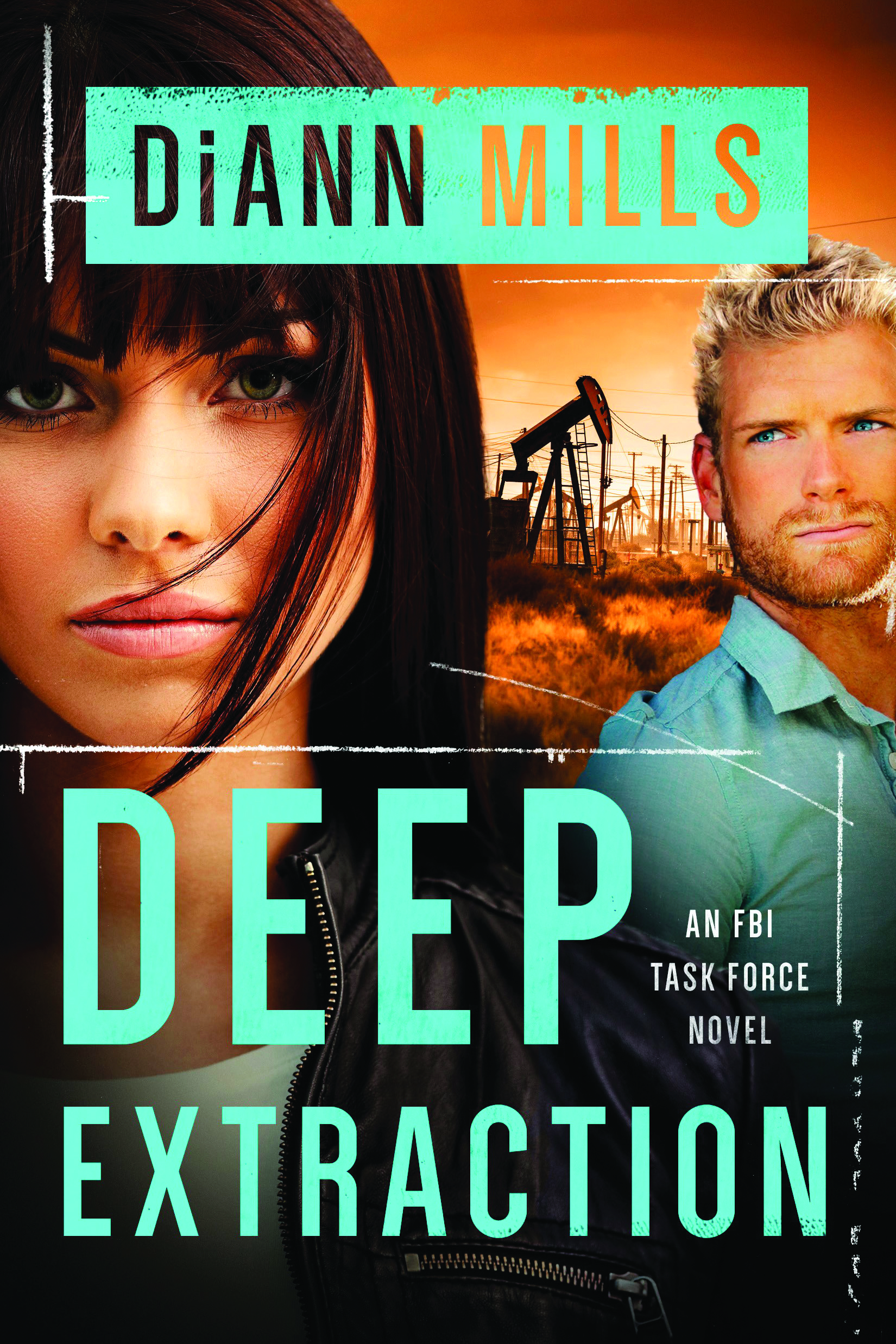
Deep POV is another type of third person, and many Christian writers put this POV into action for their novels. This POV can be tricky. The author must sink into the POV character revealing thoughts and emotions. Readers tend to enjoy this POV because they feel dropped into the story even sensing emotions the POV character experiences. To utilize this POV, apply third person pronouns while writing as if you are in first person. Avoid words like ‘saw’ and ‘felt’ so you can describe gut reactions. DiAnn Mills wrote deep POV in this sample from her novel, Breach of Trust: “Paige’s pulse raced into high gear as her foot pressed the accelerator. If the guy thought he’d succeed in making her nervous, he’d better think again. She changed lanes again while watching him in the mirror.” Notice Paige assumed what her pursuer intended, but she didn’t know. You see her heart beat faster in response to what she believed.
In summary, authors have several POVs to choose from. Those who want to write novels can choose first person, third person omniscient, limited, or deep POV. For instructional material, letters or poetry, authors will get the best results from second person. Perfecting your POV polishes your work and makes your readers want more.

TWEETABLE

Before You Write. . . You Must Choose a Lens by Cynthia L. Simmons (Click to Tweet)

Bio:
Cynthia L Simmons and her husband, Ray, have five children and reside in Atlanta. She has taught for over thirty years as a homeschool mother and Bible teacher. She’s a columnist for Leading Hearts Magazine and she directs Atlanta Christian Writing Conference. Cyndi has a heart for encouraging women in today’s crazy, upside-down world. She loves history and peppers her speaking and teaching with fascinating vignettes from the past. Her first book, Struggles and Triumphs, was nominated for 2008 Georgia Author of the Year. She co-founded Homeschool Answers and hosts Heart of the Matter Radio. Visit her at www.clsimmons.com.
Book Blurb:
With his father dead and his business partner incapacitated, Peter Chandler inherits the leadership of a bank in economic crisis. With only a newly minted college degree and little experience, Peter joins his partner's daughter, Mary Beth Roper, in a struggle to keep C&R Bank afloat while the Civil War rages around Chattanooga. Political pressure for unsecured loans of gold to the government stirs up trouble as tempers and prices rise. Their problems multiply when Mary Beth discovers counterfeit money with Peter's forged signature. Can they find the forger before the bank fails? The two friends must pursue gold on behalf of their business, as they learn to pursue their heavenly Father to find hope and peace.


Friday, January 15, 2016

Romancing the Idea ~ Colleen Coble


Romancing the Idea

Colleen Coble

People always ask how a writer gets an idea. Ideas can come from anywhere and generally reflect the kinds of things that interest us and that fit in with the kinds of stories we write. Read the newspaper, watch TV with the thought “what if?”


Plot and Structure by James Scott Bell says the best books come from who we are.

  • What do you care about most in the world? What are your passions? The best novels come out of outrage.
  • How do you feel about your physical appearance?
  • What do you fear the most?
  • What are your major strengths of character?
  • What are your major flaws?
  • What are you good at? What do you wish you were good at?
  • If you could do one thing and know you’d be successful, what would you do?
  • What three events from your childhood helped shape you into the person you are?
  • What are some of your annoying habits?
  • What secret in your life do you hope is never revealed?
  • What is your philosophy of life?

Now think about your story and distill the basic premise to one sentence. What’s a premise? The main “hook” that lifts the story out of the ordinary. For Mermaid Moon it would be: a young woman must find her father’s killer before her past catches up with her.

Figure out the setting. Setting is much more important than most writers realize.

I want you to figure out an interesting place to set your novel, then go online and read news stories set in that area. Jot down things that can ONLY happen in that area.

  1. Research setting. Come up with different ideas based on the setting. It can add to the plot. For example, in writing Beyond a Doubt, I read about how they’d taken copper mines and turned them into plant growing facilities. Part of the plot sprang from that research.

  1. Flip a genre. Take a look a genre other than the one you’re writing in—westerns, for example—and see how you can flip it and make it a romance. See what makes it work and figure out if the elements of that other genre will raise your own story a notch.

  1. Take a look at trends by reading current magazines like Scientific American, TIME, Newsweek, and USA Today. Maybe you can pick up on a coming wave and ride it for a while.

Okay, now you have your idea. But are their problems? Has this type of story been done before? Almost always the answer will be yes. But what makes your idea stand out? What makes it different from others?

Is the story BIG enough? Can you come up with a great hook that will catch the reader’s attention?

Is there some other element you can add to make it more fascinating? Quirks, obsession, a fresh angle?

Let’s talk about plot layers.

Ever since I started writing, I’ve heard that it’s tough to get published. And it is. But it’s not really tougher today than it was last year or the year before. It’s always been hard. Good layers are often the key to making an editor sit up and take notice. So much of the time, stories that hit the editor’s desk are so similar. Romance especially can be tough to make fresh. But it’s all in the layers.

Here are the layers I work on with every story:

  1. As I mentioned, setting is huge for me. A character who lives in Boston is very different from one who lives in Indiana. The culture that shaped him/her is different too. Think about where your characters are. Read newspapers from that area and see if you can find a plot layer in what is going on currently there. Is there a culture group that’s strong there?

  1. Character types. Take a look at character types and pit different types against one another to play off weaknesses and pet peeves. This can add a really great layer of conflict that’s ongoing. Maybe your female lead loves the wilderness and the hero’s idea of a great vacation is a cruise where everything is served to him. Maybe your heroine makes gourmet chocolates and the hero breaks out in hives from the aroma on her clothing. Do your research by reading obituaries and noticing people around you.

  1. Can you give your protagonist an obsession? That can really springboard you to plot ideas as she pursues it. This is often where to layer in your theme.

  1. Interesting occupation. This leads me to story ideas all the time. I’ve written about a SAR dog team, a dolphin researcher, a smokejumper, an antique quilt expert, and an old time telephone operator at the turn of the century.

  1. Think of plot layers that are problems for your main characters. Try to come up with at least three. For example, in Lonestar Homecoming, Gracie is running away in her wedding dress from men who just killed federal agents in front of her. She has no money and no way of supporting her daughter so she agrees to be a nanny to a man’s two children. She’s estranged from her father because only she knows she was responsible for her mother’s death. The problem with many manuscripts I see is that there isn’t enough conflict and it isn’t varied enough. It’s not enough to have just ONE conflict.

Layers will life your book out of the rejected pile. They will add depth and interest to your characters and your plot. If you’ve already written the book, it’s still not too late to tear into it and make it something special. Don’t be afraid to start from scratch and add the things that need to be there.

~~~~~~~~~~~~~~~~~~~~~~~~~~~~~~~

Best-selling author Colleen Coble’s novels have won or finaled in awards ranging from the Best Books of Indiana, the ACFW Carol Award, the Romance Writers of America RITA, the Holt Medallion, the Daphne du Maurier, National Readers’ Choice and the Booksellers Best.

She has more than three million books in print and writes romantic mysteries because she loves to see justice prevail. Coble is CEO of American Christian Fiction Writers. She lives with her husband, Dave, in Indiana.

To keep up with Colleen Coble, visit www.colleencoble.com, become a fan on Facebook (colleencoblebooks) or follow her on Twitter (@colleencoble).

Friday, November 21, 2014

Trends, Tie-ins and Writing From Your Heart. Possible? Carrie Turansky

Authors are often told, don’t try to follow the trends, write the book of your heart. But does being aware of trends and what’s popular in culture, and choosing to write about it, mean you aren’t writing a story that comes from your heart? I think not!

I believe what people actually mean when they give this advice is: don’t just follow a trend for the trend’s sake, and don’t try to write a particular genre just because it’s popular. Write a story you are passionate about, one that comes from your heart. 

And I agree . . . but I do think you can follow a trend and write a story that you and your readers will love.

In 2012, Downton Abbey was just becoming popular. I enjoyed the show, and I wanted to write longer historical novels, but I wasn’t sure I could write a series that required so much research. After doing some reading about the era, I promptly fell in love with it and decided to create a proposal for The Edwardian Brides Series. I used some of the same elements that made Downton enjoyable: characters from both the staff and a wealthy, aristocratic family; a beautiful English estate as the setting; and important events and issues from the era as part of the plot.

When I pitched the series I said it’s like Downton Abbey meets Jane Eyre. This piqued the interest of several editors, and soon I had a three-book contract. The series was connected to a popular trend, it was a time period that was interesting, but had not been overdone in CBA, and it was the type of story that I loved to read and wanted to write.

Tying my book to Downton Abbey has been a wonderful marketing tool and a great connection point with readers. We mentioned it in the back cover copy and the endorsement on the cover. We used it in our book launch promotions and often use Downton Abbey gifts in our giveaways. I gave my website a makeover so it had an English Historical feeling similar to Downton. I joined a few Downton Abbey Facebook Fan groups and set up a Downton Abbey list on Twitter. I set up a Google Search for Downton Abbey articles and often share those photos on Pinterest, Facebook, and Twitter. I visited the Downton Abbey Costume Exhibit and even traveled to England and Scotland to visit two filming locations for Downton Abbey. I used that research in my books and shared those trips on my blog, email newsletter, Facebook and Pinterest, and my readers love it. 

My publisher created a special poster they distributed to libraries all over the US called “Downton Abbey Read Alikes.” It included my book and several others. This gave me another opportunity to connect with Downton Abbey fans.

I’m not the only author who has ridden a trend with good results. Several authors including Cathy Gohlke, Tricia Goyer, Janice Thompson, and others planned ahead and took advantage of the 100th Anniversary of the sinking of the Titanic, using that as a back drop for their stories. Other authors like Julie Klassen and Katherine Reay have connected their novels to popular author, Jane Austen. Julie’s books are historical, and she has used her Austin research in marketing her books and connecting with readers who enjoy Regency novels. Katherine’s books are contemporary, but she uses themes and quotes from Austen in beautiful ways in her award-winning books. Cara Putman used the popularity of The Monument Men as a tie-in when her WW2 historical novel, Shadowed by Grace released. And several WW2 novelists recently joined together for a promotion remembering the 75th Anniversary of the beginning of WW2. Very clever ideas! 

So do write the story of your heart . . . and do consider cultural trends, historical anniversaries, unique settings, popular authors from the past, and other tie-ins that might allow you to connect with new readers and expand your audience.

Carrie Turansky is the award-winning author of more than a dozen novels and novellas, including Surrendered Hearts, Snowflake Sweethearts, and Along Came Love. She has been the recipient of the ACFW Carol Award, the Crystal Globe Award, and the International Digital Award. Turansky’s first historical fiction novel, and the first in the Edwardian Brides series, The Governess of Highland Hall, is a 2014 Carol Award finalist. While Turansky has been writing articles, devotions and essays since 1999, writing fiction is her passion, and she’s thankful for the creative ideas God has put into her mind and heart.

When she’s not writing Turansky enjoys spending time with her family, working outside in her flower gardens, cooking healthy meals for family and friends, or walking around the lake near her home.

To keep up with Carrie Turansky, visit www.carrieturansky.com, become a fan on Facebook (AuthorCarrieTuransky) or follow her on Twitter (@CarrieTuransky) and Pinterest (CarrieTuransky).