Get a Free Ebook

Five Inspirational Truths for Authors

Try our Video Classes

Downloadable in-depth learning, with pdf slides

Find out more about My Book Therapy

We want to help you up your writing game. If you are stuck, or just want a boost, please check us out!

Showing posts with label fiction tips. Show all posts

Thursday, August 18, 2016

Sharing the Wisdom ~ Six Tips I Learned From Frank Peretti ~ Carrie Stuart Parks

Six Writing Tips I Learned from Frank Peretti.
by Carrie Stuart Parks


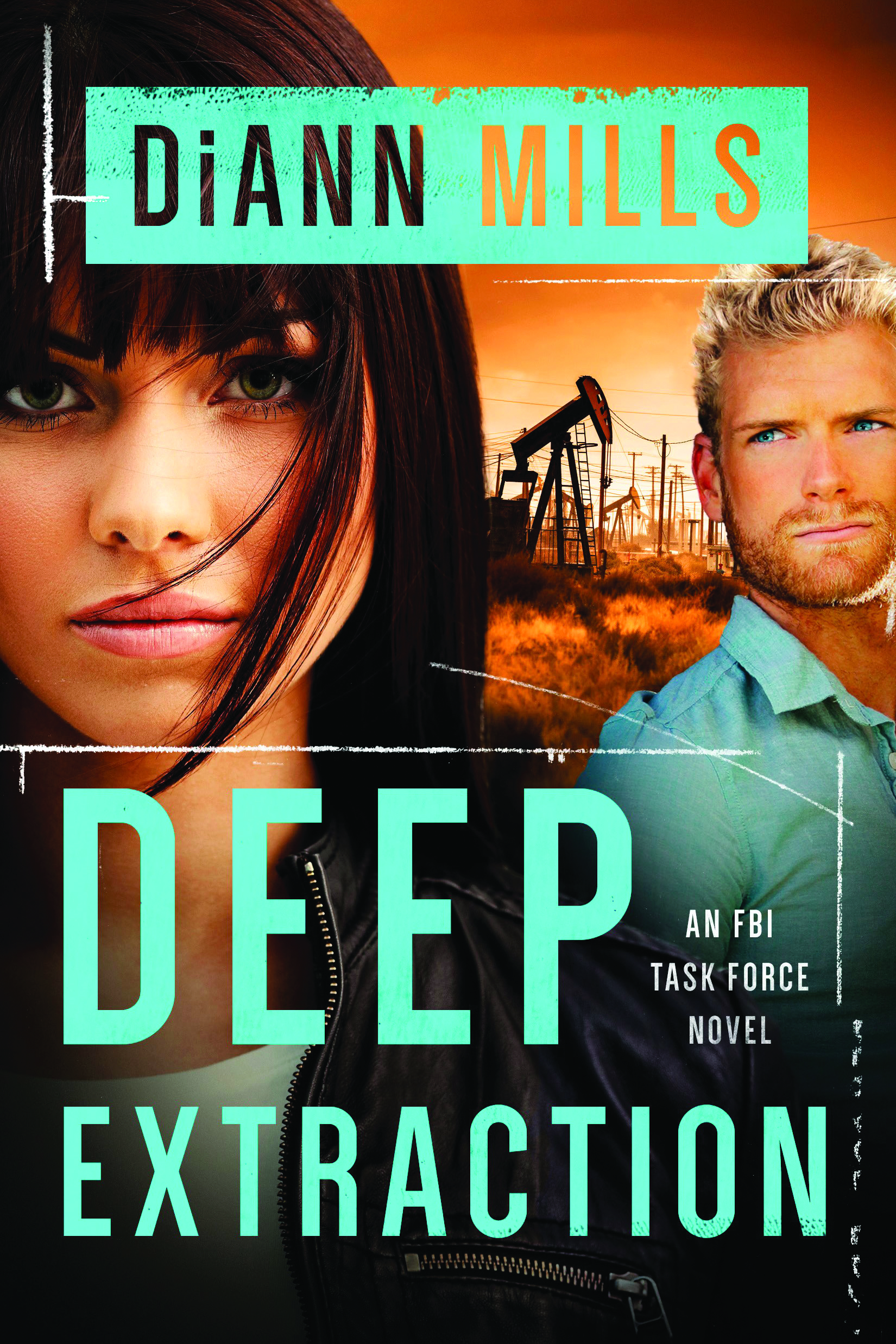
Between 2004 to 2015, I was blessed abundantly by having the New York Times bestselling author, Frank Peretti, as my mentor. He’d never mentored a writer before, and I’d never written fiction before, so it was a learning experience for both of us. Frank, in his forward to my first book, A Cry From the Dust, wrote this:


“From then on, every few weeks, she hollered at the back door, “Knock knock?” then brought in a case full of pens, highlighters, post-it notes, her computer, and pages of manuscript - her homework, a copy for her, a copy for me.  She read aloud, I followed.   I commented, she listened and scribbled notes all over her work.  She dubbed me “Master” and herself “Grasshopper” after that old Kung Fu TV show, but we were both new at it: she’d never written fiction and I’d never taught it.  The learning was mutual.  


And I guess it worked out.

Her perseverance alone was deserving of success, but she became a writer because she knew - and I knew - she could do it.  She had the flair, the imagination, the whimsical, inventive, sometimes zany ability to go to other places in her mind and come back with the unexpected.  She was a creative explosion sure to go off somewhere; all I had to do was aim her.”

Wow, heady words of encouragement to a newby writer! So let me share some of the great writing tips from the mouth of the master himself: Frank Peretti.

  1. Slaying Dragons. Your protagonist must face the bad guy. I recently read a suspense/thriller where the protagonist was rescued from the villain. That’s a weak resolution, and I threw the book across the room. The protagonist must defeat his/her own dragons.

  2. Hero. Your protagonist must be a hero, not just someone that gets beat up. Add the first two ideas together and you’ll find the bones of a great story. The reverse: defeated protagonist who has to be rescued is an unsatisfying novel.

  3. Action. If something doesn’t move the story forward, delete it or rewrite it so it does. You can’t stop and smell the roses in a novel—you’ll lose your readers. Descriptions, backstory, setting and so on must always be propelling the novel forward.

  4. Proactive. You really want the protagonist to figure out who the villain is, not wait for the villain to reveal himself. Your protagonist needs to be proactive.

  5. Elastic mind. The first book I labored over for six plus years had originally had a murder in the third chapter. Frank said to have the murder in the first chapter. What? I had no idea how to do this. I worked and worked, finally moving the body to chapter two. Nope. Frank wanted it in chapter one, preferably on page one. Be elastic in your thinking about your story.

  6. Nothing in stone. Frank didn’t teach me this by telling, but by showing (a little writer’s humor…okay, so very little humor.) Print out your working novel on recycled paper. I remember he gave me something in writing that was printed out on the back of one of his stories. OOOoooooohhh! Aren’t his words written in stone and sacred? Nope. Anything you write can be re-written. There are other, and probably better ways to say something. This is an application of tip five-elastic thinking.


BIO

Carrie Stuart Parks is a multiple Christy finalist as well as a Carol and Inspy award-winning author. An internationally known forensic artist, she travels with her husband, Rick, across the US and Canada teaching courses in forensic art to law enforcement professionals. The author/illustrator of numerous books on drawing and painting, Carrie continues to create dramatic, award-winning watercolors from her studio in the mountains of Idaho.

Mentored by New York Times best-selling author, Frank Peretti, Carrie began writing fiction while battling stage II breast cancer. Now in remission, she continues to encourage other women struggling through the effects of cancer.

Animals have always been a large part of her life. Her parents started Skeel Kennel Great Pyrenees in 1960. Carrie inherited the kennel and continues with her beloved dogs both showing and as an AKC judge.

Book’s blurb.

Gwen Marcey takes death in stride. Until she’s faced with her own mortality.

Forensic artist Gwen Marcey is between jobs when she accepts temporary work in Pikeville, Kentucky—a small town facing big-city crime. But before Gwen can finish her first drawing of the serial rapist who is on the loose, the latest witness vanishes. Just like all the others.

Gwen suspects a connection between the rapist and the “accidental” deaths that are happening around town, but the local sheriff has little interest in her theories. When her digitally-obsessed teenage daughter joins her, Gwen turns her attention to a second assignment: going undercover in a serpent-handling church. She could get a handsome reward for uncovering illegal activity—a reward she desperately needs, as it seems her breast cancer has returned. But snakes aren’t the only ones ready to kill. Can Gwen uncover the truth—and convince anyone to believe her—before she becomes a victim herself?

In a thrilling race against time, When Death Draws Near plunges us into cold-case murders, shady politics, and a den of venomous suspects.

Friday, October 30, 2015

Writing Contests—The Good, The Bad, and The Ugly

by Robin Caroll

Writing Contests—The Good, The Bad, and The Ugly

Overall, writing contests get a bad rap. Oh, when a writer finals, places, or wins, it’s all good. But if they don’t . . .

First, there’s the whole deal of score sheets. Really, on a scale of 1-5, you expect someone to put a point system to our works of art? And feedback? If the author is published, how good is the feedback if the book’s published? Can’t exactly change a character arc because the score sheet showed the hero’s journey was a bit too slow.

And judges! Who are these unnamed, faceless people? If a writer gets a good score, they’re wonderful, brilliant and insightful, of course. But a bad score? Oh, the judge didn’t “get” the story. Had to be someone unfamiliar with the genre.

But I like contests, always have. Unpublished and published. I like feedback. I like score sheets. Call me strange, but I like to know how my story interacts with the reader. A very wise person once told me that your story is just a story until a reader interacts with it. Stuck in my head. I like that—to think that readers are interacting with my story, my characters, my settings.

How to cope with bad scores? Don’t. No, I’m serious. If you get a bad score and there’s nothing useful you can use in the feedback, shut it right out of your mind. If you can’t get it out of your head, here’s a thought—praise God that particular judge didn’t feel compelled to go write a review of your book up on Amazon!

I’m blessed. I finaled and placed in some amazing contests. I’m in a group of writers who are so talented, I’m awed to be listed with them. Will I ever win? Probably not—hey, were you not paying attention? I said those who finaled with me are awesome! But it’s enough for me just to make the list. Have I NOT finaled in a contest as a published author? You bet. The Edgar Awards. Didn’t even come close. But you know what? I’m proud that I had enough guts to enter.

Contests are what they are—subjective because each reader/judge will interact with your story differently. Good, bad, or ugly, I love ’em. I just like to know that readers ARE interacting with my story. That’s enough for me.

“I love boxing. I love Hallmark movies. I love fishing. I love scrapbooking. Nope, I've never fit into the boxes people have wanted to put me in.” ~Robin Caroll is definitely a contradiction, but one that beckons you to get to know her better. Robin’s passion has always been to tell stories to entertain others and come alongside them on their faith journey—aspects Robin weaves into each of her 25 published novels. When she isn’t writing, Robin spends quality time with her husband of twenty-six years, her three beautiful daughters and two handsome grandsons, and their character-filled pets at home. Robin gives back to the writing community by serving as Executive Director/Conference Director for ACFW. Her books have finaled/placed in such contests as the Carol Award, Holt Medallion, Daphne du Maurier, RT Reviewer's Choice Award, Bookseller's Best, and Book of the Year.  

Thursday, August 20, 2015

The Power of Story


Heidi Chiavaroli is a writer, runner, wife, mother, and grace-clinger—not necessarily in that order. She writes Women’s Fiction that weaves the past and present with everlasting hope. Heidi is the winner of ACFW’s 2014 Genesis Contest, Historical Category. She lives in Massachusetts with her husband, two sons, and Howie, her standard poodle.

The Power of Story

Story is powerful.

I’m not the only one claiming this fact. Now, science is backing up the assertion that story has the ability to change the way we think, to change the way we even act.

At a writer’s retreat a couple years back, I listened to an inspiring presentation by author Tessa Afshar, in which she spoke of the incredible power of story. As I tried to pull together this blog post, I berated myself for not taking notes. Luckily for me, a search online brought up a 2012 New York Times article by Annie Murphy Paul, in which she explores Your Brain On Fiction.

Your Brain On Fiction:

“The brain, it seems, does not make much of a distinction between reading about an experience and encountering it in real life; in each case, the same neurological regions are stimulated,” Paul writes.

When we read of metaphors, textures, and scents imparted to us in rich words, the same places of our brain that are stimulated when actually experiencing these things are roused when we read them. 

A powerful story can even go beyond this. The same way the brain responds to smells and textures as if we were truly experiencing them, so the brain also responds to a character’s heartaches, happiness, and frustrations as if they are our own. We can learn from make-believe characters. We can become more empathetic to those around us. We can hone our social skills simply by picking up a book.

Wow. Great news for those of us who already love a good story.

As I read this scientific evidence, I thought of the Master Storyteller. Many times, Jesus taught with a story. The Parable of the Lost Sheep certainly has a deeper impact on His listeners than if Jesus simply said, “God loves the lost with a passion you can’t imagine.”

Instead, we can see ourselves in that story—alone and afraid, and yes, as a sheep! It doesn’t matter. God made His point in this story and many others, as well as in His entire Word—one huge, beautiful story of His love for us.

So I don’t know about you, but next time I’m wrapped up in a good novel I won’t feel quite so guilty about the laundry not getting done. After all, I’m not just reading. I’m improving my social skills. I’m relishing a creation. I’m becoming a more empathetic person.          

And who can argue with the power behind that? 

Friday, July 17, 2015

Power Packed Editing ~ Words of Wisdom from Beth K. Vogt

Improve Your Editing Process with Preferred Readers

 by Beth K. Vogt

When I reach a deadline and finish a manuscript, I do two things:
  1. I hit SEND and submit my the newly-completed novel to my editor
  2. I contact my Preferred Readers and let them know they’ll be getting their copies within the next few days


I’ve been working with Preferred Readers since my debut novel, Wish You Were Here, released in 2012. Back then I had one Preferred Reader. Now I have three.

What is a Preferred Reader?

My Preferred Readers are three women who read through my manuscript and then meet with me to give me feedback on my plot, my characters, as well as telling me which scenes worked for them and which didn’t. 

Why Work with Preferred Readers?

My group’s feedback is invaluable. They are my target readers: the kind of women I hope will pick up my novels, pass them on to their friends, or even to their teen daughters. Their insights let me know if I’m tapping into readers’ emotions, or if I’m confusing readers. Do they like my hero and heroine? Is my pacing working or is the story dragging? Did they like that challenging scene I wrestled with? 

How Do You Run a Preferred Readers Group?

  • Limit the size of your group. Having three Preferred Readers is ideal. When we meet, we discuss each chapter, keeping to “big picture” comments. Each person has a say. Even with a small group our meetings often last six hours and include a meal – and we talk while we eat.
  • Select different personalities. One of my Preferred Readers (PR) is a detail person, as well as a certified emotional intelligence (EQ) coach. Another PR is a writing buddy, and she brings that skill set to the group. My third PR is specifically a target group reader, as well as a former teacher and a homeschooling mom. The last time we met, she had her teen daughter read through the manuscript too.
  • Equip your group. I print out the manuscripts, which allows my PRs to mark up the pages as they read. NOTE: If you do this at someplace like Kinkos, this can be pricy. I spent $90 for printing and hole-punching. But if you do it at home, it’s your paper and ink, which you have to replace. I also provide individual binders and include dividers to mark each chapter, which makes it easier to go back and forth during discussions. 
  • Tell your Preferred Readers what kind of feedback you want. Be specific. I recommend staying with general comments and not getting bogged down with grammar, punctuation, and spelling – although they can go ahead and mark that too. Let them know you want both positive feedback and constructive criticism – no writer wants to hear only negative input. Consider starting with overall feedback about the book, like a character or a plot point, before going chapter by chapter. 
  • Appreciate your Preferred Readers. I always work with them to set a convenient time to meet and discuss the manuscript. We’ve met at restaurants for a working breakfast or dinner – my treat. Last time, we met at my house because it was quieter, and I ordered Thai food from a local restaurant for lunch. I also include my PRs on my influencer list so they receive a copy of each book when it’s released.


Beth K. Vogt is a non-fiction author who said she’d never write fiction, the wife of an Air Force physician who said she’d never marry anyone in the military and a mom of four who said she’d never have kids. Vogt believes God’s best often waits behind the doors marked “never.” A 2015 RITA® Finalist and a 2015 and 2014 Carol Award finalist, her 2014 novel, Somebody Like You, was one of Publisher’s Weekly’s Best Books of 2014. She lives in Colorado with her husband, Rob, and their youngest daughter.


For more information about Beth, visit her website, become a fan on Facebook or follow her on Twitter and Pinterest.

Friday, November 21, 2014

Trends, Tie-ins and Writing From Your Heart. Possible? Carrie Turansky

Authors are often told, don’t try to follow the trends, write the book of your heart. But does being aware of trends and what’s popular in culture, and choosing to write about it, mean you aren’t writing a story that comes from your heart? I think not!

I believe what people actually mean when they give this advice is: don’t just follow a trend for the trend’s sake, and don’t try to write a particular genre just because it’s popular. Write a story you are passionate about, one that comes from your heart. 

And I agree . . . but I do think you can follow a trend and write a story that you and your readers will love.

In 2012, Downton Abbey was just becoming popular. I enjoyed the show, and I wanted to write longer historical novels, but I wasn’t sure I could write a series that required so much research. After doing some reading about the era, I promptly fell in love with it and decided to create a proposal for The Edwardian Brides Series. I used some of the same elements that made Downton enjoyable: characters from both the staff and a wealthy, aristocratic family; a beautiful English estate as the setting; and important events and issues from the era as part of the plot.

When I pitched the series I said it’s like Downton Abbey meets Jane Eyre. This piqued the interest of several editors, and soon I had a three-book contract. The series was connected to a popular trend, it was a time period that was interesting, but had not been overdone in CBA, and it was the type of story that I loved to read and wanted to write.

Tying my book to Downton Abbey has been a wonderful marketing tool and a great connection point with readers. We mentioned it in the back cover copy and the endorsement on the cover. We used it in our book launch promotions and often use Downton Abbey gifts in our giveaways. I gave my website a makeover so it had an English Historical feeling similar to Downton. I joined a few Downton Abbey Facebook Fan groups and set up a Downton Abbey list on Twitter. I set up a Google Search for Downton Abbey articles and often share those photos on Pinterest, Facebook, and Twitter. I visited the Downton Abbey Costume Exhibit and even traveled to England and Scotland to visit two filming locations for Downton Abbey. I used that research in my books and shared those trips on my blog, email newsletter, Facebook and Pinterest, and my readers love it. 

My publisher created a special poster they distributed to libraries all over the US called “Downton Abbey Read Alikes.” It included my book and several others. This gave me another opportunity to connect with Downton Abbey fans.

I’m not the only author who has ridden a trend with good results. Several authors including Cathy Gohlke, Tricia Goyer, Janice Thompson, and others planned ahead and took advantage of the 100th Anniversary of the sinking of the Titanic, using that as a back drop for their stories. Other authors like Julie Klassen and Katherine Reay have connected their novels to popular author, Jane Austen. Julie’s books are historical, and she has used her Austin research in marketing her books and connecting with readers who enjoy Regency novels. Katherine’s books are contemporary, but she uses themes and quotes from Austen in beautiful ways in her award-winning books. Cara Putman used the popularity of The Monument Men as a tie-in when her WW2 historical novel, Shadowed by Grace released. And several WW2 novelists recently joined together for a promotion remembering the 75th Anniversary of the beginning of WW2. Very clever ideas! 

So do write the story of your heart . . . and do consider cultural trends, historical anniversaries, unique settings, popular authors from the past, and other tie-ins that might allow you to connect with new readers and expand your audience.

Carrie Turansky is the award-winning author of more than a dozen novels and novellas, including Surrendered Hearts, Snowflake Sweethearts, and Along Came Love. She has been the recipient of the ACFW Carol Award, the Crystal Globe Award, and the International Digital Award. Turansky’s first historical fiction novel, and the first in the Edwardian Brides series, The Governess of Highland Hall, is a 2014 Carol Award finalist. While Turansky has been writing articles, devotions and essays since 1999, writing fiction is her passion, and she’s thankful for the creative ideas God has put into her mind and heart.

When she’s not writing Turansky enjoys spending time with her family, working outside in her flower gardens, cooking healthy meals for family and friends, or walking around the lake near her home.

To keep up with Carrie Turansky, visit www.carrieturansky.com, become a fan on Facebook (AuthorCarrieTuransky) or follow her on Twitter (@CarrieTuransky) and Pinterest (CarrieTuransky).

Friday, March 14, 2014

Pregnant with Story

by Allen Arnold

It matters how a story is conceived.

Nothing is more important to
a novel than how it was created.
And who you were during its creation.
__________

Let’s start at the beginning
The time you first flirted with the idea.

Neither of you were looking for anything serious.
But your eyes met.
Sparks flew.
You fell in love and
got married to the idea.

The next thing you know...
you are pregnant with story.

This affects male
and female writers alike.

You love the story inside you.
Can’t wait for it to be born.

But man, is it messy.

Part inspiration.
Part isolation.

You write all night.
Eat too many Doritos.
Your clothes don’t fit.
Your brain goes fuzzy.
And all your friends are out playing
while you’re in this whole new chapter.

You are officially Pregnant with Story.

And what you do during these months
will forever determine the life of your novel.

______________


Am I saying that who you are – and what you do – during the creation of your novel is more important than anything else?

Yes. Absolutely.

Am I talking about you hitting a certain word count each day?

Not at all.

Is this about a killer concept, craft mastery, or better social media strategy?

No. There’s a place for those.
But they are never the foundation.

The main reason God has given you the gift of story
is for the two of you to spend time together.
The Creator showing the created how to create.

Can you fathom that? God wants to spend time creating with you. You have a unique passion for story because God knit that into your being. Why? I believe it is for your own heart and, secondarily, for the hearts of those who will read your stories.

If you get so busy writing that you miss that,
your story will be less than it could.

Because you can’t write a better story than you’re living.

But we try. During my 20 years in the publishing industry, I worked with hundreds of authors and most struggled to remember this during the creative process.

So let me ask you...

If your future readers could see the process of how you create, would they want to read your story once it is born?

When you find yourself pregnant with story, here are three ways to carry it well.

1.    While You’re Expecting...Stay Expectant

In Scripture, I love Mary’s reaction after realizing she is with child. That God has – in the most miraculous way – allowed her to participate in the birth of the Savior.

Her primary emotion is awe.

“I’m bursting with good news.
I’m dancing with the song of my Savior God...
His mercy flows in wave after wave
On those who are in awe before him.”
(The Message, Luke 1)

When you are giving birth to story – is your primary emotion one of awe?

Do you awake expectant about all God has in store for you each day? I try to begin each morning, before my feet hit the floor, asking, “Father, what do you have planned for us today?” It is a spirit of fellowship and expectancy...of walking with God in a constant state of awe.

This enables life to enter the pages you are writing.

But if you spend more time with your fictional characters than God, your words will lack life. If you are huffing and puffing on worry and stress during the creative process, your story will be born small and frail.

In actual pregnancies, experts have shown that when a mother-to-be is overly stressed about her birth, the pre-born baby can feel it. This impacts not just the pregnancy but also the child. How do you think stressful days of cranking out a manuscript will impact the life of your book?  Can words of life and creativity really make into your story when there’s no awe in the storyteller?

2.    Nourish Yourself...and Your Story

When pregnant with story, you must make sure you consume things that nourish both your soul and your story.

Philippians 4:8 (The Message) urges us to focus on things that are “noble, pure, true, reputable, authentic, compelling, gracious – the best, not the worst; the beautiful, not the ugly; things to praise, not things to curse.” Yet pop culture feeds us a steady diet of media void of any real life. It offers songs and story that celebrate hopelessness, death, violence, gratuitous sex, narcissism, and the use of God and Jesus’ name as slurs. It’s hard to create life if you are consuming this toxic mix of junk food.

3.    Setting Your Story Apart

Remember Hannah. She wanted a son more than anything else. So she made God a promise. If God would give her a son, she vowed:  “I will give him completely and unreservedly to you. I will set him apart for a life of holy discipline.” (The Message). And God did just that. His name was Samuel.

God made a barren womb a place of life. And God is the one who will bring your stories to life. I encourage you to follow Hannah’s example. Even before you have the idea – give your future story completely and unreservedly to God. Set it apart and allow God to do with it what he desires. It is the bold act of giving back to God what he so generously gave to you.

Yet many see the birth of story as their ticket to fame or validation. We wouldn’t put that burden on our child. And we shouldn’t put it on our novel. The reason to have a child – and a story – is to bring life into the world and to make it a better place. Not to enhance our stature or comfort.

____________

At last...the big day arrives.

You give birth.
What started as an idea is fully realized.

The press release, um, I mean birth announcement, goes out.

But by then, the story’s destiny is already set.

It was formed into either an offering or a means to something other while the story was developing inside you and being created.

It all depends on understanding why God has given you the gift of story – and what your story is – as you create.

Invite him into the process.
Give him your story as an offering before it is born.

Because it matters how a story is conceived. 

Allen Arnold loves the epic adventure God has set before him. From the mountains of Colorado, he leads Content & Resources for Ransomed Heart Ministries (led by John Eldredge). Before that, he spent 20 years in Christian Publishing - overseeing  the development of more than 500 novels as founder and Publisher of Thomas Nelson Fiction. He was awarded the ACFW Lifetime Achievement Award in 2012. But that doesn't really describe the man. Allen savors time with his family, craves the beach, drinks salsa by the glass, is hooked on the TV series "Once Upon a Time" and is passionate about helping storytellers write from an awakened heart. 

Monday, July 29, 2013

What do you mean "Find Your Voice?"


Fiction writers are told to find their voice. Well, what is voice, and for that matter, how do you find it?

I mastered the mechanics of good writing by learning and following the guidelines or ... stay with me here ... the rules. Then, I began to understand when and how to break them to turn my manuscript into a symphony or a dance of words.

About that same time, I started a new series, and when I sent my critique partners the first chapter, they told me I'd found my voice. Cool. I didn't know I'd lost it. I mean, I didn't have laryngitis or even a sore throat.

Okay, I'm being silly and probably not that funny, so you can stop rolling your eyes. In truth, I'd been working on voice. I read Les Edgerton's book Finding Your Voice. I highly recommend it if you're still looking for yours.

In Edgerton's book, he said go back and look at letters you'd written when you were young or at least before you began to write. There was your voice.

As I thought about that, I remembered how our friends always told me they loved my Christmas letters. Mine were the ones they actually read and looked forward to. When I was late with it one year, I received a few "Where is it?" emails.

Instead of a travelogue or a report on the kiddos' doings, I made up stories about the major events of the past year, poking fun at us and liberally adding embellishments.

I pulled out those past Christmas letters and studied them. I noticed the cadence, the style, and the sound of them. That's what I wanted to get in my fiction.

I then tried a new game of "Name that Author."

First, I went to a multi-author blog—it doesn't work on any other type. (NOTE: This needs to be a blog of authors well known to you.) I chose Girls Write Out. Before I looked at the signature or by-line, I tried to guess who wrote it. 

Between the post and their fiction, I could see the similarity in the "voice." It was natural and organic to the author. While some may have similarities, especially if they write in the same genre, each author does have a unique voice.

If you're still developing your voice, read ... a lot. Don't copy another writer, but rather study what they do and how they do it. Then look at something you wrote before you started perusing a writing career. Forget the mechanics for a moment. What did the writing sound like? That's most likely your voice.

Try it for a while and see what happens.