Get a Free Ebook

Five Inspirational Truths for Authors

Try our Video Classes

Downloadable in-depth learning, with pdf slides

Find out more about My Book Therapy

We want to help you up your writing game. If you are stuck, or just want a boost, please check us out!

Showing posts with label author wisdom. Show all posts

Friday, May 19, 2017

Cynthia Ruchti: Up Close and Personal

Interview by Kelly Klepfer

Tell us a bit about your current project.

The book that just released is A Fragile Hope. In some ways, one might say it was a risky project. How does a woman write an emotion-packed contemporary novel with a male protagonist, a marriage in trouble—his own—and his wife’s point of view is “heard” only in mere snippets…for the whole book? And how can hope weave its way onto the pages of a novel with betrayal center stage?

Friday, February 17, 2017

A Dog, A Monk and A Judge Walk Into a Book Store

Sorry. There is no punchline. But Ron has author wisdom to share involving all three of those elements. How could I resist?  
Meet Ron Marasco ...

What things would you do differently…


I think I would have liked to begin my writing career with the understanding I now have about editors. Older writers sometimes have negative and cautionary things to say to young writers about editors. But it has been my experience that your relationship with you editor can be one of the truly rich experiences of your working life as a writer. The key is to approach it as a naturally collaborative relationship—as it is—as opposed to an adversarial relationship--which it only is if it gets off on the wrong foot!

Thursday, August 18, 2016

Sharing the Wisdom ~ Six Tips I Learned From Frank Peretti ~ Carrie Stuart Parks

Six Writing Tips I Learned from Frank Peretti.
by Carrie Stuart Parks


Between 2004 to 2015, I was blessed abundantly by having the New York Times bestselling author, Frank Peretti, as my mentor. He’d never mentored a writer before, and I’d never written fiction before, so it was a learning experience for both of us. Frank, in his forward to my first book, A Cry From the Dust, wrote this:


“From then on, every few weeks, she hollered at the back door, “Knock knock?” then brought in a case full of pens, highlighters, post-it notes, her computer, and pages of manuscript - her homework, a copy for her, a copy for me.  She read aloud, I followed.   I commented, she listened and scribbled notes all over her work.  She dubbed me “Master” and herself “Grasshopper” after that old Kung Fu TV show, but we were both new at it: she’d never written fiction and I’d never taught it.  The learning was mutual.  


And I guess it worked out.

Her perseverance alone was deserving of success, but she became a writer because she knew - and I knew - she could do it.  She had the flair, the imagination, the whimsical, inventive, sometimes zany ability to go to other places in her mind and come back with the unexpected.  She was a creative explosion sure to go off somewhere; all I had to do was aim her.”

Wow, heady words of encouragement to a newby writer! So let me share some of the great writing tips from the mouth of the master himself: Frank Peretti.

  1. Slaying Dragons. Your protagonist must face the bad guy. I recently read a suspense/thriller where the protagonist was rescued from the villain. That’s a weak resolution, and I threw the book across the room. The protagonist must defeat his/her own dragons.

  2. Hero. Your protagonist must be a hero, not just someone that gets beat up. Add the first two ideas together and you’ll find the bones of a great story. The reverse: defeated protagonist who has to be rescued is an unsatisfying novel.

  3. Action. If something doesn’t move the story forward, delete it or rewrite it so it does. You can’t stop and smell the roses in a novel—you’ll lose your readers. Descriptions, backstory, setting and so on must always be propelling the novel forward.

  4. Proactive. You really want the protagonist to figure out who the villain is, not wait for the villain to reveal himself. Your protagonist needs to be proactive.

  5. Elastic mind. The first book I labored over for six plus years had originally had a murder in the third chapter. Frank said to have the murder in the first chapter. What? I had no idea how to do this. I worked and worked, finally moving the body to chapter two. Nope. Frank wanted it in chapter one, preferably on page one. Be elastic in your thinking about your story.

  6. Nothing in stone. Frank didn’t teach me this by telling, but by showing (a little writer’s humor…okay, so very little humor.) Print out your working novel on recycled paper. I remember he gave me something in writing that was printed out on the back of one of his stories. OOOoooooohhh! Aren’t his words written in stone and sacred? Nope. Anything you write can be re-written. There are other, and probably better ways to say something. This is an application of tip five-elastic thinking.


BIO

Carrie Stuart Parks is a multiple Christy finalist as well as a Carol and Inspy award-winning author. An internationally known forensic artist, she travels with her husband, Rick, across the US and Canada teaching courses in forensic art to law enforcement professionals. The author/illustrator of numerous books on drawing and painting, Carrie continues to create dramatic, award-winning watercolors from her studio in the mountains of Idaho.

Mentored by New York Times best-selling author, Frank Peretti, Carrie began writing fiction while battling stage II breast cancer. Now in remission, she continues to encourage other women struggling through the effects of cancer.

Animals have always been a large part of her life. Her parents started Skeel Kennel Great Pyrenees in 1960. Carrie inherited the kennel and continues with her beloved dogs both showing and as an AKC judge.

Book’s blurb.

Gwen Marcey takes death in stride. Until she’s faced with her own mortality.

Forensic artist Gwen Marcey is between jobs when she accepts temporary work in Pikeville, Kentucky—a small town facing big-city crime. But before Gwen can finish her first drawing of the serial rapist who is on the loose, the latest witness vanishes. Just like all the others.

Gwen suspects a connection between the rapist and the “accidental” deaths that are happening around town, but the local sheriff has little interest in her theories. When her digitally-obsessed teenage daughter joins her, Gwen turns her attention to a second assignment: going undercover in a serpent-handling church. She could get a handsome reward for uncovering illegal activity—a reward she desperately needs, as it seems her breast cancer has returned. But snakes aren’t the only ones ready to kill. Can Gwen uncover the truth—and convince anyone to believe her—before she becomes a victim herself?

In a thrilling race against time, When Death Draws Near plunges us into cold-case murders, shady politics, and a den of venomous suspects.

Friday, July 15, 2016

Never Give Up - The World Needs Our Stories - Kelli Stuart

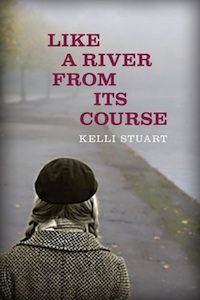
Like A River Cover - 200X300The World Needs Our Stories

by Kelli Stuart


It took me a decade to write my first novel. Really, it took longer than that, but "a decade" is such a neat and tidy way of saying it took an extremely long time. From the day I typed the very first word of my first draft, to the day the book finally landed on bookshelves, was seventeen years. More than a decade for those who are good at math. I'm equal parts proud of how long it took me to write this book, and a little embarrassed. Really, when you think of some of the most prolific writers, and their abilities to pump out great books every few years, one novel in seventeen years isn't something to brag about. I try not to dwell on that, though, because what good is comparing my journey to anyone else's, right? 

This book took time because I refused to rush the story. It is historical fiction, set in World War II Soviet Ukraine, which meant sifting through mountains of propaganda in order to find out the truth of those days. It required me speaking with over 100 former Soviet veterans, listening to their stories and feeling the emotion of what they experienced. I needed to get this story right, not only because I wanted to present the reader with a factually accurate historical fiction novel, but also because I wanted to honor the people of Ukraine, who's country was the central focus of the novel. I also got married, moved across country a few times, had four children, and worked as an editor/ghostwriter/blogger in those years. There weren't copious amounts of spare time from which to draw. In the end, however, it didn't matter because when I finally finished the book I knew it was right. I had taken my time, and I'd written a book I could be proud of. 

Had I pushed it through ten years ago, it wouldn't have been the right story. I needed to live a little, to experience life and the world in order to really tell the story as it needed to be told. There is a feeling of urgency in the writing world. We all know that there's nothing new under the sun, and that we're simply looking for new and fresh ways to tell the same old story, but still...we don't want to be left behind. It's true that some writers are prolific. Some people have a lot of words, and somehow they manage to organize all those words into book after book, story after story, and I applaud them for it! Others have, perhaps, an equal amount of words, but putting those thoughts together cohesively takes a little more time. One isn't better than the other as long as neither gives up. I wanted to give up on my book multiple times over the years. I was certain I wasn't cut out for this fiction writing thing. I tried over and over to convince myself to just walk away. Be a mom. Be a wife. Be a blogger. All those things were fine. Yes, those things are fine - they're wonderful, in fact - but I had a story, and I needed to tell it. For this reason alone, I couldn't begin another book project in all those years. I tried to put the novel aside and work on different ideas, but it was as though that one book had occupied all the brain space available, and there was no freeing up space unless I finished. 

Finishing was only half the battle, though, because after typing The End, I needed to find someone who would read it. And so began the arduous process of finding an agent, and then a publisher, and once again fighting the urge to just walk away. "Fiction is a tough sell." I heard this line over and over as I pitched my book. Apparently in my "decade" of research and writing, fiction faded into the shadow of non-fiction. According to my pile of rejection letter, the masses had spoken, and fiction was the red-headed stepchild of the literary world. Still there, but treated mostly as an annoyance. Now, had I been willing to turn Hitler into a vampire, and throw in a few zombies, I might have gotten this show on the road a little sooner (and don't think I didn't consider it). But again, the integrity of the story forced me to wait, to be patient, and to refuse to give up. Fiction may be a tough sell, but the power of story is never going away. Story is the vehicle from which all of life can be revealed. From the very beginning of time, story has been the way that we've communicated. There is great power behind story, and so we the storytellers can't give up, no matter what the popular market tells us. Putting in the time and effort to tell the right story in the right way is a daunting process. Of course we'll want to give up at times, because writing is hard. But we cannot quit telling stories. So I'll keep on writing and you will, too! Whether the book takes six months or a decade-ish, let's agree not to give up on story, okay?

Because the world needs our stories, and we need to believe that.

 Kelli Stuart is a storyteller at heart with an affinity for languages, travel, and history. She is fluent in the Russian language, and spent over a decade researching the effects of World War II on the former Soviet Union. Kelli’s first novel, Like a River From its Course, is an epic story of war, love, grief, and redemption set in World War II Soviet Ukraine. It released in June 2016. Kelli lives in Tampa, Florida with her husband and four children.
Purchase Like a River From Its Course today!

Friday, June 17, 2016

Shifty-Shifty ~ How to Shift From 1st to 3rd Person by Varina Denman


How to Shift (Smoothly) From 1st to 3rd Person, and Back Again
Varina Denman
When I drafted my first novel, I didn’t know it was against the rules to switch back and forth from 1st to 3rd person. My main character’s POV was in 1st which felt natural, but after a while, I wanted to let the reader see inside the hero’s head, so I plopped down a chapter in 3rd and continued drafting a crazy mixed-up jumble.
THEN, I discovered craft books. Oh me, oh my, I had broken the rules, but no … maybe not. It depended on which books and blogs I read. So I toyed with the manuscript, tweaking and re-writing, and after a while … those POV shifts almost worked. Over the course of three books, I learned a lot about POV shifts, and now I’d give anything to be able to go back and edit that first manuscript just a teensy bit more.
As a reader, many times I find myself in the middle of a chapter, only to realize I’m in the wrong character’s head. One time, I went back and skimmed several pages, re-living every word through the correct person’s perspective. So very annoying, but it taught me something. In my own writing, I need to make POV shifts easy for the reader, and now I follow a simple rule of thumb.
When switching from 1rd to 3rd (or vice versa), special care should be taken with the VERY FIRST sentence of the scene.
Even the first WORD, if possible. I need to cement the new POV in the reader’s mind, and the closer to the beginning of the scene the better. Here’s an example of the first line of a chapter written in 3rd person in Clyde’s perspective. The preceding chapter was in 1st in Lynda’s perspective.
Clyde wondered if he would always attend worship alone. As he slipped through the double doors of the Trapp church building and stood in the tiny foyer he could hear Dodd Cunningham teaching a Bible lesson behind a hollow door.
This works because I’ve immediately grounded Clyde with an internal thought to put the reader right in the character’s head. In the first two words of the chapter, the reader has no doubt in whose perspective the chapter is written (because Lynda can’t know what Clyde is wondering.)
This technique grows weaker when it is placed deeper into the scene. If I had switched the two sentences in the example, putting the action first, it would have muddied things up, because Lynda is capable of describing Clyde’s actions from her 1st person perspective.
If smooth enough, the untrained reader won’t even notice the switch from 1st to 3rd, and that’s my goal.
The goal is not to make a smooth transition, but an invisible one.
http://litfusegroup.com/campaigns/jilted-varina-denman
In order to check the invisibility of the shift, it’s good practice to read aloud the last paragraph of the preceding chapter followed by the first paragraph of the new one. I put myself in the reader’s chair, and determine if the transition is smooth enough to avoid confusion.
This all seems simple enough, right? But … oh, dear … there’s bad news:
It’s more difficult shifting from 3rd to 1st
Personally, when I read a book, third person is easier for me to digest. I feel as though the story is laid out in pieces, and I merely come along and pick them up. 1st person takes a little more work, because I’m becoming the character. Even more difficult, is reading from 3rd straight into 1st, because I have to adjust my thinking.
Once again, the trick is to put the reader into the head of the POV character as soon as possible. The problem lies in the fact that if I jump into 1st person narrative immediately after a 3rd person chapter, the reader has no idea who that 1st person character is. Not only is it jarring and confusing, but the reader is likely to throw down the book in frustration. So …
When switching from 3rd to 1st, I must label the POV character before giving the internal thought.
I have two options. In the first, I use another character to identify the POV character through a line of direct address. This points-out who the “I” is going to be, so the reader is prepared for the 1st person internal thought.
“Lynda, that man wants you.”
I pressed my lips together and scowled at Dixie, ending the conversation before it started.
The dialogue tells the reader that Lynda is in the room, and the very next sentence puts the reader in Lynda’s head, showing that this chapter is in 1st person, Lynda’s perspective. The internal thought isn’t in the first words of the chapter, so clearly, the shorter the dialogue the better. I also leave off dialogue tags here, making the distance from the word Lynda to the internal thought as short as possible.
Another way to label the POV character is to tag an inanimate object.
Lynda’s Makeup and Stuff.
The stenciling on my cosmetic case had faded, but I could still make out Velma’s handwriting.
This is the same principle as using a line of dialogue, only it gives you the freedom to have the character in a scene alone. Another option is to show a text message, or voicemail, or—with a subtle twist on the dialogue idea—have the character remember a line of dialogue from a previous scene.
In spite of going to great lengths to soften the transition for readers, POV shifts can still be jarring, but it seems that readers have learned to adjust as we writers stretch the limits and change the rules. And that’s good for us, because it’s fun to be able to give readers a different literary experience.
What tricks do you use to make POV shifts smooth or possibly … invisible?

Varina Denman writes stories about the unique struggles women face. A native Texan who spent her high school years in a small Texas town, Varina now lives near Fort Worth with her husband and five mostly grown children. Her passion is helping others make peace with their life situations. Varina’s Mended Hearts series is a compelling blend of women’s fiction and inspirational romance. Connect with Varina through her website, Facebook, Instagram, Twitter, or Pinterest.

Friday, May 20, 2016

Sarah Sundin ~ It's A Mystery to Me....Mesmerizing Mysteries and How to Master Them


Mesmerizing Mysteries and How to Master Them
by Sarah Sundin 

What makes a satisfying mystery? As in all novels, we need intriguing lead characters, a captivating premise, and a setting that supports the story on both a physical and emotional level. But mysteries also have a cast of suspects and an interwoven plot with suspects and investigators acting and reacting to each other. Ideally, the reader figures out the mystery around the same time as the sleuth does. Too obvious and the reader is bored. Too opaque and the reader is annoyed.

When I tackled my first mystery plotlines in the Waves of Freedom series, I found I needed new ways to develop my secondary characters and plot. As an outline-oriented plotter, I laid this all down in advance so I had a clear roadmap when writing my rough draft. But a seat-of-the-pants writer may find these methods helpful when analyzing the rough draft before editing.

Suspicious Suspects

Well-developed secondary characters are necessary in any novel, but in mysteries the author needs to dig even deeper. The story needs a number of suspects, both guilty and innocent, for the sleuth to investigate.

To develop the suspects, I filled out character charts—a shortened version of the questionnaire I use for heroes and heroines, with some additional specialized questions.

To understand each person, I filled out information about his appearance, family, upbringing, education, employment, morals, personality, strengths, and weaknesses. I want to know what makes him tick.

Next, I examined why the character is qualified to be a suspect. How is he clever, resourceful, knowledgeable, or skilled? What does he bring to the table in the story?

What is his driving passion? Does she want something badly enough to break the law to get it? Does he love someone so obsessively that he’ll do anything to help—or have—this person? Along these lines, what is her greatest fear and what will she do to make sure it doesn’t come to pass? What is his greatest secret and what will he do to keep it in the dark?

How does she act suspicious? If she’s guilty, how is she concealing her actions? If he’s innocent, how does it look as if he’s concealing something? Maybe he’s hiding an affair, or a surprise party, or an unrelated crime, or a secret from his past.

Each suspect needs to have the classic “motive, means, and opportunity.” Each must look as if he could and would commit the crime. But you can create “holes”—an airtight alibi or a seeming lack of connection to the victim.
https://promosimple.com/ps/9a33.

Each suspect needs to look evil enough to have committed the crime. And—this is important—each needs to look innocent enough not to have committed the crime. Give each one, including the actual villain, some positive traits—kindness, humor, devotion, chivalry, courage, standing up for the downtrodden, charitable giving, excellence in his field—traits that make the sleuth and the reader write him off as a suspect.

Next, write a brief sketch of the plot from his point-of-view. What actions does he commit? How does he react to the story events, investigators, and other suspects?

Puzzling Plot

Now to set your cast in motion. You might have a dozen suspects, an amateur sleuth, and a detective. They interact with each other, respond to story events and each other, and drop clues and red herrings. They lie, conceal, and deliberately mislead.

It was enough to make me pound my head on my keyboard.

Instead I made a chart.

In a table format, I set up columns for each suspect and each investigator, including my amateur sleuth heroine.

Each row is for a scene in the novel—or for the time between scenes—and I shade these in different colors. For the scenes, I fill in what each character does or says, what others say about her, or any clues that point to her.

Just as important—the rows for time between scenes. This is what happens offstage. Perhaps a hitch in chapter 10 causes the villain to change plans. Perhaps a clue in chapter 20 leads the police to search Innocent Suspect A’s apartment. Perhaps that search makes Suspect A panic and plant evidence to place Suspect B at the crime scene.

The chart format allowed me to make sure each suspect followed a natural plot arc and acted and reacted in character. I could track what my heroine learns, when she does so, and whom she suspects most at each moment.

For you seat-of-the-pants writers who discover the true villain along with your point-of-view character, this can help you backtrack and plant appropriate story elements.

Done well, your conclusion will be a logical surprise, and your readers will be delighted.

Bio:

Sarah Sundin is the author of eight historical novels, including Anchor in the Storm. Her novel Through Waters Deep was named to Booklist’s “101 Best Romance Novels of the Last 10 Years,” and her novella “I’ll Be Home for Christmas” in Where Treetops Glisten was a finalist for the 2015 Carol Award. A mother of three, Sarah lives in California, works on-call as a hospital pharmacist, and teaches Sunday school. She also enjoys speaking for church, community, and writers’ groups. Please visit her at http://www.sarahsundin.com.

Friday, April 15, 2016

Author Answers ~ Catching Up with Cynthia Ruchti


What two or three things would you do differently if you were starting your publishing career today?

Since I was 58 when my debut novel was published, I’d have to say, “Start earlier!” But on the other hand, I can trace back through thirty-three years of ministry in radio—a good portion of my adulthood—and see that God prepared me, informed me, deepened me, worked on maturing me (that process will never end), created empathy in me, and accomplished untold other prep work in me before I ever signed my first contract.

I would apply myself to better and more efficient filing methods if I were starting now. Not only do we have greater access to tools that help us accomplish that goal these days, but I understand all too well what it’s like to have bins of material that need filing, scraps of paper with a brilliant idea buried under other scraps of paper, and what it’s like to waste time re-researching a bit of information I already have somewhere in the office. And this is coming from an author who has a “decent” filing system. I’m working toward becoming more streamlined now, uncluttering the paper jam of my life. That too, I wish I’d started sooner.

What one issue makes you struggle the most as an author? How do you handle it?

By necessity, because of the many facets that accompany publication—marketing, reader communication, research, development, editing, planning, interviews, conferences, speaking—and because, like many authors, I have a day job too, finding the sweet spot in time management is always an issue. What is most important for this moment? Some people have a word of the year. This year, I felt led to adopt a three-word phase that has often helped guide me in time management decision-making. My phrase for 2016 is “More of Less?” The question mark is there intentionally. Throughout the day, I ask, “Do I need more of this in my life or less of it?” It’s been an exercise that causes me to approach every assignment and every request with greater intentionality. And when I ask the question, I’m asking both myself and God…and listening for His answer.

What one issue ignites your passion? Does your passion fuel your writing? What would you do with your life if you didn't write?

My writing tagline, but also for my life, in its extended version (my tagline, although let’s say my extended life, too!) is “I can’t unravel. I’m hemmed in Hope.” Landing on that tagline was like coming home to harbor. It seems to fit what I believe, what I practice, what I write, and what I long to pour into others. The stories I’m compelled to write are not all happy-happy-joy-joy stories. They’re careful, intimate, sometimes raw peeks into the very real struggles humans face, and sometimes the ones we don’t want to admit—like the character who isn’t sure she wants to be around her husband that much in retirement (Song of Silence from Abingdon Press). But hope isn’t just the last paragraph of the final chapter. It is woven throughout the story, even in the tough parts, because that’s what God does. He hems us in hope so we can bear life’s ravages—emotional, financial, health-wise, spiritual—without unraveling.

If I didn’t write, I would find some outlet where I could continue to encourage people with the irresistible wonder that God has created hope for every situation we can face.

And I’d consider editing or coaching other communicators. Or…take on more speaking opportunities for women’s events.

Do you still experience self-doubts regarding your work, or struggle in a particular area such as writers block or angst driven head-banging against walls? Please share some helpful overcoming hints that you’ve discovered.

I’m just now getting serious about the benefits of setting a timer to create boundaries for writing and intentional breaks for moving and accomplishing the non-writing facets of this business. I’m finding my rhythm in about twenty-five or thirty-minute block of focused writing interspersed with ten-minute blocks (the recommendation is five, but ten works better for me) in which I keep myself from writing (unless in the last throes of a deadline) and force myself to walk around, unload the dishwasher, exercise, check email, put a stamp on an envelope, tidy the family room… Anything that is not actual writing. I implemented the plan—my home-tweaked version of the popular Pomodoro Technique—in the last two weeks of a very tight deadline. My productivity increased, and I felt as if I were still engaged in home life, rather than completely ignoring it. The body needs to move, but if I sat at my computer until the work was done, I never would move. The work is never “done.” And that is a natural frustration to my personality type. I’ve made it a regular practice now. It’s bringing a sense of energy to my writing, greater efficiency (although I had to DO it before I was convinced it could), keeps me from endless minutes or more staring at a blank screen because I’m eager to get back to the manuscript, manages distractions in a positive way, and also manages my guilt for what I in the past wasn’t accomplishing when in writer mode.

What is your favorite source for finding story ideas?

Life. More specifically, listening to life.

The kind of stories I’m compelled to write are inspired by listening to people’s heartaches, the story of their struggles, and watching for where that intersects with God’s story.

I find ideas—whether for fiction, nonfiction, or devotions—by staying alert and looking for the story in any small incident or observation.

One of my first fiction instructors had us create a paragraph in fifteen minutes centered on something in that room. “What item?” He said, “Pick one. It doesn’t matter. There’s a story everywhere you look.” I’ve taken that to heart and found it not only true but empathy-building.

What piece of writing have you done that you’re particularly proud of and why? (Doesn't have to be one of your books or even published.)
I don’t look the type, don’t fit the profile, but I was challenged to write a Spoken Word piece for a specific sermon our pastor intended to preach the following Sunday. He wanted a Spoken Word on the Old Testament Joseph and the story of his going from a literal pit, thrown there by his brothers, to a place of prominence where the salvation of his nation depended on his forgiving his brothers. I had a heavy schedule at the time and told him, “I’ll try. But if it doesn’t come quickly, I’ll have to say no.” Within an hour, I emailed the piece to him, and reread it as if seeing it for the first time. An “in the zone” experience.

Since then I’ve done two other Spoken Word pieces—one for Christmas and one for Easter. I can’t say I’m “proud” of them, but that I am blessed to have been given the challenge, and stirred by how God poured His thoughts into me when I approached as an empty vessel ready to be filled.

It also reminded me of the power of poetry, and its importance in communicating deep truths. Sometimes when I’m in a rut in my writing, I’ll stop and read poetry. It restores my infatuation with the beauty and musicality of writing, the love of language, and the power of story.

What is the first thing you do when you begin a new book?

I’m one of those writers who needs a title to inspire me as I write. It’s so much more difficult for me to create chapters, plots, characters, if I don’t have a title in mind, even if it isn’t the final title the publisher and I agree on.

What gives you the greatest writer buzz, makes the trip worth the hassles (besides coffee or other substances, or course)?

My heart swells with joy when I read a note from a reader or a reviewer that shows they “got” what I attempted to communicate through story. But more thrilling than that is a reader whose life was enriched, comforted, encouraged, or newly hemmed in hope because of their connection with something I’ve written. It means I got out of the way so God could say what He wanted to say.

~~~~~~~~~~~~~~~~~~~~~~~~

Cynthia Ruchti tells stories hemmed in hope through her novels, novellas, nonfiction books, articles, and devotionals, drawing from 33 years of on-air radio ministry. Ruchti has 17 books in print, and her books have received numerous awards and nominations.

One of Ruchti’s greatest joys is helping other writers grow in their craft. To that end, she has served as worship and devotions staff and faculty for the Write-to-Publish conference and teaches at other writers’ conferences across the country and internationally as opportunities arise. She also serves as the professional relations liaison for American Christian Fiction Writers.

To keep up with Cynthia Ruchti, visit www.cynthiaruchti.com. You can also follow her on Facebook (Cynthia Ruchti), Twitter (@cynthiaruchti), and Pinterest (cynthiaruchti).