Get a Free Ebook

Five Inspirational Truths for Authors

Try our Video Classes

Downloadable in-depth learning, with pdf slides

Find out more about My Book Therapy

We want to help you up your writing game. If you are stuck, or just want a boost, please check us out!

Showing posts with label Fiction writing. Show all posts

Monday, March 27, 2017

What Sports Photography Taught Me about Point of View (POV)

by Beth K. Vogt @bethvogt

My teen daughter plays volleyball year-round, which means I spend a lot of time at volleyball tournaments. My husband and I are also the photographers for both her high school and club teams. This happened by accident – meaning, when no one else volunteered to take photos, we did. At first, we took lousy photos. Now, we’ve invested in a more expensive camera and lens and after lots of trial and error, we're getting better and better at this whole unexpected sports photography gig.

Wednesday, January 25, 2017

What is Your Writing Dream?

by Yvonne Lehman

Answers to that question vary according to writers’ gifts, experience, God’s leading, expertise, and desires. But as Christian writers, we generally want to make a difference in the lives of readers, glorify God, and use our talents and opportunities for good.

After I was led into writing and attended my first writers conference, my dream became to change the world, accept humbly the inevitable fame and fortune, and cheerfully give God 10%. Okay, I was young and foolish and inexperienced. But that dream motivated me.

Tuesday, September 06, 2016

Never Kick A Sleeping Skunk

By Michael Ehret


Would you kick this sleeping skunk?

"Never kick a sleeping skunk."

-- Kelly Long's Mom

 
Here on Novel Rocket, we give a lot of advice, much of it writing related. Makes sense, right?

Sometimes we may even sound like a "Mom," telling you the things you already know but are, ahem, choosing to ignore. 

And Mom's have a lot of great advice. I'm sure we've all heard:
  • Money does not grow on trees.
  • Don't make that face or it'll freeze in that position.
  • Always change your underwear; you never know when you'll be in a car accident.
  • Be careful or you'll put your eye out.
  • If you can't say something nice, don't say anything at all.
  • Be careful what you wish for, it might come true.
We could go on obviously.

But, I was intrigued by this bit of advice when Kelly shared it with me some time ago. Is there a writing application? What do you think?

What is your "sleeping skunk" in writing that you're afraid to kick? What do you fear will happen if you do kick it? 

What is a sleeping skunk?

It's that thing in your life that is holding you back. You're afraid of what might happen if you kick it—if you wake it up. 

 For me, it's "You're not really good enough." I'm afraid if I kick that skunk, it'll jump up and spray meand that fear keeps me paralyzed. For a person who deals in "What Ifs," why am I so afraid of my own unknown?

You know, I could kick that skunk and it gets so startled that it stands up and runs away. It could happen. After all, it's sleeping, not actively menacing me.

My foot's getting itchy.

Enter your writing related advice about kicking sleeping skunks below.

____________________________________

Michael Ehret has accepted God's invitation and is a freelance editor at WritingOnTheFineLine.com. In addition, he's worked as editor-in-chief of the ACFW Journal at American Christian Fiction Writers. He pays the bills as a marketing communications writer and sharpened his writing and editing skills as a reporter for The Indianapolis News and The Indianapolis Star.


Tuesday, August 02, 2016

Why Can’t I Go To A Conference?

By Michael Ehret


After a solid decade (almost) of regularly attending writer’s conferences, this year I’m not able to. Let me correct that: I’m probably able to, but the door to attend one has not opened for me this year.

My conference of choice, American Christian Fiction Writers, is even meeting within driving distance of my home and the keynoter is one of my favorite authors: Ted Dekker. But it’s not happening this year and I vacillate between being OK about it and being pretty ticked off, truth be known. Can you relate?

At last year’s conference, I got what I considered a pretty clear message from God about my writing. (See the details here and here.) “I’m inviting you into a new season of writing.”

Surely that would include attending my favorite writing conference? Seeing my favorite writing friends? Surely? Apparently not—and don’t call me Shirley.

Feel like this guy because you can't attend
a writer's conference?
Despite my efforts to pry that door open—or to find that ‘promised’ open window God provides when He closes a door (you know that’s not biblical, right?)—there’s no conference in my year.

Are you there too? Are you feeling left out? On the outside looking in? Not one of the cool kids? Bring your pocket-protector self over and have a seat. OK, you’ve got three minutes to cry and fuss and whine. I’m setting a timer. 3-2-1 Go!

Feeling better? No? Well, me either, but here are three things you can do if you’re not attending a writer’s conference:

1. Buy yourself a much-needed or long-desired writing resource.

One of my favorite
fiction craft books
One of my reasons for not being able to go this year is monetary. That may be a reason for you, too. And it’s a valid reason. Even though we’re writers, we still have responsibilities that we can’t just toss away. Am I right?

So, instead of buying a conference (easily upwards of $1,500 with registration, hotel, plane ticket, etc.), treat yourself to some resource you’ve been wanting and putting off. Maybe that’s a craft book. Maybe that’s a writing assist program like Grammarly or Scrivener. Maybe it’s a framed inspirational quote to display in your writing corner.

Just buy it. Feel guilty later if you must, but console yourself that (whatever it is) it’s far less than the cost of the conference you’re not going to.

2. Consider, oh, I don’t know, writing?

Wilma Rudolph, an American Olympic track and field sprinter who won three gold medals in 1960, once said: “Believe me, the reward is not so great without the struggle.”

You get that, right? The struggle is what makes the reward, when it comes, so sweet. So persevere in your writing. Take the time you’re not going to spend at your preferred writing conference, put your butt in your chair, and write.

Honor your gift and your calling—and, for your own sake, get lost in your fictional world. Bring life where there is no life. And if your sadness is overwhelming, choose to write the scenes where your hero and heroine face their Black Moments—and all seems lost.

All is not lost for them. You know it, as the creator, but they don’t. They are just living the day-to-day lives you, their creator, wrote for them … You’re getting the point right? You don’t need a hammer on the head, right?

3. If you can’t write, then pray for your writer friends who are attending conferences.

No, I’m not kidding. When you’re locked in a pity party, the best way to break free is to do something nice for someone else. So, if you can’t be there…then be there for your friends who are there.

Hold them up before the Lord. Pray for encouragement. Bravery. Their emotions. The editors and agents they’ll meet with.

Pray for the casual, unplanned for meetings around meal tables. The overwhelming feeling of the introvert writer who just can’t face another class or another “thank you, but this isn’t right for our house” appointment.

Be Aaron to their Moses.

If you do these three things, you’ll find the time goes much quicker, you’ll feel more productive, and you’ll be a blessing. And isn’t that better for everyone, including you?

____________________________________

Michael Ehret has accepted God's invitation and is a freelance editor at WritingOnTheFineLine.com. In addition, he's worked as editor-in-chief of the ACFW Journal at American Christian Fiction Writers. He pays the bills as a marketing communications writer and sharpened his writing and editing skills as a reporter for The Indianapolis News and The Indianapolis Star.


Thursday, July 21, 2016

Sometimes, #Writing is Hard

Award-winning author Catherine West writes stories of hope and healing from her island home in Bermuda. When she’s not at the computer working on her next story, you can find her taking her Border Collie for long walks or reading books by her favorite authors. She and her husband have two grown children. Catherine’s novel, Bridge of Faith, won the 2015 Grace Award. Her new novel, The Things We Knew, releases July 12th, 2016, through Harper Collins Christian Publishing. You can find Cathy on her website, Facebook, Twitter, Goodreads, Pinterest, Google+, and her AmazonAuthor page.


This one always makes me laugh.

Because sometimes? Writing is hard. And sometimes being a writer is harder.

Today, I hope to encourage you. You know who you are. You're sitting with your plane ticket or staring at a map wondering what in the world you're thinking . . . you're heading into Writer Land, ACFW in Nashville!!
And you’re just a little terrified.

Yes, it's a big writers conference. If you're used to hanging out with your dog and maybe your spouse on occasion, you're going out of your comfort zone. A little. But . . . ACFW is a blast. It really is. Writers, editors, agents, publicists¾four days of hanging out with people just as nuts as you. (About writing).

But it can also be a scary time. Especially if you're new to this business, and you're still a little starry-eyed over the whole thing. You'll get over it. And if you want to get over it quick, find the group of haggard-looking, glassy-eyed, worn out veteran writers and come talk to us. (We'll be in the bar).

Because writing is hard. 

I know. You want me to tell you all the tricks. How to not be nervous. How to blow an editor back from the table with the best pitch they've ever heard in all their two years of coming to conference. (Yes, most of them really do look like they just graduated college). You want to know how to find your way through a crowded (think salmon season and you're swimming in the wrong direction) dining room and land a spot seated right next to your dream agent or that one editor you've never been able to talk to without crying. You want me to tell you there's no reason to panic, no reason to be nervous or fret or throw-up a couple times before your appointments.

And I wish I could. But I don't have the tricks. I don't have a magic bean and I sure don't have the confidence I certainly should after years in the field. The whole extravaganza still scares the bejeebers out of me. I feel your pain. And I still get nervous too. I'd prefer to just hang out with my friends, and then hole up in my room and read and rest and rewind a little. But that defeats the purpose, doesn't it?

We need to get out there and find the ones just like us, shaking in their boots and wondering what they were thinking coming here. They're easy to spot. Slammed against a back wall, looking a little green. We need to find them and tell them, hey, you know what, you're here, that's amazing. You're amazing! And you can do this. And they might not believe you, but you just keep saying it until they do.

Because writing is hard.

And we need our friends. Sometimes they'll drag us across a room if they have to, because honestly, what fun is it really, plastered against a wall looking like you're facing down a firing squad? And maybe you don't even know for sure that this is your calling, that this is where you're meant to be. Well, that's okay too. But you're not going to find out if you don't get out there and start asking. Seeking. Listening.

And then when it's all said and done and you've done your best, you've put yourself out there, you've prayed and maybe cried a little, and hopefully laughed a lot, you wait.

This is the hardest part. Ask me how I know. 

But . . . trust. Believe. Do the work and don’t give up. Find a little extra faith for each day that comes. And then, one day, you'll know.

One day you’ll find yourself standing in the midst of a dream come true.
And it will be good.

Until then, grab on to your seat, buckle up and hold on, because it's a heck of a ride. But if you let in a little light, love and laughter along the way, it's a really fun one.

Go in peace, friends. Face down your fears and just do the thing.

Because you're awesome.

Are you headed to conference? Tell us how you’re feeling!

The Things We Knew

When their tragic past begins to resurface, can he help her remember the things she can’t?

After her mother’s death twelve years ago, Lynette Carlisle watched her close-knit family unravel. One by one, her four older siblings left their Nantucket home and never returned. All seem to blame their father for their mother’s death, but nobody will talk about that tragic day. And Lynette’s memory only speaks through nightmares.

Then Nicholas Cooper returns to Nantucket, bringing the past with him. Once Lynette’s adolescent crush, Nick knows more about her mother’s death than he lets on. The truth could tear apart his own family—and destroy his fragile friendship with Lynette, the woman he no longer thinks of as a kid sister.

As their father’s failing health and financial concerns bring the Carlisle siblings home, secrets surface that will either restore their shattered relationships or separate the siblings forever. But pulling up anchor on the past propels them into the perfect storm, powerful enough to make them question their faith, their willingness to forgive, and the very truth of all the things they thought they knew.


SaveSave

Friday, July 15, 2016

Never Give Up - The World Needs Our Stories - Kelli Stuart

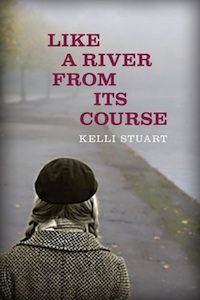
Like A River Cover - 200X300The World Needs Our Stories

by Kelli Stuart


It took me a decade to write my first novel. Really, it took longer than that, but "a decade" is such a neat and tidy way of saying it took an extremely long time. From the day I typed the very first word of my first draft, to the day the book finally landed on bookshelves, was seventeen years. More than a decade for those who are good at math. I'm equal parts proud of how long it took me to write this book, and a little embarrassed. Really, when you think of some of the most prolific writers, and their abilities to pump out great books every few years, one novel in seventeen years isn't something to brag about. I try not to dwell on that, though, because what good is comparing my journey to anyone else's, right? 

This book took time because I refused to rush the story. It is historical fiction, set in World War II Soviet Ukraine, which meant sifting through mountains of propaganda in order to find out the truth of those days. It required me speaking with over 100 former Soviet veterans, listening to their stories and feeling the emotion of what they experienced. I needed to get this story right, not only because I wanted to present the reader with a factually accurate historical fiction novel, but also because I wanted to honor the people of Ukraine, who's country was the central focus of the novel. I also got married, moved across country a few times, had four children, and worked as an editor/ghostwriter/blogger in those years. There weren't copious amounts of spare time from which to draw. In the end, however, it didn't matter because when I finally finished the book I knew it was right. I had taken my time, and I'd written a book I could be proud of. 

Had I pushed it through ten years ago, it wouldn't have been the right story. I needed to live a little, to experience life and the world in order to really tell the story as it needed to be told. There is a feeling of urgency in the writing world. We all know that there's nothing new under the sun, and that we're simply looking for new and fresh ways to tell the same old story, but still...we don't want to be left behind. It's true that some writers are prolific. Some people have a lot of words, and somehow they manage to organize all those words into book after book, story after story, and I applaud them for it! Others have, perhaps, an equal amount of words, but putting those thoughts together cohesively takes a little more time. One isn't better than the other as long as neither gives up. I wanted to give up on my book multiple times over the years. I was certain I wasn't cut out for this fiction writing thing. I tried over and over to convince myself to just walk away. Be a mom. Be a wife. Be a blogger. All those things were fine. Yes, those things are fine - they're wonderful, in fact - but I had a story, and I needed to tell it. For this reason alone, I couldn't begin another book project in all those years. I tried to put the novel aside and work on different ideas, but it was as though that one book had occupied all the brain space available, and there was no freeing up space unless I finished. 

Finishing was only half the battle, though, because after typing The End, I needed to find someone who would read it. And so began the arduous process of finding an agent, and then a publisher, and once again fighting the urge to just walk away. "Fiction is a tough sell." I heard this line over and over as I pitched my book. Apparently in my "decade" of research and writing, fiction faded into the shadow of non-fiction. According to my pile of rejection letter, the masses had spoken, and fiction was the red-headed stepchild of the literary world. Still there, but treated mostly as an annoyance. Now, had I been willing to turn Hitler into a vampire, and throw in a few zombies, I might have gotten this show on the road a little sooner (and don't think I didn't consider it). But again, the integrity of the story forced me to wait, to be patient, and to refuse to give up. Fiction may be a tough sell, but the power of story is never going away. Story is the vehicle from which all of life can be revealed. From the very beginning of time, story has been the way that we've communicated. There is great power behind story, and so we the storytellers can't give up, no matter what the popular market tells us. Putting in the time and effort to tell the right story in the right way is a daunting process. Of course we'll want to give up at times, because writing is hard. But we cannot quit telling stories. So I'll keep on writing and you will, too! Whether the book takes six months or a decade-ish, let's agree not to give up on story, okay?

Because the world needs our stories, and we need to believe that.

 Kelli Stuart is a storyteller at heart with an affinity for languages, travel, and history. She is fluent in the Russian language, and spent over a decade researching the effects of World War II on the former Soviet Union. Kelli’s first novel, Like a River From its Course, is an epic story of war, love, grief, and redemption set in World War II Soviet Ukraine. It released in June 2016. Kelli lives in Tampa, Florida with her husband and four children.
Purchase Like a River From Its Course today!

Wednesday, June 29, 2016

I Wrote Like Snoopy


I cut my authorial teeth on dialogue as a playwright. I was the creative arts director for 11 years at my church. We did everything from the 30-second sermon starter to full-length musicals. When I first wrote my first few scripts, my actors often used different words that I'd written, or they changed the sentences around, and even...gasp...dropped words.

But I liked what I heard, so I dissected the changes and found the common ground. I wrote like Snoopy, trying to be literary. Gag. The lines were too perfect and not realistic.

Have you read a book where the dialogue actually pulls you out of the story because it's so stiff and unbelievable? Or worse, it sounds like an info dump, as if the writer's saying, "You won't understand this unless I explain it to you."

Well, thank you Billy Sunday. That'll make me throw a book across the room faster than a politician can empty your wallet. Unless it’s on my e-reader; then I’d delete it before it contaminated the other e-books.

So what does make good dialogue in a book?

It has to be realistic for starters. And it has to be organic to your character. If you're an Oregonian and writing about a Southern Belle, you'd better have a Cousin Sue Ellen read your manuscript, or it may well be stereotyped. The same goes for Sue Ellen writing about a Yankee.

What if you’re writing a young adult book and don’t have any teens or twenty-somethings living at home, and you aren't sure how the characters would really talk? Go to a local mall and hang out in the food court and eavesdrop. Listen to the half sentences, colloquialisms, and especially to the way people answer questions.

One mistake new writers often make is found in the way characters answer questions.

"Good morning, Bob. Where are you headed this fine morning?"
"Good morning, John. I'm going to the hardware store to get a new float for the toilet."

First of all, we don't really care about Bob's toilet, unless his four-year-old flushed the latest Wiki-leaks state secrets. A bit more realistic might sound like this:

"Morning, Bob. Where you off to?"
"Hardware store."
"Anything I can help with?"
"I got it."
"Okay, holler if you need me."

That's how two neighboring men would have this conversation. If it were women, it still wouldn't be complete sentences, but it might go something like this:

"Morning, Sally. Going shopping?"
"Macy's is having a huge sale, and you know those new slip covers I got for the den sofa? John ruined it with cranberry juice."
"I hear you. Bob got mustard on my bedspread. Why can't they be more careful?"
"I think it's in their genes."
"Yeah, he got mustard on those, too."

Anyway, you can see how their conversation veered off the main track. We women do that. Men, not so much.

In romance, Jenny B, Jones is a master at building conflict into dialogue. A few lines from Save the Date illustrate this point well:

"Do you know anything about football?"
"You toss around a ball and throw people to the ground. What else is there to know?"
"Okay then, what's a birdcage?"
"The name of the bar where you met your last girlfriend?"
"A cut?"
"A fantasy I have involving your throat."

She never answered his questions seriously and he kept asking instead of commenting on what she said. It was brilliant dialogue for building character and a great example of verbal ping-pong.

For realistic dialogue, remember to:
Study they way dialogue is written in books you love
Listen to people engage in conversation and study their responses


Do you have any great examples of dialogue to share with us?

Tuesday, May 03, 2016

Does this word count make my book look big?

By Michael Ehret

(This post first appeared in 2012. It has been edited for wordiness. But even more could be slashed, I suspect.)

 Your manuscript is big-boned. Over the years, it has picked up a few extra words here and there. But that shouldn’t be a problem. Publishers should just accept your manuscript as it is, right? All of those skinny manuscripts are airbrushed anyway. No more manuscript-shaming!

Time to get serious, for the health of your book and your career.

Your book is likely overweight and if it doesn’t lower its word count it won’t be able to compete. Sign up for Word Watchers and get trim. Because, like Weight Watchers, Word Watchers works!

Word Watchers has developed four key principles that can help you self-edit that extra verbiage. These are borrowed from Weight Watchers directly, but adapted for writers.

Principle 1: Healthy word loss

Q. What’s healthy when it comes to word loss?

A. As trim as possible without sacrificing artistry or voice.

I think of it this way: If a word can be deleted, it gets deleted. Scour your writing for:
  • Redundancies:
    1. “Josh estimated that they’d arrive in Minneapolis by roughly 4:00 p.m. in the afternoon.” (14 words)
    2. “Josh estimated they’d arrive in Minneapolis by 4:00 p.m.” (9 words)
  • Wordiness:
    1. “Sarah knew that at her place of employment Jason was knee-deep in advance planning for the next year’s fundraising campaign.” (20 words)
    2. “Sarah knew her co-worker Jason was knee-deep in planning next year’s fundraiser.” (12 words)

Principle 2: Fits into your life

Any Word Watchers approach must be realistic, practical, and livable. You are not likely to become Ernest Hemingway straight out of the gate. But set goals that will help. Here are two simple tricks:
  • That/Very: In almost every case, these words can be eliminated.
  • Adverbs: Scorn them. “Adverbs are the tool of the lazy writer.” — Mark Twain For more on this.

Principle 3: Informed choices

At Word Watchers, writers learn not only what to do, but why. If you know why, you gain the confidence to make the right choices for your writing. Here are two websites I often visit for input:
  1. Grammar Girl: Quick and Dirty Tips
  2. Purdue University Online Writing Lab
I highly recommend American Christian Fiction Writers as a place to get grounded not only in the craft of writing, but in the career of writing as well.

Principle 4: Take a holistic view

Finally, the Word Watchers approach must be comprehensive. One of the best ways to practice tight writing is in a writer’s critique group that will, kindly and in love, kick your writing butt until you’re in shape. They’ll remind you of what you’ve learned (and of how often you’ve had to learn it). They will hold you down and sit on you until you’ve eliminated every extra word—and will expect you to do the same to them. With chocolate. 

Respond:

What's your favorite trick for trimming a bloated manuscript?

____________________________________

Michael Ehret has accepted God's invitation and is a freelance editor at WritingOnTheFineLine.com. In addition, he's worked as editor-in-chief of the ACFW Journal at American Christian Fiction Writers. He pays the bills as a marketing communications writer and sharpened his writing and editing skills as a reporter for The Indianapolis News and The Indianapolis Star.