Get a Free Ebook

Five Inspirational Truths for Authors

Try our Video Classes

Downloadable in-depth learning, with pdf slides

Find out more about My Book Therapy

We want to help you up your writing game. If you are stuck, or just want a boost, please check us out!

Showing posts with label author journey. Show all posts

Friday, May 19, 2017

Cynthia Ruchti: Up Close and Personal

Interview by Kelly Klepfer

Tell us a bit about your current project.

The book that just released is A Fragile Hope. In some ways, one might say it was a risky project. How does a woman write an emotion-packed contemporary novel with a male protagonist, a marriage in trouble—his own—and his wife’s point of view is “heard” only in mere snippets…for the whole book? And how can hope weave its way onto the pages of a novel with betrayal center stage?

Friday, February 17, 2017

A Dog, A Monk and A Judge Walk Into a Book Store

Sorry. There is no punchline. But Ron has author wisdom to share involving all three of those elements. How could I resist?  
Meet Ron Marasco ...

What things would you do differently…


I think I would have liked to begin my writing career with the understanding I now have about editors. Older writers sometimes have negative and cautionary things to say to young writers about editors. But it has been my experience that your relationship with you editor can be one of the truly rich experiences of your working life as a writer. The key is to approach it as a naturally collaborative relationship—as it is—as opposed to an adversarial relationship--which it only is if it gets off on the wrong foot!

Friday, July 15, 2016

Never Give Up - The World Needs Our Stories - Kelli Stuart

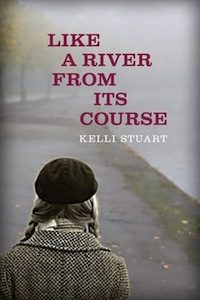
Like A River Cover - 200X300The World Needs Our Stories

by Kelli Stuart


It took me a decade to write my first novel. Really, it took longer than that, but "a decade" is such a neat and tidy way of saying it took an extremely long time. From the day I typed the very first word of my first draft, to the day the book finally landed on bookshelves, was seventeen years. More than a decade for those who are good at math. I'm equal parts proud of how long it took me to write this book, and a little embarrassed. Really, when you think of some of the most prolific writers, and their abilities to pump out great books every few years, one novel in seventeen years isn't something to brag about. I try not to dwell on that, though, because what good is comparing my journey to anyone else's, right? 

This book took time because I refused to rush the story. It is historical fiction, set in World War II Soviet Ukraine, which meant sifting through mountains of propaganda in order to find out the truth of those days. It required me speaking with over 100 former Soviet veterans, listening to their stories and feeling the emotion of what they experienced. I needed to get this story right, not only because I wanted to present the reader with a factually accurate historical fiction novel, but also because I wanted to honor the people of Ukraine, who's country was the central focus of the novel. I also got married, moved across country a few times, had four children, and worked as an editor/ghostwriter/blogger in those years. There weren't copious amounts of spare time from which to draw. In the end, however, it didn't matter because when I finally finished the book I knew it was right. I had taken my time, and I'd written a book I could be proud of. 

Had I pushed it through ten years ago, it wouldn't have been the right story. I needed to live a little, to experience life and the world in order to really tell the story as it needed to be told. There is a feeling of urgency in the writing world. We all know that there's nothing new under the sun, and that we're simply looking for new and fresh ways to tell the same old story, but still...we don't want to be left behind. It's true that some writers are prolific. Some people have a lot of words, and somehow they manage to organize all those words into book after book, story after story, and I applaud them for it! Others have, perhaps, an equal amount of words, but putting those thoughts together cohesively takes a little more time. One isn't better than the other as long as neither gives up. I wanted to give up on my book multiple times over the years. I was certain I wasn't cut out for this fiction writing thing. I tried over and over to convince myself to just walk away. Be a mom. Be a wife. Be a blogger. All those things were fine. Yes, those things are fine - they're wonderful, in fact - but I had a story, and I needed to tell it. For this reason alone, I couldn't begin another book project in all those years. I tried to put the novel aside and work on different ideas, but it was as though that one book had occupied all the brain space available, and there was no freeing up space unless I finished. 

Finishing was only half the battle, though, because after typing The End, I needed to find someone who would read it. And so began the arduous process of finding an agent, and then a publisher, and once again fighting the urge to just walk away. "Fiction is a tough sell." I heard this line over and over as I pitched my book. Apparently in my "decade" of research and writing, fiction faded into the shadow of non-fiction. According to my pile of rejection letter, the masses had spoken, and fiction was the red-headed stepchild of the literary world. Still there, but treated mostly as an annoyance. Now, had I been willing to turn Hitler into a vampire, and throw in a few zombies, I might have gotten this show on the road a little sooner (and don't think I didn't consider it). But again, the integrity of the story forced me to wait, to be patient, and to refuse to give up. Fiction may be a tough sell, but the power of story is never going away. Story is the vehicle from which all of life can be revealed. From the very beginning of time, story has been the way that we've communicated. There is great power behind story, and so we the storytellers can't give up, no matter what the popular market tells us. Putting in the time and effort to tell the right story in the right way is a daunting process. Of course we'll want to give up at times, because writing is hard. But we cannot quit telling stories. So I'll keep on writing and you will, too! Whether the book takes six months or a decade-ish, let's agree not to give up on story, okay?

Because the world needs our stories, and we need to believe that.

 Kelli Stuart is a storyteller at heart with an affinity for languages, travel, and history. She is fluent in the Russian language, and spent over a decade researching the effects of World War II on the former Soviet Union. Kelli’s first novel, Like a River From its Course, is an epic story of war, love, grief, and redemption set in World War II Soviet Ukraine. It released in June 2016. Kelli lives in Tampa, Florida with her husband and four children.
Purchase Like a River From Its Course today!

Friday, January 16, 2015

NLB Horton's Adventurous Journey


How convoluted was your path to your first published book?

Eugene Peterson described my journey well with the title of his great devotional book, A Long Obedience in the Same Direction. I wrote all my life: for every school newspaper and while owning a marketing and advertising company. I am an avid reader. When I moved to a mountaintop after retiring, I gave myself the gift of finally sitting down to write fiction.


What is one of the more unique or strange life experiences that has given you an extra oomph in your writing?


I returned to Dallas Theological Seminary for my Master of Arts in Biblical Studies, and embarked on an archaeological survey as part of my degree. I was under heavy-artillery fire from Syria, machine-gun fire out of Lebanon, and a camo- painted Israeli Defense Force bomber. I stood at the edge of a dig pit in far northern Israel with my family at my side. Archaeologist Grace Madison was born that day in late May 2009, and we’ve been inseparable ever since. 


Do you experience self-doubt regarding your work, or struggle with writers’ block or angst driven head-banging against walls?


“No” to both. And my answer has nothing whatsoever to do with pride or self-confidence, but rather rests in the knowledge that God has pre-ordained my path, and my success is in His hands. My job is to apply all my gifts to every aspect of writing and publishing. The results are His.


What gives you the greatest buzz regarding your writing career?


When a reader responds to what I like most about my work, reviews are a blast. I am overjoyed when someone picks out Grace’s tenacity; her very daily, intimate, conversational relationship with God; or her fierceness about her beliefs and family.


I also love edits, believe it or not. My first edit was so rough it looked as if the editor spilled red ink down the right column of the document. That “edit” column went on FOREVER. But edits transform my manuscripts. They come alive and mature into the powerful, funny, encouraging, entertaining stories I want them to be. I could never do this on my own and am so thankful for a wonderful team. 


Describe where you write, your rituals or creative triggers, or other quirks about your process.


Even when the children were very young, and I was homeschooling them, I had a home office. My current perch overlooks a high mountain valley, and I watch seasons change and weather roll in from my desk chair. I do not write anywhere else. 

Because my work is international suspense, though, I take notes everywhere. This fall, I traveled to confirm details for manuscript three and shoot photography and gather marketing material for The Brothers’ Keepers. I came home with 1,489 photos and a notebook full of ideas that enhance in my writing process.


My only rituals are a small pot of tea and a neatly organized desk.

What is the most difficult part of putting together a book?

I only write about places I’ve been and know well, so I sometimes omit important bits and pieces. I subconsciously assume the reader knows what I know—and that’s a mistake. Getting just enough detail to move the story along without bogging down the reader is an instinct I still lack. (This is where the editors come in.)

The process of writing, editing, and polishing is manageable, but creating the title is a nightmare. In my old career, I dreaded writing photo captions and headlines. My literary version of that task is creating titles. “Lord, spare me the titles!”


Tell us about The Brothers’ Keepers.


I’d love to! Grace Madison is in Brussels cataloging looted antiquities when her son’s bride is attacked in Switzerland. Her day careens from bad to catastrophic when daughter Maggie disappears in France. Because of recent family history (When Camels Fly), she suspects that mayhem is afoot.


She summons her family to Paris, where Maggie was last seen. Maggie’s love interests—one as all-American as a golden retriever, the other a movie-star handsome Mossad associate—join family and friends heeding Grace’s call for help. They follow Maggie’s trail, one that leads directly to an ancient relic that passed through King Solomon, the Emperor Constantine, and Reformist Martin Luther.


At the end of their four-thousand-year-old trail that crosses three continents, they discover that to save themselves, they must first rescue an old friend. If he’ll let them.


Can you tell us more about your lead character?


Espionage is an uncomfortable fit for my protagonist, Grace Madison, a middle-aged archaeologist who describes herself as “the plodding type.” Readers refer to her as Hercules in a burkha, Yenta-like, and hysterically funny. More than one has said she wants to be Grace.


Grace’s adult family is intelligent and educated, committed to God and each other, and protective of her. But because they use their God-given gifts to the extreme and have interesting careers of their own, she is thrust into life-threatening situations as she tries to save everyone she holds dear.


This woman of faith has survived two novels: When Camels Fly and The Brothers’ Keepers. I’m not letting her off the hook for at least three more.

                          
NLB Horton returned to writing fiction after an award-winning career in journalism and marketing as well as earning her Master of Arts degree in Biblical Studies from Dallas Theological Seminary. She has surveyed Israeli and Jordanian archaeological digs, tossed a tarantula from her skiff into the Amazon after training with an Incan shaman, driven uneventfully through Rome and consumed gallons of afternoon tea while traveling across five continents.

For more information about NLB Horton, visit www.nlbhorton.com, become a fan on Facebook (NLB-Horton) or follow her on Twitter (NLBHorton) or Pinterest (nlbhorton). 

Friday, June 20, 2014

Embracing Steep Learning Curves and Other Lessons from the Writing Life of Lynette Sowell


Interview by: Kelly Klepfer

Tell us a bit about your current project.


A Season of Change is an “urban Amish” romance, set in the village of Pinecraft, in the city of Sarasota, Florida. Jacob Miller is an Amish widower visiting family during Christmas time, when his daughter is seriously injured in an accident. He must stay in Pinecraft for an extended time while she recovers, and he’s face-to-face with the world in ways he never imagined. Natalie Bennett, a former circus performer, works at a circus school and volunteers at the hospital where Jacob’s daughter is. She meets the Millers and embarks on a search to find her late mother’s family. Her mother was ex-Amish and had never told Natalie. Sparks fly between Jacob and Natalie, but there’s another woman who makes sure she remains in the picture—and she’s the logical, proper, Amish choice.


Do you still experience self-doubts regarding your work, or struggle in a particular area such as writers block or angst driven head-banging against walls? Please share some helpful overcoming hints that you’ve discovered.


Yes, especially the self-doubts and the head-banging incidents. With every book, I try to learn something about the craft that I haven’t before. With every bookstore (online or otherwise) visit, however, I see book after book and wonder sometimes: are my stories in the making any real difference in the mix of things? There are thousands of written voices clamoring for readers. But I remind myself that God’s given me skills with writing and I’ve done my best to multiple what He’s given me and be faithful in that. We aren’t promised the outcome, but I believe hard work will be rewarded. Also, I’ve learned to be patient with myself. So, you writers out there be patient with yourselves, too. Sometimes we have to be thankful for the baby steps we make.


What mistakes have you made while seeking publication? Or to narrow it down further what’s something you wish you’d known earlier that might have saved you some time/frustration in the publishing business?


For several years, I held onto a book idea that never really got anywhere. Hundreds of hours of research (in neuroscience and neuropsychology, no less!) and several versions of the same proposal later, my book never went everywhere. It was a psychological thriller, and I still think the idea has merit. But when I look back and see how much time I spent on that book and the first three chapters, I shake my head now. I’d be farther along than I am now if I’d simply just: Let. The. Book. Go. So, don’t get stuck on one book and obsess over it so much you don’t get anywhere with it, like I did.


What is your favorite source for finding story ideas?


Documentaries and/or news stories. I’m a history buff and I especially like learning about lesser-known ties of the past to the present. But I always have my ears open for something I can use in a future book.


Have you ever had one of those awkward writer moments you’d like to share with us, the ones wherein you get “the look” from the normals? Example, you stand at a knife display at the sporting goods store and ask the clerk which would be the best to use to disembowel a six foot man…please do tell.


I have some wonderfully supportive friends, and I appreciate the fact that I do. There have been times, though, when someone might ask about how the writing is going, and I tell them more than they probably want to know about my characters and their issues. That’s when I notice I’m getting the look that says: “You’ve gone a bit overboard telling me about your imaginary friends.”


With the clarity of experience what advice would you offer up to the wet-behind-the-ears you if beginning this writing journey today?  


Make haste—slowly. Don’t keep putting off finishing that book, but then don’t send out a book proposal before it’s truly ready. With the “ease” of self-publishing now, I think it’s tempting for some writers to put out a book before it’s ready and then get disappointed. I’m glad self-publishing wasn’t around back when I was starting; I think I would’ve been tempted to jump into something before my work was ready. And once a book is “out there,” it’s out there.


What event/person has most changed you as a writer? How?


A little more than four years ago, I sent my resume to our local newspaper because they ran an ad saying they were looking for writers and photographers. I was hired to cover local news events, from bake sales to political debates to school board meetings. I had NO experience in news writing, although I did know about who-what-when-where-how-why of reporting. It was a steep learning curve, but in 2012 they offered me a weekly column as well. Becoming a freelance news reporter has changed the way I view my characters and story lines. And I think being a fiction writer has helped me be a better reporter.


What piece of writing have you done that you’re particularly proud of and why? (Doesn’t have to be one of your books or even published.)


Although my books are all dear to me for various reasons, I’m proud of the series of feature articles I wrote for the newspaper leading up to Veterans Day 2012. I had the opportunity to interview a number of veterans, from a retired Army command sergeant major who was in the TET Offensive in Vietnam and was the first (and last) man to buy me a drink at the local VFW (I had a Diet Coke), a 90-plus-year-old Pearl Harbor survivor, and a firecracker of a lady who served in the Women’s Army Corps.


Do you have a pet peeve having to do with this biz?


Just when you think you’ve guessed what the market’s doing, another curveball comes along. But then, it’s the nature of the biz. You can only make an educated guess and do your best work.


Share a dream or something you’d love to accomplish through your writing career.


I would love, love, love to have one of my books turned into a movie.


What gives you the greatest writer buzz, makes the trip worth the hassles (besides coffee or other substances, or course)?


When I realize that I’m getting to do something I love, and I’m getting paid to do it. I also freelance part-time for my local newspaper, so that provides a regular income. And, it’s writing also, except I get to write about real people and events.


Describe your special or favorite writing spot or send a picture if you’d like.


I like writing in my living room, with my dog at my side. My office dress code can’t be beat.


Writing rituals. Do you have to sit somewhere specific, complete a certain number of words, leave something undone to trigger creativity for the next session? Some other quirk you’d like to share?


Sometimes—no, often—I’ll write the very last scene of the book. It can be the “gravy” that keeps me going when I’m in the thick of things.


Plot, seat of pants or combination?


Combination. I’ve tried Snowflaking—highly recommend writers to check it out—but it was too outline-y for me and started to feel too much like a school “assignment.” Come to think of it, I never liked writing the outline in school. I’ve also tried pants-ing, but if I don’t know enough about where I’m going, I get lost or sidetracked, and end up wasting time. So I’ve found a happy medium for me. And I love Scrivener.


What is the most difficult part of pulling together a book? Ex. Do you have saggy middles, soggy characters, soupy plots during your first drafts…if so, how do you shape it up?


Soggy characters, at first. I’ll get the basics of a character, and that’s a nice place to start. But if I don’t find out what they really, truly want and need, I find it’s harder to get a story line going. I keep asking my characters, “Why? Why? Why?” In the last book I turned in (A Promise of Grace), I really had to coax Rochelle Keim into sharing her secrets with me. She seemed a bit passive at first, and I had to get past that to see more facets of her character.


Have you received a particularly memorable reader response or peer honor? Please share.


I love it when a reader tells me she couldn’t get to sleep or couldn’t get her housework done because she couldn’t put my book down. When I read, I want to immerse myself in the story, and I’m honored when a reader tells me she had that happen while reading one of my books.


Have you discovered any successful marketing/promo ideas that you’d share with us?


I’m a big fan of joining Facebook groups where readers hang out. They are just looking for books to buy, and some of those groups have thousands of members who would like a good read. And that’s free; it just takes time to post links and book blurbs.


Parting words? Anything you wish we would’ve asked because you’ve got the perfect answer?


Why did I write an Amish book? Well, thanks for asking! I’ve heard it said, “Put a bonnet on it, and it’ll sell.” Well, yes, and no. I chose to write this series because of its setting. There’s barely a buggy or a farm in the “Seasons in Pinecraft” series, but plenty of beach. And I love the beach. I found the village of Pinecraft a fascinating and endearing place to write about, and if I close my eyes, I can picture its streets and layout because I’ve walked and bicycled it. I’ve eaten its food, stayed in the neighborhood, and I call some of its residents my friends. I miss it. I would love for a reader who’s never picked up an Amish book because it’s an Amish book, to try this one out because it’s a bit different.


Thanks for having me!

Lynette Sowell is the award-winning novelist of more than fifteen titles. When she’s not writing fiction, Lynette works covering local news for the Copperas Cove Leader-Press, where she also writes a weekly column called My Front Porch. She enjoys reading, cooking, watching movies and is always up for a Texas road trip. Lynette was born in Massachusetts, raised on the eastern shore of Maryland, but makes her home in Copperas Cove, Texas, with her husband, along with a spoiled Texas heeler and a pair of cats who have them all well-trained.

Keep up with Lynette Sowell via her blog (lynettesowell.blogspot.com), Facebook page (Lynette Sowell, Author) or Twitter (@LynetteSowell).

Friday, March 21, 2014

Twists and Turns in the Writing Life of Billy Coffey ~ An Author Interview

by Kelly Klepfer

Tell us a bit about your current project.


The title of my newest novel is The Devil Walks in Mattingly. It’s about the death of a boy named Phillip McBride, whose body was found twenty years ago along a riverbank in a small Virginia town. His death was ruled a suicide, but three people have spent the last two decades burdened with the truth that Phillip was in fact murdered, and they are each responsible. The story traces the effects of the remorse and guilt these three people have suffered under, and what happens when that dead boy comes back for them all.


We are all about journeys...unique ones at that. How convoluted was your path to your first published book? Share some highlights or lowlights from your path to publication.  


As strange as it is to say, I became a writer through laziness and depression. I was a jock in high school. Second baseman on the varsity baseball team. Playing baseball was all I ever wanted to do. It consumed me, and when something consumes you to the point that it’s all you do and think, you’re bound to get pretty good at it. By my senior year, I was being scouted. The plan was to graduate, play baseball for the next twenty years, and retire by forty. That last sentence sounds pretty ridiculous (I was chuckling halfway through writing it), but it was true. I had a shot. A shot was all I needed.


My creative writing teacher pulled me aside one day and said that baseball or not, there was no way she was going to let me coast through my senior year. She arranged for me to write a weekly column for the local newspaper. Whatever subject I wanted, however I wanted to write about it, just so long as it wasn’t over 500 words. Busy work, for the most part, and that’s exactly how I treated it.


I tore my rotator cuff three months later. The scouts stopped coming. The doctors said I’d never play baseball again. I contemplated suicide. I was seventeen years old, and my life was over. And the worst part was that I couldn’t truly grieve over the whole thing because I had to sit down and write another stupid column for my stupid creative writing teacher. But I sat down that night and truly wrote for the first time. Honestly, deeply, wrote. About how sometimes dreams fade and sometimes they’re snatched away, and how we’re all supposed to try and pick up the pieces and move on. A week later, I received an anonymous letter from someone who wanted to thank me for what I’d said, because those words had saved her from her own suicide attempt. That’s when I decided maybe I could do more good with a pen and paper than with a glove and bat.


I’ve been writing ever since. It took twenty years to get my first book deal (some highs, LOTS of lows), and I’m getting ready to release my fourth novel with a fifth on the way.


Do you still experience self-doubts regarding your work, or struggle in a particular area such as writers block or angst driven head-banging against walls? Please share some helpful overcoming hints that you’ve discovered.


I don’t think there’s a writer alive who doesn’t secretly believe him-or-herself a talentless hack who will sooner rather than later be exposed as a complete charlatan. It’s part of the calling, I suppose. How I’ve learned to handle that angst is twofold. The first is to work and write every day. Keep getting those thousand words, keep churning out those pages. Keep yourself so busy creating something that you don’t have time for angst. The second is to come to grips with the fact that you will work and write every day and still not get it right. You will never produce a book that is perfect, you can only get as close as you can and then try once more. That’s part of the calling as well.


What is your favorite source for finding story ideas?


My fiction generally steers toward Southern gothic. I write about the poor and downtrodden and morally bereft. I write about ordinary people struggling to live their lives and find a good dose of grace. All of which is to say that to me, there is no better place to spend an afternoon as a writer doing research than the nearest Walmart.


With the clarity of experience what advice would you offer up to the wet-behind-the-ears you if beginning this writing journey today?  


I would use that dreaded word “patience.” You must be patient. The wheels of the publishing industry turn slowly, and if you stand abreast of them and scream “FASTER!” they only seem to slow more. With the advent of the Kindle single, there is no better time in history to be a writer than right now. There is also no worse time, because that manuscript you sweat and bleed into will become a book, and that book will become just one more drop in a swelling ocean. So be patient. And while you’re waiting, work. And while you’re working, visit the nearest Walmart.


What event/person has most changed you as a writer? How?

That mean, nasty creative writing teacher who refused to let me slack off during my senior year of high school. It’s still a mystery to me how she saw a talent to write under all those ripped jeans and Guns N’ Roses T-shirts, but she did. I told her early on that real men don’t sit around writing about what they feel and think. The next day, she’d placed a copy of The Old Man and the Sea on my desk. I still have that copy.


Share a dream or something you'd love to accomplish through your writing career.

Whether our dream is to write books or find a nice job in a cubicle, we all want to matter. We all want to feel like we’re needed in some way. We all want to believe that we will be remembered for something long after we’re gone from this world. I’m no different. I’d love a string of bestsellers and a nice cabin in the mountains from my writing career, but what I’d love to accomplish is to know that what I write is used by some as a mirror by which they can look upon their deeper selves.


What gives you the greatest writer buzz, makes the trip worth the hassles (besides coffee or other substances, or course)?


The second draft. The first draft of anything is such an awful thing, because what you’re doing is staring at a blank page and wondering how in the world you’re ever going to fill it up with words. The last draft is equally intimidating, because by then you know you’re almost done, and what will follow after is judgment from editors and readers alike. But that second draft? That’s all yours. That’s where you can tear apart things and build back better ones. That’s where you can make your sentences shine. That’s where the magic happens.


Writing rituals. Do you have to sit somewhere specific, complete a certain number of words, leave something undone to trigger creativity for the next session? Some other quirk you’d like to share?


I write with pen and paper until I have no choice but to commit things to keyboard and screen. It’s always cheap yellow legal pads from Staples, because you don’t mind making a mess of things on cheap yellow legal pads from Staples. But the pen has to be good—very good. I’ve used a Waterman fountain pen since high school. Aside from that, I get a chapter a day, no more or less. Sometimes that means I’m done after 500 words. Other times that means it’s 2500 words and I’m working long into the night. Either way, I hate the thought of leaving things undone. One chapter means it’s done.


Plot, seat of pants or combination?


I wish I could be one of those people who plans out every little plot twist and detail. A part of me thinks writing would be so much easier if that were the case, but it’s never been that way for me. I have outlines upon outlines of my previous novels, weeks of work, all of which went unused because I wanted my characters to do one thing and they all ended up wanting to do something else. So I just focus on that now—the characters. I get to know them, try to understand them, and I keep a rough sense of what happens at the beginning, middle, and end of the story. After that, I hand the reins over to the characters. They tend to know what to do better than I do, anyway.


Billy Coffey dreamed of being a published author ever since high school but vowed he would never be a novelist. Four novels later, God had a different plan in mind. Coffey’s novels tackle faith’s big questions against the backdrop of the rural South, where history is long and things are seldom as they seem. He aims to remain as true to reality as possible — the reality that we experience pain, loss and confusion. Coffey doesn’t want his readers to escape reality, but embrace life and live it better. He also uses his blog, “What I Learned Today,” to reflect on life’s lessons offered in small moments, people and everyday life.


Coffey’s fifth novel, Heart of the Dark Wood, is scheduled to release November 2014.
He lives with his wife and two children in Virginia’s Blue Ridge Mountains.


For more information about Billy Coffey and his books, visit his online home at www.billycoffey.com, become a fan on Facebook or follow him on Twitter.

Read a review of the devil walks in mattingly here.

Saturday, February 22, 2014

It's Never Too Late!

Patricia Bradley lives in North Mississippi and is a former abstinence educator and co-author of RISE To Your Dreams, an abstinence curriculum. But her heart is tuned to suspense. Patricia’s mini-mysteries have been published in Woman’s World, and her debut novel, Shadows of the Past, is the first of three set in Mississippi and will release February 4, 2014. She will present a workshop, Writing 50,000 words in 30 days, at the Mid-south Christian Writer’s Conference in Collierville, TN on March 8, 2014. When she’s not writing, she likes to throw mud on a wheel and see what happens.

NR: Leave a comment for Patricia and be entered in a drawing to receive her book. The winner will be announced on Novel Rocket's Facebook page tomorrow. Be sure to like us there! US residents only, please. http://www.facebook.com/pages/Novel-Rocket/129877663761335?ref=hl

I was late coming to writing; thirty-five before I even dreamed of characters, sixty-nine before my first book came out. Yep. That’s thirty-four years. Thirty-four years of writing and submitting, and in the early years getting a rejection almost by return mail.

I’ve often been asked what kept me writing all that time, and until lately I didn’t have a good answer, other than I couldn’t not write. But as I considered this post, I realized there was more to it than that. I want to share what I’ve come to realize.

One, I always believed I would be published. Where that came from, I have no idea. Other than that the first thing I ever wrote was published by Woman’s World. A mini-mystery. Then another one a few years later, and in another few years, they bought a third one. That really helped when the rejections came.

Two, I did the discipline. A lot of writers want to “have written.” They don’t actually want to sit behind a computer and write. I wrote every day. Well, not every day, but the days I couldn’t, I worked on the book in my head. When I finally could get to the typewriter (yes, I said typewriter, but at least it was electric) I was ready to write.

Then, in 1987, I bought my first computer, and taught myself to use it. It was a DOS machine, and at first, I shut it down by pushing the button. I’m afraid it took me more than once of not saving my work before I called the guy who sold me the computer—took him about an hour to walk me through the steps of shutting down the computer. Never said I was a fast learner.

Three, I learned the craft. That took a little longer. For a long time I worked in a vacuum. No craft buddies, no critique partners, no Internet, nothing but Writer’s Digest Magazine and a couple of writing books. Finally in 1998 I attended my first writing conference, the Florida Christian Writer’s Conference.

And. Learned. So. Much.

An exciting new world opened up. Since then I’ve attended many conferences from huge ones like ACFW(American Christian Fiction Writers) to smaller ones like the Southern Christian Writer’s Conference in Tuscaloosa, Alabama. This March I will be teaching a workshop at the Mid-South Christian Writer’s Conference in Collierville, Tennessee.

I urge anyone who is serious about writing to invest in their writing. Take classes, study books on writing, attend writing conferences. The conferences can be small, like the Mid-South  Conference or huge like ACFW or RWA, but make those connections. I still am friends with some of the writers I met in Florida way back in 1998. I even first met my agent there. Of course it was fourteen years before she signed me, but every time I ran into her at a conference, we talked. She started remembering me, and when I finally had a finished, polished manuscript we had a history.

Fourth, and the most important—I relied on God’s help and direction to write. He will guide your thoughts and words. I hope that if God has gifted you to write, you will use that gift, do the hard work of learning the craft and doing the actual writing and leave the rest to Him.

Shadows of the Past

Psychology professor and criminal profiler Taylor Martin prides herself on being able to solve any crime, except the one she wants most desperately to solve—the disappearance of her father twenty years ago. When she finally has a lead on his whereabouts, Taylor returns home to Logan Point, Mississippi, to investigate. But as she is stalking the truth about the past, someone is stalking her.

Nick Sinclair pens mystery novels for a living, but the biggest mystery to him is how he can ever get over the death of his wife—a tragedy he believes he could have prevented. With his estranged brother the only family he has left, Nick sets out to find him. But when he crosses paths with Taylor, all he seems to find is trouble.