
Get a Free Ebook

Five Inspirational Truths for Authors

Try our Video Classes

Downloadable in-depth learning, with pdf slides

Find out more about My Book Therapy

We want to help you up your writing game. If you are stuck, or just want a boost, please check us out!

Showing posts with label how to fiction. Show all posts

Thursday, August 18, 2016

Sharing the Wisdom ~ Six Tips I Learned From Frank Peretti ~ Carrie Stuart Parks

Six Writing Tips I Learned from Frank Peretti.
by Carrie Stuart Parks


Between 2004 to 2015, I was blessed abundantly by having the New York Times bestselling author, Frank Peretti, as my mentor. He’d never mentored a writer before, and I’d never written fiction before, so it was a learning experience for both of us. Frank, in his forward to my first book, A Cry From the Dust, wrote this:


“From then on, every few weeks, she hollered at the back door, “Knock knock?” then brought in a case full of pens, highlighters, post-it notes, her computer, and pages of manuscript - her homework, a copy for her, a copy for me.  She read aloud, I followed.   I commented, she listened and scribbled notes all over her work.  She dubbed me “Master” and herself “Grasshopper” after that old Kung Fu TV show, but we were both new at it: she’d never written fiction and I’d never taught it.  The learning was mutual.  


And I guess it worked out.

Her perseverance alone was deserving of success, but she became a writer because she knew - and I knew - she could do it.  She had the flair, the imagination, the whimsical, inventive, sometimes zany ability to go to other places in her mind and come back with the unexpected.  She was a creative explosion sure to go off somewhere; all I had to do was aim her.”

Wow, heady words of encouragement to a newby writer! So let me share some of the great writing tips from the mouth of the master himself: Frank Peretti.

  1. Slaying Dragons. Your protagonist must face the bad guy. I recently read a suspense/thriller where the protagonist was rescued from the villain. That’s a weak resolution, and I threw the book across the room. The protagonist must defeat his/her own dragons.

  2. Hero. Your protagonist must be a hero, not just someone that gets beat up. Add the first two ideas together and you’ll find the bones of a great story. The reverse: defeated protagonist who has to be rescued is an unsatisfying novel.

  3. Action. If something doesn’t move the story forward, delete it or rewrite it so it does. You can’t stop and smell the roses in a novel—you’ll lose your readers. Descriptions, backstory, setting and so on must always be propelling the novel forward.

  4. Proactive. You really want the protagonist to figure out who the villain is, not wait for the villain to reveal himself. Your protagonist needs to be proactive.

  5. Elastic mind. The first book I labored over for six plus years had originally had a murder in the third chapter. Frank said to have the murder in the first chapter. What? I had no idea how to do this. I worked and worked, finally moving the body to chapter two. Nope. Frank wanted it in chapter one, preferably on page one. Be elastic in your thinking about your story.

  6. Nothing in stone. Frank didn’t teach me this by telling, but by showing (a little writer’s humor…okay, so very little humor.) Print out your working novel on recycled paper. I remember he gave me something in writing that was printed out on the back of one of his stories. OOOoooooohhh! Aren’t his words written in stone and sacred? Nope. Anything you write can be re-written. There are other, and probably better ways to say something. This is an application of tip five-elastic thinking.


BIO

Carrie Stuart Parks is a multiple Christy finalist as well as a Carol and Inspy award-winning author. An internationally known forensic artist, she travels with her husband, Rick, across the US and Canada teaching courses in forensic art to law enforcement professionals. The author/illustrator of numerous books on drawing and painting, Carrie continues to create dramatic, award-winning watercolors from her studio in the mountains of Idaho.

Mentored by New York Times best-selling author, Frank Peretti, Carrie began writing fiction while battling stage II breast cancer. Now in remission, she continues to encourage other women struggling through the effects of cancer.

Animals have always been a large part of her life. Her parents started Skeel Kennel Great Pyrenees in 1960. Carrie inherited the kennel and continues with her beloved dogs both showing and as an AKC judge.

Book’s blurb.

Gwen Marcey takes death in stride. Until she’s faced with her own mortality.

Forensic artist Gwen Marcey is between jobs when she accepts temporary work in Pikeville, Kentucky—a small town facing big-city crime. But before Gwen can finish her first drawing of the serial rapist who is on the loose, the latest witness vanishes. Just like all the others.

Gwen suspects a connection between the rapist and the “accidental” deaths that are happening around town, but the local sheriff has little interest in her theories. When her digitally-obsessed teenage daughter joins her, Gwen turns her attention to a second assignment: going undercover in a serpent-handling church. She could get a handsome reward for uncovering illegal activity—a reward she desperately needs, as it seems her breast cancer has returned. But snakes aren’t the only ones ready to kill. Can Gwen uncover the truth—and convince anyone to believe her—before she becomes a victim herself?

In a thrilling race against time, When Death Draws Near plunges us into cold-case murders, shady politics, and a den of venomous suspects.

Thursday, July 17, 2014

For Your Consideration: Should You Co-Author? ~ Jennifer Slattery


Five Questions to Consider Before Co-Writing
by Jennifer Slattery


Why would an opinionated, bullheaded, self-isolating author initiate a collaboration project? How does that even work? Especially considering she and her partner have strong yet vastly different voices?
These are the questions I’ve been asked on numerous occasions, and I suspect ones you, yourself have contemplated if you’ve ever considered working with another author. And yet as one who’s done this not once but thrice, I can tell you, it is possible, and I believe, even beneficial. But it’s not easy. In order to avoid computer-smashing fall-out and mid-project break-downs, there are things writers must consider pre-collaboration.
Are you theologically compatible?
First and most important, do you agree doctrinally. This is perhaps the most important piece of any collaborating relationship, whether you’re writing fiction or non. Because our worldview always leaks out, and what we write speaks loudly of us and our faith. Unfortunately, many doctrinal differences aren’t readily apparent. Because of this, it’s important to discuss faith matters thoroughly, determining what issues are nonnegotiable.
Even then, unforeseen issues may arise later. This will be less likely if the collaboration grew out of a strong relationship. That’s what happened with author Eileen Rife and I, a writer I’ve worked with on two projects now, the first initiated by her, the latter by me. We’d been critique partners for some time, which allowed me to see her heart and faith. With each novel I critiqued, our relationship grew and our similarities became more apparent.
Do you share similar passions?
More than that, we appeared to share a very similar calling—revealing God’s love and truth with a broken world. Though we can enjoy light-hearted novels, neither of us feel called to write them. Rather, we prefer to write “issue-driven” fiction, fueled by our passions for the impoverished, orphan, spiritually lost, and the broken. We also share a strong belief that only Christ can heal and transform a heart.
These similarities unite us in purpose and passion and help ensure a cohesive manuscript we can both feel good about.
Are your work ethics similar?
Deuteronomy 22:10 says, “You must not plow with an ox and a donkey harnessed together” (NLT).
Both of these beasts had a place in ancient agriculture and performed their job well. United, however, they were completely incompatible, varying in strength and size. One would be continuously striving to faster and harder, held back by the smaller creature, while the donkey would be dragged along. Similarly, when a faster or more diligent writer pairs with a slower or less motivated one, there’s bound to be frustration and hurt feelings. The faster writer may feel held back, or, pushing ahead, as if they are doing the brunt of the work. Meanwhile, his slower partner could begin to feel unappreciated and insecure. Guaranteed, both will feel frustrated; maybe even frustrated enough to bail.
Can you share openly?
If you butt heads while critiquing, you’ll do so even more while collaborating. There will be times when you and your co-author feel strongly about something your partner vehemently disagrees with. You may even hate-hate-hate a portion they wrote, and they may hate yours. You’ll need to be able to hash these things out in an open yet loving way.
Can you bend?
This is an area I struggle with most as I can be insanely, jaw-clenching stubborn, especially when it comes to writing. Sometimes this is a heart issue, and God has to whack the back side of my head, reminding me to surrender the project to Him. Most often, however, my stubborn arises out of insecurities. It’s always easier to write something that originated in our brain than someone else’s.
But when I remember God’s in control of our partnership, our writing, and the finished product, it becomes easier. I remember my partner has strengths I lack, and vice versa, and that God paired us for a reason. The best results come when we maximize one another’s strengths while remaining united from brainstorm to final draft.
Collaborating isn’t for everyone, and it’s not a partnership to start lightly, but with ample prayer, relationship building, and forethought, authors can develop strong collaboration projects.
Beyond I Do:
 Marriage . . . it’s more than a happily ever after. Eternally more. Ainsley Meadow’s encounter with a woman, her child, and their abuser sparks a passion that threatens her engagement. Will seeing beyond the present unite her and her fiancé or tear them apart? Raised by a hedonist mother, who cycles through jobs and relationships like wrapping paper on Christmas morning, falls into a predictable and safe relationship with Richard, a self-absorbed socialite psychiatrist. But as her wedding nears, a battered woman and her child spark a long-forgotten dream and ignites a hidden passion. One that threatens to change everything, including her fiancé. To embrace God’s best and find true love, this security-seeking bride must follow God with reckless abandon and realize that marriage goes Beyond I Do.
***
Jennifer Slattery writes Missional Romance for New Hope Publishers, a publishing house passionate about bringing God’s healing grace and truth to the hopeless. Her debut novel, Beyond I Do, is currently available for preorder at a 26% off discount. You can find it here: http://www.amazon.com/Beyond-I-Do-Jennifer-Slattery/dp/1596694173/
Visit with Jennifer online at JenniferSlatteryLivesOutLoud.

Friday, June 21, 2013

Deanne Gist's Musical Tribute - Show Vs. Tell


Words, Words, Words. I’m So Sick of Words!
by Bestselling Author Deeanne Gist

Remember that song from My Fair Lady?

Words! Words! Words! I’m so sick of words!
I hear words all day through;
First from him, now from you!
Is that all you blighters can do?

Don’t talk of stars burning above;
If you’re in love, Show me!”

That’s the song I force myself to focus on when I’m writing. Because, honestly, if I had my druthers, I’d rather tell. It’s so much easier.

“Tell me no dreams filled with desire.
If you’re on fire, Show me!”

But when I try to “show” the reader, what’s my first instinct? To rely on clichés.

“Here we are together in the middle of the night!
Don’t talk of spring! Just hold me tight!
Anyone who has ever been in love’ll tell you that
This is no time for a chat!”

And, sadly, our readers are no different than Eliza Doolittle in this respect. They don’t want to read a story, they want to experience it. And the best way to accomplish this is by evoking emotion.

I know. Easier said than done. Still, we writers have a toolbox. And if we forage around in it, we’ll find a very powerful tool. It is the one Eliza is so adamant about: Let’s see some action!

A great example of this can be found in Jane Yolen’s, Sleeping Ugly. It’s a children’s book about a princess who is pretty on the outside and ugly on the inside. Watch how Yolen uses a show-don’t-tell technique to convey the princess’s inner qualities.

TELLING: Princess Miserella was mean.
SHOWING: Princess Miserella liked stepping on dogs. She kicked kittens. She threw pies in the cook’s face. And she never—not even once—said thank you or please.

Don’t you just love that? Showing is so much more powerful because it causes feelings within us to bubble up. That is our character’s single most important function: To cause the reader to feel.

When I read about a princess who steps on dogs and kicks kittens, it calls up feelings of hostility and outrage. It is so unheroic that I take an immediate dislike to her.

Now, let’s have a look at Plain Jane (who is plain on the outside, but pretty on the inside). In this scene, Jane has earned three wishes from the fairy godmother and Princess Miserella is none too happy about it:

“The princess stamped her foot.

‘Do that again,’ said the fairy, taking a pine wand from her pocket, ‘and I’ll turn your foot to stone.’

Miserella stamped her foot again. It turned to stone.

Plain Jane sighed. ‘My first wish is that you change her foot back.’”

After reading this, my heart immediately went awwwww. I like this girl. I like her a lot and I’m going to root for her the entire rest of the book.

I hesitate to break this down even further, but the truth is, we’re trying to get our readers to judge our characters. I know. Not exactly a friendly mission, but there it is. And neither you nor I can restrain ourselves. When we read a passage presented in the right way, we pronounce judgment on that character and, if the author is very skillful, the passage will draw a physical response from us. The whole reason we laugh, cry, tense up, swoon, bite our nails, or feel our pulse began to race is because the author has engaged us. The author has wielded her show-don’t-tell tool and evoked our emotions.

Like all rules, there needs to be a balance. If we attempt to maintain a high level of emotion all the way through the book, the reader will be too exhausted to enjoy it. So, balance the peaks with some quiet valleys. But even in a restful state, we have feelings.

“Don’t wait until wrinkles and lines
Pop out all over my brow,
Shooooooooow me now!”

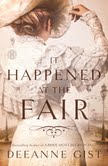
Leave a comment for your chance to win* a copy of Deeanne’s brand new release, It Happened at the Fair.


Entrants must have a valid mailing address within the continental USA.


 Deeanne Gist—known to her family, friends, and fans as Dee—has rocketed up the bestseller lists and captivated readers everywhere with her original historical and contemporary romances. A favorite among readers and reviewers alike, her popular titles include A Bride Most Begrudging, A Bride in the Bargain, and Maid to Match. Her latest book, It Happened at the Fair (releasing April 2013), is her ninth published novel.
A popular speaker, Gist’s presentations have been featured on the front page of the Wall Street Journal and in other publications. The Wall Street Journal’s accompanying online video was the most watched video on the FrontPageWSJ.com website for several days following their feature.
Gist has a background in education and journalism. Her credits include People, Parents, Parenting, Family Fun, Houston Chronicle and Orlando Sentinel. She is also the creator of I Did It!®, a parenting line of products. Gist lives in Houston, Texas with her husband of thirty years. The couple has four grown children. 

Friday, June 15, 2012

Making Fantasy Fiction Feel Real ~ Robert Liparulo


Best-selling novelist Robert Liparulo is a former journalist, with over a thousand articles and multiple writing awards to his name. His first three critically acclaimed thrillers—Comes a Horseman, Germ, and Deadfall—were optioned by Hollywood producers, as well as his Dreamhouse Kings series for young adults. Bestselling author Ted Dekker calls The 13th Tribe, released in April 2012, “a phenomenal story.” Liparulo is currently working with director Andrew Davis (The Fugitive, The Guardian) on the novel and screenplay of a political thriller. New York Times best-selling author Steve Berry calls Liparulo’s writing “Inventive, suspenseful, and highly entertaining . . . Robert Liparulo is a storyteller, pure and simple.” Liparulo lives in Colorado with his family.


Five Elements that Make Fantasy Fiction Feel Real
By Robert Liparulo

I like stories that surprise me, show me things I’ve never seen before, and get me playing make-believe like I haven’t since selling my G.I. Joes and Legos at a garage sale. Few tales are as make-believe (or as fun) as fantasy fiction—from the ones I call “light fantasy,” like alternate histories and time travel to the hard-core stuff involving space odysseys and dragons. Trouble is, I’m a skeptic, a hard sell. For a story to grab me, no matter how far-fetched it’s supposed to be, I have to see and feel things I recognize, things I relate to.
Sounds like common sense, but as a voracious reader of published fiction and a judge in umpteen writing competitions, I’m here to tell you it’s not as common as you’d think.
The idea of reality-based fantasy truly hit home when, after writing three reality-based thrillers (Comes a Horseman, Germ, and Deadfall), I decided to tackle a fantasy-adventure story for young adults and a fantasy-thriller for my latest novel, The 13th Tribe.
In the Dreamhouse Kings series, a family moves into a house that turns out to be a gateway to times past. Not only can the family go from the house to the past, people from the past can come through into their house. Someone does—and kidnaps Mom back into some unknown history. Brothers David and Xander begin going through the portals looking for Mom. We slowly learn that the Kings are in the house for a very specific purpose, and they must do much more than “simply” find their mother.
In The 13th Tribe, a group of immortal vigilantes try to earn God’s favor by killing sinners. When we meet them, they’re planning an attack on a major city and it’s up to our reluctant protagonist to stop them.
My goal was to make the stories feel as real as possible, and more: I wanted to reach even readers who don’t normally like fantasy elements in stories. I identified a few key ingredients that would help me reach this goal:
1. Characters who feel. The way to a reader’s heart is through a story’s characters. Doesn’t matter if they’re fighting dragons or stepping into the Roman Colosseum during a gladiator fight, a character has to experience fear and courage, love and heartbreak, blood, sweat and tears—all of it realistically rendered in a way the reader understands. In the Dreamhouse Kings, I decided to make the time travel parts feel real by making everything else absolutely real.
The poor King boys (ages 12 and 15) suffer so many cuts, bruises, and broken bones that a popular contest on my website involves identifying as many wounds as possible on medical body charts. They cry for their mother, and ache at the possibility of never seeing her again. They also realize how much they need and love one another, and even find time to laugh.
Look, too, at Ender Wiggin in Orson Scott Card’s brilliant Ender’s Game: That boy went through such a gamut of emotions (loneliness, anger, triumph, self-discovery) that despite the future setting on a spacecraft, even non-sci-fi fans ate it up.
2. A character who’s skeptical. Some authors have done so much research and spent so much time contemplating the fantasies of their stories that buying into the fantastic is a no-brainer for them. Their characters barely shrug at the concept of vampires or the shattering of the laws of physics.
I read a lot of fantasy, but I still want to be convinced every time. It helps when at least one character mirrors my disbelief. It tells me the author knows he or she is venturing into fantasy territory, so I trust that I won’t be left behind. As the evidence slowly convinces the skeptical character, more times than not, I’m convinced as well. In other words, the author builds a bridge between reality and fantasy—if not necessarily with rock-solid explanations, then at least with feasible theories and suppositions.
3. A learning curve in understanding the fantasy. “Hey, a watch that stops time—let’s do it!” You’ve probably seen the equivalent of this many times: the characters instantly grasp and use some crazy new item or idea. I want to see them stumble, misuse it, make mistakes, figure it out. A large part of the fun in Dreamhouse lies in the family’s near fatal mistakes as they rush to find Mom, and how their assumptions about time travel and the portals consistently lead them into more trouble. They eventually set up a “Mission Control Center” to map where the portals take them and what they can and cannot do in the past.
In Richard Matheson’s I Am Legend (my favorite book), protagonist Robert Neville is constantly learning new things about the creatures after him and the virus that turned them into vampire-like beasts. Readers get to tag along and figure out the problems and solutions with him; discovery becomes a team effort between character and reader.
4. Real surroundings and situations. Like characters who laugh and cry, hyper-realistic environments make the fantasy elements feel more real—because everything else is. When the King family finds the house, it’s dusty and run down, the banister leaves splinters in their palms, when the electricity comes on, old bulbs pop. Tolkien was a master at this, chronicling in Lord of the Rings the hobbits’ journey in almost painful detail. He gradually pulls readers in until we’re there, sore—if not hairy—feet and all. Likewise, characters should eat, sleep, go to the bathroom, whittle . . . whatever makes them real.
5. Consistency. A major Hollywood studio has an offer on the table for the film rights to The 13th Tribe, but part of the deal includes my providing a “mythology” of the immortals: What are their abilities, how can they die, how does the way they became immortal (it was a divine punishment) and their time on earth effect their current behavior? Movie people are particularly sensitive to remaining consistent to the rules of made-up conceits because audiences can spot inconsistencies easier in the condensed stories of film (and movies rarely have the time to explain how seeming inconsistencies really aren’t). It’s a lesson writers of novels would do well to learn, because readers tend to be more demanding when it comes to storytellers staying true to the rules of a made-up world.
Not every story requires equal doses of these elements. Think of them as spices: the amount authors use of each depends on the dish they’re preparing . . . and their personal tastes. But all dishes need spices, just as all stories need to feel real to readers.