
Get a Free Ebook

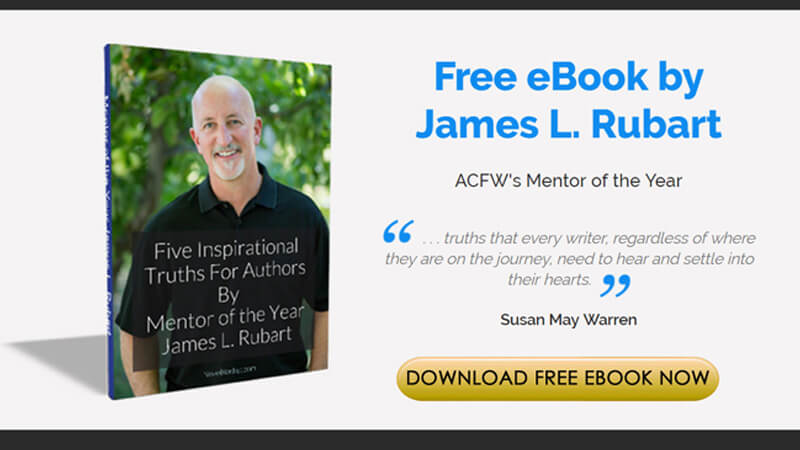
Five Inspirational Truths for Authors

Try our Video Classes

Downloadable in-depth learning, with pdf slides

Find out more about My Book Therapy

We want to help you up your writing game. If you are stuck, or just want a boost, please check us out!

Showing posts with label Robin Caroll. Show all posts

Friday, July 29, 2016

Conferences—Advancing Your Writing Career

by Robin Caroll

As a little girl, I had a dream—to be a writer. Life ensued. I went to college and graduated with a paralegal certificate, then realized I hated the legal industry. I wanted to experience life, so I went to work in the automobile industry. Stayed there, in customer service, for ten years. Let me tell you, THAT was an experience. Every now and then, I’d remember the dream and write a poem. Enter it in a contest, got a couple published. Then I got married and had my first daughter. I had such a busy life, how could I think of my dream? Until the day my little girl and I were reading, and I thought to myself, “I love reading, have always loved reading. I want to be an author, have always wanted to be an author.” I decided to do something this time. I enrolled in a Writer’s Digest fiction course. Completed it, and began work on a manuscript.

Life interrupted again. We moved—twice. I had two more little girls. But the dream didn’t die. And ten years after I completed my fiction course, I decided to do something again. I bought craft books. Joined writing groups. And learned about writing conferences. Before then, I hadn’t a clue that there were conferences you could attend to take workshops and classes to learn and study. Places you could go and be taught by nationally recognized authors. Events where you could meet with *gasp* editors and agents, face-to-face. Boy, was I hungry for that.

I attended some small, local conferences. Learned what a pitch was. Realized I was nowhere ready to pitch to an agent, much less an editor. Honed. Networking  Robin Caroll, Novel Rockettudied. Absorbed. It took me having gone to four conferences before I attended the “big” ones—ACFW National and RWA National.

At my first conferences I:
  • Met my critique partners face-to-face and our relationship changed from just writing partners to dear friends for life.
  • Met my mentor in person and realized I loved her just as much as I did on email and telephone.
  • Met my agent in person for the first time.
  • Pitched to the editor who ended up contracting my first book—the one I’d pitched to her.
  • Networked with editors who I just like hanging out with because they’re fun
  • Been blessed to have taught and encouraged other writers
  • Realized how much I NEED conferences to feed my writing spirit 
Now that I’m published and have many, many conferences under my belt, I still wouldn’t miss going to at least one or two a year. Why? Because now I can:
  • Connect with my writing friends. There’s something special about hugging a friend and praying with them in person.
  • Network with others in the industry.
  • Visit with my agent and various editors I’ve worked with.
  • Get up-to-date information on this ever-changing industry.
  • Feed my writing spirit.
  • Learn new insights as well as brush up on my skills to hone my craft. 

Want to advance your writing career? GO TO A CONFERENCE. Yes, it takes money to go. Plan ahead. Apply for scholarships. Sale the kids. (Ok, I’m kidding about that.) But the expense is worthwhile—you’re investing in your career. And for me? It’s investing in my mental stability to be around others in this crazy industry.

Born and raised in Louisiana, Robin Caroll is a southerner through and through. Her passion has always been to tell stories to entertain others. Robin's mother, bless her heart, is a genealogist who instilled in Robin the deep love of family and pride of heritage--two aspects Robin weaves into each of her 25 published novels. When she isn't writing, Robin spends time with her husband of twenty-five+ years, her three beautiful daughters and two handsome grandsons--in the South, where else? She serves the writing community by serving as Executive/Conference Director for ACFW. Her books have finaled/placed in such contests as the Carol Award, Holt Medallion, RT Reviewer's Choice Award, Bookseller's Best, and Book of the Year.

Bayou Corruption


"Don't let them get away with it, Jacks-" 


Those were the sheriff's last words. Left for dead in the middle of the road, Jackson Devereaux's good buddy had slipped into a coma. Well, Jackson wouldn't let them get away with it, once the ace newspaper reporter uncovered who they were. He'd start with the lovely Alyssa LeBlanc, the only eyewitness to the crime. Problem was, she hated Jackson-why?-as much as she hated being back in the Louisiana bayou. Unfortunately, the truth lay deep in the bayou's belly. And whether they liked it or not, Alyssa had to lead the way.

Friday, April 29, 2016

Getting Editor Revisions

by Robin Caroll

It’s the same for me every single time I turn in a manuscript. I hover at my computer, checking email every 3 minutes for a note from my editor. Doesn’t matter if it’s an editor I’ve worked with several times or a new one. Doesn’t matter if it’s a publishing house I’ve partnered for several books with or if it’s my first with them. I’m literally waiting with baited breath for editorial feedback.

And when it finally comes, I have the same sensations as I always do: excitement to see how the first person besides me feels after interacting with my characters; dread to maybe confirmation I’m a hack; and energized to make my book the best it can be.

Even after close to 30 books, I still manage to go through the same emotions…and then the same steps to deal with all of them.

Vent
When I get my edited manuscript back, I scan through it and read all the comments quickly. Then I let myself vent. Usually to my husband.

“What does she mean this phrasing is awkward?” and “The pacing isn’t off in this scene!” and “How can she not see the hero’s motivation? It’s so obvious!” are all things I have vented. Just a few of the many. And my husband, being the good man that he is, nods his head, hugs me, then takes me out to dinner. Which also helps move into the next step…

Take a Day Away From the Manuscript
Since the family and I go out to eat, it’s easy enough not to go right back to the file when I get back. I force myself to ignore the manuscript (and revision notes) for 24 hours to let my subconscious work through what I read.


When I return the next day, the comments make a lot more sense than they did the previous day. For some reason, the first read of edits usually feel like personal attacks. After that, they feel more like good insight and suggestions.

Remember We’re Partners to Make the Book the Best Possible
When it’s time to start revising, it helps me to remember that my editor and I are working together to put out the best version of my story as there can be. If I’m unsure of her comments, I ask. I’d rather be clear on what I need to do. It's my editor's job to tear apart my manuscript like the pickiest critic ever and find every nitpicking detail anyone could even think about causing a pause in the reader’s experience. It’s my job to polish until it shines. How to do that? Here are my tips:


1-Start Simple
Complete the easy stuff first. Word choices. Active vs passive. The little things the editor pointed out that I can fix in less than a minute. Once I get those done, I always feel so productive.


2-Fix Character Issues
Yes, my precious “babies” have issues I need to fix. After the simple stuff, I work on the character issues the editor has pointed out. I created these people, so I should be able to step into their skin and smooth out roughness that the editor pointed out. Which finally leads to…

3-Fix Plot Issues
Once the easy stuff is completed and then the characters are shining, I move on to the last stage: plot issues the editor has found. Sometimes that means stripping apart my timeline and rebuilding. Sometimes I need to weave in more, or sometimes cut. A lot.

When revisions are all said and done, I usually take a day to let the story “rest.” The next day, I read it through, making any final changes before saving and sending. But once it’s done and gone, I move on. Because, after all, I’ll be getting line edits soon!

I’ve learned that the harder I work on a book, the more satisfying to hold the final product in my hands. Every time I work with an editor, I learn and grow as a writer. Hopefully, my craft improves from each editor's insights. And it’s time to start on the next book, as deadlines loom!

TWEETABLES:

Torrents of Destruction
As a white water rafting guide, Katie Gallagher must battle the forces of nature on a daily basis. When sabotage becomes apparent on a weekend rafting trip, Katie must determine who she can trust—and who has their own agenda.

Hunter Malone has a mission on a business adventure trip on the Gauley River, a mission that didn’t include a spunky guide who could handle the class-five rapids better than he’d ever imagined. But can she handle the truth?


Born and raised in Louisiana, Robin Caroll is a southerner through and through. Her passion has always been to tell stories to entertain others. Robin's mother, bless her heart, is a genealogist who instilled in Robin the deep love of family and pride of heritage--two aspects Robin weaves into each of her 25 published novels. When she isn't writing, Robin spends time with her husband of twenty-five+ years, her three beautiful daughters and two handsome grandsons--in the South, where else? She serves the writing community by serving as Executive/Conference Director for ACFW. Her books have finaled/placed in such contests as the Carol Award, Holt Medallion, RT Reviewer's Choice Award, Bookseller's Best, and Book of the Year.

Friday, January 29, 2016

Putting it Aside

Born and raised in Louisiana, Robin Caroll is a southerner through and through. Her passion has always been to tell stories to entertain others. Robin's mother, bless her heart, is a genealogist who instilled in Robin the deep love of family and pride of heritage--two aspects Robin weaves into each of her 25 published novels. When she isn't writing, Robin spends time with her husband of twenty-five+ years, her three beautiful daughters and two handsome grandsons--in the South, where else? She serves the writing community by serving as Executive/Conference Director for ACFW. Her books have finaled/placed in such contests as the Carol Award, Holt Medallion, RT Reviewer's Choice Award, Bookseller's Best, and Book of the Year.

I remember the first manuscript I hacked out on a typewriter. (Showing my age, aren’t I?) It was bad, and I mean, bad. That was back in the 90s. Thank goodness I lost that manuscript in one of my moves. Yes, it was THAT BAD. The good news was (and still is) one story does not a writer make.
The next one I hacked out wasn’t AS BAD, but it was still pretty bad. And the next one—well, it was improving, at least. Again, one story does not a writer make.

Then I wrote a story I just loved. Wrote it, rewrote it, polished it until it was “ready.” Submitted it to a publisher. Imagine my surprise when I received a form rejection letter. You know the ones that are addressed to Dear Writer? And another. And another… Back then, I didn’t even realize that “unsolicited manuscript” would get that form rejection letter quicker than quick. That was early in 2000.

Between then and now, there have been many a manuscript on my computer in various stages. Some completed, some not. Some I really love, some…well, not so much anymore. But there is a story on my system that I love. It’s one that comes straight from my heart. It is ready for submission. Again, let me reiterate, I LOVE this story. My beta readers love this story. But for some reason, editors don’t. Or it’s not right for them. Or it’s too similar to something they’ve already contracted. Or . . .

Know what I’m talking about? There comes a time in every writer’s career when they have a story that means so much to them, is so personal to them, that it’s almost obsessive in the way we write, rewrite, and edit that story. When it’s finally ready to go out, we just KNOW it’s going to be snapped right up. But it doesn’t.

Each writer will come to this crossroads sometime in their career. Each writer will have to cross the hurdle, much like overcoming writer’s block. Each writer will have to make that painful decision to either independently publish, or put the story aside and move on. Yep, you heard me—put the story of our heart aside and move on to something else.

Ouch, that hurt. For me, it was several months of pouting. Kicking the couch. (Would never kick my dogs) Pouting again. Stomping around the house until the hubby and kids were cowering in closets. Depressed. Angry. Pouting.

And then I grew as a writer.

I saved the story of my heart onto a jump drive. (Ok, two different ones—I’m obsessive, what can I say?) Then I did the hardest thing: I deleted it off my desktop. My heart pounded, I felt nauseous. But I knew I had to. I didn’t break down. My heart ached only a little before I did the unthinkable—started a new story. I’d learned there’s a time to put away a story and move on to something else. One story does not a writer make.

I still miss that story of my heart sometimes. Every six or seven months, I pull out the drive and read through it. I don’t save it to my computer though. I read it, then put it away. In early 2000, I’d moved on to something else, and doing so got me published.

One story does not a writer make.

One day . . . one day it’ll be that story’s time. It’ll be its turn. And I’ll take it out, probably revise it for the millionth time, and send it out again. Who knows? It might be snapped up in a minute. Or I might publish it independently—the timing might be right for it then.

Until I decide, I’ll keep pressing forward. Keep writing what I can. Keep giving each current story all my attention. I’ll keep doing so because I want to be an author, because I DO have more than one story in my heart.

One story does not a writer make.


As a white water rafting guide, Katie Gallagher must battle the forces of nature on a daily basis. When sabotage becomes apparent on a weekend rafting trip, Katie must determine who she can trust—and who has their own agenda. Hunter Malone has a mission on a business adventure trip on the Gauley River, a mission that didn’t include a spunky guide who could handle the class-five rapids better than he’d ever imagined. But can she handle the truth?


Friday, October 30, 2015

Writing Contests—The Good, The Bad, and The Ugly

by Robin Caroll

Writing Contests—The Good, The Bad, and The Ugly

Overall, writing contests get a bad rap. Oh, when a writer finals, places, or wins, it’s all good. But if they don’t . . .

First, there’s the whole deal of score sheets. Really, on a scale of 1-5, you expect someone to put a point system to our works of art? And feedback? If the author is published, how good is the feedback if the book’s published? Can’t exactly change a character arc because the score sheet showed the hero’s journey was a bit too slow.

And judges! Who are these unnamed, faceless people? If a writer gets a good score, they’re wonderful, brilliant and insightful, of course. But a bad score? Oh, the judge didn’t “get” the story. Had to be someone unfamiliar with the genre.

But I like contests, always have. Unpublished and published. I like feedback. I like score sheets. Call me strange, but I like to know how my story interacts with the reader. A very wise person once told me that your story is just a story until a reader interacts with it. Stuck in my head. I like that—to think that readers are interacting with my story, my characters, my settings.

How to cope with bad scores? Don’t. No, I’m serious. If you get a bad score and there’s nothing useful you can use in the feedback, shut it right out of your mind. If you can’t get it out of your head, here’s a thought—praise God that particular judge didn’t feel compelled to go write a review of your book up on Amazon!

I’m blessed. I finaled and placed in some amazing contests. I’m in a group of writers who are so talented, I’m awed to be listed with them. Will I ever win? Probably not—hey, were you not paying attention? I said those who finaled with me are awesome! But it’s enough for me just to make the list. Have I NOT finaled in a contest as a published author? You bet. The Edgar Awards. Didn’t even come close. But you know what? I’m proud that I had enough guts to enter.

Contests are what they are—subjective because each reader/judge will interact with your story differently. Good, bad, or ugly, I love ’em. I just like to know that readers ARE interacting with my story. That’s enough for me.

“I love boxing. I love Hallmark movies. I love fishing. I love scrapbooking. Nope, I've never fit into the boxes people have wanted to put me in.” ~Robin Caroll is definitely a contradiction, but one that beckons you to get to know her better. Robin’s passion has always been to tell stories to entertain others and come alongside them on their faith journey—aspects Robin weaves into each of her 25 published novels. When she isn’t writing, Robin spends quality time with her husband of twenty-six years, her three beautiful daughters and two handsome grandsons, and their character-filled pets at home. Robin gives back to the writing community by serving as Executive Director/Conference Director for ACFW. Her books have finaled/placed in such contests as the Carol Award, Holt Medallion, Daphne du Maurier, RT Reviewer's Choice Award, Bookseller's Best, and Book of the Year.  

Friday, July 31, 2015

Conferences—Advancing Your #Writing Career

The best-selling author of more than twenty novels, ROBIN CAROLL writes to entertain. Her books have been recognized by the Carol Award, HOLT Medallion, Daphne du Maurier, RT Reviewer’s Choice Award, and more. She serves the writing community as the Executive/Conference Director for ACFW. Find out more about Robin at RobinCaroll.com

Conferences—Advancing Your Writing Career

As a little girl, I had a dream—to be a writer. Life ensued. I went to college and graduated with a paralegal certificate, then realized I hated the legal industry. I wanted to experience life, so I went to work in the automobile industry. Stayed there, in customer service, for ten years. Let me tell you, THAT was an experience. Every now and then, I’d remember the dream and write a poem. Enter it in a contest, got a couple published. Then I got married and had my first daughter. I had such a busy life, how could I think of my dream? Until the day my little girl and I were reading, and I thought to myself, “I love reading, have always loved reading. I want to be an author, have always wanted to be an author.” I decided to do something this time. I enrolled in a Writer’s Digest fiction course. Completed it, and began work on a manuscript.

Life interrupted again. We moved—twice. I had two more little girls. But the dream didn’t die. And ten years after I completed my fiction course, I decided to do something again. I bought craft books. Joined writing groups. And learned about writing conferences. Before then, I hadn’t a clue that there were conferences you could attend to take workshops and classes to learn and study. Places you could go and be taught by nationally recognized authors. Events where you could meet with *gasp* editors and agents, face-to-face. Boy, was I hungry for that.

I attended some small, local conferences. Learned what a pitch was. Realized I was nowhere ready to pitch to an agent, much less an editor. Honed. Studied. Absorbed. It took me having gone to four conferences before I attended the “big” ones—ACFW National and RWA National.

At my first conferences I:
  • Met my critique partners face-to-face and our relationship changed from just writing partners to dear friends for life.
  • Met my mentor in person and realized I loved her just as much as I did on email and telephone.
  • Met my agent in person for the first time.
  • Pitched to the editor who ended up contracting my first book—the one I’d pitched to her.
  • Networked with editors who I just like hanging out with because they’re fun
  • Been blessed to have taught and encouraged other writers
  • Realized how much I NEED conferences to feed my writing spirit
Now that I’m published and have many, many conferences under my belt, I still wouldn’t miss going to at least one or two a year. Why? Because now I can:
  • Connect with my writing friends. There’s something special about hugging a friend and praying with them in person.
  • Network with others in the industry.
  • Visit with my agent and various editors I’ve worked with.
  • Get up-to-date information on this ever-changing industry.
  • Feed my writing spirit.
  • Learn new insights as well as brush up on my skills to hone my craft.
Want to advance your writing career? GO TO A CONFERENCE. Yes, it takes money to go. Plan ahead. Apply for scholarships. Sale the kids. (Ok, I’m kidding about that.) But the expense is worthwhile—you’re investing in your career. And for me? It’s investing in my mental stability to be around others in this crazy industry.


As a white water rafting guide, Katie Gallagher must battle the forces of nature on a daily basis. When sabotage becomes apparent on a weekend rafting trip, Katie must determine who she can trust—and who has their own agenda.


Hunter Malone has a mission on a business adventure trip on the Gauley River, a mission that didn’t include a spunky guide who could handle the class-five rapids better than he’d ever imagined. But can she handle the truth?