Get a Free Ebook

Five Inspirational Truths for Authors

Try our Video Classes

Downloadable in-depth learning, with pdf slides

Find out more about My Book Therapy

We want to help you up your writing game. If you are stuck, or just want a boost, please check us out!

Showing posts with label Deep POV. Show all posts

Friday, June 16, 2017

How to See the Normal Through New Eyes

by Roseanna M. White, @RoseannaMWhite

Have you ever noticed how few words there are for door? Seriously. She can approach the door, listen through the wood, knock on the slab, step through the…portal? Er, not unless you’re writing certain genres. Door is something we all encounter a gazillion times a day. Something our characters encounter just as often. Something so mundane that we risk either being repetitive when we mention it, or so creative that it’s distracting.

Friday, November 18, 2016

Before You Write. . . You Must Choose a Lens


by Cynthia L Simmons
Before you began to write, you must choose which point of view, POV, you will use. That seems like an easy decision yet it’s crucial to the outcome of your work. Point of view tells who speaks to the reader, who is holding the camera. Each perspective has its strengths and weaknesses.
First person uses the pronouns ‘I, me, mine’ for singular and ‘we, us’ for plural. If you want your audience to connect emotionally, this is your best option. Joshua employed this POV when he wrote, “As for me and my house, we will serve the Lord.” Remember in order to use this POV, you’ll share only what you know rather than the thoughts of others.
The pronoun employed in second person is ‘you’, which is both singular and plural. This POV doesn’t work well for story telling because it tends to have an authoritarian tone. Think about the Ten Commandments: “You shall not murder”.  Recipes use this POV because the author tells what to do: mix the eggs and butter well. You’ll also see it in letters, greeting cards, and poetry and song lyrics: “You are my sunshine…”
Third person uses the pronouns ‘he, she, it, they, we, and us’.  This POV offers many possibilities, but let’s start with omniscient. The narrator in Omniscient POV knows the thoughts and actions of everyone in the room. This POV has drawbacks. First, your audience doesn’t connect to the emotions as quickly. Second, readers can be confused as the narrator jumps in and out of character’s inner thoughts. Writers like Agatha Christie and Dorothy Sayers used omniscient POV. Here’s an excerpt from The Body in the Library by Christie. “In her sleep, Mrs. Bantry frowned. Something disturbing was penetrating through the dream state.” If one is sleeping, they aren’t conscious of their own thoughts, so the narrator reveals information Mrs. Bantry wouldn’t be aware of until later.
Another form of third person is limited POV, and many authors prefer this one. The POV character can only reveal what he sees and knows. Think about the story of Moses. He found an Egyptian beating a fellow Israelite. After looking around to make sure no one saw him, he killed the Egyptian and hid the body. Later, however, when he stopped two Israelites from fighting, they knew both knew about the Egyptian. Moses had limited knowledge. He thought no one saw, but he was wrong.
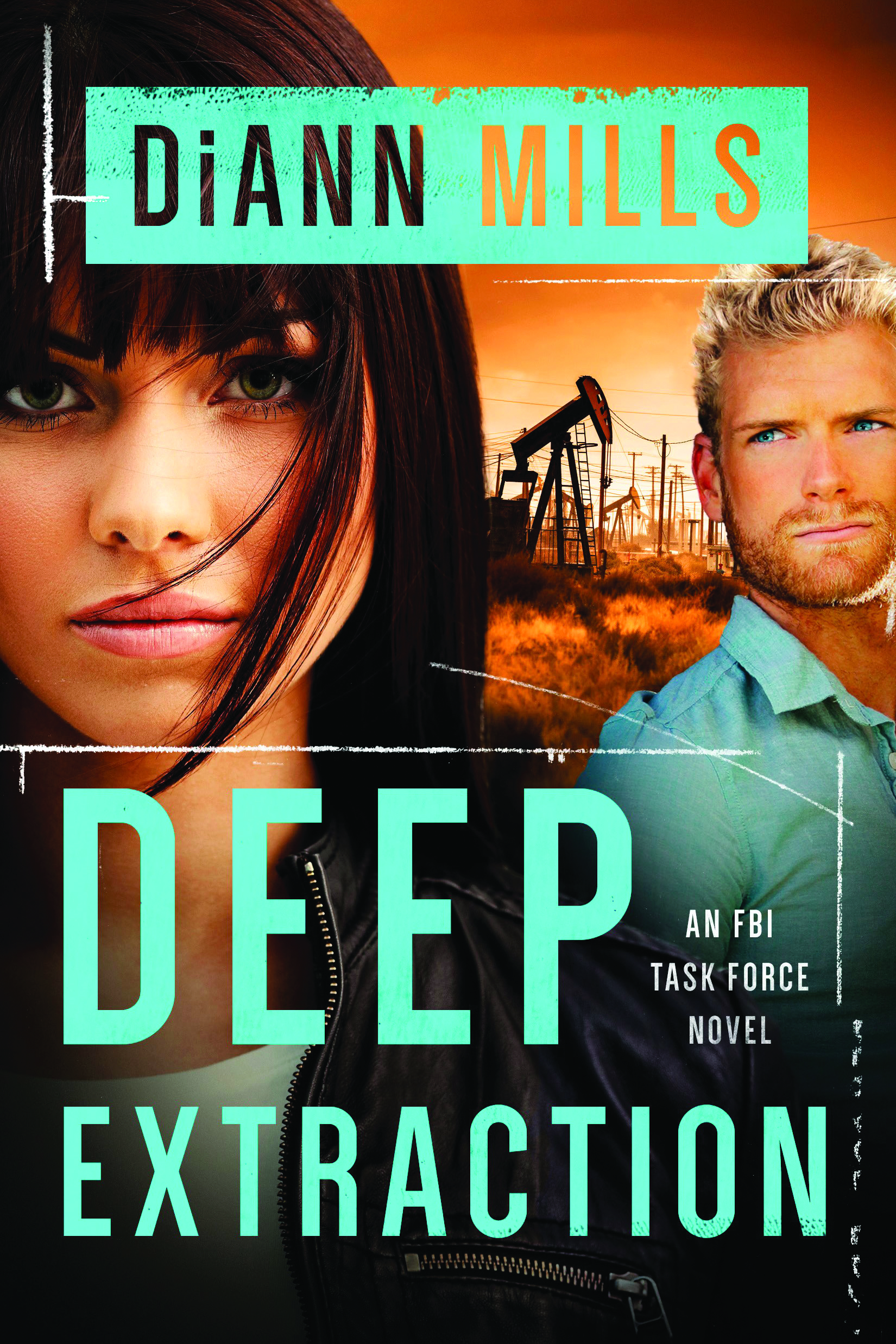
Deep POV is another type of third person, and many Christian writers put this POV into action for their novels. This POV can be tricky. The author must sink into the POV character revealing thoughts and emotions. Readers tend to enjoy this POV because they feel dropped into the story even sensing emotions the POV character experiences. To utilize this POV, apply third person pronouns while writing as if you are in first person. Avoid words like ‘saw’ and ‘felt’ so you can describe gut reactions. DiAnn Mills wrote deep POV in this sample from her novel, Breach of Trust: “Paige’s pulse raced into high gear as her foot pressed the accelerator. If the guy thought he’d succeed in making her nervous, he’d better think again. She changed lanes again while watching him in the mirror.” Notice Paige assumed what her pursuer intended, but she didn’t know. You see her heart beat faster in response to what she believed.
In summary, authors have several POVs to choose from. Those who want to write novels can choose first person, third person omniscient, limited, or deep POV. For instructional material, letters or poetry, authors will get the best results from second person. Perfecting your POV polishes your work and makes your readers want more.

TWEETABLE

Before You Write. . . You Must Choose a Lens by Cynthia L. Simmons (Click to Tweet)

Bio:
Cynthia L Simmons and her husband, Ray, have five children and reside in Atlanta. She has taught for over thirty years as a homeschool mother and Bible teacher. She’s a columnist for Leading Hearts Magazine and she directs Atlanta Christian Writing Conference. Cyndi has a heart for encouraging women in today’s crazy, upside-down world. She loves history and peppers her speaking and teaching with fascinating vignettes from the past. Her first book, Struggles and Triumphs, was nominated for 2008 Georgia Author of the Year. She co-founded Homeschool Answers and hosts Heart of the Matter Radio. Visit her at www.clsimmons.com.
Book Blurb:
With his father dead and his business partner incapacitated, Peter Chandler inherits the leadership of a bank in economic crisis. With only a newly minted college degree and little experience, Peter joins his partner's daughter, Mary Beth Roper, in a struggle to keep C&R Bank afloat while the Civil War rages around Chattanooga. Political pressure for unsecured loans of gold to the government stirs up trouble as tempers and prices rise. Their problems multiply when Mary Beth discovers counterfeit money with Peter's forged signature. Can they find the forger before the bank fails? The two friends must pursue gold on behalf of their business, as they learn to pursue their heavenly Father to find hope and peace.


Friday, October 21, 2016

Going Deeper

by Carol J. Post


Before I was published, I used to enter a lot of contests. One of the first contests I entered, a judge said I needed to learn to write in deep point of view. I had never heard of it and had to look it up. I have to say, that is some of the best writing advice I have ever gotten.


Writing in deep point of view is not for the lazy. Not only is the concept difficult to master, scenes written in deep point of view also take longer to write, often requiring more words. But the result is well worth the extra effort. Deep point of view lets the reader experience the story through the eyes of the POV character. It adds sparkle to that character’s voice and gives the writing emotional punch.


The first step in deepening point of view is to fully know your characters. What do they want more than anything? What do they feel strongly about? What are their goals, motivations and conflicts? What about quirks, things that make them unique and memorable? Don’t just write about the character; become the character. (Click to Tweet)


Here are some tips for deepening point of view:


  1. Eliminate “telling” words and phrases. These are words like thought, felt, saw, heard, wondered, decided, realized, and phrases like was sure and was determined. All of these words and phrases distance the reader from the POV character, because the author is intruding on the story, telling what the character is experiencing. Instead of “He heard a gunshot,” try “A shot rang through the air.” Instead of “She felt sick,” try “Nausea churned in her gut.” Instead of “She was determined not to fall for him again,” try “No way was she going to fall for that dark charm again.”


  1. Try to describe emotions rather than naming them. This isn’t to say that you will never name an emotion, but showing the character feeling and acting is much more powerful. Abstract words don’t evoke emotion. When describing an emotion, consider its physical effects on the body, the actions and behaviors of someone experiencing it, and thoughts in keeping with that particular emotion.


In Out for Justice, the heroine, a homicide detective discovers that the latest victim of a serial killer is her cousin. Telling her reaction using a shallow point of view, we would say, “Lexi was shocked and horrified.” In deep point of view, the reader instead experiences those emotions with Lexi:


No.
Lexi shook her head. The ground seemed to tilt beneath her and she took a stumbling step backward to steady herself. A scream of protest clawed its way up her throat, followed by a wave of nausea that almost brought her to her knees.
Alan’s words finally penetrated her befuddled brain, several seconds too late.
“Lexi, it's Kayla.”


  1. Try to eliminate dialogue tags as much as possible. By their very nature, dialogue tags (he said, she whispered, etc.) are “telling.” Action and emotion beats show the reader not only who is speaking but also what that character is thinking, feeling and doing. Instead of “talking heads,” we have real flesh-and-blood characters. In the following snippet of conversation from Trust My Heart, the action and emotion beats give the reader insight into the characters that simple tags wouldn’t.


She picked up her coffee cup and washed the Danish down with a loud slurp. “So you’re single? No wife? No girlfriend?”
He cocked a brow at the intrusion into his privacy. But something told him this fiery-haired Bernie wasn’t much for convention.
“I’m not married.” He’d made that mistake once. Two years and a quarter of a million dollars later, he was once again single.
“Don’t worry, you’re still young.” She gave his hand a couple of pats. “You’ve got plenty of time.”
He stifled a snort. Thirty wasn’t exactly young. And if single was an ailment, he wasn’t looking for a cure.


  1. Incorporate sensory details. Showing what a character is seeing, hearing, smelling, tasting and feeling is one of the most effective ways to immerse a reader into a scene. Choose two or three vivid details, but make sure they are things the character would reasonably notice at that time. Here is the beginning of a scene from Hidden Identity that incorporates the senses of sight and hearing.


Time moved at a snail’s pace.
Meagan sighed and dropped her gaze from the clock on the wall to the book of poetry lying open in her lap. Voices buzzed around her, and across the room, a mother tried to quiet a crying baby.


A half page later, the hero appears, and we have the senses of smell, sound and touch.


A familiar scent wafted toward her, the faintest hint of evergreen, tipped with spice. Her thoughts tumbled over one another.
“Mind if I interrupt your reading?” The voice close to her ear was liquid smooth, sending goose bumps cascading over her.


For more information on this topic, Kathrese McKee, author and editor, offers a great resource. She has written an amazing booklet titled Mastering Deep POV, which takes a passage, sentence by sentence, and transforms it from shallow to deep point of view. She offers the booklet free to all her newsletter subscribers. You can find her at http://www.wordmarkeredits.com/.


Now go back through your current work in progress and see how deep you can go. Reach into the heart of your character and tap into all that emotion. And step out of the way. Your reader will remember your story and characters long after THE END.

TWEETABLES

Going Deep: Elicit Greater Emotion Through DEEP POV by Carol J. Post (Click to Tweet)

Don’t just write about the character; become the character.~ Carol J. Post (Click to Tweet)


From medical secretary to court reporter to property manager to owner of a special events decorating company, Carol J. Post’s resume reads as if she doesn’t know what she wants to be when she grows up. But one thing that has remained constant through the years is her love for writing. She currently pens fun and fast-paced inspirational romance and romantic suspense stories. Her books have been nominated for a RITA® award and an RT Reviewers’ Choice Best Book Award.


Carol lives in sunshiny Central Florida with her husband, who is her own real-life hero, and writes her stories under the shade of the huge oaks in her yard. Besides writing, she works alongside her music minister husband singing and playing the piano. She enjoys sailing, hiking, camping—almost anything outdoors. Her two grown daughters and grandkids live too far away for her liking, so she now pours all that nurturing into taking care of a fat and sassy black cat and a highly spoiled dachshund.


Connect with Carol at her website, www.caroljpost.com, Facebook (www.facebook.com/caroljpost.author), or Twitter (www.twitter.com/caroljpost). For regular updates, sign up for Carol’s newsletter (http://bit.ly/2dKK9CE)


Book Blurb:
Grant McAllister arrives in Murphy, North Carolina, with one aim: to sell his inherited property and leave as quickly as possible. The big-city lawyer has no interest in his late, estranged grandparents or the dilapidated mansion he just acquired. After his high-profile divorce, he should be avoiding perky reporters, too. But Jami Carlisle is honest, funny, and undeniably appealing.
After breaking up with her safe-but-smothering boyfriend, Jami is determined to ace her first big assignment. A story about the McAllister estate is too intriguing to ignore—much like its handsome, commitment-phobic heir. Thanks to her digging, the pieces of Grant’s fraught family history are gradually fitting into place, but also upending all his old beliefs.
The two draw closer as they share their dreams, until misread signals and misunderstandings begin to test their trust. But in the unspoiled beauty of the Smoky Mountains, there’s healing and forgiveness to be found. And for Grant, this unplanned detour may be just what’s needed to finally guide him home…

Thursday, May 19, 2016

The Magic Paragraph


One of my favorite writing tips came from the late Ron Benrey. He taught it to me about ten years ago. He called it The Magic Paragraph. It and much more are in his book The Complete Idiot’s Guide to Writing Christian Fiction.

When Ron left us to enter heaven and teach them all how to write, his wife, Janet, gave me permission to pick up the mantle on his Magic Paragraph and pass it on. This little gadget has worked well for me.

The Magic Paragraph:
  • Signal which head to enter.
  • Record an appropriate sense, emotion or mental faculty
  • Show appropriate action or response
  • Repeat if necessary 

Breaking that down, the first one is fairly self explanatory. Begin by letting the reader know whose POV.
        
Jane plopped her backside down on the curb.

We know we’re in Jane’s head. You don’t have to start with the name, but give it fairly soon, so the reader knows who it is. In the book I’m writing now, I start it this way:

The morning fog was about as thick as the pea soup Great-aunt Lola used to make. Claire hated that soup then and she didn’t much like this fog now.

I give you Claire’s name in the second sentence. And you wouldn’t confuse the POV character with Great-aunt Lola, because she wouldn’t think of herself that way.

In those same two opening sentences, I have both the first and second bullets in the magic paragraph.

I signaled whose head to enter and then I recorded an appropriate sense, emotion or mental faculty for the character. Here’s another one to follow Jane’s opening line.

Her spirit was so low she could probably dangle her feet and not touch the water trickling in the gutter.

Next is to show an appropriate action.
For Claire it’s: She swished her hand back and forth in an impotent attempt to dispel it. 
For Jane: She pulled a crumpled tissue from her pocket and blew her nose, wishing she could blow away her problems as easily.

The last item is Repeat if necessary. You need to keep the reader grounded in your POV character’s head. This little gadget, the Magic Paragraph, isn’t a formula per se. It’s a guide to showing what’s in your character’s head. Take your reader on the journey, making them privy to your POV character’s innermost thoughts.

Jane plopped her backside down on the curb. Her spirit was so low she could probably dangle her feet and not touch the water trickling in the gutter. She pulled a crumpled tissue from her pocket and blew her nose, wishing she could blow away her problems as easily.

So there you have it, The Magic Paragraph. Use it to help keep your story and your reader grounded in your character’s POV.

Home to Chapel Springs, (available now)

A homeless author, a heartbroken daughter, and a theatre ghost. There’s trouble in Chapel Springs.

There’s always someone new in Chapel Spring, either coming home or stirring up trouble.

Bestselling author Carin Jardine’s latest book is a flop. While the reviewers are happily skewering her, her racecar-driver-husband walks out on her and she’s evicted, because he hasn’t paid the lease on their condo for the last three months. Then she discovers he also he drained their bank accounts. Homeless and broke, she and her little boy have no choice but to retreat to the house she inherited from her nana in Chapel Springs—the house that’s been gutted. Then, a stranger knocks on her door. One that will change the course of her life.

After the residents thwarted Howie Newlander’s plans for a Miami-style resort on Chapel Lake, he’s running for mayor and spreading rumors about diverted water and misused taxes. The Lakeside Players want to remodel the town’s old theater, but it’s rumored to be haunted. When Newlander and Mayor Riley go head-to-head, Claire gets caught in the middle.

Claire’s youngest daughter is in love with a young man whose daddy is none other than Mayor Felix Riley…the man who man who blames Claire for every wrong in Chapel Springs. Having him part of her family isn’t in Claire’s plan. The years of her heartache should warn her daughter off this boy. So far, her daughter’s heart isn’t hearing the warnings.

With hearts pulled in all directions, will they find a home in Chapel Springs?

TWEETABLES:


While a floppy straw hat is her favorite, novelist Ane Mulligan has worn many including pro-family lobbyist, drama director, playwright, humor columnist, and novelist. She firmly believes coffee and chocolate are two of the four major food groups. Ane writes her Southern-fried fiction in Sugar Hill, GA, where she resides with her artist husband, chef son, and a dog of Biblical proportion. You can find Ane on her Southern-fried Fiction website, her Amazon author page, Google+, Facebook, Goodreads, Twitter, and Pinterest. 

Thursday, February 19, 2015

Deep POV~ What Is It?


Recently, I saw someone explaining showing as deep POV, which it isn't. The example was:

She saw a truck drive by the house.
Deep POV is: a truck drove past the house.

That's not deep POV. That's the difference between showing and telling.

Deep POV is writing from inside the character's head, making the reader privy to his or her thoughts. What it isn't, or in my mind shouldn't be is long internal monologues. I prefer action, which is probably why I'm not a fan of literary fiction.

Now before y'all tar and feather me, let me say I love parts of literary fiction. I love a literary turn of a phrase and will read some to study it. But I don't read literary for pleasure.

Back to the action. Pulling an excerpt from my sophomore novel, Chapel Springs Survival, my main character, Claire, and her husband, Joel, have just found out her nineteen year old son, Wes, has married a 21st Century mail order bride...from Brazil. One who is eight years older than he. This is the exchange.

Joel squatted next to her. "Are you okay?"
She'd never be okay. Not now. Wes dropped to his knees in front of her.
"Mom, I'm sorry. I ... I don't know what to say. I didn't want to tell you until Costy was here and you got to meet her."

Costy? Claire groaned. She didn't want to meet her. What kind of name was that anyway? Costly was probably more like it. "Does this girl even speak English?"

"Uh-uh, not yet."
Her son married someone he couldn't even talk to?

You've been privy to Claire's thoughts without me using "she thought" or "she wondered." Those tags take the scene out of deep POV, while still remaining in the character's POV. 

That said, sometimes, I use thought or wondered. When? When it sounds better. As with all elements of fiction, there are times to employ them and times to hire a temp and change it up.

So, how do you feel about deep POV? I know some people hate it and some love it. What about you?


While a large, floppy straw hat is her favorite, Ane Mulligan has worn many: hairdresser, legislative affairs director (that's a fancy name for a lobbyist), drama director, playwright, humor columnist, and novelist - all providing a plethora of fodder for her Southern-fried fiction. She firmly believes coffee and chocolate are two of the four major food groups. Ane resides in Suwanee, GA, with her artist husband, her chef son, and two dogs of Biblical proportion. You can find Ane on her Southern-fried Fiction website, Google+, Facebook, Goodreads, Twitter, and Pinterest.