
Get a Free Ebook

Five Inspirational Truths for Authors

Try our Video Classes

Downloadable in-depth learning, with pdf slides

Find out more about My Book Therapy

We want to help you up your writing game. If you are stuck, or just want a boost, please check us out!

Showing posts with label Christian Writers Guild. Show all posts

Thursday, April 05, 2012

Take No Shortcuts!

If you want to be an overnight success, go read another blog.

No, I’m serious. Novel Rocket is about putting in the work, making the connections, learning the craft, writing and then revising, revising, revising.

But, if you have the passion, commitment, and determination—and a chunk of time to invest—there is help out there.

As the editor-in-chief of the Jerry B. Jenkins Christian Writers Guild, obviously I’m most familiar with the ways we help aspiring novelists. We have fantastic courses—so why be shy?

Top-shelf instruction

For instance, our Craftsman course is our most advanced and demanding—but with good reason. In 2009, Craftsman graduate Henry McLaughlin won our Operation First Novel contest with Journey to Riverbend (Tyndale), the book he prepared for his class assignments.

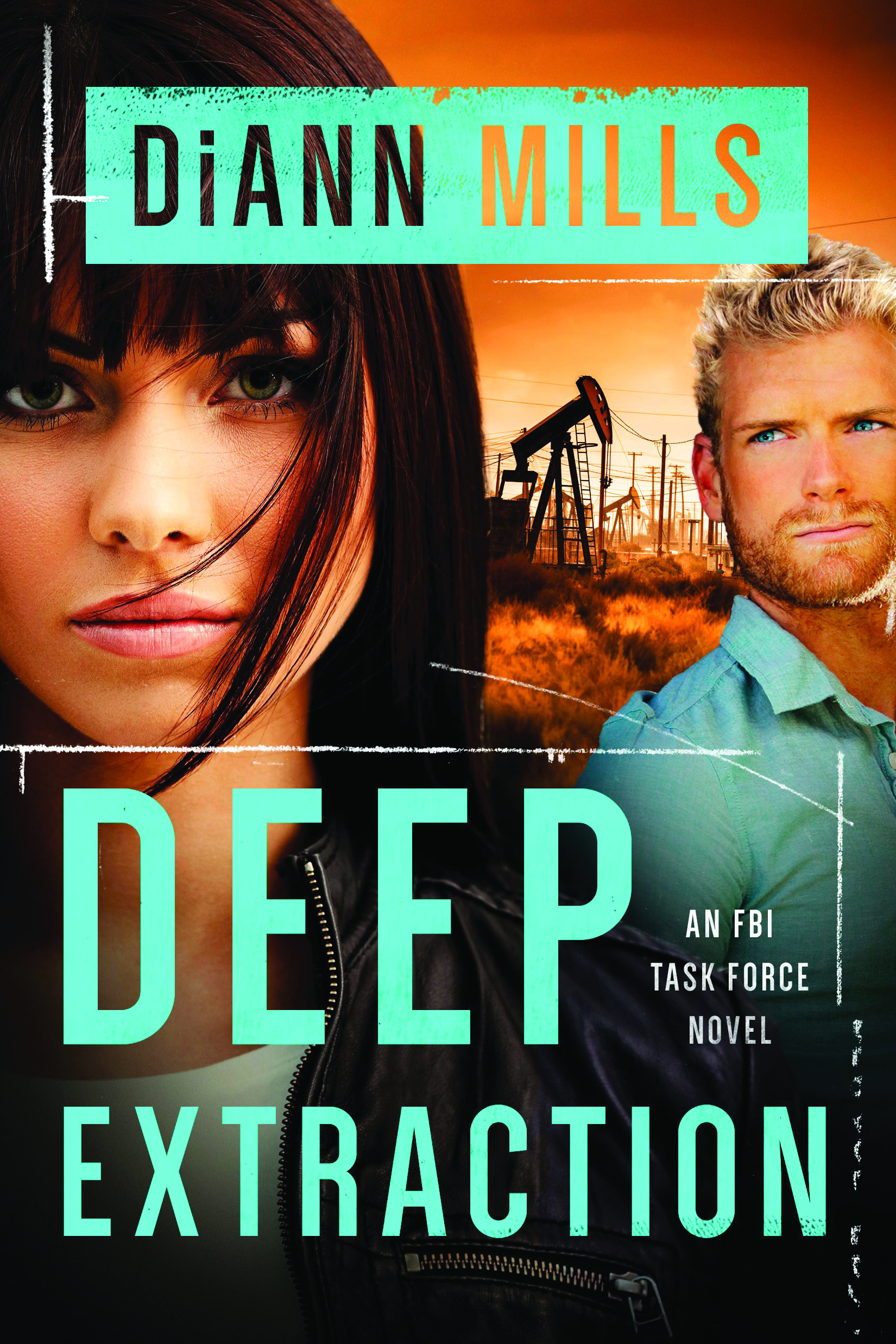
In the Craftsman course, students receive exclusive instruction, encouragement, and support from multiple Christy Award winning author DiAnn Mills as their mentor, but also enjoy face-to-face instruction with Jerry B. Jenkins and other experts like Brandilyn Collins, Steven James, Angela Hunt, James Scott Bell, and Dr. Dennis E. Hensley at an exclusive 4-day residency in Colorado Springs CO.

What students say
“The Craftsman course gave me what I was looking for—structure, technique, and organization for writing my first novel. I will take my idea all the way!” – Dennis Ricci

“It improved my confidence level and writing ability more than I expected. I started the course as someone who writes. I left a writer.” – Marsha Tallman

“By far the best course I’ve taken on novel writing.” – Florence Larson

“The residency prepared me for publication.” – Ella Sadler

Is it for you?
A new Craftsman class starts May 1. I’ll admit right here, it’s not for everyone. But if you are a good fit, it can be a difference maker. Get more information.

There are other options. Just Google novel writing course and stand back as the torrent of information floods over you. With Craftsman you’ll receive instruction and support from Christian authors at the top of their game.

Not ready for Craftsman? Look here.


Michael Ehret loves to play with words and as editor of the ACFW Journal, he is enjoying a new playground. He also plays with words as the editor-in-chief of the Jerry B. Jenkins Christian Writers Guild and as a contributor here on Novel Rocket. He has edited several nonfiction books, played with words as a corporate communicator, and reported for The Indianapolis Star.

Thursday, March 22, 2012

Writing Conference Connections

When you help organize a writing conference, you sometimes wonder whether the conference connected with those who attended—whether they picked up on the vibe you were trying to create, or not.

Occasionally you receive feedback from a conferee—or you observe a moment during conference—that eases your mind and makes you know the effort was worth it.

With the Writing for the Soul conference, one of the things we strive to create each year is a sense of community among those who attend. So, it was a joy to see that lived out—particularly between the finalists in our Operation First Novel contest.

Group dynamics
In January, we notified the five finalists—Kimberley Gardner Graham, Jim Hamlett, Clarice James, Peter Leavell, and Terrie Todd—that one of them would see his or her book published by Worthy Publishing, our co-sponsor in the contest, and receive $20,000.

What happened next was special.

The finalists formed a support group for each other and I was lucky enough to be included in their email group (which is still going strong, by the way). Some of what they shared was pure silliness (limericks, anyone?), but they also went deeper. They began to pray for each other—and for the conference.

Leavell (right), the eventual winner, said it best: “One prayer surfaced, ‘Please, Lord, let the book the world needs win. Not our wills, but Yours.’ We all rallied around that thought. Of course we each wanted to win, but God was more important.”

Singing solo
But that was just one group of five who clicked, right? Not so fast. Another conferee, Cecilia Accetta, submitted a blog post for the Guild’s blog (read her full post). In it, she wrote about the welcome from Jerry B. Jenkins that was included in our conference notebook: “Welcome to the 2012 Writing for the Soul Conference! It’s good to have you here.”

After sharing some conference highlights, Accetta (right) concluded her blog: “By far, the best thing was knowing that everyone there gets you. I felt at home—like I was sitting at a dining table with friends. Jerry Jenkins may have said in his letter that it was good to have me there, but the truth is it was good for me to be there.”

What about you?
That’s good to hear as a conference organizer. Heck, that’s good to hear as a writer/editor and as a person involved in the publishing industry.

And it makes me eagerly anticipate (yes, already!) our 2013 Writing for the Soul conference—so I can enjoy the stories that come out of it. Maybe I’ll see you there?


Michael Ehret loves to play with words and as editor of the ACFW Journal, he is enjoying a new playground. He also plays with words as the editor-in-chief of the Jerry B. Jenkins Christian Writers Guild and as a contributor here on Novel Rocket. He has edited several nonfiction books, played with words as a corporate communicator, and reported for The Indianapolis Star.

Monday, March 19, 2012

Losing Control

Deborah Raney dreamed of writing a book since the summer she read Laura Ingalls Wilder's Little House books and discovered that a Kansas farm girl could, indeed, grow up to be a writer. After a happy twenty-year detour as a stay-at-home mom, Deb penned her first novel, A Vow to Cherish, which won a Silver Angel Award and inspired the acclaimed World Wide Pictures film of the same title. Since then, her books have won the RITA Award, HOLT Medallion, ACFW Carol Award, National Readers' Choice Award, as well as twice being finalists for the Christy Award.  She and her husband, Ken, have four children and four precious grandchildren who all live much too far away. Visit Deb at www.deborahraney.com. 


On a writers' loop I'm on, the discussion of authors' rights came up––how much of our story we retain control over, and how much we must give up. This was my response:

There are SO many places along the road to being traditionally published, and/or having your novel optioned for film, that you DO lose control over your property. It was one of the biggest surprises to me after I sold my first novel. (This is long and full of parenthetical asides––sorry!––but if you don't read the whole thing, please at least read the last few paragraphs to see why I'm NOT complaining!)
I signed my first contract in 1994 and I agented myself for the first 9 years. That was back in the day when the secular market had closed to unagented authors, but the CBA was still allowing writers to submit over the transom.

My acquisitions editor told me they loved my book and wanted to publish it. I assumed that meant somebody would fix my typos, punctuation and grammar, the book would go to press a couple weeks later, and I'd be holding my (NYT bestselling, Pulitzer prize-winning HA!) published novel in my hands a week or two after that. Ha! The first thing I received after signing the contract was a 12-page editorial letter––the substantive edit––with dozens of suggestions for changing the plot, deepening the characters, and CUTTING some of my favorite passages in the novel. I've now written for Bethany House, WaterBrook Press/Random House, Barbour, Steeple Hill/Harlequin, Howard/Simon & Schuster, Abingdon Press (non-fiction) and have contributed to anthologies, thus worked on a smaller scale with Tyndale House, Multnomah, David C. Cook (then RiverOak), and others, and I can tell you that 12-page letter was one of the shorter ones. ; }

One of the main plot changes the publisher wanted me to make completely derailed the theme of my book! I argued hard for that one, and won. Because I was brand new and didn't want to rock the boat, I deferred to my editors on most other issues. (Eighteen years later, I'd say I still take 85-90 percent of my editors' suggestions because I TRUST them! They know their stuff!! But I'm also much braver to argue hard for a point I disagree on.)

Anyway, after extensive rewriting (mostly to fix all my head-hopping POV issues and to change many, many telling passages to SHOWING) my book went back to my editor for line edit (more changes), back again for copy edit (during which we found at least one HUGE timeline/continuity issue that we'd ALL missed in the early edits!) then back to me in galley form for one final read. And FINALLY, 15 months after I sold the book, it started showing up in bookstores.

Somewhere in the midst of all those edits, I learned that my publisher rarely uses the author's title. They promised me they wouldn't use a title I hated, but they didn't plan to use the one I'd submitted. We settled on something I didn't hate, but didn't love it either––A Time to Cherish. A few weeks later my niece informed me that Robin Jones Gunn had a YA book out with that same title. I didn't want people going into bookstores asking for my title and being sold the far-more-popular-far-more-well-known (and very lovely and delightful, but I didn't know that yet!) Robin Jones Gunn's book! So we changed the title to A Vow to Cherish, which I still didn't hate, but loved a lot less than the first one.

My publisher chose a cover that wasn't what I'd imagined at all, but that I liked just fine. Mostly. And at least my name was on the cover.

A few months later, I learned that my novel had been optioned for film. And shortly after that, I got the contract, which signed over ALL control of my story to World Wide Pictures. But it was Billy Graham's film company, so I trusted that even if they changed everything, I would at least be happy with the message of the film. I was sent the script to read when it was finished but it wasn't for approval, it was just a courtesy. And believe me, they changed almost everything they could change about my novel. (And it had changed even more dramatically by the time my husband and I got to watch the premiere in Hollywood the following July.)

Still, I don't believe there's one thing about the above scenario that I would change if given the chance to do it all over again. I had SO much to learn about writing and about the publishing industry. Working with my editors who changed so much of my story was like getting a degree in fiction writing. And I have no doubt that my first book would have been my last, had I not been coachable and taken that direction from my wonderful editors. (That's still true today, with 20+ novels under my belt!) 
I'm apparently getting better at titles because I've gotten to use my own on my last 10 or 12 books. I've gotten some great covers and some not so great ones, and I get varying degrees of input depending on the publisher, but again, I'm learning to trust publishers who've been in the business for far, far longer than I have.

About that movie? If I'd put my foot down and said, "I won't sign unless you give me story approval, etc." I have no doubt the contract would have gone to someone else. And that movie launched my career.

My first contract with that traditional publisher (for 2 books) paid an advance that fully covered 4 years of room/board/tuition for our oldest son's college. (The REASON I started writing in the first place! And the reason, with 4 kids, that I'm still writing. 30 semesters down, 2 to go!)

Yes, my name is on the covers of my books (and the credits of the movie) and the copyright is in my name in the Library of Congress info. But I've given up a lot of creative control to partner with traditional publishers. And because of the ever changing definitions of "out-of-print," in some cases I've given up the option to get the rights back to my books. But despite the frustrations of not always getting my way with MY books, I wouldn't have it any other way!

The publishing world is definitely going through some serious growing pains (I could NOT traverse these current waters without my wonderful agent of 9 years, Steve Laube!!) and things are changing to where it's becoming much more possible to self-publish successfully, but for where I started and what I wanted out of the writers' life, I would give up that portion of creative control all over again. Yes, it's meant I don't always have a say about certain aspects of my own books! But I'm proud to have partnered with some wonderful publishers who've made it possible for me to work full-time at the career I've dreamed of since I was a little girl.


Wednesday, February 29, 2012

A Passion for History

Peter Leavell is the winner of the Jerry B. Jenkins Christian Writers Guild’s 2011 Operation First Novel contest. His novel, Songs of Captivity, will be published by Worthy Publishing, the contest’s co-sponsor.

Leavell (left with his book's cover), who also took home $20,000 in prize money, is a Boise State University history graduate. Historical fiction is his passion and his story about Tad, a courageous child of slavery, was chosen the winner because of its “emotionally-charged approach to a sensitive, historic period,” says Jeana Ledbetter, Worthy vice president of planning and author relations. “Peter’s story presents a piece of history readers will be eager to learn more about.”

In Songs of Captivity, Leavell writes about how Tad’s actions expose the sins of an entire nation as the Civil War threatens to tear apart the United States. But where did Leavell’s interest in history come from?

Two educators nurtured his interest
“In the fourth grade I had a teacher who taught about Laura Ingalls Wilder, pioneers, and Native Americans,” Leavell says. “She painted pictures with her lessons, giving us a feel for what it was like living back then.

“Imagine waking up in a teepee, the night still young, Sioux asleep on their buffalo robes, and you looking up through the open flap of the teepee at the stars revolving slowly overhead. I lived the history in my mind. Since then, I’ve been trying to recreate what it was like to live in other times.”

The idea for Songs of Captivity came from another educator during a three hour night class at Boise State on the Civil War. “It was three hours of joy and happiness,” Leavell says. “Dr. Lisa Brady told us at the beginning the course would not be about fighting—that there was more to the war than the battles.”

What would it be like if…?
Part of that “more” was the launching pad for his winning novel. At the beginning of the war, the North needed to refuel ships patrolling Southern waters. They took the Sea Islands of South Carolina, including Hilton Head and Beaufort. All the Caucasian people left, leaving 10,000 slaves to fend for themselves.

“My fiction feelers, those receptacles that sense a good story, were charged and sending massive signals,” Leavell says. “What would it be like to grow to adulthood under those circumstances? How would I get educated? Would my relationship with the woman I love survive the war? I had to write Tad’s story.”

Historical fiction, Leavell says, breathes life into the past. “Good historical fiction helps us understand why people did what they did—and what it meant,” he says. “I want to paint those pictures.”

Unusual camaraderie
Leavell’s class of Operation First Novel finalists included Terrie Todd, Kimberley Gardner Graham, Jim Hamlett, and Clarice James (Right: Leavell, after his win, being embraced by Terrie Todd, with Jim Hamlett). The five developed a strong bond, thanks to Todd reaching out with an email describing the symptoms she was having as a finalist.

“Those symptoms mirrored what the rest of us were feeling,” Leavell says. “So we kept emailing back and forth, getting to know one another. Then we started to pray for the conference and each other.

“One prayer surfaced, ‘Please, Lord, let the book the world needs win. Not our wills, but Yours.’ We all rallied around that thought. Of course we each wanted to win, but God was more important.”

Look for Songs of Captivity in late 2012.

Thursday, January 26, 2012

Playing With Words

A child “can develop fully by means of experience in his environment. We call such experiences ‘work’. Such experiences are not play… . It is work he must do in order to grow up.” – Maria Montessori, Italian physician and educator

“Play is a child’s work.” – Jean Piaget, Swiss early childhood theorist


I had to write a new bio for myself recently to promote the upcoming
ACFW Journal magazine. As I struggled to make the bio more than just a recapping of my activities in the world of publishing—yawn—I fell upon describing what I do as “playing with words.”

No, this is not a new thought, nor is it original to me. But it is attractive, is it not?

Since coming to work for the Christian Writers Guild just over a year ago, I have frequently felt that what I get to do is closer to play than to work. But, as Montessori and Piaget suggest, even play is a vital learning tool. I know I am learning more about writing and editing as I work.

So, let’s play together—and see what we can learn. I’m going to provide the beginning of a story and I want you to carry it forward. A couple rules, because every playground has them:
  1. Write no more than two paragraphs or 2-3 lines of dialogue.
  2. Do not lead those who will follow you into an abyss of extreme silliness—only mild silliness allowed.
  3. You can make more than one comment, but you have to let another commenter carry the story forward before you contribute again.
  4. No editing.


Ready? Go! And thanks to CWG mentor Christy Scannell for the seed to this story, which I played with and expanded:

If Everett Sloan has to preach one more sermon, he’s going to hit someone—probably Bertha McVie, his “EGR” (Extra Grace Required) board chair, who just plopped her overstuffed self into the metal folding chair across the table from him. The metal protested louder than Everett, but he meant it more.

“Pastor Sloan,” the ooze in her voice made him hate his own name. “Some of the ladies from the auxiliary—” no doubt she meant herself—“have been wondering something.”


OK, play!

"Let's Play" image (c) Jennifer Marr, stock.xchang.com

Michael Ehret loves to play with words and as editor for the ACFW Journal, he is enjoying his new playground. As anyone who has watched children play knows, play is how humans learn. By planning each issue of ACFW Journal and editing its articles, Michael is constantly learning. He also plays with words as the editor-in-chief of the Jerry B. Jenkins Christian Writers Guild and as a contributor to the blogsite, NovelRocket.com. He has edited several nonfiction books, played with words as a corporate communicator, and was a reporter for The Indianapolis Star.

Thursday, January 05, 2012

Feeling Like Stretch Armstrong

The Web is full of admonitions to stretch before working out or engaging in any kind of exercise. Why? The plusses are many:
  • Stretching helps prevent injuries
  • It keeps your muscles in good working order
  • Tight muscles are less capable
  • It just makes you feel good
Plus, if you stretch first you’re less likely to have to listen to your wife laugh (under her breath, of course) while you’re on the chiropractor’s table.

And who hasn’t enjoyed a good shoulder stretch after hours of hammering away at the keyboard?

Writing stretches
Lately, I’ve been doing some serious stretching in my writing/editing life. Since September, I’ve been helping to launch a new print magazine for American Christian Fiction Writers, ACFW Journal.

We have a great team pulling this together (and we’re having a great time, too), but I am being stretched, particularly in the areas of organization and time management.

As the editor-in-chief of the Jerry B. Jenkins Christian Writers Guild, I’ve taken on some new responsibilities this year that have really been a blast, but which have also stretched me in ways that weren’t always comfortable.

We improved our popular Operation First Novel contest, providing entrants with feedback on their submissions for the first time and I took on the task of managing the blog content for the Guild—both stretching me, again, in the area of organization.

Since organization is definitely a weakness of mine (I don’t really even know how to use Excel, but I’m learning), this has all been a great experience. I think it will eventually lead to me learning how to better use my time—and finding the time to pick up my writing again.

Strength in weakness
In II Corinthians, Paul notes that he “will boast more gladly about my weakness, so that Christ’s power may rest on me. That is why, for Christ’s sake, I delight in weaknesses … for when I am weak, then am I strong” (II Corinthians 12:9-10, NIV).

What about you? In what areas are you being stretched? What weaknesses are you being forced to face? And how will that both benefit you and further the cause of Christ?


Michael Ehret is the editor-in-chief for the Jerry B. Jenkins Christian Writers Guild. He has written for newspapers and other print and online outlets. He edited several nonfiction books, was the senior editor for a faith-based financial services and insurance organization, and is the editor of ACFW Journal, the magazine for American Christian Fiction Writers.

Thursday, December 01, 2011

Chris Fabry's Small Slice-of-Life Stories

Chris Fabry can be heard daily on Moody Radio’s Chris Fabry Live, where he talks “over the back fence” with listeners across the country. He won the 2011 Christy Award for contemporary fiction and the 2011 ECPA Christian Book Award—both for Almost Heaven. He is also a member of the Christian Writers Guild's Editorial Board. Learn more about him at chrisfabry.com.

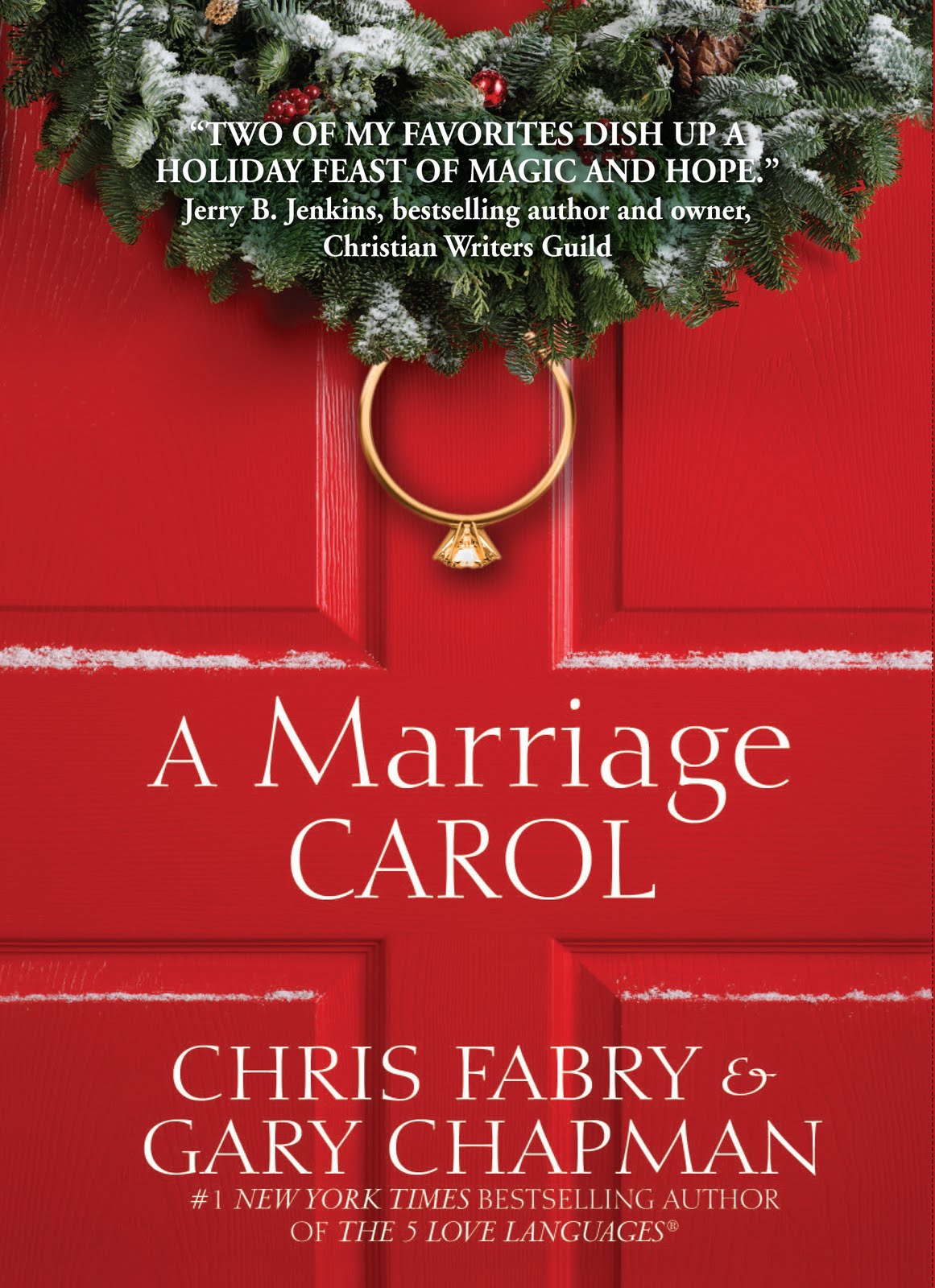
Tell us about your new release, A Marriage Carol, from River North/Moody Publishers.

This is a story about a couple on the verge of divorce. They’ve given up. They see no reason to go on. But a choice by the husband to take a shortcut leads to disaster—and then to the truth about their marriage.

Clearly this novella was inspired by Charles Dickens’s A Christmas Carol—even the characters’ names evoke the comparison. Why did you choose to pattern your book after a classic?

Dickens’s story is a classic and full of truth. I see this as more of a nod to Dickens because we don’t use the ghost of marriage past, present, and future—we use another tool, snow. But I think readers will enjoy the similarities between the two stories.

In what ways is your story different?

With Scrooge, we only get to see the possible outcome of his life if he doesn’t change. I felt it important to show Marlee, the wife, not only the negative outcome of her life if she continues on the current path, but the possible positive outcome.

The snow is the metaphor that floats through the book and provides the “magic,” if you will, of seeing the past, present, and future.

Why marriage as the theme?

Marriages are in trouble. Couples are in trouble. And our culture says, “If you’re not happy, find someone new.” Dr. Chapman believes many couples give up too early. God can resurrect a dead marriage. If we capture this theme, we could turn an entire society around—and think of what that would do for our children.

What was Gary Chapman’s involvement with A Marriage Carol?

I had the original idea and patterned much of the storyline from examples we’ve discussed on the radio. (Chris and his wife co-host Building Relationships on the radio with Dr. Chapman.) Gary gave me a thumb’s up and I wrote the story with his editorial help. He’s great to work with.

What’s your favorite Christmas memory?

I just lost my father in August, so this is our first Christmas without him. I’d say it was going out with him to hunt for a Christmas tree on the hill behind our house. The leaves on the ground, a hatchet or two on the shoulder, all bundled up. Great memory.

Every novelist has a journey. Tell us about yours.

I had no idea you could actually write and pay bills. As a kid I wrote stories, poems, songs, skits. I couldn’t wait to write down ideas. But I got very little encouragement at school.

It wasn’t until I was finished with college (journalism major) that I encountered novelists and writers through my work with Moody Radio. Jerry B. Jenkins, author of the Left Behind series, mentored me for a number of years and that was a huge help. A Marriage Carol is my 71st published book.

You’re also a radio guy, with several ongoing radio projects. How does your radio work affect your novel writing?

You’d think I wouldn’t have time for both, but actually the radio work feeds the writing. It uses a little different side of my brain and it keeps me in community rather than total isolation. Almost Heaven, a novel that was published in 2010, came as a direct result of the radio show I do. I get a lot of ideas for stories from listeners.

What's the most difficult part of writing?

The biggest is probably confidence. I was constantly looking for validation early on. I asked, “Is this any good?” I couldn’t tell. I needed someone to help me gain the confidence to not have to ask. Other than that, actually sitting down and writing and not checking email or looking at the weather forecast for Ottumwa is a close second.

How do you overcome it?

Confidence comes from somewhere within. I look at writing as not just a gift but a calling. It’s something God puts in your life that he wants you to do. If that’s true, your confidence can come from him.

At the same time, you have to work at becoming a writer. It’s an art form and not everyone is good at it, and not everyone who likes to write is meant to be a writer. Maybe part of the answer is simply not caring what other people think about your writing and letting it go on its way.

What is the best part of writing?

I find great satisfaction in discovering things about characters or about myself. This morning I wrote a few pages and went to take a shower. The water flowing over my head does things at times, and when it was over, I had the rest of the conversation and the whole next scene. When it falls into place like that, it’s a good day.

Where do you write: In a cave, a coffeehouse, or a cozy attic nook?

I write in a closet. Literally. I’m getting ready to move into a room with a window, but for the past two years I’ve been in this closet because of my radio show. I have to have a quiet place and this is the most remote in the house. No windows. I can touch the walls on either side of me.

What does a typical day look like for you?

My son has Type 1 diabetes so I get up to check him at 3 or 4 a.m. I usually stay up and read some Scripture and then get to work. Devotions really help clear my head spiritually.

I work on my story until 10 or 11, then get ready for my radio program. Sometimes I’ll do interviews in the middle of the morning, but I try to keep it free for writing. My show is from 1-3 Mountain Time, then I do voice work for the rest of the day. Then it’s off to play basketball with my youngest boys. We have nine children, so it’s a full time job.

What’s the best writing advice you’ve received?

Jerry Jenkins says, “Butt in chair.” That’s not bad. Thinking about writing is not writing. Talking about writing is not writing. Reading great writing is not writing. Only writing is writing.

Almost Heaven won the Christy Award this year—and it was your second Christy—as well as the ECPA Fiction award. What’s next in full-length fiction? Do the awards intimidate you when you start writing the next book?

I never thought I would ever win any kind of award for the type of stories I like to tell. They’re small, slice-of-life stories with big, overarching ideas. I guess there’s some comparison—I won a Christy for Dogwood but not June Bug—and I really liked June Bug. But I’ve learned not to compare stories and if the awards come, great. If they don’t, someone else will deserve to win them.

My next full-length novel will be out in February. It’s titled Not In The Heart and is the story of an out-of-work reporter whose son needs a new heart. The reporter is asked to tell the story of a man on death row. The inmate wants to donate his heart to the reporter’s son. However, in the telling of the story, the reporter finds evidence that the man might not be guilty. If he spills this information, his son will die. If he doesn’t, an innocent man might die.


Michael Ehret is the Editor-in-Chief for the Jerry B. Jenkins Christian Writers Guild. He has written for newspapers and other print and online outlets. He edited several nonfiction books, was the senior editor for a faith-based financial services and insurance organization, and is the editor of Afictionado, the ezine for American Christian Fiction Writers.


Thursday, October 06, 2011

The Glow?

Recently, I attended the American Christian Fiction Writers annual conference in St. Louis, Missouri. I always come away from these gatherings with renewed creativity and an appreciation for just how tough this business is.

But I also come away with a glow.

If you’ve been to a writer’s conference, you probably understand. If not, and if you consider yourself a writer, you need to get to a conference and experience it.

I—intentionally—did not pitch a project in St. Louis. This freed me to relax and simply enjoy the moment. When I did, I realized a few things:

  • I like the company of writers, editors, and agents. In an informal lobby gathering one night we had a laugh-fest—as creatives, yes, but also as people.
  • You can inhale creativity. I had more new ideas—for my novel, my job, my church—in those few days than I had in the previous three months. Not all are gems, but I think some of them are.
  • You can be alone in a room with hundreds of people. And that’s not necessarily a bad thing because you’re really in the world of your novel and everyone there understands.

Now I’m back home, back at work, back in my everyday world—and I’m enjoying the residual glow. From this point through February 2012, I’m stepping onto the other side of the conference experience.

In my work as editor-in-chief at the Jerry B. Jenkins Christian Writers Guild, I get to help plan and execute our conference, Writing for the Soul. This is my second year. Last year I was a wide-eyed schoolboy conference planner (some would say a deer-in-the-headlights conference planner, and I won’t contest that).

This year, I’m just as excited, but I have a better understanding of the work that goes into pulling off a conference. And I’m wondering something: Other than put on the best conference possible, what can we do to help our conferees experience “the glow”—at the conference and after they return home? How do you keep the glow glowing?


Michael Ehret is the Editor-in-Chief for the Jerry B. Jenkins Christian Writers Guild. He has written for newspapers and other print and online outlets. He edited several nonfiction books, was the senior editor for a faith-based financial services and insurance organization, and is the editor of Afictionado, the ezine for American Christian Fiction Writers.

Thursday, September 22, 2011

The Call to Community

I live a blessed life. No, really. I do.

Lately I’ve been realizing just how blessed, as I’ve coordinated several large-team projects.

These projects have increased my coordination skills, but they have also taught me about human relations—which means I’m learning things that will eventually inform my character development.

Being part of something bigger
News flash: Writers are sort of solitary creatures. But give them a cause they believe in—say the promotion of Christian fiction or the education of neophyte authors—and it can be hard to turn off their enthusiasm.

But it’s not just enthusiasm. Writers and editors are evangelists for writing and editing. In the Christian arena, I’ve yet to meet one who isn’t willing to share his or her experiences in order to help another writer overcome a challenge or take the next logical step.

Contests and conferences
For instance, the
Christian Writers Guild’s Operation First Novel contest recently closed for this year. At the bell, we had received 118 entries.
The next day I parceled out those entries to our volunteer judges—all working (and successful) writers and editors. I can’t name them, because judging is anonymous, but to a person they were excited to have the opportunity to offer guidance and feedback to those 118 unpublished authors—one of whom will no longer be unpublished at the end of the contest.

I am also the editor-in-chief for the American Christian Fiction Writers ezine, Afictionado. For the month of October we’re producing two special editions of the ezine:


  • ACFW Carol Awards issue: For this project, 35+ book reviewers joined forces to provide reviews of 45 books in 15 categories. The fact that almost every reviewer met deadline—and many came in early—was icing on the cake. The cake was the enthusiasm with which all the reviewers participated. Check out their work on Oct. 1, 2011, at www.acfw.com/ezine.

  • ACFW Conference issue: Here more than 40 reporters and 8 editors volunteered their time and talents to report on every session, keynote address, and Early Bird workshop. What makes is so sweet is that each year about half of the crew are new participants and half are returning for another helping. This edition of the ezine will publish on Oct. 15, 2011, at the same URL.


Making a difference
None of this would be possible without the volunteers who make it happen. If you’re involved in any of these three projects, I hope you know you have my thanks.

But, even if you’re not involved, I hope you can see the importance of coming together as a group to make a difference in people’s lives—of being a part of something bigger.

As Christians, that’s what we’re called to—to community. To mutual support. To, as Michael Card once wrote, “day after day…take up the basin and towel.”


Michael Ehret is the Editor-in-Chief for the Jerry B. Jenkins Christian Writers Guild. He has written for newspapers and other print and online outlets. He edited several nonfiction books, was the senior editor for a faith-based financial services and insurance organization, and is the editor of Afictionado, the ezine for American Christian Fiction Writers.


Thursday, September 01, 2011

Ever Built A Platform?

As a writer, you need to build a platform to support your career over the long run. That’s why it’s important to build it right.

Don’t jump!
Many eager writers hear about the need to build a platform and, being intrepid folk, leap right into social media with little thought.
But that’s the wrong approach, according to
T. Suzanne Eller (right), a Christian Writers Guild mentor, who wrote about conquering social media recently in the Guild’s member newsletter, WordSmith.

Build it and they will come. Right?

Maybe that worked for Kevin Costner in
Field of Dreams
, but it doesn’t work for social media. Before you start a Facebook fan or group page, start tweeting, or blogging, you need a blueprint. To create an effective social media platform that will draw your niche audience to your message, you need to answer:


  • What is your message?


  • How do you communicate it throughout your social media platform?


  • Who is Googling questions for which you have answers?


  • How do you reach that person with content and value?


  • How do you help that person find you?


  • What will draw readers and create synergy and word of mouth?


  • How much time are you willing to devote?


  • How can you avoid mistakes that will alienate potential readers?

Suzie’s right. You need a plan when building your platform.

Build it right and they will come
Because of her experience, Suzie wrote the Guild's new course, Building Your Social Media Platform, to teach writers how to effectively use social media. She is also one of the professionals who will provide one-on-one mentoring for the course.

If you need help in this area, the Guild invites you to
consider our course . Alternately, another platform guru, Randy Ingermanson, will teach a four-hour course on the same subject at the Guild’s Writing for the Soul conference this February in Denver CO.

Of course, there are other places to receive platform-building help. Find a way to make it work for you and your writing.

In what ways have you built your platform? I love Facebook and plan to start a blog next year. What tools do you use? Which do you avoid?

Michael Ehret is the Editor-in-Chief for the Jerry B. Jenkins Christian Writers Guild. He has written for newspapers and other print and online outlets. He edited several nonfiction books, was the senior editor for a faith-based financial services and insurance organization, and is the editor of Afictionado, the ezine for American Christian Fiction Writers.

Thursday, August 25, 2011

What's Your Point? by Jerry B. Jenkins

I like movies that are not afraid to be quiet. The film adaptation of John Irving’s The Cider House Rules was a masterpiece, which I confess despite the fact that it was a pro-abortion bromide and my personal philosophy is diametrically opposed to its message. Why? Because as opposed as I am to abortion, Irving deserved his Academy Award, and I applauded his acceptance speech, wherein he made clear his worldview. He didn’t pretend he didn’t have a message.

And neither should Christian writers. Ours is a message of hope, of reconciliation, of forgiveness. True art will communicate that without preaching. Give the reader credit. Tell a story and assume he gets it.

If the Left Behind books, The Prayer of Jabez, The Purpose-Driven Life, and others have awakened the general market to the vast potential of inspirational titles, the horizon has been broadened for us all.

The toughest challenge for any artist, any creator, is to resist the urge to show off. Our name will be on the cover, after all, and we’d love to remind the reader with a turn of phrase or a choice word that yes, I’m the one fashioning this message.

Art trumps self
But the best writers, like the best composers and painters, know that it is not about them. It is about the art, the content—and anything that interferes with the connection between that and the viewer, listener, or reader is an interruption.

If your reader is aware of your technique, he may miss your message. If the pianist dazzles his audience with technique, the purpose of the composer may be compromised. If the appreciator of art becomes aware of the brushstrokes, the artist may lose his ability to reach the soul through the meat of his message.

A true classic transports you. You’re unaware of the performance and the performer, the author and his technique. As creators, that should be our goal. Not to write classics. That’s not up to us. The market will decide that. But to get out of the way so the heart of the message reaches the soul of the reader.

Accomplish this by writing clearly and concisely, enticing your readers and guiding them to the core of your work. Use words they will understand rather than ones that will make them wonder. Get out of the way of your art.

Jerry B. Jenkins is author of more than 175 books, with sales of more than 70 million copies, including the best-selling Left Behind series.
Twenty of his books have reached the
New York Times best-seller list (seven in the number-one spot). In 2011 he released the first in a trilogy of police novels set in Chicago, The Brotherhood. The second in the series, The Betrayal, released this month. Jerry also owns the Christian Writers Guild, which trains writers through courses, conferences, contests, critiques, and community. Visit him online.


Thursday, August 04, 2011

Contests: A Two-Edged Sword?

In Hebrews 4:12, Paul wrote about a “two-edged sword.” He wasn’t talking about writing contests, but about the Word of God and its ability to cut to the heart of a person, exposing what that man or woman thinks and desires to the light of God’s truth.

Since then, the phrase “that’s a two-edged sword” has indicated there is good and bad in a situation. It wasn’t that long ago that Gloria Estefan sang about a love that “Cuts Both Ways.” (Okay, it was 20+ years ago--excuse me while I go get my cane. Ouch.)

A difference maker
Diana Prusik was one of the five finalists in last year’s Operation First Novel contest. Even though she didn’t win, she did get published.

“I can honestly say participating in contests changed my life,” Prusik said. “As a result, I received opinions and suggestions from a few editors, judges, and even Jerry Jenkins himself (through a Thick-Skinned Critique session). I soaked up every piece of advice offered and did my best to apply them in revisions.”

Through the contest and the Writing for the Soul conference, Prusik gained the attention of Tyndale House and her contest entry, Delivery, was released this year as part of Tyndale’s Digital First Initiative.

Professionals agree
DiAnn Mills (right), the Craftsman course mentor for the Christian Writers Guild and two-time Christy award winner (Breach of Trust, 2010 and Sworn to Protect, 2011), said contests can create interest.

“Contests are a valuable tool to get your name in front of agents and editors,” Mills said. “However, the downside of that is submitting an unpolished manuscript—that can tarnish a writer’s name.”

Christy Scannell, a Guild mentor and a member of the board of the San Diego chapter of the Society of Professional Journalists, says participating in contests can lead to additional assignments.

“Contests are an opportunity to publicize your skills and interests and to network at awards banquets,” Scannell says. “My participation in contests has resulted in more freelance work and contacts.”

The caution
In addition to Mills’ encouragement to not submit anything but your best, Julie-Allyson Ieron (right) points out the dark side of contests.

“I’ll never forget the deep disappointment of the first runner-up one year in the Operation First Novel contest,” says Ieron, a Guild mentor and an author-speaker. “Mom was with me at the conference that year (I was on faculty) and she noticed the runner-up weeping in the background.”

Remember when entering contests that judging is subjective. Certainly there is good and bad writing, but when comparing great with great, a judge’s personal preference will make the difference.

“So enter, be thrilled if you win, but don’t put too much stock in that one-in-a-million shot,” Ieron says. “Keep working with excellence and consistency. Keep building your credentials and your platform, and eventually you’ll see success.”

Go for it
As long as you have a good attitude and reasonable expectations, I say enter those contests—you just might win. But even if you don’t, you’ll receive feedback on your writing that will either affirm your direction (we all need that) or help you see a problem area you were unaware of.

Feedback is key. If I enter a contest and don’t receive any, what’s the value of that contest—except to the winner? This is why the Christian Writers Guild changed our Operation First Novel contest this year. We want to provide everyone who enters with a sheet of advice and encouragement.

Our contest is only open to Guild members. We’ve recently lowered the cost of membership and upped the benefits. Find out more.

There are many contests. Check online and in The Christian Writers’ Market Guide. Use discernment and find the contests that offer what you need.


Michael Ehret is the Editor-in-Chief for the Jerry B. Jenkins Christian Writers Guild. He has written for newspapers and other print and online outlets. He edited several nonfiction books, was the senior editor for a faith-based financial services and insurance organization, and is the ezine editor for American Christian Fiction Writers.

Thursday, July 28, 2011

Who You Know or Who You Are?

Publishing is often considered an “It’s who you know” industry. And it often works that way.

But in many ways it’s not “who you know” as much as “who you are.”

You think:

  • “I’m no one. I’m not published. I’m still adding to my (growing) file of rejections.”
  • Or, “I’m no one. My first book didn’t do well and I can’t even get my agent to return my calls.”
  • Or even, “Sure my series sold well, but I’m still waiting for that big break that will make me the next Jerry B. Jenkins.”
Whatever goal you have yet to accomplish, do you feel you’re constantly dodging the next obstacle? Maybe you see yourself as George Jetson, walking his dog on that moving sidewalk outside his space bungalow—walking, walking, walking—but never getting anywhere.

Maybe it’s who you are

Are you the kind of writer who:

  • Bristles when someone suggests edits you don’t like?
  • Doesn’t use standard manuscript formatting?
  • Never follows up when an editor requests your proposal—with changes?
  • Always asks for deadline extensions?
  • Pushes ahead of others to get the seat at the editor’s side at a conference meal? (Think of Kenneth Mars’ role [right] as Hugh Simon in the 1972 movie, What’s Up, Doc?)
  • Brings every conversation back to you and your project?
  • Believes you know it all, but no one sees your brilliance?
If you see any of these traits in yourself, can you see how you are sabotaging your career? What changes can you make to be the kind of writer editors want to work with?

Editors prefer writers who are partners in the process—writers who have a long-term vision not just for their own careers, but for where their work fits into the larger picture. Be that writer and you’ll come to know and be known by the right people.

Michael Ehret is the Editor-in-Chief for the Jerry B. Jenkins Christian Writers Guild. He has written for newspapers and other print and online outlets. He edited several nonfiction books, was the senior editor for a faith-based financial services and insurance organization, and is the ezine editor for American Christian Fiction Writers.

Thursday, June 02, 2011

Eva Marie Everson Chases Sunsets

Today, bestselling author Eva Marie Everson shares about her writing journey, her involvement with the Jerry B. Jenkins Christian Writers Guild, her new book, Chasing Sunsets, and her embrace of Southern Fiction as a genre.

We love writing journeys here, so take us on a little tour of Eva Marie Everson’s life as a writer—particularly how you came to embrace Southern Fiction, a fairly recent change for you.

I wrote my first novel—serious first novel—in 1997 and it became the third book I saw published. It went on to be a three book deal with Barbour (Shadow of Dreams, Summon the Shadows, and Shadows of Light). These books went way over the norm for Christian publishing at that time. Katie Webster, my protag, was an exotic dancer who found redemption first in her husband and then in her Lord. A lot of folks said I couldn’t write something like this and see it published, but I did.

For a while after that, I wrote nonfiction, did some editing, etc. Then my good
friend Linda Evans Shepherd asked if I’d like to write a book called The Potluck Club with her. It took 18 months of planning and praying and submitting before Baker/Revell picked it up, but it became a 7-book series that continues to sell—dare I say it?—like hotcakes!

While writing the books, it became evident through my Southern character Goldie that writing
Southern Fiction was something I should concentrate on. I talked to my editor Vicki Crumpton about a few ideas, and voila! Things Left Unspoken and This Fine Life were released in 2009 and 2010. Chasing Sunsets (the first in the Cedar Key novels) releases this month—with more to follow.

What was the genesis of Chasing Sunsets? Was there a specific "what if" moment?

Yes! I found
Cedar Key in 2004.
In probably 2008, I went back (for the umpteenth time). I took some magazines so I could flip through them while sitting on the balcony of my condo. I saw an ad for Liz Claiborne that had four blondes and one dark-haired girl posing in a beach-home setting, all wearing white. The dark-haired girl (a Latina) looked very pensive. A story popped into my head immediately. I set it in Cedar Key, wrote the proposal, took it to my agent and editor—and the rest is history. We found we had a 3-book deal.

What would you do differently if you were starting your publishing career today?

I don’t know that I would do anything differently in that I see God’s hand in the way my story has played out. But, I wish I’d have seen the direction of writing Southern Fiction sooner. This really is my niche, this is where I’m most comfortable writing.

You are clearly in a season of success. Do you still experience self-doubt regarding your work, or struggle in a particular area such as writers block or angst driven head-banging? What are some helpful overcoming hints you’ve discovered?

Ohmygoodness. Yes. Yes, yes, yes. How many times do I write and write and write, giving it everything I have, and then sit back and say, “This is just awful. Just awful! You can’t write. What makes you think you can write?”

Sometimes that means I really just dumped some pretty bad stuff onto the page and I need to delete and start over, but other times it’s just me going through the self-doubt process.

Good news is that I know I am not alone.

I am a mentor with
Jerry B. Jenkins Christian Writers Guild . So when my students say the same thing to me, I can then relay to them what I’ve learned as I put myself through the paces of self-doubt. They, in turn, say, “Hey, if you feel that way—and you’ve got all these books published—maybe I’m going to be all right.”

I like to share a story from writing Chasing Sunsets. I was about 1/3 of the way done and I just wasn’t sure it was any good. So I called a trusted friend who is a voracious reader and asked her to take a look-see and give me her honest opinion.

Well, she did—and she didn’t like it either. I asked her, “Why not?” and she very honestly said, “I don’t care about Kimberly and Steven.” I realized then what the problem was and was able to fix it in re-writing. When I sent the manuscript to her again, she loved it!

It’s great to have that kind of relationship with another writer—someone you can trust to be honest with you. What advice would you offer to the wet-behind-the-ears writer beginning her or his writing journey today?

Well, obviously, as a CWG mentor, I suggest courses such as those offered by the Guild. And as an executive co-chair for the
CWG Word Weavers (a national critique group), I suggest joining such a group. The feedback you receive will make you better.

And, of course, attend writers conferences, novel writing retreats, and read books on writing. And, finally, write!

Since you mentioned Word Weavers, which recently became a part of the Christian Writers Guild, let’s explore that a bit. What makes Word Weavers work?

Simply put: we work hard.

I was one of the original five who started the group and the first president as it grew. I worked in that capacity for seven years, all the while watching writers comes in green as grass and then getting published and winning awards.

What makes it work is that it is about community. When one of us gets published, we all get published. When one wins an award, we all win an award. This isn’t a “come let me pat you on the back” kind of group. This is a “come let me show you what works and what doesn’t” kind of group. We keep one another accountable.

How is the transition to being a part of the Guild going? Any challenges that have had to be overcome? What positives have come from the affiliation?

Obviously, there are challenges when one group becomes a part of another, but this really has been smooth! The biggest challenge, if you can call it that, is how quickly folks from across the country—the world in fact—have said, “We want to form a Word Weavers group in our community!”

Larry Leech, Cheri Cowell, and I (the national leadership team) are working really hard to keep up. We’re amazed, but thrilled, at what we are seeing so far.

Christian writers have to rise to the bar that has now been set in Christian publishing. Word Weavers is a natural fit with CWG because we are about excellence in craft. Not just craft. Writing is one thing. Writing well is another.

As a mentor with the Guild, what is your philosophy of mentoring? Why is mentoring a good thing? What does it offer the mentee? The mentor?

My philosophy is to give each student the best I can. If they want me to just pat their backs, they won’t get that. I let them know when they do well and I tell them what to do to write better. I also try to give them ideas for publication.

Mentoring offers the mentee the opportunity to have someone who has been at this a while look at their work and help them shape their craft. For the mentor—well—let me tell you a story:

I have a student (and this is just one of many who inspire me) who has so totally moved me; every time I get a lesson from her and go over it, I end up in tears. She is amazing, not just in her ability to write (though that is surely there) but in what she has had to overcome to write.

The day she gets published for the first time is the day I “get published” again because my heart is so with her and her work. I’ll be as proud as if I’d written the words myself.

What is the best writing advice you have ever heard—or wish you had followed? Why?

Find time to rest.

Once I get on a project, I’m like a maniac. But I learned the hard way to take that one day of rest. I believe
Shabbat was created for man to both pause and reflect and thus be drawn back to God. It’s like the balancing scales have returned to side-by-side. I have so learned to find peace in rest.

What one issue ignites your passion? How does this fuel your writing? What would you do with your life if you didn't write?


Eva Marie's Mountaintop Experience in Israel
I have a great love for Israel, the Old Testament, the commonality of the Jewish and Christian faiths and how, without Judaism, the branch of Christianity would rot off and die. When I write nonfiction, I write a lot about how the Old Testament and the New Testament support each other.

When it comes to fiction, I feel very strongly that life happens and then it catches us (so often) unaware. We hit those bumps in the road because we were not prepared for the results. Everything is fine—and then it is not.

That becomes evident in my fiction. These are the times we have to dig in and find our strength in God. It may seem subtle at first, but when you really look at my work, God’s hand is all over the place.


Sometimes you get a second chance
at your first love

Kimberly Tucker's life hasn't turned out the way she thought it would. While her ex is living it up, she struggles to understand what went wrong. When her two sons end up spending five weeks of summer vacation with their father, Kim plans a respite at the family vacation home on tiny Cedar Key. As she revisits the long-forgotten past, she discovers that treasures in life are often buried, and sometimes you do get a second chance at love.

Let yourself get swept away to an island retreat of warm tropical breezes, sandy beaches, and the most glorious sunsets you can imagine.

Endorsements
“In Chasing Sunsets, Eva Marie Everson takes her readers on a beautifully written journey through one woman's unexpectedly altered life. The convincing cast of characters and lovely imagery had me wishing I could pack my bags and run off to Cedar Key.” Jennifer Erin Valent, author of Fireflies in December, Cottonwood Whispers, and Catching Moondrops

“In
Chasing Sunsets, Eva Marie Everson tells a poignant story of grace, second chances, and the depth of a family's love. I rooted for sympathetic and lovable Kimberly Tucker through every page. Thoughtful, romantic, and warm as a tropical breeze. Highly recommended.” Julie Carobini, author of Fade to Blue

Michael Ehret is the Editor-in-Chief for the Jerry B. Jenkins Christian Writers Guild. He has written for newspapers and other print and online outlets. He edited several nonfiction books, was the senior editor for a faith-based financial services and insurance organization, and is the ezine editor for American Christian Fiction Writers.