Get a Free Ebook

Five Inspirational Truths for Authors

Try our Video Classes

Downloadable in-depth learning, with pdf slides

Find out more about My Book Therapy

We want to help you up your writing game. If you are stuck, or just want a boost, please check us out!

Showing posts with label Writing Craft. Show all posts

Saturday, July 08, 2017

How do you come up with this stuff?

By Patty Smith Hall, @pattywrites

Several weeks ago, I helped Mrs. Partin’s second grade class complete an English project. In the days before my visit, the kids were assigned to come up with a list of characters and setting for a story that we would complete together in class. The day of my visit arrived, and I was surprised to find not only the children waiting on me but my cousin(Mrs. Partin’s mother) there too. Over the next hour, the kids and I weaved an imaginative story filled with battles and learning right from wrong and the power of a grandmother’s love.

Monday, January 30, 2017

Advice on Writing a Novella Collection

by Patty Smith Hall

A few weeks ago, my first novella collection, The American Heiress Bride Collection from Barbour Publishing hit the bookstores, and I was tickled to death. After fourteen published books and novellas, it may seem funny to get excited over, but it was a dream come true for me. Working with the staff at Barbour has been a goal of mine ever since I helped them with multi-city book tour several years. I learned a great deal about marketing and what goes into the publishing process during that tour, and saw firsthand the dedication Barbour had to producing the best books possible.

Saturday, August 20, 2016

What I Learned From Self Publilshing

post by Michelle Griep
You know those TV shows that feature some daredevil lighting his underwear on fire as he hops on a motorcycle and jumps over five semi-trucks and a baby, all while some scrolling type at the bottom of the screen warns you not to attempt this at home? Yeah. I feel like there should be some kind of warning to those considering self publishing because it's really not as easy as it looks. Leastwise not if you want to put out a quality book.

So here is my attempt at enlightening those who think they'll just slap up some type on Createspace and rake in a million bucks.

**pretend the following is scrolling across the screen . . . I'm not technologically savvy enough to do that and there's no teenager around for me to collar**

1. Covers are a pain in the patootie. Who knew there'd be so many decision to make? Color. Style. Artwork. Wording. Layout. Font. Sizing. Transparency. Bleed. And that's just in the first consultation.

2. No matter how many times you go through a manuscript, you can always find something else to change.

3. A good editor is worth her weight in chai. I didn't actually have the money up front to pay for a manuscript edit so I bartered for a lifetime supply of chai. So far it's worked out pretty good. Of course, if she lives to be one hundred, I may be in trouble. Nah. I'll be dead first. Hahahaha! Joke's on her. . . wait a minute. Maybe not.

4. If you put your book up for pre-order on Amazon, they give you a deadline set in stone to upload your final copy. If you're late, oops! Your name is written on the Amazon naughty list and you don't get to put up any more pre-orders for over a year.

5. There's way more that goes into producing a book than simply good writing, though that is a must. There's book size, paper color, paper weight, ISBN nonsense, Library of Congress shtuff, a bajillion different kind of ebook conversions, yada, yada. Seriously, I had no idea.

It was an adventure putting out my self-pubbed book, Writer Off the Leash, but one that's been a good education. Would I do it again? Probably. Will I leave the realm of traditional publishing behind? Nope. Each venue has their pros and cons.

ABOUT THE BOOK:

WRITER OFF THE LEASH: GROWING IN THE WRITING CRAFT is a kick in the pants for anyone who wants to write but is stymied by fear, doubt, or simply doesn’t know how to take their writing to the next level.


ABOUT THE AUTHOR:


Michelle Griep’s been writing since she first discovered blank wall space and Crayolas. Follow her adventures and find out about upcoming new releases at her blog, Writer Off the Leash, or stop by her website. You can also find her at the usual haunts of FacebookTwitter, or Pinterest.

Monday, August 31, 2015

Dissecting The Male POV


by Patty Smith Hall

All right, class. The weekend is over and now it’s time to settle down because today, we have a lot of information to cover today on the fascinating, yet frustrating subject: The Male Point of View.

Why this particular subject? Because a large number of people who write have the XY chromosome combination and don’t have a clue as to what is going on in the mind of their male characters. It can be difficult to capture the male voice, frustrating at time. So after a great deal of research and in-depth study, I hope I can shed some light on the subject for you today.

The Scientific Facts
As a medical professional with years of research experience, I liked to start with the science behind male communication. Why do men communicate the way they do? Why don’t they talk as much as women? Is there a physiological reason they react the way they do in the heat of an emotional discussion?

First, a brief overview of the center of communication, the human brain. The brain has two hemispheres; the left which is the home of logic and reasoning and the right side which is the center of emotions, feelings, intuition and social relationships.

The differences between the male and female brain begin in utero. Male fetuses experience a testosterone bath between the 18th and 26th week of gestation that damages the connections between both sides of the brain, making each hemisphere work more independently of each other. This makes it harder for men to do things that require the use of both sides(language , expression feelings, managing emotions.) Men function best on one side of the brain than the other where as women(thanks to estrogen) can use both sides of her brain equally as well. Another interesting fact is that men possess a larger amydalae, a tiny set of glands at the base of the skull where highly emotional or frightening experiences are stored. This could explain why men have a greater ‘fight or flight’ response as well as flash back to the horrible even more often and with greater detail than women.

Men Really Are Like Waffles

This one-sidedness is also the reason why men are able to compartmentalize different areas of their lives into boxes and typically live in one box at a time.  When a man is in one box, it’s as if the other compartments don’t exist. They give 100 percent of their attention to whatever they’re involved in at the moment and tend to stay in the box they’re most successful in—that can be anything from work to video games to anything, as long as they feel like they’re achieving something. They can also think of nothing at all and have the ability to ignore everything else around them.

What Does That Mean For A Writer?

We have to keep in mind the why behind the male way of thinking and communicating in order to create a more well-rounded character. It would seem odd to find a hero who loves to spend hours talking on the phone or get in touch with his emotions. That’s not to say it doesn’t happen, but if we intend to use such a trait, we’d better have a good explanation as to why our hero is like he is. Another  example might be our hero might not understand why the heroine is having trouble sleeping because he has the ability to think about nothing.

Having a gasp of these facts will help you build realistic male characters.

Come back on October 26th when we’ll be talking about the inherited characteristics of men that shape how he responds to life events.

What are other ways  you’ve incorporated these scientific facts in your male characters?  


New Hope Sweethearts

She’s ready to take back her life . . .or what’s left of it.

After ten years of caring for her invalid grandfather, Kallie Huffman is ready to claim her life as her own. Taking a job in the laboratory of New Hope Community Hospital seems like a logic choice while she waits for her nursing license to be reinstated. That is until she meets Lab Director Jefferson Muster. Kind and intelligent, the handsome doctor is everything Kallie has ever wanted in a man. But what about having a life of her own?

He’s never needed anyone’s help. . .until now.

Patients are dying at New Hope Community Hospital, and Jeff needs help to discover the culprit before another family loses a loved one. When help comes in the person of Kallie Huffman, the walls Jeff has constructed around his heart after a family tragedy start to crumble. But Kallie craves a life on her own terms. Can two people shaped by heartache put the past behind them and trust in love?

Wednesday, January 15, 2014

Back Story vs Character History

by Rachel Hauck


Ding, ding!

Referee: “Ladies and gentleman, welcome to the first ever bout between Back Story and Character History.”

Wahhaaaaa. Cheeerrrs!

Ref: “In this corner, from the New York City, wearing black shorts, weighing in at a hefty five hundred and eighty-two pounds is the champion of all novel prose, Baaaaack Storrrryyyyyy!”

Waahhhh…. crowd cheering.

“And in this corner, from Miami Beach, wearing blue shorts, weighing a sleek one hundred and seventy-eight pounds is the challenger, Chhhaaaarrracter Hhhiiiistorrrryyy.”

Wooooo…. Crowd booing.

Referee: “All right you two, I want a clean fight. No hitting below the belt, no tripping, spitting, holding or biting. Touch gloves, go to your mutual corners and when the bell rings, come out fighting.”

Ding!

Character History leaps to the center, bouncing, dancing, he’s full of pip. From his corner, Back Story lumbers to the center of the ring. One cross from the herculean champ, Character History will be out, face down on the canvas.

Character History circles, jabbing at his opponent.

“He sure seems confident, Bill.”

“I’ll say he does, Sam.”

Smirking, Back Story takes a wide stance, raises his gloved fists and waits, his hawk-like gaze tracing the young fighter. He’ll not give up his championship belt without a fight. 

He know, this young whipper-snapper has no power over him.

Character History bobs and weaves. He taunts. “You’re going down, Back Story. You’re going down.”

“Take your best shot, wise guy.” Back Story strikes, a hard right jab.

Oh! Character History takes the hit on the chin. His head snaps back and he wobbles to stay up. He’s against the ropes. Back Story presses forward.

“This is it folks. Back Story will win in round one with a one-two punch.”

Just as he swings, Character History cuts low and lands a hard shot to Back Story’s ribs. The big man is stumbling, breathing heavily.

His arms slip low but he recovers, watching Character History circle. He strikes again with an uppercut…

“But mercy, Bill, Back Story misses by a mile.”

“And here comes Character History. With a jab, cross, uppercut. Ooo, Back Story is taking a beating. He’s teetering… he’s stumbling… he’s against the ropes. Sam, it’s not looking good for Back Story.”

Character History throws one final blow. A sharp cross. And Back Story falls! 

The whole arena quakes as he hits the canvas. It’s like watching Goliath being quelled with one of David’s stones.

The ref is on his knee, counting. “One, twos, three, four…. nine, ten. You’re out, Back Story. You’re out.”

It’s over. In Round One.

“Ladieeesssss and gentlemennnn, Chhhhaaarrracter Hissstory is the new prose Cham’peeean of the World.

***

Fun, uh? Okay, I can hear y’all now, “Rachel, what are you talking about?”

I’m talking about back story verses character history. What’s the difference? Strength, power, speed, agility and ability to sustain the long haul of a novel.

Back story is old fashioned writing. It’s large and encumbersome. Slow. Waddling. And most of the time, unnecessary.

But writers use it and readers endure it because it gives us some glimpse into the heart and soul of a character.

Character History is hot, lean and sleek, fast and quick, in and out, not weighing down the story.
Back story, we all know, slows down the action. We’ve heard the rule: No back story for the first 30-50 pages.

But wait, what if an author needs the reader to know something critical about the character for the opening scenes to make sense?

That, my lovelies, is character history.

For example, Billy Bob is about to go on his first police call -- a possible robbery -- since returning to the force after being shot in the gut while responding to a bank hold up.

 He’s nervous. He’s anxious. 

When he gets inside the establishment, he draws his gun a bit too early and almost shoots his partner.

What’s going on with him? I f we stick to the “no back story rule” we miss the importance of this moment. 

His jittery nerves just make us think he drank too much coffee. We don’t care.

What the reader needs a bit of history. A line or two of prose, or even better dialog, that gives the reader a hint of Billy Bob’s emotional state.

The scar on his shoulder from the bullet wound burned and twisted as Billy Bob entered the bank. It’d only been four weeks… and in a split moment, he couldn’t remember why he’d returned to this job.

Ah, the reader has learned there’s something more to the story. 

It ups the readers attachment to Billy Bob. This bit of history adds tension. 

What bullet in the gut? When? Who shot him? Why?

All of those question, left hanging, build tension and will be answered later in the story.

 If the writer wanted, s/he could add a line of dialog from his partner.

“You okay?”
“I’m here aren’t I?”
“Just wondering.”
“You do your job, I’ll do mine.”

Why was his partner asking Billy Bob if he was okay? Hmm? The reader wants to find out more so s/he turns the page.

Back story is another matter. Back Story stops the forward action and talks about things unrelated to the current scene and emotion. 

Back story interjects another story.

Sure, it’s about Billy Bob and it’s all true, but it takes the reader to another emotional place.

Here’s a back story blob:

“Since taking a bullet in the gut, Billy Bob wondered if he could still be a cop on the beat. But his dad had been a cop and his father before him. Every Martin man wore the badge. 

Billy Bob remembered the first time he held his father’s badge, feeling the cool metal in his palm, stroking his finger over the shiny brass. 

He knew then, at then, he’d be a cop just like his father. Mother didn’t want him to be. She worried about Dad, but if a man put on blue and a gold badge, wasn’t he invincible?”

Wow! All that while checking on a robbery call? By now, the reader’s forgotten what was going on. 

And some back story trails go on for pages and pages.

Meanwhile, the burglar has escaped while our hero mused over his past. Or worse, shot Billy Bob’s partner.

The reader doesn’t need that much information. Save it for later. Perhaps in a conversation with his Dad when our hero, Billy Bob, is facing a voice-of-truth moment.

Back Story is more for the author than the reader. Character History is for the reader, and the power of the story.

So, what’s Character History and how do we use it?

1.         Character History applies to the current action on the stage. If your heroine cannot stand the hero, don’t let her behave irrationally, leaving the reader in the dark. Don’t give us a snippy rude girl without giving us motivation. Drop in a line of history. “Ever since seventh grade when he stole her PE clothes from her locker and she got detention, Jen couldn’t stand Colby Witherspoon.”

2.         Drop in the pertinent history related to the character's current emotion and motivation and exit quickly. Leave the reader a bit curious.

3.         Character History sets up tension. Drop in a line about how your character is afraid of…. snakes or heights. Can you imagine how boring the snake scene would’ve been in Indiana Jones would've been if Indy went on for several minutes about the reason he hated snakes. How his big brother used to toss snakes on him when they played in his grandma’s creek? Who cares at that point? All we needed in the opening scene was "I have snakes."

4.         Character History is part of the prose painting. It helps the reader take a breath and get into the heart and mind of the protagonist. But be careful. Just a bit of history is all we need. Use dialog, or a fast line or prose, to paint the history. Don’t give the reader a montage that begins when our heroine is ten and ends when she’s sixteen. All you need is enough to fill the reader in.

5.         Character History sheds light on the protagonist motivations. Let the history pertain to what’s happening in the current scene. If your character is dealing with, oh, say, an errant child, don’t stop and give a dissertation on the protagonist own childhood and upbringing. Not necessary. Boring. But, do tell us how her mother was so kind and patient, and it frustrates her how she is so impatient and sharp. That’s all the reader needs to get what’s going on with the protagonist motivation.

Watch out for phrases like, “a sound brought her back into the present.” Ooo, where did she go? 

We all love to sit and reminisce, but a novel is about tension, conflict and moving forward. Most of us don’t stop to muse or reflect while arguing with our friend or trying to save the world. Right?

Now, these are guidelines. Once in awhile, we do have a character drift off in thought for a moment, but be guarded. Ask yourself if there is a better, more emotionally impacting way to present the information. If not, then go for the reflect and keep it brief.

So, there you have it. The bout between Back Story and Character History. Go out writing and have a clean fight with your words.


Ding, ding!


Best-selling, award-winning author Rachel Hauck loves a great story.


With a love for teaching and mentoring, Rachel comes alongside writers to help them craft their novels.

She serves on the Executive Board for American Christian Fiction Writers and leads worship for their annual conference. At the fall conference in Indianapolis, she was named ACFW 2013 Mentor of the Year.

She is also the Book Therapist for My Book Therapy.

She lives in Florida, where she is also a worship leader, with her husband and mini schnauzer.

Her novel, The Wedding Dress, was named Romantic Times Inspirational Novel of the Year. Her latest release, Once Upon A Prince, earned starred reviews from Booklist and Publisher's Weekly.

Visit her at www.rachelhauck.com

Thursday, March 07, 2013

Character conversations

Author Amber Stockton
When I first began writing, I thought I’d be better suited to screenwriting, as it didn’t require so much description. Conversation has never been a problem for me—I’m outgoing and I love people.

It didn’t take me long to realize I could blend my love of dialogue with the scenes happening around the conversation for a total experience. Writing realistic dialogue doesn’t come easily to everyone, but it’s worth the effort. Nothing pulls the reader out of a story faster than bad dialogue.

First of all, familiarize yourself with these five things to avoid, then I’ll share the 10 Ways Dialogue Defines Characters.

Five errors to avoid

Before you can write excellent dialogue, learn how to avoid these five key components:
  1. Stilted language: Your character’s words don’t sound like natural speech.
  2. Filler: Conversations that don’t move the story along or shed any light on your characters.
  3. Exposition: Characters who wax philosophic on the plot issues or repeat something for the readers’ sake.
  4. Naming: Characters who repeatedly use the name of other character’s in the scene to identify them.
  5. Dialogue tags: Overuse of such tags as exclaimed, cried, mumbled, whispered, etc. For most uses, the largely invisible said is the most appropriate choice.
Each of those five can kill your dialogue, but worse, bore your reader. Alfred Hitchcock once said a good story was “life, with the dull parts taken out.” Keep this in mind as you revise dialogue.

10 tips for defining your characters by dialogue

  1. Observe real people and real conversations. You can discover creative and fascinating dialogue by listening to how people really talk. Skip over the distracting parts (um, like, y’now) and get to the meat. When you apply those styles to your characters, you’ll be surprised at how naturally they give away integral components of their personalities and lives.
  2. Apply limits. Keep the interchanges to one thought per character per dialogue segment. Any more and you risk impeding the flow of your story. Caveat: If your character happens to be a rambler, then let that person go from thought to thought. But, otherwise, keep it simple.
  3. Create differences. Make certain your characters use different styles, patterns, and word choices. Read a sequence of lines out loud. If you can’t tell your characters apart by dialogue, your readers won’t be able to either.
  4. Vary the dialogue with action. Writers often use too many dialogue tags—this will pull the reader out of your story. Instead, try using character or action tags to break up the stream of conversation. Describe gestures, facial expressions, movements, or even inner thoughts. These can offer great insight into a character’s thoughts and personality.
  5. Let your characters talk freely. When it feels like a character is talking directly to the reader, saying or explaining something simply for the reader’s sake, they get bored. Assume your reader is intelligent and will infer what’s necessary from the story. If you’ve done it right, you won’t have to explain, and the reader will be pulled along on the wave of the conversation.
  6. Do your research. Don’t use styles, words, grammar, and phrases that don’t fit with the setting or time period you’ve established. Get to know your characters well. Interview them to learn all about them. Know the language of the setting and get it right. On the other hand, avoid stereotypes.
  7. Watch your tone. Characters are like people. You wouldn’t speak to a stranger in the same way you’d speak to a friend or loved one. Neither would your characters. Be careful what attitudes you convey through dialogue. You can show feelings for people when you use the right tone and words.
  8. Throw in some subtext. People are curious creatures. They don’t often say what they really mean. If you want your characters to come across as real and natural, they’ll do the same thing. If one character is angry over one thing, but doesn’t want the other character to know what it is, have him get angry about something else to cover up the truth. The anger is still there, but the other character doesn’t fully understand the reason.
  9. Allow for surprise. Have you ever read a story and been surprised by something a character says? This is an excellent way to keep the reader turning the pages. If your dialogue becomes too predictable, the reader will know where the conversation is headed. So, let your characters act out of character. Just make sure they have a legitimate reason for doing so, or your reader might get frustrated.
  10. End the conversation well. Don’t leave your reader or your characters hanging at the end of a dialogue exchange.
This was a brief introduction into some dialogue tools. Once you get into it and grasp the importance of real dialogue for real characters, you’ll be able to layer in many other facets that will bring your story to life.  

Tiffany Amber Stockton, who writes as Amber Stockton, has been crafting and embellishing stories since childhood. She is an author, speaker, and virtual assistant who lives with her husband and fellow author, Stuart Stockton, in Colorado. Her latest book is Antique Dreams for Heartsong Presents. She and Stu have one daughter, one son, and a dog. She has sold 13 books, with more on the horizon. Visit her online, on Facebook, and on Twitter.

Wednesday, October 17, 2012

Spiritual Conflict in The Romance Novel by Laurie Alice Eakes


“Eakes has a charming way of making her novels come to life without being over the top,” writes Romantic times of  bestselling, award-winning author Laurie Alice Eakes. Since she lay in bed as a child telling herself stories, she has fulfilled her dream of becoming a published author with a dozen books and novellas in print and more on the way. A graduate of Seton Hill University’s Writing Popular Fiction graduate program, she also teaches writing and gives inspirational talks to women’s groups. She lives in Texas with her husband, dogs, and cats.

Follow her on Twitter: https://twitter.com/LaurieAEakes
Read excerpts from her books at: http://www.lauriealiceeakes.com


Spiritual Conflict in the Romance Novel


"Why do you read romance novels?" I've been asked more times than I can count on fingers
and toes with my nose and ears tossed into the mix. "You know how it's going to end. The  hero and heroine always get together."

"Ah, yes," I respond, "But it's HOW they get together, how they resolve their conflicts that makes the story worth reading." 

Conflict is essential to a romance novel. Without a believable and compelling reason for the hero and heroine to stay apart for 200-400 pages, the point of the story is completely lost. In fact, if boy meets girl and they fall in love and have a friction-free courtship, no one would want to read the story because it is probably unrealistic. It is what non-romance readers think that romance novels are.

Conflict, contrary to what many believe, is not 200-400 pages of hero and heroine sniping at one another until they realize they’re in love. That would be ludicrous and tiresome to read.

The hero and heroine must have some kind of personal issues that keep them from diving head first into the relationship and staying their. This is internal conflict. One can also have external conflict. This is some outside force that keeps the protagonists apart—war, an interfering parent, whatever the writer’s imagination comes up with. Internal and external conflict have been the mainstay of romance novels since romance novels have existed—Mr. Darcy is arrogant, Mr. Rochester had another wife already, Emma needs to grow up. . .

Now, enter the inspirational romance novel and one more layer—spiritual conflict.

Inspirational romances are written from a “Christian world view”. Again, this does not mean their world is friction free. It means the Christian characters incorporate their faith into the decisions they make, the actions they take, the viewpoints about the issue they hold—at least they are supposed to. At least they know they are supposed to do so. When they do not consider their faith, or if their faith is in crisis, you have spiritual conflict.

In my recent release from Baker/Revell, A Flight of Fancy, my heroine, Cassandra, and hero, Geoffrey, Lord Whittaker, hold a great deal of guilt because of their past behavior with one another. They allow this guilt to stand between themselves and god, and then between one another. When a tragic accident befalls Cassandra, she thinks God is punishing her and thus backs away from her faith altogether. Until Cassandra and Whittaker can resolve their spiritual conflict, they cannot resolve their romantic conflict either.

On the other end of the spiritual conflict spectrum, in my upcoming Heartsong, The Carpenter’s Inheritance, my hero and heroine hold their faith and hold it fairly strongly throughout the story. The conflict rises from them questioning god’s purpose for their lives, as they try to work out which direction they should take as godly men and women. Their decisions in this direction make a difference in the romance outcome also.

Unlike with romantic conflict, an inspirational romance does not specifically need spiritual conflict; however, it makes for a deeper and richer story if that extra layer of internal issues exists. In addition, when the characters need to get their hearts right with the Lord before they can get their hearts right with one another, it sends the reader a stronger message of how accepting God’s love and redemption impacts all aspects of our lives, especially our relationships with one another.


Her head is in the clouds. His feet are planted firmly on the ground. Can love cover the distance?
Cassandra Bainbridge may be a bit of a bluestocking, but when Geoffrey Giles is near, love seems a fine alternative to passion for Greek and the physics of flight. With his dashing good looks and undying devotion to her, the earl of Whittaker sets Cassandra's heart racing with his very presence. It seems his only flaw is his distaste for ballooning, the obsession that consumes so much of her thoughts.


When a terrible accident compels her to end her betrothal, Cassandra heads for the country to recover from both her injuries and her broken heart. With time on her hands and good friends to help her, she pursues her love for ballooning and envisions a future for herself as a daring aeronaut. But when Lord Whittaker slips back into her life, will she have to choose between him and her dream?


Thursday, April 05, 2012

Take No Shortcuts!

If you want to be an overnight success, go read another blog.

No, I’m serious. Novel Rocket is about putting in the work, making the connections, learning the craft, writing and then revising, revising, revising.

But, if you have the passion, commitment, and determination—and a chunk of time to invest—there is help out there.

As the editor-in-chief of the Jerry B. Jenkins Christian Writers Guild, obviously I’m most familiar with the ways we help aspiring novelists. We have fantastic courses—so why be shy?

Top-shelf instruction

For instance, our Craftsman course is our most advanced and demanding—but with good reason. In 2009, Craftsman graduate Henry McLaughlin won our Operation First Novel contest with Journey to Riverbend (Tyndale), the book he prepared for his class assignments.

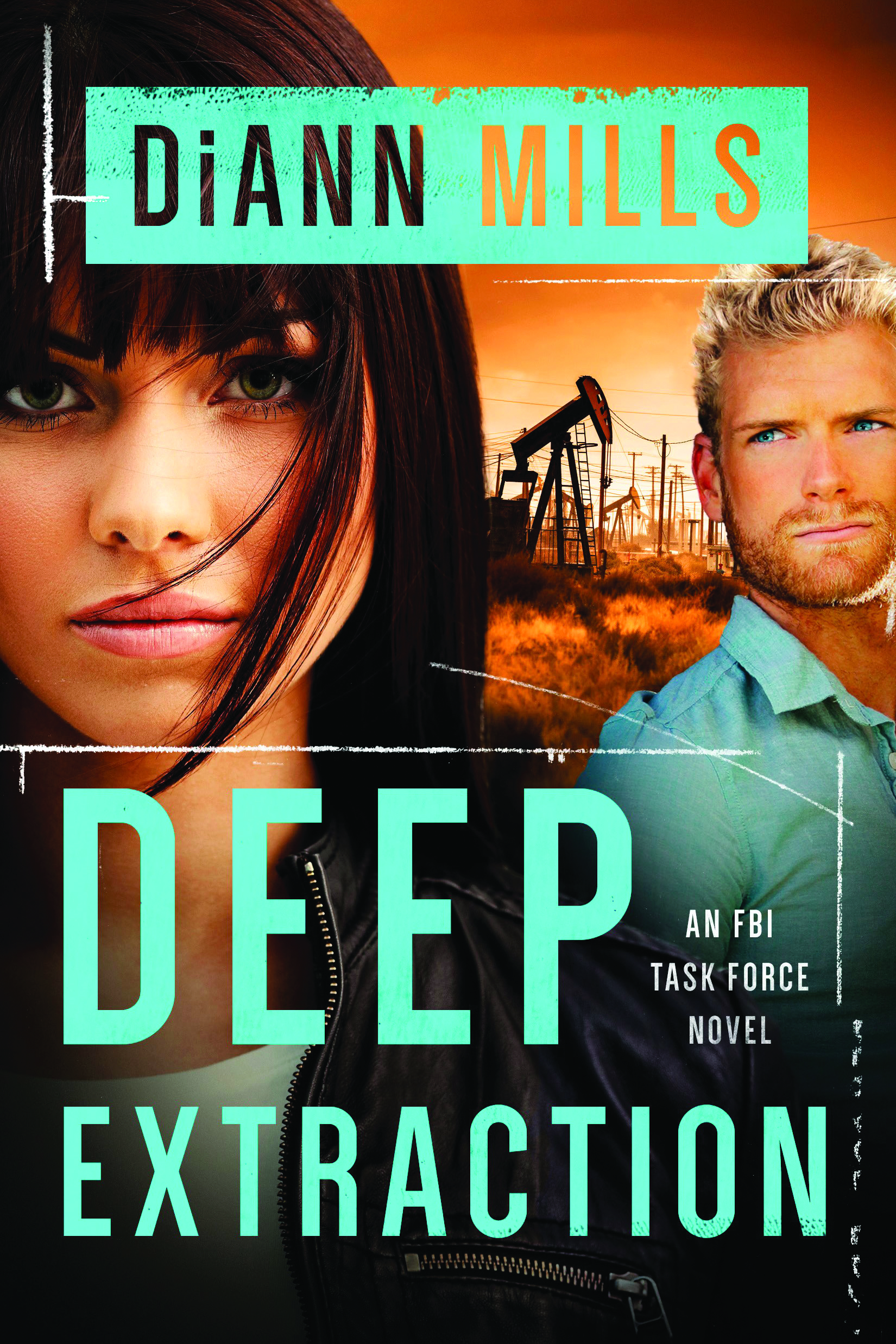
In the Craftsman course, students receive exclusive instruction, encouragement, and support from multiple Christy Award winning author DiAnn Mills as their mentor, but also enjoy face-to-face instruction with Jerry B. Jenkins and other experts like Brandilyn Collins, Steven James, Angela Hunt, James Scott Bell, and Dr. Dennis E. Hensley at an exclusive 4-day residency in Colorado Springs CO.

What students say
“The Craftsman course gave me what I was looking for—structure, technique, and organization for writing my first novel. I will take my idea all the way!” – Dennis Ricci

“It improved my confidence level and writing ability more than I expected. I started the course as someone who writes. I left a writer.” – Marsha Tallman

“By far the best course I’ve taken on novel writing.” – Florence Larson

“The residency prepared me for publication.” – Ella Sadler

Is it for you?
A new Craftsman class starts May 1. I’ll admit right here, it’s not for everyone. But if you are a good fit, it can be a difference maker. Get more information.

There are other options. Just Google novel writing course and stand back as the torrent of information floods over you. With Craftsman you’ll receive instruction and support from Christian authors at the top of their game.

Not ready for Craftsman? Look here.


Michael Ehret loves to play with words and as editor of the ACFW Journal, he is enjoying a new playground. He also plays with words as the editor-in-chief of the Jerry B. Jenkins Christian Writers Guild and as a contributor here on Novel Rocket. He has edited several nonfiction books, played with words as a corporate communicator, and reported for The Indianapolis Star.