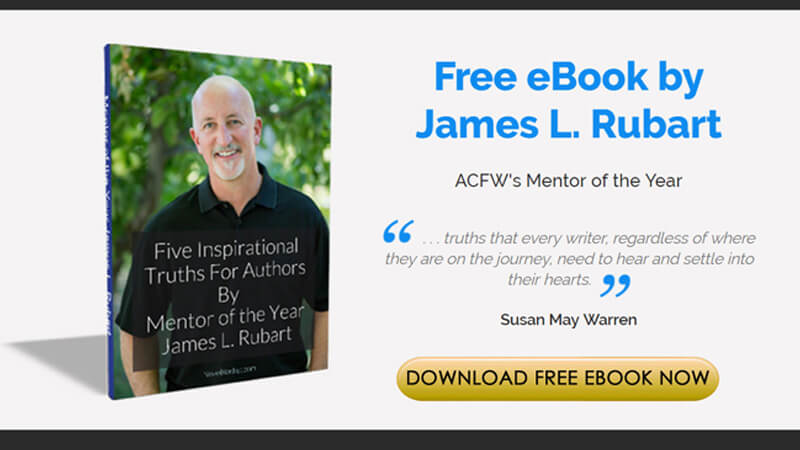
Get a Free Ebook

Five Inspirational Truths for Authors

Try our Video Classes

Downloadable in-depth learning, with pdf slides

Find out more about My Book Therapy

We want to help you up your writing game. If you are stuck, or just want a boost, please check us out!

Showing posts with label self publishing. Show all posts

Saturday, October 08, 2016

Four Things to do before Self Publishing Your Book

Not that long ago, self-publishing your book was considered equal to sporting a scarlet letter on your chest. It was embarrassing because it meant you weren’t ‘good enough’ to be considered by traditional publishing houses. Now, with Amazon and the array of affordable tablets on the market, that tarnished letter has become much more respected, to the point, publishers are encouraging their authors to jump into the fray. Indie publishing gives writers control over their careers as well as a freedom to write on subjects some publishing houses feel are taboo.

So how do you get started in the world of self-publishing? Here’s four things I think every author should do:

 1. Produce material.

The more full-length novels or novellas that you put out, the more you’re going to sell thus increasing your take home pay. When I published my first story, it did okay. It sold about 2000 copies in those first six months but after that, sales just dried up. Then I published several more novellas and a full-length novel, and a friend of mine ask if she could use some of my novellas for collections. Before I knew it, sales took off and haven’t slowed down. The little check from my first novella increased each time I put out new material. Now I bring in between $200-$500 a month from my indie books.

2.  Cultivate a support system.

Being a part of a group of writing friends who encourage and answer questions about the indie publishing process is vital. Need to know how much to space out the lines when you’re publishing with Amazon? Looking for someone to do the cover art for your next novella? That’s what these supportive friends do. But it didn’t happen overnight. It takes time. A few good places to look for your people is on Facebook. There are several indie author’s groups like ACFW Indie Authors, Christian Indie Authors, Clean Indie Authors and IndieGypsy.


3. Hire an editor.

There is nothing more embarrassing than getting a review on Amazon that reads something like this: Great story and characters but the author wouldn’t know the King’s English if it bit her in the backside. Ouch! With so many people throwing stuff out there these days, you have to make yours stand out above the rest, and a good edit can do that for you. A good rule of thumb—treat every manuscript as if you’re sending it to a major publishing house. Make it as clean and the content as clear as possible. We owe it to our readers.


4.  Don’t put all your eggs in one basket.

One of the best pieces of advice I received in my journey to publication was to have at least three avenues of revenue coming in, or three legs of a stool which represent your means of income. Don’t just depend on what you’re going to earn from your indie/traditional books—look at ways to use your expertise to bring in income. Editing and cover design are two ways to do this. Or you can be like me, and write articles and fillers for different magazines. Whatever it is, share what you’ve learned in your writing journey.   


TWEETABLE

Four Things to do before Self Publishing Your Book by Patty Smith-Hall (Click to Tweet)
______________________________________________________________________________


Patty Smith-Hall is a multi-published, award-winning author with Love Inspired Historical/Heartsong and currently serves as president of the ACFW-Atlanta chapter. She currently lives in North Georgia with her husband of 30+ years, Danny; two gorgeous daughters and a future son-in-love. Her next release, New Hope Sweethearts will be available in July on Amazon.

Saturday, August 20, 2016

What I Learned From Self Publilshing

post by Michelle Griep
You know those TV shows that feature some daredevil lighting his underwear on fire as he hops on a motorcycle and jumps over five semi-trucks and a baby, all while some scrolling type at the bottom of the screen warns you not to attempt this at home? Yeah. I feel like there should be some kind of warning to those considering self publishing because it's really not as easy as it looks. Leastwise not if you want to put out a quality book.

So here is my attempt at enlightening those who think they'll just slap up some type on Createspace and rake in a million bucks.

**pretend the following is scrolling across the screen . . . I'm not technologically savvy enough to do that and there's no teenager around for me to collar**

1. Covers are a pain in the patootie. Who knew there'd be so many decision to make? Color. Style. Artwork. Wording. Layout. Font. Sizing. Transparency. Bleed. And that's just in the first consultation.

2. No matter how many times you go through a manuscript, you can always find something else to change.

3. A good editor is worth her weight in chai. I didn't actually have the money up front to pay for a manuscript edit so I bartered for a lifetime supply of chai. So far it's worked out pretty good. Of course, if she lives to be one hundred, I may be in trouble. Nah. I'll be dead first. Hahahaha! Joke's on her. . . wait a minute. Maybe not.

4. If you put your book up for pre-order on Amazon, they give you a deadline set in stone to upload your final copy. If you're late, oops! Your name is written on the Amazon naughty list and you don't get to put up any more pre-orders for over a year.

5. There's way more that goes into producing a book than simply good writing, though that is a must. There's book size, paper color, paper weight, ISBN nonsense, Library of Congress shtuff, a bajillion different kind of ebook conversions, yada, yada. Seriously, I had no idea.

It was an adventure putting out my self-pubbed book, Writer Off the Leash, but one that's been a good education. Would I do it again? Probably. Will I leave the realm of traditional publishing behind? Nope. Each venue has their pros and cons.

ABOUT THE BOOK:

WRITER OFF THE LEASH: GROWING IN THE WRITING CRAFT is a kick in the pants for anyone who wants to write but is stymied by fear, doubt, or simply doesn’t know how to take their writing to the next level.


ABOUT THE AUTHOR:


Michelle Griep’s been writing since she first discovered blank wall space and Crayolas. Follow her adventures and find out about upcoming new releases at her blog, Writer Off the Leash, or stop by her website. You can also find her at the usual haunts of FacebookTwitter, or Pinterest.

Sunday, June 14, 2015

All The Brains Have Fallen Out

by Anita Higman
Best-selling and award-winning author, Anita Higman, has forty books published. She’s been a Barnes & Noble “Author of the Month” for Houston and has a BA in the combined fields of speech communication, psychology, and art. Anita loves good movies, traveling to exotic places, and brunch with her friends.

Well, the book biz has turned itself on its head, and it appears that all the brains have fallen out. What’s an author to do with thirty years in the business when suddenly faced with a digital revolution, closings, cutbacks, mergers, the new age of indie publishing, and book sales as stable as uranium? Well, I’ve decided to venture out into the meadow, hoping not to get shot like Bambi’s Mom.

You can find Anita on her website or her Facebook Reader Page.

Bottom line. I couldn’t keep running my business the same way anymore. I can no longer play it safe. I am choosing to do something fresh and creative—something that I hope will remind me why it is that I fell in love with writing all those years ago.

So, I came up with a five-point plan for my career to help deal with this madly fluctuating state of the book industry.

  1. I have decided to stop writing in my genre—inspirational romance—at least for now. I will be coauthoring novels for young adults with my daughter, Hillary. This YA genre has been calling my name for many years, but I never had the courage to switch over. Until now. We’re hoping these stories of the heart will resonate with a wide audience of readers.
  2. I have gone hybrid—meaning that I will have books coming out through traditional publishers as well as books released through other means. I decided to get the rights back to some of my out-of-print books and give them over to an entrepreneur extraordinaire named Cynthia Hickey. She has republished some of my older books as well as released a few newer works through Forget Me Not Romances, which is the inspirational line through her new company, Winged Publications. Here’s the link: www.forgetmenotromances.com. With Cynthia’s help, I have come to know the joys of being on multiple Amazon best-seller lists.
  3. Prayer. There are many more questions than answers in the publishing industry right now, which can either send you out screaming in the night or bring you to your knees in prayer. I choose the latter. It’s the only sane choice.
  4. I am staying connected to writers and editors through conferences and writer’s loops. I think this is more important than ever—for networking, updates, and support.
  5. Do I still need an agent? Yes. I decided to continue working with an agent for many reasons—career advice, accountability, and of course, because I still needed someone to pitch my work to editors. By the way, I’m happy to say that my agent, Chip MacGregor, is hard-working, business savvy, and he’s supportive of my need to go hybrid.
Through my decades of writing, I have known plenty of failure and changes and dire predictions, but I keep on writing no matter what, because that is what God called me to do. So while the book industry gets its brains back together, you’ll find me faithful at the computer—with perhaps a newer vision—but still very much in love with the art of storytelling.

Summer’s List

A dying wish alters the course of a young woman's life.

Life hadn't been easy for Summer Snow. In acts of selflessness-caring for her ailing parents and running her grandmother's bookstore-she had forfeited her youth and dreams for the needs of others. And the only tries she had at love... didn't turn out. She had the bookstore, she had her beloved granny, but she was missing something-or someone.  

Opportunity strikes when Granny sends Summer on an unexpected adventure with one Martin Langtree, a kind but gangly young man from Summer's past. A childhood friendship is rekindled, a romance is sparked, and mysteries are solved in one magical Texas summer. Will Summer strike out on love again, or will things finally go her way?

Saturday, February 21, 2015

Why Would a Fiction Writer Write Non-Fiction?

I live, eat, and breathe historical fiction. No, really. Sometimes I won’t answer to people unless they call me Jane Eyre, which annoys the bejeebers out of my husband. It’s a hoot to mess with cashiers and sign my checks Jane Austen. Kind of rotten about that lawsuit, though. And I admit, it’s just a tic creepy when I fake a British accent and dress like Charles Dickens. I think it’s the moustache that really throws people.

With that background in mind, what in the world am I doing dipping my toes into the pool of non-fiction with my latest release Writer Off the Leash? It all started with a blog. Grab your milk and cookies, kids, because here comes a story.

Way back when dinosaurs roamed the face of the earth, I staked out my little corner of the internet and named it Writer Off the Leash. I didn’t want to be pinned down to a particular topic, though writing is what I most often post about. I wanted to roam into other neighborhoods like religion, philosophy, and where the best chocolate chip cookie recipe can be found.

Lo and behold—quit blinking, an angel will not appear—that little plot of cyberspace grew, attracting readers from all over the place. Yes, even Hoboken, New Jersey. I know, right? Anyway, these readers started leaving comments about how I should compile all my writerly advice into a book format.

I froze. Me? Put out a non-fiction book? What do I know about truth telling? I’m a historical fiction writer for Pete’s sake. But the voices would not shut up . . . not the ones in my head, the commenters on the blog.

So, I did what any self-respecting, strong, not-so-young woman would do. I caved into peer pressure. I found a buddy who had an interest in the inner workings of publishing and was willing to take my material and figure out how to morph it into paperback and ebook formats. And voila! Harpy type music and a glittery sprinkle of fairy dust later, Writer Off the Leash: Growing in the Writing Craft was born.

I’ve learned a lot from going the self-publishing route. Who’d have thought a cover involved so many many decisions? Editing requires a gazillion read-throughs. Then there’s ISBN’s and Library of Congress and on and on and on. Why did I suffer through it all?

I wanted to blow the lid off stodgy old-school rulebooks and make it clear that writing can—and should—be fun. Here’s a blurb:

Are you a writer at heart? How can you tell? And if you are, how do you go about composing and selling the next Great American Novel? WRITER OFF THE LEASH answers these questions and more--all in an easy to understand, tongue-in-cheek style. This is more than a how-to book. It's a kick in the pants for anyone who wants to write but is stymied by fear, doubt, or simply doesn't know how to take their writing to the next level.

Will there be more non-fiction in my future? Maybe. This has been a fun detour, but if I listen really hard, I hear voices from the past calling me. For now I’m returning to historical fiction.


ABOUT THE AUTHOR:

Michelle Griep’s been writing since she first discovered blank wall space and Crayolas. Follow her adventures and find out about upcoming new releases at her blog, Writer Off the Leash, or stop by her website. You can also find her at the usual haunts of Facebook, Twitter, or Pinterest.

Friday, February 20, 2015

Terri Blackstock on Self-Publishing. Should You or Shouldn't You?


Is Self-Publishing Worth The Investment?

By Terri Blackstock

“You must have invested a fortune in all these titles!” That’s what more and more people say to me when they see that I’ve had over seventy books published. Some of them are shocked to learn that for thirty years, I didn’t invest a penny in getting my books published. My publishers paid me, and I’ve made a nice living.

So many of my letters from aspiring writers ask the question, “How can I get published without going broke?” Others ask, “Can you tell me your secret for marketing your books? I published with a self-publishing service, and they’re not marketing my books at all.” There’s a basic misunderstanding about publishing these days, and I hope to correct some of that here, so that fewer new writers are lured into using self-publishing services because they’ve been given deceptive sales pitches. I hate it when decent, hard-working people are financially wounded and woefully disappointed.

Before I go on, let me say that there is a place for self-publishing, and there are print-on-demand companies who provide honest services. (To find those companies, talk to lots of people who have self-published, and learn from their mistakes and successes. There are also lots of bloggers who blog about the right way to self-publish.) Did you know it’s possible to publish ebooks to Kindle, Nook, iBooks, and other digital retailers for free? Moreover, you can publish your print books through Create Space (part of Amazon) and other print on demand services, again for free. There are hundreds of books and YouTube videos that will teach you how to do it. I’ve reprinted two of my out of print books that way—Seaside and Soul Restoration.

Many of my multi-published friends are self-publishing now because they’re able to keep more of the money (up to 70% of sales), so it’s a viable option now for those who have invested the time to do it right. Their only investment is in what they hire others to do—cover design, editing, interior design and formatting. But that’s a minimal investment, and is easy to earn back in sales. However, the vast majority of self-published people pay thousands of dollars to self-publishing services (what we used to call vanity publishers), and complain bitterly about the lack of marketing and distribution, the impossibility of getting those books into physical stores, and the impossibility of earning back the money they’ve invested.

In the old traditional model of publishing (and the way I do it), writers work for years to learn the craft (take college courses, attend writers conferences, join writers’ groups). They submit it to a publisher or agent, and often get rejected. But with each rejection they learn something. Eventually, if they get published, it’s because they’ve invested years in honing their craft and making their book the best it can be. When that traditional, paying publisher decides to buy the book, they negotiate an advance (up-front money that the publisher pays the author). The book is edited and polished to the point that the publisher feels comfortable having their imprint on it. They hope it will make them a profit so they can keep their jobs and stay in business. They have their art department create a cover. The book will be placed in that publisher’s catalog. The sales force at that publishing house will meet with buyers of stores and major chains, and try to convince them to carry the book. The booksellers only have so much space, so they pick out the ones they think they can sell. The author will get royalties on the copies that are sold (minus the advance money they’ve already been paid). But if the publisher’s risk doesn’t pay off, the publisher will lose a substantial amount of money. (The author doesn’t.) That’s a risk the publisher takes with every title it releases.

With self-publishing, the risk is only for the author. Though some of these self-publishing services will lure writers with the promise of getting the books into Barnes & Noble and other bookstore chains, the truth is that they won’t get one copy into the actual, physical stores. They will get it in the online stores, but it won’t sell many copies, because no one will know it’s there. (Again, you can get it into the online stores for free without those services.) If the author has a prolific speaking career and can sell the books at speaking engagements, this model might work well. But if you’re an unknown writer, and you’re out there on your own, you’re lucky to sell 100 copies.

Yes, there’s instant gratification in self-publishing. You will see your name on a book, guaranteed. It will all happen faster than with traditional publishers. But a writer who skips the steps of learning his craft, particularly in fiction, isn’t doing himself any favors. Self-publishing services may want you to think that they’re discriminating about what they publish, that they picked you because you were so talented. But the truth is, they don’t often turn people away. I challenge you to find someone who was rejected by one of these companies. Their claims that they only publish twenty percent of their submissions (or whatever number they offer) doesn’t disclose the fact that most people walk away when they learn that it will cost them money to publish with them. The ones who follow their emotions and pay the money will likely get published no matter how bad their book is. They want you to think they turned down eighty percent, but it’s just the opposite. That’s the number of writers who walked away before slapping down a check.

I have no problem with self-publishing services who are honest about what they do. I have no problem with writers who understand what they’re getting, and after due diligence, make a business decision to self-publish. They hire professionals to do their cover designs, their interior formatting, their editing, and their books wind up looking as professional as any put out by traditional publishers. But I hate when new, uninformed writers are deceived.

If you seriously want a career as a writer, then learn the craft. Take college classes, join writers’ groups, attend writers’ conferences, read, read, read, write, write, write, and then rewrite, rewrite, rewrite. You learn by doing it, and every failure is a step to success. Develop enough patience to learn the business, then get your work vetted by true professionals—whether you go the traditional publishing route or self-publish. It’s easy to find freelance editors who used to work at publishing houses. Just email any published writer and ask for names. While you may choose to invest some money in your book to hire those professionals, most of your investment should be in the time you take to make your books excellent. Then you’ll really have a shot at a career.

~~~~~~~~~~~~~~~~~~~~

Terri Blackstock’s Latest Book is Truth Stained Lies, Book 3 in her award-winning Moonlighters Series, published by Zondervan. 

Holly Cramer’s past choices have finally caught up to her, but she never expected them to endanger her baby. Though Holly’s stumbled through most of her adult life as a party girl, she longs to live a more stable life for her daughter. Then police show up to question her on the whereabouts of Creed Kershaw, Lily’s father. She has kept his identity a secret from friends and family—she never even told him about the pregnancy. Now he’s a person of interest in a drug-related murder case.

Bio: 
Terri Blackstock is a New York Times best-seller, with over six million copies sold worldwide. She is the winner of two Carol Awards, a Christian Retailers Choice Award, and a Romantic Times Book Reviews Career Achievement Award, among others. She has had over twenty-five years of success as a novelist. Terri spent the first twelve years of her life traveling in an Air Force family. She lived in nine states and attended the first four years of school in The Netherlands. Because she was a perpetual “new kid,” her imagination became her closest friend. That, she believes, was the biggest factor in her becoming a novelist. She sold her first novel at the age of twenty-five, and has had a successful career ever since.

In 1994, Terri was writing romance novels under two pseudonyms for publishers such as HarperCollins, Harlequin, Dell and Silhouette, when a spiritual awakening prompted her to switch gears. At the time, she was reading more suspense than romance, and felt drawn to write thrillers about ordinary people in grave danger. Her newly awakened faith wove its way into the tapestry of her suspense novels, offering hope instead of despair. Her goal is to entertain with page-turning plots, while challenging her readers to think and grow. She hopes to remind them that they’re not alone, and that their trials have a purpose.


To keep up with Terri Blackstock, visit www.terriblackstock.com, become a fan on Facebook (tblackstock) or follow her on Twitter (@TerriBlackstock).