Get a Free Ebook

Five Inspirational Truths for Authors

Try our Video Classes

Downloadable in-depth learning, with pdf slides

Find out more about My Book Therapy

We want to help you up your writing game. If you are stuck, or just want a boost, please check us out!

Showing posts with label Contests. Show all posts

Sunday, April 12, 2015

THE RARE WELL DONE

by Cynthia Ruchti

It's the contest season. From small local contests to large, nationally recognized awards, it's the season for mailing in entries and entry fees, for waiting to hear about finalists, and waiting longer to find out if the book resonated with the judging committees.

The Blur of Awards
Philosophies for the shoulds or should nots of contests abound.There are obvious
marketing benefits for an author's career or an aspiring author's journey forward, if nothing more than evidence that it isn't only Mom who sees value in the story.

We know dangers lurk in contests, too. Comparisons, out of control competitiveness, self-aggrandizement, caring more about the contest results than the content of the story.

Sunday, September 14, 2014

Goodreads Giveaway of Chapel Springs Revival


I'm doing a giveaway  of my debut novel Chapel Springs Revival (#2 in Amazon's Hot New bestsellers) on Goodreads, from midnight tonight to midnight tomorrow night. Don't register before midnight. 


Thursday, March 20, 2014

You Gotta Know When to Hold 'Em: Marketing & Advertising for the Indie Author, Part Two


By: Heather Day Gilbert

Last month, we looked at social media and personal ways to reach readers. This month, we're focusing more on paid advertisements and no-cost ways to get the word out on your novel.

As we did last time, I'll link to the contributing authors and their sites/books. Hopefully these posts will help as you make decisions on when to spend your bills...and when to "hold 'em." This series is by no means exhaustive, so if you've tried alternate ways of marketing/advertising, please comment below!


 PAID ADVERTISEMENTS
The consensus seemed to be to do as much or as little as you can afford.

Bookbub was consistently mentioned as being worth the advertising cost, but you have to make sure your book is at a competitively low price (say, 99 cents; or even better, FREE, which can seriously bump sales/reviews afterward), and you've categorized it in the right genre. ENT (E-reader News Today) is another site like this. Just know that these sites generally require a minimum number of Amazon reviews and are more selective about what they will pick up.

—Authors also said that although you might not get fast returns from paid ads, the result of consistent exposure to a book ad might pay off later. I have mixed feelings on Facebook ads, since in the interests of experimentation, I paid $30 to boost a Facebook post advertising a radio show I did with blogtalkradio. I was able to target it to the US, Iceland, and Norway (Viking haunts). I will say I might've gotten a couple new followers and a couple book sales, but I don't think I boosted the right post. It's probably better to boost one when your book is on sale for 99 cents or free. If you've done a paid Facebook ad, please comment below with YOUR results and suggestions.

      ONLINE CONTESTS AND AWARDS
This idea brought mixed responses; namely, that judges are quite subjective and feedback can run all over the board. If you're only looking for exposure and not feedback, I'd recommend free online contests, such as reader's choice awards or e-cover art awards. With these contests, you gain some exposure but don't have to pay to enter. As an indie, I have to ask myself why I am entering award contests, when my readers really don't care if I have awards in my bio or not. For me, it's not worth it to pay to enter contests at this point.

However, as of March 6, ACFW has announced that indies can be eligible for Fiction Finder and the Carol Awards (in 2015). Although there will be minimum requirements to meet, I feel this is a huge step forward for Christian authors as a group. I hope more contests open doors to self-published novels and novels produced by smaller houses. I think this will bring a wealth of previously undiscovered gems onto readers' radar. I could definitely see the benefits of entering a contest like that.

I think the key with contests is entering ones you know will reach your demographic/readership. For example, enter mysteries in a mystery contest, Christian fiction in a Christian contest, etc.

      FREE ADVERTISING
Sites such as The Fussy Librarian and eBooksoda deliver book recommendations to readers directly via email. Both are just getting off the ground, but I've already gotten feedback that one reader found my book through eBooksoda. They are choosy about genres they accept, but it's worth checking into.

Radio interviews and vlogs are another great way to gain exposure and connect with your readers. It's easy to set up a YouTube channel, so your vlogs can be centralized in one place.

      REVIEW SITES/FREE DAYS ON E-READERS
I quickly learned that only certain book review sites will accept indie novels. Most larger sites work directly with publishers. But if you poke around the internet and watch who's reviewing authors in your genre, you can find individuals or sometimes larger groups willing to exchange a review for a free book. There are a couple Facebook review sites for Christian authors to connect with reviewers: Crossreads Reviewers and the recently established Christian Fiction Reviewers. An excellent post I recently discovered on all the ins and outs of finding reviewers was here at The E-Book Author's Corner 

There are also author co-ops that utilize NetGalley. I paid an author friend to use her slot for the month of February. I would just give the caveat that if you go with a co-op, make sure your genre matches what your group usually distributes to readers. I didn't garner large numbers of reviews, but I learned that one library might purchase it, so that was a win for me. I'll probably try this route again.

I have mixed feelings on authors doing freebies. I know it can generate early release buzz, but then again, you run into readers who aren't in your target audience and might give lower than average reviews. I'd love your thoughts below on freebies (as a reader OR an author). I have found some favorite authors via free Kindle downloads, but that generated no income for said authors. However, it did generate a loyal influencer who will spread the word and buy all the author's future books. Therefore, I am planning to do this at some point, if I choose to go with Kindle Select.

GIVEAWAYS
Nowadays, you don't have to look far to find the latest book giveaway, often complete with a free Kindle/ipad/mp3/Amazon gift card. I wonder about the effectiveness of these costly prizes. Yes, they draw a lot of attention and plenty of entries. But do they pay off in the end? 

Staci Stallings, co-founder of CrossReads, shares that CrossReads offers a $50 Amazon gift card with their Book Blasts twice a month, which links readers back to author sites and social media outlets, resulting in solid increases in an author's audience. However, an uptick in sales on featured books tends to correlate closely to the book's price point, with 99-cent and free books getting the most boost.

I've had mixed success with book giveaways on blogs...I would say 8 out of 10 winners will review my book and spread the word. But much of this just depends on how your particular book resonates with that particular winner. I've decided not to spend my profits on electronic incentives for giveaways. 

I'd also like to point out the importance of following through on your giveaways. I think many of us have had experiences where we've won a book and the author never made good on sending it to us, or finally it showed up five months later when you'd forgotten all about it. Now, maybe I'm just a gal indoctrinated with Southern ideas on courtesy, but I believe if you promise something and don't make good on it, you look like a liar. In other words, it'll reflect very badly on you as an author. If there is a good reason why you can't get that book out, offer a gift card or alternate gift. But at the very least, contact the winner and apologize.

As I've said in previous posts, Goodreads giveaways are a great way to get many people to add your book to their To-Read list, thus increasing your visibility on Goodreads. Some of those people will eventually buy your book, even if they don't win. But I'd just advise to offer at least three copies of the book and let your giveaway run a month so it will reach more people who might potentially share it with others and review.

Finally, I'd be remiss if I didn't share this link to an older Author Media post on this very topic: 89 Book Marketing Ideas That will Change your Life. I have a feeling I'll be reading over and pondering each one of these options.

A huge thanks to the authors below, who contributed to this series. Names link to their author sites, titles link to their most recent books on Amazon. Thank you!


***Would love your thoughts/experience with advertising hits and misses. This is a place where we can help each other get ahead and make the most of our advertising budgets!***


Heather Day Gilbert enjoys writing stories about authentic, believable marriages. Sixteen years of marriage to her sweet Yankee husband have given her some perspective, as well as ten years spent homeschooling.

You can find Heather at her website, Heather Day Gilbert--Author, and at her Facebook Author Page, as well as TwitterPinterestYouTube, and Goodreads. Her Viking novel, God's Daughter, is an Amazon bestseller. She plans to release her contemporary Appalachian mystery, Miranda Warning, on West Virginia Day: June 20, 2014.


Saturday, June 15, 2013

What Do You Think About Giveaways?

No, it's not Christmas in July, or June for that matter. I've simply got a snarly ball of thought wadded up in a corner of my brain, kind of like the horking gob of Christmas lights when you pull 'em out of storage. Let's unravel it and see what we find. I apologize in advance if it happens to be mouse droppings.

All the trendy kids are doing giveaways lately. Even my editor asked if I wanted to do one. Of course I said yes. If my publisher wanted me to ride a pony backwards through Times Square in a bikini, I would (sorry for the visual). But honestly, I'm not super convinced giveaways are effective. Oh, they're fun and sparkle like disco balls, but how much bang for the buck does an author really get?

That's assuming, of course, that the giveaway is of value. No one really wants to win my grandmother's dentures, even if they are signed by Johnny Depp. So...

What constitutes a valuable giveaway?

Recently I won a Nook from a blog giveaway. Wowzer. Value city, dude! I certainly struck the jackpot. But not everyone can afford to deal out electronics like candy. In researching the giveaway trend, I came across some basics that should go into choosing a geegaw to award a lucky winner:
  • Branding (item should reinforce the author's niche)
  • Worth (don't stick the recipient with something stupid you pulled out of a junk drawer)
  • Unique (in a positive way...something they're excited to tell others about)
  • Memorable (long lasting & durable to remind recipient of you/your books)

Do giveaways sell more books?

From what I've read, the answer is no. So why do a freakin' giveaway in the first place? Because it's a way to get your name out there in the public realm, more so than if you don't do a giveaway. And if your name is seen on Twitter, Facebook, the inscription on the cover of your book sitting on somebody's coffee table who won it, the more chances a victim person will eventually want to find out what the hype is about and they'll finally buy a book. It's not necessarily the giveaway in and of itself that will sell you, but the cumulative name recognition.

Convinced? Apparently I am, because I’m doing a giveaway this week over at Writer Off the Leash. Stop by and give it a whirl. You just might win!


Michelle Griep’s been writing since she first discovered blank wall space and Crayolas…professionally, however, for the past 10 years. Her latest release, A HEART DECEIVED, is available by David C. Cook. You can find her at: 

Tuesday, May 14, 2013

Congratulations to the Selah Finalists!


CHILDREN
Crystal Bowman, My Grandma & Me”(Tyndale Publishers)
Debi Toporoff, Who Parked the Ark? (Tate Publishers)
Jan Price Ward, Smokey and the Great Escape (Tate Publishers)

INSPIRATION & GIFTS
Debora M. Coty, More Beauty, Less Beast (Barbour Publishing)
Dianne Neal Matthews, Designed for Devotion (Baker Books)
Cindy Sproules, New Sheets; 30 Days to Refine You Into the Woman You Can Be (Lighthouse of the Carolinas)

CHRISTIAN LIFE (Double First Place)
Allison Bottke, Setting Boundaries with Food (Harvest House)
Anita Higman, Where God Finds You (Standard Publishing)
Kim Ketola, Cradle My Heart—Finding God’s Love After Abortion (Kregel  Publications)
Linda Evans Shepherd, When You Need a Miracle (Revell)

BIBLE STUDIES
Cheri Cowell, Parables And Word Pictures (AMG Publishers)
Pastor Jayamon Jacob, The Depth of Faith (Westbow Press)

YA FICTION
Eddie Jones, Dead Man’s Hand (Zonderkidz)
Diana Klingel, Cracks in the Ice (Write Integrity Press)
Lorilyn Roberts, Seventh Dimension (Create Space)

NOVELLA
Marianne Evans, Finding Home (Pelican/White Rose)
Anita Higman, A Merry Little Christmas (Summerside Press)

FICTION – FIRST NOVEL
Dani Pettrey, Submerged (Bethany House)
C. Kevin Thompson, The Serpent’s Grasp (Oak Tara)
Carole Towriss, In The Shadow of Sinai (DeWard Publishing)

Fiction—Contemporary
Ann Tatlock, Traveler’s Rest (Bethany House Publishers)
Dan Walsh, The Reunion (Revell)
Susan May Warren, You Don’t Know Me (Tyndale Publishers)

Fiction—Historical
Stephen Bly, Stuart Brannon’s Final Shot (Greenbriar Book Company)
Dan Walsh, The Discovery (Revell)
Susan May Warren, Baroness (Summerside Press)

Fiction—Romance
Lena Nelson Dooley, Mary’s Blessing (Realms)
Rachel Hauck, The Wedding Dress (Thomas Nelson_
Jillian Kent, Chameleon (Realms)

Fiction—Suspense
Lynette Eason, When a Heart Stops (Revell)
Ronie Kendig, Firethorn (Barbour Publishing)
Lorena McCourtney, Dying to Read (Revell)

The SELAH AWARDS are open industry wide to authors published by traditional and nontraditional publishing houses within the previous year. The awards will be given during the awards banquet held on Wednesday evening, May 22, 2013 at 8:00 pm Eastern Time. 
Thanks to the generous support of Crossbooks and LifeWay/Ridgecrest the banquet will be telecast live over the Internet. To access the live stream during the awards banquet, click on http://ridgecrestconferencecenter.org/christian-writers-live. For more information, e-mail Eva Marie Everson at BlueRidgeCWC (at) aol (dot) com.

Thursday, April 04, 2013

What next, you winner?

It’s an unfortunate truth—if there are writing contests, there will be people who do not win them and most of the time those people will be you and me.

The American Christian Fiction Writer’s First Impressions contest recently announced 2012 winners—out of almost 600 entries, five people won (one in each genre category). The organization’s Genesis contest had 438 entries this year and will announce nine winners in September.

So know going into it that, when it comes to writing contests, the odds are against you winning. Does that mean you shouldn’t enter? Not at all! But what it does mean is you need to enter contests for the right reason—getting that invaluable feedback. If you win, great! In fact, stupendous! But if you don’t, what can you learn from your contest scores?

If you were one of the 595 or so who didn’t win First Impressions—or if you find yourself among the 429 who don’t win in the Genesis contest—give yourself a half hour to mourn, but remember, putting your work out there for review in any contest is brave. Here’s the truth: Even if you don’t win the certificate, you are not a loser. You still win!

Obedience pays off

It’s true. In a real sense, you win—regardless of what writing contest you enter. You took a critical step—you submitted your writing for review. You poured out the story God laid on your heart and invited experts to judge it. You were obedient.

But you also won because you will receive your judging score sheet with those invaluable comments from publishing professionals on the details of writing, such as Characterization, Plot, Conflict, Dialogue, Setting, Mechanics, and Overall Writing Quality.

If you apply the suggestions you receive to your manuscript, you could be a finalist—or even a winner (again)—next year.

Male winnner image courtesy of imagerymajestic; Female winner image courtesy David Castillo Dominici/ FreeDigitalPhotos.net

Michael Ehret loves to play with words and as editor of the ACFW Journal, he is enjoying his playground. He also plays with words as a freelance editor at WritingOnTheFineLine.com, where he often takes a writer Into The Edit, pulling back the veil on the editing process. He has edited several nonfiction books, played with words as a corporate communicator, and reported for The Indianapolis Star.

Thursday, September 06, 2012

Pitch to Win!

If you’re a writer who is serious about writing, you know that in order to be successful you have to be able to pitch your book—and no, I don’t mean throw it across the room in exasperation because “it’s just not working!” (Though that will likely happen, too.)

Since I was rejected—actually laughed at—in a pitch appointment once, I’ve let that experience keep me from pitching again. And it even has kept me from working on my writing as much as I should.

Don’t let this happen to you!

Aside from the fact that the person I pitched to was having a bad (and insensitive) day, why did my pitch fail? Simple. Because I didn’t know what I was doing and I didn’t practice, practice, practice. So, today let’s practice!

The elements of a successful pitch

Michael Korda, once editor-in-chief at Simon & Schuster, said: “If you can’t describe a book in one or two pithy sentences that would make you or your mother want to read it, then of course you can’t sell it.” That’s still a good description of a pitch. But there’s more.

Editors are looking for ideas they can sell—to their pub boards and to the public. And part of what they sell is you and your passion for your book. Can you describe it clearly and confidently? And are you the right person to write it? If so, why?

Prepare and then prepare some more 

Here’s where I made a major error. I did not know what my book was about. Oh sure, I wrote it—but I didn’t know it very well. I wasn’t even familiar with the genre I was writing in, or what a genre is. (See “To Thine Genre Be True” by Susan Miller in the October issue of ACFW Journal.)

I also was unfamiliar with terms such as: set-up, conflict, resolution, setting, plot, and characterization. Turns out I had them all in my manuscript, but I could not articulate them to the editor. And if I can’t relate them to an editor, why would the editor believe I have the ability to make them clear to an audience? Oh, and what’s an audience? Hint: Saying, “Everyone will want to read this” does not work.

One method 

Linda Rohrbough
As ACFW Journal columnist and author Linda Rohrbough has told me time and time again, “It’s an entirely different set of skills to talk about a book than to write a book.” And she is right. Linda’s three-step method for pitching a book makes sense to me:
  1. The First Log Line: This line contains the basic information of your manuscript:
    • The hero
    • The hero’s flaw
    • The life-changing event that start’s your story
    • The opponent
    • The ally
    • The battle/conflict
  2. The Second Log Line: This line amplifies the first by indicating:
    • The character who arcs/changes
    • What the arc/change is
  3. The Third Log Line: Here is where you add a sentence about theme. What does the character learn? How does he or she change?

An example 

Here’s how Rohrbough’s method looks in use, with an example from the movie 50 First Dates.

(Log Line 1) A womanizing veterinarian falls in love with a girl with short-term memory loss. (Log Line 2) His challenge is to win her heart anew every day. (Log Line 3) He learns that the fun, for him, is in the chase. 

Learn much more about this method on Linda’s website (http://www.lindarohrbough.us/). She even has her method in an iPhone app you can download.

Time to practice (and a contest!) 

Many of you will attend the ACFW Conference in Dallas TX in just a couple weeks, but if you’re not, participate anyway! You’ll be pitching a book somewhere, sometime, right? Post your pitch in the comments for the chance to win your choice of:
(Winner drawn from those who enter a pitch.)

Image: FreeDigitalPhotos.net
Michael Ehret loves to play with words and as editor of the ACFW Journal, he is enjoying his playground. He also plays with words as a freelance editor/writer at WritingOnTheFineLine.com, where each Tuesday he takes a writer Into The Edit, pulling back the veil on the editing process. He has edited several nonfiction books, played with words as a corporate communicator, and reported for The Indianapolis Star.

Saturday, April 21, 2012

ACFW's Genesis Contest Semi-finalists


Congratulations to all the ACFW Genesis Contest semi-finalists! ESPECIALLY Novel Rocket team-member MICHAEL EHRET!!! Way to go everyone!

Contemporary Fiction
Buffaloe, Kimberli
Ehret, Michael
Herringshaw, Casey
Lewis, Melissa
Massaro, Michelle
Phillips, Colleen Shine
Prado, Anne
Schmitt, Will
Smith, Sarah J
Storm, Chris
Truesdell, Linda J
Young, Brenda J

Contemporary Romance
Allen, Cora 
Anderson, Brenda
Atkins, Jennie
Basham, Pepper
Buckner, Kimberly
Buckner, Kimberly
Faris, Tari
Hamaker, Sarah
Isaac, Kara (with 2 manuscripts)
Jenkins,Ava W.
Johnson, Kimberly
Keller,Jessica
Matayo,Amy
McNear,Shannon
Moncado, Carol
Murray, Sherri 
Nell, Andrea
Tagg, Melissa
Wilson, Cindy R.

Historical Fiction
Chiavaroli, Heidi
Clochesy, Jessica 
Diekmann, Nancy
Maher, Kathleen L.
Miller, Christina
Morton, Vanessa
Neal, Rachel
Payne, Leslie J.
Thomas, Sarah 
Tuberty, Mary Kay
Wangard, Terri
Yancy, Renee
Younts, Elizabeth Byler

Historical Romance
Albury, Lance
Bailey, Whitney M.
Barnes, Crystal L.
Barnett, Karen
Calloway, Debra
Carroll, Brenda
Chandler, Kay
Crandall, Dawn
Curtis, Barbara
Dietze, Susanne
Haynes, Terri
Henderson, Lyndee
Hunter, Kristi Ann
Jagears, Melissa
Kalas, Diane
Mason, Susan Anne
Rhoads, Marilyn
Rich, Christina
Shocklee, Michelle
Takamiya, Ginger
Taylor, Brenda B.
Vallance, Brandy
Webb, Lanna
Whitham, Becca
Wilder, Rachel
Young, Lora

Mystery/Suspense/Thriller
Agen, Jerusha
Bullock, Rich
Civiletto, Morris
Christen, Courtemanche
Joseph, Robert
Gannaway, Randall
Netherton, Dena Quigley
Smith, Deborah
Sheehy, Matthew
Storm, Chris
Tennery, V.B.
Timm, Larry (with 2 manuscripts)
Webb, Michael J.

Romantic Suspense
Bayless, Sally
Boire, Paula
Bratcher, Suzanne
Coulter, Arlene
Fischer, Normandie
Hughett, Kelli
McDaniel, Lesley
Padgett, Carrie
Parker, Ellen
Trainum, Pat
Vorreiter, Katy
Weldon, Terri

Speculative Fiction
Breakey, Caleb Jennings
Brooke, Dennis
Hall, Jo
Karfelt, Stephanie
Laureano, Carla
Leatherman, John (with 2 manuscripts)
Ramirez, William (with 2 manuscripts)
Scott, Luke
Smeltzer, Regina
Stevens, Amanda G.(with 2 manuscripts)
Treibel, Heidi

Women’s Fiction
Almony, Connie
Anderson, Brenda
Archibald, Robin
Bradley, Sally
Buchanan, Kathy
Chase, Diane
Conrad, Emily
Hill, Susan
Hunt, Kara
Marcinkowski, Ginger
Miura, Susan
Moore, Rachel
Nelson, Christina
Scorziell, Julie
Scott-Jones, Katherine
Shipman, Dawn Alicia
Sorrells, Amy K
Toto, Julia
Trawick, Pamela
Young, Erin Taylor

Young Adult
Abels, Linda
Barnes, Sandra
Freeman, Kathleen
Goff, Sara
Haggerty, Glenn
Hamilton, Mary L.
Hartzler, Barbara
Hyde, Katherine
Lockhart, Teresa
Olson, Rondo
Paulus, Rajdeep
Ramirez, Martha
Schroeder, Shawn
Tipton, Sarah
Toney, Cynthia

Thursday, August 04, 2011

Contests: A Two-Edged Sword?

In Hebrews 4:12, Paul wrote about a “two-edged sword.” He wasn’t talking about writing contests, but about the Word of God and its ability to cut to the heart of a person, exposing what that man or woman thinks and desires to the light of God’s truth.

Since then, the phrase “that’s a two-edged sword” has indicated there is good and bad in a situation. It wasn’t that long ago that Gloria Estefan sang about a love that “Cuts Both Ways.” (Okay, it was 20+ years ago--excuse me while I go get my cane. Ouch.)

A difference maker
Diana Prusik was one of the five finalists in last year’s Operation First Novel contest. Even though she didn’t win, she did get published.

“I can honestly say participating in contests changed my life,” Prusik said. “As a result, I received opinions and suggestions from a few editors, judges, and even Jerry Jenkins himself (through a Thick-Skinned Critique session). I soaked up every piece of advice offered and did my best to apply them in revisions.”

Through the contest and the Writing for the Soul conference, Prusik gained the attention of Tyndale House and her contest entry, Delivery, was released this year as part of Tyndale’s Digital First Initiative.

Professionals agree
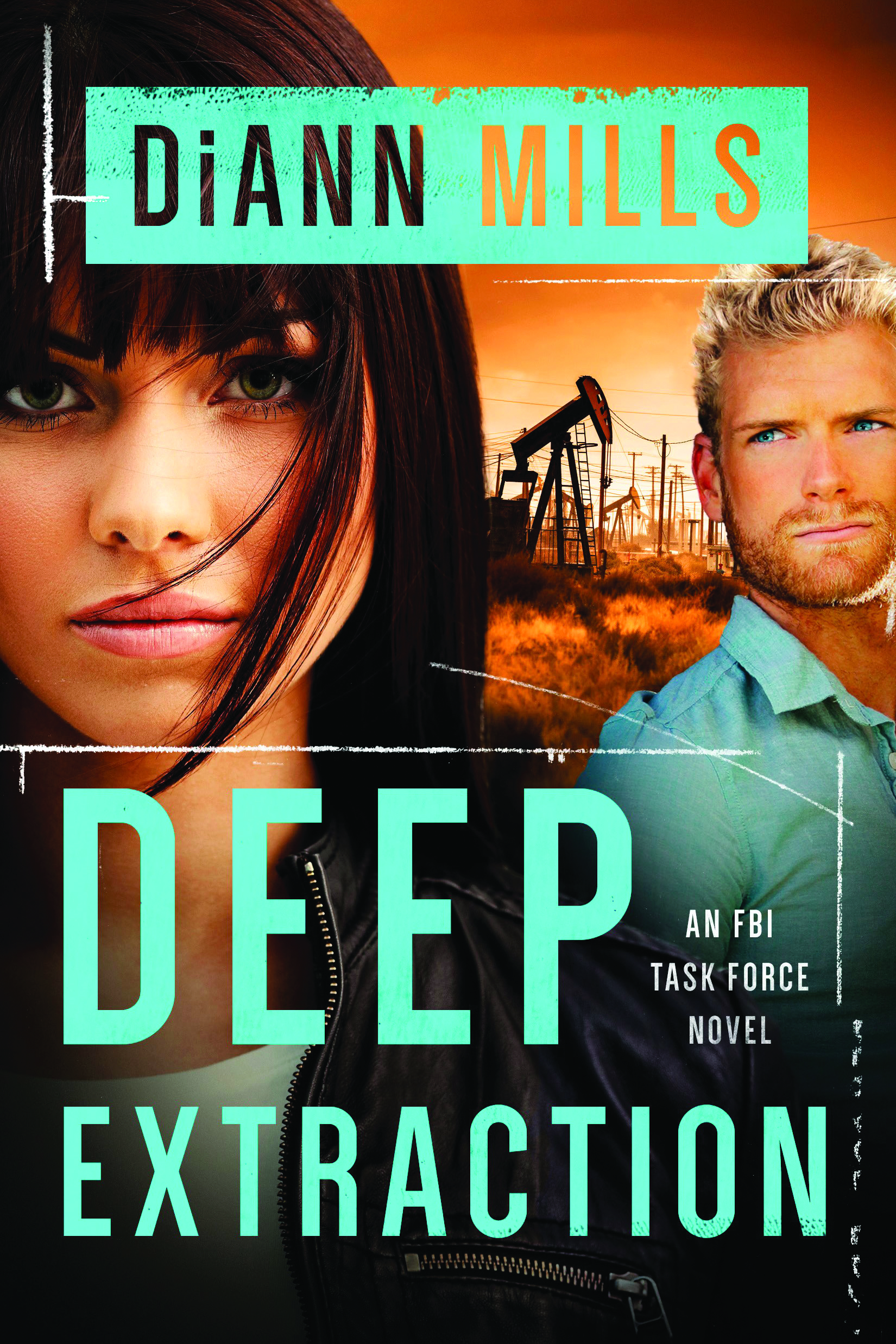
DiAnn Mills (right), the Craftsman course mentor for the Christian Writers Guild and two-time Christy award winner (Breach of Trust, 2010 and Sworn to Protect, 2011), said contests can create interest.

“Contests are a valuable tool to get your name in front of agents and editors,” Mills said. “However, the downside of that is submitting an unpolished manuscript—that can tarnish a writer’s name.”

Christy Scannell, a Guild mentor and a member of the board of the San Diego chapter of the Society of Professional Journalists, says participating in contests can lead to additional assignments.

“Contests are an opportunity to publicize your skills and interests and to network at awards banquets,” Scannell says. “My participation in contests has resulted in more freelance work and contacts.”

The caution
In addition to Mills’ encouragement to not submit anything but your best, Julie-Allyson Ieron (right) points out the dark side of contests.

“I’ll never forget the deep disappointment of the first runner-up one year in the Operation First Novel contest,” says Ieron, a Guild mentor and an author-speaker. “Mom was with me at the conference that year (I was on faculty) and she noticed the runner-up weeping in the background.”

Remember when entering contests that judging is subjective. Certainly there is good and bad writing, but when comparing great with great, a judge’s personal preference will make the difference.

“So enter, be thrilled if you win, but don’t put too much stock in that one-in-a-million shot,” Ieron says. “Keep working with excellence and consistency. Keep building your credentials and your platform, and eventually you’ll see success.”

Go for it
As long as you have a good attitude and reasonable expectations, I say enter those contests—you just might win. But even if you don’t, you’ll receive feedback on your writing that will either affirm your direction (we all need that) or help you see a problem area you were unaware of.

Feedback is key. If I enter a contest and don’t receive any, what’s the value of that contest—except to the winner? This is why the Christian Writers Guild changed our Operation First Novel contest this year. We want to provide everyone who enters with a sheet of advice and encouragement.

Our contest is only open to Guild members. We’ve recently lowered the cost of membership and upped the benefits. Find out more.

There are many contests. Check online and in The Christian Writers’ Market Guide. Use discernment and find the contests that offer what you need.


Michael Ehret is the Editor-in-Chief for the Jerry B. Jenkins Christian Writers Guild. He has written for newspapers and other print and online outlets. He edited several nonfiction books, was the senior editor for a faith-based financial services and insurance organization, and is the ezine editor for American Christian Fiction Writers.