
Get a Free Ebook

Five Inspirational Truths for Authors

Try our Video Classes

Downloadable in-depth learning, with pdf slides

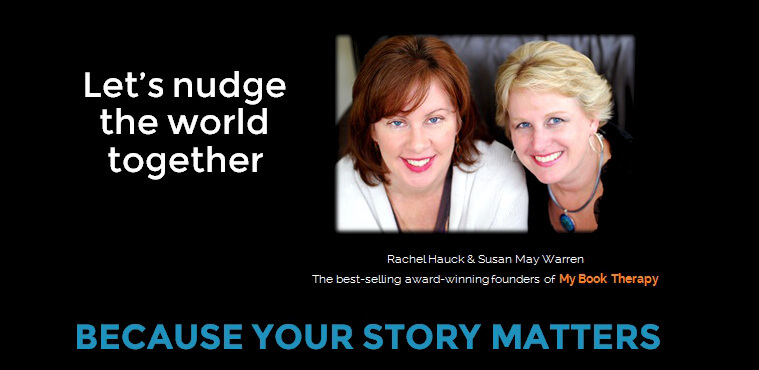
Find out more about My Book Therapy

We want to help you up your writing game. If you are stuck, or just want a boost, please check us out!

Showing posts with label obedience. Show all posts

Sunday, March 27, 2016

The Scent of Wood

The Scent of the Wood


Learning a trade from a father was essential. A tradition of following in a father’s footsteps. And so this young man obeys by mimicking the work of his father’s hands.

In the humble beginning of his apprenticeship, he is learning from his father to carve out the design of the wood, to slide his hands across the wood and feel the grain, and to carry stacks of wood.

Still a young lad and learning his trade, he needs the direction of his father’s callused hands to guide his unskilled hands, which now need a little rest.

Stepping away from the carpenter’s bench, he walks outside the shop to take a break from his work and stretch his back.

Standing in the warm, noon sun, he picks at another of the daily splinters in his hands, as the rhythm of the hammer pounds in the background. Extending his arms toward the sky, he says a prayer of thanksgiving to God the Father.

He breathes in fresh air to rid his nostrils of sawdust. First shaking his head to dislodge more sawdust tangled in his hair, he then removes his sandals and shakes out the wood shavings.

As the sun’s warmth soothes his aching muscles, he wonders when he first loved the savory aroma of wood. From the stories his father has told him, he decides the first whiffs seeped into his memory from the wooden trough at his birth.

When that dreadful day of agony came, did it revive all those scented memories of His childhood? All harbingers of torment upon a wooden cross.

What did those harbingers herald? 
  • Stepping aside from His carpenter’s life meant stepping into His glorified life.
  • The sawdust that clung to His hair now exchanged for a crown of thorns encircling His head.
  • Stretching His sore back could never compare to the excruciating pain from the flesh-revealing stripes received from a scourging.
  • The removing of His sandals to rid them of sawdust; now removing them reveals His feet for nine inch nails.
  • The wood He once carried on His shoulders was exchanged for a cross-beam along the Via Dolorosa.
  • His hands, once suffering splinters from sliding them across the grain of the wood, now feeling the pain of puncture from the shards of the wooden cross-beam.
  • The hammer that pounded in the background now pounds in rhythmic timbre upon the nail heads, piercing His hands.
  • The memory-scent of the wood, embedded in His nostrils, infuses His soul as the punctured wood releases that familiar fragrance.
  • The fresh air He so easily breathed in, now barely makes it into His nostrils as He struggles to breathe.
  • His muscles that ached from work now throb from the pain of crucifixion, which no soothing sun can ever relieve.
  • His arms extended once again...in prayer to His Father.

Following His heavenly Father’s guidance, this young Man obeyed...unto death.

And the scent of the wood was released from obedience. A sweet aroma to the Father.

Easter blessings, Lynn


Lynn Mosher loves to dig into God’s Word and treasure hunts for golden nuggets along the road Home. Lynn lives with her hubby (since 1966) in their Kentucky nest, emptied now of three kidlets and embracing three giggly grand-chicklets. Her greatest passion is to share those nuggets in her devotionals and inspirational stories, fulfilling God’s call on her life to encourage others and glorify the Lord. Lynn writes monthly for several sites and bi-weekly at her online residence, Heading Home. 

Sunday, March 22, 2015

ALL I DID WAS TAKE NOTES

by Cynthia Ruchti


"The real test of the saint is not preaching the gospel [or writing a bestseller], but washing disciples' feet, that is, doing the things that do not count in the actual estimate of men but count everything in the estimate of God…now who becomes broken bread and poured out wine in the hands of Jesus Christ for others."  Oswald Chambers, My Utmost for His Highest


How many serious students of the God-centric life include in their morning or even routines--their spiritual aerobics--a reading from Oswald Chambers' My Utmost for His Highest?

Considering this popular devotional hasn't been out of print since it first released in 1927, and that it has been translated into at least 39 languages, and that some reread it annually, it's brain-straining to calculate.


I spoke with a twenty-something young woman who had been given a leather-bound copy of the book with spaces for journal entries on each page. Reading Chambers' straight-forward yet practical approach to obedience to Christ and abandoning ourselves to His purposes awakened a fire within her.

Simple truths expressed in profound ways.

I wonder how Chambers' young widow felt when she transcribed the quote mentioned above. Her husband was the one gifted to preach, to move audiences, to influence others. After he died at 43 from complications from appendicitis, she continued transcribing his teachings from the shorthand she'd used to take notes. All she did was take notes.

We would have none of those words to inspire, nudge, and drive us deeper into God's Word if his wife hadn't used HER gift--lightning-speed shorthand--and if she hadn't devoted countless hours to record Oswald Chambers' messages.

In what ways have you become discouraged because of the humble tasks you've been assigned, the ones that "do not count in the actual estimate of men"? 

Even in the world of the novelist, if you're helping tell others about someone else's book, is it possible that one day someone who's faith has grown from that other book will realize, "I never would have heard that story if my friend hadn't 'taken notes' for me"?


Cynthia Ruchti tells stories hemmed in HOPE. Information about her award-winning novels and nonfiction, as well her speaking topics for women's events and writers' workshops is available at cynthiaruchti.com or Facebook.com/CynthiaRuchtiReaderPage.

Thursday, April 04, 2013

What next, you winner?

It’s an unfortunate truth—if there are writing contests, there will be people who do not win them and most of the time those people will be you and me.

The American Christian Fiction Writer’s First Impressions contest recently announced 2012 winners—out of almost 600 entries, five people won (one in each genre category). The organization’s Genesis contest had 438 entries this year and will announce nine winners in September.

So know going into it that, when it comes to writing contests, the odds are against you winning. Does that mean you shouldn’t enter? Not at all! But what it does mean is you need to enter contests for the right reason—getting that invaluable feedback. If you win, great! In fact, stupendous! But if you don’t, what can you learn from your contest scores?

If you were one of the 595 or so who didn’t win First Impressions—or if you find yourself among the 429 who don’t win in the Genesis contest—give yourself a half hour to mourn, but remember, putting your work out there for review in any contest is brave. Here’s the truth: Even if you don’t win the certificate, you are not a loser. You still win!

Obedience pays off

It’s true. In a real sense, you win—regardless of what writing contest you enter. You took a critical step—you submitted your writing for review. You poured out the story God laid on your heart and invited experts to judge it. You were obedient.

But you also won because you will receive your judging score sheet with those invaluable comments from publishing professionals on the details of writing, such as Characterization, Plot, Conflict, Dialogue, Setting, Mechanics, and Overall Writing Quality.

If you apply the suggestions you receive to your manuscript, you could be a finalist—or even a winner (again)—next year.

Male winnner image courtesy of imagerymajestic; Female winner image courtesy David Castillo Dominici/ FreeDigitalPhotos.net

Michael Ehret loves to play with words and as editor of the ACFW Journal, he is enjoying his playground. He also plays with words as a freelance editor at WritingOnTheFineLine.com, where he often takes a writer Into The Edit, pulling back the veil on the editing process. He has edited several nonfiction books, played with words as a corporate communicator, and reported for The Indianapolis Star.

Sunday, June 26, 2011

What’s It All About?

Anita Mellott homeschools and blogs at From the Mango Tree.


To obey is better than sacrifice, and to heed is better than the fat of rams. 1 Samuel 15:22b

“Write to encourage others.” I sensed a gentle “whisper” in my heart five years ago.

“What encouraging words do I have?” I argued. “Besides I’m spent after editing others’ words all day.”

The whisper continued through my job loss of 13 years as a writer/editor with Habitat for Humanity International and the angst of a high-risk pregnancy. When, against all medical odds, I held our baby in my arms, I knew I couldn’t ignore that soft voice any more.

As I wrote an article here, a devotional there, things began to fall into place in a way only God could orchestrate: an established author mentored me and introduced me to the American Christian Fiction Writers. I joined a critique group, where I was encouraged write a proposal for an idea that had been on my heart for a while--a devotional book for homeschooling parents. Twenty-seven rejections later, I signed a contract with Judson Press. About 10 days ago, School is Where the Home Is: 180 Devotions for Parents released—a testimony to God’s ability to bring to fruition an idea He had sparked.
As wonderful as it is to hold a copy of the book in my hands, I’m holding on even tighter to the following truths I’ve learned so far on this journey:

* It’s all about obedience. Sometimes God leads us to traverse paths that may seem strange—writing in a genre that isn’t considered “current,” or pursuing an idea that seems like it won’t work. Questions and doubts may fill our hearts when we sense the call. As we step out to obey Him, at times with trembling feet, our obedience can come at a price. We may be called to write through the valleys, or to keep writing without any signs of a contract. But it’s precisely in those moments of vulnerability--when our writing is a sacrifice--that He shows Himself strongest. The words of David during these times, bring comfort, “I will not sacrifice to the LORD my God burnt offerings that cost me nothing” (2 Samuel 24:24).

* It’s all about His timing. Publication is in His hands. When the time was right, He opened doors I never thought were possible. He has also shut doors that can not be pried open. “In His time, He makes all things beautiful” (Ecclesiastes 3:11).

* The results are in His hands. When I’m honest with myself, I admit I want to write a bestseller, to impact many for Jesus. Yet, in the quiet of His presence, He reminds me that He alone knows the end. I’m merely His vessel. I can only write when He fills me. Colossians 3: 23 reminds me, “Whatever you do, work at it with all your heart, as working for the Lord, not for human masters.” I am to do what I can to the best of my ability—studying and honing the craft of writing, and helping with marketing. The results are in His hands—whether it touches hundreds or a few--His economics are not mine. When I take the focus off myself and my desires and motivations, I can rest in what He desires to accomplish.

“Lord, please be the ink as I desire to be your willing pen.”

Sunday, September 27, 2009

What’s important?

Anita Mellott writes to encourage others on their journey of life. With a background in journalism and mass communications, she worked for 13 years as a writer/editor for Habitat for Humanity International. She balances homeschooling and the call to write, and blogs at From the Mango Tree (http://amellott.wordpress.com/).

“I guess I’ll get a job when my kids go off to high school.” Debra, a friend and fellow homeschooling mom, picked up a doll from the floor to hand to my toddler as we sat in my family room. “What about you?”

I grinned and pointed to my toddler, “It’s going to be a while before that happens. But when it does, I’ll probably write full-time.”
“What?” Debra dropped the doll and stared at me. “I thought you were doing that stuff as a creative outlet. You mean you’re actually working toward publication?”
“Well, that’s what most serious writers do.”
“But, you don’t even know if you’ll be successful or not, Anita.” Her eyebrows almost disappeared into her bangs.
“Umm, well to be honest, I figured if God called me to this, He’ll work things out…” My voice trailed off as she shrugged and turned her attention back to my toddler.
Success. The word embedded itself in my mind and made its presence known almost daily after that conversation.
What would success as a writer look like? Multiple contracts? My books in stores around the country and perhaps even in other countries? High book sales? An income?

As the months passed, rejections trickled in and a paying market closed. I was ever aware of the uphill task of breaking into the publishing world, especially as a newbie.
Would I ever be successful as a writer?
But what was success? The question was never far from my mind. I loved the exhilaration when words gave life to the teeming ideas in my mind, and the sheer joy when everything began to fall into place under the guidance of the Master Designer.
But was it enough just to write? I neither had contracts, nor pay checks. I spent every spare minute working on a single idea that I felt drawn to time and time again.
Was Debra right?

Several months later, my tween and I sat at our kitchen table, discussing a heart issue that raised its ugly head now and then.
“What Daddy and I really need from you is obedience.” I tried to catch her eye as she twirled strands of hair around her finger and looked everywhere else, except at me.
“Did you hear me?” I raised my voice. “You don’t always have to ‘get’ why you’re supposed to obey, you just need to do it.” I stopped short.
“That’s it!” I pounded my hand on the table. My tween started.
“What?” She stopped twirling her hair and looked at me.
“That’s it.” My voice went up a decibel.
“Mama, what’s going on?” She stared as I began to drum my feet on the floor, joy bubbling up inside.
“It’s obedience, that’s what it is.” She rolled her eyes. I laughed.
“Don’t you get it? That’s all God requires of me. It doesn’t matter whether what I write gets published or not. It doesn’t matter whether I earn a single cent from writing or not. All I need to do is obey Him.”
“What is more pleasing to the Lord: your burnt offerings and sacrifices or your obedience to his voice? Listen! Obedience is better than sacrifice, and submission is better than offering the fat of rams. 1 Samuel 15:22, NLT


From the Mango Tree

Sunday, February 08, 2009

An Ordinary Thing


Marca Lee Laycock lives in Central Alberta with her husband, two adolescent Golden Retrievers and a six-toed cat. Her writing began in the attic of her parents' home where she wrote stories for her dolls. They didn't complain, so she kept it up. Her debut novel, One Smooth Stone, won the Best New Canadian Author Award in 2006.


I love the book of Exodus, especially chapters 4 & 5. I love the way God used an ordinary thing – a shepherd’s staff - to reveal Himself to Moses and Aaron and the people who watched.

God made that ordinary thing into a divine instrument. It was a tool that became a concrete symbol of God’s presence and God’s power and His desire to communicate with those who would dare to wield an instrument of His choosing.
Each miracle Moses and Aaron performed before Pharaoh and the Israelites was done with the staff in hand and was the means by which the people learned about God. It was also the means by which Aaron and Moses learned about God.

I believe we writers have been given a tool, an instrument as ordinary as that shepherd’s staff. God wants us to use it to set His people free, to His glory. Just as God gave Moses his staff, He has given us the gift of language that we might both speak and listen, that we might both teach and learn. He has given us the gift of the written language to show that He is present with us and to reveal His power. He has given these gifts to show us the depth of His love and His desire for communion with His people.

Like Moses, we may want to run from the amazing things God will do with ordinary things. Like Moses, we may show signs of false humility, and say, my talent isn’t that big; I don’t expect to do such great things for God. We must learn it is not what we will do for God, but what God wants to do and will do through us when we are willing.

Like Moses, we must trust our God enough to pick up the snake by the tail. We must wield the instrument He has given us with faith and expectancy, coming before His throne boldly with the confidence that comes from knowing we belong to Him, knowing He will never spurn His own children.

The gift of language is God’s instrument in our hands. May we use it wisely with humility and grace, to His glory.

Saturday, January 31, 2009

A Writer's Obedience

Marcia Lee Laycock is the author of One Smooth Stone, Focused Reflections and The Spur of the Moment. Visit her website - http://www.vinemarc.com/

A while ago my husband and I were surfing the channels on TV when we happened upon a biography of Henri Nouwen. I was moved by his story, by the humility he learned when he went from being an acclaimed professor and author to a care-giver for a mentally challenged adult at L'Arche Daybreak Community.

And I was struck by Jean Vanier’s words – “Henri’s call was not just to be with
Adam or just to care for him, it was to announce him to us, to the world.”

That made me think of another story I heard Philip Yancey tell, of how he sometimes felt guilty when his wife would come home after a busy day of helping people and ask him what he’d done that day. His answer – “Well, I found a great adverb!” - made him feel less than adequate.

I’ve had those same feelings from time to time, especially when a member of our congregation looks at me like I’m that two-headed writer who sits at a computer all day and doesn’t really “do” anything.

It’s at those times that Mr. Vanier’s words ring with a truth I try not to forget. When I feel misunderstood or even guilty, I remember that there were those in the Bible whose only role was to sit at the King’s feet and write down what He did. They were to announce the King’s greatness to their world.

We are to do the same in ours. Just as Henri Nouwen announced the beauty of God in the guise of a disabled man, we are to look for those people, places, things, where God is hidden, and reveal Him.

The best place, the best vantage point from which to do that is sitting at His feet, watching, listening, waiting, and then, writing. For the writer, this is obedience.

Sometimes I envision the Lord taking my chin in his hand and turning my head so I will see what He wants me to record. Sometimes I envision him touching my eyes so they can see.

And then I write.

“Each one should use whatever gift he has received to serve others, faithfully administering God’s grace in its various forms.” 1 Peter 4:10

Saturday, September 27, 2008

Watching Someone Read by Marcia Lee Laycock

I was on my way across the country to participate in the School of Writing at Canadian Mennonite University. I was nervous about going, even though my work had been accepted and I'd been granted entrance to the advanced fiction class with Canadian literary icon, Rudy Wiebe. To gain that entrance I had submitted three short stories that I'd worked on long and hard, but I had chosen to workshop another ten pages - part of the sequel to my novel, One Smooth Stone. Would they like it? Would the writing be good enough?

As I settled into my seat on the small plane, the stewardess came down the aisle and asked us all to move forward, to balance the load. I ended up sitting one seat back and across the aisle from a young woman who took out a book to read. As she did so, the colour caught my eye. Hmm ... same colour as the cover of One Smooth Stone.

I watched out the window as the ground dropped away and the plane lifted off, then glanced across the aisle again. The young woman had turned the book. My book. It was a surreal moment. A comforting, though in a way, disconcerting moment. What did she think of it? She seemed to be reading eagerly enough. But did she like it? Was it good enough? For the rest of the flight I peeked over at the woman, trying to gauge her reaction. In the flurry of disembarking I lost track of her and never did find out.

Then I arrived at the University and was swept into the routine of classes and writing assignments. The day my excerpts were to be critiqued, my palms were sweating and my heart was beating a little faster than normal. My fellow classmates began to comment on my work. According to the rules I was not allowed to speak until given permission by the instructor. Staying silent was at once a relief and a hardship. Then Rudy made some comments, asking for further input from the class as they dissecting the excerpt.

Then his words, "This is good writing." Words from "the master." I could have danced down the aisle.

But now the euphoria has worn off as I'm continuing to work on the sequel. What will people think of it? Will it be good enough?

And then I go back to why I write - because it's the way I'm "wired." Because I can't not write. Because the images and characters and scenes and emotions flood out of me through a keyboard and I can't stop them any more than I could stand in a flood and stop the raging waters.
And then I remember who made me this way, who controls what happens to the words I type on this computer, and who will some day say, "well done," if I work in obedience to Him.

And I realize how much I want to hear that Master's voice and how much I want to some day dance down the aisle that leads to His throne. So I go on, trying to be obedient to the task of being a writer, fighting off the self doubt and the need for affirmation from men when the only thing that counts is affirmation from Him.