Get a Free Ebook

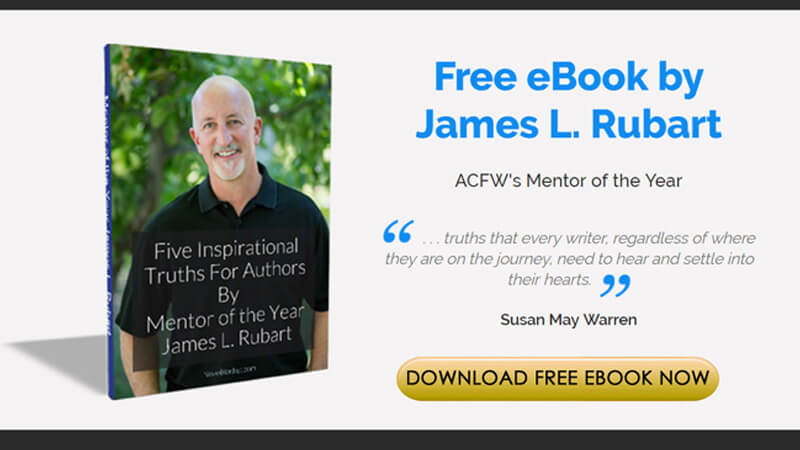
Five Inspirational Truths for Authors

Try our Video Classes

Downloadable in-depth learning, with pdf slides

Find out more about My Book Therapy

We want to help you up your writing game. If you are stuck, or just want a boost, please check us out!

Showing posts with label critique. Show all posts

Tuesday, July 18, 2017

A Bit of Advice On Taking Advice

by James L. Rubart, @jameslrubart

In ninth grade, I wanted to be a rock star. (Yeah, me and every other kid who had a modicum of talent on the guitar, bass or drums.)

That meant buying an electric guitar. I’d played an acoustic for a few years, but I needed something I could plug into an amp that would go to eleven. More than that, I needed a guitar that I could play lead guitar on. I wanted to play those screaming solos that would make girls like me and guys want to be me.

Wednesday, June 07, 2017

How Not to Do A Critique

By Linore Rose Burkard, @LinoreRBurkard

Seasoned writers know that having one's work critiqued by fellow writers (or even savvy readers) can determine the difference between a finished piece that is merely "good" or one that sings. Critique partners can strengthen a manuscript, clean up errors, and make invaluable suggestions that the writer might not think of.

Wednesday, February 22, 2017

The Broken Blog

By Yvonne Lehman

BROKE… at Christmastime!

On December 12, I became literally broken – physically. Then I discovered the truth in 1 Corinthians 12: 12, 26 (NLT): “The human body has many parts, but the many parts make up only one body… If one part suffers, all the parts suffer with it…”

There I was, 20 minutes before 14 Sunday school class members were to arrive for a Christmas party at my beautifully decorated home, the flocked Christmas tree beside the fireplace, two tables set with lovely china, crystal glasses, cloth napkins, aromas of meat concoctions in the crock pot and oven, candles glowing and emitting their holiday scents. Dirty Santa gifts festively wrapped. My Let It Snow novel ready to be given to each. Perfect!

Friday, June 19, 2015

Iron Sharpening ~ Tamara Alexander


Iron Sharpening Iron
by Tamera Alexander

“As iron sharpens iron, so one man sharpens another.” 
Proverbs 27:17

Having a writing critique partner has made all the difference in my writing and in my writing journey. Deborah Raney and I have been writing critique partners for more than twelve years, ever since we met at the first American Christian Fiction Writers conference. And while not all critique partners become friends, friendship has been a natural outgrowth of our working relationship, and I’m so grateful. 

Over the course of critiquing twenty-plus manuscripts between us, we have learned a lot about what to look for in a critique partner, what works, what doesn’t, how to handle conflict and competition, and how to “agree to disagree” with grace.

Here are a few quick things we’ve gleaned through our working partnership.

Why have a critique partner?
  • A critique partner (CP) offers fresh perspective. We’re often too close to our own story to read it as an unbiased reader, let alone evaluate it critically. CPs can see not only technical glitches in each other’s work but also story strengths and weaknesses, and ways to potentially deepen the layers of the story and characters.
  • We bring only one opinion or viewpoint to the reading of our own work—and it’s obviously biased. A CP can view our work from a different point of view since they’ve likely had a different upbringing and life experiences.
  • Since a CP isn’t as close to your story as you are, they often come up with ideas or plot directions that you never would have dreamed of.
  • Two people bring two sets of strengths to the table, and can offset each other’s weaknesses.
  • When one of you is down, the other is there to build up! Deb and I are tough on each other, but we’re also huge fans of each other’s work.
  • It’s much easier to see “mistakes/room for growth” in someone else’s writing. Deb and I learn from critiquing each other’s manuscripts, and then apply those principles to our own writing.
  • Brainstorming! With SKYPE and FaceTime, CPs can “video brainstorm” any time, day or night.

Where and how do I find a critique partner?
  • Connect with someone at a writer’s conference or local writers group. And remember, you don’t have to write in the same genre. 
  • One-on-one partnerships often develop naturally out of larger critique groups; so join a group with an eye to eventually working with one other writer as a CP.
  • Ask a well-read non-writing friend to critique your manuscript. A non-writer who loves to read your genre can be an invaluable source for clarity and pacing of story.
  • If feasible, consider paying a professional editor for a critique. Numerous well-qualified freelance editors are available and can add depth and clarity to your manuscript.
  • Sign up for a paid critique at a conference you’re attending. Worth every penny!
  • As you’re looking for a CP, become your own. Read books on self-editing, such as Revision & Self-Editing by James Scott Bell (Writer’s Digest Books) and Self-Editing for Fiction Writers by Renni Browne & Dave King (HarperCollins).

Do you have someone sharpening your writing skills? If yes, what’s something you’ve learned from that relationship? 

~~~~~~~~~~~~~~~~~~~~~~~

Tamera Alexander is the USA Today bestselling author of numerous books, including A Lasting Impression, A Beauty So Rare, To Whisper Her Name and From a Distance. Her richly drawn characters and thought-provoking plots have earned her devoted readers worldwide, as well as multiple industry awards.

After living in Colorado for 17 years, Alexander has returned to her Southern roots. She and her husband now make their home in Nashville where they enjoy life with their two adult children who live nearby and Jack, a precocious terrier.


To keep up with Tamera Alexander, visit www.tameraalexander.com, become a fan on Facebook (tamera.alexander) or follow her on Twitter (@tameraalexander) or Pinterest (tameraauthor).

Thursday, June 02, 2011

Eva Marie Everson Chases Sunsets

Today, bestselling author Eva Marie Everson shares about her writing journey, her involvement with the Jerry B. Jenkins Christian Writers Guild, her new book, Chasing Sunsets, and her embrace of Southern Fiction as a genre.

We love writing journeys here, so take us on a little tour of Eva Marie Everson’s life as a writer—particularly how you came to embrace Southern Fiction, a fairly recent change for you.

I wrote my first novel—serious first novel—in 1997 and it became the third book I saw published. It went on to be a three book deal with Barbour (Shadow of Dreams, Summon the Shadows, and Shadows of Light). These books went way over the norm for Christian publishing at that time. Katie Webster, my protag, was an exotic dancer who found redemption first in her husband and then in her Lord. A lot of folks said I couldn’t write something like this and see it published, but I did.

For a while after that, I wrote nonfiction, did some editing, etc. Then my good
friend Linda Evans Shepherd asked if I’d like to write a book called The Potluck Club with her. It took 18 months of planning and praying and submitting before Baker/Revell picked it up, but it became a 7-book series that continues to sell—dare I say it?—like hotcakes!

While writing the books, it became evident through my Southern character Goldie that writing
Southern Fiction was something I should concentrate on. I talked to my editor Vicki Crumpton about a few ideas, and voila! Things Left Unspoken and This Fine Life were released in 2009 and 2010. Chasing Sunsets (the first in the Cedar Key novels) releases this month—with more to follow.

What was the genesis of Chasing Sunsets? Was there a specific "what if" moment?

Yes! I found
Cedar Key in 2004.
In probably 2008, I went back (for the umpteenth time). I took some magazines so I could flip through them while sitting on the balcony of my condo. I saw an ad for Liz Claiborne that had four blondes and one dark-haired girl posing in a beach-home setting, all wearing white. The dark-haired girl (a Latina) looked very pensive. A story popped into my head immediately. I set it in Cedar Key, wrote the proposal, took it to my agent and editor—and the rest is history. We found we had a 3-book deal.

What would you do differently if you were starting your publishing career today?

I don’t know that I would do anything differently in that I see God’s hand in the way my story has played out. But, I wish I’d have seen the direction of writing Southern Fiction sooner. This really is my niche, this is where I’m most comfortable writing.

You are clearly in a season of success. Do you still experience self-doubt regarding your work, or struggle in a particular area such as writers block or angst driven head-banging? What are some helpful overcoming hints you’ve discovered?

Ohmygoodness. Yes. Yes, yes, yes. How many times do I write and write and write, giving it everything I have, and then sit back and say, “This is just awful. Just awful! You can’t write. What makes you think you can write?”

Sometimes that means I really just dumped some pretty bad stuff onto the page and I need to delete and start over, but other times it’s just me going through the self-doubt process.

Good news is that I know I am not alone.

I am a mentor with
Jerry B. Jenkins Christian Writers Guild . So when my students say the same thing to me, I can then relay to them what I’ve learned as I put myself through the paces of self-doubt. They, in turn, say, “Hey, if you feel that way—and you’ve got all these books published—maybe I’m going to be all right.”

I like to share a story from writing Chasing Sunsets. I was about 1/3 of the way done and I just wasn’t sure it was any good. So I called a trusted friend who is a voracious reader and asked her to take a look-see and give me her honest opinion.

Well, she did—and she didn’t like it either. I asked her, “Why not?” and she very honestly said, “I don’t care about Kimberly and Steven.” I realized then what the problem was and was able to fix it in re-writing. When I sent the manuscript to her again, she loved it!

It’s great to have that kind of relationship with another writer—someone you can trust to be honest with you. What advice would you offer to the wet-behind-the-ears writer beginning her or his writing journey today?

Well, obviously, as a CWG mentor, I suggest courses such as those offered by the Guild. And as an executive co-chair for the
CWG Word Weavers (a national critique group), I suggest joining such a group. The feedback you receive will make you better.

And, of course, attend writers conferences, novel writing retreats, and read books on writing. And, finally, write!

Since you mentioned Word Weavers, which recently became a part of the Christian Writers Guild, let’s explore that a bit. What makes Word Weavers work?

Simply put: we work hard.

I was one of the original five who started the group and the first president as it grew. I worked in that capacity for seven years, all the while watching writers comes in green as grass and then getting published and winning awards.

What makes it work is that it is about community. When one of us gets published, we all get published. When one wins an award, we all win an award. This isn’t a “come let me pat you on the back” kind of group. This is a “come let me show you what works and what doesn’t” kind of group. We keep one another accountable.

How is the transition to being a part of the Guild going? Any challenges that have had to be overcome? What positives have come from the affiliation?

Obviously, there are challenges when one group becomes a part of another, but this really has been smooth! The biggest challenge, if you can call it that, is how quickly folks from across the country—the world in fact—have said, “We want to form a Word Weavers group in our community!”

Larry Leech, Cheri Cowell, and I (the national leadership team) are working really hard to keep up. We’re amazed, but thrilled, at what we are seeing so far.

Christian writers have to rise to the bar that has now been set in Christian publishing. Word Weavers is a natural fit with CWG because we are about excellence in craft. Not just craft. Writing is one thing. Writing well is another.

As a mentor with the Guild, what is your philosophy of mentoring? Why is mentoring a good thing? What does it offer the mentee? The mentor?

My philosophy is to give each student the best I can. If they want me to just pat their backs, they won’t get that. I let them know when they do well and I tell them what to do to write better. I also try to give them ideas for publication.

Mentoring offers the mentee the opportunity to have someone who has been at this a while look at their work and help them shape their craft. For the mentor—well—let me tell you a story:

I have a student (and this is just one of many who inspire me) who has so totally moved me; every time I get a lesson from her and go over it, I end up in tears. She is amazing, not just in her ability to write (though that is surely there) but in what she has had to overcome to write.

The day she gets published for the first time is the day I “get published” again because my heart is so with her and her work. I’ll be as proud as if I’d written the words myself.

What is the best writing advice you have ever heard—or wish you had followed? Why?

Find time to rest.

Once I get on a project, I’m like a maniac. But I learned the hard way to take that one day of rest. I believe
Shabbat was created for man to both pause and reflect and thus be drawn back to God. It’s like the balancing scales have returned to side-by-side. I have so learned to find peace in rest.

What one issue ignites your passion? How does this fuel your writing? What would you do with your life if you didn't write?


Eva Marie's Mountaintop Experience in Israel
I have a great love for Israel, the Old Testament, the commonality of the Jewish and Christian faiths and how, without Judaism, the branch of Christianity would rot off and die. When I write nonfiction, I write a lot about how the Old Testament and the New Testament support each other.

When it comes to fiction, I feel very strongly that life happens and then it catches us (so often) unaware. We hit those bumps in the road because we were not prepared for the results. Everything is fine—and then it is not.

That becomes evident in my fiction. These are the times we have to dig in and find our strength in God. It may seem subtle at first, but when you really look at my work, God’s hand is all over the place.


Sometimes you get a second chance
at your first love

Kimberly Tucker's life hasn't turned out the way she thought it would. While her ex is living it up, she struggles to understand what went wrong. When her two sons end up spending five weeks of summer vacation with their father, Kim plans a respite at the family vacation home on tiny Cedar Key. As she revisits the long-forgotten past, she discovers that treasures in life are often buried, and sometimes you do get a second chance at love.

Let yourself get swept away to an island retreat of warm tropical breezes, sandy beaches, and the most glorious sunsets you can imagine.

Endorsements
“In Chasing Sunsets, Eva Marie Everson takes her readers on a beautifully written journey through one woman's unexpectedly altered life. The convincing cast of characters and lovely imagery had me wishing I could pack my bags and run off to Cedar Key.” Jennifer Erin Valent, author of Fireflies in December, Cottonwood Whispers, and Catching Moondrops

“In
Chasing Sunsets, Eva Marie Everson tells a poignant story of grace, second chances, and the depth of a family's love. I rooted for sympathetic and lovable Kimberly Tucker through every page. Thoughtful, romantic, and warm as a tropical breeze. Highly recommended.” Julie Carobini, author of Fade to Blue

Michael Ehret is the Editor-in-Chief for the Jerry B. Jenkins Christian Writers Guild. He has written for newspapers and other print and online outlets. He edited several nonfiction books, was the senior editor for a faith-based financial services and insurance organization, and is the ezine editor for American Christian Fiction Writers.