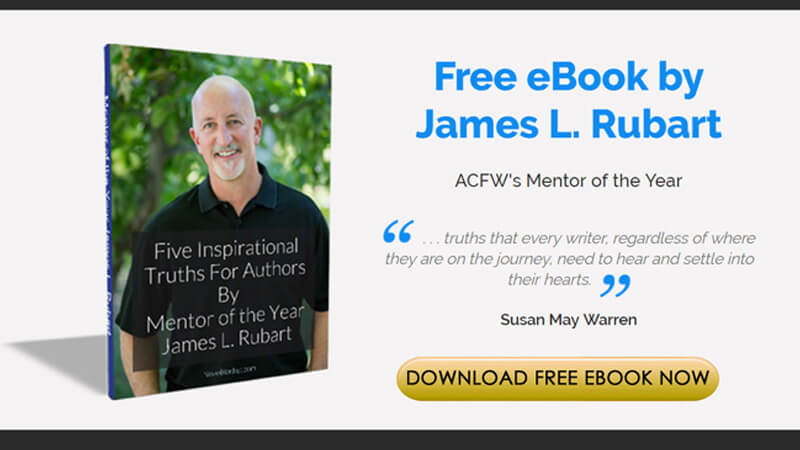
Get a Free Ebook

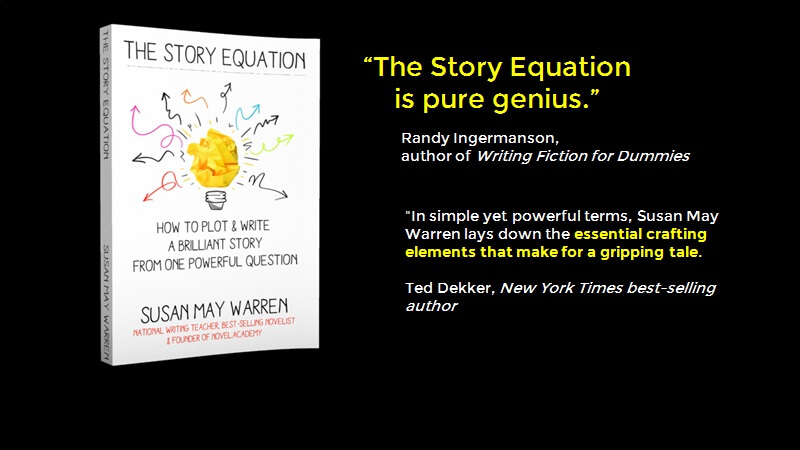
Five Inspirational Truths for Authors

Try our Video Classes

Downloadable in-depth learning, with pdf slides

Find out more about My Book Therapy

We want to help you up your writing game. If you are stuck, or just want a boost, please check us out!

Showing posts with label reading. Show all posts

Tuesday, September 27, 2016

Reasons Why Writers Should Love E-Books

Photo: Research with highlighter

by Alton Gansky

Easily accessible E-books have been around for a decade and a half. The process and invention go back a little more than that, but the real surge came in the early 2000s. Since then, digital publishing has become a mainstay for publishers, indies, and writers. Several times a year, someone writes an article about how 1) e-books are crushing print books, or 2) how print books are crushing e-books. At the end of the discussion, however, both sides still agree that there are a lot of e-books being published.

Writers should love e-books. In fact, (don’t throw stones until you’ve finished this paragraph), for writers e-books are superior to print books. I’m not talking about publishing e-books. That’s a topic for another time and probably one best handled by a different writer. I’m talking about e-books used to help your work-in-progress.

Yes, I know that there remains a debate about the superiority of physical books. The pleasure, the feel, even the smell satisfies the avid reader more than digital ink. The debate seems silly to me and reminds me of the couple who argue over which is better, salt or pepper. I leave such jawing to others. I want to present my belief that e-books are to be valued by any writer that has to do research to make his/her work-in-progress the best it can be. Here’s what I mean:
  1. Never be without material to read. This is me stating the obvious first. One great advantage to e-books is that the writer can carry around a library in a single device. This means that those books you use for research or inspiration are always within reach. I have apps on my iPhone, iPad (several iPads actually—don’t judge me). Those apps include Kindle, Nook, and iBooks. If I’m waiting at the dentist or the auto shop (don’t ask, it’s too sad for words) I can continue my research. I have scores of physical books on various topics. I can’t imagine carrying them with me when I go somewhere. With digital books, I can do just that.
  2. Cheaper research. E-books are more often than not cheaper to purchase than their physical counterparts. If you’re having to do a lot of research on say, WWII American submarines, then you can drop several pretty pennies on some of the books you’ll need. The price of one hardbound book can be used to buy several e-books (not always, but frequently).
  3. Makes you a better interviewee. Like you, I’ve spent a great deal of time doing radio interviews. This was especially true for my books 60 People Who Shaped the Church and 30 Events That Shaped the Church. I’ve also done a large number of interviews for my novels. Since I ain’t all that smart, I like to have notes in front of me. I have found having an e-book version before me lets me run down the info I need.
  4. More efficient reading. 
    • Highlighting. I love the highlighting function of e-books. Sure, you can highlight a physical book. I’ve marked up a great many of those. The point is: An e-book allows the writer to highlight some important bit of info needed in her work-in-progress. Especially when one considers the next item:
    • Highlight summary. Most e-readers not only allow digital highlighting but will display every highlight as a list, making it remarkably easy to find what you’re looking for.
    • Search function. This is a real time saver. Ever wonder why e-books don’t have indexes? They don’t need them. No index is easier to use than a Find function in an e-book. Recall a word or two of a line you read? Search for it and the reader will find all words that match your search and say, “Here ya go, would you like some cookies too?” Okay, maybe the cookie thing is a fantasy, but the rest of my statement is true.

Well, that’s a start. Can you think of other ways e-books can help you with your current project?


Alton Gansky is the author of 50 books, fiction and nonfiction. He is also the co-host of Firsts in Fiction podcast.
Alton Gansky

Monday, August 29, 2016

Hook ‘em Tight: One Technique for Writing a Book They Can’t Put Down by Author Janine Mendenhall

So you’d like to write a novel, huh? I can appreciate that. I want to write another one too. In fact, like you, I’d like to keep writing them from now on—a book a year, or maybe even two. But the thing is neither one of us wants to produce an ordinary piece. 

We both want to please our readers so much that they won’t want to put our books down, right?

That means we need to hook our respective audiences not only with an excellent story full of conflict-based tension, but most especially, where people normally think it’s time to stop reading.

So when do readers reach for their bookmark? (I’ll give you one guess.)

That’s it, at the end of a chapter!

Before I go any further, I need to give credit where it is due because, the truth of the matter is, I learned to write (and still am, by the way) by following Steven James’s directions in Story Trumps Structure and from other great Craft books written by James Scott Bell, Jack M. Bickham, and Jordan E. Rosenfeld—to name a few.

Now that that’s settled, let me share three ways to keep your readers reading. 

3 Ways to Hook Readers at the End of a Chapter 

(My examples come from my debut inspirational historical fiction/romance novel. Preview Starving Hearts at http://www.janinemendenhall.com/preview-starving-hearts/.) 

  1. Modify Your Thinking. The close of a chapter is NOT the end. It’s the beginning of your next scene, or one that will follow soon enough. Instead of tying things up in a nice little bow and losing the tension you’ve built up, create some suspense by leaving a string untied. 

Add an extra dose of tension in the language too.

These are the last three sentences of Chapter 2--Savior in Starving Hearts.

        At the far end of the gallery, she entered the deserted renovation area. Honestly, at the moment, she could not care less that it was off limits. 
       Opening the door of the first room she reached, Annette stepped in and lurched to a halt.

Did you see and feel that? 

The door opened, but we couldn’t see what Annette saw. The shocking word lurched created a touch of suspense, and the reader turned the page. 

Once the page is turned, we’re safe, as long as there’s a good hook waiting to catch the reader at the beginning of the next chapter.

  1. Create Nagging Doubt. Our readers have very quick minds. If we offer just enough information to create a slight imbalance, they will get the subtle hint and ask themselves “But did she?” (or a similar contrary question), and that will be enough to make them move on and find the answer.  

Here’s what I mean.

Read the last three sentences of the Prologue of Starving Hearts. See if you feel enough doubt to cause you to ask what I call a contrary question.

         Annette was too overwhelmed to care. All she wanted was Mother’s assurance that she would never see or hear of the fiend again. Mrs. Chetwynd agreed that was best, and she would personally see him immediately dispatched from the estate. And that was precisely what Annette believed Mother would do.  

Of course, readers don’t necessarily realize they are constantly scrutinizing stories as they read them. But did you recognize the subtle “But did she?” that came at the end of that sentence? 

My heroine, Annette, believed her mother would do what she said, but the fact that I wrote it this way caused you to doubt that her mother did what she said.

That nagging doubt is enough to keep the reader going, of course, it also makes a promise, and as Steven James always says, we need to be very careful to keep our promises to our readers. 

If we don’t, they will close our books and never read any of them again. (If you haven’t read Story Trumps Structure, please know, it is well worth your time, and Steven James isn’t even paying me to say this. ☺)

  1. Play Opposites Attract.  I cannot emphasize it enough. Our readers are very intelligent, and they often automatically predict what will happen next. We can take advantage of this brilliance by giving them something negative or scary to worry them without even putting it on paper.

Notice the end of Chapter 4—The Plan. 

You will automatically predict that the opposite of what I’m telling you is really what will happen next. And because that opposite is attractive in a negative way, it’s likely you’ll want to find out how bad things get for my hero, Peter.

Try it, and see what happens.

         Adjusting his evening coat again, Peter willed himself to move to the door. He had made his decision. He would propose tonight, and she would accept him. Then his life would begin, and all would be well.

It did happen, didn’t it? You predicted she would not accept his proposal and that things would not end well, right? That’s because you’re smart, just like our readers.

On that note, it’s time to say goodbye, at least for now. I hope you enjoyed this little lesson on 3 Ways to Hook Readers at the End of a Chapter so they can’t put your book down. Visit me and preview Starving Hearts http://www.janinemendenhall.com/preview-starving-hearts/ to see if I’m successful at keeping your attention. 

If I do, remember, the credit for Craft goes to those I mentioned above, but the real glory belongs to God.   “Whoever abides in (Him) . . . bears much fruit, for apart from (Him) you can do nothing.” John 15:5


Bio:

Janine Mendenhall teaches teens English, of all things! Sometimes she sleeps, but most nights she reads, writes, or watches movies like “Pride and Prejudice” and claims she’s researching her next book. “Splickety Love” and “Splickety Prime” have published her flash fiction. She and her husband, Tom, live in North Carolina where they and their two golden retrievers help gratify the needs of their five children and two cats.

Website


Monday, August 08, 2016

Are You a Re-Reader?

post by Michelle Griep

“To quote French author Francois Mauriac, ‘Tell me what you read and I’ll tell you who you are’ is true enough, but I’d know you better if you told me what you reread.” 

 ~ Sarah Wendell, American author and reviewer

Do you ever re-read a book? Sometimes when I admit this out loud, I get the same reaction as if I'd said, "I haven't washed my underpants in three weeks." Yep. That combination slack-jawed frowny face type of look. But come on, folks, I can't be the only freak out there.

Turns out I'm not. In fact, there's an entire page on Goodreads devoted to books recommend to re-read. What's up with that? With all the bajillions of books out on the market, why pull an oldie off the shelf?

One study based on interviews in the U.S. and New Zealand reveals that a 'second run' (techno term for rereading a book) can offer "profound emotional benefits." But that warm and fuzzy feeling isn't the only reason why people pick up a title for the second or third time. . .

TOP 5 REASONS TO RE-READ A BOOK

1. To Run Away
Everyone needs to press the eject button now and then and escape from a nose-diving schedule. When you open a favorite book, it's like running away to Happy Land because you know exactly what will happen with characters you feel safe with. . . which can be the polar opposite of reality.

2. The Movie Version is About to Hit Theaters
You remember loving the story, but you want to make sure you don't sound like an idiot when you tell your buddies how Hollywood got it all wrong. Think of this as the research approach to re-reading.

3. It's Tradition
My girls, though they're now in their twenties, still read The Christmas Puppy every Christmas Eve. It's for preschoolers. Sheesh. But they can't have a proper Christmas unless they read it together.

4. Go Deeper
Maybe you missed a theme the first time around. Even if you didn't, there are always nuances and things you didn't notice before because guess what . . . you're older. You're not the same reader you were the first go around. You're bound to get something different out of a re-read.

5. You Don't Like a Particular Author's New Style
Writers change over time, but that doesn't mean you'll like the changes. Some fans are die-hard, old school, gotta-have-the-same-old-same-old. And that's okay.

One of my favorite titles to re-read is Jane Eyre by Charlotte Bronte. What's one of yours?


Like what you read? There’s more. WRITER OFF THE LEASH: GROWING IN THE WRITING CRAFT is a kick in the pants for anyone who wants to write but is stymied by fear, doubt, or simply doesn’t know how to take their writing to the next level.


Michelle Griep’s been writing since she first discovered blank wall space and Crayolas. Follow her adventures and find out about upcoming new releases at her blog, Writer Off the Leash, or stop by her website. You can also find her at the usual haunts of Facebook, Twitter, or Pinterest.


Wednesday, January 20, 2016

Counting the Cost of Writing in the Christian Market

By Rachel Hauck

Being a Christian comes with a cost. Jesus tells us plainly that if men hated Him, they will hate us.


In Luke 14, Jesus challenges His followers to "count the cost," summarizing with this, "Simply put, if you’re not willing to take what is dearest to you, whether plans or people, and kiss it good-bye, you can’t be my disciple."


For most of us, the cost of being a disciple is nominal. We live, so far, in a land that allows us to believe as we want, to function as Followers of Christ.


But more and more there are dividing lines. You don't see Christian music artists delivering awards at the Grammy's or American Music Awards. And the Inspirational awards are usually off stage not part of the main show.


As for movies, we've not seen the Kendrick brothers invited to present at the SAG Awards or the Oscars, or People's Choice, and they've produced some of the last decades top grossing films. The War Room topped the chart the weekend it opened. 


If they were anyone or anything other than Christians, would they be invited to awards shows? On Kelly and Michael? Kelly and Michael went gaga over 50 Shades of Grey but not War Room. 


Christian fiction sometimes feels like the red headed step child in the literary world. The annoying kid who's "there," can't be ignored, "But man, do we have to embrace it?"


It's hard to watch books about sexual bondage or multiple sexual partners, etc take off, in some case, make millions, while our stories about healing, restoration and hope languish on the proverbial shelves.


Hard to read a book about a heroine who discovers her great aunt is really her grandmother while flashing back to her first sexual experience — with her step brother — only to have the story end with NO sense of hope, change or resolution to make more of her life.


Meanwhile, authors who write with a Christian world view are shelved separately in stores, discounted as preachy or worse, subpar writers.


Face it, we most likely will never get the attention of the elite literary world. 


Anyone been in People Magazine? Maybe Ted Dekker or Karen Kingsbury. And we have authors in our market worthy of a People shout out! 


How about an Oprah book club pick? Or the whole slew of NY acclaim and awards? 


Sure, there are many general market authors who get none of those things too. I get that. But when you choose to write in the Christian market, once aimed largely at now-decreasing Christian brick and mortar retailers, you're also choosing to a much narrower path.


The acclaim is less. The money is well, less. Sales are smaller. Above all, it seems, our impact and reader reach is limited, shorter. 


If the general market author can reach 10 readers, Christian market authors can only reach, say, 5 readers.


I'm spitballing. I don't have exact stats but my point is writing in the Christian market comes with constraints. 


We have our literary excellent authors who have done very well. I've mentioned Dekker and Kingsbury, but there's Susan Meisner and Lisa Wingate who've crossed over to the general market and found success. 


So, why not just go general market? Why do we write in the Christian market anyway? Why is there even a Christian fiction market? 


Because we have a message. The one in which God breaks into our every day human existence and reveals Himself.


Isn't that what Christmas is all about? God breaking into history as a little baby in a manger with the destiny in His bones to grow up to be the man on the Cross?


Sometimes the "general market" doesn't want to hear our message. Even a little bit. Because it's convicting, challenging, makes us face our own weakness and need for a Savior. 


In our market there are various levels of God content in each author's book, and at writer's conferences, we teach against being preachy with our God-message. But the fact our books are tagged, labeled, classified, categorized, designated, stamped and called "Christian fiction" we get "special" shelves all our own.


Our great authors have to leave the market to get the recognition and compensation they deserve. 


So why write in the Christian market? Because we feel called. Because there's something in our hearts that can't leave God out of our stories because we can't leave Him out of our lives.


To authors who've left our market and gone to the general market, hats off to you! Let the fragrance on your words go out into the world!


2 Corinthians 2 says, "Because of Christ, we give off a sweet scent rising to God, which is recognized by those on the way of salvation—an aroma redolent with life."


Let's perfume the world with the fragrance of Christ! 


However, if you choose the Christian market with aspirations of acclaim, movies, large advances, guest spots on TV shows, or half the world talking about your book re 50 Shades or Hunger Games, you might be disappointed.


If you choose the Christian market because you feel compelled by the Holy Spirit to write stories that demonstrate the Love of God coming to earth, then go for it. With all your might. The awards, acclaim, sales, etc is gravy compared to doing what you're called to do.


I think an author is worthy of all those things! I want them for myself too. But if I don't get them, I'm okay right? I'm doing what God has called and gifted me to do!


Writing in the Christian market is like fishing in the family pond sometimes. We're all trying to hook the same fish.


But with God as the great fisherman and rewarder of those who seek Him, we'll all be just fine!


I'll close with a few words from Jesus...


"Simon, push out into deep water and let your nets out for a catch.”


Simon said, “Master, we’ve been fishing hard all night and haven’t caught even a minnow. But if you say so, I’ll let out the nets.” 
It was no sooner said than done—a huge haul of fish, straining the nets past capacity. They waved to their partners in the other boat to come help them. They filled both boats, nearly swamping them with the catch."
See, there are plenty of fish in the see. What if our stories are just the net Jesus is needing to bring in a big haul of souls?
Never the less... as you pursue your writing endeavors, be sure to count the cost. 
*** 

Rachel lives in sunny central Florida.

A graduate of Ohio State University with a degree in Journalism, she worked in the corporate software world before planting her backside in uncomfortable chair to write full time eight years ago.

She’s the author of USA Today, EPCA and CBA best sellers, RITA and Christy nominated books. 

Her book The Wedding Dress was named Best Inspirational Novel by Romantic Times.

Rachel serves on the Executive Board for American Christian Fiction Writers. She is a mentor and book therapist at My Book Therapy, a conference speaker and worship leader.

Rachel writes from her two-story tower in an exceedingly more comfy chair. She is a huge Buckeyes football fan.
Her latest book, The Wedding Chapel, was named to Booklist Top Ten Inspirationals for 2015.

Visit www.rachelhauck.com for book links.


Thursday, August 21, 2014

I Kissed Reading Goodbye~A New Look at Book Reviews by Amy Drown

Today, I'm thrilled to introduce friend and author, Amy Drown. I've been following Amy's book reviews for some time now, and her structure for book "breakdowns" seems like a breath of fresh air in the often polarized world of reviews. I especially love how she includes her expectations going into the book based on the book blurb/cover art. This lets authors know if their blurbs/covers are hitting the mark (as indies, that job falls on us!). I know you will take away something new from her post today, and I hope you go over and read some of Amy's reviews here.~Heather Day Gilbert


I KISSED READING GOODBYE

A New Look at Book Reviews by Amy Drown

I used to love to read. Anytime. Anywhere.

High school family vacation to Hawaii? My sister and brother went surfing and snorkeling and swimming at the beach every single day. I stayed in the shade and read. They got sunburned. I got through six novels. Twice.

The last time I moved, it took thirty-six boxes just to pack my personal library.

Last year’s Christmas tree theme featured Scholastic Book Club favorites from my childhood and a giant bookworm for my tree topper.

I. Loved. Books.

I loved writing, too. Reading and writing were the ebony and ivory of my harmonious, happy, blissfully ignorant life. But then I became a “professional” writer… and that one word—Professional—dragged my reading bliss down a dark alley, slashed it, stole its wallet, and tossed its lifeless remains in a dumpster.

Learning to write killed my love of reading.

But why?

Like Neo in The Matrix, the moment I chose to become a writer, I chose the pill that opened my eyes to what the world of novels and writing really is. I began to study the crucial components of storytelling. I started crafting my writing with purpose and voice and structure. I developed a critical eye.

Today, like Neo, I can no longer accept the simplicity of a novel for what it is. I can’t help but see the reality and hard work behind it. I’ve been transformed, and there is no going back. I have officially kissed reading goodbye.

Now I am a student of novels.

What’s the difference, you say? How does studying a novel differ from merely reading it? Consider the following three factors:

1. Expectation.

Everyone who picks up a book has certain expectations about it. They want to be entertained. Learn something new. Enjoy a heart-pounding romance. Be scared silly and kept awake all night. The general reader may not be able to describe these expectations if asked, but they are aware of them nonetheless and will react if these expectations are or aren’t met. They will sigh. Smile. Cringe with delight. Tell their friends about it. Or they will toss the book across the room and bash it on Amazon and Goodreads.

A student, however, is not only aware of their expectations, but can articulate them. Can’t help articulating them, in fact. From the moment I pick up a book from the shelf, I know exactly what to expect from it in terms of genre, character development, story arc, theme, series potential, even publishing line. And my expectations fuel a very thorough…

2. Examination.

Because of my expectations, it is no longer enough for me to simply “like” or “dislike” a novel. I have to examine why.

Were my expectations met? Why or why not? Why did this description make me laugh? How did the author carry her theme through all 400 pages? When did I find myself truly sympathizing with the heroine’s plight? What made me fall in love with the hero? And the most diabolical question I can no longer resist… what, if anything, would I change about this story?

3. Experimentation.

Despite the number of months, even years, writers put into creating their novels, the new student in me can’t resist experimenting.

If I like a particular passage or turn of phrase, I’ll experiment with ways to create something comparable in my own stories. If a theme or character motivation doesn’t appeal to my writer’s instincts, I’ll dissect it, rearrange it, and piece it back together in a way that satisfies the scholar in me.

So what does a book study look like?

With these three elements in mind, I have developed a rather daunting book review system. Before I open a new book, I jot down my thoughts about what I expect the story to deliver in terms of story, subject matter, and writing skill. Then, as I’m reading, I highlight favorite passages and note any questions or concerns about where the story is going. When I’ve finished the book, I look at whether the story met my expectations, and analyze twelve crucial areas of storytelling to help compose my thoughts in greater detail. Finally, I pull those thoughts together in a short summary conclusion, and identify a few bullet points for Pros and Cons about the story, and post it on my website and social media.

It may sound like a lot of work, but in reality it adds less than one hour to my overall time spent with a book. And that is an hour I am absolutely willing to invest because—and this is the reason we writers are encouraged to read extensively—such analysis ultimately improves my own writing. And while it is rather intimidating to post such an “honest” review publicly, nearly every author I have reviewed has thanked me for being so detailed, and I’ve developed some new amazing friendships with fellow writers who appreciate that honesty!

So the next time you pick up a book, I encourage you to take a moment to think about what you’re about to read, what you hope to get out of it, then don’t be afraid to be honest in your assessment of it. Experiment. Learn. Become a better writer by becoming a better reader.


I dare you to kiss reading goodbye.

# # #

AMY DROWN is a fiction reviewer for The Christian Manifesto, one of the publishing industry’s leading review websites. She studied History at the University of Arizona and the University of Glasgow. An executive assistant by day, she is also an award-winning photographer and musician. But her true passion is writing edgy, inspirational stories that explore the deep roots of family, friendship and faith. She is a 2013 My Book Therapy Frasier Finalist and Bronze Medalist, and an ACFW Genesis Semi-Finalist and First Impressions Finalist. Connect with Amy, learn more about Deep-Rooted Fiction™, and read her in-depth book reviews at www.AmyDrown.com.


Wednesday, July 10, 2013

Over/Under-Estimating Readers


It occurred to me that sometimes we writers (and the rest of the publishing professionals) have a tendency to either overestimate or underestimate our readers and readers in general.

The "rules of writing" give evidence to some writing professionals thinking without fairly strict adherence to most of these rules, our work is going to repel readers and give them fits while trying to elucidate what we've written. However, if anyone has tracked the sales' numbers of some, shall we say, less-than-fabulous writing according to most or many or at least some standards (need I mention The DaVinci Code, The Twilight Series, 50 Shades of Grey), readers have a habit of ignoring the writing in search of a story they like. We can certainly disagree with their choices of those stories, but if you start a dialogue with them about the "writing" and why it appealed to them, those readers will look at you like you just oozed a third eye.

Now we can proclaim that readers of literary fiction demand more from our writing, but unless those literary readers are writers, they tend to be far more discriminating when it comes to the nuances of story, the meaning of symbolisms, and the quality of the metaphors than when the POV switches without an appropriate break.

Readers love reading stories and will do whatever it takes to decipher an author's writing if they like the story.

Now before all you writers - and readers - and editing professionals get in a tizzy and start explaining that without observing the rules, those stories wouldn't be as successful, it's high time you admit a lot of "successful" novels have less than impeccable writing as shown by those three examples above. (I haven't read any of them in case you're curious, but the overwhelming commentary coming from the professional community is that all of them lack real writing skills.) And it begs the question to agents and publishers: Wouldn't you have liked getting your percentages from the earnings of those poorly written stories? Ka ching, baby! I know: Christian agents will answer appropriately about the content of those books.

Readers come in all varieties which is precisely why certain authors ride the waves of their appeal for years. Those authors have established a faithful following regardless of what and how they write. Other authors earn a discriminating and devoted audience, but in comparison to big names who assembly-line bestselling novels, they don't always make a great deal of money while nurturing tremendous respect.

It's hard to criticize "success", but of course we do. We're disgusted with tomes like the pornographic/sadistic 50 Shades of Grey, but the publishers high-five each other for taking a chance on it. In Christian circles we might silently berate bestselling novels by certain authors because of how they write (because we tend to think it's "inferior"), but who can rightfully criticize the readers who enjoy and support their work?

Believe it or not, this isn't a post against the rules of writing - even though I think they're highly overrated. This is a commentary about the reading public which includes those of us who write novels. Whether or not we decide so-and-so is a lousy writer only matters when it comes to our wallets. Improving our writing takes a solitary effort to get it to the place that satisfies us with the hope it will find homes with other readers via the traditional publishing methods or the self-publishing buffet.

And the truth is we don't often know what kind of readers will like our stuff. We keep hoping a large number of them will.


Nicole Petrino-Salter writes love stories with a passion. Somewhat rebelliously.

Raw Romantic Redemptive    


Friday, March 29, 2013

Lisa Bergren ~ Creative and Collaborative Marketing Tips


Lisa T. Bergren is the author of over forty books, and the latest is the Grand Tour Series, beginning with Glamorous Illusions and continuing on with the newly released Grave Consequences and the upcoming Glittering Promises. When she’s not messing around on Facebook or Twitter, she’s usually researching or writing her next project. She lives in Colorado Springs with her husband and three children. You can find her at LisaBergren.com, Facebook.com/LisaTawnBergren, and @LisaTBergren.

Collaborative Marketing
By Lisa T. Bergren 
 
So you’ve shouted the news about your new release on Facebook, Twitter, and your author web site as well as covered it in your author newsletter. How else can you get the word out about your book?

Form a Website/Blog Loop

In 2012 I released a YA series and after another author read Waterfall, I was invited to take part in an ABA-oriented scavenger hunt, in which I hosted a YA author and yet another hosted me. We formed a loop of about 30 stops, and it was so successful, it’s been oft-repeated and gone on to incorporate more than 100 authors, with three separate arms. Now everyone wants in, but you can’t always take part.

What readers loved was that they both gathered clues for a potential prize, but also learned about new authors they’d never heard about. What writers loved was that readers who had never heard of them, now had, and were buying their books.

So I brought that same concept over to my Christian-fiction pals, and we formed a loop last summer and fall, and will do so again this May. Each hunt has brought me at least 1000 new visitors to my web site, and gotten at least 900 to focus on my name, title and cover for a minimum of a minute. You just can’t buy that kind of advertising.

Do you have 6-10 author friends with published works? Consider rallying the troops for your own version of our scavenger hunt! Figure out the dates, get firm commitments from all involved (if you have a broken link, you’re in deep weeds), and then get your party started! Speaking of parties…

Throw a Twitter Party & Invite Your Author Pals

In conjunction with the last hunt, I had my first Christian Fiction Twitter party, which was fairly successful. It’s hard to judge how many took part, because many see the Twitter stream but don’t jump in to comment. I’ll try it again this summer, and do more build-up to hopefully get more engagement. But let’s face it. If you’re into Twitter at all, there’s a voyeuristic aspect that’s kind of fun. If someone’s dialoguing with another, you can click on that person’s stream and put the conversation together. It’s almost like listening in. And readers get a special thrill over listening to authors talk to one another. It’s like being given entry to a secret club. Why not give them that thrill and talk a lot about one another’s books? They’re listening. Even cooler? Use a unique #hashtag and readers can continue to discover that conversation for months to come! Speaking of conversation with friends…

Cultivate Friendships with Book Bloggers

Let me introduce you to your new BFFs: Book Bloggers Who Already Adore You. They won’t think of your new coziness as usury. They’ll think of it as mutually beneficial. J You’ve likely been sent 25-100 free copies of your newly published books. These weren’t meant for your grandma and her buddies at the retirement center. These were really meant for you to give to influencers--people who will influence others to all flood the bookstore or online retailer and buy your book. Now if your grandma is one of those, give one to her. But then move on to book bloggers!

PLEASE NOTE: There are more and more book bloggers all the time. Savvy women have discovered that if they commit to blog, books will come. What you want to find are those book bloggers who both have some decent traffic and engagement on their site, but also LOVE YOU AND YOUR WRITING. You’re looking for the kind of blogger who would, honestly, promote your book, even if they had to go borrow it from the library to read/review. The kind of blogger who talks, and people listen. Know of one…or ten? Send ‘em a free, autographed book. Consider offering another as a prize if they do a special post or interview with you, which you can, in turn, link to on your Facebook author page (you have one of those, right? No? Get thee to the Book of Face immediately and create one!)

AN ADDITIONAL NOTE: If you’re an indie-published author, many book bloggers refuse to review you. I know. It stinks. But there are some who will—and it’s even better if you can send them an e-file rather than go through the expense of posting a paperback. Check the blogger’s guidelines to find out if they’re open to indie- or self-published works so you don’t burn that bridge you’re working so hard to build.

So there are a few ways to take publicity from lonely to a corporate experience. Bring in your friends and have fun with it!

Wednesday, March 13, 2013

The Writing Prep Zone


Sandra D. Bricker is a best-selling and award-winning author of laugh-out-loud romantic comedy for the Christian market. Her most popular series (that started with Always the Baker Never the Bride from Abingdon Press) will conclude this spring with Always the Baker FINALLY the Bride, which is now available for pre-order at Amazon.Connect with the author on her website or on Facebook.
  

My name is Sandra D. Bricker, and I’m a serial prepper. Okay. Let me explain.

Every few months, I schedule a Skype session with a favorite girlfriend of mine. The other morning, we had coffee together across the miles between Southern California and Central Florida, and – as usual – one of the first things she asked me: “So how’s the writing going?”

“I’m in the Prep Zone,” I replied.

Because she’s known me for a couple of hundred years, she understood exactly what this meant. Ever since my college days, I’ve referred to the hours before an important date as The Prep Zone. If you’re a woman, you’ll understand. These are the hours burgeoning with activities like a fresh mani/pedi, an extra-long/extra-hot bath, a snack of protein so we don’t sit down for dinner feeling ravenous … The Prep Zone.

My time before beginning a new writing project is very much the same. I have a sort of laundry list of things I like to do to find the appropriate mood for the story I’ll write. It goes a little something like this:

I read. Something completely UNLIKE what I’ll be writing; a sort of palate-cleansing adventure. A Frank Peretti, a Brandilyn Collins, or a Colleen Coble. I like a little something to take my mind off the last project and away from the one to come.

I listen. To music – all sorts of music! – until I find that just-right soundtrack for the story I’ll soon start. When I wrote The Big 5-OH!, Michael Buble made the cut. And I enjoyed him so much that he carried over to the next novel, Always the Baker Never the Bride. By the time I started the second book in the series, Always the Wedding Planner Never the Bride, the classic rock of Bob Seger rose to the top. For Raw Edges (my upcoming Quilts of Love book releasing in the fall), I’d found inspiration in vintage Van Morrison. The music is as important to the writing as the words themselves for me.

I go people-watching. I can sit in a Starbucks or on a park bench or in my favorite wine bar for hours, just watching the folks who cross my path. Every now and then, a platinum blonde with an enviable sense of style walks by…and an Audrey Regan (from Always the Designer Never the Bride) is instantly born!

I scribble. I almost never leave home without a small leather notebook in my purse. When a funny line or situation pounces, I’ve learned to write it down before it escapes. If sudden plot inspiration falls out of the sky, I’m ready to catch it. Not with a net, of course; but with a sturdy gel pen and a page of my journal.

By the time my handsome date arrives – err, I mean by the time I type Word 1 – I usually feel fairly well prepared already. I’ve started getting to know my characters. I know what music they enjoy, what clothes they wear, what kind of person they’re attracted to, and whether they have a dog or not. Because of my prep time, I’m ready to put characters and situations that have already become very real in my mind to the page so that my readers will feel the same.

What about you? What’s the most important part of your preparation process? If you share something that I want to “borrow,” I’ll put you in the running to win a copy of the final book in my Another Emma Rae Creation series from Abingdon Press. Always the Baker Finally the Bride releases on April 1st.