Get a Free Ebook

Five Inspirational Truths for Authors

Try our Video Classes

Downloadable in-depth learning, with pdf slides

Find out more about My Book Therapy

We want to help you up your writing game. If you are stuck, or just want a boost, please check us out!

Showing posts with label Research. Show all posts

Saturday, September 23, 2017

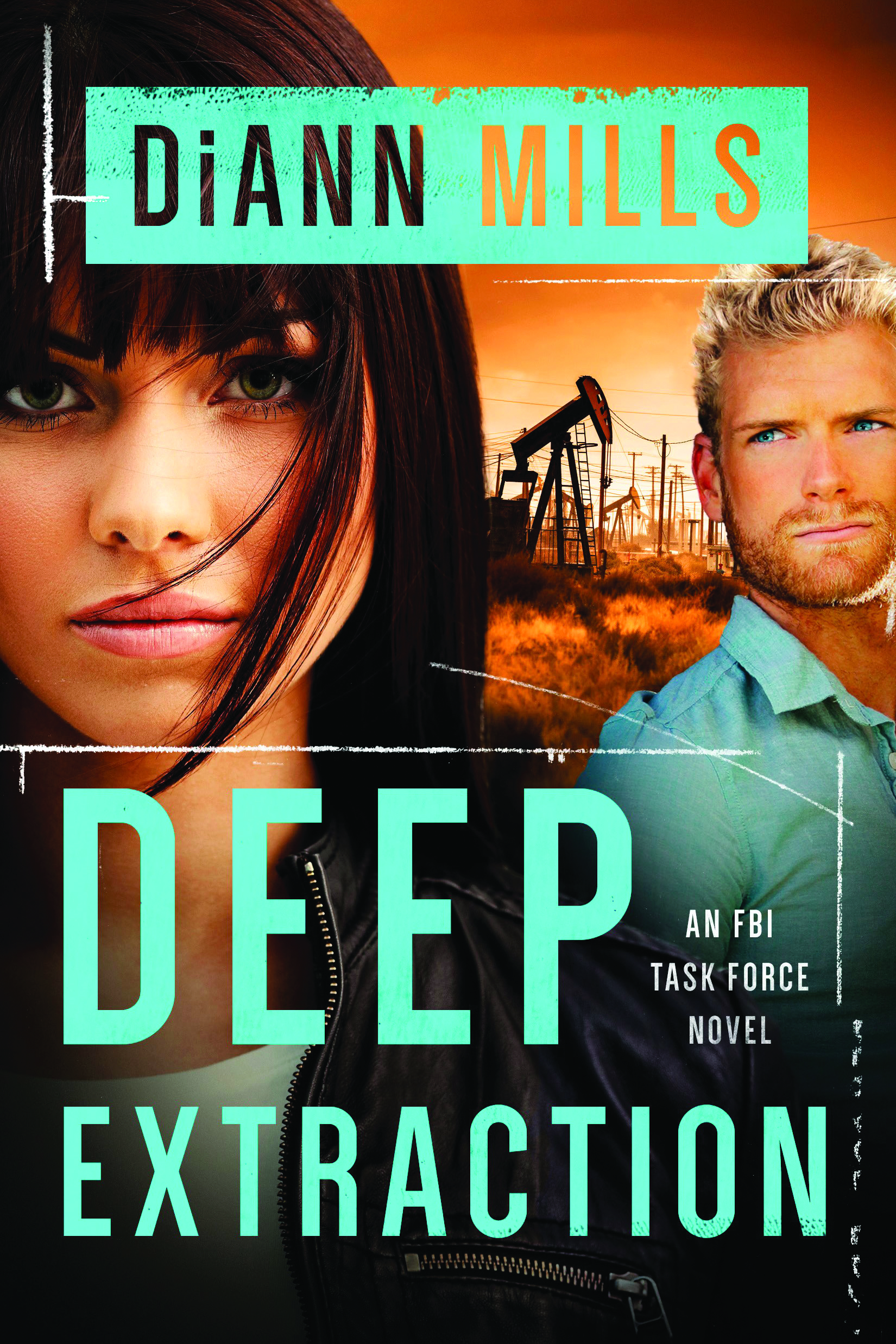
Simplifying Writer Research

by DiAnn Mills, @diannmills

Writing and research go hand in hand. Every topic in a novel needs an element of research. If the manuscript isn’t accurate, the reader will recognize the flaw and toss our work aside. If a writer is spot-on, she will be rewarded with good reviews and more readers. Sort of a no-brainer for us writers.

How do we conduct the process effectively and efficiently?

Wednesday, August 16, 2017

Don’t Be Afraid of The Story

by Rachel Hauck, @RachelHauck

A couple years ago as I fast drafted a novel, I realized I had this tension in my gut.

What was going on?

Yea, it’s tough to hammer out a first draft on a tight deadline but I was pleased with my progress. I wasn’t behind schedule. Though the story wasn’t really popping.

Hmm… the tension? I concluded I was actually afraid of my story.

We talk about being afraid of the blank page, but it’s really being afraid of the story.

Saturday, July 29, 2017

Yet Another Tip On How to Write A Great Novel

by Rachel Hauck, @RachelHauck


Do you ever weary of all the do’s and don’ts of writing a novel? I do. Sometimes I get so bogged down with the “rules” and guidelines I end up writing something that doesn’t work. But in the end, it all forms together to create the novel I do end up sending to my editor. Nothing written for a novel is ever wasted. Every word becomes a layer and texture of the ultimate story. On my latest novel, I learned a valuable lesson. Reading. Shocker, right? Y’all are rolling your eyes, moaning, “Gee whiz, Rachel, and you have more than twenty novels published!? Where’s the justice?”Simmer down. I know reading is important. I’ve always read. Let me be more specific. Reading for research.

Saturday, March 11, 2017

3 Qualities of a Successful Researcher

by Patty Smith Hall

An author can create fantastic characters, a gorgeous setting and a plot that keeps the reader turning the pages well into the night. But misplaced a petticoat or put in a piece of dialogue that’s just too contemporary and that same writer will have her email flooded with corrections from diehard historical readers. That is why research is such any important part of writing any kind of fiction.

So where does one start at being an expert in research? Just like writing can be learned, becoming proficient at finding the facts is a learned art. The best in the field have three defining qualities.

Tuesday, September 27, 2016

Reasons Why Writers Should Love E-Books

Photo: Research with highlighter

by Alton Gansky

Easily accessible E-books have been around for a decade and a half. The process and invention go back a little more than that, but the real surge came in the early 2000s. Since then, digital publishing has become a mainstay for publishers, indies, and writers. Several times a year, someone writes an article about how 1) e-books are crushing print books, or 2) how print books are crushing e-books. At the end of the discussion, however, both sides still agree that there are a lot of e-books being published.

Writers should love e-books. In fact, (don’t throw stones until you’ve finished this paragraph), for writers e-books are superior to print books. I’m not talking about publishing e-books. That’s a topic for another time and probably one best handled by a different writer. I’m talking about e-books used to help your work-in-progress.

Yes, I know that there remains a debate about the superiority of physical books. The pleasure, the feel, even the smell satisfies the avid reader more than digital ink. The debate seems silly to me and reminds me of the couple who argue over which is better, salt or pepper. I leave such jawing to others. I want to present my belief that e-books are to be valued by any writer that has to do research to make his/her work-in-progress the best it can be. Here’s what I mean:
  1. Never be without material to read. This is me stating the obvious first. One great advantage to e-books is that the writer can carry around a library in a single device. This means that those books you use for research or inspiration are always within reach. I have apps on my iPhone, iPad (several iPads actually—don’t judge me). Those apps include Kindle, Nook, and iBooks. If I’m waiting at the dentist or the auto shop (don’t ask, it’s too sad for words) I can continue my research. I have scores of physical books on various topics. I can’t imagine carrying them with me when I go somewhere. With digital books, I can do just that.
  2. Cheaper research. E-books are more often than not cheaper to purchase than their physical counterparts. If you’re having to do a lot of research on say, WWII American submarines, then you can drop several pretty pennies on some of the books you’ll need. The price of one hardbound book can be used to buy several e-books (not always, but frequently).
  3. Makes you a better interviewee. Like you, I’ve spent a great deal of time doing radio interviews. This was especially true for my books 60 People Who Shaped the Church and 30 Events That Shaped the Church. I’ve also done a large number of interviews for my novels. Since I ain’t all that smart, I like to have notes in front of me. I have found having an e-book version before me lets me run down the info I need.
  4. More efficient reading. 
    • Highlighting. I love the highlighting function of e-books. Sure, you can highlight a physical book. I’ve marked up a great many of those. The point is: An e-book allows the writer to highlight some important bit of info needed in her work-in-progress. Especially when one considers the next item:
    • Highlight summary. Most e-readers not only allow digital highlighting but will display every highlight as a list, making it remarkably easy to find what you’re looking for.
    • Search function. This is a real time saver. Ever wonder why e-books don’t have indexes? They don’t need them. No index is easier to use than a Find function in an e-book. Recall a word or two of a line you read? Search for it and the reader will find all words that match your search and say, “Here ya go, would you like some cookies too?” Okay, maybe the cookie thing is a fantasy, but the rest of my statement is true.

Well, that’s a start. Can you think of other ways e-books can help you with your current project?


Alton Gansky is the author of 50 books, fiction and nonfiction. He is also the co-host of Firsts in Fiction podcast.
Alton Gansky

Thursday, December 17, 2015

How Can I Write What I Know When I Know So Little?


We've all heard write what you know. I say know what you write. If we had to stick to write what you know, there would be many books by our favorite authors. 

In fact, I'm changing that up to: Include what you know and learn what you don't. That's more fun, don't you think? 

Do you have to journey to a far-off land to do your research? Road trip! It's more fun, but if you're a new writer, who hasn't got deep pockets, then plan your road trip via the Internet. 

Do you want your protagonist to be a law enforcement officer? Go to your local police. They often offer a citizen's police academy to acquaint the citizens with police activity.

Want your hero to be an archeologist? Go dig up your back yard, see what you can find. Okay, that's not enough, you've got to do more research. But you get the idea.

Most writers could have a coffee barista as a protagonist, since most of us have spend countless hours in coffee shops. See? That's a "know".

The main character in my debut novel, Chapel Springs Revival, is a potter. I'm not a potter. Neither is the hubs, although he is an artist. But I researched making pottery, went to visit a potter in his workshop/gallery. I observed, and used what I learned. I used my "know" in the Southern setting and the food.

In another book, not yet published, I placed it in both the South and Albany, New York in the capitol. My main character was a pro-family lobbyist, something I know well, since I'd been one. I was always fascinated with the underground between New York's capitol and the legislature and other buildings in the downtown area. I used that.

In my sophomore novel, Chapel Springs Survival, I have Claire trying out a new art form. And I had to learn about how it was done. Boy, am I glad I did. I thought it was done a certain way but found out it wasn't. (Am I teasing you? Yes!)

The moral of this is don't be hampered by thinking you can't write about something you don't know. Learn about it. Research it well, then write!

Thursday, October 30, 2014

Susan May Warren, Giveaways, and Sky Diving! Oh, My!


Susan May Warren is the Christy, RITA and Carol award-winning author of over forty-five novels with Tyndale, Barbour, Steeple Hill and Summerside Press. Two-time Christy winner, RITA winner, she’s also a multi-winner of the Inspirational Readers Choice award, and the ACFW Carol award. A seasoned women’s events speaker, she’s a popular writing teacher at conferences around the nation and the author of the book, Conversations with a Writing Coach. She is also the founder of www.MyBookTherapy.com, a craft and coaching community for novelists.
* * *
You have written a lot of novels. You also co-own the successful My Book Therapy for writers. How do you keep it all together?

Keep it all together? Ack! What does that look like, really? If it means I’m supposed to be OUT of my pajamas before noon, have pre-thought-out crockpot meals on the table, laundry that is not rotting in the washer and a made bed…well…you’ll have to catch me between novels, or MBT projects. Because I’m sort of an all-or-nuthin’ gal.

When I write, I’m all in, huddled under what my children call my “thought” blanket. I claim no responsibility for my words to the outside world while under this shroud. And when I’m working on MBT, I’m all in, helping writers craft amazing stories. (probably too all in, because working with me can sometimes be like getting a blast from a fire-hose, but I’m working on that.) Here’s what I think: You gotta do what you love, be passionate about that, and if you have to, hire a cleaning lady (and let your hubby cook)!

Tell our readers about the Christensen Family series.

The Christiansens! Oh, how I love them. They’re a crazy, love big and live life outloud family who *might* be a little like my family. They live in the north woods of Minnesota, run a resort and try to figure out faith while living life (that often goes wrong). They make mistakes, but they love each other through them. Right now, I just finished book #5, The Wonder of You, and am working on plotting book #6, the final book. It’s a little touch of Lake Wobegon—all the men are good-looking, all the women heroic.

And it has the overtones of small town Cheers, where everyone knows your name. Which means that when you get into trouble, the entire town knows about it! The series follows each one of the adult children through their trials and triumphs of falling in love and finding their way in the world. (And oh, I feel sorry for Ingrid, their mother!) The next book hits the shelves in February 2015—Always on My Mind, a story about Casper, brother #2, who just can’t get the wrong girl off his mind...

I recently took a great class from you about branding, that it’s not just your tag line, but the commonality readers will find in all your works. I loved that, because it carries a writer into farther fields. Can you elaborate for our readers?

Sure—as a novelist, your brand is YOU. Or at least, your voice, your stories, your truths that you put on the page. When someone picks up your novel, they are relying on you to fulfil the promise you made in every other book they’ve read by you (and for first time readers, you are cementing that promise in their minds). It’s more than just place, or characters, it’s the FEELING you leave in your reader’s mind. Just like John Grisham leaves a different feeling than Nora Roberts –but both keep the promises (justice. Romance.)

Think about what feelings you want to leave for your reader. I came up with words—Family. Romance. Fun. Connectedness

All my stories have some element of these pieces. This is my brand—when you pick up a Susan May Warren novel, you’ll get a story about family, a strong romance, a lot of fun story elements and a sense of connectedness to each other, the world, and even God. So, if you’re a reader, ask yourself—how do your favorite authors make you feel as you put the book down. Does that feeling make you want to pass the book along, and go back for more? (Probably!) If you’re a writer, ask yourself the same question, and then figure out what feeling would make someone pass YOUR book along. 

Leave a comments to be entered
I learned some very fun and little-known facts about you from your publisher, that I know our readers will love. Will you tell us more about these? Especially the football letter and the skydiving!

>>Susan May Warren takes her research very seriously—from riding a mechanical bull, to skydiving, to surfing and parasailing, to recently enduring one of the coldest-ever Minnesota winters just to get the details correct for her upcoming Christiansen Family novel, Always on My Mind. But her proudest achievement is the varsity letter she earned . . . in football.>>

Well, I really did earn a letter in football. Sadly, not for my amazing skills on the field, but OFF the field as the manager for our state-winning team. But, since I was the manager that year, I got a letter also, which is SO fun when I mention to my sons that BOTH their parents were on state-winning football teams (my hubby’s team won state also), and earned letters in football. So, they have a double football legacy. 

As for skydiving—well, I wanted to write a sky-diving scene in a book, and sometimes you just have to do something crazy. I am afraid of heights, but this was different, almost like flying. Absolutely breathtaking. I highly recommend the experience!

My newest book is about a crab fisherman in Alaska, on one of those Deadliest Catch boats…I’m thinking I need some hands-on research…

Leave a comment for Susie and be entered in a drawing for a basketful of Susan May Warren’s The Christiansen Family series.

Journey to the remote Minnesota lodge of Evergreen Resort and see where faith and family meet real life in Take a Chance on Me, It Had to Be You, When I Fall in Love, and Evergreen.


An empty nest has Ingrid Christiansen dreading the upcoming holidays, but her husband, John, couldn’t be more excited about this new season of life. He even has a surprise trip abroad planned. He’s sure she’ll love it. What’s more romantic than Christmas in Paris?

Before he can stop her, however, Ingrid agrees to spearhead a major church project. Then their faithful dog, Butterscotch, needs emergency surgery, draining their savings. And then—because disasters strike in threes—an unexpected guest arrives, dredging up old hurts.

As a beautiful blanket of snow transforms the north woods into a winter wonderland, a deep chill settles over John and Ingrid’s marriage. With the holidays fast approaching, their only hope of keeping their love evergreen depends on turning the page on the past and embracing a new chapter of their future.

Wednesday, October 26, 2011

10 Tips for Effective Research Trips


Vickie McDonough is an award-winning author of 24 books and novellas. She is the author of the fun and feisty Texas Boardinghouse Brides series from Barbour Publishing. Watch for her new books from Moody Publishers, Texas Trails: A Morgan Family series, in which she partners with Susan Page Davis and Darlene Franklin to write a 6-book series that spans 50 years of the Morgan family. The first three books release this fall. Also, next year brings the release of another new series from Guidepost/Summerside, Pioneer Promises, set in 1870s Kansas.


Leave a comment for Vickie and be entered in a drawing for any book on her website. U.S. residents only, please.


Ten Tips for Effective Research Trips


I’ve just returned from my first cruise to the Caribbean. I never dreamed a sunset could be so beautiful or the color of the water so vivid. There was such an amazing difference in the houses of the poor, made from tin or only partially built with people still living in them to the lavish mansions of the wealthy with their beautiful flowers and fancy locked gates. 

When I visited Charleston several years ago, I was awed by the 300-year old homes and buildings, especially when you consider I grew up in Oklahoma where we just celebrated our centennial five years ago. The only thing we have that’s 300 years old is the land. 

In North Dakota, I was amazed by how the flat lands, which seemed to go on for forever, suddenly turned into hilly mounds and then the rugged, grassy Badlands.

Research trips are one of the best perks a writer enjoys. Traveling to a place you want to write about makes your story more realistic and alive. You’ll discover tidbits that you probably wouldn’t if you never visited the area, and seeing it for yourself is so beneficial to learning the lay of the land, the culture, flora and fauna of the area, and how the local people of the speak and live. These this make your story authentic.

So, how do you prepare for a research trip?

11.     Know what information you need and make a list. The last thing you want is to get back home and realize you forgot to get info on something crucial to your story.

22.     Research the town or locale before you leave home.
            *View online websites
            *Study the history of the area
            *Decide in advance which places you want to visit. Museums and tourist sites in small towns are sometimes only open on certain days and for a few hours at a time, because they are often staffed by volunteers. The last thing you want to do is to make a trip somewhere and not be able to visit the sights you want to see. Do I sound like the voice of experience here? Make a list of the sites you want to visit, with addressees, phone numbers(so that you can call if you need directions) and hours.
             *If you’re a AAA member, get a tourbook of the state. They have some good historical information as well as a listing of the main places to visit with contact information, hours, and prices.

33.   Take Good Notes. Document everything. Even though you think you’ll remember things, once you get back home, minute details and impressions will slip your mind. Most phones have a video recorder, which can be handy for places where you’re not allowed to take photos, like some museums. If you tour a historical home, you might want to record the tour guide, who usually gives lots of great info about the family who lived there and the town’s history.
 
   4.   Be sure to write down contact info and the names of the people you talked with (get the correct spelling) in case you need to contact them again or want to acknowledge them in your book when it comes out.          

  5.   Don’t forget your camera. I take tons of pictures on research trips.(All the pictures in this article are ones I’ve taken) Pictures of buildings, houses, waterways. When I can take photos in a museum, I snap pictures of furniture, dishes, guns, wagons—anything that represent the time period I plan to write about. Also take pictures of the landscape, trees, birds, and flowers.

  6.   Talk to the locals. They love to chat about their town and its history. Ask them questions and ask if they can refer you to someone else in the know. If you make a good connection with someone, you might also ask if they’d mind giving you their email address is case you have questions later.              

  7.   Don’t overlook college research centers. I visited the Carroll Library on the campus of Baylor University in Waco to view part of The Texas Collection while researching my books for the Texas Trails series. The workers their were extremely helpful, and I found lots of fodder for my stories.

88.   Take an envelope with you to keep all your receipts in. Those tiny buggers can easily get lost and then you’ll lose a tax deduction. I also like to take a letter size plastic envelop with a Velcro closure when I travel. I put all my organizational papers, hotel reservation info, and maps in it so I can find them easily.

99.   Visit tourist information centers. You can find great maps there, information on local sites, and sometimes historical info. The people who work in the centers are often a wealth of information too.
 
110.  Have fun. Take some time to do something just for fun. Don’t work your whole trip. Visit a tourist site, see a local show, and enjoy yourself.

Did you know that if you’re actively working toward becoming a published writer that you can deduct a chunk of your expenses when you take a research trip? Be sure to check the laws in your state to know exactly what you can and can’t deduct.

Long Trail Home

A weary soldier returns from the War Between the States to discover his parents dead, his family farm in shambles, and his fiancée married. A pretty, blind woman reaches through his scarred walls, but will the secret she holds ruin all chances for a future filled with love, faith, and family?

Wednesday, October 12, 2011

Make Your Setting a Character ~ by Susan Meissner

Susan Meissner is the author of 13 novels, including The Shape of Mercy, named by Publishers Weekly as one of the Best Books of 2008. When she is not working on a new novel, she is directing the small groups ministries at The Church at Rancho Bernardo. She also enjoys teaching workshops on writing, spending time with her family, music, reading great books, and traveling. She lives in southern California with her pastor husband and their four grown children. Visit Susan at her website


Susan is giving away 3 copies of her book, A Sound Among the Trees. Leave a comment to be entered in the drawing. U.S. residents only, please.


Make Your Setting a Character 

Close your eyes and picture in your mind a place where you would like to be right at this moment. See it, feel it, breathe it. What makes that place special to you? How does it make you feel? What do you taste and touch and smell at that place? If that place had a voice, what would it say to you?

Chances are you didn’t have to break a sweat coming up with a place to mentally head to. We are wired to assign value to places. That’s why home is so sweet, Yosemite is so beautiful, Paris is so romantic and a moonlit beach is so calming. It’s also why dark houses scare us, crumbling cliffs intimidate us, and foggy moors depress us. Places communicate something to us. A spider doesn’t care if it makes a web in a dark, musty cellar or under a chair in an opulent ballroom. But we care!

The fondness or apprehension or dread you feel toward different places is actually something you can shop from as you write your novel. Because the more you make your setting a character, the more you can use your setting to influence your character’s quest as either her ally, an observer, or her adversary. 

In A Sound Among the Trees, which hit bookstore shelves just last week, I wanted the antebellum house that appears in both the contemporary and historical parts of the book to come across as almost a living thing, with desires and regrets and loyalties. I knew if I could do that, the story would have an extra layer of depth and I would have a built-in mechanism for increasing the tension.  Holly Oak, the house on the front cover of the book, was more than just a setting; it was an apparatus to display my characters’ flaws and strengths.

So what’s the best way to make endow your setting with character traits? Here are some steps to follow:

1.  Envision the world your characters live in. Know the environment that will be the backdrop for everything that happens. The setting you choose should matter. It should make a difference to the outcome. It should communicate something. Note that there is one major setting and dozens of supplementary ones. You want to be intimately familiar with all of them.

2.  Do your research upfront. Familiarize yourself know the weather, the lingo, the hot spots, the scary streets, how the sky looks at sunset and how far you can see on a clear day. Knowing the setting ahead of time frees you to concentrate on plucking out of it plot-driving details. Read that city’s newspaper online, check out the real estate ads, the society pages, the obituaries, and the restaurant guide. Look at satellite photos on Google Earth, noting its streets, its topography, its airport and shopping malls
And please remind yourself that there is much more to the physical setting than the weather. We love to use the weather (it was a dark and stormy night) to set our stages but there are so many other very vivid scene-setters at your disposal. Make use of all your senses. Every scene should include a setting that is dimensional and purposeful.

3. Make note cards about your setting when you’re in pre-write mode so that when you begin to actually write and the creative engine is cruising along, you don’t have to stop to study the place where your characters find themselves in. Mine from your setting’s details the aspects that will touch the reader at the sensory level. Concentrate on the five senses, and be mindful of the ones that aren’t as obvious. There is more to a setting than what you can see.

4. Could your story take place anywhere else? What is unique about the time and place you have chosen? Make a list.

5. Interview your setting! It made sound weird, but give it a try and see what happens. Pretend your setting is sitting across from you. Ask it these questions: Are you ambivalent, malevolent, or benevolent toward my character(s) and the quest? Why? What has made you the way you are? What would you say to my character if you had a voice?

I have a special exercise for you to help hone your setting skills! Watch You’ve Got Mail this week or weekend. Make a list of every time you sense the setting as character. When the movie is over “interview” Kathleen’s West Side. Is it ambivalent, malevolent, or benevolent toward her and her quest? How are the seasons used to help tell the story? What sensory details enhance the setting other than simple geography?  Let me know how this exercise helps you…

See you out in the wonderful world…

A Sound Among the Trees


A house shrouded in time.


A line of women with a heritage of loss.


As a young bride, Susannah Page was rumored to be a Civil War spy for the North, a traitor to her Virginian roots. Her great-granddaughter Adelaide, the current matriarch of Holly Oak, doesn’t believe that Susannah’s ghost haunts the antebellum mansion looking for a pardon, but rather the house itself bears a grudge toward its tragic past.

When Marielle Bishop marries into the family and is transplanted from the arid west to her husband’s home, it isn’t long before she is led to believe that the house she just settled into brings misfortune to the women who live there.

With Adelaide’s richly peppered superstitions and deep family roots at stake, Marielle must sort out the truth about Susannah Page and Holly Oak— and make peace with the sacrifices she has made for love.