
Get a Free Ebook

Five Inspirational Truths for Authors

Try our Video Classes

Downloadable in-depth learning, with pdf slides

Find out more about My Book Therapy

We want to help you up your writing game. If you are stuck, or just want a boost, please check us out!

Showing posts with label dogs. Show all posts

Tuesday, March 29, 2016

SIT! STAY! LOVE!

Dana Mentink is a two time American Christian Fiction Writers Carol Award winner. She is the author of over thirty titles in the suspense and lighthearted romance genres. Her suspense novel, Betrayal in the Badlands, earned a Romantic Times Reviewers Choice Award and she has also been honored with a Holt Medallion Award of Merit. She is pleased to write for Harlequins Love Inspired Suspense and Harlequin Heartwarming. Besides writing, she busies herself teaching third grade. Mostly, she loves to be home with Papa Bear, Yogi, Boo Boo, a dog with social anxiety problems, a chubby box turtle and a feisty parakeet.

My writing is going to the dogs lately. No kidding. It's strange how life parallels art sometimes. As I worked on Sit, Stay, Love, my first dog-themed book about a pro baseball pitcher and a geriatric pooch named Tippy, my own sweet old doggie was about to take her final walk. Nala was a part of our family for thirteen years and I knew that she was entering her final weeks as I pounded away on my keyboard. I found the scenes I wrote about the fictional Tippy were extra poignant, as I watched my sweet Nala enjoy napping in the sun and eagerly plodding along through her (slow) morning walks.

In addition to Sit, Stay, Love, I was working on a K-9 continuity for Love Inspired Suspense! I delved into the world of bloodhounds, otherwise known as “noses with dogs attached" for that story. So while my fictional dogs flourished, my own darling Nala passed away, just as both books were headed off to the editors. Oh how I cried. I still do. There will never be another dog like my adorable Nala, my writing partner, my devoted friend. For a long time the house felt empty without the jingle of her collar, and I looked for her in the hallway and lying on the grass in every patch of sunlight.

But time has a way of passing, doesn't it? Spring has brought us a wild, wiry little mutt named Junie. We went to the Animal Rescue foundation in search of an older, mid-sized dog and we emerged with a ten-pound puppy who adores her squeaky toys and steals my pencils at every opportunity.

Odd, that a similar wild, wiry little mutt named Jellybean is currently finding his way into my work-in-progress. Junie's a bundle of zany energy, she eats absolutely everything and as I type this, she is knocking all the pillows off the sofa. Will this insanity be a part of Jellybean's character in Paws for Love? Oh you betcha. I wonder what our box turtle will think after she awakens from her three-month hibernation to find out there's a puppy waiting to sniff, poke and pester her? "Doggone it!" I imagine she'll say before she goes to find a nice hole to hide in.
I don't even want to know what the parakeet thinks!

Sit Stay Love
Take one abrasive professional athlete, a quirky out-of-work schoolteacher, and an overweight geriatric dog, and you're ready for a lesson in love...Tippy style.

Pro baseball pitcher Cal Crawford is not a dog guy. When he inherits his deceased mother's elderly dog, Tippy, he's quick to call on a pet-sitting service.

Gina isn't thrilled to be a dog sitter when her aspirations lie in the classroom. Furthermore, she can't abide the unfriendly Cal, a man with all the charm of a wet towel. But with no other prospects and a deep love for all things canine, she takes the job caring for Tippy.

As Gina travels through Cal's world with Tippy in tow, she begins to see Cal in a different light. Gina longs to show Cal the God-given blessings in his life that have nothing to do with baseball or fame. When her longing blooms into attraction, Gina does her best to suppress it. But Cal is falling in love with her too...

Discover the charming story of Tippy, the dog who brought a family together.

TWEETABLES

Thursday, February 04, 2016

What Still Matters?

Dan Walsh is the bestselling author of 15 novels, including The Unfinished Gift, The Discovery and When Night Comes. He has won 3 Carol Awards and 3 Selah Awards. Three of his books were finalists for Inspirational Book of the Year (RT Book Reviews). Dan is a member of ACFW and Word Weavers. He lives with his wife, Cindi, in the Daytona Beach area where they love to take walks and spend time with their grandkids. Click here to connect with Dan or check out his books.


*     *     *

.
As I write this, presidential politics are front and center in the national news. The first official presidential election event just happened, the Iowa Caucus. Of course, presidential politics has been in the mainstream news every day for months. One of the big stories is how some of the leading presidential candidates are overturning everything that used to be considered the norm. On the Republican side, Donald Trump is shaking things up in a big way, while Bernie Sanders is doing the same with the Democrats.

The pundits are saying the mainstream political parties--the Establishment--are completely confused by these developments. Everything they used to do to influence the public isn't working anymore. It's like people are doing their own thing now. They aren't listening to the "powers that be" anymore. 

It almost seems like the same kind of shakeup is taking place in the publishing world. I came onto the publishing scene in 2009, when everything seemed to run the way it always had for almost a century. There were norms in place that were widely followed and acknowledged by all to be "the way things are done 'round here."

In the last couple of years, it seems like all of that has changed.  

I find myself asking this question: "What still matters?" Certain things were emphasized in publishing just a few years ago as being essential and of critical importance for success. Now? Some of those same things don't seem to matter much anymore at all. Other things matter. Newer things. Just about the time I figured out how to do some of the older things well, now it seems no one cares about these things anymore. They care about other things (things I'm not very good at and not sure I want to learn).

Let me give you a few examples:

Blogging - Used to be everybody who is anybody has a blog. You need a blog. I need to blog. Regularly, faithfully. If possible, also join a blog with several other authors. And you need to appear in other people's blogs and leave comments, not just lurk. Now I'm wondering...Does blogging still matter? Hardly anyone reads blogs faithfully and blogs that used to garner dozens of comments every day now barely receive a few.

Agents - Used to be every author needs an agent. And not just any agent, an A-lister, a real mover and a shaker. Without an agent, you're sunk. Publishers won't even look at your manuscript unless you are represented by a great agent. Does this matter anymore? With the rise of indie publishing, do authors even need literary agents anymore? If so, when? Is there a new norm when it comes to agents?

Print Books in Retail Bookstores - Used to be you weren't a bonafide author unless you had been signed by a mainstream publisher, because retail bookstores only accept books vetted by traditional publishers (well actually, this is still the case). Again, with the massive influx of successful indie authors and the rise of people reading their books on digital devices, does this even matter anymore? Do authors even need to worry about getting their books printed and made available in brick-and-mortar retail stores? I read articles that say traditional bookstores still matter but, if I'm being honest, I hardly ever see anyone in the bookstores anymore. Except in the coffee shop. I still love to go to bookstores, but I almost never see anyone browsing through the shelves. A few years ago, the same aisles used to be full. Additionally, I've met many indie authors over the past 2 years who are selling tens of thousands of books and making a great deal of money who've never seen even one of their books in a brick-and-mortar store.

I've got a number of other items I could share in this post, things I'm wondering whether they still matter, but blog posts aren't supposed to be this longThen again, does that even matter anymore? I'd love to hear from some of you on these things (that is, what do you think? What's still matters in publishing and what doesn't matter so much anymore?).

And while I'm talking about things that matter, here's a pic of my newest novel, Rescuing Finley. This matters a lot (at least to me). It's a great book. That's not me saying it, but the 65 other people who've reviewed it on Amazon the last month or so (avg 4.7 stars). It's FREE on Kindle Unlimited and only $3.99 on Kindle. It's about a rescue shelter dog named Finley who winds up rescuing the female inmate who trains him and the Afghan war vet who adopts him. Click here and check it out. 

Dogs always matter.


Thursday, December 03, 2015

Write What You Know?

Dan Walsh is the bestselling author of 15 novels, including The Unfinished Gift, The Discovery and When Night Comes. He has won 3 Carol Awards and 3 Selah Awards. Three of his books were finalists for Inspirational Book of the Year (RT Book Reviews). Dan is a member of ACFW and Word Weavers. He lives with his wife, Cindi, in the Daytona Beach area where they love to take walks and spend time with their grandkids. Click here to connect with Dan or check out his books.

*     *     *

Writing a novel is mostly a solitary effort.

A picture comes to mind of an author hammering away on a keyboard all by himself as days, weeks and months go by. It’s an accurate picture for the most part. But for some very good reasons, every writer depends on the help of others.

There’s an old saying, “Write what you know.” In other words, situate your stories in locations and areas of life in which you have some expertise. That might work for a novel or two, maybe even three. But at some point, if an author is being honest, they will come to the end of things they know. What happens then? 

What most do, including this author, is a lot of research. You spend a quality amount of time learning from people who really do know what they’re talking about. In short, you write what others know. The input they provide is invaluable and adds a much-needed measure of credibility and realism to your story. They provide details which would be impossible to obtain without their help.

For my newest release, Rescuing Finley (novel #15), I had a valuable research asset living right inside my home. My wife, Cindi. After spending years taking care of our home and homeschooling our kids, I asked her, "What would you like to do?" She didn't hesitate. She wanted to go back to school and learn how to train dogs. 

So, she did. She wound up graduating from Animal Behavior College with a 4.0 GPA. For the last 4 years, she's trained hundreds of dogs through her job as the Animal Behavior Manager at our local Humane Society. To put it simply, she is a wizard with dogs. She not only can train them to all kinds of things (practical things, not just tricks). She also really understands how they think and why they do the things they do. Her input on Rescuing Finley was priceless.

That's one of the things I love about Research...I get to learn all kinds of new things about a wide variety of topics. And for fiction research, it's not enough to skim over things; you have to study them hard enough that people who read your book believe you really know what you're talking about. Or at least, your characters do ("I'm not a doctor, but I play one on TV").

For example, here are some of the neat things I learned about dogs researching Rescuing Finley
  • You can teach old dogs new tricks - That's really just a myth. I've seen it happen with dogs of all ages. Even our own. When my wife was near the end of her schooling, I said, "If all this stuff is really true, shouldn't you be able to fix our dogs?" They were 4 years old then and had some serious quirks. Sure enough, she fixed all of them. 
  • Your dog is not the problem 90% of the time - The problem is mostly us, and the fact that dogs are nothing like people. They don't think like we do and have a totally different way of communicating. These differences can be known and understood. Once they are, it's amazing how much better your dog will behave (and how much happier you both will be). 

  • Most of the reasons people get rid of their dogs are fixable problems - It's a horrible thing to bring a dog down to a shelter because of problems that make life seem incompatible. The truth is, 90% of the problems can be solved by spending time with a certified dog trainer. My wife (and trainers like her) have reconciled hundreds of dogs with their owners.
  • Finally, dogs actually save people's lives - Sadly, 22 military veterans commit suicide every day in the US. Most are vets who served in Iraq or Afghanistan and suffer from PTSD. Many of these men and women can be saved by getting a trained service dog. I watched dozens of videos of veterans who said their service dog was responsible for preventing their suicide. With their dog's help, many are beginning to resume all kinds of activities they had been unable to do before.
These are some of the reason I like research. To me, research is not a "have-to" but a "get-to." I'm really looking forward to all the new things I'll learn as I research Books 2 and 3 in this Forever Home series. So, how about you? Share with us some of the cooler things you have learned doing research for your novel.


Thursday, September 03, 2015

A Tribute to a Great Writing Friend

Dan Walsh is the bestselling author of 15 novels, including The Unfinished Gift, The Discovery and When Night Comes. He has won 3 Carol Awards and 3 Selah Awards. Three of his books were finalists for Inspirational Book of the Year (RT Book Reviews). Dan is a member of ACFW and Word Weavers. He lives with his wife, Cindi, in the Daytona Beach area where they love to take walks and spend time with their grandkids. Click here to connect with Dan or check out his books.


*     *     *

Last week I lost a very good friend. The day he passed and for the next week, my grief was profound. I'm still not over it. He wasn't a writer, but he was certainly a great source of encouragement in my writing. 

I'm referring to my dog, Darcy. Darcy was a mini-Australian shepherd. Along with his sister,
Bailey, they've been keeping me company every day as I write for the last several years (Darcy is the gray one on the right). For those of you who write full-time, you know it can be a lonely vigil. But Darcy wouldn't let that happen. He had a way of constantly inserting himself into my day with mostly welcomed and pleasant interruptions. 
He wasn't a high-maintenance dog; he just loved to be with me and wouldn't put up with me ignoring him for too long. 

He started getting sick midway through the summer, with a persistent cough and frequently running out of breath. He was only eight years old, so we knew it wasn't his age. We took him to the vet, who diagnosed him with congestive heart failure. We were really alarmed but were told it was something that could be controlled with medication, and that he still had a good many years ahead of him. 

That wasn't what happened. 

For the next 6 weeks, he grew increasingly worse, and the vet kept increasing his meds. It was so hard to see him suffer and not be able to do anything to really help him. He would constantly come to me for comfort when he got afraid, as if somehow I could make his suffering go away. I took the picture here on the right during one of those times. For some reason, my efforts to love and comfort him did seem to help temporarily. His face would brighten right up, and his little doggy smile would return.

But eventually, even my comfort didn't help. It became obvious he wasn't going to make it. So one night last week, after holding him for 6 hours then saying our final goodbyes, I brought Darcy down to an emergency vet clinic at around 3am.

To be honest, the amount of grief my wife and I have experienced since letting him go is very similar to the grief we've felt when losing close family members. I know some people couldn't possibly understand this. Dogs are pets, not people. Usually these people are not "dog people" and don't really understand the unique relationship dog owners can have with their pets. At the same time, we've received dozens of comforting notes from other dog lovers who totally get it. They speak about the grief they've gone through, and it's remarkably the same.

It's like losing a close member family, because that's exactly who Darcy was. And I realized, for me, he was even a little more than that. 

Let me explain.

I've just finished the first novel in a new series, called Rescuing Finley. Finley, as you might have guessed, is a dog. Each of the novels in the series will feature a dog as a main character. Finley is a shelter dog who winds up rescuing the two people who think they are rescuing him. One is a former meth addict who becomes a female inmate who helps train Finley to become a service dog. The other is a Marine who lost his leg to a landmine in Afghanistan, and he's really struggling with PTSD.

To research this book, I spent all kinds of time reading and watching videos about veterans who said, time after time, that their service dog literally saved their lives. This is no exaggeration. The stats say 22 war veterans are committing suicide every day because of PTSD issues. Yet somehow, many of them are being saved through the power of a relationship they are having with these dogs.

These vets talk about their dogs with the same passion they talk about their combat buddies. Usually after a few sentences, they choke up and start crying. As a researched their stories, I realized I completely understood what they mean.

Five years ago, I went through a terrible relational and financial trial that devastated me emotionally. It got so bad, I saw a doctor who said I was having the same kind of PTSD symptoms soldiers have (although clearly, they've suffered far worse than I). Nevertheless, I now realize just how much Darcy helped me through this time.

He wasn't a trained service dog, but he served the same role in my life. For those of you who aren't dog lovers, perhaps if I explain it this way it will help. Imagine you have a close friend who loves you unconditionally. He never judges you or makes you feel tense. Just the opposite. You feel totally accepted and loved whenever he is near. If you're hurting, he's right there to help in any way he can. He is completely devoted to your welfare and, without hesitation, will always puts your needs ahead of his own. He loves spending time with you, even wasting time with you. In fact, he'll drop whatever he's doing if there's even a chance to be with you doing anything at all. This relationship goes on this way for years, and these qualities about your friend never diminish. If anything, they only grow in their intensity. 

Now imagine, this incredibly good friend suddenly dies. That's how it feels. 

That's why the grief is similar to losing a close loved one or friend. Because that's who Darcy was to me (to us...my wife's grief equaled my own). One of the things that has really helped, besides the great comfort offered by other dog-loving friends, is to know that my God perfectly understands everything I've just said, and everything were going through. He created these wonderful little creatures and appointed them to be some of our best friends.

I only wish he would have given them the lifespan of a tortoise. I'm sure tortoises are very nice in their own way. But really, why give them 75 years?


Wednesday, July 09, 2014

Buddy the Wonder Dog by DiAnn Mills

Buddy the Wonder Dog

By DiAnn Mills

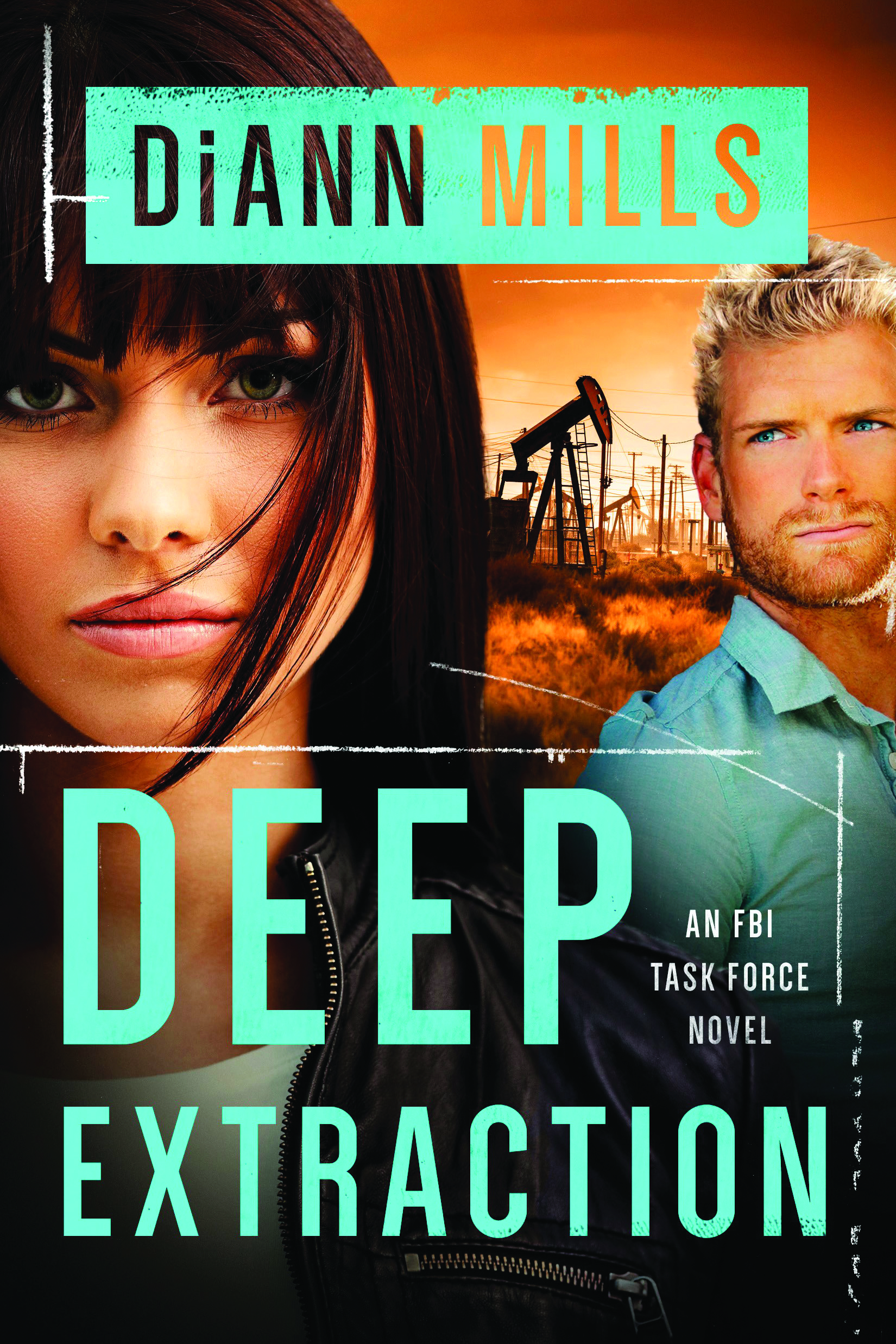
Taryn Young, my heroine in Firewall, finds a friend in a German shepherd. I’m not an detailed plotter, and when Taryn spotted the dog, so did I. He appears on a dark night in a precarious situation when she needs a friend. Her world is shattering around her, and she’s frightened. The dog became a dear friend, and she quickly named him Buddy. Throughout the story he exhibits loyalty and unconditional love. Often he lays his head on her lap when she’s discouraged and stays by her side when she’s in danger.
German Shepherds may be better than a boyfriend!
 I fell in love with Buddy too. So I did more research on German shepherds. I learned they are listed in the top five most intelligent breeds of dog. They are fast learners, eager to develop new skills, and used extensively in K-9 units as bomb sniffers, drug sniffers, search and rescue, and various branches of the military. German Shepherds are suited as guard dogs. Although they can be aggressive, they can be trained to obey their owner. No wonder Taryn fell in love with this beautiful animal!

I posted the question to my Facebook friends about their experiences with German Shepherds. Some of their responses were the dog’s sweetness, protective nature, devotion to family, and loyalty. Others mentioned unconditional love and alertness.

One man told me how his German shepherd walked between his toddler and the street, never allowing the child to step into danger—The dog was not used as a babysitter, but the father observed this. The same gentleman told me about his dog playing hide and seek with his children. I loved his stories!

A woman confessed to loving her German shepherd to the point of attributing her fondness to that of a child.

Another woman valued her dog’s keen sense of smell. She was involved in K-9 Nose Work.
  
I wanted to own German Shepherd until I realized I don’t have the yard size needed for the dog to exercise. This breed has tons of energy and must have a way to work it out. If I’m to have a dog of this caliber, I don’t want to be selfish and not provide for its needs. Maybe a home in the country is in my future. :)

But I can admire from a distance and envy all you who have these wonderful animals.


DiAnn Mills is a bestselling author who believes her readers should expect an adventure. She currently has more than fifty-five books published. Her titles have appeared on the CBA and ECPA bestseller lists; won two Christy Awards; and been finalists for the RITA, Daphne
Du Maurier, Inspirational Readers’ Choice, and Carol award contests. DiAnn is a founding board member of the American Christian Fiction Writers; the 2014 president of the Romance Writers of America’s Faith, Hope, & Love chapter; and a member of Inspirational Writers Alive, Advanced Writers and Speakers Association, and International Thriller Writers. She speaks to various groups and teaches writing workshops around the country.
DiAnn is also a craftsman mentor for the Jerry B. Jenkins
Christian Writers Guild. She and her husband live in sunny Houston, Texas. Visit her website at www.diannmills.com and connect with her on Facebook
(www.facebook.com/DiAnnMills), Twitter (@DiAnnMills), Pinterest (www.pinterest.com/DiAnnMills), and Goodreads
(www.goodreads.com/DiAnnMills).

Available now!


Thursday, August 29, 2013

Lessons from Dogs

Sometimes when I’m goofing with my two dogs, Baxter and Taffy, God will snap his fingers, hold his hand over my nose, and tell me to “Sit. Stay. Listen.” And when I do, I learn valuable lessons.

Almost every morning I have the same breakfast—two slices of peanut butter toast. I love peanut butter. At one point in my (much younger) life, I was going to marry peanut butter. My siblings still make fun of me for this—I do not care.

However, during the year I was unemployed (except for freelance work), every morning Baxter and Taffy would come and sit attentively near the table, convinced  I would either give them some toast or drop a bite accidentally. Their faith in my generosity (or sloppiness) never wavered.
    Taffy, the trusting one
  • Lesson 1: Faith looks a lot like perseverance. If I would sit at God’s feet every morning and believe He’s going to give me something good—even if he hasn’t for a while—then I’m right where I need to be just in case he does. This lesson also applies to prayer requests.
Eventually, the dogs’ faithful attentiveness prompted me—not out of guilt, but out of a desire to share with my faithful companions—to reward their faith with one bite of crust each from both pieces of toast. Every morning.
  • Lesson 2: God does not share his bounty with me (not defined as anything related to money) because I beg, but because I am his child and he loves me.
The first time I offered the dogs their pieces of crust, Taffy came to me immediately, without question, and took the bite from my hand. Baxter held back. He looked at what I offered, sniffed it, and finally took it from my hand, hesitantly, as if he expected me to take it back.

Let me be clear. I am a soft-hearted man. I have never given my dogs reason to fear me or to wonder if the good I give them will be taken away. We have had Baxter five years and Taffy eight. They know what to expect.

So, they are not reacting to me with trust or hesitation. It is their nature. It’s the way they were made. One trusts completely and has since Day 1. One holds back, assessing and analyzing, and has since Day 1.
    Baxter, the hesitant one
  • Lesson 3: If I immediately take up God’s blessings and run with them in joy—or if I hesitate to accept the good things he has for me, it is not a reflection on God. It is the way I am. The way I was created. My nature.
Yes, I can (with God’s help) change my nature somewhat. For instance, I can train myself not to lie. But my nature—my default position, if you will—is what it is. Without the sacrifice of Christ, and the ministry of the Holy Spirit, I would remain largely unchanged until the day I die.

“What do these lessons mean to me, as a writer?” I found myself wondering one day as God held his hand over my nose.
  • My characters don’t have to show a strong, unwavering faith. Few people are gifted with that. But, when they face doubts and have questions, perseverance—moving forward from the last place they heard God—is a form of faith. Taking action based on what they know to be true of God is faith, even if he is silent.
  • Regardless of how much my characters pray for a certain outcome, God is under no obligation to provide it. I do not have to give my dogs crusts—I could give them carrots instead, or nothing. Our prayers do not obligate God; our prayers bring us into alignment with his will.
This one may be controversial, but I think it’s true.
  • My characters should not change by leaps and bounds, but by small incremental, sometimes nearly invisible, steps. Each one’s basic nature is their basic nature.
Can God do deathbed conversions of atheists? Of course. But the more likely outcome is that a lifelong, militant atheist, will go to his or her death an atheist. Can an abusive husband experience a turnaround, repent, and abuse no more? Certainly, but the more likely—the more realistic—outcome is that he won’t.

Redemption is still redemption even in (and sometimes especially in) those smaller life changes that pull our characters not in a new direction, but just slightly off the course they were on. Even a tiny course correction, over time, will significantly alter a character’s destination.

Resist tying up all the loose ends and ending your books with everyone happy and in harmony with God. The Word tells us the world won't end that way. Why should our books?

Your turn: What writing lessons have you learned from your pets?

Michael Ehret loves to play with words and as editor of the ACFW Journal ezine, he is enjoying his playground. He also plays with words as a Marketing Communications Writer for CHEFS Catalog and as a freelance editor at WritingOnTheFineLine.com. He has edited several nonfiction books, proofedited for Abingdon Press, and reported for The Indianapolis Star.