Get a Free Ebook

Five Inspirational Truths for Authors

Try our Video Classes

Downloadable in-depth learning, with pdf slides

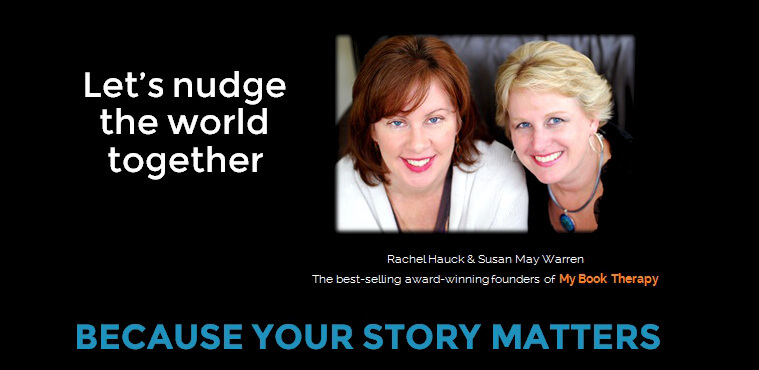
Find out more about My Book Therapy

We want to help you up your writing game. If you are stuck, or just want a boost, please check us out!

Showing posts with label guest author. Show all posts

Thursday, November 10, 2011

I'm There But I'm Not ~ Tess Gerritsen


Tess Gerritsen left a successful practice as an internist to raise her children and concentrate on her writing. She gained nationwide acclaim for her first novel of medical suspense, the New York Times bestseller Harvest. She is also the author of the bestsellers Life Support, Bloodstream, Gravity, and The Surgeon. Tess lives with her family in Maine. (PHOTO CREDIT: Paul D'Innocenzo)


I'm There But I'm Not


by Tess Gerritsen


I just spent a lovely week with my family, cooking Thanksgiving dinner for ten, hanging out with my sons, catching up with out-of-town relatives, and watching the latest Harry Potter movie plus a season's worth of "Mad Men" DVD's. I'd like to report that I was completely focused on family and friends but, sadly, that is not the case. Because no matter how scintillating the conversation, or how shocking the movie plot twists, there was always something nagging me, nibbling at the edge of my consciousness, sucking away from complete enjoyment of the here and now.


And that would be my book in progress.


It's the curse of the working novelist. I hate to sound ungrateful for my good fortune -- and yes, anyone who's a working novelist, who actually has a contract with a publisher and an audience waiting for her next book, is a lucky duck indeed -- but there's a price to be paid for it. And that is, your brain is not your own. You may think you're in control of it. You think you can sit down to a nice turkey dinner and enjoy family conversation, but in reality your mind has been commandeered by thoughts of that novel in progress. During Thanksgiving dinner we traded family news over champagne and turkey, yet all that fascinating gossip couldn't drive thoughts of THE BOOK out of my head. I'd be in the middle of a conversation with my darling niece and nephew, and suddenly, wham! A snatch of dialogue would pop into my head, and I'd have to fight the urge to bolt from the table and head upstairs to my desk to write it down. Or I'd see the way the candlelight glowed on my son's face and I'd want to snatch up pen and paper to describe the image. Or I'd get that searing jolt of anxiety about the fact my deadline is only two months away, and I'm having a leisurely dinner with the most important people in my life.


When I really should be writing.


That's a curse, it really is. It keeps us from living in the moment, from being totally engaged with the ones we love. And the ones we love sense it. Even as we talk to them about what's happening in their lives, they see that faraway look suddenly drop over our eyes and they know we're somewhere else. We're in another universe with people who don't exist.


If you're lucky, you have a family who tolerates your eccentricity. Maybe they murmur to each other: "Oops, we've lost her again." And they tolerate you as they would the crazy aunt. I acknowledge that I am the crazy aunt. Here one moment, gone to Mars the next. "What was that you said again, dear? Sorry, I was thinking about ligatures. Yes, the turkey is juicy this year, isn't it?"


So that was Thanksgiving dinner this year at my house. I cooked, I ruminated, I thought about strangulation.


Next year, I promise, will be different.

First appearing at Murderati - Tuesday, November 30, 2010 , reprinted with permission.


Friday, October 21, 2011

What You Can Learn from the Universal Story ~ Martha Alderson


Martha Alderson has worked with hundreds of writers in sold-out plot workshops, retreats, and plot consultations for more than fifteen years. Her clients include bestselling authors, New York editors, and Hollywood movie directors. She lives in Santa Cruz, CA. Follow her blog.


What You Can Learn from the Universal Story

My understanding of the Universal Story and its importance emerged from twenty years of research into the anatomy of stories and consulting with writers from all over the world. By gaining a fluent knowledge of the Universal Story, you gain at least two strengths:

1. The more skilled you are at presenting your words according to the time-honored techniques, the more compelling your story and the stronger its connection will be with readers and audiences.

2. By creating a transformative plot for your story, you improve your productivity as a writer, which in turn transforms the quality of both your writing life and your personal life.

Wisdom about the Universal Story improves your story and it also will improve your life. Stand back from the drama of your own life and gain a deeper understanding of the bigger picture by assessing where you currently are in the Universal Story. Determine how your own individual story is related to and is integrated within the whole of your life. Learn about the strength and purpose of your own personal power and what weakens you as a writer and a person. Seize the capacity to create vital stories and live a meaningful life.

The Universal Story is in the undercurrent of every breath you take, every story you tell yourself, and all the stories you write. Learn to refer to it when you arrange a story or when, having written, you find yourself mired and lost or simply curious about where you are and where you are headed or, at least, the general direction in which you are moving.

The better you know your strengths and weaknesses as a writer and the broader your understanding of the universality of the story of your life, the less resistance and pain you experience when crafting a story. Understanding the universality and interconnectedness of everyone’s stories allows you to appreciate the forces that both support and interfere with your success.

The deeper you delve into the Universal Story, the more you will recognize the universal components in your work—your protagonist’s emotions in a scene, your reaction to situations, and the significance of friends and foes in your story and in your life.

The more conscious you are of the meaning of your writing and your story, the closer attention you pay to the words you write, the schedules you create, and the language you speak.

A belief in the partnership between the writer and the Universal Story makes you less inclined to give full ownership of the story to your ego. This partnership helps you do what needs to be done for the good of the story and readies you to work in concert within yourself and outside yourself. Thus, you will be more willing to open yourself up for critiques and feedback from others.

That said, I recommend that you never show your first draft to anyone. The first draft of a writing project is the generative phase. At the end of it, you are faced with a manuscript full of holes and missteps, even confusion and chaos. This is part of the process. Bringing in an unbridled critic risks stifling the muse and could intimidate you into stagnation.

Your first draft is a fragile thread of a dream. You know what you want to convey—well, maybe. Few writers adequately communicate a complete vision in the first draft of a story, especially when writing by the seat of your pants. Allow others to read your writing now and you may lose energy for your story and become overwhelmed by the task ahead of you.

Submitting your work for others to evaluate and judge is never easy, but then writing it in the first place was not easy either. Before making a copy of the story for others to read, release old beliefs that do not fit you anymore. By now, you already have purged scenes and chapters that lacked a thematic thread leading to the climax. Just as the release of those unnecessary words frees your story to embrace a new identity, you are free to create a higher and more vibrant meaning to your life.


Release Your Ego When You Release Your Story to Be Read and Critiqued by Others

You have three choices about how to react to feedback from others:

1. Your body shrinks and withdraws. Negative words crowd your mind. You give up.

2. You become angry and belligerent, rejected constructive criticism that could be helpful.

3. You consider the feedback and intent thematically. You wake up and move ahead.

In learning about the Universal Story, you come to understand that you are more than the words you write and the books you publish. You are a writer. Because you are a writer, you listen differently to other people’s judgments about your words and your books.

Thursday, October 13, 2011

Tortoise or Hare? What's Your Speed ~ Tess Gerritsen


Tess Gerritsen left a successful practice as an internist to raise her children and concentrate on her writing. She gained nationwide acclaim for her first novel of medical suspense, the New York Times bestseller Harvest. She is also the author of the bestsellers Life Support, Bloodstream, Gravity, and The Surgeon. Tess lives with her family in Maine. (PHOTO CREDIT: Paul D'Innocenzo)


What’s your speed?

Tess Gerritsen
(reprinted from Tess's 4/19 post on Murderati.com)

My husband says I walk too fast. He complains about this whenever we stroll together, even when we’re not late for any appointment but just seeing the sights. “What’s your hurry?” he asks. “Are you trying to make me feel like a slacker?” Really, I’m not; I just naturally walk fast. How fast? I think people in Manhattan should stop being so pokey.


Years ago, when I was working as a doctor in a Honolulu emergency room, I walked into a treatment room to sew up a cop who had a nasty laceration. Before I could say a word, the cop says, “You’re not from the islands, are you?”


“How the heck did you know that?” I ask, completely baffled. As an Asian American, I look like half the population of Honolulu.


“It’s the way you walk,” he said. “You look like you have to get somewhere in a hurry. Islanders don’t walk that way.”


Now that’s an observant cop.


Another memory: my husband and I are in London, on a double date for dinner with my UK editor and her husband. My editor and I walk together, and we both walk fast. We’re talking business while we walk, and we’re so engrossed in conversation that we’re not really paying attention to where our husbands are. Suddenly we realize we’ve lost them. They’re nowhere to be seen. We halt on the sidewalk, wondering if they took a wrong turn or ducked into a pub somewhere. A moment later the men appear, annoyed and grumbling about “these damn career women, always leaving their husbands behind.”


The thing is, I don’t think I walk fast. This is just my natural walking pace and if I slow down, I feel as if I’m wading through molasses. It’s something that’s inborn and not a conscious thing. We each have our own natural rhythms that determine how much sleep we need and how fast our hearts beat.


In the same way, I think I have my own writing speed, and no matter how hard I try, I can’t change it. I would love to write multiple novels a year. I would love to have a new book on the shelves every four months. The fastest I ever wrote was back when I was writing romantic thrillers for Harlequin, and one year I managed to write two books, but those were only 300-page manuscripts. Now that I’m writing longer thrillers, I have to work hard to meet my book-a-year deadlines.


Now, this may have something to do with my chaotic process. I don’t outline, I don’t plan ahead. I plunge into a first draft and it goes all over the place and it ends up a mess. Which means I have to spend the next five months cleaning it up. Oh, if I could just have a logical system with notecards that summarize every chapter ahead of time. If only I could approach it like an engineer with a blueprint. But even if I could do it that way, I think I’d still be writing only a book a year. Because of that natural rhythm thing again. I write four pages a day and I’m bushed. Whether those four pages are good or bad, they exhaust me.


And I have to wander off and make a martini to recover.


I’ve given up beating myself over the head about my pokey writing schedule. Just as I’ve stopped apologizing for how fast I walk. Too bad I couldn’t be a fast writer and a slow walker.


Then everything would be perfect.


Thursday, September 22, 2011

On to the Next Shrub, Page or Abode ~ Christopher Bollen


Christopher Bollen is a writer who lives in New York City. He has contributed to many publications including New York Times Magazine, Vice Magazine, Fantastic Man, and V Magazine. His interview series at V Magazine includes literary and cultural luminaries the likes of Joan Didion, Norman Mailer, Gore Vidal, Brett Easton Ellis, Patti Smith, Roman Polanski, and Brad Pitt. He is currently the Editor at Large at Interview Magazine. Lightning People is his first novel. For more info on Christopher Bollen, visit http://www.christopherbollen.com.

On to The Next Shrub, Page, or Abode

by Christopher Bollen


There is some advice for victims of disaster in the 2003 documentary, Touching the Void, which recounts the miraculous survival story of a mountain climber with a broken leg who crawled to safety in the Peruvian Andes, which also turns out to be smart advice for novelists. When discussing how he managed the impossible task of getting down the mountain, Joe Simpson explains that he didn’t envision crawling all the way to the bottom. Instead he made little, manageable goals for himself—get to that rock, crawl to that passageway, make it to that first piece of scrub brush.

When I began the task of writing my first novel Lightning People five years ago in my cottage apartment in the West Village, I tried not to envision the almost unimaginable feat of writing hundreds of pages of fiction, where my characters knotted together in so many elaborate braids until the final resolution it seemed an exhausting endeavor even before I turned my computer on. Instead I followed Joe Simpson’s survivalist trick: get to the end of the first scene of the marriage at City Hall; put down this character’s backstory on her first disastrous love relationship; just make it to the scene of the first murder and tomorrow, when you’re rested, you can tackle that murder.

Little by little, hour after careful hour, I crawled through my first draft of Lightning People. At one point the manuscript neared 600 pages, and if five years before I had known it would take so many years and so many sore muscles, I probably would not be writing this essay now. Let’s allow the poets to be the dreamers of the family. Novelists are the closest literary equivalent of injured mountain climbers. It doesn’t take long views to write fiction. It takes the sustained willpower of wanting to get out with your life.

I wish I could say that writing for me is a constant pleasure. Surely, it must satisfy some innate itch in the back of my brain that can only be scratched by my fingernails tapping on computer keys and putting down pieces of a story. But I’ve often felt that writers are like addicts with their work (and the fact that so many great writers have also been addicts is a thesis very much worth exploring at a later date). It is not so much pleasure but need that brings us every morning to the page to continue in this rather bizarre practice of inventing worlds. And for any writer who has his or her “good days,” the results are a bit like a drug. Hours vanish unblinking, and somehow an entire scene with dialogue and details has managed to be laid down.

Since Lightning People was my first novel and since I already had a career as a magazine editor, I did not have the benefit of an advance or full empty days to devote to writing. For me, the novel was a nights-and-weekends ritual. I was thirty years old when I started and had just moved into a Tolkien-sized cottage on West 12 Street entirely hidden behind an apartment building and surrounded by a back garden of oak trees.

On the outside it looked like an enchanted fairy-tale house. On the inside, it looked like a matter for psychiatric intervention and perhaps a case for the Board of Health. It was tiny with just enough room for a desk, a chair, and piles of paperbacks and art books which began to arc like crumbling garbage columns. There was no oven, only a mini-refrigerator, and since it was built in 1927, there was no insulation in the walls to keep out the winter frost. Nevertheless, I found it a very quiet, peaceful writing zone, in the heart of the city but also removed from it (or as the previous tenant described it to me, “like the hotel in The Shining in that no one will be able to hear your screams.”)

After three years of living in the cottage, the part of me that wanted a happy New York renter’s existence wanted to move. The problem was that I wrote well in this absurd little folly. I could concentrate without neighboring footsteps or traffic horns. I could smoke the odd cigarette, step right out the front door when I needed some fresh air, and I could simply look around at the cobwebbed beams or the blue sky through the tarnished skylight whenever I was stuck for a detail. In a sense it was like an architectural talisman to keep up the work. I promised myself that I wouldn’t move until I had finished the first draft. That might only be three months, I said as a comfort. Of course I was lying. It took two more years. I guess what I’m trying to say is that much of my process for writing relies on quiet without any uncontrolled interruptions, and the routine of a place that I could count on to be mine at all times. I formed such a mental connection between the story in Lightning People and the yellow-walled stucco cottage that even now I associate that novel with living at that address. I also used the cottage as the residence for one of the older characters of the book: a salty ailing gay “real New Yorker” who was spending his last days in life and in the city in this falling down shrine. Perhaps that operated as a reminder to myself not to become Brutus Quinn and know when it was finally time to abandon the place. Not long after I turned in the final manuscript to my agent, Bill Clegg, did I finally submit my future to another kind of agent: that of real estate. I moved into a bright, big single bedroom in the East Village last year. I often worry that my next novel will suffer because of my need for a little more residential comfort—the new place doesn’t have the same magic or nearly as much peace and quiet. But I do believe process has everything to do with environment, and the environment best for stories is not necessarily best for existence. Still, I’m hopeful to make a writing home here. And if it doesn’t I still have the number of the cottage’s owners stored on my cell phone.

Friday, August 19, 2011

Growing Pains ~ Sibella Giorello


Sibella Giorello grew up in Alaska and majored in geology at Mount Holyoke College. After riding a motorcycle across the country, she worked as a features writer for the Richmond Times-Dispatch. Her stories have won state and national awards, including two nominations for the Pulitzer Prize. She now lives in Washington state with her husband and sons.


Growing Pains

by Sibella Giorello


I can still remember the ringing phone.


Coming thro
ugh the front door from vacation -- sand still in my hair -- I lunged for the telephone, always certain somebody has just died.

But it was my editor at Revell.

"You won!" she exclaimed.

It will sound disingenuous but the truth often embarrasses: I didn't know what she was talking about. Several significant moments of silence passed. Then an idea dislodged itself from my beach brain.

Oh. Christy Awards. This weekend.

My first novel, "The Stones Cry Out,” was nominated for best first novel.

"What's wrong?" the editor asked, as the silence stretched on.

"Nothing."

"You’re probably in shock. Isn’t it great news?!"

Yes.

And no.

Despite the nomination, I never expected to win. Given the great novels competing in the same category, I didn't think my book would win.

Actually, I didn't think it should win.

My first novel reminded me of a knock-kneed colt struggling to stand up on its own feet. That it would win an award like the Christy seemed absurd. I wondered if a mistake had been made.

Ever since, I've felt a certain ambivalence about winning that honor. I figured my problem was pride (I’m human; there is always pride). But four novels later, I can see some sense in my ambivalence. And I can share three important lessons.

One: Pray that your first book is not your best.

Despite the award in my hand, I remained busy grieving my novice abilities. Fortunately, God countered the sackcloth-and-ashes with a spirit of perseverance. I decided the only way to get better was to keep going.

“Most people won’t realize that writing is a craft,” said Katherine Anne Porter. “You have to take your apprenticeship in it like anything else.”

Of course, you will find your own ways of enduring the early apprenticeship, but one of my favo
rites was The Tour of First Novels.

One day, at my most frustrated, I stormed into the library and checked out first novels by my favorite authors. Within hours, relief was humming through my veins. Not that schadenfreude sort of relief, but something productive.

Most of those first books were bad. Some even stunk. And none matched their author’s later output.

Like most first novels, those first books read like seed pods yearning to bloom.

Or: knock-kneed colts struggling to stand.

Two: In the modern era of e-books, the first book might not be so final.

Some months ago, the copyright to "The Stones Cry Out" returned to me.

Here came my colt, running for home.

Unfortunately, temptation was riding with it.

The rationalization went like this: It won a Christy. Received good reviews. Launched a successful series. You should just put it on Kindle. As-is….

But we’re called to be workers who need not be ashamed, “rightly dividing the word of truth." (2 Tim 2:15). Since I still didn't love my first book, it was m
y responsibility to do something about it.

With prayers for humility and discernment, I proceeded from Page 1 and continued to the end, rounding out scenes, adding flesh to characters, trying to bring the story closer to what followed in the rest of the Raleigh Harmon series.

And when "The Stones Cry Out” was put on Kindle, I didn't hesitate to add the Christy Award honor.

Because it looked different to me now.

Not only for the new work done, though it played a large part. The difference was lesson three.

I didn’t write that first book to win an award; I am grateful for it. But I am also grateful that the honor didn’t fill me with (more) pride. The simple fact is, I write because God made me a writer. That's what I’m supposed to do. Any honors, awards, or leading positions on the best-seller list can only be viewed through the lens of grace.

Completely undeserved: And yet, there it is.

And the apprenticeship carries on accordingly.