
Get a Free Ebook

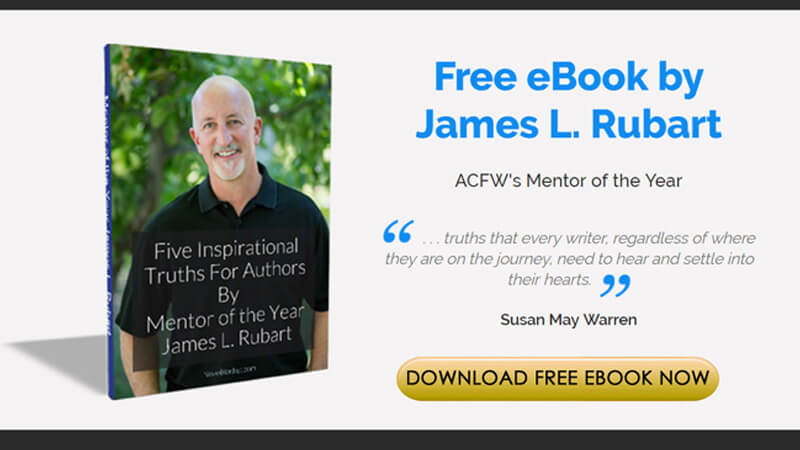
Five Inspirational Truths for Authors

Try our Video Classes

Downloadable in-depth learning, with pdf slides

Find out more about My Book Therapy

We want to help you up your writing game. If you are stuck, or just want a boost, please check us out!

Showing posts with label learn to write. Show all posts

Thursday, April 01, 2010

Get Thee to the Swordfight

People are funny. And not always funny ha-ha. When Lost Mission hit the shelves last September, a few people told me it was well written as far as that went, but it started off too slowly. I was prepared for any criticism except for a slow start, since the story mentions two miracles in the first four pages alone. (A church bell seems to ring by itself, and a fresco is “not painted by human hands.”) I even tossed in a couple of boys who are nearly burned alive. These folks did admit it “got better” later on, but still, apparently the miracles and near death experience were barely enough to pique their interest.

Maybe I should have burned the boys.

Of course I know a novel has to hook the reader from the very first word these days. Even an Amish romance must be thrilling from the get-go, otherwise the jaded citizenry will wander off to channel surf their countless choices in realty television shows, or “meet” a dozen perverts a minute on Chat Roulette, or even worse, read somebody else’s book. But I did think I had done my duty, hook wise, with two miracles and a couple of burning boys in four pages flat, so color me confused.

In situations like this it’s good to consult the specialists. I decided to check out the first four pages of a few stories that have done pretty well, and what I found there was instructive: Aunt Polly fails to spank her nephew. Yawn. Tom Sawyer goes back on the shelf. A man—we don’t even know his name yet!—rents a house. So much for the first four pages of The Great Gatsby. On page one of another novel we learn the Hudson River valley is uncivilized, and we learn it some more on page two, and more on pages three, and four, and by then it is clear The Last of the Mohicans wouldn’t last long in the hands of today’s impatient reader. In fact, none of these so-called “classics” would pass muster nowadays, yet people in the olden times seemed to think they were okay. So between then and now, what changed?

We did, I’m afraid. Once upon a time a troubadour could count on Lords and Ladies to sit and listen in the castle without interrupting him to say, “Get thee to the swordfight already.” Once it was possible to write a novel about a great white whale in which the whale did not appear until around page three hundred. But nowadays, unless there’s pending death, dismemberment or damnation in the first sentence it’s close the book and pass another novel.

Blame it on
Robert Adler, that mad Austrian scientist who invented the television remote control. He hoped to liberate us from the senseless tyranny of having to move more than one finger to switch from NBC to CBS to ABC and back again (the only three options back in ‘56), but his impatience with the time consuming walk from couch to television set unwittingly created a slave race of channel surfing zombies.

Or maybe Adler’s Folly was just one more step in the long attention span decline that began with Gutenberg, (real name, “Goose-skin”) the inventor of movable type, a devilish creation which made it possible for the Average Joe’s reading choices to outnumber his brain cells. But really I suspect we’d have to go much further back to expose the roots of this problem, because even Gutenberg suffered from an early indication of the looming plague when he took a little longer than expected to come up with the printing press and got sued by an investor who was “
losing patience.”

It turns out slow beginnings aren’t even my only shortcoming as a novelist.


In Lost Mission, I also made the mistake of setting some scenes in the 1700’s and others in the here and now. I never dreamed this would cause so much trouble, yet some people have complained it's hard to follow the transitions between timeframes. In my defense, I did see this one coming. In the book are subtle hints, along the lines of “Pay attention, dear reader, because we’re about to leave the old timey days.” Lest you think I’m exaggerating, allow me to quote Lost Mission's first transition. Here’s the setup: at this point in the story we are crossing the Atlantic toward the New World on a Spanish galleon with an eighteenth century friar, and then . . .

“. . . this is just the first of many journeys we shall follow as our story leads us back and forth through space and time. Indeed, the events Fray Alejandro has set in motion have their culmination far into the future. Therefore, leaving the Franciscan and his solitary ship, we cross many miles to reach a village known as Rincon de Dolores, high among the Sierra Madres of Jalisco, Mexico. And we fly further still, centuries ahead of Alejandro, to find ourselves in these, our modern times.”

You see the problem. (I know you do, because you’re one of the few who haven’t gotten bored with this column already and gone off to Google something better.) If a reader can’t (won’t?) follow along with an in-your-face transition like that, it’s hard to hope she will remember basic plot points or character’s names from one chapter to another.


Should an author pander to such people?

Just imagine where that could lead. Think of eBooks with embedded comments to remind readers that John is “the narcissist you met in chapter three” and New York is “the city where this story is taking place.” Such things are certainly feasible in this electronic age, but are they wise? Don’t brains, like muscles, atrophy unless we use them? One does hope to let the reader’s memory and imagination do some of the work, otherwise what do we have? Television, I suppose.

In a culture with
150 channels in the basic cable package, and 116 second delivery times in fast food drive through lanes, and eight minute speed dating (not to mention three minute online speed dating), I suppose impatience with old fashioned storytelling had to reach this fevered pitch. And I suppose it was too much to hope my novels would escape unscathed. After all, some of the people who read them also enjoyed that mega bestseller which is not entitled Your Best Life Later. But it does leave me wondering how a novelist should respond.

Should authors embrace the current reality by getting a character killed, kidnapped, betrayed or broken hearted in the very first phrase (never mind the first sentence) of page one? Should we try for two miracles per page rather than two pages per miracle? Should we (as some are doing) crank out four or five novels a year for fear of being otherwise forgotten in the reader's rush to choke words down like French fries? This path has the advantage of keeping the author in print. Might it also make authors part of the problem, like drug pushers who claim they only give the people what they want?

Or should we hope there are enough sober readers left who still know the difference between reading a novel and channel surfing? Ah, the high road. Writing for that vanishing breed would be a risky choice for those of us who survive on advances and royalties, but while it might keep us up at night worrying about the bills, at least we could still look in the mirror in the morning.

There is always compromise, of course, a middle path between these two extremes, and that’s what most of us do, including me. But where does compromise lead us? Given the change in attitude from the days of Cooper, Twain and Fitzgerald, it seems the real choices are two: join our culture’s epidemic of impatience and make a living, or write for thoughtful folks and risk going out of print. Imagine you’re a novelist, struggling to survive on words. What would you do?

Wednesday, December 09, 2009

How I Became a Dummy ~ with Randy Ingermanson

Randy Ingermanson is the award-winning author of 6 novels and is known around the world as "the Snowflake Guy" in honor of his "Snowflake method" of designing a novel. He publishes the free monthly Advanced Fiction Writing E-zine, the world's largest electronic newsletter on fiction writing. Randy has a Ph.D. in theoretical physics from UC Berkeley and sits on the Advisory Board of American Christian Fiction Writers. He has taught at numerous writing conferences around the country. Most recently, he's the author of WRITING FICTION FOR DUMMIES, which is currently #1 in the fiction writing category on Amazon. Visit Randy at his website.

How I Became a Dummy

I've always had a thing for simplicity. Even when I worked full time as a computational physicist, I always looked for ways to make the physics "as simple as possible, but no simpler" -- to quote Einstein.

One of the reasons my Snowflake method is so widely used around the world is because it really is about making things simple. You start with one sentence that defines your story, then you build out from there. Ultimately, you'll create a beautiful and complex story, but you can always understand it in terms of one simple sentence.

Here's an example of a simple sentence that summarizes a 400-page novel in only 11 words: "A physicist travels back in time to kill the apostle Paul."

That's it. Nothing fancy. Yet there's a whole story hiding behind that. Some people think it sounds like a good story. Others aren't interested. That's the point of the one sentence storyline -- it separates people instantly into two classes -- "interested" and "not interested."

The storyline above is the summary of my first novel, TRANSGRESSION. I've used that storyline hundreds of times at book-signings and conferences when people asked me what my book was about.

I believe that if you're writing a novel, you should always look hard for a way to condense your story down to one sentence. If you do that, you can use that storyline to interest an agent. Your agent can use it to interest an editor. Your editor can use it to interest the publishing committee (the people who make the ultimate decision on whether your novel gets published). Your editor can use it to fire up the marketing department and the sales team. The sales team can use it to sell more copies to the purchasing agents who make decisions for bookstores and chains of bookstores. Ultimately, if you can communicate a strong and simple storyline to readers of your novel, they can use it to explain your story to their friends. And word of mouth is what sells copies.

Simplicity is power.

I've been writing fiction since 1988, and one of the driving forces in my life has been the quest for simplicity:

* What makes a great story world?
* What makes a character real and three-dimensional?
* What makes a great plot?
* What makes a great scene?
* What makes a great paragraph?
* What makes a great theme?

Let's be clear on one thing: Part of great fiction is that special "oomph" that every writer brings to the table. I can't teach you how to be special. Luckily, I don't need to. Everybody is special in some way, and it would be foolish for me to teach you how to be yourself.

But part of great fiction is just knowing the tricks. That's what I teach -- the tricks of fiction.

Writing fiction is a bit like doing magic. Anybody can saw a lady in half. Anybody can make an elephant disappear. Anybody can pull the ace of spades out of a well-shuffled deck. If, if, if they know the trick.

I've been teaching the tricks of fiction pretty much ever since I got published. I've been teaching them at conferences, in my critique group, on my Web site, in my e-zine, and on my blog.

For years now, I've been thinking hard about what I teach, always trying to make it simpler. I have a selfish reason for this. I want to write fiction better. I learned a long time ago that the best way to really learn something for myself was to teach it to others.

Early this year, the publisher of the "Dummies" books decided to do a book titled WRITING FICTION FOR DUMMIES. They asked one of their veteran authors, Peter Economy, to do the book. Actually, they asked him to find a coauthor to do the book, because Peter isn't a fiction expert himself. He's an expert in presenting things in the Dummies tradition -- which has a long tradition of elegance and simplicity.

Peter Googled the phrase "writing fiction" and found my Web site immediately. He liked what he saw, so he called me and asked if I was interested in the project. I was.

That's how I became a Dummy.

It's been an interesting year. The schedule for WRITING FICTION FOR DUMMIES was extremely tight. The publisher wanted to bring the book out in November/December. That meant we needed to finish the book by the end of July and get it edited by early September.

We did it. 122,000 words. 384 pages. It was hard, but we did it. I had to cut back on blogging and sleep and other nonessentials, but we did it.

We did it because I'd already spent over 20 years simplifying every part of fiction writing down to the core tricks.

Fiction writing has one simple goal: Give your reader a "powerful emotional experience." Do that and you win. Fail to do that you lose. Every trick I teach is designed to do that.

WRITING FICTION FOR DUMMIES is available now in bookstores and online stores. Amazon lists it at $13.59 for the paper book and $9.99 for the Kindle edition.

I'm running a "book rush" this week on my Web site. If you buy WRITING FICTION FOR DUMMIES on or before Wednesday, December 9, 2009, you get 9 electronic bonus goodies -- including a brand new 80-minute lecture by me on "Strategic Self-Editing." I've never taught this subject before. It's not even presented this way in my book. It's new. I created this lecture just for the launch of the book. You get it free if you buy the book before the deadline.

For all the pesky details on WRITING FICTION FOR DUMMIES, check out this page on my Web site

Writing Fiction for Dummies

The tricks of the trade to writing compelling, concise fiction.

So you want to write a novel? This easy-to-follow guide provides step-by-step instruction on everything an aspiring writer needs to know, from conducting research to crafting a unique manuscript to finding an agent. Even if you've had no formal training, this hands-on resource will show you how to get your ideas down and make your publishing dreams come true.

Inside you'll find expert guidance in how and what to research; how to devise a plot; ways to use engaging dialogue and voice, and much more. You'll discover how to make your words jump off the page, create characters that resonate, and put together your manuscript for submission to publishers. Plus, you'll see how to plan a daily writing schedule and overcome writer's block.

• Features easy-to-follow, step-by-step instructions in writing a compelling novel and preparing it for the publishing world
• Teaches you how to effectively read fiction in order to enhance your writing skills
• Helps you structure, format, and present your proposal or manuscript
• Explains business practices between authors, agents, publishers, and booksellers

Whether you're starting a first draft or trying to finish your novel, Writing Fiction For Dummies is your savvy guide to navigating the entire publishing process and turning your dream into a well-written, saleable book.