
Get a Free Ebook

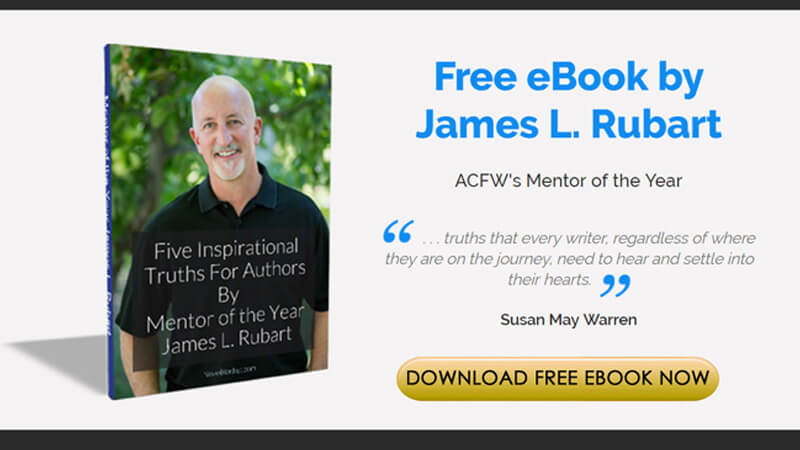
Five Inspirational Truths for Authors

Try our Video Classes

Downloadable in-depth learning, with pdf slides

Find out more about My Book Therapy

We want to help you up your writing game. If you are stuck, or just want a boost, please check us out!

Showing posts with label Randy Ingermanson. Show all posts

Thursday, April 17, 2014

On Reading Your One-Star Reviews...and Eating Rat Poison

By Randy Ingermanson 

(This is a two-part series of posts arguing why authors SHOULD versus SHOULD NOT read their one-star reviews. I knew Randy had strong feelings on this, and I think he nearly has me convinced I shouldn't read mine. Check in next month for the pros of reading low reviews with Julie Cantrell. I respect both authors so much and don't wish a one-star on either of them.--Heather Day Gilbert) 

Randy Ingermanson is the award-winning author of six novels and the best-selling book WRITING FICTION FOR DUMMIES.  He holds a Ph.D. in theoretical physics from UC Berkeley and is the creator of the wildly popular Snowflake Method of writing a novel.  He edits the free monthly Advanced Fiction Writing E-zine and gets ridiculous amounts of traffic on his web site at AdvancedFictionWriting.com.  Randy sits on the Executive Board of American Christian Fiction Writers and lives at an undisclosed location in the Pacific Northwest where he attends to the needs of three surly cats.


Don't Eat the Rat Poison
by: Randy Ingermanson


I was visiting my friend JimBob last month and we were having breakfast.

JimBob was reading the newspaper, doing the crossword, and I had my iPad out, reading reviews of my latest book on Amazon.

I slapped my hand down on the table hard. “Idiot!”

JimBob gave me a strange look. “I was just about to ask you for a five-letter synonym for ‘moron’ that ends with a T. You must be clairvoyant.”

“No, I’m furious.” I shoved my iPad over to JimBob. “Take a look at what this reviewer wrote about me.”

JimBob scanned the review. “Hmmm, what does ‘soporific’ mean?”

“Sleep-inducing. Which is ridiculous.”

JimBob kept reading. “What about ‘tepid dialogue?’ Dialogue doesn’t have a temperature. How can it be tepid?”

I just stared at him. “Do you think my books are sleep-inducing?”

“Why would you say that?” JimBob asked.

“Well, you didn’t say anything when I said it was ridiculous that this guy said it was sleep-inducing.”

“Because it was ridiculous.” JimBob shook his head. “This guy doesn’t like your writing. So what?”

“He’s an idiot!”

“So why do you care what an idiot thinks?”

I began spluttering. “Because … this review is out there in public.”

JimBob pointed at the screen. “He misspelled ‘boring’ right there. He spelled it ‘borring.’ And his grammar is horrible. I bet he’s 15 years old.”

Acid welled up in my stomach. “Is my writing really boring?”

“No.”

“Are you just saying that to make me feel better?”

“Yes.”

I stared at JimBob.

He punched me. “Teasing.”

I wanted to go punch a wall or something. I knew I was going to have another crappy day. This review was going to stick in my mind all week. I’d be thinking of all the horrible things this guy said about my book, and there was nothing I could do about it. I’d be so mad, I wouldn’t be able to write. And it was all his fault.

“Why do you do that?” JimBob said.

“Do what?”

“Read your 1-star reviews.”

“Because they’re there.”

“That’s not a reason. These people aren’t in your target audience. You don’t owe them anything. Nothing you do will make them happy. Why should you care what they think?”

“Because … I might find ways that I can improve my writing.”

JimBob shoved the iPad back toward me. “This guy wants you to have zombies in your novel.”

“I don’t write zombie fiction.”

“And cussing.”

“I don’t need cussing to get my point across.”

 "And graphic sex scenes.”

“That’s not what I write.”

“So how is reading a review by a guy like this going to improve your writing? You don’t write the kind of things he wants, and you’re never going to write the kind of things he wants.”

“What, I should just bury my head in the sand and only read my 5-star reviews?”

“Who writes 5-star reviews?” JimBob asked.

“Well … that’s obvious. The people who really like my stuff. My biggest fans.”

“So if you read their reviews, will it tell you the things they like best, and remind you to do those more often and better?”

“Sure.”

“And if you read reviews by people who hate your writing, are you ever remotely likely to take their advice? Have you ever found any useful advice in a 1-star review?”

“It’s just something I have to do.”

The doorbell rang. A thunderstorm of footsteps clattered outside on the porch and down the steps.

JimBob went to answer the door.

I kept trying to think if I’d ever found even one helpful piece of advice in a 1-star review.

“Idiots.” JimBob slouched back into the room carrying a bowl. He went to the fridge, poured some milk in the bowl, grabbed a spoon and sat down at the table.

“What have you got there?” I asked.

JimBob put a spoonful in his mouth and began chewing. His face twisted into a horrible grimace, and then he began gagging. Suddenly, he couldn’t breathe.

I pounded him on the back.

He retched up something and spit it out on the table.

I stared at it. “What is that stuff?”

“Gift from the neighbor kids.” JimBob took another bite.

I looked at it closely. “It looks like rat poison.”

His face twisted again and he chewed furiously, then took a big swallow of orange juice and forced it down. His face had turned a sickly shade of pale green. “It is rat poison. The neighbor kids hate me.”

“Why?”

“Last month I called the cops on them because they were having a huge party with giant speakers out in the streets at 3 AM. They’ve had it in for me ever since.”

I stared at him. “So they bring you rat poison?”

JimBob nodded. “They leave a bowl of it on my doorstep every day.”

“And you eat it?”

“Yeah.”

“Why in the world would you eat rat poison?”

“Because it’s there.”

“That’s not a reason. Those kids hate you. You don’t have to eat what they give you.”

“Well, I might figure out what they don’t like about me so I can be a better person.”

“JimBob, that’s nuts! You already know why they hate you, and that’s not going to change. You’re not going to become a better person by eating rat poison.”

“What, I should just bury my head in the sand and only eat things made by people who like me?”

“That’s a whole lot better for you than eating rat poison from your enemies.”

JimBob put another spoonful in his mouth. “It’s just something I have to do.”

“Well, you’re crazy if you eat rat poison.”

He chewed and chewed and chewed and finally gagged down the mouthful. A terrible look crossed his face. He went running into the bathroom and I heard the sound of vomiting. JimBob was moaning. “I’m gonna be sick all day. And it’s all those kids’ fault.”

I shook my head. That was the weirdest thing I’d ever heard of.

I drank the rest of my orange juice and scrolled down to the next 1-star review of my book.

My face started getting hot. Here was another guy who didn’t get my writing. Didn’t like the kind of books I wrote. Wanted something completely different. And insisted on telling me all about it.

Idiot.

***Thank you for that well-written and very convincing post, Randy! Authors, I'd love it if you'd share your thoughts on reading low reviews--do you or don't you, and why or why not? Watch for next month's follow-up post!***


Wednesday, December 09, 2009

How I Became a Dummy ~ with Randy Ingermanson

Randy Ingermanson is the award-winning author of 6 novels and is known around the world as "the Snowflake Guy" in honor of his "Snowflake method" of designing a novel. He publishes the free monthly Advanced Fiction Writing E-zine, the world's largest electronic newsletter on fiction writing. Randy has a Ph.D. in theoretical physics from UC Berkeley and sits on the Advisory Board of American Christian Fiction Writers. He has taught at numerous writing conferences around the country. Most recently, he's the author of WRITING FICTION FOR DUMMIES, which is currently #1 in the fiction writing category on Amazon. Visit Randy at his website.

How I Became a Dummy

I've always had a thing for simplicity. Even when I worked full time as a computational physicist, I always looked for ways to make the physics "as simple as possible, but no simpler" -- to quote Einstein.

One of the reasons my Snowflake method is so widely used around the world is because it really is about making things simple. You start with one sentence that defines your story, then you build out from there. Ultimately, you'll create a beautiful and complex story, but you can always understand it in terms of one simple sentence.

Here's an example of a simple sentence that summarizes a 400-page novel in only 11 words: "A physicist travels back in time to kill the apostle Paul."

That's it. Nothing fancy. Yet there's a whole story hiding behind that. Some people think it sounds like a good story. Others aren't interested. That's the point of the one sentence storyline -- it separates people instantly into two classes -- "interested" and "not interested."

The storyline above is the summary of my first novel, TRANSGRESSION. I've used that storyline hundreds of times at book-signings and conferences when people asked me what my book was about.

I believe that if you're writing a novel, you should always look hard for a way to condense your story down to one sentence. If you do that, you can use that storyline to interest an agent. Your agent can use it to interest an editor. Your editor can use it to interest the publishing committee (the people who make the ultimate decision on whether your novel gets published). Your editor can use it to fire up the marketing department and the sales team. The sales team can use it to sell more copies to the purchasing agents who make decisions for bookstores and chains of bookstores. Ultimately, if you can communicate a strong and simple storyline to readers of your novel, they can use it to explain your story to their friends. And word of mouth is what sells copies.

Simplicity is power.

I've been writing fiction since 1988, and one of the driving forces in my life has been the quest for simplicity:

* What makes a great story world?
* What makes a character real and three-dimensional?
* What makes a great plot?
* What makes a great scene?
* What makes a great paragraph?
* What makes a great theme?

Let's be clear on one thing: Part of great fiction is that special "oomph" that every writer brings to the table. I can't teach you how to be special. Luckily, I don't need to. Everybody is special in some way, and it would be foolish for me to teach you how to be yourself.

But part of great fiction is just knowing the tricks. That's what I teach -- the tricks of fiction.

Writing fiction is a bit like doing magic. Anybody can saw a lady in half. Anybody can make an elephant disappear. Anybody can pull the ace of spades out of a well-shuffled deck. If, if, if they know the trick.

I've been teaching the tricks of fiction pretty much ever since I got published. I've been teaching them at conferences, in my critique group, on my Web site, in my e-zine, and on my blog.

For years now, I've been thinking hard about what I teach, always trying to make it simpler. I have a selfish reason for this. I want to write fiction better. I learned a long time ago that the best way to really learn something for myself was to teach it to others.

Early this year, the publisher of the "Dummies" books decided to do a book titled WRITING FICTION FOR DUMMIES. They asked one of their veteran authors, Peter Economy, to do the book. Actually, they asked him to find a coauthor to do the book, because Peter isn't a fiction expert himself. He's an expert in presenting things in the Dummies tradition -- which has a long tradition of elegance and simplicity.

Peter Googled the phrase "writing fiction" and found my Web site immediately. He liked what he saw, so he called me and asked if I was interested in the project. I was.

That's how I became a Dummy.

It's been an interesting year. The schedule for WRITING FICTION FOR DUMMIES was extremely tight. The publisher wanted to bring the book out in November/December. That meant we needed to finish the book by the end of July and get it edited by early September.

We did it. 122,000 words. 384 pages. It was hard, but we did it. I had to cut back on blogging and sleep and other nonessentials, but we did it.

We did it because I'd already spent over 20 years simplifying every part of fiction writing down to the core tricks.

Fiction writing has one simple goal: Give your reader a "powerful emotional experience." Do that and you win. Fail to do that you lose. Every trick I teach is designed to do that.

WRITING FICTION FOR DUMMIES is available now in bookstores and online stores. Amazon lists it at $13.59 for the paper book and $9.99 for the Kindle edition.

I'm running a "book rush" this week on my Web site. If you buy WRITING FICTION FOR DUMMIES on or before Wednesday, December 9, 2009, you get 9 electronic bonus goodies -- including a brand new 80-minute lecture by me on "Strategic Self-Editing." I've never taught this subject before. It's not even presented this way in my book. It's new. I created this lecture just for the launch of the book. You get it free if you buy the book before the deadline.

For all the pesky details on WRITING FICTION FOR DUMMIES, check out this page on my Web site

Writing Fiction for Dummies

The tricks of the trade to writing compelling, concise fiction.

So you want to write a novel? This easy-to-follow guide provides step-by-step instruction on everything an aspiring writer needs to know, from conducting research to crafting a unique manuscript to finding an agent. Even if you've had no formal training, this hands-on resource will show you how to get your ideas down and make your publishing dreams come true.

Inside you'll find expert guidance in how and what to research; how to devise a plot; ways to use engaging dialogue and voice, and much more. You'll discover how to make your words jump off the page, create characters that resonate, and put together your manuscript for submission to publishers. Plus, you'll see how to plan a daily writing schedule and overcome writer's block.

• Features easy-to-follow, step-by-step instructions in writing a compelling novel and preparing it for the publishing world
• Teaches you how to effectively read fiction in order to enhance your writing skills
• Helps you structure, format, and present your proposal or manuscript
• Explains business practices between authors, agents, publishers, and booksellers

Whether you're starting a first draft or trying to finish your novel, Writing Fiction For Dummies is your savvy guide to navigating the entire publishing process and turning your dream into a well-written, saleable book.