Get a Free Ebook

Five Inspirational Truths for Authors

Try our Video Classes

Downloadable in-depth learning, with pdf slides

Find out more about My Book Therapy

We want to help you up your writing game. If you are stuck, or just want a boost, please check us out!

Showing posts with label genre. Show all posts

Saturday, July 25, 2015

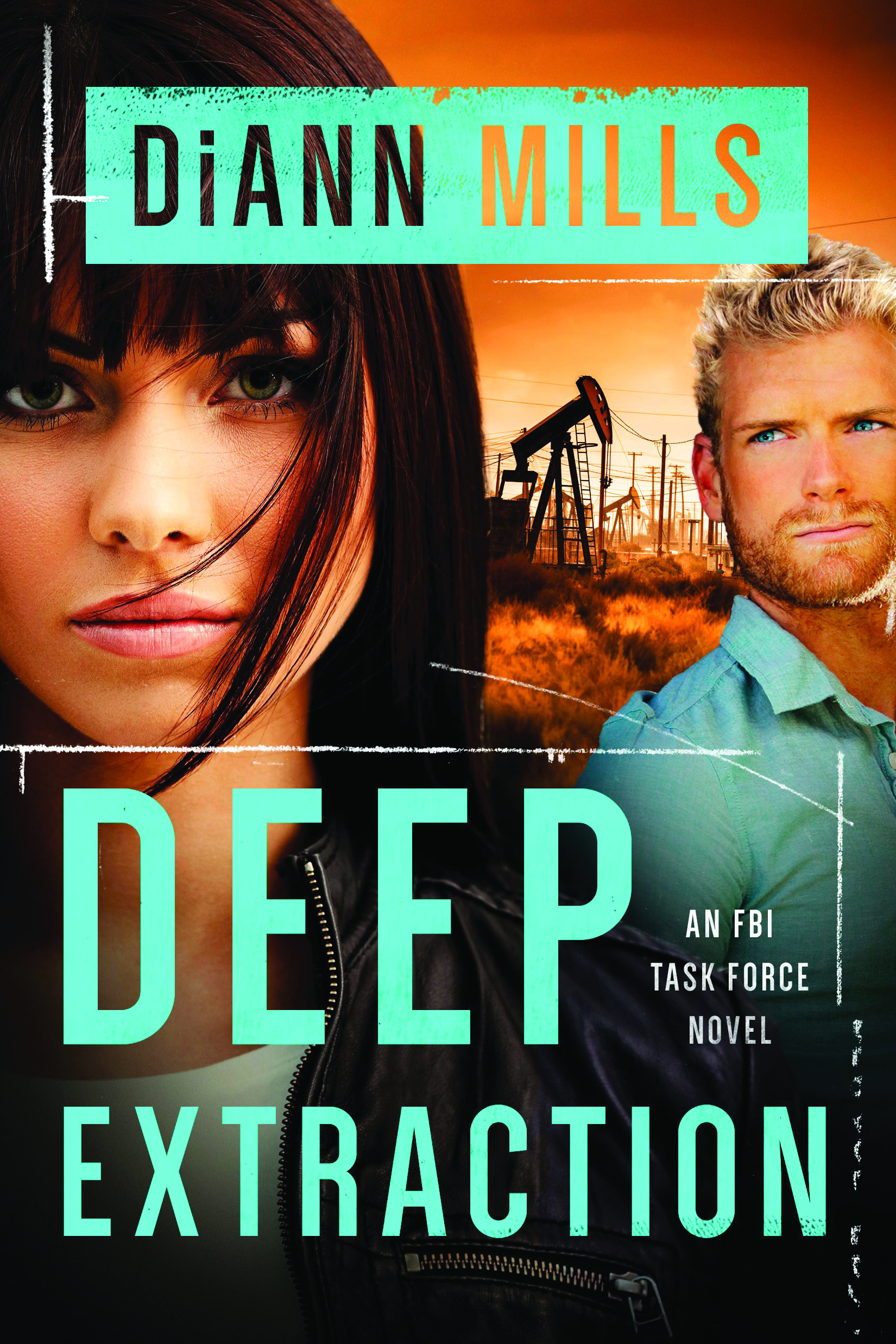
Keeping Promises to Your Readers by DiAnn Mills


Keeping Promises to Your Readers

DiAnn Mills

We writers get carried away in our stories. We’re so focused on building memorable characters and scenes with goals, problems, conflicts, and high stakes that we sometimes forget to keep our promises to readers.
Pro writers keep their promises!


At the end of the book, the reader is left scratching her head. What happened to Susie’s ill grandfather? Did Johnnie ever find the missing puppy? Did Mark and Joanna make up after their huge argument?

I’ve slipped and left my story hanging, just like you have done. Fortunately it was an editor who caught the problem and not a reader who was disappointed when her magic carpet tipped.
This is a no-no!


Writers make promises, and our readers expect them to be addressed no matter how small. They look like this:

I will find out who robbed the bank and make an arrest. Nothing’s made mention of the robbery again.

The 5K will happen in three months. I want to compete in it, so I’ll have to train. No mention of the character ever training.

Someday we’d like to have a child. No mention of this desire again. Is the character’s problem infertility?

When our car is paid for, we might look for a home to purchase. The key word is “might.” How does it pertain to the story? Does it need to be tied up before the last page?

5. Matt had a performance review in one week to get a raise. We never learn if Matt received
a raise.


I devised a method to ensure my story promises were fulfilled. It’s easy and it works. All it takes is a little time.
Pinky promise to the reader
Prepare a spreadsheet with columns that are labeled:

Scene Number
Page Number
POV Character
Promise Made
Scene and Page Number of Promise Kept.

As the writer completes each scene either in the draft stage or editing, she fills in the information. The result is no loose ends. Your story is ready to send readers on a magic carpet ride that doesn’t tip.


DiAnn Mills is a bestselling author who believes her readers should expect an adventure.


Her titles have appeared on the CBA and ECPA bestseller lists; won two Christy Awards; and been finalists for the RITA, Daphne Du Maurier, Inspirational Readers’ Choice, and Carol award contests. Library Journal presented her with a Best Books 2014: Genre Fiction award in the Christian Fiction category for Firewall.

DiAnn is a founding board member of the American Christian Fiction Writers; the 2015 president of the Romance Writers of America’s Faith, Hope, & Love chapter; a member of Advanced Writers and Speakers Association, and International Thriller Writers. She speaks to various groups and teaches writing workshops around the country. She and her husband live in sunny Houston, Texas.

DiAnn is very active online and would love to connect with readers on any of the social media platforms listed at www.diannmills.com.

Wednesday, July 08, 2015

Hit and Run Emotions by DiAnn Mills

by DiAnn Mills @DiAnnMills

While driving back from the grocery store, I was hit by a truck and the driver took off. The emotions I experienced were shock, anger, and a twinge of fear. The latter one was probably because I write suspense, and my mind always goes into story mode. But the truth is, fear often results from the unpredictable and suspicions from those who harm us.

Are you guilty of hit and run emotions?
The same applies to the characters in our stories. What happens when a writer has a character encounter a traumatic incident and there’s no reaction? Or what happens when a character responds to a minor incident with drama-queen emotion?

Both scenarios can destroy a reader’s reality check and toss the reader out of the story. Future purchases from that writer are nil. Sad, but true. Not much opportunity for a second chance when there are so many writers competing for our attention.

To avoid hit and run emotion in our stories, we can take steps to ensure our characters’ reactions to events are met with responses that are in character, realistic, and slide into genre.

In Character
For credible emotion, we writers must thoroughly understand our POV characters. This means taking time to develop their personality, unique traits, and backstory. A character who handles anger by stuffing it may logically end up with an ulcer. A character who deals with anger by breaking noses may need anger management classes. The first key to overcoming inappropriate reactions lies in characterization.

Realistic

Many writers keep a journal of the happenings in their lives and how they reacted. It’s been said that if a writer is unwilling to seek resolution to life’s explosions, then the writer will never be able to write about those same emotions effectively.

Dramatic reactions to small incidents initiates skepticism in the reader, unless the writer is gifted in humor. Even those stories must be crafted with care. When a hero or heroine appears callused to tragedy, displays an absence of wit or logic, or is over-the-top in dialogue, readers no longer care about the character or the story.

Don't hit the reader with a drama queen!
Genre 
The many genres provide us an opportunity to show our stories through a variety of techniques. The criterion dictates the story world’s dialogue, culture, goals, setting, and symbolism. The seven universal emotions stated in Tonya Reiman’s,The Power of Body Language are surprise, fear, anger, sadness, disgust, happiness, and contempt. Every POV character experiences these emotions according to genre guidelines. Here are a few examples:

Contemporary: Today’s world is filled with instant information from various communication devices. Problems arise from dealing in a world where change is the norm. A character is continuously assaulted with situations that involve coping devices according to traits and backstory. Contemporary characters filter a whirl of happenings through their personal data bank of their past.
Historical: The past is known for its slower pace of living. Communication from local,
national, and worldwide events shape the future many times before the character learns about them. Culture and gender often dictate how a character receives and processes emotion.

Romance: Romance is an emotional adventure. This aspect of novel writing can be woven into any genre. A thread of romance invites a reader into a dreamlike world of fresh and breathless love.

Create emotions for your fantasy world.
Speculative:This genre has a broad range of categories from fantasy to sci-fi. Here the setting and culture blends with character to show how emotion is received and processed. Because the story world is unusual, how a character views emotion is according to the writer’s discretion.


Suspense: Suspense can be written into any genre, much like romance, but the character’s reaction to a state of anxiousness or uncertainty with a blanket of fear leads the character down a path of uneasiness and often apprehension. Heroes and heroines walking through suspense are survivors who have learned to manage and compartmentalize their emotions in a way that is healthy and believable.

Hit and run emotions. We writers don’t have to be labeled with this criticism because we understand the power of character, reality, and genre.
DiAnn Mills is a bestselling author who believes her readers should expect an adventure.
She combines unforgettable characters with unpredictable plots to create action-packed, suspense-filled novels.

Her titles have appeared on the CBA and ECPA bestseller lists; won two Christy Awards; and been finalists for the RITA, Daphne Du Maurier, Inspirational Readers’ Choice, and Carol award contests. Library Journal presented her with a Best Books 2014: Genre Fiction award in the Christian Fiction category for Firewall.


DiAnn is a founding board member of the American Christian Fiction Writers; the 2015 president of the Romance Writers of America’s Faith, Hope, & Love chapter; a member of Advanced Writers and Speakers Association, and International Thriller Writers. She speaks to various groups and teaches writing workshops around the country. She and her husband live in sunny Houston, Texas.


DiAnn is very active online and would love to connect with readers on any of the social media platforms listed at www.diannmills.com.

Saturday, February 07, 2015

Genre is dead. Long live genre.


If you've read Lake Wobegon Days by Garrison Keillor--and I highly recommend it--you may recall Keillor's telling of the early church in Lake Wobegon, Minnesota. The founding church began as a single congregation, then split, then split again, until finally every church consisted of one member meeting with himself in his living room. As Christians, we can relate.

As writers, I think we can relate as well. Back when I was a young whipper snapper, I snapped up books and whipped through them faster than a prairie dog in a hailstorm (it works, visualize with me). My primary source for books was the navy housing bookmobile. The bookmobile was divided up by genre. The genres were called "Books on the bottom shelves" and "Books on the top shelves."
I'd select my books based on the title and cover. My favorite book of all time, Watership Down, was selected because I thought it was about naval battles. The cover was missing. It's a good thing I didn't see the fluffy bunnies on a cover, otherwise I may never have read my favorite book.

Now, a short thirty-some-odd years later, the two genres I grew up with have been split, and split again, and split again, until we now have genres that are comprised of a single title meeting in his living room. Wait...never mind. You get the point.

If you're an Amazon shopper like most of us, you know that we really don't have genres anymore. We have key words. You type in "Amish Vampires and Pontiac Trans Ams" and a list of titles pop up. There is no genre called "Trans Am driving Amish Vampires." There should be, but I don't make the rules.

If you follow Donald Maass and have read his Writing 21st Century Fiction, you know he alludes to this muddling of genre as well. But he, like me, is not concerned. In fact, he, like me, sees it as a huge benefit to writers and readers alike.

What does genre do?

Genres allow readers to narrow down the vast number of books available to a few that fit their tastes. That's the good side. Imagine a book store where there was no organization according to genre.

But the dark side of genre is that publishers have established rules, often restricting rules, according their definition of the genre. Now, I'm a plotter and I love having guidelines before I start the first chapter. But they're my guidelines. While I believe that the publishers set these guidelines based on decades of customer research and experience, it still doesn't discount the fact that most readers will never get a chance to try an alternative to the formula.

What indie authors have done is provide easily accessible alternatives to the formulas. What a large corporation was not willing to do because they can only take acceptable risks, the individual writer is free to do. What have we got to lose? A few months of our time and maybe a little investment on editing and a cover. If that's still too much, you can write about Amish Vampires in Trans Ams, have your friends edit it for free, design your own cover, and upload your novel at zero cost.


Obviously, we've seen some crazy stuff get self-pubbed during the recent indie gold rush. But we've seen some gems come out of it as well. Our odds of success are still about the same, whether we self-pub or submit to traditional publishers. The difference is that, with indie publishing, you're not counting on a single assistant to the assistant editor to give your manuscript a pass after she's already read six dozen that morning and just got a Dear Jane text from her boyfriend.
You can put it out there and let the readers decide. At least a few will read the entire thing. If you get a swarm of one-star reviews, you know it's back to square uno.


Okay, Ron, what does that have to do with the death of genre?

Everything. If you'll scroll up before my rant, you'll note that I give credit to this genre demise to the indies. The indies took the risks and tried different things. My Amish Vampire sold his Trans Am and went into space, but it was close enough (did you picture Burt Reynolds with fangs?). In any industry, the big players are not the risk-takers. It's the nerd in his garage building the first home computers with his stoner buddies while IBM executives were saying that no individual would ever need his own computer. It's a kid from Memphis beating out a blue-sy tune on his old guitar while swaying his hips. It'll never sell. It's a couple of brothers with a bike shop who wanted to fly.

They're all indies. Indies blaze new paths. Once the path is wide enough, the big boys follow and make it mainstream. Then the indie gets tired of staring at cubicle walls and finds a new path to blaze.

Is that who you are? Some of you reading this are quite comfortable with your publishers and agents. That's fine. I still want that for myself. But another part of me, one that says you're 48 years old Ron don't just write, write something that defies the trends. Something that would have your book seller staring at a dozen different genre shelves with no clue what to do with it. But something that a reader will pick up on Amazon or Kobo and say, "Wow...I didn't even know such books existed."

No, I don't need to sell books to make a living. In fact, I could probably retire early if I'd stop spending money on conferences and how-to-write-books books. So I have nothing to lose. I'm going to go out on a limb and suggest that most of us fit that category.

So why not? That should be your phrase of the week. Why not?

Put your Amish Vampires in the driver's seat. Give your gun slinging cowboy a salvation experience and an orphanage to run (and maybe a talking horse). Re-write some fairy tales with a few more explosions. This is our time. There's trails to blaze, people.

Let's throw a few genres into the blender and see what pours out. Go make me proud.

What is your most outlandish idea, the one you won't even tell your critique group about? Go ahead, your secret's safe with us.


Wednesday, March 19, 2014

Finding Your Author Voice


By Rachel Hauck

The writing community talks a lot about "voice."

The "sound" your writing makes when words and ideas are strung together.

Voice is unique to each author.

It is the single thing that makes one author stand out from another.

Four romance authors could write the Valentine's Day scene of a hero bringing a rose to his beloved and each story would be dramatically different.

But equally enjoyable.

Voice is how "you" say things.

Readers might say, "I love her voice."

A writer might say, "Oh, my editor is killing my voice."

And sometimes "voice" needs a bit of adjustment. Authors can get overly sensitive about their "voice."

But like a singing voice can be trained, so can an author's voice. In fact, a good editor can help you find your voice.

Ami McConnell at Thomas Nelson saw and "heard" something in my voice and challenged me to write deeper and with more intention.

I'm grateful!

However, that voice is NOT the one I want to talk about today. I want to talk about "voice" as it relates to what you write.

Often new authors genre hop, trying to figure out what they want to write or with what publisher. Perhaps they see a trend and migrate to "what's' hot now."

Established authors might get bored with what they've been writing and try something new. It's a risk -- remember John Grisham in Painted House -- but more easily done than a new author.

It's hard for an editor to see an author year after year at a conference and never know what kind of story the person is going to bring.

I love thrillers. I love a bit of sci fi fantasy. My husband comes up with some GREAT story ideas.

But they are not my voice. At least not for now.

Often people suggest I write a certain kind of book. "Write military." Or, "write about trafficking."

While I love the military and adamantly oppose human trafficking of any kind, those stories fall outside of what I think God is calling me to write.

I'm not saying "never" but right now, my writing voice is about love. Not just human love but the love of God for us.

I'm finding strength in writing with a supernatural element. Family Fiction said:

"Rachel’s portrayal of the supernatural presence and intercession of the Holy Spirit... is artfully executed and a powerful testimony. Often modern supernatural encounters with the Holy Spirit read as instances of mysticism and imagination, but Rachel Hauck illustrates Reggie’s spiritual awakening with a purity that leaves little doubt to its credibility."

The supernatural fits my voice. It's something I can do pretty well.

So combining my love stories with an element of the supernatural is becoming more and more my voice.

Down the line, I may find I can add a justice element to my love-supernatual stories. 

This is my voice. It's what I like to write. It's what I write well.

So, what's your voice? What do you do well? What seems to pop off the page?

Sol Stein said, “Write something only you can say.” 

That's voice!

My challenge to you is find out what YOU can write. What God is calling you to write? Stick with it. 

Don't change your mind based on what someone says or what's trending. 

If you don't know "your voice," do some testing. What do you read? What movies do you automatically gravitate toward? What do readers love the most about your work? What do you love most about your work?

I realized I could write supernatural elements early on, with my first chick lit, Georgia On Her Mind. I expected pushback from my editor. But low and behold, she loved it.

I'm sure you have a similar element in your writing.

Give yourself some times, too. It actually takes awhile to find your "voice."

So keep writing. Keep seeking. Find your voice.

***

Rachel lives in sunny central Florida.

A graduate of Ohio State University with a degree in Journalism, she worked in the corporate software world before planting her backside in uncomfortable chair to write full time eight years ago.

She’s the author of the EPCA and CBA best sellers, and RITA nominated books. She also co-authored the critically acclaimed Songbird Novels with platinum selling country music artist Sara Evans. Their novel Softly and Tenderly, was one of Booklists 2011 Top Ten Inspirationals.

Rachel serves on the Executive Board for American Christian Fiction Writers. She is a mentor and book therapist at My Book Therapy, a conference speaker and worship leader.

Rachel writes from her two-story tower in an exceedingly more comfy chair. She is a huge Buckeyes football fan.

Here latest novel, Princess Ever After and novella A March Bride, released in February 2014.


Visit her web site: www.rachelhauck.com.


Thursday, October 31, 2013

The Summer of Success

Facing a career crossroads at the moment—what step to take next and all that. I’m not all angsty over it, but I have been thinking a lot about Donna Summer lately, as a result.

Donna Summer? The Queen of Disco?

First of all, thinking about Donna Summer is not new for me. I’ve had a long time interest in her career and in the singer, herself. I’ve even been known to be a defender of Summer (she’s so much more than disco), because I think her talent was far overshadowed by her persona and by the Super Storm known as Disco that came in and tried, unsuccessfully, to obliterate the Rock and Roll shoreline.

Still, I’m more interested in Summer’s genre-hopping than in her music, per se. For instance, did you know she was nominated for 17 Grammy Awards in eight different categories (genres)? Further, did you know that she won five times in four different categories—twice in Inspirational? That’s right, Inspirational. The singer of 1975s disco moan-fest, “Love To Love You, Baby,” won two Grammy Awards for Best Inspirational song (1984 and 1985).

Conventional wisdom is to not genre hop in the publishing world. Start in romance (or speculative or historical or suspense) and stay in romance (or speculative or historical or suspense).

But, I must have a little Donna Summer in me because I don’t want to be constrained in that way. Before we get all crazy, let’s remember that no one is knocking down my door for my next book—or, for that matter, my first book.

But—again—we can look to the diva for guidance. Because “conventional wisdom” isn’t called “conventional-sort-of-good-advice,” you know?

Summer made her mark in one genre—disco. It was the red-hot genre of the time and she rode that horse for all it was worth. But when the horse started to get hobbled, she made the smart move of wrapping up that era with a Greatest Hits collection, changing record labels, and then came roaring back in 1980 with a rock-pop disc without even a whiff of disco, The Wanderer. And a song from that project earned her one of her Grammy nominations.

What are the lessons for a writer?

  1. Do your homework. Summer worked in Germany and Europe in various touring companies of shows like “Hair” and “Godspell” before connecting with Giorgio Moroder for her first album, Love To Love You Baby.
  2. Establish yourself as an excellent writer of (choose one: romance/historical/suspense/other) and then, like Summer, work your butt off to make your mark. She released seven disco albums from 1975 to 1979—that’s four years—three of them in a row were blockbuster double albums.
  3. Keep your nose to the ground and your face forward. If you pay attention to the market and publishing trends, you’ll know when it’s time to change genres. If you’re a big enough success, you’ll get your opportunity. When you do, show the same quality, perseverance, and dedication to craft that got you where you are.
That’s the way to build a Hall of Fame career (Summer was inducted into the Rock and Roll Hall of Fame in 2013) and do all the things you want to do.

Summer died May 17, 2012, at age 63. At her death (from cancer) she was working on two albums simultaneously—a collection of standards and a new dance music collection.

For the record, Summer’s Grammy wins were for:
  1. Best R&B Female Performance, 1979, for “Last Dance.”
  2. Best Rock Female Performance, 1980, for “Hot Stuff.”
  3. Best Inspirational Performance, 1984, for “He’s A Rebel.”
  4. Best Inspirational Performance, 1985, for “Forgive Me.”
  5. Best Dance Music Performance, 1998, for “Carry On.”
Additionally, she was nominated four times for Best Pop Vocal, twice for Best R&B Vocal, twice for best Rock Vocal, once for Album of the Year, once for Best Disco Vocal, once for Best Inspirational, and once for Best Dance Music.

Not a bad career.

Your turn: So, do you have a little Donna Summer in you?

Michael Ehret loves to play with words and as editor of the ACFW Journal ezine, he is enjoying his playground. He also plays with words as a Marketing Communications Writer for CHEFS Catalog and as a freelance editor at WritingOnTheFineLine.com. He has edited several nonfiction books, proofedited for Abingdon Press, and reported for The Indianapolis Star.

Saturday, August 17, 2013

John Ray Who?

No, I'm not name challenged. I can pronounce and spell correctly today's guest blogger, so welcome with me Jo Huddleston...

When writing was only a secret dream, I slipped into room 213 to attend a meeting where an editor and an agent from New York would speak. Like a squirrel, I checked my space for predators before moving farther inside. Sure enough, here came one, closing in like she’d picked me up on radar.

After introducing herself, she said, “Which is your favorite genre?”

Well, I’d lived my whole life in the South. I knew plenty of guys named Billy Earl, Bobby Joe, or Jimmy Lee but I hadn’t met a John Ray.

“I’m sorry but I don’t know any John Rays,” I said. She marched off in a huff, her literary nose tilted a few degrees closer to the ceiling than before.

My greeting committee of one caused me to wonder: Maybe this event wasn’t for me but for someone else—someone who knew John Ray better than I did.

The editor spoke first, then the agent. For an hour, I seldom heard more than two sentences strung together that I understood. The program ended with a question-and-answer time. Ah ha! Now if I just listen, all my potential writing questions will be answered.

To most of the questions, the two women answered with one of the following sentences: “Make sure you know your genre.” “Query them.” “Identify your POV.” “Include your SASE.”

Query? SASE, POV? And I was wondering how I would ever meet this John Ray person everyone had such high regard for.

Since then, I’ve lined my bookshelves with writers’ magazines, reference books and annual volumes of market guides. After numerous bylines, I still haven’t decided on a favorite John Ray. Perhaps several could query me, so I can choose one. I hope each includes an SASE.


Jo Huddleston is a multi-published author of books, articles, and short stories. Her debut novel, That Summer, released in December 2012, as the first book in The Caney Creek Series. Book 2, Beyond the Past, released in April 2013 and book 3, Claiming Peace, is scheduled for release in September 2013. Visit with Jo and her books at her website www.johuddleston.com.