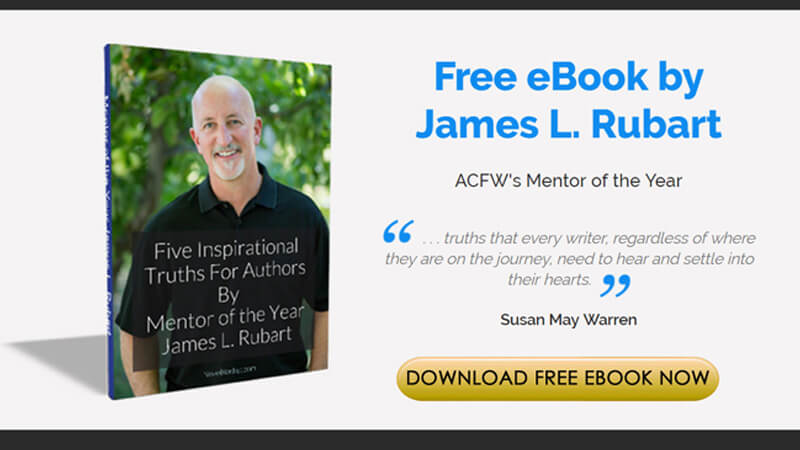
Get a Free Ebook

Five Inspirational Truths for Authors

Try our Video Classes

Downloadable in-depth learning, with pdf slides

Find out more about My Book Therapy

We want to help you up your writing game. If you are stuck, or just want a boost, please check us out!

Showing posts with label Writer's Bio. Show all posts

Thursday, January 16, 2014

Getting the Good out of Goodreads: Six Methods to get Your Novel Noticed

By: Heather Day Gilbert

(Goodreads illustration from Cass Co. Public Library)


I'd like to offer a few short and sweet tips on how to make Goodreads work for you; specifically if you are self-publishing, but much of this will also hold true if you're traditionally published. An alternate, yet equally effective title for this post could have been "Learning from Heather's Mistakes on Goodreads."

1) The moment your cover art and blurb are ready, list your book on Goodreads. This gives people time to get it on their To-Read lists, which will increase your visibility on search engine sites. I'd suggest getting your cover art and book blurb up about two months ahead of time to build buzz on all your social media sites. You can also post quotes from your novel, which is another effective way to draw people into the story. A fun way to do this is to use PicMonkey and edit free pictures (I got many from Morguefile), if you can find some that fit your fave quotes.

2) Give yourself an author page to link with your book, pre-publication. When you write your author biography, try to use action verbs as much as possible and don't make it all about the one book that is coming out. Take the long view of what kind of fiction you write and who you are as a person. 

You can also easily link your blog to your Goodreads author page, as well as upload vlogs, trailers, or YouTube videos so people get a visual picture of your novel.

3) Nominate your book for Listopia lists. Yes, even before it's released. Yes, it seems really self-serving, but it will help it get noticed sooner in its appropriate genre. Use judgment as to nominating your own book for "Best of" lists before it's even released/reviewed. I stuck to lists like "Eye-Catching Cover Art" or "2013 Releases." 

Oh, while you're poking around in Listopia, nominate your other favorite books for lists! Boost those authors, too.

4) Send out a Goodreads friend request to all your Twitter followers. This is something I did by accident, and I felt bad for asking all kinds of people to accept my Goodreads friendship. But it added a whole plethora of readers to my follower lists and increased visibility. In short, it was a brilliant mistake.

5) Join Goodreads groups in your genre, but READ the group regulations before linking to your book. I confess this is something I learned the hard way. I *gasp* got kicked out of a group, because I misunderstood their rules on sharing links to your own book. I felt like a heel and offered a personal apology, but never heard back. In short, I felt like a jerk. Make sure you keep your groups straight —if you're in several, it's easy to forget which ones allow author shout-outs and which ones don't. 

6) Once your book releases, if you have softcovers in hand, do a Goodreads giveaway. This is a GREAT way to gain exposure for your novel. You can't offer an e-book in a Goodreads giveaway, though—only hard copies. I would strongly recommend you offer at least three copies of your book to reach more readers, and run the giveaway for at least a month

I made the mistake of only offering one copy of my book for a two-week giveaway. I still got lots of requests, but I could've reached even more potential readers if I'd extended the giveaway and offered more copies. Bonus perk: when people sign up for the giveaway, there's a handy button they can hit to add your book to their To Read lists. I would rough-estimate that over 200 people added my book to their list in that two-week giveaway period.

In short, it's relatively easy to make Goodreads work for you as an author. You just have to spend time/effort getting your book cover/blurb ready ahead of release, fixing up your author page, and exhausting built-in marketing opportunities such as giveaways and groups. 

Here's hoping you go forth and get the good out of Goodreads!


Heather Day Gilbert enjoys writing stories about authentic, believable marriages. Sixteen years of marriage to her sweet Yankee husband have given her some perspective, as well as ten years spent homeschooling her three children. Heather is the ACFW West Virginia Area Coordinator.

You can find Heather at her website, Heather Day Gilbert--Author, and at her Facebook Author Page, as well as Twitter, Pinterest, YouTube, and Goodreads. You can find her Amazon best-selling Viking historical novel, God's Daughter, here on Amazon and Smashwords.


***Question for you: If you're an author, what's been the most helpful aspect of Goodreads for you?***


Monday, January 21, 2013

Advice on Writing an Author Bio from Rachelle Gardner


Writers: Are you having trouble putting together a short, concise bio for your book proposal? I hate to admit that it’s one of the greatest challenges I’ve had in recent years when preparing to pitch. How do you capsulize everything you are as a writer, and still tell enough about yourself to interest prospective editors or agents?

A while back, my agent Rachelle Gardner (Books & Such Literary Agency) put together a list of tips on this subject that I’ve found extremely helpful. With Rachelle’s permission, I’m going to share them with you now.
  • Write your bio in first person for query letters, third person for most other purposes including proposals, book jackets, article bylines.
  • Make it professional but you also need to convey personality and writing style. Don’t try too hard to be funny, but include something that makes you seem like a real person.
  • What gives you credibility? What makes you interesting? What helps people connect with you? (When you’re on Twitter, Facebook or your blog, what kinds of posts seem to get the most comments?) These are things you can briefly include.
  • If your book centers on something specific—the Civil War, for example—are you a member of a Civil War society? Have you published any articles in historical journals? Include that.
  • Try not to include too much “resumé” type information–education, job history, etc. because it tends to be boring. Only include what’s relevant to the book you’re pitching.
  • As you write a bio, consider carefully the purpose of the bio – who is the audience? Is it agents and editors? Is it your blog readers? Tailor it to this audience.
Rachelle also suggests reading the author bios in a couple of dozen books, paying close attention to the things you like and don’t like. I've done that a time or two when updating my bio. 

An additional tip that I can offer is to find the rhythm of your voice and use it in your biographical text. For instance, when writing my bio for the promotional material for a lighthearted devotional called Delight Yourself in the Lord...Even on Bad Hair Days, I added one short sentence that displayed the spirit of my writing: Sandra D. Bricker states that she hasn't seen a good hair day in more than twenty years.

Rachelle also encourages authors to compose several bios of varied lengths and save them to an author file so that they’re handy when needed. Speaking from experience, I can tell you this is a really helpful suggestion!

For additional information about nearly anything you can imagine in regard to the publishing industry, Rachelle’s blog (named multiple years by Writer’s Digest in their list of 101 Best Websites for Writers) is a wonderful source. 


  # # #

Sandra D. Bricker is a best-selling and award-winning author of laugh-out-loud romantic comedy for the Christian market. Her most popular series (that started with Always the Baker Never the Bride) will conclude this spring with Always the Baker FINALLY the Bride, which is now available for pre-order at Amazon and Christianbook.


Friday, September 07, 2012

Every Writer Needs a Bio


Fall conference season is here and writers everywhere are scrambling to get prepared. One thing many neglect is a writer's bio. Those who include it, often don’t give it the time and thought it deserves.

Every writer needs a bio, whether or not you're attending a conference.

In truth, you need three.
  • A small one, 25-50 words.
  • A medium length one, approximately two paragraphs.
  • A full page one, in depth. 
Many times this written bio is the first introduction someone in this business (think editor or event coordinator) or a consumer (reader or attendee) will have of you. This, with your message, can mean the difference between making the sale or not.

Your bio should reflect, through words, exactly who you are. It must be relevant and it must reflect your personality, as well as give you credibility.

Below are some of the instances where a bio will be necessary.
  • Cover Letter (to an editor, agent or event coordinator).
  • Book Proposal.
  • Query Letter.
  • Your website.
  • Inside your book or on the jacket.
  • Publicity for a personal appearance. 
  • In a publication (web or print) after an article. 
It’s important to remember a bio isn’t a resume. It’s not necessary to include information that isn’t relevant to what you’re writing. For example, if you’re not writing about a salesperson, it isn’t important to mention your job 15 years ago as an outside sales person. Again, think relevant when you’re composing your bio.

Here are some steps to help you write an engaging bio:

Step One—ask yourself a few questions.
  • What are some of my passions?
  • Why am I pursuing this craft of writing and/or speaking?
  • What value do I present my audience?
  • What are some of my strengths?
  • What impression do I leave with most people?
Don’t worry about sounding like an egomaniac when you answer, no one but you will see your rough draft. After answering those questions, try to come up with a one-sentence statement about yourself. Use active verbs and vivid adjectives.

Step Two—more questions.
  • What is my experience in this field?
  • What experience(s) in other fields are relevant to this field?
  • What aspects of my personality give me credibility?
  • What study(s) give me credibility?
  • What life experience gives me credibility?
Now begin to put the above information in chronological order. Basically what you are doing is outlining God’s road map that got you to the point you are today.

Step Three—flesh it out.
Build a word pool. From the questions above you’ll begin to see a trend. Use it. Amplify it by trading on words that bring your essence to mind.

Step Four—wrap it up.
Put it all together. It’s time to assemble the information you’ve gathered into your full-page bio. If you’re having problems pulling it together, this is the time to get some feedback from close friends.

Now that you have your full-page bio it’s time to sift through it and boil it down, first reduce it two paragraphs (try to keep it at no more than 200 words). Then cut it further to 25-50 words.

Writing a bio doesn't have to be a reason for a nervous breakdown, take it step-by-step and you'll have something to add value to your next meeting.


Edie Melson is a freelance writer and editor with years of experience in the publishing industry. She’s a prolific writer, and has a popular writing blog, The Write Conversation. She’s the co-director of the Blue Ridge Mountains Christian Writers Conference, as well as a popular faculty member at numerous others. She’s also the Social Media Coach at My Book Therapy.