Novel Journey

ONE OF WRITER'S DIGEST 101 MOST VALUABLE WEBSITES FOR WRITERS, 2008.

Thursday, November 30, 2006

Work and Publicity

Have you ever seen the movie, The Coal Miner's Daughter?

It follows the story of Loretta Lynn through her childhood and into the struggles of being a star. What's impressive to me is the part where Loretta goes from an unknown to a known.

I don’t how much is fact or fiction, but it teaches an incredible lesson. Standing on the stage of the Grand Ole Opry didn't happen over night. The movie shows her husband working to package the records, make their own "professional" pictures, type the letters, mail out the packets and then driving to the locations to follow up. I love that he keeps a list of radio stations he crosses off, one-by-one. No stone unturned.

In the film, they were so busy promoting themselves on the road they didn't even know they'd hit number 14 on the charts. When they learned, they turned around and went straight to Nashville—not sure how they were going to manage to get on stage at the Opry House, but just knowing they were going to get there.

Publicity takes work.

Not just for the publicist, but for the author as well.

Even when I garner the hit, it does not excuse the author from the work. While I might orchestrate schedules, assemble press kits, write new releases, and come up with an appropriate Q&A, the author is the one stepping on the plane, spending a night in a strange city, scheduling time for radio interviews, or appearing before the camera.

Constantly, I have authors sending me contacts and information they've gathered for the campaign. They call with ideas for radio interviews, or magazine articles. Like the Loretta Lynn story, they don't stop with just the recording of the song… but keep the ball moving.

What are you doing this week for your book?

Author Interview ~ Jane Kirkpatrick


Jane Kirkpatrick is a best-selling, multi-award-winning author of two non-fiction books and twelve historical novels, and Literary Guild, Doubleday, Crossings and Book of the Month book club have featured her titles. Jane is a former mental health director in Deschutes County and a former consultant in mental health to the Confederated Tribes of Warm Springs. An international speaker, she and her husband Jerry ranch along the lower John Day River in rural Sherman County, Oregon. www.jkbooks.com

What new book or project would you like to tell us about?


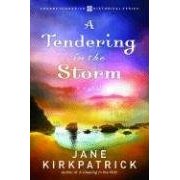
I’ve just put the finishing touches on the second novel in my Change and Cherish Series based on the life of the only woman who with nine male scouts was sent out from Bethel, Missouri in 1853 to the West to find a new site for their communal religious colony. It’s called A Tendering in the Storm and will be out in April. It follows A Clearing in the Wild which is the first part of Emma’s story. Just as we were working on the final galleys of this second book, I learned some new information about Emma that I just HAD to incorporate into the story. It’s one of the challenges in writing a novel based on the lives of real people. When I learn something from a descendant – which is what happened – that I hadn’t known before and it informs the story, I have to change it. Fortunately the publisher was fine with my doing that. Whew!

Tell us about your publishing journey. How long had you been writing before you got a contract? How did you find out and what went through your mind?

I’ve been very fortunate. Since my husband and I left suburbia and moved to where we live now, rattlesnake and rock ranch, I started writing nonfiction articles and essays for newspapers and magazines. That was in 1984. People thought we’d really gone off the deep end to leave our jobs (I’d been the director of a mental health clinic and my husband was a builder) to move to remote property that had nothing on it, no house, no power, 25 miles from the nearest town, seven miles from our mailbox. So I wrote to friends and family to assure them we were still alive and one of them wrote back and said they saved my letters and turned off the TV and read them out loud because they were like chapters of a book. That’s when I decided to write a book.

A memoir (as though I thought I had something fascinating to say!) It wasn’t to be a “how to” book, but a “follow your dream” book. Anyway, I wrote a proposal and sent it out along with 10 sample chapters – the proposal looked like a term paper! After six months I got a call from the editor in Texas. He asked if the manuscript was still available. Still available! I hadn’t written anything on it since I’d sent that proposal AND I hadn’t sent the proposal anywhere else. I assured him it was then went outside to tell my husband that the most extraordinary thing had just happened. I was about to write a book! We danced around on the deck as the dogs barked their happy jubilation thinking we were about to go for a walk. To me it was an affirmation of following our hearts and stepping out onto a cloud of faith, believing we wouldn’t fall through.

I received an unagented contract and that book came out in 1991 with Word. The book was just reissued with a new section from WaterBrook Press, a division of Random House this past fall. So I guess it was seven years of writing before I got a contract. But the book contract came from a proposal.

My first novel came out in 1995. I had a contract before I’d written it. My agent sold it by proposal and I’ve had contracts in advance of the writing for all of the now thirteen novels since. I have contracts for four more. The good news about “selling” a book before it’s written is that I know I’ve convinced someone it’s a great story and that’s how I felt about the novel, A Sweetness to the Soul published by Questar (which became Multnomah). My agent called to tell me and I was elated. She also said they’d be interested in possibly three more. The bad news about selling a proposal is that I never know if I can actually write it. So each novel is a step into the wilderness. (But as writer Terry Tempest Williams says, “to step into the wilderness is to court risk; but risk favors the senses which allow the good life.” I have a very good life.)

Do you still have self-doubts about your writing?

See above, but yes. Each time I start something new I think I can’t. I’ll re-read what I’ve written on a particular day and think it’s drivel. I tell my husband what I’ve done that day is awful and he’ll say “Gee, you’re feeling that way earlier in the process than before” so apparently it’s a part of my routine. With deadlines, I don’t have a lot of time to obsess about how bad my writing is. Anne Lamott’s words “You Don’t Have Time For That” sit on my computer.

I’ve taken to imagining the negative voices sitting behind me as the harpies in a Greek tragedy and I have to imagine them with duct tape on their mouths. I don’t have time to listen to their negativity because it isn’t my job to write the great American novel nor to get Oprah to know my name. It’s my job to tell the story I’ve been given the best way I know how and to trust that I’m not alone in the telling. As Madeleine L’Engle noted, when we create, we co-create: with spirit and with our readers. So I trust that I’m sitting at that computer for a reason and somehow that story has found its teller and I just need to be truthful and faithful to that.

Was there ever a time in your writing career you thought of quitting?

I’ve been writing for other people to read for about 22 years. I never thought of not writing during that time, especially since I had contracts so I knew others depended on me. But I did not attempt to earn my living totally from writing until about four years ago. Up until then, I continued to work as a mental health consultant on an Indian reservation about 100 miles from our home. Sometimes I didn’t think I could keep that pace up, of working away from home three days a week, helping on the ranch and writing, but I never thought of giving it up. I just got up earlier to write and turned myself into a morning person!

What mistakes did you make while seeking a publisher or agent?

I sent a lot of my nonfiction pieces out to publishers that were just not going to be interested. I didn’t do the marketing survey as well as I could have. Sending a 75 page proposal is pretty naïve too though the editor at Word forgave me. I pitched my work and myself to agents at writing conferences and while I didn’t garner an agent or publisher from them, it was really good experience and exposure. I hadn’t really researched the agents to see what they handled and that would have saved my time and theirs. I also did get asked to submit some pieces to a NY agent at one of the conferences and I didn’t follow up on it because I was sure he hadn’t really meant for me to do that. I’d just wandered in to his session.

This past summer, I had a chance to talk with him about a writing conference I helped organize and in fact he remembered me! So who knows, if I’d trusted in my work, I might have had a NY agent! Ultimately I got my agent through referral from a publicist hired by the publisher to promote my first book and she’s been my agent for the past 14 years. We have a great working relationship. So whatever mistakes I made along the way did help me arrive with an agent who has been right for me.

What’s the best writing advice you’ve heard?

With my articles, it was to make a list of 10 markets and write them on a folder with the date I sent the query or article out. When it comes back, read it once and if it still reads well, send it to the next market on the list within 24 hours out. I did that and rarely did I get to number 10 before the article sold. I don’t think that’s because it was a great article. I think it was because when I was feeling good about the work, I located the markets and I had a next step to take when the rejection letter came back. Keeping our work in circulation is important and the rejection letters can devastate. So I like always having a next step.

As for fiction, I think the best advice I had was to make a commitment to a story and then trust that with the words of Goethe, “Providence moves.” I was advised to just choose the story I was going to tell and then trust that what I needed to tell it would be there. It always has been. A corollary is from a prayer by Barry Longyear published in Writer’s Digest 22 years ago that I have stuck on my computer and one of the lines is “Help me to enter and live my story.”

Living it and not worrying about whether it’s good or not is great advice I think. And finally, a fellow author took me aside after my fifth novel and told me I was a great writer but that I needed to write with a single person in mind, maybe the mom picking up a book at the grocery store or a grandmother looking for a book for her granddaughter but one she’d read herself first. Making one’s work accessible was his advice and it was good advice. It’s a challenge to write for many while still imagining that individual whose life I hope will be touched.

What’s the worst piece of writing advice you’ve ever received?

I had this idea for a book once and I told a writer who had just gotten published about my dream to write a book. I didn’t say what it was about, only that I wanted to write. “You’re going to write a book? Good luck. It’s a more miserable process than you’d think.” I thought if a published author felt that badly about it, who was I to think that I could write something worthy or that I’d enjoy the process. I didn’t write that book and it was a couple of years before I had the courage to listen to my heart again and write ANY book. It wasn’t bad advice, really; but my poor interpretation of it. I deprived myself of the joy of this writing life!

Do you have a pet peeve having to do with this biz?

My husband says it’s the strangest business he’s ever heard of, where you GIVE books away to booksellers hoping they’ll order in more and where the author whose work is being sold receives the smallest percentage of the income…if there is any. But every biz has strangeness to it. You just have to find the way through. I’ve worked in large organizations: the pet peeves of publishing are nothing.

What do you wish you’d known early in your career that might have saved you some time and/or frustration in writing? In publishing?

Coping skills. My husband once asked me to get him a hacksaw from the shop and I brought him his saw but also one that looked a little different. It was shaped like a U. It was called a coping saw and he said it was used to fit things into tight places like a cabinet into a corner. He told me the blade was very strong but also very flexible. If it was too strong it would splinter what you’re trying to fit; if it was too flexible, it would leave gaps. The blade also allowed you to change directions quickly without a lot of friction. In order to cope you have to be strong, but not so strong you’re rigid and you have to be flexible but not so flexible you stand for nothing. And then there’s that changing part, without friction. (It was the Marlboro man meeting mental health!).

So I wish I’d realized early on that change is just a part of the process, that authors don’t always get to choose their titles; that publishers have more than one book (mine!) to promote; that when an editor makes a suggestion and I have to defend why I want that scene, that defending makes me a better writer and if I can’t defend it well enough, then I have to decide whether to trust the wisdom of someone who ALSO wants me to succeed or get rigid and maybe splinter what I’m trying to fit. Publishing really is a team effort. It’s not all about the author. It’s about production and promotion and sales and distribution and it’s about the reader, getting the best story into the hands of the reader. I wish I’d known that earlier. I think I’d have not taken things personally that were just part of the process.

Was there ever a difficult set back that you went through in your writing career?

One of my books, a second in a series, was rejected by the publisher. I hadn’t written a series before, only a “collection” so I didn’t realize I had to carry the stories of these characters through the entire series. I got in to introducing new characters and of course, readers want to know what happened to the others they fell in love with. But I didn’t know that. I was devastated. It was like getting an F when you’re an over-achieving-A kind of person. The good news is that after a couple of days of crying…the editor and I talked again and she had some great suggestions for how to salvage the book, what we might do, etc. Her suggestions made me dig deeper and find a way to retain the new characters and weave them into the story of the original characters. It worked! Book three was also much easier to write and that series has gone on to be my bestselling series ever.

When a book goes out of print, that feels defeating, the hassle of getting rights back, etc. and trying to resell it. Fortunately I’ve been able to find other publishers for the two books of mine (nonfiction) that went out of print so that now all fourteen of my books or a version of them are in print.

What are a few of your favorite books?

Vinita Hampton Wright’s Dwelling Places is an all time contemporary favorite along with Marilyn Robinson’s Gilead. I loved Linda Hall’s Sarah’s Song as well as her other mysteries. B.J. Hoff’s books are gems and Liz Curtis Higg’s books, too. Sue Grafton novels. Linda Hunt’s Bold Spirit: Helga Estby’s Forgotten Walk across Victoria America is terrific nonfiction read. Angle of Repose by Wallace Stegner. Ivan Doig’s English Creek. The Persian Pickle Club by Sandra Dallas (along with her others) and this may seem strange, but Ted Kooser’s The Poetry Home Repair Kit is just the best book about writing. Oh, but of course Anne Lamott’s Bird by Bird and Stephen King’s On Writing. Molly Wolf’s White China: Finding the Divine in Everyday Life and Christina Baldwin’s book StoryCatcher: Making Sense of our lives through the Power and Practice of Story. Madeleine L’Engle, Walking on Water. Kathleen Norris Amazing Grace and Dakota. And finally, anything at all by Barbara Brown Taylor and Frederick Buechner.

What work have you done that you’re especially proud of and why?

Does this have to be about writing? Because I think some of my best work has been with families of children who have disabilities and my being able to learn from them while hopefully helping them to discover their own strengths. I also believe that mentoring or encouraging young writers is good work and I’ve done that in a number of ways. And encouraging people to remember and write their own stories down is important work. I feel blessed that my counseling life and my writing life do blend, for as it’s said, stories do heal. Work with traumatized children at Baylor University verify that, that such children benefit most from music, dance or movement (quilting? Woodworking?) art and story.

It seems no coincidence to me that the Hebrew word for parable meaning “toss along beside” like a pebble is similar to the Greek word for comfort meaning “to come along beside.” In my writing life, I’m proud of my first novel, getting it written and believing it was a good story before I even tried to write it down. It earned a national award and was recently named to Oregon’s Literary 100: 1800-2000 being named one of the best books about Oregon written in the past 200 years. That’s cool.

I also compiled some encouraging words I’d given my sister when she was dying and said she couldn’t concentrate long enough to read an entire book. A Simple Gift of Comfort grew from that book and I’m grateful for that.

Do you have a scripture or quote that has spoken to you lately in regards to your writing?

I’m fond of Deuteronomy (a word that means “these are the words”) 6: 6-9 which I paraphrase to mean that we should remember the stories and teach them diligently to our children and “write them on the door posts” and never forget what God has done in our lives. This scripture gives encouragement to write, to remember, to encourage others to do likewise. I have this little saying at the end of my email: Stories are the sparks that light our ancestors’ lives; they’re the embers we blow on to illuminate our own. Deuteronomy says to remember and to write it down.

Can you give us a look into a typical day for you?

When I’m in my “writing” part of the year, I’m up early, sometimes at 4:00 AM taking a break around 9:00 then back to write most of the day with a break for lunch and I finish at dinner time. I have an office that looks out onto the rimrocks and the ridges of the John Day River. I use a computer. I begin each book by doing a timeline of significant historical events in the life of the characters and also in the country at large, to see how my character might have been affected by the Civil War, let’s say; or the British influences in the Northwest Fur Trade. I spend a lot of time seeking out descendants and interviewing them to hear the family stories that often aren’t written anywhere.

That’s especially true since I write about historical women, primarily, and I really have to scrounge to find authentic information about women. Usually I have to track their husbands, fathers, brothers or sons to know where they might have been and to wonder how their lives were spent. I don’t look at emails until 11:00 AM Pacific time, in case my editor has contacted me and then I don’t look at them again until 5 or so. I don’t answer the phone, just take messages and answer them back in the late afternoon or evening. Otherwise I get distracted.

I usually don’t write on Saturday or Sunday but on those days I read books I’ve been asked to read for endorsement and do pleasure reading. I also make presentations, lead women’s retreats, speak at historical societies etc. I’m doing research in the evenings and weekends too but usually that’s sandwiched in between the things of living like cleaning the house. This is my January to June routine. I’ve had a book come out in April or May for several years now.

That means I’m on the road launching the new book but I’ll still be writing using a laptop and my flash drive to finish up the manuscript due in June. I don’t like that writing as much because I can’t access the shelves of reference books available to me that I accumulate for each book. As I get close to finishing and with a deadline looming, I often wake up at 1 or 2:00 AM and just go in and work then come back to bed at 8:00 AM to nap. I don’t set any number of words or pages as goals for my day. I do write one chapter at a time and not specific scenes that I later move around. It’s pretty much chronological for me. Boring, eh?

Then from June to December, I’m researching the next book and rewriting the manuscript I turned in the previous June. I usually don’t get up so early; I’m showing up by 9 and work until 3:00. I can participate in blog interviews! I look at my emails more often. I have a three to four week break when I don’t read the manuscript or work on it but let it cook and wait until the editor has comments for me before I begin the rewrites. This is the best part of writing for me because I know where the story is going and now I can put in the things that deepen it for me and hopefully for the reader.

Usually during the latter half of the year I’m also re-reading galley proofs, talking with the copy editors and I’m researching the next book but I may also be verifying something a copy editor has questioned. In between I’m spending time with my family, writing Christmas cards or at this time of the year, going pheasant hunting with my husband and our Wire haired Pointing Griffon dog. I’m always thinking ahead to what the next book might be. I never know when a particular story will hit me and I’ll have to write it down.

I also participate in a writer’s organization called Women Writing the West and that takes time away from writing so I have to watch that just as I have to be careful of spending too much time on other loops, blogs etc. There are other writing on-line groups (ACFW, CHI LIBRIS, Western Writers of American) that I belong to and I could easily churn my day away reading about writing rather than, well, writing.

Do you have a word or page goal you set for each day?

No. I like to write an entire chapter in a day but I rarely get to. They’re usually 5 to 6000 words so I guess that’s a goal. But mostly I feel like I’ve been successful when I’ve shown up, kept my commitment to “assume the position of a writer” and then just trust what will happen. I have good days and bad days of writing but even the worst days of writing are better than not writing at all.

Are you an SOTP (seat of the pants) writer or a plotter?

Someone once asked Albert Einstein how he worked and he said “I grope.” I grope too (and I’m groping dead people whose stories I’m telling so there is probably some mental health disorder named for that) But I’m both a SOTP and a plotter. Because I write about actual historical events or people, I do have some sort of historically based plot or sequence of events that I know I’ll be working into the story or that drives the story forward. I also have an idea of where I want to start and where I think I’ll finish, a final scene, let’s say. But in between, if I know my characters and the setting well, then they are free to lead me and I am then going by the SOTP method. I like it when I end a chapter with “As she looked over the hill she knew from what she saw before her that her life would change forever.” But then not know what she saw until the next day when I start writing again. Writing ought to have surprises for the writer and the reader, at least that’s my theory.

What author do you especially admire and why?

Frederick Buechner. Because he writes both fiction and nonfiction, he writes with great wisdom and compassion. He’s innovative with his thinking and he integrates issues of faith so delicately and with such grace that I am always moved, never led to feel guilty but always led to be a better person, live a better life, deepen my faith and reach out to my neighbor because of what he wrote. I’d like to move people in that way, to write like that.

What is your favorite and least favorite part of being a writer?

Favorite part is “having written” as some wise person once said. Knowing I did it, that I silenced the harpies in my head. Least favorite? Writing the “suggested reading list” because I have to remember the style requirements: last name, first name, period. Title of book. Place published. Date. All that stuff so I have to lay my hand on the book to get it right.

How much marketing do you do? What's your favorite part of marketing?

When my first book came out and I realized it wasn’t going to be a bestseller and the publisher would move on to their next releases, I asked my brother, a successful salesman, what he wanted in a product that made it easy for him to sell. He said two things: you want to know that you have a quality product, the best it can be. Second, you want a story. A story? I asked. Yes, he said, because if it’s a quality product, people can buy it anywhere, but they’ll buy yours and from you because they’ll remember your story.

So first I want to be sure that my book is the best I can make it. Then I become a marketer not of my books but of the importance of story in our lives, of the people I write about and how I think it’s important for the world to know about them and what they have to teach us about living today. I also “market” my own story about living on Starvation Lane and how my life changed when we took a chance and followed a dream and that we’re still here at the end of the rutted dirt road. We have a sign on our gate that says “We seek neither convenience nor ease but to live at the edge of possibility.” In some ways, that’s what I market. I like best the chance to be with readers, telling them stories, answering their questions.

More specifically though, I have a website
www.jkbooks.com and I write a monthly essay of encouragement on it to bring people back. I respond to my guest book entries personally. I participate in some blogs on a regular basis. At signings I have a guest book where I solicit postal addresses and my niece maintains my mailing list and when a new book comes out or I’ll be at an event in an area, we send postcards to announce that. I also keep a schedule on my website. At various time I’ve paid for a publicist’s help. At times I’ve been fortunate to have the publisher provide a publicist to work with me to set up events etc.

I speak or attend signings maybe 100 times a year. Out of those events have come some great connections (including being asked to speak to the European Council of International Schools) as well as learning about new stories. The people who like my books are my best marketing. They tell their friends and family, order signed books from me, attend events even when they don’t plan to buy a book, they just come to support me. What could be better than that? My least favorite part of marketing is having a signing that’s set up for say two hours and we’re trying to get people to come into the store to just stop and buy a book. I much prefer having an “event” where I’m talking about stories or history or women’s issues for a half an hour or so and then signing afterwards. When it’s just a “signing” and since I’m not famous, it can sometimes get pretty lonely and I feel badly for the store. I do read a lot of other people’s books that way, though. The end cap books I pick up while waiting for a customer.

Do you have any parting words of advice?

Only that you can see by the length of my answers why I have to work with good editors, to keep me within a word count! Brevity is good. Writing spare is good. But finding your own style and voice is best of all. I hope you keep writing until you do. Thanks for staying with me to the end!

Wednesday, November 29, 2006

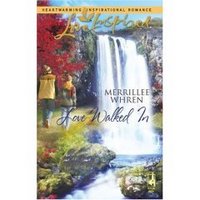
Author Interview ~ Merrillee Whren

Merrillee Whren is an award-winning author who in 2003 she won the Golden Heart Award presented by Romance Writers of America for best inspirational romance manuscript. Her first book, THE HEART’S HOMECOMING was a finalist in the More Than Magic Contest. Merrillee has lived in Spokane, Cincinnati, Atlanta, Boston, Dallas, and Chicago and now resides in Florida. When she isn’t writing, she works part-time for her husband’s recruiting firm or enjoys walking on the beach, playing tennis or doing a little yard work. She is married to her own personal hero, her husband of thirty plus years, and has two grown daughters.

What new book or project would you like to tell us about?

I have a book, LOVE WALKED IN, coming out in December 2006 from Steeple Hill Love Inspired. It’s the story of Beth Carlson, single mom, who has her hands full with a teenage son. She doesn’t have time for romance, especially with her new neighbor, Clay Reynolds, who is only in town for a few months. Besides, she learned long ago that love doesn’t last. But Clay is good to her and her son and has helped her with her faltering faith, and he makes her wonder whether she’s been wrong about God and love.


For those who have read my first book, THE HEART’S HOMECOMING, my December book is set in the same fictional town of Pinecrest, Washington.

Tell us about your publishing journey. How long had you been writing before you got a contract? How did you find out and what went through your mind?

I wrote my first novel when I was in high school, but it wasn’t until many years later that I thought about writing for publication. I always loved reading romances because I wanted a happy ending. After reading dozens of romances, I decided that I could write one, too. I started writing long hand in a spiral notebook. This was around 1984, and thankfully, not long after that, I was able to get a personal computer otherwise I may never have had the endurance to type a whole manuscript, as I am a terrible typist.

I wrote off and on, mostly on, for the next twenty years. I submitted to publishers and entered lots of contests. During that time period, I wrote and rewrote eight books. I sold book number eight and eventually sold book number six. Book number seven won the RWA Inspirational Golden Heart Award in 2003, and I still hope to sell that book. The other books were my practice books, but parts of THE HEART’S HOMECOMING, my first book, came from book number five.

Here's my call story. February 20, 2004, a Friday, I went to get my haircut and stopped to pay our water bill. When I got home, I saw the light blinking on the answering machine. I punched the button to play the message. "This is Diane Dietz from Steeple Hill. Please call me." My heart was racing, and I was thinking this has got to be THE CALL. (I missed it!!!) My husband was busy on his business phone and didn't answer our home phone while I was gone. Then I thought maybe she wasn’t calling to buy my book, but I thought surely she wouldn't call unless she wanted to buy the book. (Was I a little neurotic or what?)

My hubby was still on the phone, so I couldn’t scream or talk to him. Instead, I got teary eyed and waited around until he got off the phone. I told him Diane Dietz called and I think she wants to buy my book. He said call her back. I said, “I'm afraid. What if she's not calling to buy the book?” He just shook his head. I told him I’d call when I got myself together. So I took a few minutes to calm myself down. Then I punched in the number, hands shaking. She answered and asked me if I was sitting down. I was. She said, "I'd like to offer you a contract on Second Chances."

At least I think that's what she said. I had to be very calm because hubby was still on his business line just up the stairs. I said that's fabulous. I think she was a little disappointed that I was so calm. I told her I'd taken plenty of time to calm myself down after I listened to her message. Anyway, she went into details about money, time lines of revisions, option book, publication, etc. And she explained some of the revisions they wanted. After going over all this, I told her I’d call her back that afternoon.

After I hung up and hubby wasn't on the phone, I screamed, "THEY WANT TO BUY MY BOOK." Our younger daughter just happened to call to talk to her dad about business stuff. I told her I had sold my book. I called my mother-in-law. She was thrilled because she knew how long I've been at this. (She can't understand why they haven't bought my Golden Heart book. She did proofreading for me on that book and loved it.) Minutes later, older daughter called to say congrats. I later called back and accepted the contract.

During the rest of the afternoon, I sent emails to everyone I could think of to let them know I'd sold. Then I went for my walk so I could burn off some of the adrenaline. The weather finally turned nice so I could walk at the beach. I was grinning from ear to ear, but I resisted the urge to go up to complete strangers on the beach and tell them I'd sold my first book. I came home did my lower body workout. Believe me I had lots of energy. I finally saw the flowers my girls sent while I was out walking. I couldn't believe they got there so quickly.

Hubby and I went out to dinner to celebrate. What a day!

Do you still have self-doubts about your writing?

Always. Each time I start a new book, I wonder whether it will be any good. I feel like I’ll always be learning to write better.

Was there ever a time in your writing career you thought of quitting?

Absolutely. One of the hardest rejections that I had to deal with was one where the publisher had my manuscript for nearly a year. I was so sure that I would sell that book. I think getting my hopes up during that prolonged wait made the rejection that much more difficult. I almost quit writing after that rejection. It was at then that I did some real soul searching.

After writing for so many years, I was wondering whether I should give up. Was God trying to tell me that I wasn't cut out for writing? That I should use my time in some other way? In 2003, I had entered the Romance Writers of America Golden Heart Contest. I had entered this contest several times before and never came close to being a finalist. The thought kept going through my mind to lay a fleece before the Lord. "Lord, if you want me to continue writing, let me win the Golden Heart." I have to admit I was afraid to pray that prayer because if I didn't win that meant God didn't want me to write.

I wasn't sure I could give it up even though many times I became so discouraged I wanted to give up. But I always came back to it. Even though I didn't pray that prayer, God knew what was in my heart. In 2003 I won the Golden Heart for best inspirational romance manuscript. A few months later I sold my first book. I didn't even sell that Golden Heart winner. I still hope to sell that one.

What mistakes did you make while seeking a publisher or agent?

I think my biggest mistake was taking too long to follow-up on submissions.

What’s the best writing advice you’ve heard?

Don’t give up.

What’s the worst piece of writing advice you’ve ever received?

“This book isn’t saleable.” This comment about my second book, AN UNEXPECTED BLESSING, made me more determined to sell it.

Do you have a pet peeve having to do with this biz?

Before I was published my pet peeve was waiting so long for responses.

What do you wish you’d known early in your career that might have saved you some time and/or frustration in writing? In publishing?

I’m not sure having known something earlier would have helped. I really feel God had a time for me to be published.

What are a few of your favorite books?

I can’t say that I have any favorites. I love all the books that I finish. If the book doesn’t grab me in the first 100 pages, I don’t finish it. I don’t want to waste my reading time that is harder to find now, since I have deadlines of my own.

Do you have a scripture or quote that has spoken to you lately in regards to your writing?

2 Corinthians 4:7 (NIV) “But we have this treasure in jars of clay to show that this all-surpassing power is from God.” This verse reminds me of the power of the gospel that I have the privilege to share in each of my stories.

Can you give us a look into a typical day for you?

I have no typical day. Each day is different for me. Tuesdays and Thursdays I sometimes play tennis in the morning. Wednesday morning is Community Bible Study. The other mornings I often do some work for my husband’s recruiting firm. I do most of my serious writing in the evening. If I’m on a tight deadline, I may closet myself away in our bedroom with my laptop and write most of the day.

Do you have a word or page goal you set for each day?

When I’m on a deadline, I do have a daily goal. It’s usually somewhere between 1,000 and 1,500 words per day.

Are you an SOTP (seat of the pants) writer or a plotter?

SOTP

What is your favorite and least favorite part of being a writer?

Getting letters and e-mails from readers is my favorite part. Promotion is my least favorite part.

How much marketing do you do? What's your favorite part of marketing?

I don’t do a lot. I have bookmarks made and send those out to family, friends and groups who are looking for promo items for goody bags.

Do you have any parting words of advice?

Give God the glory.

Tuesday, November 28, 2006

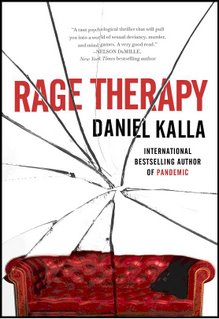
Author Interview ~ Daniel Kalla

Daniel Kalla was born and raised in Vancouver where he continues to reside along with his wife and two young daughters. He spends his days (and sometimes nights) working as an Emergency Room Physician at an urban teaching hospital.

His latest release, RAGE THERAPY (a psychological thriller), came out in hard cover from Forge Book in October 2006. In it, Kalla plumbs the depths of forensic psychiatry and the emerging fields of impulse and rage control therapy.

In 2005, he was featured on the front page of the Globe & Mail Review section and was interviewed on national TV on the Vicki Gabereau Show. CNN, CBC radio, The National Post, City TV, and The Vancouver Sun have also interviewed him.
He received his B.Sc. in mathematics and his MD from the University of British Columbia.


What book or project is coming out or has come out that you’d like to tell us about?


RAGE THERAPY is my current hard cover release. It’s a dark psychological thriller flavored with my behind-the-scenes medical experience.

Dr. Joel Ashman, a young widowed psychiatrist, narrates two stories. One follows the fatal beating of his mentor Dr. Stanley Kolberg, and the other the suicide of a beautiful but emotionally fragile patient. A year apart, on the face of it the events are unrelated. But as the investigation into Kolberg’s murder wades into an ugly world of sadomasochism and patient abuse, the relevance to his patient’s death grows. After the murder of a second psychiatrist, Joel realizes he is on a crash course with someone willing to do anything to distort the past.

Who killed Stanley Kolberg and why? The answer lies in a lurid underworld of violence and predators—and in the tortured past of a disturbed young patient.

Tell us about your journey to publication. How long had you been writing before you got the call you had a contract, how you heard and what went through your head.

Oddly, my very first submission, a feature script I co-wrote with two friends fresh out of an introduction to screenwriting course, was optioned within a week. And I thought this writing gig was a joke. Then, a failed production, two novel manuscripts, three agents, and five years later, I wasn’t laughing! However, on my third manuscript, my third agent got a big bite from Tor/Forge books in New York. And I have to say, receiving that confirmatory email was one of the highlights of my life. A kind of mix of elation and validation that still feels good to remember.


Do you still experience self-doubts regarding your work?

All the time! Now I’m working on my fifth novel for Tor/Forge (that has a guaranteed pub date in 2008), and I question myself more than ever. But that’s not necessarily bad. As long as the self-critic does not paralyze you as a writer, then I think it can actually be constructive.


What mistakes have you made while seeking publication?

I think all agents (even the high-powered A list ones) have a tough job in pitching and selling new authors. If you have an agent you like and trust, you’re in a good position. And when I was waiting / hoping to find a publisher, I think I let my impatience sometimes get the better of me. I regret that. And I wished I had concentrated on simply writing more and letting the agent do his or her job.


What’s the best advice you’ve heard on writing/publication?

Someone once said that publishers love to find stories that are similar and comparable to other “hot” titles, but trying to be derivative of another writer or book is the worst career mistake a writer can make!


What’s the worst piece of writing advice you’ve heard?

Write what you know. Obviously, it has its inherent wisdom, but if you write fiction, eventually you have to make stuff up!


What’s something you wish you’d known earlier that might have saved you some time/frustration in the publishing business?

There are terrific books and websites available on finding agents and publishers. I would suggest the Jeff Herman book, but there are numerous others. When I finally found them, the work of shopping my work was cut considerably!


Is there a particularly difficult set back that you’ve gone through in your writing career you are willing to share?

I had a near miss when a major publisher expressed interest but did not make an offer. For whatever reason, I was crushed, but the sky did not fall and other opportunities came along.


What are a few of your favorite books? (Not written by you.)

Gold Coast – Nelson DeMille
Summer of Katya – Trevanian
Skinny Legs and All – Tom Robbins


What piece of writing have you done that you’re particularly proud of and why?

I am the guest writer in the Vancouver Province’s inaugural novel-writing contest. Briefly, we’re writing a collaborative thriller novella, with a new chapter chosen every week for twelve weeks. There are a few swank grand prizes. And I was allowed to introduce the story any way I wanted. And I will write the final chapter on December 10th. Every week in between readers (unpublished writers) have been vying for the the next chapter. We’ve had up to 360 entries one week, and you would not believe how many talented writers are emerging from the woodwork. I am proud of the project and the opportunity it has given other writers. (You can check it out at:
http://www.canada.com/theprovince/features/thriller/index.html)

Do you have a pet peeve having to do with this biz?

It seems to be a reactive business. By that I mean the importance placed on a new title and its orders are driven by who, what, and how many sold last year, rather than what will be great this year.


Can you give us a view into a typical day of your writing life?

I hold a day job as an ER physician, so I write when work and family demands are not too much. As long as I have something to say, I can writer anywhere, anytime.


If you could choose to have one strength of another writer, what would it be and from whom?

John Irving’s genius for wrapping the reader up in his characters.


Do you have a dream for the future of your writing, something you would love to accomplish?

Yup. Inside this thriller writer’s exterior is a poet waiting to emerge. Just kidding! But I do have an idea for a historical novel that I’m chomping at the bit to write.


Was there ever a time in your writing career you thought of quitting?

No.

What is your favorite and least favorite part of being a writer?

My favorite parts are writing and celebrating the release of a new book with the friends and family who made it possible. My least favorite part is stressing over sales figures and the economics of the biz.


How much marketing do you do? Any advice in this area?

Aside from what my publisher chooses to do, the only marketing I believe a writer in my position can do is network with readers, booksellers, and other writers, especially in person. And I do that at every opportunity.


Parting words?


Wish I had something wise. Instead, I’ll just wish the best of luck to my fellow writers out there.

Monday, November 27, 2006

Author Interview ~ Scott Nicholson

Scott Nicholson is the author of six supernatural thrillers, including The Farm and The Home. He lives in the Blue Ridge Mountains of North Carolina, where he tends an organic garden, collects mountain folklore, and picks an acoustic guitar. Nicholson is also a freelance editor and has published over 50 short stories. His Web site www.hauntedcomputer.com contains folk wisdom, writing tips, and fiction excerpts.


What book or project is coming out or has come out that you’d like to tell us about?

THE FARM came out in July, a tale of a little mountain town where a dead circuit-riding preacher puts in an appearance about once a decade. My vampire action novel, THEY HUNGER, will be out in April. It’s billed as “Deliverance with Fangs,” and we’re trying to set it up with Hollywood at the moment.

Tell us about your journey to publication. How long had you been writing before you got the call you had a contract, how you heard and what went through your head.

I always wrote as a youngster, but didn’t pursue it seriously until about 10 years ago. I immediately began sending off stories and getting rejection slips, and it wasn’t until I’d finished five novels that I finally sold one. I was at work when the editor from Pinnacle Books called, and I think I jumped out of my seat without using my legs. I knew it would happen sooner or later if I stuck to it, but still, it was the culmination of a long dream, but also a wake-up call that the next steps were still ahead.

Do you still experience self-doubts regarding your work?

Sure. You’re only as good as your last book, and, indeed, even your last sentence. There’s always a chance the well will dry up or your career will collapse or readers simply stop caring. I remain optimistic that if I holed up my end of the bargain, the rest will sort itself out.

What mistakes have you made while seeking publication?

Not understanding the markets well enough. I used to send my novels to every publisher listed in Literary Marketplace, and I’m lucky some of those places didn’t accept them, because my career would have died before it even started. Sometimes rejection is a favor, not an insult.

What’s the best advice you’ve heard on writing/publication?

Keep at it. Beat your head against the wall until the bricks fall. Don’t take “no” for an answer, and don’t let people around you kill your dream.

What’s the worst piece of writing advice you’ve heard?

Write what you know. If we stuck with this rule, fantasy, science fiction, most horror, and mystery wouldn’t exist. Sure, you should be emotionally true, but the rest you can research and invent.

What’s something you wish you’d known earlier that might have saved you some time/frustration in the publishing business?

Realities of the publishing industry. The publisher really does have hundreds of books to release and promote, so yours is just one in the stream and the next new one is coming up fast behind it. Instead of being bitter, try to build a mutually beneficial partnership and trust that the publisher knows what it’s doing.

Is there a particularly difficult set back that you’ve gone through in your writing career you are willing to share?

Promotion is difficult. I’ve tried dozens of different approaches, and even though I am experienced with media, it’s hard to tell what’s working. After five years of doing it, I’d say book signings, banner ads, bookmarks, newspaper and web interviews, writing articles, and writing groups all help a little bit and that you should spend as much time, energy, and money as you can afford.

What are a few of your favorite books?

I love Dr. Seuss and Mark Twain. MISERY by Stephen King—there’s a writer’s tale for you! Dean Koontz, John Steinbeck, William Goldman. To kill a Mockingbird is a great book, as is The Haunting of Hill House.

What piece of writing have you done that you’re particularly proud of and why?

My story “The Vampire Shortstop” was very effortless and it won an international writing contest. Plus the viewpoint character is autobiographical. It’s been published several times and appears in my collection THANK YOU FOR THE FLOWERS.

Do you have a pet peeve having to do with this biz?

Some new writers think established writers have time to read their unpublished work. That’s why I do freelance editing as a sideline, but I just don’t have time to read stuff for free, though the new voices are important. I do read for pleasure, but that’s different. Too many books, not enough time.

Can you give us a view into a typical day of your writing life?

I’m a reporter, so I write every day for my job, and then write my fiction and writing articles when I can. Usually, I sneak a wedge of time during the morning or night. Some days I can spent eight or ten hours on a project, but consistency is the best approach for me.

If you could choose to have one strength of another writer, what would it be and from whom?

The pacing of William Goldman—novels like Magic and Marathon Man are taut, with no wasted words.

Do you have a dream for the future of your writing, something you would love to accomplish?

Right now I just want to continue improving and expanding and gaining new readers. Eventually, I’d like to write fiction full time, possibly teaching or editing a little on the side. Like I said, all of this can go away very quickly. On the other hand, if you don’t take risks for your dream, why should anybody else believe in it?

Was there ever a time in your writing career you thought of quitting?

Almost every day…right in the middle of that first sentence, when it seems like the most difficult thing in the world. But like Santiago in Hemingway’s “The Old Man and the Sea,” you know you’ll soon row yourself warm.

What is your favorite and least favorite part of being a writer?

Favorite is sitting around in sweatpants and T-shirts, working at home. Least favorite is trying to make money from it.

Parting words?

You’re the only one who knows how to tell your stories. It’s a sacred duty, so do it as well as you can.

Saturday, November 25, 2006

Sunday Devotion: The Sign

Janet Rubin

“Kiss-your-asters-good-bye sale!”

So reads the sign standing by the road in front of a little store called Green Survival here in CT. An old, family-owned business, Green Survival provides a nice contrast to the plant sections at Wal-Mart or Home Depot. The place has character—cats prowling around the plants outside, roosters crowing behind the building and an ancient parrot beside the register who says hello to customers. The perfect place to get your pet food, fresh eggs, pumpkins in fall, and Christmas trees in winter.

But the best thing about Green Survival is the sign. Even when I don’t need to stop and buy anything, I love driving by and reading the latest message. Like most signs, the point is to give information about a sale or product in the hopes of attracting customers. But whoever makes up the signs at Green Survival is clever. They manage to give the information in a creative way, eliciting giggles from me every time I pass. (i.e. “Thank you very Mulch for your business.” Or “Tweet the bird-lover in your life to a new birdhouse for Christmas.”)

More than once, after reading the sign (and nearly swerving into oncoming traffic in the process), I've decided to pull in and take a look around. But then, that’s the whole point. Anyone can report the facts. Using creativity to present the facts in a way that draws people in is a different matter.

Jesus knew how to do it. His message was simple- "Repent," "Follow Me." He was all about truth. In fact, He was The Truth. But He took the time to present His message creatively, packaging it in stories that touched the emotions, engaged the intellect, and even amused. He used allegory, metaphors, and similes. Jesus could have just laid out the plan of salvation once and let people take it or leave it, but He chose to go further, telling the story again and again, in different ways so people could “get it.”

God still uses people and stories to communicate His truth. Though the plots of the stories we write differ, the truth contained within them remains the same. I am amazed to think that God could use my writing to touch people’s hearts and perhaps help them better understand some bit of truth. Like how much God loves them, how endless His supply of grace and forgiveness is, or that He loves to give people second chances (and third and fourth…). He can use you too. What will your sign say?

Mark 4:2 Then He taught them many things by parables.

Lord, Thank You for the simple truth of the gospel. And thank You for loving us enough to put that wondrous truth into stories that still touch people today. Thank You for making me a story-teller. Please help me to represent the truth well in my stories, and then use them to touch hearts. Amen

Labels:

What R U Reading?

I'm curious what everyone's reading these days and why you're reading what you are.

I'm working on a medical series so I've been reading some of Tess Gerritsen's work, which I'm enjoying. I just finished Tim Down's upcoming release, Head Game. I can pretty much pick the books I want to review and I chose this one because I'm currently shopping a psychological thriller and wanted to see how I fared. Tim's is a great book. I'll be writing a review probably today and will post it on Novel Reviews in the next week.

I just started A Pagan's Nightmare by Ray Blackston. I loved Flabbergasted and I like Ray, and well, the cover is really cool, so when the publisher asked if I wanted to review it, I said heck yeah.

Next in my pile is a book I asked to review: By the Time You Read This by Giles Blunt. This one's a secular title from Henry Holt. I write thrillers so I asked for this one because it looked particularly suspensful and I'm always looking to improve in that area.

Jonathan Strange and Mr. Norrell is something I'm going to bite off in paragraph size chunks. It's a monster of a book but Jess was calling me up reading me passages from it which were just my sense of morbid humor, so I finally bought it. I have too many other books to read and review to take a couple months off for this one. It's a slow read so I'll just take my time with it.

The Magician's Nephew (Chronicles Of Narnia). I'm almost done this book which I'm reading with my nine year old, Jacob. I didn't read through these as a child and I am LOVING this book, more than my son is but he's coming around.

Also in my to be read pile is A Bigger Life by Annette Smith. The book hasn't released yet but a friend who had an advanced copy is gushing over it. When she gushes, I pay attention. I asked her for an advance copy to review. Can't wait to get that.

One more in my TBR pile: Paul Auster's to be released: Travels in the Scriptorium. Another Henry Holt, BEA title. I didn't ask for this one but they sent it and it's really short and has a great cover, and the premise is intriguing, so what the heck? I'll probably read this one when I'm done the others.

I'd love to sneak a classic into my pile and I really want to read Gilead as well. Maybe I can take some time off from reviewing soon to do this. I think I will.

So, what are you all reading? Anything particularly good? Reading for research, review or fun?

S'up Saturday

Thanks all for sticking with us through our mushy-gushy Thanksgiving love-fest.

Great interviews and commentary coming up:

Interviews with Zondervan Sr. Acquisitions Editor: Sue Brower, Robert Liparulo, literary agent: Kelly Mortimer, BEA medical thriller writer: Daniel Kalla, Scott Nicholson, Christy Barritt, commentary from Mike Duran, Mary DeMuth and yours truly ... and a whole lot more.

Off subject: Would anyone be interested in subbing a page of their manuscript for public critique? Ane, Jess and I get tired of only ripping our own work to shreds and thought we might like to torture someone else. You can be anonymous when it's posted but it would be done on Novel Journey for all to see.

If you're interested, contact Gina through her profile

Friday, November 24, 2006

Jess' Turn ...

I hope everyone had a blessed Thanksgiving and safe travel. For the last 'Thanksgiving' post, I wanted to mention people everyone in this writing community has reason to be thankful for. These individuals freely give their time and energy to promote Christian writers.

Bonnie Calhoun with the
Christian Fiction Blog Alliance, who is dedicated to promoting Christian Fiction. She gives up many hours of her life to promote authors and titles.

Michelle Hutchinson, who features authors and reviews many books.

C.J. Darlington, with
TitleTrakk, who reviews, interviews, and works to unite Christian music with CBA fiction.

Lena Nelson Dooley, who must spend hours a week preparing interviews and providing spotlight for authors in her newsletter.

Barbara Warren who keeps track of the news and updates, generously giving her time for others.

The girls from the
FabFourBookPicks, who not only review and interview, but I see their comments all over the net about books

Ane Mulligan with
NovelReviews, who works tirelessly to keep the review site up current.

Gina Holmes, founder of
NovelJourney, who works to keep this blog growing and informative and people connected.


I'm sure there are more names that deserve to be listed above. I'm thankful for those who promote others and impact lives.

Thursday, November 23, 2006

Our Thanksgivings ...

Ane's Turn:

Mary DeMuth started a wonderful thing on her blog by declaring this Bless an Author Day. As I thought about who I would bless, the list grew way beyond the space allotted—so many have blessed my life. But I finally narrowed it down to these:

Deb Raney for making me cry with her books and teaching me so very much. You opened the doors of good writing for me. You are my benchmark.

Diann Hunt for making me laugh so hard with her novels and for being my mentor. We decided we must have been separated at birth and are fraternal twins. ;)

Sally John for tackling hard subjects with such beauty in writing and deep stories. I always sigh at the end of your books, hating that they're finished.

But above all, there are two yet-unpublished authors (although not for long): Gina Holmes and Jessica Dotta, my beloved blog and crit partners. You two push me beyond myself and never, ever allow me to settle for anything less than my best. You love me enough to rip my work to shreds where it needs it, and then lift me up with the encouragement to rewrite it until it gleams.

The Penwrights, a group of up and coming writers who Gina, Jessica and I mentor, you all have added to the tapestry of my life with rich hues and flawless designs. I know God has brought each of you into my life for a special purpose, but while we discover what that purpose is, I'm relishing the journey with you. I love each of you dearly.

And so on this Thanksgiving Day, I give thanks to God for each one of these mentioned. I'm thankful you're in my life. To each of you, I send my undying thanks and love.


Blessings and Happy Thanksgiving,
Ane
___________________________________________________

___________________________________________________
Gina's Turn:


It goes without saying that I'm thankful for those who critique my work and let me cry on their shoulders and listen to my delusions of grandeur (which are many): Ane, Jessica, Michelle Griep, Sandra, Mike D, and Lisa Ludwig. Also to the folks I randomly bother to be a fresh set of eyes: Ron, Wayne, & Mike.

I'm thankful beyond words that I, a wretch, should be called a child of God...thank you Jesus! And for my boys, Jacob and Levi, whom offer me unconditional love that feels straight from Heaven. My children are sweet, smart, funny, kind, beautiful, and love God. Um, am I blessed? Ya think? I have a wonderful and enormous family: sisters, brothers, parents, etc who I adore and know I don't deserve whom of course I'm also very grateful for.

I'm thankful for my agent, Chip, who is amazing. Many, if not most of you, know him so I won't go on except to say, he's incredible at what he does (and is one of the few people who I don't have to constantly say "I was just kidding" to.)

I've been blessed with incredible mentors. Some of these folks read my work and give advice, others are there for an occasional question or bit of encouragement but who bless me on a continual basis: Alton Gansky, Don Brown, Kathy Mackel, Colleen Coble. Also: Deb Raney, Bob Liparulo, Camy Tang, Gail Martin,Tony Hines, Brandilyn Collins, Randy Ingermanson, and the list goes on. Thank you for taking time out of your busy schedules to be there whenever I've called on you for help.

With the exception of our always encouraged and encouraging Ane Mulligan, writers tend to be a moody, melancholy bunch. I'm no exception. I've had certain folks whose edification is medicine to my soul and always when I need it most: Cindy Sproles, Kelly Klepfer, Reni Bumpas, Janet Rubin, and Mark Ragonese, to name a few.

ACFW (American Christian Fiction Writers): If you're not a part of this huge group of encouragers and talent, you should consider it.

I'm thankful to the publicists who make my job easier here on Novel Journey: I appreciate them all, but several have gone above and beyond for us: Rebeca Seitz & our own Jessica Dotta of Glass Road PR, Dave Bartlett, and Jeane Wynn, though I appreciate all of you!

Our Penwrights, who were hand picked originally for their incredible potential. Man, these folks are talented! But more than that, these people from all over the country, oops-make that world, love each other like family. These are quite possibly the loveliest group of PEOPLE, not just writers, that I've ever been a part of.

I'm thankful to all the authors, editors, publishers, agents, etc, who come to Novel Journey and write for us or allow us to interview them and learn. What a blessing you've been! And to our many book reviewers over at Novel Reviews. You all do this as a service to the writing community and we are so very grateful to you!

And a huge thanks to the community of readers of Novel Journey. When I started this site, I would never have dreamed we'd grow the way we have and it's really all of ours now. Thanks especially to those who consistently leave comments for the authors (Mary DeMuth and Kristy Dykes come to mind off the top of my head but you all know who you are). It might seem like a little thing, but it makes a difference in their day, and I appreciate this kindness!


Wow, this is starting to sound like an acceptance speech, (remember those delusions of grandeur I suffer from?) I just wanted to take this rare opportunity to tell each of you reading this that you have blessed me in some way.

Thank you and Happy Thanksgiving!

Gina Holmes


Wednesday, November 22, 2006

Guest Blogger ~ Debra White Smith

Please welcome Debra White Smith, our guest blogger. With her new book releasing in January 2007, Debra talks about what she's learned from Jane Austen and sharing it with Novel Journey.

Debra White Smith has more than 40 books to her credit and over 1 million books in print. The author of Romancing Your Husband (more than 100,000 copies sold) and the popular Jane Austen series, Debra’s award-winning writing, entertaining humor, and solid biblical knowledge have made her a reader favorite and a sought-after conference speaker. Debra holds an M.A. in English.


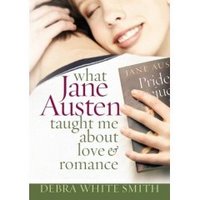
My next book releasing is January 2007 is What Jane Austen Taught Me about Love and Romance. A nonfiction wrap-up to the Jane Austen Fiction Series, this book takes the Great Love Chapter, 1 Corinthians 13, and highlights the way Jane Austen reveals the differing facets of love in her novels. Here's the back cover copy:

Dear Jane…

I always ache for Knightley's unrequited love for Emma...celebrate the sparkling excitement between Darcy and Elizabeth...long for Edmund to wake up to Fanny Price's undying love...and cheer for Elinor Dashwood as she learns to love Edward with abandonment. I sigh when Anne Elliot and Captain Wentworth are finally reunited...and laugh out loud at the forever naive and dear Catherine Morland as she bungles her way into Henry Tilney's heart.


What a cast of characters. What a writer. What a woman you were! The novels you wrote have forever left an impression upon my mind, my heart, and my writing.

Your devoted fan,
Debra White Smith


In tribute to Jane Austen’s genius at revealing the intricacies and foibles of affairs of the heart, bestselling romance writer Debra White Smith highlights the delightful interactions between Austen’s people and celebrates the many facets of love. Drawing on her own irrepressible humor, Debra also shares her often hilarious encounters in her quest for love to reveal the timelessness of romance.

An insightful and charming read for anyone who loves Jane Austen, romance, and laughter.

Please share with us something you've learned about writing in your journey as a novelist.

I never seem to get to a point in writing novels where I stop learning. I'm forever turning a corner and bumping into new insight or a new way of crafting my stories. In the last few years, there have been several "Eureka!" moments I've experienced, but I think the strategic use of details and description has been a long lesson and one that I'm still trying to perfect.


BALANCE IN DETAILS

Scene: I'm a detail person and love to include realistic, concrete details in my novels. However, I've learned that you can actually use key words and phrases to bring up an immediate image in your reader's mind that save you the necessity of going into too much description. For instance, "antique dresser." Most readers already have an "antique dresser" image "saved" in their mental files.

So, unless there's a specific reason to go into detail on the intricacies of that dresser, then stop there. The reader's imagination will fill in the rest. Now, if you're writing a mystery novel and the clue is in the antique dresser and the detective knows it is, then by all means, describe that dresser. But, if your hero enters a house with an antique dresser in the foyer, just hit the highlights and mention the dresser to give the ambiance of the room, then move on.

Adjectives/Color: Another area this has really been helpful to me is in the use of adjectives, specifically colors. As a beginning novelist, I wanted to write my stories in living color. Problem is, if you're not careful, too many color adjectives--or other adjectives, for that matter--can become extraneous and actually detract from the story.

Now, when I'm trying to decide whether or not to include a color or adjective, I ask myself, "Is it imperative that the reader have the color of (or adjective about) this item?" For instance, if the heroine wears a red jacket that reminds the hero of his high school sweetheart, then that jacket must be red. If the heroine just has a jacket she's throwing on, then there's no need to tell the world it's red...unless it's being used as a character building element. For instance, if her favorite color is red and you want to show that, you can mention that the jacket is red. Bottom line is, only use the adjectives and colors that are necessary to the story.

Emotions: One of the things I've learned in the last few years is to do the best I can to exclusively show, not tell the emotions. For many of my earlier novels, I realized I was showing and telling the emotions. For instance, "Her fists clenched, Jenny marched across the room in anger." "In anger" is not needed. I've already shown that Jenny is angry. Usually, these emotions are written in a prepositional phrase. "He blinked in confusion," "She laughed with joy," "He snorted in derision," "The dog barked and ran in terror." If a novelist is doing a good job of showing these emotions, there's no reason to write them in. If you feel like you have to include the emotion word to communicate the emotion, then chances are high you haven't completely shown that emotion.

Clothing: First, by all means put some clothing on your characters. I can't tell you how many times I've read books or manuscripts in which many of the characters must have been nude! No clothes or precious few clothes were mentioned. But, as with the above mentioned details, there's a fine balance, here, as well. Don't get bogged down in describing what your characters are wearing--unless there's a specific reason to go into detail. Make sure that whatever they wear, it reflects their character. And understand that you can indicate what characters are wearing with a few key actions by the character, without actually ever having to say, "She wore..." For instance, "She squeezed her sweater's button until it left an imprint on her finger." This one phrase tells us that the character has on a button-up sweater and that she's very likely tense about something.

So, it takes care of two necessary descriptions in one sentence without ever having to tell the reader, "She wore..." or "She was tense." I usually try to mention a few key, clothing words per scene per character and then don't go into long description on the clothing unless it's necessary to the plot. Also, remember the point made under the first section, "Scene," applies here as well. For instance, most people have a mentally "saved" image of what a butcher looks like.

So, if a character goes into a deli and you say that the butcher was behind the counter, then we immediately dress him/her in white, wearing a butcher apron. Unless there's a good reason to mention that butcher apron, then let the reader fill in the rest on that. If an incidental cowboy walks by, most people will dress him in jeans, boots, a hat, and a western shirt. However, if your hero is a cowboy, you do need to go ahead and mention some clothing clues. If the cowboy/hero always wears a leather vest because it belonged to his grandfather, then that leather vest becomes a character issue. If a heroine was "born" wearing blue jeans and she dresses up in a frilly dress, then the hero is going to really notice that dress. So it should be described.

Connect Your Character to the Scene: Frankly, this is a huge mistake I see many authors make--even multi-published ones. Always remember to keep in mind what is going on in the scene around your character and have the character acting in sequence with and reacting to the scene. For instance, if your characters are in a long conversation while riding in a car along a bumpy road, then those characters are going to be jostled around the whole conversation. Many times, I've seen long stretches of conversation in such situations and there's no showing of the character moving in sequence with the bumps.

Show a purse falling in the floor, characters straining against the seatbelt, bumping against each other, etc., as they talk. If it's a warm day, show the character wiping sweat or taking off a jacket. Too many times, I've read scenes where the reader is told it's hot or the car is bumpy at the first of a scene and then the character is never wholly connected to that scene. Don't overkill, but do sprinkle in these details along the way to continue to give your reader the ambiance of the scene. Remember, whatever is going on around the character is best described by that character's interaction with the scene. If a character is near a swamp late at night, don't forget how mosquitoes bite, how fog blocks the view, and how amphibians are no respecter of shoes.

Even in the most tense scenes, keep the character connected to the scene. Nothing builds tension more than something like knowing the killer is just on the other side of the tree, where the hero is hiding...he can't move...and then, a mosquito lands on his cheek and starts a bite that won't stop. The reader is itching with the very thought, and that's exactly what you want.

Debra White Smith
www.debrawhitesmith.com
www.reallifeminute.com

Tuesday, November 21, 2006

Author Interview ~ Todd and Jedd Hafer


Jedd Hafer is an award-winning writer, comedian and speaker. He has written seven books with his talented brother Todd. Jedd also works with troubled teenagers at Childrens ARK treatment centers in Colorado . Jedd is in demand as a presenter on topics related to working with kids, parenting and stress (in no particular order).


Todd Hafer has written more than 30 books, many of them with his talented brother Jedd. His day job is senior editorial director for Hallmark Books, a division of Hallmark Cards, Inc. When he's not doing book stuff, he's running miles and miles across the Kansas plains.


What book or project is coming out or has come out that you’d like to tell us about?


Our new novel Bad Idea. We are psyched at the attention it’s getting! People we respect a lot are calling it “Incredibly witty” and “brilliantly crafted”.


Tell us about your journey to publication. How long had you been writing before you got the call you had a contract, how you heard and what went through your head.

Fortunately, by the time we sent out our 1st proposal, Todd had written a few children’s books through his employer, so he already had a track record. We sent proposals for our humor book (Snickers from the Front Pew: Confessions from 2 Preacher’s Kids) to about 4 different houses. We ended up going with the 1st house that expressed interest.

The whole process took about 2 years and then over another year for the book to actually release. The biggest rush was to walk into a store and buy one off the shelf. We’ve even sold TWO ADDITIONAL COPIES since then, so you can imagine the excitement (even though our aunt bought both of them… and she meant to buy the last 2 Left Behind books instead – but still).

Do you still experience self-doubts regarding your work?

Sorry, we had to change our 1st answer because it wasn’t good enough. Umm, yes.

What mistakes have you made while seeking publication?

Sadly, I think we assumed that Christians would automatically be kind and fair 100% of the time and that wasn’t true.

What’s the best advice you’ve heard on writing/publication?

“Use verbs.” Our stories have moved so much better since we heeded this advice.

What’s the worst piece of writing advice you’ve heard?

“Who needs verbs?” No, actually, we were once told to “give ‘em what they want” meaning commercialize your writing. Glad we haven’t done that.

What’s something you wish you’d known earlier that might have saved you some time/frustration in the publishing business?


Everything takes forever! Nothing will happen quickly.

Is there a particularly difficult set back that you’ve gone through in your writing career you are willing to share?


We did once have an issue with a publisher not wanting to pay us, but we were able to laugh about it. Luckily, we hadn’t earned enough for it to be that upsetting.

What are a few of your favorite books? (Not written by you.)

Anything by Brennan Manning or CS Lewis. We both love Max Lucado.

What piece of writing have you done that you’re particularly proud of and why?

This novel. This is the best thing we’ve done. It’s funny and raw and real and honest and we don’t make the mistake of saying “and” too much.

Do you have a pet peeve having to do with this biz?


We’re not fond of formula fiction (which is why our books contain zero handsome strangers).

Can you give us a view into a typical day of your writing life?


There is no such thing. We both have several other demanding obligations and active family li- HEY, YOU KIDS GET AWAY FROM DADDY’S COMPUTER! Most writing must get done very late at night. You can always check the next day to see if your exhausted ramblings made any sense.

If you could choose to have one strength of another writer, what would it be and from whom?


Jedd would like to have Todd’s discipline. Todd would like to have Jedd’s ability to slack off and not feel guilty.

Do you have a dream for the future of your writing, something you would love to accomplish?


We’d like to crack double digits in sales. When that 10th book finally flies off the shelf… SWWEET! You gotta dream big.

Was there ever a time in your writing career you thought of quitting?

Again, because we both do so many other things, (freelance, editing, comedy, speaking, trying to develop a decent frozen waffle) it doesn’t seem possible. We both dream of quitting the other stuff.

What is your favorite and least favorite part of being a writer?

The best part is when a reader is moved by something you say. If we can make readers laugh or cry or move them to some action, that’s pretty rewarding. We once got an email from a fellow writer stating “Because of you guys, I’m going to start using verbs TOO!” That kept us on a high for weeks. The least favorite part would have to be being misunderstood. You know what we mean? Darn.

How much marketing do you do? Any advice in this area?


Until now, we haven’t done enough. The advice would be to hire somebody who knows the business. That makes all the difference. We love our publicist and she’s worth all the yard work we do to pay her.

Parting words?

Please take a look at Bad Idea and let us know what you think. We believe it will make you laugh, make you think and move you. We read and respond to every email at haferbros.com
God bless,
Todd & Jedd Hafer


Monday, November 20, 2006

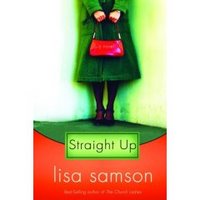
Author Interview ~ Lisa Samson

Lisa Samson is the author of nineteen novels, including the Christy Award winning Songbird. She has been called, "one of the best inspirational novelists in the market today" by Publishers Weekly Magazine. Lisa broke ground in CBA fiction with her novel The Church Ladies, a novel portraying broken, brutally honest women who struggle with their faith. She has continued to offer her readers an edgier experience with books such as Tiger Lillie, The Living End and Women's Intuition. Quaker Summer, set to release in March of 2007, deals with social justice and mercy themes and will be Women of Faith's Novel of the Year. Lisa lives in Kentucky with her husband and three children.


What book or project is coming out or has come out that you’d like to tell us about?

Straight Up
, released September 18th. Georgia Bishop has wasted her life on booze. Her cousin, Fairly Godfrey is entering a consumeristic and social-climbing vacuum. Both women are giving God the cold shoulder in their ‘own special way’. Straight Up explores what it looks when we choose to live in the shadows of our own pain instead of using the gifts God has given us: time, talents, people, places, to crawl back into the light. It explores what grace might look like to those who seem to deserve it the least because they’ve been given the most talent, energy and drive and yet, have thrown it away completely or centered it on the temporal. I admit, my take on that grace is a little crazy, but that’s nothing new.

Tell us about your journey to publication. How long had you been writing before you got the call you had a contract, how you heard and what went through your head.

I was writing for about a year-and-a-half. Yeah, it’s a Cinderella story and I totally DID NOT deserve to be published. What went through my head? It’s ridiculous but here goes. “Oh my gosh. I’m gonna be a published author. Now if I write five of these a year and they sell 40,000 copies a piece I can break six figures!” I kid you not. And hey, you asked for specifics.

Do you still experience self-doubts regarding your work?

More than ever before. It’s like the widow’s cruise of oil. Just never seems to stay empty.

What mistakes have you made while seeking publication?

As I said, a Cinderella story. I’m the last person to give advice for that. However, personally speaking, waiting to get published was like being drunk on the bathroom floor. I don’t know how many times I begged God to “get me through this.” I was really an emotional wreck and that’s too bad. I should have trusted God more. But I didn’t.

I also thought I was pretty darned something because I finished a book. Okay, plainly speaking, I was arrogant and I had no right to be. I still don’t. I’ve learned a lot over the years but not nearly as much as I want to or can or should. So the question you ask, while meaning your first novel, should be applied in the present tense, year after year. “What mistakes am I making?” Getting published doesn’t mean I’ve arrived. It simply means the cubicle’s been set up, the chair is in place and I’ve got a new job to do. The great thing about that is, for every book, you at least get a new boss to work for, and depending on what your protagonist is like, that can be good or bad! But at least it’s always interesting.

What’s the best advice you’ve heard on writing/publication?

Write the book. I think that’s where I had the advantage, even in my Cinderella experience. I had a completed manuscript before I ever tried to get published. Also, make sure your manuscript is as polished as can be, because you can be sure someone else’s manuscript in that slush pile will be, and who’s the editor going to pick?

What’s the worst piece of writing advice you’ve heard?

As a first-time novelist you don’t need more than three chapters and a synopsis. Now, I’m just speaking as someone projecting herself into the acquisitions editor chair. I know I would think, “How do I know if this person can actually pull off a novel? I need to see it all.” So what I’m saying right here might be absolutely worthless. But it seems to me, that would be the case with any art form.

Another piece of advice I read one time, and I have no idea who said this but they were really famous, was: (and I’m paraphrasing) If you’re hungry, don’t eat, write. If you have to go to the bathroom, don’t go, write. If your children need you, tell them “Not now” and write.” And blah, blah, blah! By the time I was finished reading it, I wanted to say, “Lady, you need a lobotomy!” Personally, if we’re not really living, what are we actually going to say in our writing? In other words, get out of that darned chair too!

What’s something you wish you’d known earlier that might have saved you some time/frustration in the publishing business?

That publishing is quite possibly an industry slower than molasses dripping from a hole the size of a pinhead. In Antarctica.


What are a few of your favorite books? (Not written by you.)

Believe me! None of my favorite books are written by me! Ack!

The Moon and Sixpence, by W. Somerset Maugham
In Cold Blood, by Truman Capote
The Good Earth, by Pearl S. Buck
On the Road, by Jack Kerouac
Outlander, by Diana Gabaldon (Okay this is a guilty pleasure read and I can’t believe I’m admitting this here.)
Katrina’s Wings, by Patricia Hickman
The Second Coming, by Walker Percy
The Chosen, by Chaim Potok
Pretty much anything by: Anne Tyler, Larry McMurtry and Douglas Coupland
I would put down Peace Like a River, by Leif Enger, but this has become for novels what that Aslan “safe” phrase has become for quotes. (I know, I’m awful.)


What piece of writing have you done that you’re particularly proud of and why?

I’m not particularly proud of anything. Upon reading the books of those writers up there, I know how far I have to go. The book I’m most likely to give to people to read, however, is The Living End. I like the way the relationship with God is presented in this book. I like the way my protagonist does things a lot of us would like to do but don’t have the guts to do. Then again, she pretty much had nothing to lose. And I sure can’t say that about myself.


Do you have a pet peeve having to do with this biz?

That novelists are encouraged to have “a platform”. IOW, if you’re a speaker or have a ministry, you have a greater chance of getting published because you already have a marketing machine in place. That’s crap. Not that people with platforms shouldn’t write novels if they’re good novelists. But good novelists shouldn’t have to become speakers. I just hope and pray our publishing house aren’t choosing mediocre novelists with platforms over excellent novelists without them. Dear Lord, I hope not! But I’m not on the inside, so I wouldn’t know if this is happening or not. Let’s keep our fingers crossed that there’s some integrity about it.


Can you give us a view into a typical day of your writing life?

Sure.

Get up. Make my favorite tea. Read the Bible while my mind wanders, beg God to let me actually get through the day. Check email and blogs. Walk Jake to school. Sit here at Starbuck’s (or Third Street Coffee or Kiser’s) like I’m doing right now. Write. Sometimes go to mass. Walk home. Homeschool Gwynnie. Write while checking email at least ten thousand times an hour and bloglines another 250. Fold laundry inbetween, pay bills, talk on the phone, stand in front of the fridge and wonder what there is to eat.

Sometimes I wish reincarnation were true so that perchance, I might be able to come back as a focused, organized individual. Even if I was a focused, organized horse or cow, that would be okay.

If you could choose to have one strength of another writer, what would it be and from whom?

I would be focused and organized. Like Angie Hunt.

Do you have a dream for the future of your writing, something you would love to accomplish?

I want to write compelling fiction for the general market someday. But God keeps me in the CBA. I don’t know if I’m supposed to be in CBA to kick against the goads or to learn to be content. Both frighten me.

Other than that, the Pulitzer for fiction would be okay too. Ha!

Was there ever a time in your writing career you thought of quitting?

Um, does yesterday count?

What is your favorite and least favorite part of being a writer?

Favorite:

Making my own hours, writing wherever I want, being finished with a project and having something physical to show for it, getting paid for exploring a creative outlet.

Least Favorite:

All of the above. Making my own hours? I’m undisciplined! Writing wherever I want? I have the focus of a gnat. Being finished with a project and having something physical to show for it? You mean it’s done? I can’t change that? Everybody’s going to see that? Getting paid for exploring a creative outlet? I must be done by X date no matter what. I know there’s a better ending out there, but there’s no time. I can’t mull over this one . . . well okay then, there, that’ll have to do.

That’ll have to do. Are those words horrible to admit to or what?

Another big fave? Meeting other writers!


How much marketing do you do? Any advice in this area?

Hardly any. I blog, send out influencer copies, book club leaders copies, speak occasionally, do interviews on the radio. I’m the last person you want advice from! Especially on things like the best place to get bookmarks printed up.

What are you most encouraged about when you read CBA fiction?

Some houses are willing to take chances these days. I’ll be a little shocked at times and say, “Wow, my editor would never let me get away with that!” I’m all for putting little fires under the status quo.

Least?

Most of what I find discouraging about Christian fiction lies more in the lap of the industry itself. And I'll just leave it there, except to say, should Christian “anything” ever have become an industry? It’s a tension, me being a part of that industry, that I live with every day.

Is there an upcoming writer that you're particularly excited about?

Claudia Mair Burney. Read her blog
www.ragamuffindiva.blogspot.com. When the rest of our books have been returned to the earth, nary a copy remaining on the planet, Claudia's writings will be read by the faithful.

What are your thoughts on the ongoing debate of writing fast vs.writing well?

If you can't write well and write fast, then please don't. If you can, go ahead! Ray Bradbury always comes to mind. So there are speedy exceptions. The trick is not to fool yourself that you're a Ray Bradbury simply because the words come out fast. They might be a swift current of dreck! Always, always, always the artist must tell him/herself the truth about their art.


Is your fast work mediocre? Then be man or woman enough to admit it. We simply must look at ourselves with an extremely critical eye. I've got to say, I totally respect Ray Blackston's take on writing only the books you're supposed to. I know I could bathe my work in a LOT more prayer than I do and I have at least two titles out there that I wonder whether they were something God wanted from me or not. Thankfully, I have a lot of good people praying for me so hopefully I won't put too much out there that the world would be better off without.


Parting words?

Read great books. The best way for a novelist to get better is to read great books that have stood the test of time and find out which books today are well-written. It doesn’t have to all be literary, surely you must read the classics but find the top of your genre as well and learn from the masters, old and new, in it. For instance, for pure pleasure, I picked up an old Ellery Queen novel called The Glass Village. Oh my goodness! I am blown away by the imagery, the description, the delicate, almost magic wand touches of character development. Reading is part of “what the novelist does” and it stands to reason, the higher the quality of books we’re reading, the higher the quality our own output will be.

Other than that, no parting words, really. Ha!

Thanks for having me!

Saturday, November 18, 2006

Sunday Devotion: Losing My Head

Janet Rubin

I recently took on the challenge of teaching ladies bible study. I spent the week prior to my first appearance preparing to teach on Galatians—taking notes, reading commentaries, and even listening to sermons online. An archeologist seeking the very best nuggets of truth, I dug into my Bible like I haven’t in years. To illustrate one of my points, I wrote a short story to read aloud. By the time Wednesday rolled around, I had enough material to preach a six-month-long series of sermons.

The morning of the study, I cleaned like a madwoman, styled and re-styled my hair, lit scented candles, and oh yeah, prayed. Lord, I really don’t know if teaching is my gift. Please help me do a good job.

The good news: it went well. My thoughts were well-organized, I spoke clearly, my story brought the women to tears. I got compliments. Two ladies even emailed later to tell me what a good job I’d done.

The bad news: I immediately lost my mind. Wow, I’m good at this, I thought. Maybe God has big plans for me. Maybe I’m the next Beth Moore or Kay Arthur! Perhaps instead of slogging my way through my first novel, I’m supposed to be holding national women’s conferences, where I speak to thousands of women and afterward do book-signings.

All week, as I prepared for my second lesson, thoughts of my grand future in ministry kept snaking into my mind. While I planned, I couldn’t help wondering what the gals would think this time. Maybe I’d be so good, they’d tell their friends. The group would double, then triple…

I’d whisk the thoughts away, meekly bow my head and reassure God that whatever He wanted was just fine. I was here for Him and the ladies.

Then I taught again. The lesson was okay, but my thoughts were a bit confused, my words stumbling, and I had a frog in my throat. My anecdotes didn’t seem as clever when I shared them as they had when I first thought of them. Afterwards, I felt sort of… icky. Later I talked to God about it. Lord, I did it again, didn’t I?

It’s so easy to let a little bit of praise go to my head. The moment my pride takes over, I start working to glorify myself rather than God. As I writer, I bounce up and down on the seesaw—plummeting to discouragement with every harsh critique, and soaring to ego-inflammation with every compliment. How on earth can we get balanced—learning to have a proper estimation of ourselves, remember that our gifts are from God, and that it’s all about Him?

Paul had some good advice in Galatians 1:10. He said, “Do I seek to please men? For if I still pleased men, I would not be a bondservant of Christ.” When Paul was a Pharisee his motivation was pleasing men, but after his conversion, his main goal was to glorify God.

It can be scary to give up the spotlight, but when we do, that’s when the big stuff really happens. Paul’s missionary journeys resulted in the salvation of many. His writings have taught, inspired, and convicted people for two thousand years. And his books are still best-sellers!

Lord, I can’t have it both ways. Either I’m living for You or living for myself. I admit I’m not humble, but I want to be. I know my pride gets in the way of You using me. Keep working on me, Lord. Teach me and change me and use me in whatever way you want—whether that means doing something big or small. Just help me to do it for You.. Amen

Labels:

S'up Saturday

First of all, don't forget to vote on the ACFW elections. Our own Ane Mulligan is running for a position. Simply go to www.acfw.com and click on the members section and follow the prompts.

We have upcoming interviews with: T. Davis Bunn, Robert Liparulo, Lisa Samson, Zondervan editor-Sue Brower, Christy Barritt, Scott Nicholson, Daniel Kalla, agent Kelly Mortimer, among many others.

Also, a very special podcast with Liz Curtis Higgs!

Stay tuned ...

Friday, November 17, 2006

FIRST SPEAKERS BUREAU FOR NOVELISTS

FIRST SPEAKERS BUREAU FOR NOVELISTS TO LAUNCH JANUARY 1, 2007

Glass Road Public Relations is thrilled to announce the launch of its newest venture—a proactive speakers bureau solely for novelists. Bureau members will be presented to a wide range of speaking engagement outlets, including churches, civic organizations, themed events, and professional venues.

“We thought about having a speakers bureau like the others, where the firm gets a percentage of each engagement fee and just reacts to calls that come in rather than seeking out venues,” said Rebeca Seitz, President and Founder of Glass Road Public Relations. “But then we realized—we don’t publicize like anybody else, why run a speakers bureau like them?”

Instead, members will pay a flat yearly Bureau fee and receive all proceeds from their speaking engagements. GRPR will arrange the engagement and, if it is open to the public, media coverage of the event. If the client desires, GRPR will also coordinate the presence of a bookseller at the engagement.

“We want to ensure we’re not taking business from booksellers by having our clients hand-sell their own books at speaking engagements,” Seitz said. “It’s always a partnership with the bookseller.”


The bureau will officially launch January 1, 2007 but has already begun signing up novelists. To be considered for membership, novelists must send in a tape or CD of themselves speaking in a public setting along with the speakers bureau application, which can be obtained on the firm’s website.

“Novelists are storytellers,” Seitz said. “And storytellers can entertain an audience while conveying truth. We just wanted to provide a home for those novelists who have the desire to speak and be represented by a firm that understands the power of story to transform lives.”

GRPR is the only publicity firm of its kind dedicated solely to representing novelists writing from a Christian worldview. It currently represents best-selling and award-winning novelists from a variety of publishing houses, including Zondervan, Tyndale, Harvest House, Howard Books, NavPress, Barbour Publishing, Faithwords, and Waterbrook-Multnomah. To learn more, visit
www.glassroadpr.com.

Accomplish Wonders

Tonight, I am very busy (it's almost tomorrow and I'm still working), so this is going to be a short Novel Journey post, but hopefully you'll still walk away with something.

I'm going to share a story about how one of my authors recently used a media opportunity to garner yet more coverage, effectively using both of our time.

It started when our firm arranged for her to make an out-of-state appearance on an international television show. She immediately agreed to the interview and contacted her publishing company about arranging book signings. Thereafter, she began working with a local book distributor in that area.

Four book signings were arranged, and because the local book distributor knew an editor at a nearby magazine, an interview was arranged. Once my author sent me the information about her book signings, I alerted local media. Within an hour, the local Public Broadcasting Station called me to arrange another television interview, and a morning radio talk show also booked her as a guest—before her signings so she could promote them on air.

The active participation of this author to promote her own books set in motion a series of events that helped her: sell books at her signings, be featured in a magazine, be on a radio talk show, to appear on PBS, not to mention the book reviews that were in the paper prior to her visiting the state. The author worked closely with her publisher, book distributor, and publicist to accomplish as much as she did.

While on her tour, this same author had a reporter from her home state call me because he wanted to write a feature about her, and ending up interviewing her via cell-phone to make his deadline. He knew about her was because she had arranged book signings in her area and he had my press release—a great example of what an active author can accomplish.

A hard-working author can accomplish a lot. A hard-working publicist can accomplish a lot. A hard-working author working with a hard-working publicist can accomplish wonders.

Thursday, November 16, 2006

Author Interview ~ Wilma Wall

Wilma Wall was born in Shonghong, South China, to missionary parents from the Mennonite Brethren church. She lived in China until civil war broke out and her family was forced to return to the U.S. Wilma attended college at Fresno Pacific, taking a break to get married, teach, and work in the church. She lives with her husband in central California.


What new book or project would you like to tell us about?

I’m working on a novel called Storm Warning, about a woman in an abusive marriage. I had started the book some years back, and called it Panel 31, because the woman reluctantly reports for jury duty but there meets two people who befriend her and end up saving her life. Now the story is much richer and has grown into a trilogy, with a spin-off planned after that.

Tell us about your publishing journey. How long had you been writing before you got a contract? How did you find out and what went through your mind?

I started writing stories and poems when I was a missionary kid, living in an isolated Chinese village, home schooled by my mother. In America, I enjoyed writing essays and term papers in high school and college. Later, as a piano teacher, I wrote skits on the lives of composers for my students to perform at recitals, as well as plays for church occasions. I took college night classes in creative writing and submitted a few short stories for publication, but they were rejected.

Then in 1981, my husband and I took a trip to China, and our experiences along with memories of my early life there inspired me to write a novel, which I called The Mystery of the Chinese Piggy Bank. When it was finished, I sent submissions to six different companies. They all rejected it. People told me “Just run off enough copies for family and friends so we can read it.” But I was stubborn. I said “No. If it’s not good enough, I’ll MAKE it good enough.”

About that time, I met a creative writing workshop teacher, and in her classes I learned what was wrong with my story. By that time I had started Panel 31, and an agent accepted it, but again, all we got were rejections. So the agent and I parted company and I concentrated on short stories. This time, several were published in LifeGlow, Angels on Earth, Woman’s World, and other women’s magazines.

Then one day I was surprised to receive a delayed rejection of Panel 31. This one said they liked the story but as a new writer, I needed to earn my right to deal with such a serious subject as spousal abuse. However, they invited me to submit a romance novella for their bi-annual volumes, and included a list of topics, either contemporary or historical.

Since WWII is now considered historical, I decided to use that setting. The topic of “controversial romance” caught my interest; and what could be more controversial during that era than a romance between a Japanese and a Caucasian? And to up the ante, why not make the Caucasian a German Mennonite? So Forbidden was born. As I developed the characters, I fell in love with them, and it was impossible to do justice to their story in as short a form as a novella. So I went online to find submission guidelines for other companies. There I learned that many preferred to use a manuscript service called The Writer’s Edge, which weeds through submissions and posts those they consider worthy of publication.

The Writer’s Edge accepted my proposal, posted a blurb of my story, and a few weeks later some companies contacted me for proposals. Kregel Publications asked for the entire manuscript. After sending it, I waited and watched the mail for the inevitable (I thought) rejections.

I write best late at night, and before shutting down, I check my email. One night, I saw a message from Kregel Publications. It included an attachment—the draft of a contract. I went into shock. My husband Dave was sound asleep, but I ran and shook him and shouted into his ear: “I SOLD MY BOOK!”

Poor guy, he thought all the late nights had finally gotten to me and I’d gone berserk. How could I have sold my book in the middle of the night? But then I explained and he was as excited as I was.


My contract called for first refusal of my next book, which by then was a completely changed China book, The Jade Bracelet. And after still more changes, I received the contract for it. (To read a review of The Jade Bracelet,
click here)

Do you still have self-doubts about your writing?

No. So many people have expressed their enjoyment of Forbidden and The Jade Bracelet. Both men and women have told me, ‘Yep, I lived through that.’

Was there ever a time in your writing career you thought of quitting?

When the agent couldn’t help me, I was discouraged. But the ideas kept coming and I enjoy writing so much that I can’t stop. And when my short stories were accepted, I had a new burst of energy.

What mistakes did you make while seeking a publisher or agent?

Early in my writing, I attended a lot of writing conferences, and showed my work to several agents. Some were mildly interested, but most were not in the market for my type of material. I know now that I should have researched to learn who wanted what.


Also, the agent who accepted me first tried the large secular companies, but it seemed my stories weren’t spicy enough for the secular market and didn’t have a strong enough message for Christian markets. When I concentrated on a spiritual focus, the Lord blessed my work.

What’s the best writing advice you’ve heard?

My workshop teacher tells us not to expect an early draft to be perfect. To avoid writer’s block, she says, “Give yourself permission to write rotten”; it can always be polished later. Other writing advice she gives us is to live in the moment, and to BE our characters.

What’s the worst piece of writing advice you’ve ever received?

I don’t remember. When I go to conferences or read books on writing I usually get a lot of advice. Most I’ve already heard; some doesn’t work for me so I ignore it and just try to remember the few tidbits that fit my needs.

Do you have a pet peeve having to do with this biz?

It’s so hard for a new writer to get published—and when we do, stores don’t always keep our books on their shelves.

What do you wish you’d known early in your career that might have saved you some time and/or frustration in writing? In publishing?

I wish I had started writing seriously earlier in life. And if I had studied creative writing sooner, my stories wouldn’t have needed as many drafts. But I had a full and rewarding career as a piano teacher, and now this is icing on the cake.

Was there ever a difficult set back that you went through in your writing career?

Each rejection is a set back. I always go into a little depression, but as I said before, I’m stubborn, and I try again.

What are a few of your favorite books?

I enjoy reading a wide variety of books and usually have several going at one time. If I have to choose, it might be Pearl Buck’s The Good Earth, The Good Mother, and Imperial Woman; Agnes Sanford’s The Second Mrs. Wu; some Dickens, some Steinbeck, Mark Twain, Betty Bao Lord’s Spring Moon. Granny Brand, by Dorothy Clarke Wilson, Peace Child by Don Richardson, Bruchko by Bruce Olson, Wonderfully and Fearfully Made by Philip Yancey & Paul Brand. For Christian fiction, Francine Rivers is very good and Beverly Lewis describes the Amish so well. I could go on and on.

What work have you done that you’re especially proud of and why?

I spent seven summers teaching preschool in a government center for migrant field workers. Few of the children understood any English and I spoke little Spanish but we learned to communicate and I was able to show them love and prepare them for kindergarten.

I also feel honored to be part of a Mennonite effort, which, through the work of volunteers, uses its profits to help the needy—mostly in third world countries— and train them to support themselves. My job is managing a large used book section in a thrift shop, and Dave collects cardboard for recycling.

During my career as a piano teacher, I was able to produce several dedicated church musicians, which gives me a great deal of satisfaction.

Do you have a scripture or quote that has spoken to you lately in regards to your writing?

Psalm 37:4 Commit thy way unto the Lord; trust also in him; and he shall bring it to pass. KJV When I did that, He really came through for me.

Can you give us a look into a typical day for you?

Let’s take a Wednesday. Since I write best at night, and Dave generously fixes his own breakfast, I sleep until I wake naturally. At breakfast, I wake my brain up with our newspaper’s crossword puzzle, and then do the household chores. After lunch, I go to the thrift store. On Monday, my two assistants and I have priced and shelved eight or nine boxes of books (all donated) so now I work in the stock room, sorting the new donations and refilling the book cart. Our conference also has a relief sale every spring, with a book room, and duplicate books go in a stack for that purpose. Ragged and obsolete materials get recycled.

When the store closes, I go home and fix a quick supper (I call myself a survival cook—I work just enough to keep us nourished; if it takes more than half an hour, forget it) and then instead of relaxing and watching Wheel of Fortune on TV (I can usually beat the contestants) Dave and I walk to the chapel in our retirement complex for their well-attended Wednesday evening service. Every other week, I run the power point for the song service, which I prepare the morning before.

We get home about 8 PM, and then I go to the computer. Sometimes I relax just a bit with Spider Solitaire, but then I pull up the chapter I’ll be reading in the following Tuesday’s workshop class. When I’m satisfied with it, I work ahead, polishing, adding, deleting, or writing new material. I might quit at 11 PM, or stay at it until 2 AM. That’s about my limit unless there’s a looming deadline.

Do you have a word or page goal you set for each day?

No. I just work until I feel a good ending spot.

Are you an SOTP (seat of the pants) writer or a plotter?

Definitely an SOTP. Maybe that’s why it took me so long to get published. But it’s so much fun to develop my characters, put a conflict in front of them, and see what they’ll do. Sometimes I have an ending in mind, and sometimes they surprise me.

What author do you especially admire and why?

Katie Funk Wiebe—she was widowed at the age of 38, with four young children to raise, and bravely forged a new life and identity for herself. Now a professor emeritus and popular speaker, her books—especially Alone: A Search for Joy; Bless Me Too, My Father; and Border Crossing: A Spiritual Journey—have encouraged and challenged people world-wide, and her prolific articles show deep insight and an appreciation of true Christian compassion.

What is your favorite and least favorite part of being a writer?

My favorite is polishing a chapter. I can’t look at my material without changing sentences around, adding a scene, going deeper into emotions. But I get a thrill when people hear my name and say, “Oh, are you the author? I loved your book.”

My least favorite is printouts. Somehow my printer knows when I’m doing something important, and balks. Or I’ll catch a word I don’t like, and have to do some pages over. By the time I’m finished, I’m a nervous wreck.

How much marketing do you do? What's your favorite part of marketing?

I do radio interviews and book signings and/or talks in stores, churches and clubs. Dave and I traveled to Kansas last fall and I spoke at a college. I always thought I would hate speaking in front of groups but now I really enjoy it.

Do you have any parting words of advice?

For aspiring writers, don’t just bask in the praise of your family and friends. Of course they love your stuff. Take creative writing classes first, and then find a good critique group or workshop with a teacher or leader who will give constructive criticism. Don’t waste time defending your material; consider the suggestions carefully because most of the time they’re just what your story needs to make it work. (It’s amazing how often you think you’ve made things clear, yet listeners might be confused) If you find a compatible group, don’t show your drafts to other people because their opinions will be different and can really mess you up.

Wednesday, November 15, 2006

Author Interview ~ Stephanie Grace Whitson

Stephanie Grace Whitson began what she calls "playing with imaginary friends" (writing fiction) when, as a result of teaching her four homeschooled children Nebraska history, she was personally encouraged and challenged by the lives of pioneer women in the West. Since her first book, Walks the Fire, was published in 1995, Stephanie's fiction titles have appeared on the ECPA bestseller list and been finalists for the Christy Award, the Inspirational Reader's Choice Award, and ForeWord Magazine's Book of the Year. In addition to serving in her local church and keeping up with two married children, two college students, and a high school senior, Stephanie enjoys motorcycle trips with her family and church friends. Visit her website at www.stephaniegracewhitson.com

What new book or project would you like to tell us about?

The "no image available" has been added for those who want to pre-order Stephanie's book. NJ

“Life, death. . . and a poodle named Rambo” is my tag line for Jacob’s List, releasing in the summer of 2007. Jacob’s family “has issues”, as Rambo says in the prolog. When Jacob is unable to complete what he called “The Xtreme Ten of Two Good Men,” his estranged parents decide to do it – mostly because Jacob’s best friend was counting on the documentary he was making of “the list” to get him into film school. In the aftermath of that decision, they learn that Jacob’s list included a surprise event honoring Jacob’s mother, a breast cancer survivor. The message of the book is that extreme living is about a lot more than white-water rafting and base jumping. Sometimes extreme living means dying to self and extending forgiveness to people who don’t deserve it.

Tell us about your publishing journey. How long had you been writing before you got a contract? How did you find out and what went through your mind?

I am proof that God can overcome any obstacle when it is His time and His plan and purpose to do so.

I have always written. Long letters home, poetry, research papers (I was the weird student who actually liked those assignments), editorials for a women’s newsletter, etc. When I was teaching state history to my home schooled children, I became fascinated by the pioneer era in Nebraska. At some point in the history lessons, I began “playing with an imaginary friend” – a pioneer woman in Nebraska. For my own entertainment I wrote little snippets of a fictional life based on women’s diaries and reminiscences I had found in our local library.

At the same time, our home-based business began experiencing explosive growth and I couldn’t justify the writing unless it would contribute to the family budget. Since I knew enough about writing to know that rejections were the way it worked, I looked up three Christian book publishers in the Writers Market at the library and sent off three letters, expecting that I would get a rejection and that would be God’s way of saying “put that away and finish it someday for your grandchildren.” But then one publisher wanted sample chapters. Still expecting the rejection letter, I was surprised when the next contact requested the entire manuscript – which I didn’t have, because I didn’t have TIME to write a book.

On the advice of a friend who had written magazine articles, I told the publisher that I could finish the book in about six weeks and would send it then. But six weeks later I still only had 2/3 of a book. I was home schooling four children and running the home-based business that had grown from a few gift products in a local store to a gift line featured in a nation-wide catalog and sold in over six hundred Christian book stores. Yikes.

Once again, knowing that rejection was inevitable, I sent off the manuscript as it was, which meant that the editor read a few chapters and then got to a page that said, “this hasn’t been written yet – but here’s what happens.” To my amazement, I came home one day to a phone message from Lonnie Hull Dupont who was with Thomas Nelson at the time.

When I returned the call I was offered a three-book contract which became Walks the Fire, Soaring Eagle, and Red Bird. I was terrified. I hadn’t even written ONE book yet. . . how could I possibly write three? There was a hurried “board meeting” with the “corporate officers” (my children), who happily said good-bye to the gift company so Mom could write books.

In retrospect, I realize that God was miraculously providing for me and the children’s future. My husband died of cancer in 2001 and if I hadn’t had six books in the marketplace I would have not been able to remain at home while the children were young – something that was very important to Bob and me. After being at home for over fifteen years I really didn’t have any marketable skills – except writing.

I sometimes wonder when I share this story if it is discouraging to writers who have worked so hard and who have a pile of rejections for all their effort. I hope they’ll look at it another way – as an encouragement to be faithful. As I said, I am proof that God can overcome any obstacle when it is His time and His plan and purpose to do so.

Do you still have self-doubts about your writing?

Every single day. Self-doubt is especially strong about thirty seconds after I push “send” to submit a manuscript.

Was there ever a time in your writing career you thought of quitting?

Yes. There have been times when there has been no joy in the work, and at those times punching a time clock for someone else has looked very very attractive. But then I realized how much I would miss the glamorous life of a writer (smile).

What mistakes did you make while seeking a publisher or agent?

As I said earlier, when seeking a publisher I didn’t have a finished product. That was a mistake of ignorance. Agents were not a “given” in the industry back then. I didn’t have an agent (I had never heard of agents for writers), but remember: I was not thinking in terms of career. Not having an agent worked out well back in 1994 but the publishing world is different now and I would consider not having an agent a mistake today. Both of my agents have been blessings God dropped in my lap – the right people at the right time.

What’s the best writing advice you’ve heard?

That the most important part of your writing space is a door you are willing to close. That’s my paraphrase from Stephen King’s book On Writing.

What’s the worst piece of writing advice you’ve ever received?

I’ve been very blessed. I can’t think of anything really awful. I’ve been part of conversations on marketing and promotion where things were suggested that wouldn’t be right for me personally, but it wasn’t bad advice. It just wasn’t right for me.

Do you have a pet peeve having to do with this biz?

The false notion that there is some secret formula to getting a book on a best seller list and that if the publisher “will only promote more,” stellar sales are guaranteed.

What do you wish you’d known early in your career that might have saved you some time and/or frustration in writing? In publishing?

I wish I had known to “just ask” my publisher what is and is not a good way to make contact with them when I had questions about the varying parts of book production. I wish publishers would provide their writers with specific “contact etiquette” so their writers know who and how to ask questions. By the way, my current publisher is fabulous at this sort of thing, but I know from talking to other writers that communication with a publishing house and the varied aspects of production can be a maze for the new writer. And by “new” I don’t mean new to publishing – I mean new to a given house.

Was there ever a difficult set back that you went through in your writing career?

I wouldn’t call it a set-back, but transitioning from historical fiction to contemporary fiction has been scary for me. I’ve read craft books that say that changing genre in mid-career is a good way to kill a career. Ouch. I have seen that I am back to working to earn an audience to replace readers who are very genre specific in what they will read and who just don’t want to read contemporary fiction. I hear from them all the time: “let me know when you write another historical.” That’s more than a little unsettling in terms of trying to build a career.

What are a few of your favorite books?

This is hard to answer because I am a voracious and very eclectic reader. So. . . here’s a stream of consciousness answer. . . The Attributes of God by Arthur Pink. Safely Home by Randy Alcorn. From the Corner of His Eye by Dean Koontz. The Winds of War by Herman Wouk, Kingsblood Royal by Sinclair Lewis, Time Lottery by Nancy Moser, The Lieutenant’s Lady by Bess Streeter Aldrich, A Tale of Two Cities by Charles Dickens, War and Peace by Tolstoy, Gone with the Wind by Margaret Mitchell.

What work have you done that you’re especially proud of and why?

The work of being a good wife to Robert Whitson for nearly 28 years, the work of raising four children to adulthood and seeing them become followers of Christ, the work of being a good wife to Daniel Higgins for almost three years now and learning to love my almost-adult step-son (whom I would rather call my son but society seems to want that “step” that creates space between us).

Do you have a scripture or quote that has spoken to you lately in regards to your writing?

I was on my way to a brainstorming retreat with two writer friends not long ago and on the way there I popped in an old Stephen Curtis Chapman CD. God used “We will abandon it all, for the sake of the call”. . .that’s not the title but that’s the phrase. . . to challenge me. “What have you abandoned for the sake of my call to you to write, Stephanie?”

I was humbled by the question because in the recent past I hadn’t abandoned much of anything and I was whining about all the things I’d rather do with my time than write. God used the song to renew my understanding of writing as a call and something for which I would have to abandon other things. God use SCC to lead me into a few moments of sincere and teary repentance and renewal.

Can you give us a look into a typical day for you?

Not really because there just isn’t a typical day. On Monday’s I can write all day – but there are dust bunnies to trap and meals to plan and dishes and laundry and recovery from the weekend to figure out.

On Tuesday mornings I volunteer at church and try to get my errand running for the week done. If I’m going to have lunch with a friend, I try to schedule on Tuesday. My husband works on Tuesday evenings, so I can write later in the day on Tuesdays. Wednesday & Thursday I can write all day. But there is quilting to do and cleaning and gardening and e-mail and fan mail & etc.

Fridays I often volunteer at the International Quilt Study Center. If my husband works on Saturday mornings (he teaches college as an extra job) I try to get some writing done while he is gone. In other words. . . my life is a work in progress and it’s a constant battle of self-discipline for me to simply put my back-side in a chair, face the blank screen, and fill it up ! See what I mean by “abandon it all for the sake of the call” and why I needed to hear that?

For each book project, I assign a word-count per day but it is a battle to reach the goal – and the battle has nothing to do with whether or not I am “jazzed” about the book. I am one of those people who has so many interests in life that I would never be bored if I didn’t have a paying job.

I have enough quilts I want to make to keep me busy for years. I have enough motorcycle trips I want to take to keep me busy for two-lifetimes. And volunteering. . . . lots of things I like to do in the community. And I’m a virtual newlywed. So – you can see why I needed that tap on the shoulder from God through SCC’s music to remind me to abandon simply “good things” and concentrate on doing the “best thing” for “the sake of the call” to write.

One other challenge for me personally is that I am more naturally creative later in the day. But writing “late in the day” does not always lend itself to family life. This is one of those preferences that I think God has been calling me to “abandon for the sake of the call.” In other words. . “write NOW whether you feel like it or not!”

Do you have a word or page goal you set for each day?

A word count. I count backwards from the due date of a manuscript taking into consideration days away from writing caused by travel, time for re-writing, etc. If I am working on something that isn’t contracted yet, I still choose a “due date” and work towards it. Otherwise, I’ll be cleaning/quilting/cooking/chatting instead of writing. It’s just too easy to procrastinate.

Are you an SOTP (seat of the pants) writer or a plotter?

A complete, unregenerate, SOTP now and forever amen.

What author do you especially admire and why?

Randy Alcorn because he walks the talk. He has had a tremendous impact on my life both through his books and as someone I am privileged to call my friend. Randy’s novel Safely Home is one of about a half dozen books I have on my “this book changed my life” shelf.

What is your favorite and least favorite part of being a writer?

Favorite: reader mail that shows me how the Lord uses my offering of words.
Least favorite: writing the first draft of anything.

OR:

Favorite: Having written.
Least favorite: Writing.

How much marketing do you do? What's your favorite part of marketing?

I have a web site and answer reader mail personally. I do book signings for a few stores here in my home state of Nebraska who have been great supporters of my books. I do public speaking a couple of times a month on a wide range of topics. Few of these speaking gigs are about writing per se, but there is always a book table and a “meet and greet” at these functions.

Marketing is a stretch for me because I wince at the idea of “self-promotion” Please understand: I am NOT saying that writers who are fabulous marketers are doing anything wrong. I’m saying my personality makes it very difficult for me personally because I am very much aware of how quickly anything that requires me to call attention to me can turn into sinful pride. Please do remember that I am NOT talking about other writers. I am talking about ME and what MY weaknesses are.

A goal for the near future is to send a couple of e-mail newsletters a year just to stay in touch with the readers who have contacted me. I’ve recently come to realize that these are people God has put in my life – individuals who have proven their interest in my work as opposed to the “scattershot” approach my publisher must use in advertising new titles.

This is probably something most writers would file under “Big Red Duh”, but I’m a slow study in areas like this because of my tendency to cross-examine the motive behind the things I do. I am convicted not to make contact based on “what you can do for me.” I think I have found a way to make contact more about ministering to people than selling myself. . . so I’m at least contemplating the possibility. This is a very challenging issue for me.

Do you have any parting words of advice?

Yes. But I stole them from Angela Hunt. “Let God sell your book. Don’t worry about what might appear to be a shrinking market, don’t fret about how you’re going to promote your book, don’t drive yourself to distraction worrying about if your publisher is placing your book in the places that count. Do what you can to be a good steward, do what you feel comfortable doing, and leave the rest alone. Start concentrating on your next book.” (quoted with the author’s permission)

Tuesday, November 14, 2006

Author Interview ~ Ray Blackston

Ray Blackston lives and writes in the upstate of South Carolina. A former financial analyst and stockbroker, he left the corporate world in 2000 to write full time. Besides writing, he loves the Carolina coast, playing golf with friends and family, hiking Blue Ridge mountains, and serving on the drama team at his church. His first novel, Flabbergasted, was chosen as one of three finalists for the Christy Award for best first novel, and in 2003 was selected Inspirational Novel of the Year by the Dallas Morning News.


What book or project is coming out or has come out that you’d like to tell us about?

My new novel is a comic look at legalism, and is titled A Pagan’s Nightmare. It released October 25, 2006, from Warner Faith (now called FaithWords). The plot centers around the last two pagan’s on Earth, who are running from legalistic zealots who are trying to capture and “convert” them. Besides the humor, the novelty of this book is its structure—it is a book within a book, sort of like what William Goldman did with The Princess Bride.


Receiving the brunt of the satire is commercialized religion, which knows no bounds when the zealots get hold of it. The scenery is also fun: a multi-chapter chase ensues through Florida and the Bahamas.

One of the two guys running from the zealots is a radio personality who calls himself DJ Ned Neutral. DJ Ned’s battle to “protect” secular song lyrics from the legalists is one of the comic highlights, at least according to my sister. This book will offend some people, no doubt. It would not surprise me if it ends up a kind of “love it or hate it” book. As one of the characters states early on, “I’m not sure the evangelical world is ready to laugh at themselves.”

Okay, what about that cover art on A Pagan’s Nightmare? Aren’t you afraid that it will be seen as too controversial?


I too was a bit stunned when I saw that the cover design team had placed the Jaws-like fish swimming upwards at the unwary pagan. But the more I thought about it, the more it seemed to fit—since the story is a kind of spoof, then the cover art should follow suit. But yeah, I expect to get a few emails about that cover.


Tell us about your journey to publication. How long had you been writing before you got the call you had a contract, how you heard and what went through your head.

I had been working on Flabbergasted for two and a half years (rewriting the thing again and again), when Baker/Revell contacted me. An editor there had plucked the manuscript from their slush pile and thought it original and funny. She first contacted me via letter, which was some five months after I had submitted the thing. When I saw the letter in the mailbox, I figured it was a rejection. But once again, the prophet Isaiah was proved correct: God’s thoughts are higher than my thoughts.

Do you still experience self-doubts about your work?


Yep. Most times it rolls over me in a slow cycle of “I’m awful” / “I’m competent” / “No, I really am awful.” But I try to remind myself that I’ve had doubts about all previous books during the writing and editing stages, and that these feelings just come with the territory. I’ve learned to locate the weakest part of a chapter, fix that, then move to the next weakest. When I’m done with the chapters, I do the same thing with the weakest paragraphs, and when I’m done with the paragraphs, I search for the weakest sentences. Like “Google Earth” I move in from the big picture to the tiny details.

What’s the best advice you’ve heard on writing / publication?


Right now, my favorite advice is something I wrote to myself in the form of an equation and taped to my writing room wall. Oh, so you want me to reveal the equation? Okay, here it is: Imagination + Prayer + Perseverance – Slothfulness + Revision + Editorial Input + More Revision + Pursuit of Excellence = Publishable Novel.


What’s the worst piece of writing advice you’ve heard?


Go to a writers a conference and thrust fifty pages into an editor’s or agent’s face and say, “This’ll be the next big thing!”

Seriously, the idea of “writing towards a trend” is probably the worst. By the time you finish your manuscript, the trend will likely have shifted. Plus there are already many copy-catish books spilling off the presses. We serve an original God, who can surely give us original books to write if we will just take our time, consider carefully, and consult Him frequently.

What’s something you wish you’d known earlier that might have saved you some time/frustration in the publishing business?


I wish I had had a greater appreciation for the demands on an editor’s time—I had far too many basic questions and objections, and I think I drove the folks at Revell crazy during my first year in the business. They were graceful about it though, and we were all glad that, after the hectic process and the long conversations, Flabbergasted sold well.

Do you have a scripture or quote that has been speaking to you lately?


In every area of my life—particularly the two big ones, the “relational” and the “vocational”—God has proven over and over that his ways are higher than my ways, and his thoughts higher than my thoughts. These words of course come from Isaiah 55.


Is there a particularly difficult setback that you’ve gone through in your writing career that you are willing to share?


A reviewer whom I’ll call Mr. Anonymous tried to set me back . . . and it worked for all of thirty seconds.

What are a few of your favorite books? (Not written by you.)

The Water is Wide - by Pat Conroy
Angela’s Ashes – by Frank McCourt
Gilead – by Marilyn Robinson
The Single Truth – by Lori Smith
Ephesians and Philippians – by some guy who used to persecute the faithful.

If your authorial self was a character from The Wizard of Oz, which one would you be and why?


Toto the dog, eating my awful first drafts so that no one will ever see them. “Hey, Tin Man, how about a little Alpo to go with this computer paper! Woof woof!”

What piece of writing have you done that you’re particularly proud of and why?


I’ve never been one to toot my own horn, but since you asked I’ll give you a couple of small pieces that I feel aren’t bad. I think the “mosquito and the spray paint” scene in Flabbergasted is pretty good for humor. In Lost in Rooville, the four-wheel drive journey into the Australian Outback has some nice descriptive language. For my new release, A Pagan’s Nightmare, I think what stands out to me is the structure, the “book within a book” technique that I thought might not work but turned out to be just what the story needed. (Thanks, Chip).

Do you have a pet peeve having to do with this biz?


Uh oh, you just asked the question that gets me in trouble. I need to pace around the room for a minute, take some deep breaths. (Five minutes later). Okay, I’m back. In my opinion, there is a growing tendency among CBA authors to write books too fast, to the point where it is quite possible that capitalism is driving the art instead of God driving the art.

I realize that some write faster than others, but we all need to admit that moolah is soooo powerful as a motivator. So powerful that the enemy can tempt us to turn Christian art into a colossal money-grab. I’ll be first in line to confess that I struggle with this issue.

Now, if I can change course here and be bold and opinionated, I’ll share a thought that’s been running through my noggin—I’m not sure that very many of us should pen more books than the Apostle Paul. And if we do, we should surely take more than a year to write them all. My prayer on this matter has remained the same since my first novel released: “Lord, if you have called me to be a one-book author, do not let me write four. And if you’ve called me to be a four-book author, do not let me pen nine. And if you’ve called me to be a nine-book author, let me take my time, do them all to the absolute best of my ability, and please don’t let me write twenty-two more just because someone will pay me to do it.”

Can you give us a view into a typical day of your writing life?


First I reply to all the email from authors who’ve read my comments above and asked me to kindly keep my opinions to myself. Then I carve out a six-hour block of time in which to write, think, edit, and write some more. This is always in the morning. By 7:00 a.m. I’m at my writing table, laptop on, cell phone off, coffee hot, Quaker Honey Bunches ‘o Oats cereal swimming in low-fat milk. By the time the sugar from the cereal gets into my system and receives a boost from the coffee, creativity is alive and well in the Blackston household. I think if I switched to something blander, like corn flakes and decaf, no one would ever read (or publish) my novels. So, if anyone likes the humor in my books, know that I give credit to God, Quaker Honey Bunches o’ Oats, and Folgers Breakfast Blend, in that order.

If you could have one strength of another writer, what would it be and from whom?

The awesome combination of resonance and restraint that Lisa Samson achieves in her under-appreciated prose. She is the best we have. And unfortunately too few people know about her. Another under-appreciated author is Brad Whittington, a wordsmith for sure.

Do you have a dream for the future of your writing, something you would love to accomplish?


To turn Flabbergasted, and A Pagan’s Nightmare, into screenplays. That would be so much fun, such a challenge.

Was there ever a time in your writing career when you thought of quitting?


Yes, during those thirty seconds when Mr. Anonymous tried to set me back.

What is your favorite and least favorite part of being a writer?


The favorite has to be the feeling (it comes all too seldom) that I’m really in touch with the infinite creative mind (God) and thus something original and entertaining just might pass from Him to me to my fingertips and into my laptop and onto the pages of a book and, eventually, into a reader’s head. That is just an incredible (run-on) thought, to be a part in that process.

Least favorite is the lack of a social network that comes with working alone in your own home. I have to work hard to stay involved and “in community.” Fortunately God has sent some strong encouragers and great friends into my life, including one that lives 11,000 miles away, in Australia. Yes, she is female. No, I cannot comment further at this time.

How much marketing do you do?


Any advice in this area? I accept nearly all interview requests, and try to be as available and upbeat as possible. Also, I highly recommend having a website through which readers can email you. I’ve kept all of the emails I’ve received since day one (www.rayblackston.com), and will inform these readers of a new release. I do not bug people, however. Not my style. I also try to keep a stock of books around and offer to sell a signed one for a discount should a reader like to give one as a gift. Overall, I do what I can, but I try to remember that my number one priority in this business is to pen an original and entertaining story. Word of mouth is so very helpful in marketing.

Parting words?

I am honored to play a tiny role in God’s ministry of words. Though my words may tend to me a bit more zany than most, I love the Lord, love the way he guided me toward writing novels, and am amazed at the quality people I’ve met along the journey.

Monday, November 13, 2006

Author Interview ~ Simon Haynes

Simon Haynes is the author of three Hal Spacejock novels, a number of articles on writing and publishing, and several short stories, one of which collected an Aurealis Award in 2001. He divides his time between writing fiction and computer software, with the occasional round of golf thrown in for a laugh.
Born in the UK and raised in the south of Spain, Simon emigrated to Australia with his family in 1983. He's a founding member of Andromeda Spaceways Inflight Magazine, and lives in Perth with his wife and two children.
His goal is to write fifteen Hal Spacejock books before someone takes his keyboard away, and you can track his progress on the official website: www.spacejock.com.au


What book or project is coming out or has come out that you’d like to tell us about?


My next book is the third title in the Hal Spacejock series.

Hal is an over-confident space pilot who is incapable of ordering an instant coffee from a dispenser without inflicting second-degree burns on himself while shorting out the local power grid with a misplaced teaspoon. And yet he sits at the controls of a two hundred ton space freighter, blithely unaware of his shortcomings.

Fortunately he teams up with a capable robot called Clunk. Unfortunately Clunk is not only capable but extremely old and creaky, much like an unwanted PC-XT in an era of supercomputers on every desk. Suffice it to say they’re pretty well matched.

I’m British by birth and Australian by nature, so the humour (sorry, ‘humor’) is in a similar vein to Hitchhiker’s Guide and Red Dwarf, infused with the laid-back larrikin spirit and healthy disregard for authority that Aussies are famous for.

The first two Hal books were launched in September 2005 and March 2006 respectively, with releases right across Australia and New Zealand. They’ve done very well here, with several appearances on bestseller lists and a fair swag of media reviews.

So, where’s the US in all of this? Shipments to the North American distributor were help up pending a possible rights deal, but in the end nothing eventuated and so the books are on their way as I type this.

The third in the series will be launched January ’07 in Australia, and should be available in the US around the same time.

Tell us about your journey to publication. How long had you been writing before you got the call you had a contract, how you heard and what went through your head.

Not so much a journey … more like a marathon with people chucking rotten fruit from the side. I started the first book almost 12 years ago, and finished the first draft in 1999. At the time Random House Australia were running an annual competition for unpublished science fiction manuscripts. First prize was publication and a $10,000 advance, which was a great motivator. In fact, I wrote four fifths of the finished draft in under three months, and made the deadline by a week.

Within a fortnight of submitting my entry I got a phone call to say I’d made the shortlist. I didn’t get ahead of myself, but it was a wonderful moment. About six months later they called again, on the day the winner was supposed to be announced, to say the judges were deadlocked and they wanted ‘another week or two’ Not such a wonderful moment – I don’t think I slept a night for the next three weeks. Then they called one last time to say I hadn’t won.

Over the next six months I submitted the same novel to three major publishers, one in Australia, one in England and one in the US. I got personalised rejection letters from two of them and a form rejection from the third.

I decided an agent would be the go, and so I sent a query letter to someone I knew represented my genre. I’m still waiting for a reply five years later, so I guess that’s a no. I also sent my submission to another US publisher at that time, and they still haven’t replied. I’m pretty sure my package was on the way to the US at exactly the same time that Anthrax scare hit, so it was almost certainly destroyed unopened. I sent them a followup letter with an SASE but they ignored that, too.

I was beginning to realise this could take years, and while all of the above was going on I managed to sell a handful of short stories to Australian print magazines. Then, to my surprise, one of those stories won an Aurealis Award. This is Australia’s premier speculative fiction award, voted on by industry professionals, and it was a major boost to my confidence.

This was in 2001. I had a manuscript and I also had proof that someone, somewhere, enjoyed my writing. And so, I decided to publish 100 copies of my novel to sell at science fiction conventions. They all sold, and the independent booksellers across Australia put them on their shelves. They continued to sell, and so I wrote another book in the same series, which I again self-published. Several branches of the major chain stores put both books on their shelves, and they also sold copies. Encouraged, I wrote a third book and published that as well.

This is where the luck came into it. Just one month after I launched that third novel, a publisher’s sales rep spotted it in a local bookstore. She took a copy back to the publisher’s fortress o’ doom, and after they’d evaluated it they rang me to ask whether I’d be happy to work with one of their editors with a view to getting all three books out under their imprint. I thought about it for a quarter of a second and then said yes.

Since then, April 2004, I’ve worked with a very good editor on all three books, tearing them apart so that I could put them back together using all the skills I’ve picked up in the years since I published the first title. Each one involved six to eight months work, but the result is a much stronger book in each case.

Self-published to best-seller … now THAT’S a journey and a half.

Do you still experience self-doubts regarding your work?

Yes, particularly when I self published. I knew about the stigma attached to the process, I knew booksellers wouldn’t want them and I knew the public would be indifferent. However, my goal wasn’t just to sell books … it was to grow as a writer and to motivate myself to keep writing more in the series.

I think the worst thing you can do is write your first novel and then spend years tweaking and resubmitting it. Instead, finish it off and start another one. Write several, and I guarantee you’ll improve with each one. Oh, and you should devour books on the craft of writing.

What mistakes have you made while seeking publication?

Back in the early days, not trying hard enough to get an agent. It’s easier to get a reputable agent than to sell your book to a reputable publisher, and I’m all for the easier option.

What’s the best advice you’ve heard on writing/publication?

You have to write a million words of fiction before you’re competent enough for publication.

What’s the worst piece of writing advice you’ve heard?
I don’t think I listened to any.

What’s something you wish you’d known earlier that might have saved you some time/frustration in the publishing business?

Assuming ‘No unsolicited manuscripts’ meant the same as ‘no unsolicited queries’
Assuming you could only query one agent at a time.

Is there a particularly difficult set back that you’ve gone through in your writing career you are willing to share?

Not really. It’s all been uphill, but I’ve not stumbled and rolled back down again yet.
They do say it’s harder to stay published than to get published in the first place.

What are a few of your favorite books? (Not written by you.)

The Martin Magnus series by William F Temple
The Foundation Series by Isaac Asimov

Far too many others to mention, but I do enjoy Tom Holt’s books.

What piece of writing have you done that you’re particularly proud of and why?

The freshly edited versions of my books. I didn’t know how working with an editor was going to go, but the process was great.

Do you have a pet peeve having to do with this biz?

I hate it when people complain about publishing being a closed industry; that you can only get published if you know the right people or have the right connections. That’s garbage.

Can you give us a view into a typical day of your writing life?

I work from home full time, so I have the luxury of picking my hours. I also have a great many demands on my time, though, so it’s not all roses.

I’m at the computer by 8am to deal with emails and web browsing. Actual work starts at 10am unless I’m really under the pump. If I’m editing something I take the manuscript to another room, and if I’m writing to a deadline (say, three scenes per day) I’ll go and use the laptop until I’ve done at least two of them. I finish when I’m done, which could be 4pm or midnight.

If you could choose to have one strength of another writer, what would it be and from whom?

That’s a hard one. I have my own voice and I’m pretty happy with it.

Do you have a dream for the future of your writing, something you would love to accomplish?

Last month I signed with a prestigious UK agent, John Jarrold. He’s respected and well known, and worked as senior editor at several major imprints in England. Right now my goal is to see the Hal books published in England.

Was there ever a time in your writing career you thought of quitting?
Never. I didn’t start writing seriously until I was 27 years old, although I’d dashed off many short pieces before that. And I did pause for five years after our first child was born.

What is your favorite and least favorite part of being a writer?

Favourite: I’ve done quite a few school visits, and I’d really like to think one kid from one class might be inspired to stick with their writing. I’ll never know, of course, but they’re all bombarded with video games, SMS, sport and so on, and very few people are telling them it’s okay to write for fun.

Least favourite? The months between handing in a book and launch date.

How much marketing do you do? Any advice in this area?

Lots, but not blatant plugging. I have three blogs, a Myspace profile, a busy website and I participate in many forums and mailing lists.

However, I get fed up when people join a forum and post nothing but Amazon links to their book, or try to turn every discussion to their pet topic so they can slip in a mention. They just don’t realise they’re doing more harm than good, and so I decided to write an article about marketing books online:
http://www.spacejock.com.au/MarketingYourBookOnline.html

Parting words?

Thanks for the opportunity to share my story, and I hope I managed to inspire someone, somewhere, to keep at it. Getting published isn’t a quick process by any means, and you need a lot of support and encouragement over the typical 8-15 year journey.

Sunday, November 12, 2006

Get Away

Janet Rubin

It was Sunday afternoon and all my family was occupied. Dave had gone outside to do yard work, while our two black labs lolled about in the grass. My youngest daughters had been lured next door to play with 4-year-old Robbie. I didn’t expect to see my teenager anytime soon. Like a squirrel hording nuts for the winter, she’d saved all of her homework for Sunday afternoon, and she’d just disappeared into her cluttered cave of a room to hibernate—every bit as growly as a tired grizzly.

Sensing I wouldn’t be missed, I pulled on my walking shoes, fired up the mini-van and drove to a place called Bluff Point. When I go to Bluff Point, I walk along a path that follows the shore of an inlet from Long Island Sound. The path stretches out for two miles and leads to the bluff- an impressive rocky outcropping that rises some 30 feet or so above the water. Standing on the edge you can see endless blue, a distance lighthouse, and on a clear day, the tiniest hint of Long Island peeking over the horizon.

I set off down the path, the sun sprinkling diamonds on the ripples of the water to my right. To my left was thick forest. The trees celebrated autumn by tossing leaf-confetti, which fluttered all around me. As I walked, my mind awakened to things easily forgotten in the daily grind of life.

I’d spent my week alternating researching and writing with home schooling, housekeeping, and church service, all the while fighting email addiction. God wanted me to spend time with Him too, so I squeezed him in here and there, but those appointments had been superficial—Bible speed-reading, prayers mumbled while half my brain insisted on thinking about my next novel chapter.

Now, away from the computer, the phone, the kitchen floor that’s perpetually covered in dog hair, and the other things that demand my attention, I could relax. I drank in the beauty of creation and took time to really talk with the Creator. I pondered the words of that morning’s sermon. I even found inspiration for writing.

Jesus knew getting away with God was important. Time and again in the gospels, we see Jesus drawing away from the crowds, finding a quiet spot, and spending time with His Father. He came to earth to do His Father’s will, but never did His work take the place of His relationship with the Father.

God is pleased when we do everything “as unto the Lord,” being a spouse, a parent, an employee, a church worker, or a writer who glorifies Him through our work. But He doesn’t desire to be just someone we work for. He wants us to take time off, walk with Him, pour out our hearts, tell Him our hopes and fears and secrets. As we give priority to this intimate relationship, He’ll refresh us, inspire us, and give us strength for all we have to do.

Life getting a little crazy? Sneak away with your Father and be refreshed.

Luke 6:12 One of those days Jesus went out to a mountainside to pray, and spent the night praying to God
.

Labels:

Saturday, November 11, 2006

S'up Saturday

We have some particularly good interviews coming up with some of your favorite authors, editors and agents, and a podcast with best-selling author, Liz Curtis Higgs.

Novelist and sweetheart, Tina Forkner interviewed Jess, Ane and I for her site. It's a short one but she asked good questions. To find out how we define Christian fiction, what genres we're willing to feature and how I snagged the world's best agent, Chip MacGregor (or maybe how he snagged me ) ... CLICK HERE.

Friday, November 10, 2006

The Winner of A Carol for Christmas by Robin Lee Hatcher is ...

Heather Ivester. Congratulations, Heather! Please email me your snail mail address through my profile.

The Christian Fiction Blog Alliance


Novel Journey is pleased to offer you an interview with Bonnie Calhoun, director of the Christian Fiction Blog Alliance. This alliance has just eclipsed their first year and yield amazing results. No stranger to writing herself, Bonnie is currently shopping a manuscript and working on several others.

How did the
Christian Fiction Blog Alliance came into being, and who plays what role?

The CFBA came into being as the brainchild of author T.L. Hines. As you can see by the recent success of his first novel, Waking Lazarus, which is into it's second printing as we speak. Tony is a bit of a marketing genius.

I remember in the late summer of 2005, he dropped by the Christian writers site that I frequented, FaithWriters.com and left a message that he was starting a blogging alliance for Christian fiction and he was looking for people who liked to read.

It sounded like fun, so I joined. Over the next year we intermittently did several blog tours for books, and when we finally got to do Waking Lazarus, Tony found himself in a whole new world where he needed to make writing deadlines rather than set up blog tours.

He asked, I answered, and our present organization came into being. I am the Director. I have Mimi Pearson as Assistant Director, and Kevin Lucia as the MySpace Director. Kevin is also the Editor of our CFBA Newsletter.

The CFBA started as a one-page blog, and I see that you have other help...how large is the CFBA now?

Jessica, we're growing by leaps and bounds. Some days I just sit back and wonder where the Lord is going to lead us.

WE now have a four...soon to be five page website. Then there's the CFBA blog where we do the tour postings and all the reviewers can check in to say that they've posted. We also have a multi-page MySpace presence. We've recently developed a Book Review Newsletter that also showcases some of the books that we don't have room to review.

And there is something new and very exciting in the works, but I can't divulge what that is at this time.

Ha! Way to tease us! Can you at least tell us how many blogs participate in the CFBA right now?

82 and rising...(new members this week!)

What is the goal of a blog tour?

The immediate goal of a blog tour is to raise the book's standing on the Technorati Popular Book page, especially for the weekend when people are looking for new things to read—and to raise a buzz about the quality of Christian fiction. It is no longer your mother's fiction, or relegated to being of second-rate quality.

Other results I've seen include a myriad of secular people telling me, "I didn't know the writing was that good in Christian fiction," or the recent debate at a very popular secular agent's site about the merits of inspirational fiction.

We now have participating members that span a plethora of subject matter on their sites, which combined draw a minimum of a thousand people daily. We as Christians can be the wave of the future...to God be the Glory!

How does the Technorati rating work?

You need to use a specific link formula keyed to the ISBN number of the book. that specific link is tracked by Technorati for its number of hits. On a good day when Technorati is functioning normally...and I give those guys and gals a lot of credit. There are only 30 people tracking approximately 52 million websites and blogs...the links pop up as a book ranking after being active for 48 hours.

Active links are counted for two days and after that they drop off the ranking. so there fore the books on the Popular page, are the ones being blogged about in the last 48 hours. the more links you have, the higher in ranking you climb.

What is required of a member?

What is expected from a member is relatively simple and only twofold

When they sign on, they are given two blogrolls for the CFBA. They are expected to keep these blogrolls posted on their blog. They also get the added benefit of eighty or so new links to their blog. Anyone who is part of a blogroll understands this.

And the other...when they order a book to review it, we expect a review, or at the least, a posting of the links and an introduction of the book to their readers.

We do have people who are not writers, and sometimes these folks are shy about writing and, in some cases, actually fearful of writing an incorrect review. In this case we offer a blurb review, which is basically the back cover story of the book. This review is posted on the CFBA blog site and is available for copying and pasting.

What constitutes an incorrect review?

An incorrect review would be one that gives away too much of the plot...or in very extreme cases...the complete ending! We've actually had that happen several times. We try to avoid that because it frazzles the authors!

What are the requirements to become a member, and where should they go to join?

The only requirements are a love of reading, the desire to further the Lord's kingdom by helping to spread the word about Christian fiction, and like I said previously...keeping our two blogrolls on their site.

How do you decide which books you're going to feature?

Since I personally set up all the tours, I pretty much have my finger on the pulse of our reviewers. I have a good idea of what is a popular read, and I try to be sensitive to all of our genre readers by maintaining a mix of genres, and first-time and established authors, so that everyone gets to read something they are enthusiastic about.

What kind of books does the CFBA review?

We review Christian fiction that is published by mainstream CBA publishers. We do not review self-published or POD books because we do not have time to scrutinize them for CBA quality.

If someone wants to set up a blog tour with the Christian Fiction Blog Alliance, where should they go?

The could stop at the CFBA website,
http://christianfictionblogalliance.com/ and send me an email. I prefer to hear about a tour six months ahead of time because it allows for planning time.
There are so many books, and we have a limited schedule.

With holidays and such, it limits us to about 48 tours a year. Right now we are maintaining a tour a week schedule.

What kind of information do you require when you're setting up the tour. What can publicist/author do to best help you?

I need to know the genre of the book, a blurb about it, to give me a feel for the story, the date it will hit the stands, and information on how many copies I can get sent to reviewers.

To best help me in the process authors and publicists can make sure we get the books on time, so as to not interfere with the schedule. Our schedule is so tight that a late book can throw it off to the point that a book winds up being cut. I just wish I had more weeks in a year!

To join the Christian Fiction Blog Alliance or to learn more, please visit their web page:
http://www.christianfictionblogalliance.com/


Thursday, November 09, 2006

Welcome Guest Blogger ~ Robin Lee Hatcher

Robin Lee Hatcher began writing her first novel in 1981 and saw it published, with all its imperfections in tact, in 1984. Fifteen years and thirty books later, she followed God's call on her heart to write Christian fiction. In October 2006, her 50th book was released. A Carol for Christmas is a story about the desires of the heart and how God wants to change and use them for His glory.


Thanks for inviting me to guest blog on Novel Journey. I'm delighted to be here.

I was asked if I would write a short piece on characterization, which I'm delighted to do since it's the characters, rather than plot, that drive my stories.

When I start a new novel, I don't always have one of those wonderful full-blown ideas waiting in the wings. Or sometimes I have nothing more concrete than, "I want to tell the story of four women friends on the home front during WWII." (That was where I began with The Victory Club.) If that's the situation, usually I go to my baby name books and start looking for the names of my characters. I don't know why this works for me, but it does. When I come across just the right names? I know them when I see them. I envision them in my mind, and little by little, they tell me who they are and what's about to happen to them.

After my story idea begins to gel and expand and sometimes after I've written a few chapters I stop to write the first person autobiographies of my main characters, telling their history from birth to the time my novel opens. These autobiographies are written in stream-of-consciousness mode, meaning I don't stop to edit or think or analyze. Thinking and analyzing get in the way at this point. This is a time for my creativity to come out and play. No rules apply. I have fun with them

An opening might begin something like this:

My name is Sarah Johnson and I was born in Denver in 1892. My mother was just a girl of sixteen and unmarried. She was in love, but the man who fathered me didn't feel the same way. When she got pregnant, her parents threw her out on the street. She never saw them again.

My mother found work as an actress with a traveling theater company, and my early years were spent sitting backstage, watching shows while sitting on big wooden trunks. Sometimes I napped in piles of old costumes or curtains.

I write these autobiographies in long hand rather than on the computer. It seems to work better for me. I keep going like that for about five pages or so. Some are much longer, some shorter. It all depends upon the character. I listen for the particular voice of the character, too, hearing their perfect diction or their atrocious accents or other speech patterns.

Most of what I write will never make it into my novel. Some of it will have to be modified. Perhaps my story must take place in 1925 for some reason, but I need Sarah to be younger than 33. So I will change the year she was born.

However, the main purpose of writing these autobiographies is to create the back story of my characters. We are all the sum total of what has happened to us in the past. We behave as we do because of what happened to us last month, last year, and when we were children. If I know my characters intimately, if I know that when Sarah was five she was in a runaway wagon and that when she was nine she saw an actor fall of the stage and die, then I will know how she will react when certain things happen to her in my novel. Her actions will ring true because she will not behave out of character. I am aware of her history and her motivations.

Of all the tools that I use as a novelist, writing first person autobiographies of my characters is the most vital. When I come to know my characters intimately, then my readers can know them that way, too.

It can be tricky to create deep characterization in novellas, which is why a couple of the reviews I've received for A Carol for Christmas pleased me so much. Dale Lewis of Hope to Home said, "Hatcher builds deep characters within a limited number of pages." Ane Mulligan of Novel Reviews said, "I'm in awe at how Hatcher can build such deep characterization into a short novella."

I hope you'll read and enjoy A Carol for Christmas as much as those two reviewers. Please stop by my Write Thinking blog where I am running a little "thank you contest" for readers until November 18th.

Wishing you all a wonderful holiday season. May you feel Christ's presence throughout.

In the grip of His grace,
Robin Lee Hatcher

Web site
Blog


Ane here. To be entered to win a copy of A Carol for Christmas, leave a comment for Robin.


A Carol for Christmas
Robin Lee Hatcher
Zondervan
ISBN 0-310-25776-X

Never underestimate the true spirit of Christmas

Carol Burke was born to sing. It was the life she had always dreamed of. There was only one thing she loved more, one person for whom she would willingly sacrifice her dreams: Jonathan Burke. Married against their parents' wishes, both are determined to make a life together despite the hardships. Jonathan works hard at his father's department store, leaving Carol alone in their tiny apartment. But long hours turn into late nights, thanks to Jonathan's insatiable desire to prove himself to his father ? even at the expense of the one he loves best.

Into the midst of an increasingly empty marriage comes an unexpected chance for Carol to sing again. Is this the opportunity of a lifetime, or a time for her to let go and trust her future to God? Carol knows one thing: she longs most of all to share her first Christmas with Jonathan, creating their own memories and traditions and breathing new life into their marriage.

Then a broken promise leaves her wondering. Can anything, anyone—even God—heal her crumbling hopes? The answer comes when Carol finds herself face-to-face with the true spirit of Christmas.

To read a review of A Carol for Christmas, click here.


Wednesday, November 08, 2006

Author Interview ~ Tamara Leigh


Tamara Leigh began writing romance novels to “get the stories out of her head.” Over the course of one providential year, she gave birth to her first child, committed her life to Christ, gave up a career in speech pathology, and released her first novel. Her first seven novels earned awards and became national bestsellers, but Tamara was dissatisfied that the stories were not God-honoring. In 2003 she determined to write books that more directly represented her faith. Tamara and her husband, David, live with their two young sons in Tennessee .

What new book or project would you like to tell us about?


Good question! That would be PERFECTING KATE, due out in January, 2007 from Multnomah. It’s the story of a woman who becomes so caught up in her physical appearance that she ends up in dire need of a spiritual makeover. Here’s a peek:

Just when thoroughly disillusioned Kate Meadows resolves to embrace singledom and be unbelievably, inconceivably happy--and not for the first time—it’s raining men. Hallelujah! Or not....

First, there’s the enigmatic Dr. Clive Alexander who, despite his insistence Kate is perfect just the way she is, can’t help but notice her attempts at self improvement. And approve. Then there’s Michael, the make-up artist who’s determined to bring Kate’s looks up to his standards. Whether she likes it or not. And behind door number three... That would be ex-fiancé, Christopher. Despite having jilted Kate years earlier, turns out he’s still in love with her. In his own warped way.

So what’s a single, thirty-ish woman to do? Withdraw her support from her church’s doughnut ministry, stick to easy-fit jeans, and resign herself to spinsterhood? Or take one last chance on finding The One? It’s a tough call, and if Kate’s going to get it right, it looks like she’ll have to jumpstart her stalled relationship with God.

(To read a review of Perfecting Kate, click here.)

Tell us about your publishing journey. How long had you been writing before you got a contract? How did you find out and what went through your mind?

I’ve always loved writing, though not until my husband and I began planning for children did I seriously pursue the dream that would allow me to remain home and raise our family.

As for the actual journey to publication, it was something of a whirlwind romance. In 1993, two weeks after sending the revised manuscript of WARRIOR BRIDE to my agent, Bantam Books offered me a four-book contract. The news came via an early morning phone call from the publisher and—Let me tell you!—I could not wait to get off the line so I could dance around the room and whoop and holler.

But it gets better. A few hours later, I received another call, this one confirming my pregnancy which had been a long time in coming. That one floored me. And it still does, especially when my “almost thirteen-year-old” son sits still long enough for me to look into his face and reflect on the day I first learned of the blessing he was to be to my husband and me.

Do you still have self-doubts about your writing?

Hello! I am the QUEEN of worry, complete with nail biting, the occasional tic, and a plethora of “what ifs”. Starts something like: What if I can’t really write this?, transitions to What if the creative well runs dry and all I bring up is dust?, progresses to What if the readers hate this one?, slides into What if I’m never offered another book contract? Ends on What if my career is over?! Fortunately, prayer helps me get a grip.

Was there ever a time in your writing career you thought of quitting?

Oh, yeah. One of those times (there were a few), I wrote STEALING ADDA, my first inspirational, á la chic lit romance—a very long way from the seven medieval romances I’d previously had published. God really does work in mysterious ways.

What mistakes did you make while seeking a publisher or agent?

Mistakes… Do I really have to answer that? Okay, let me count the ways. Mistake #1: Jumping in feet first and not educating myself on the market. Mistake #2: Not seeking out organizations like American Christian Fiction Writers and Romance Writers of America until after the fact. Mistake #3: Taking advice from those who weren’t qualified to offer it. Mistake #4… No. I can’t bear to go on.

What’s the best writing advice you’ve heard?

One of the best pieces of advice I’ve received is to make time for reading the works of others. It’s easy to become so caught up in your own writing that you forget to read that which first gave you a passion for the craft. Recently, I discovered ON BECOMING A NOVELIST by the late John Gardner. Though I’m only halfway through the book, his advice and insight into a writer’s life are eye-opening. A real “keeper”.

What’s the worst piece of writing advice you’ve ever received?

Let me count the ways— No, we won’t do that again. The one piece of advice that I really could have done without was when I was advised to switch publishers in order to acquire an “in-house” editor as opposed to the one I had who worked from her home. The grass is NOT always greener. If you have a good editor, count yourself blessed and build on that relationship.

Do you have a pet peeve having to do with this biz?

I wouldn’t call it a peeve, but it does bother me when I’m at a booksigning and another writer monopolizes my time to get advice on breaking into the field, plotting, point of view, etc. I love to share, but after delivering on the advice and offering to sign a book for my fellow writers, on several occasions I’ve had them turn up their noses and tell me they don’t read “that” kind of book. What? Other cheek. Other cheek! Yep, it’s happened. In fact, I fictionalized one such encounter in STEALING ADDA.

What do you wish you’d known early in your career that might have saved you some time and/or frustration in writing? In publishing?

That goes back to the mistakes I made in seeking a publisher/agent. Refer to question above…

Was there ever a difficult set back that you went through in your writing career?

Umm…yes. Share? No. Just kidding. Following the release of my seventh book, BLACKHEART, which was written with a sequel in mind (and for which I’d been given verbal approval), the publisher decided that the story of a head-injured heroine didn’t hold enough appeal. Thus, I often receive reader mail asking me about Alaiz’s story, and some of that mail is rather aggressive—as in how dare I leave them hanging! So sorry.

The book definitely ended on the note of a sequel to come, but I guess it wasn’t meant to be. And, yes, this was one of those times I quit writing—and, a month later got the itch and started penning STEALING ADDA. It had to have been a “God thing”.

What are a few of your favorite books?

The RED TENT by Anita Diamant is right up there. I was reluctant to read this book, though it was recommended over and over. Finally, I gave it a try and could not put it down. A fairly recent discovery is the “Fred” series by Brad Whittington: WELCOME TO FRED, ESCAPE FROM FRED, and LIVING WITH FRED. Wonderful!

What work have you done that you’re especially proud of and why?

I’m very pleased with STEALING ADDA and PERFECTING KATE. Both have placed me in the inspirational market where, I believe, God was moving me even though I kept ignoring the nudge.

Do you have a scripture or quote that has spoken to you lately in regards to your writing?

Galatians 6:4-5, The Message: “Make a careful exploration of who you are and the work you have been given, and then sink yourself into that. Don’t be impressed with yourself. Don’t compare yourself with others. Each of you must take responsibility for doing the creative best you can with your own life.”

Enough said!

Can you give us a look into a typical day for you?

Once our boys return to school in late summer, I typically write five days a week from eight-thirty in the morning until two-thirty in the afternoon. Due to the commute involved in getting our children to school, I often stay in the area and write at one of two Starbucks. Hey! Don’t knock it. Those Caramel Macchiatos are worth every dime. If I had to rent an office for writing, the cost would far exceed what I pay Starbucks to keep me in coffee and tea. And you certainly can’t beat having someone else make the drink for you.

Do you have a word or page goal you set for each day?

I try to write 1,000 words a day. Some days I make it and even exceed 1,000. Other days, I hit far below. This may sound compulsive, but when I start a book, I calculate the number of “school” days (family time is a priority!) before it’s due at the publisher, then divide that into the word count I’m aiming for. That gives me the minimum number of “net” words I need to write each day to finish the manuscript. I just LOVE it when my weekly average exceeds the minimum, as it allows me to coast from time to time and accept lunch offers, etc.

Are you an SOTP (seat of the pants) writer or a plotter?

Definitely an SOTP writer, meaning I’m also a groaner—as in, do I really have to write a synopsis? Those publishers!

What author do you especially admire and why?

Hmm. Non-fiction wise, as mentioned earlier, I’m impressed with John Gardner and his book ON BECOMING A NOVELIST. Fiction-wise, there are quite a few, but one that sticks out is Jasper Fforde who has written a series of “over the top” books featuring a detective heroine named Thursday Next. In an alternate universe, Thursday enters works of classic literature (i.e. Jane Eyre, Wuthering Heights, Hamlet) and embarks on adventures with the heroes and heroines. The first book in the series is THE EYRE AFFAIR.

What is your favorite and least favorite part of being a writer?

Favorite: What I affectionately term “The OOB”, or Out Of Body experience (I know…I know…) that I enjoy when the final keystrokes are put to a story and I’ve made the lives of two people (fictional, I know) complete.

Least Favorite: The Dreaded Synopsis (see SOTP question above)

How much marketing do you do? What's your favorite part of marketing?

While in the secular market, my advertising/marketing guru husband helped me promote my medieval romances with bookmarks, postcards, posters, contests, and magazine advertising. Though I believe these types of marketing impact a book’s sales, we’re taking it easier in the inspirational market in order to preserve our family time. Thus, STEALING ADDA was released to the tune of blog interviews, book giveaways, and booksignings. Favorite part of marketing? That would be the end result, which is hearing from readers.

Do you have any parting words of advice?

Write a lot. Revise even more.

Tuesday, November 07, 2006

Author Interview ~ Frank James

L. Frank James is a pastor at Valley Springs Presbyterian Church in Roseville, California, and holds an MFA degree in Theatre and Drama from the University of California Los Angeles (UCLA). James is an accomplished playwright and has performed, directed, and toured with such groups as Theatre Du Terte, Paris; Last Minute Production (of which he is a co-founder); Actors Alley Theatre; Long Beach Civic Light Opera; and Richmond Sheppard Theatre, Hollywood.


What book or project is coming out or has come out that you’d like to tell us about?

An Opened Grave: Sherlock Holmes Investigates His Ultimate Case

In this novel, the world’s greatest detective, Sherlock Holmes solves the world’s greatest mystery, the death and resurrection of Jesus Christ.


Tell us about your journey to publication. How long had you been writing before you got the call you had a contract, how you heard and what went through your head.

This is my first book. (I have written and produced several theatrical pieces.) I started writing this book about four years ago...writing, putting it down, picking it up....writing some more...leaving it for a couple of months....picking it up again. I shopped the idea around for a couple of years through an agent and some friends, to no avail. Most everyone seemed to really like the idea but the rejection notices can be paraphrased as follows: ‘Well, it’s a great idea and it sounds interesting but we don’t know what to do with it.’

I have an absolutely wonderful working relationship with my publisher, a publishing veteran who coaches me at every turn. When I walked into his office (with my insecure baggage) he was immediately encouraging. An author needs to get the time and attention needed in walking through the entire process. From every aspect of manuscript development, editing, design, marketing/promotion, career opportunities, execution and follow through. I didn’t always like the advice I got but the honesty and the expertise is what I needed!! I tend to be a flakey artist. Don’t forsake wise counsel and experienced publishing people. If you don’t know the ropes find someone who does.

What mistakes have you made while seeking publication?

Presuming that everyone within earshot is as instantly excited about my project as I am. Why wouldn’t they be?

What’s the best advice you’ve heard on writing/publication?

Be patient and persistent! Be prayerful! (The three ‘Ps’) Write & Re-write.

Write what’s on your heart as driven by the Holy Spirit. Prayerfully surround yourself with good people.

What’s the worst piece of writing advice you’ve heard?

Write what fits the mold, what people are used to. (What’s the line in that John Mayer song?.... ‘They love to tell you, stay inside the lines....something’s better on the other side...’

What’s something you wish you’d known earlier that might have saved you some time/frustration in the publishing business?

The rigidness of traditional publishing houses and venues. Only certain projects fit the Marketing/Promotion mold and only those will be accepted.

What are a few of your favorite books? (Not written by you.)

(In no particular order) Cry the Beloved Country, Robinson Crusoe, The Stranger, The Fountainhead, The Sirens of Titan, Mutiny on the Bounty, The Great Divorce, A Christmas Carol...(I’ll here add favorite fiction authors: C.S. Lewis, Arthur Conan Doyle, L. Frank Baum, Agatha Christie, Raymond Chandler, PG Wodehouse, John Steinbeck, John Grisham, Kurt Vonnegut.)

What piece of writing have you done that you’re particularly proud of and why?

This book – An Opened Grave – it’s great. It’s really better than I initially imagined it would be.

Some times I’ll pull back from a phrase or sentence and after reading what I just wrote, I’ll say to myself, “Wow this is good, I wish I could write something like that!” Wait a minute, I just did.

Can you give us a view into a typical day of your writing life?

I read an article one time on Hemingway and it told of him waking every morning to write 5,000 words before lunch. Can you believe that? I will write, when I can, in the morning (Not 5,000 words I assure you) depending on the day’s schedule and the need for production. I can be very fast when needed but also very fastidious. I tend to be the tortoise not the hare, though. When I get tired, I usually get very uncreative and the writing gets dull. When I’m dull or bored my writing is dull and boring.

If you could choose to have one strength of another writer, what would it be and from whom?

P.G. Wodehouse...He was a prolific writer. He could take the same characters, the same situations and write about them again and again and make it fresh every time. He was an amazing craftsman.

Do you have a dream for the future of your writing, something you would love to accomplish?

Turn the stories I write into visuals, i.e., movies.

What is your favorite and least favorite part of being a writer?

Being creative and re-writing the re-writes, respectively.

How much marketing do you do? Any advice in this area?

Whatever is asked of me. Marketing is critical. I believe I have an absolute top-notch publicity team. (PDG & Wynn-Wynn Media) I really like Jeane Wynn. She has been extremely helpful and enthusiastic about the project. I’m sure there are lots of good publicity people out there and so far I’m convinced that Jeane is one of them. Even if you write a good book what good does it do, if no one knows about it?


I am completely convinced that expert help in the area of marketing and publicity is vital to success. I have been involved in many worthwhile projects where the ‘art’ is excellent but not fully appreciated because of the lack of marketing. I began and shut down a dinner theater within an eight-month period. If I had to go through that experience again, I would double or triple the amount of attention and money I would pay to the area of marketing/promotion. It is a must.

Parting words?

Write under the aegis of the Lord Jesus Christ and no one else.


Sunday, November 05, 2006

Author Interview ~ Eva Etzioni-Halevy


Eva Etzioni-Halevy is professor emeritus of political sociology at Bar-Ilan University in Israel. A child Holocaust survivor, she spent World War II in Italy, partly in an Italian concentration camp and partly in hiding. She moved to what was then Palestine in 1945.

She lived most of her life in Israel, but spent lengthy stretches of time in the United States and Australia before returning to Israel in 1989, to seek her roots there, and returned to the religious orientation she had previously abandoned.
Eva lives in Tel Aviv with her husband; she has three grown children.


What book or project is coming out or has come out that you’d like to tell us about?

The book is THE SONG OF HANNAH (Plume/Penguin) that has recently hit the US book shelves, which takes the reader back in time for an amazing biblical journey. It traces the lives of two women, Hannah and Pninah, their intricate relations with each other, with the husband they shared, Elkanah, and with Hannah's son, the Prophet Samuel.

It is a tale of passionate scorned love, of betrayal and revenge, but also of redemption through feminine compassion and friendship. It is a sensual and gripping story with several twists, a page turner that has already elicited widespread interest and support among the various groups to which I have given talks about it.

Apart from offering light entertainment, THE SONG OF HANNAH gives voice to women in the Bible. Below it surface lurk feminist messages about strong and intelligent women, who used their strength of character to cope with life in a male-dominated society.


Tell us about your journey to publication. How long had you been writing before you got the call you had a contract, how you heard and what went through your head.

THE SONG OF HANNAH was sitting inside me for years before I began writing, and then it took a few more years before it saw the light of day. It is based on the biblical story (I Samuel) of this man, Elkanah, and his two wives: Pninah, who had many children, but her husband did not love her, and Hannah, who was initially barren, but beloved by her husband. Therefore Pninah provoked her rival to make her angry.

Each year when I heard the story being read in the Synagogue (on the high holidays) I found it deeply troubling. What troubled me was that the scripture shows much sympathy for Hannah the barren woman, but no sympathy at all for Pninah, the unloved one, who is never allowed to give voice or tears to her anguish. It is this sense of injustice done to Pninah that led me to identify with her, and prompted me to take up her cause in a novel.

I had no doubt that both women had shattering experiences. But Hannah's plight was temporary: it dissolved when she obtained the son she craved for, while Pninah was permanently injured. I thought that the women's shattering experiences would have led to shattering responses, and this is the way I decided to structure the novel.

If I could have given The novel a subtitle, it would have been: A Barren woman Shatters Heaven – an Unloved Woman Shatters the Earth. I resolved to make Pninah shatter the earth by finding happiness, even though it was in sin.

Then started the actual writing (which was short) and the rewriting (which seemed almost endless), followed by the quest for a publisher (which coincided with the revising process).

And so, after a very lengthy and difficult pregnancy that lasted several years, THE SONG OF HANNAH was finally born.


Do you experience self-doubts regarding your work?

I have no doubts regarding my project of writing novels about women in the Bible. My soul searching is about the best way to accomplish my aim at the high standard it calls for.


What mistakes have you made while seeking publication?

The biggest mistake I made was seeking publication for too early a draft of my manuscript. I found this an error that was difficult to avoid: self criticism was (and still is) one of the most difficult tasks in my writing process.


What’s the best advice you’ve heard on writing/publication?

To hone my writing skills and submit my work only after I had done so. The problem with this advice is, though, that improvement is a never-ending process, and how is one to know when one has crossed a reasonable stretch of the way?


What’s the worst piece of writing advice you’ve heard?

To give up.


What’s something you wish you’d known earlier that might have saved you some time/frustration in the publishing business?

To beware of charlatans who present themselves as publishers, and confine my search to reputable ones, as I finally learned to do.


Is there a particularly difficult set back that you’ve gone through in your writing career you are willing to share?

For me, the greatest difficulty is that I write for readers in a country (The United States), in which I don't reside, as I live in Israel. This is a constant setback for me in comparison to other writers of novels on similar topics. At the same time, I could not write biblical novels, whose plots are set in The Holy Land, without actually living in that land and deriving inspiration from it. This is an advantage that in some measure counterbalances the geographical distance from my readers.

What are a few of your favorite books? (Not written by you.)

It may sound trite, but it's the truth: My all-time favorite is the Bible. This is not one book but a set of books, which I read and re-read many times over not merely for religious reasons but for pure enjoyment. I could not be a biblical novelist, unless I loved the Bible itself more than any other books.

What piece of writing have you done that you’re particularly proud of and why?

So far, my only "child" in the area of biblical fiction is THE SONG OF HANNAH, and like every mother, I am proud of my offspring.

Why? Because I believe that I have written a sensual novel for light entertainment, which is yet faithful to the spirit of the Bible. What makes me particularly proud is that many readers told me that once they began reading the book they could not put it down.

Best of all: quite a few women readers told me that they related it to their own life experiences.

Do you have a pet peeve having to do with this biz?

No. Although my journey to publication was arduous, I have been very fairly treated: As a complete outsider, with no connections at all, I did find a wonderful agent and the best possible editor and publisher.

Can you give us a view into a typical day of your writing life?

I get up around 6.30 in the morning, and settle down to writing almost immediately. I take various breaks for other concerns, but on and off I write until 10.30 in the evening.

My computer is endlessly tolerant and doesn't mind all the erasing and rewriting, which is most of what I do from morning until night. His (or is it her?) patience matches my stamina, so we are reasonably well-matched writing partners. It's hard to imagine how the truly great writers managed without this tool!

If you could choose to have one strength of another writer, what would it be and from whom?

I would go for Jane Austen's ability to find the perfect balance between romance and critical social commentary.

Do you have a dream for the future of your writing, something you would love to accomplish?

My dream is that people will like to read THE SONG OF HANNAH. But also I dream that thereby they will be "lured" into the world of the Bible, and into making the acquaintance of the strong and wonderful women who populated it.


Was there ever a time in your writing career you thought of quitting?

Never.

But over the years I vacillated between different types of writing. For many years I was a Professor of Sociology and wrote academic books. Then I switched over to the writing of biblical fiction, which now I cannot imagine living without.

What is your favorite and least favorite part of being a writer?

My favorite part is the writing itself. The least favorite part is getting dismissive comments based on misunderstanding, rather than constructive criticism.

How much marketing do you do? Any advice in this area?

I do try to promote THE SONG OF HANNAH in a variety of ways. We live in a world in which publicity is the lifeblood of book circulation. Without it, a writer might as well be (metaphorically speaking) dead.

Which brings me to my advice. I cannot remember where it comes from, but I gladly pass it on: the only bad publicity is one's obituary.

Parting words?

If you do get around to reading my book, please let me have your (constructive) comments. Here is my e-mail:
ehzioe@mail.biu.ac.il I promise to respond.


Saturday, November 04, 2006

Faith *in* Fiction's Story Contest ...the Third

Click here for details.

S'up Saturday

The winner of Tamela Hancock Murray's book Vera's Turn for Love is ... Judy Grivas.

Judy if you'll email me your snail mail address through my profile, we'll get the book sent out to you.

Novel Journey wants to thank all the authors who participated in our Best of Evil contest by donating their books. You're the greatest!

Can y'all believe it's November already? The leaves here in north Georgia are gorgeous this year, and the view out my office window is intoxicating - and distracting. ;o) There's a nip in the air and the smell of burning leaves. I think this Saturday is a good day for curling up with a good book and a cup of chocolate velvet coffee. Care to join me?

Friday, November 03, 2006

Are "Author Tours" Still Valuable?

In the simpler days - before radio interviews were conducted by phone and the technology of satellite TV and the Internet - book sales relied heavily on book reviews and "author tours.

"So, in today's world, does the "author tour" still make sense? We believe the answer is, yes!

A publicity campaign should be viewed as a two-part strategy. The first part is a publisher's in-house efforts. These usually consist of book reviews (minimally) and sometimes an effort is made to obtain media in an author's home town. These promotional activities are priceless for jump-starting book sales and providing an author the opportunity to ramp-up his interview skills.

Taking a Campaign on the Road
But, once a publisher's campaign is over, how is the book "buzz" maintained?

One answer is "author tours." They can be very effective, if you know how to squeeze the most mileage out of every city. Too often we hear of an author run ragged by a tour composed of flimsy itineraries and exorbitant costs.

One can avoid this experience by knowing the five criteria of a successful tour and sticking to them:

1. Anchor each city with at least one interview on a major network TV affiliate. If a major network affiliate show can't be landed - cancel that city and move on to the next one!

2. Schedule at least one book signing. This will guarantee availability of your book in that city. Plus the book is often given free prominent display that would otherwise cost a small fortune.

3. Utilize down time by visiting area bookstores. Offer to sign any books in stock. If none are on the shelf, let the manager know the author is in town on a tour and urge them to order books!

4. Obtain a minimum of two to three media appearances in each market. Try to schedule these within a one day period if possible - reducing travel costs and down time.

5. Generate local word-of-mouth by arranging speaking engagements at the local library, Chamber of Commerce or professional affiliations, etc.

Keep in mind that an author's role is that of a promoter. And they should utilize every moment doing just that - promoting! Although it can be exhausting, it's the only way to gain control over book sales and at the same time, maximize the cost of a tour.

Scheduling interviews with the media takes a lot of perseverance. Don't give up if a producer or journalist doesn't call back at first. Assuming you have a topic that's a right fit for the medium you're contacting - it takes a good pitch, lots of intention to get through to them and tons of persistence to get a confirmation!

Sometimes it takes up to fifteen calls to one producer to get a call back and schedule an interview. Point is - don't give up!

Feel free to call me if you need help with your campaign(s).

Wishing you all the best,
Marsha Friedman, President
Event Management Services
1127 Grove Street
Clearwater, FL 33755
mfriedman@event-management.com
727-443-7115 x 208

Article posted with permission from Midwest Book Review. [Click Here] for the site.

Thursday, November 02, 2006

The winner from yesterdays' guest blog is ...

Sheryl. Congratulations! If you'll email Ane through her profile, we'll have Lost in NashVegas mailed to you.

Author/Agent Interview ~ Tamela Hancock Murray

Tamela Hancock Murray is a CBA writer who seeks to provide other Christians with edifying, entertaining works. She is the author of 13 novels, 8 novellas, 7 Bible trivia books, and her work has appeared in several compilations. Tamela is also proud to be an agent for Hartline Literary Agency. She is the wife to John, her real life knight in shining armor, and the mother of two lovely daughters.

Ane here. Tamela is allowing us to give away her book, Vera's Turn For Love. Leave a comment at the end of her interview to enter in the drawing. Click here to read about the book.


What new book or project is would you like to tell us about?


I am quite excited about VIRGINIA HEARTS, a book of contemporary romantic stories set in my home state, and MARYLAND BRIDES, a book of historical romantic stories set in historical Maryland. Since I live in Northern Virginia, I visit beautiful Maryland often, and many of my friends and relatives live in that state. I am also excited about THE MUSIC OF HOME, soon to be released by Heartsong Presents. In that story, a young couple finds love amid the hardships experienced by musicians in the early years of recording. And of course, who doesn’t love a good Christmas story? I’m honored to be teamed with Ginny Aiken in a novella set called YULETIDE IN IRELAND AND WALES.

Tell us about your publishing journey. How long had you been writing before you got a contract? How did you find out and what went through your mind?

After I left my office job to stay home full time with my first daughter, I wrote occasional articles for newspapers while I worked on my novels. If I had been focused on fiction, I believe I would have taken less time to land a book contract. When I did, my first thought was, “Good! Now maybe my first book won’t be published posthumously.”

Do you still have self-doubts about your writing?

No, really, I don’t. Never. Ever. And if you believe that, you certainly are a fan of fiction!

Was there ever a time in your writing career you thought of quitting?

And get a real job? You’ve got to be kidding!


What mistakes did you make while seeking a publisher or agent?

Not realizing that you must write to market rather than writing a book with no market in mind.

What’s the best writing advice you’ve heard?

If you write 1,000 words a day, you will have a novel in three months.

What’s the worst piece of writing advice you’ve ever received?

That anyone can write a silly romance.

Do you have a pet peeve having to do with this biz?

The Theory of Relativity. For people waiting for me to read a manuscript, time moves quickly—so quickly that I don’t realize I’ve kept someone waiting longer than I intended. But when I’m waiting for an editor to get back to me, time moves slowly. Surely the editor knows I want to know NOW! What is taking so long?

That is how the Theory of Relativity works, right? If not, don’t send me any books on Quantum Physics.

What do you wish you’d known early in your career that might have saved you some time and/or frustration in writing? In publishing?

Write to market! No matter how good a book is, if the story doesn’t fit the publisher’s marketing plan, the editor won’t buy it.

Was there ever a difficult set back that you went through in your writing career?

I got discouraged as I waited to publish my first book. However, during that time, I wrote three other books. That effort wasn’t wasted even though I since haven’t marketed those novels.

What are a few of your favorite books?

What do you mean, not written by me? (laughs)

I have many favorites, but I’ll point out a small book I read on a plane trip recently. It was given to me by a friend and it’s called A LIFE GOD REWARDS: Why Everything You Do Today Matters Forever by Bruce Wilkinson. The title lives up to its promise.

What work have you done that you’re especially proud of and why?

Readers tell me how much my books touch their lives, and that is something that always makes me feel gratified. I am especially glad that I had the opportunity to write Bible trivia books because Sunday School teachers use those to impart knowledge to students. I am thrilled to be a small part of their learning experience.

Do you have a scripture or quote that has spoken to you lately?

Yes. Psalm 23:1: The LORD is my shepherd; I shall not want.

I have been led to realize that when He is your shepherd, He will take away your want for what you don’t need, and for things that will take you away from Him.

Can you give us a look into a typical day for you?

Every day starts with prayer. Other than that, there is no typical day. I try to get a little exercise every day, and balance business with family. Our family sits down to dinner every night with almost no exceptions. My husband and I make a point to spend time alone together each evening. We believe that a strong marriage is one of the greatest gifts a couple can give their children.

Do you have a word or page goal you set for each day?

I try to write 1000 words a day.

Are you an SOTP writer or a plotter?


I am a plotter.

What author do you especially admire and why?

St. John the Apostle, for his vigor in evangelizing.

What's your favorite and least favorite part of being a writer?

The least favorite part is the grunt work of sitting in front of a blank screen and going through the exercise of getting characters from Point A to Point B. The most rewarding part is hearing how much people enjoy my work.

How much marketing do you do? What's your favorite part of marketing?

Since most of my writing is for book clubs, I don’t have to do the intense marketing required by authors of trade books. I enjoy holding book signings and talking to people about my work.

How long have you been an agent?

Almost five years now, I think. A quick five years, I must say.

Did you write before or after you became an agent?

Before. I think my experience as a writer helps me understand the process and to empathize with both writers and editors.

As an agent, what's that special something you look for in a book?

A story that has a clear and viable market. My personal opinion of the writing and story doesn’t matter. What matters is its marketability. Of course, I do like and enjoy the books I choose to market; otherwise I couldn’t be enthusiastic when speaking with editors. However, I am forced to turn down excellent books when they simply don’t have a market.

What are some things that set off red flags in a manuscript?

A query letter where I can’t follow the author’s train of thought. I don’t require a fancy letter – just one that shows me you know how to convey thoughts. Another red flag is when an author obviously has no idea about current market realities. For instance, very few editors are looking for a 20K word manuscript. I’m amazed by how many letters I receive asking me to market books that are really pamphlets. Writers should do enough research to have a basic idea of what type of book the market will bear.

What makes a manuscript stand out from the rest?

A strong manuscript from a well established author will always get my attention. When an author is less well established, I need a super manuscript written to market that the author can promote. A recommendation from a current client will earn a writer exceptional consideration.

We all hear how subjective this business is. Can you elaborate on that?

An editor has to work with a manuscript on so many levels. When the editor has a choice between a manuscript that touches the heart and one that’s good enough but doesn’t speak to the editor’s heart, the first one will win every time.

What's the best piece of advice you can give our readers about getting published?

Sometimes after I am forced to decline representation to someone, I receive a response that conveys deep, personal hurt. I advise these authors not to take rejection personally. Rejection from an editor or agent is not the same as rejection from a beloved friend. Unless you and this person have had a definite falling out, the decision about your manuscript is not personal, but a business decision.

To protect yourself from hurt feelings, do the following:

Distinguish between a book that your family will treasure and one the public will read. For example, you may have just been through the most heart-wrenching experience of your life and it may have made you a better person, but does a typical reader—a stranger—want to learn about that? A reader paying money and investing time to read your words is rightfully selfish, looking for entertainment or useful knowledge, maybe both. If your book wouldn’t interest a stranger, save it for your family, who will appreciate your writing and you even more after sharing your experience through the written word.

Remember that just because a book has been written doesn’t mean it must be published. Publication does not necessarily mean the book has incalculable merit. What it does mean is that the text has been identified as something the public will buy. Very, very few publishers are run by independently wealthy people on a mission to publish certain literary tomes whether or not they make money. Most publishers need to make money to stay in business. That is why most books published will have some sort of broad popular appeal, or serve a profitable niche.

And remember that just because a book isn’t published, doesn’t mean that it’s not worthy. Much writing is worthy and worthwhile, but not published.

When thinking about whether or not to market your book, decide where your book fits. If your topic is too intensely personal to be of interest beyond your friends and family, be glad you wrote your book for them and don’t worry if no publisher ever buys it. If you want to be published, study the publisher’s guidelines and write exactly what they say they want. Your book may still be rejected, but if you’ve written to market, you can approach other publishers looking for similar books.

Let's say I have an intriguing query, a well developed synopsis and my three sample chapters are strong. Why might I still get a rejection?

The quickest reasons are the most easily avoidable:

1.) Don’t tell the agent she’s the 20th one you have approached. I like to think my ego isn’t so very fragile, but this is not flattering and it’s hard for me to believe you’re excited about working with me if I’m on your “desperation strikes” list.

2.) On email queries, don’t have forty other addresses showing in the “sent to” header. I take a dim view of submissions that seem like a mass mailing.

3.) Approaching all four Hartline agents at once is not desirable. Decide which one of us you want to work with and approach that agent. Maybe even tell us why you want to go with our agency, and why you chose the particular agent. We still may be forced to decline, but showing some thought is always a nice touch and will get you more than a cursory read.

4.) Don’t send an agent a book that is out of category. Whatever your category, find an agent who’s looking for it and try that agent. Don’t bother with any agent who’s clearly not seeking your category.

Sometimes, however, agents have to decline excellent manuscripts. One major reason is that the agent has too many similar manuscripts on file. I will tell authors this if that is the case, which is more often than authors like to think. In fact, more than once I have received responses from upset authors insisting that indeed, I cannot possibly have too many similar manuscripts on file. But if an agent says she has too many similar stories on file, I suggest you believe her.


Of course every author’s book is unique, but if yours is the tenth high tech fantasy the agent has seen that day and she already has several clients writing those, she really can’t take yours too, even though your manuscript may still be wonderful. The next agent you approach might have just received a call from an editor frantic for a wonderful high tech fantasy, and yours might be the one!

Another reason is that the agent’s roster is simply too full. Just as editors have only so many slots to fill, agents can only market so many manuscripts. If you really want to go with a certain agent and this is the reason she gives, ask if you might approach her again in six months. Even if she says yes, you are still free to approach other agents in the meantime, but you might want to let the first agent know if you sign on with someone else, and thank her for leaving the door open for you. The world of publishing is smaller than you think, and you want to keep as many doors ajar as you can at all times.

If a writer is rejected and reworks the manuscript, can he/she resubmit it?

I speak only for myself, but I would say yes if there is a strong reason to resubmit. For example, you have been to a conference and several editors expressed interest; your manuscript has been changed by editing, especially a professional editor; you have developed a speaking ministry or some other new way to promote your book.

If so, would they send it to a different agent in the agency or the same one?

I’d keep working with the same agent, but that’s my opinion. Hartline is the Agency with a Heart, and all four of us work in a collegiate and congenial way together.

Would you recognize a resubmission? If you did, would you be able to see it with fresh eyes?

I would probably recognize a resubmission, and would appreciate honesty regarding that. Tell me why it’s fresh and new now, and worthy of a second look.

Do you have any parting words of advice?

Get an agent! Be persistent. Keep writing. And pray without ceasing!

Wednesday, November 01, 2006

Please Welcome Guest Blogger, Rachel Hauck ...


Rachel Hauck is a multi-published author living in sunny and sometimes hurricane plagued, central Florida with her husband and ornery pets . She is a graduate of The Ohio State University with a BA in Journalism. Visit her blog and web site at www.rachelhauck.com.


Last week, I stocked groceries in Freedom, Alabama. This week, I live in Nashville, Tennessee about to take the stage at the famous Bluebird Café.

Sounds fantastic, doesn’t it? Only one problem. I’m terrified to sing in front of people.

But after twenty-five years of being ruled by fear, hiding from my dream, I confronted my limited reality and left home. Forget the hometown hunk who wants to make me queen of his doublewide. Forget Momma’s doubt-inspiring tirade. I can make it in Music City… Can’t I?

God put the longing to write songs in my heart. If He’s for me, who can be against me? Not even my own fear can overshadow His love. So, I gathered my old guitar, my notebook full of songs and packed up my ’69 Chevy pickup. Look out NashVegas, the next hit songwriter is coming to town.


With the help of my cousin, and a few new friends, especially handsome contractor, Lee Rivers, my dream finds the light of day. As I face my first night at the Bluebird Café, I realize…

I might just do what comes naturally. Look for the nearest exit, and run!


Hi everyone. Thanks to Gina and Ane for giving me space on Novel Journey. I have a book coming out in November, Lost In NashVegas, about a small town girl overcoming her fears to make it in Nashville as a songwriter.

But today I’m going to talk about … the writing craft.

Ten Things I Learned On The Road To Publishing (in no particular order.)

1. Read. Read. Read. While pursuing writing, I stop reading. When I began to read again, I truly believe my writing improved. A lot.

2. Less is more. Writers write, right? We over write many times. I’ve gone through manuscripts and edited like crazy. Or so I thought. But later while reading the published copy, I found many other places where I could’ve tightened my prose. Find a way to state a story point in one finely crafted sentence, then let it stand.

3. Crit partners are nice, but … writing is a solitary job. Writing friend understand the trials we go through, but be careful not to lean too heavily on others. Honing the craft often means grinding out your ideas alone and making them work. Thinking through your story, not counting on others to fix it for you. Too much input can actually hinder the creative process and kill your confidence. Nevertheless, be humble and brave enough to reach out to others for input and help when the time is right.

4. Sitting too long in my chair makes my legs hurt. Don’t forget to get up and move.

5. God is the best writing partner. Develop stories ideas with Him.

6. Networking is key. Most of my major writing strides were made after attending a writers conference and making friends and learning craft. Take advantage of conferences or weekly writer’s meetings.

7. Using writing techniques like newspaper articles or email are good ways to give readers information and advance the story without a long narrative or dialog scene. Sophie Kensella does this well in the Shopaholic books.

8. Discipline your time. Whether you work, are busy raising children or are retired and have all day to write, nothing will happen if you don’t discipline your time. Writing won’t happen outside of sheer determination.

9. Contrasting a characters greatest fear with his/her secret desire is a great way to create inner and external conflict. For Lost In NashVegas, my heroine, Robin Rae McAfee wants to be a songwriter. But she’s afraid to sing in front of people. Her journey is overcoming her fears. It was fun to write.

10. People talk to me all the time about writing. “What do I need to do to get started?” My response? “Backside in chair. No way around it.”

Visit Rachel's website at: http://www.rachelhauck.com/

Ane here: If you leave a comment for Rachel, you will be entered in a drawing for her new book, Lost in NashVegas. To read a review of Lost in NashVegas, click here.