Get a Free Ebook

Five Inspirational Truths for Authors

Try our Video Classes

Downloadable in-depth learning, with pdf slides

Find out more about My Book Therapy

We want to help you up your writing game. If you are stuck, or just want a boost, please check us out!

Showing posts with label Dan Walsh. Show all posts

Thursday, September 07, 2017

I’ve Gotta Be Me, She Said

by Dan Walsh, @DanWalshAuthor

Believe it or not, my column this month is about the Characters in our novels. In short, the idea of making them seem and even feel like real people to our readers. This is a major priority for me. I think with good reason.

Last month, I quoted one of my favorite writing quotes: “The secret to great fiction writing is to create characters readers care about, then do terrible things to them.” That article mainly focused on the second part. Today, I want to focus on the first, creating characters readers care about.

Thursday, August 03, 2017

How do you overcome a Sagging Middle in your novel? Throw Grampa Down the Stairs

by Dan Walsh, @DanWalshAuthor

What in the world am I talking about here? Throw Grampa down the stairs? Let me assure you right off, although both my grandfathers passed away years ago (my wife’s grandfathers as well), I would have never done anything to hurt them.

That is, in real life. But in my books? I actually did this very thing (with my wife’s full approval).

Thursday, July 06, 2017

Dealing With Profanity in Christian Fiction

By Dan Walsh, @DanWalshAuthor

People swear a lot these days.

They swear when they're angry, and even when they're not. In recent years, it’s not uncommon to hear the F-word, for example, tossed around in casual conversation as almost the adjective-of-choice for everything and anything people are talking about.

The prevalence of profanity is just a sad fact of life. Well, here’s another one. There’s no swearing allowed in Christian Fiction. Period. None. Nada. I learned this rule very early on after signing with Revell, the primary publisher of my traditional fiction novels.

Thursday, June 01, 2017

When Going Green Isn't a Good Thing

by Dan Walsh, @DanWalshAuthor

In recent years, the idea of “Going Green” has become a pretty popular and positive thing in the US. I say “recent years” because I can easily recall a time (in my youth) when the thought of focusing on the quality of our environment was no big deal. No one talked about it. The topic was rarely in the news. No one ever recycled anything or cared about “sustainability” (they wouldn’t even understand such terms if they heard them).

Thursday, May 04, 2017

I Make Stuff Up for a Living

By Dan Walsh

I should start off my post today (in an effort at full disclosure) by saying my inspiration came from reading my friend Rachel Hauck’s Novel Rocket blog post a couple of weeks ago on April 19th, called, It All Boils down to This… I'm a Writer.

I've been writing novels full-time now since 2010, part-time 2 years before that. I'm just about to release Novel #18 on May 15th. I'm not sure, but I think Rachel's been writing quite a bit longer than me and has more novels published. Still, as I read her blog, I was nodding constantly in agreement.

Thursday, April 06, 2017

Getting Rid of the Parts Readers Skip

by Dan Walsh

We’ve all done it. You’re reading a novel that’s captured your interest and, before long, you find yourself skipping several paragraphs to find “where the story picks up again.” The writer writes well. That’s not the problem. The problem is they write too much. Sprinkled throughout the interesting, exciting parts you find a lot of blah-blah-blah.

Thursday, March 02, 2017

Sometimes You Gotta Take a Risk


by Dan Walsh

I think it's fair to say that I'm nowhere near as brave or courageous as most of the main characters in my novels. If I'm being honest, it might be accurate to describe me as a "Risk Adverse" kind of guy.

That's why the last few weeks have been pretty exciting for me. Some of you know my “author story.” At the end of 2014, I did something pretty risky. After being a traditionally published author with 12 contracted novels released over 6 years the old-fashioned way, I made the decision to leave my comfort zone and start publishing my books as an indie.

Thursday, February 02, 2017

How to Make Nifty Book Promo Ads

by Dan Walsh

Some of you know my story. Back in 2008, without paying hardly any "Writer's Dues," I submitted my first novel, The Unfinished Gift, to a handful of A-list literary agents, fully expecting to be rejected. This would result in me submitting a package to several more agents, also being rejected, and so on until I made it through the entire list. That's not what happened. Two of the first 3 agents wanted to read the entire book. I signed with one of them. She had a contract with a major publisher in 2 months. That book went on to sell very well and win 2 Carol Awards.

Thursday, January 05, 2017

Marketing Our Books by Theme

by Dan Walsh

A few weeks before Christmas, I had the privilege of sharing the podium with Jaimie Engle, a novelist of children’s and young-adult fiction, at a Saturday morning workshop for writers in Mount Dora, Florida. I was there to share some of the things I’ve learned about transitioning from traditional publishing to the indie world. Jaimie was there to share some tips she’s learned about marketing books. In my column this month, I want to talk more about what Jaimie shared.

Specifically, one theme. That is, getting better at marketing our books by their theme.

It’s something I’ve believed in for some time and have even practiced. Hearing Jaimie, reminded me how important and effective this kind of marketing can be, especially for an indie or hybrid author. What is, “Marketing by Theme?” Let me define it by sharing a little of Jaimie’s story.

She writes in the children and young-adult fantasy, sci-fi genre. Jaimie shared how, at first, her book sales were okay but not great. Then she got the idea, rather than to just keep pitching her books the old fashioned way, she would zero in on the main message or theme of her story. Her first novel, Clifton Chase and the Arrow of Light, deals with the subject of Bullying. She actually wrote the book to help her young son who had been bullied at school.

As you know, bullying is a HUGE problem in schools today, public or private. It’s a topic constantly in the news and a challenge most parents of school-age children will deal with at some point in their children’s lives. Jaimie began to market the book and herself as a speaker, focusing on helping children (and their parents) deal with bullying. Suddenly, she began getting all kinds of opportunities to speak about this in a variety of venues, including public schools. AND…not surprisingly, after hearing her speak a lot more people wanted to buy her books.

If you’d like to check out Jaimie’s story for yourself, or her books - CLICK HERE.

What’s My Theme?

Some fiction novels may not have a strong, central theme. Some of us may simply write books to entertain and tell interesting stories. But I’m sure a lot of us do have strong themes in our hearts: topics, messages, maybe even scriptural truths we want to communicate through our fiction stories.

The idea is to spend some time focusing in on that theme(s) and figure out who our best target audience is. Who really needs to hear the message, or theme, unveiled through our story? What would be the best way to make those people aware of the reasons why this is a book they would absolutely enjoy. More than that, a book that might even benefit their lives in some significant way.

I’ll use my novel, Rescuing Finley, as an object lesson. At first glance, someone might think, “Oh, what a nice, heartwarming dog story.” If you read some of the 343 Amazon reviews (4.8 Star avg, in case you're curious), you will see lots of people saying this about the book. But if that’s all the book was, I could only market it to dog lovers.

But that’s not all Rescuing Finley is about. It also talks about some major, cutting-edge themes going on in society right now. For example, did you know that--on average--20 Iraq/Afghan war veterans are committing suicide every day in the US? Most of them dealing with severe PTSD issues. It's a horrible tragedy. Millions more vets and their family members are struggling with PTSD-related challenges on a daily basis.

I became aware of this through my wife’s experience as a certified dog trainer, through a program at our local prison. This program takes dogs from a rescue shelter and pairs them up with inmates who train the dogs. When the training is done, they are given absolutely free to military veterans to serve as companion dogs. It has been proven that these dogs literally safe veterans’ lives. Programs like these are popping up all over the country, because of the amazing and life-changing results.

As I researched this, I got a great idea for an inspirational, romantic novel. So, I wrote it. But Rescuing Finley is not just for dog lovers (although dog lovers are clearly loving the book). It’s also a great book for millions of military veterans and their family members, especially those wrestling with PTSD. The novel even includes themes that would really encourage people who work with rescue dogs or in programs that help rehabilitate prison inmates.

Think about your novels. Are there any central themes you could zero in on that would provide fresh marketing opportunities for you?

TWEETABLES

Marketing Our Books by Theme by Dan Walsh (Click to Tweet)

Who really needs to hear the message~ Dan Walsh (Click to Tweet)

Are there themes in your books that provide fresh marketing opportunities?~ Dan Walsh (Click to Tweet)
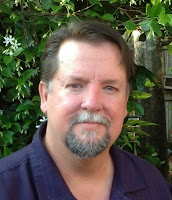

Dan Walsh is the bestselling author of 17 novels, including The Unfinished Gift, The Reunion and When Night Comes. He has won 3 Carol Awards (finalist 6 times) and 3 Selah Awards. Three of his books were finalists for Inspirational Book of the Year (RT Book Reviews). Dan is a member of ACFW and Word Weavers. He lives with his wife, Cindi, in the Daytona Beach area where they love to take walks and spend time with their grandkids. Click here to connect with Dan or check out his books.

Thursday, December 01, 2016

On Writing Christmas Novels

by Dan Walsh

As the 2016 holiday season began, I released my 5th Christmas novel, called Finding Riley. I’m not sure how many NR writers have ever considered or even attempted to write a Christmas novel before, but for those who have, I thought you might benefit if I shared some of the things I’ve learned along the way. I’m by no means an expert, but I’ve definitely had some real success with my Christmas books over the years.

The fact that this newest one is my 5th Christmas novel should be a clue (would I keep doing something over and over again if it flopped?). The truth is, my Christmas novels have been some of my biggest bestsellers. Which may seem odd, considering the window for selling them is only about 3 months out of the year.

I don’t know about you, but come January 1st, something strange happens (apparently not just to me but to almost everyone in the country). During the holidays, most of us love all-things-Christmas. Christmas music, Christmas movies, Christmas cookies, Christmas decorations (in the stores and all over town). And Christmas books. Millions of people love to read Christmas books; stories set during "the most wonderful time of the year.”

But right after New Year’s Day, we’re all done with Christmas. Totally and completely done.

In retail bookstores, Christmas books come off the shelves. There are no shelves in online stores like Amazon, but sales of Christmas novels plummet in early January. No one is in the mood to read them anymore. This sales slump on Christmas novels generally continues for the next 9 months.

But guess what happens after that? That’s right, it’s Christmas time again. And suddenly, millions of people are in the mood to read Christmas books once again. This pattern repeats itself over and over  every year. My first novel, The Unfinished Gift, was a Christmas novel. It came out during the holiday season of 2009, and it sold extremely well (even won 2 Carol Awards). It’s fair to say, this book launched my writing career. But in January 2010, it came off the shelves. It sold poorly from January and all through the spring and summer months. Then it came back again the following October and for the next 2 months sold even more copies than it had the year before.

It has continued to sell very well every holiday season since. As have all my other Christmas novels. Which is why, this year, I’ve written and published another – Finding Riley. Already it is selling very well and getting great reviews.

So if you’ve been thinking about writing a Christmas novel, you can see I think it’s a worthwhile pursuit. Here are a few things to consider before you jump in:
  • If you aren’t someone who already loves the Christmas season, you might want to skip this idea. I think the best Christmas stories are written by people who absolutely love Christmas. Their stories become the overflow of the joy and excitement they feel when Christmastime is here.
  • As with any good novel, a Christmas story needs to have all kinds of conflict and struggle woven into the plot. The characters must be people the reader will care about from the very first chapter. But it’s imperative, no matter how much tension and peril you put into the story, the climax should lead to a happy and hopeful ending (preferably on Christmas Eve or Christmas morning).
  • One nice thing about Christmas novels is they can typically be shorter in length. My 5 average between 50,000 to 65,000 words, whereas my other novels are more like 80,000 words or more. But usually, you can still charge the same price.
  • Writing Christmas novels, I think, takes an extra measure of creativity and imagination. Mainly because, you will likely have to be writing it during the late spring and summer when you’re not in a Christmas mood (and neither is anyone or anything else around you). I’m not sure why it works out this way, but every one of my Christmas novels was written in the hot summer months (for me, in Florida).
As you can see, I’m a fan. A big fan of Christmas and Christmas novels. If you’ve written any, I’d love to hear your story. If you’re thinking about writing one and have any questions, feel free to ask. And…if you’re looking for a brand new Christmas story to read this year by an old Christmas storytelling veteran, may I recommend…Finding Riley!

TWEETABLES

Writing Christmas Novels by Dan Walsh (Click to Tweet)

Millions of people love to read Christmas books~ Dan Walsh (Click to Tweet)


 *     *    *

Dan Walsh is the bestselling author of 17 novels, including The Unfinished Gift, The Reunion and When Night Comes. He has won 3 Carol Awards (finalist 6 times) and 3 Selah Awards. Three of his books were finalists for Inspirational Book of the Year (RT Book Reviews). Dan is a member of ACFW and Word Weavers. He lives with his wife, Cindi, in the Daytona Beach area where they love to take walks and spend time with their grandkids. Click here to connect with Dan or check out his books.

Thursday, November 03, 2016

Helping Art to Imitate Life


by Dan Walsh

There’s a piece of writing advice beginners are sometimes told: “Write what you know.” I get why. Fiction writing is all about making stuff up. If you write about things you know well, it’s much easier to sound credible and authentic as your story unfolds (as you make stuff up).

I heard this advice back in the days when I was crafting my first novel. I knew a whole lot about WW2, had been studying this era as a hobby for many years. So I set my first 2 novels (The Unfinished Gift and The Homecoming) on the homefront during WW2. Worked out great.

But in time, 2 things began to surface that revealed some flaws in this “write what you know” idea. If you plan to keep writing books, you eventually run out of things you know. Or you find, you don’t want to keep writing about the same thing over and over again (the thing you know).

Something I’ve learned to help offset this problem is to start paying attention to the things going on in my life that might actually—with some help—become decent material for my books. I added “with some help” because, let’s face it, my life, as is, would bore the average reader to tears. That is, taken as a whole. But if I spend some time breaking it down a bit, I realize my life does have some non-boring, interesting parts. Occasionally, even some exciting, adventurous parts. Admittedly, they are few and far between. But they do exist. And they are mine. I can use them in my books and don’t even need to get anyone’s permission.


Here’s an example. My wife is an amazing dog trainer (she’s professionally certified and has trained over 1,000 dogs). For 4 years, she was the Animal Behavior Manager at our local Humane Society and now trains dogs in a private practice. Every day she would come home with these fascinating stories. It dawned on me, I could do a series that featured a rescue shelter dog as a main character, as well as a dog trainer similar to her (only younger and single, so I could add a romantic thread). I’ve borrowed bits and pieces from some of her best stories to create at least 3 very good novel ideas (maybe more).

Just like that, and the Forever Home series was born. Rescuing Finley (Book 1) came out last November and is doing extremely well (276 Amazon reviews, Avg 4.8 Stars). I just released Book 2, Finding Riley, on October 1st. And here’s another fun way I helped Art to imitate Life…the dog on the cover of Book 2 (who’s playing Riley) is actually Charlie, a mixed spaniel dog we brought home from the shelter 2 years ago. I was able to use all kinds of things drawn from real-life experiences with Charlie in my new novel.

I just weave all this real-life stuff in with the made up stuff (which is often way more exciting) and it seems to be working out great (17 novels later).

Here’s my final example. We live in Daytona Beach. Two weeks ago, Hurricane Matthew came barreling through the Caribbean straight for us. It had been 12 years since we’d experienced a hurricane. Back in 2004, we went through 3 of them (and we didn’t evacuate; we stayed home). But the folks on the Weather Channel, and our local weather experts, were all saying this storm might hit us head-on as a strong Category 4. They were warning about massive tidal surges, roofs tearing off of houses, trees coming down all over.


Suddenly, we were told we had to evacuate…only 2 hours before the weather outside would start getting really bad. We rushed around the house, gathering insurance papers and things that mattered most into bags and suitcases, packed up the dogs, and joined a caravan of family members out on the highway (along with hundreds of thousands of others).

We drove nine hours straight toward Atlanta, wondering if we’d even have a home to come back to. The next few days provided quite an adventure.

At one point, my wife looked over at me, smiled and said, “I think Jack and Rachel will have to go through a hurricane.” I said, “Oh yeah. They definitely will.”

Who are Jack and Rachel? They are the main characters in my other novel series, The Jack Turner Suspense series. Jack and Rachel don’t know it yet, but their future now includes a number of crazy hurricane experiences that will remarkably resemble our own.

How about you? Share some of the moments when your Art has Imitated your Life in your writing.

TWEETABLES


*     *    *

Dan Walsh is the bestselling author of 17 novels, including The Unfinished Gift, The Reunion and When Night Comes. He has won 3 Carol Awards (finalist 6 times) and 3 Selah Awards. Three of his books were finalists for Inspirational Book of the Year (RT Book Reviews). Dan is a member of ACFW and Word Weavers. He lives with his wife, Cindi, in the Daytona Beach area where they love to take walks and spend time with their grandkids. Click here to connect with Dan or check out his books.

Thursday, October 06, 2016

The Importance of a Good Ending


Two years ago as I prepared to teach a Fiction Writer’s workshop, I did a reader survey, asking them to tell me “The 3 Things That Matter Most to Fiction Readers.” I gave them a list of 7 things to pick from. The third-highest vote-getter was: “Must have a Satisfying Ending.”

A good ending was definitely on my Top 3 list. My wife's list, also. It would be safe to say we both HATE bad endings in our books and our movies. This brief equation would sum things up for me:


A Good Story + A Bad Ending  = A Bad Story

It spoils the whole thing for me when a writer hasn’t thought through how to create a satisfying ending to their story. And I never, recommend a book or a movie that has a lousy ending. Which is another good reason to learn how to write a solid ending…it’s good business (i.e. it helps increase sales). The late NY Times bestselling crime novelist Mickey Spillane said it this way:

“Nobody reads a novel to get to the middle. They read it to get to the end. If the ending’s a letdown, they won’t buy anymore. Your first chapter sells your book. Your last chapter sells your next book.” 

                                                                                        ―Mickey Spillane

Armed with the results of my survey, I set out to do some research and create my outline on “How to Write a Satisfying Ending.” But guess what I found? Almost nothing. That's right. I have collected about a dozen how-to books on writing fiction well. To my surprise, only ONE had any chapters on writing a good ending. I couldn’t believe it. Maybe that’s why I’ve read (and watched) so many stories that begin well and end poorly.

So, I dug deeper and eventually came up with some great tips to share about how to write a satisfying ending to a novel. I can only share a brief overview in this blog post (compared to how much time I had teaching the workshop). I'll share a few things now and next month share some more.

Are you writing a Comedy or a Tragedy?

How many of you have ever seen the Happy/Sad Masks of Comedy and
Tragedy? During the days of Classical Theater, people used to ask this question: “Is this story a comedy or a tragedy?” What they were really asking about was the ending.

Does the main character achieve his/her goal? Will they solve their main problem, overcome their biggest challenge? If the story is a romance, will they get the girl (or will the girl get the guy)? If the answer was “Yes,” then it was a Comedy (even if it wasn’t funny). If the answer was “No,” then it was a Tragedy.

In the classical sense then, I am clearly an advocate for the Comedy. In my books I always shoot for a Happy Ending. Notice I said happy (not sappy). I’m not talking about everything ending up all unicorns and rainbows.


Remember how all the old Disney stories used to end? “…And they lived Happily Ever After.” I’m not sure we can write stories that end THAT happily anymore (not the way people are wired today). Having said that, I think a lot of the stories coming out today are WAY too dark, and the endings often leave the reader stuck there in that darkness.

In part, I can understand why. Life is hard and for many people, it’s been hard for a long time. For many writers, a happy or hopeful ending comes off as fake or forced because, let's face it, we all know “life just doesn’t turn out that way.” They view dark endings as just being “realistic” and “relevant.” 


I do think it’s important for our stories to depict honestly and accurately the difficult and harsh realities of life. The dark days. But I also think good fiction can lead people from that dark place to a place of hope.

In my books, I show life as difficult and as hard as it really is. I just choose not to have my stories END AT THAT PLACE. I keep writing until HOPE is born. I am a Christian, after all, and have been for over 40 years. This really has been the story of my life, and the life-story of hundreds of people I have known. 


I thought I’d end this post with a quote from a movie my wife and I watched this week called “Fugitive Pieces.” It’s based on an award-winning novel by Anne Michaels published in 1998. The story is filled with tragedy but also with hope. At one point, a wise old man encourages a young boy to write, as a means of helping him cope with his dark experiences. The boy seems puzzled about how this could possibly help.

The man says, "There is an old saying: the greatness of wood is not that it
Finding Riley pic
burns, but that it floats. Meaning, there is a good and bad side to everything. You can choose to see what destroys something or what saves it
."

I instantly resonated with this advice and realized... this is what motivates me to write the kind of stories I write (Warning: Blatant Book Plug coming)…including my newest novel, Finding Riley, which JUST RELEASED THIS WEEK. It’s my 17th novel, Book 2 in the Forever Home series (sequel to Rescuing Finley but can easily be read as a stand-alone). And to top it off, it’s also a Christmas novel (my 5th).

You can check it out by CLICKING HERE (available on Kindle or print).


*     *     *

Dan Walsh is the bestselling author of 17 novels, including The Unfinished Gift, The Reunion and When Night Comes. He has won 3 Carol Awards (finalist 6 times) and 3 Selah Awards. Three of his books were finalists for Inspirational Book of the Year (RT Book Reviews). Dan is a member of ACFW and Word Weavers. He lives with his wife, Cindi, in the Daytona Beach area where they love to take walks and spend time with their grandkids. Click here to connect with Dan or check out his books. 

Thursday, September 01, 2016

Ready For Christmas Yet?

Dan Walsh is the bestselling author of 17 novels, including The Unfinished Gift, The Reunion and When Night Comes. He has won 3 Carol Awards and 3 Selah Awards. Three of his books were finalists for Inspirational Book of the Year (RT Book Reviews). Dan is a member of ACFW and Word Weavers. He lives with his wife, Cindi, in the Daytona Beach area where they love to take walks and spend time with their grandkids. Click here to connect with Dan or check out his books. 


*     *     *
 
The title I really wanted for this post was from that classic old Yuletide song: It’s Beginning to Look A Lot Like Christmas, but it was too long.

Here’s the thing, this weekend I just finished my newest novel (#17). One I’ve been working on all summer long (in Florida, our summer starts around mid-May). Our nickname is the "Sunshine State" with good reason. It’s warm and sunny the better part of the year, and especially during the long summer months. People come to vacation here from all over the world this time of year. They visit all the theme parks like Disney World and Sea World, and many of them spend a few extra days tanning themselves on our beaches. My wife and I live in the Daytona Beach area, historically referred to as, “The World’s Most Famous Beach.”

The novel I just finished is called Finding Riley, Book 2 in my inspirational Forever Home Series (Book 1 is Rescuing Finley). It’s also a Christmas novel. Yes, that’s what I said. Which means, I've been writing a Christmas novel for the last four-and-a-half months during the dog days of summer. Turns out, this is my 5th Christmas novel. And this past weekend it dawned on me…I’ve written every single one of them during the hot summer months here in Florida.

That’s not how I planned it, it’s just how things worked out (more to do with things like schedules and deadlines). Why do I bring this up? I don't know. Maybe I'm looking for some extra credit. I'm not talking about money here. All my Christmas novels, thankfully, have done very well. And readers have been extremely kind in their reviews. But I imagine many of them picture me writing these Christmas books wearing a thick sweater, sitting by a cozy fire, a nice mug of hot chocolate beside my laptop, a Johnny Mathis Christmas CD on in the background. Occasionally, I pause, glance around the room at all the beautiful sparkling Christmas decorations for inspiration.
I wish. 

Here’s the real picture…I’m wearing a short-sleeved shirt, short pants and flip-flops. I have the air-conditioning turned down as low as I can afford (to ward off the beads of sweat that would otherwise constantly run down my back). Throughout the day, I try NOT to look outside, because all I see is sunshine and palm trees.

So, where does my inspiration for these lovely, inspirational Christmas tales come from? I’ll tell you where (and why I’m fishing for compliments here)…from my wholly unassisted imagination. As I pondered the hardship I’ve had to endure (well, okay…that’s overstating it a bit), I’ve wondered if my challenge is not unlike modern-day actors who work on hi-tech movies almost entirely created with CGI special effects.

Have you ever seen those “How They Made ________ “ documentaries? It makes you realize just how talented some of these actors and actresses are, as they try to act and react to big things happening which none of them can see. All they see are the other actors in their costumes and these huge green screens everywhere. Directors are having to tell them what will movie-goers will actually see weeks or months later in the theater.

Hey…that’s an idea. Maybe I could set up some green screens in my house and project some beautiful Christmas scenery on them.

Well, let’s end with 2 things. 
 
First, a blatant plug for my new Christmas novel, Finding Riley, which you can Pre-order from Amazon for $3.99 by CLICKING HERE. It will release 1 month from now on Oct 1st.  
 
And secondly, I'd like to ask those of you who write novels to share some of your crazy writing stories. I'm talking about unusual behind-the-scenes stuff that most readers would never imagine. The kinds of things that have really challenged your ability to be inspired or hindered your motivation.

Saturday, August 13, 2016

Who You Should Vote For

Dan Walsh is the bestselling author of 16 novels, including The Unfinished Gift, The Reunion and When Night Comes. He has won 3 Carol Awards and 3 Selah Awards. Three of his books were finalists for Inspirational Book of the Year (RT Book Reviews). Dan is a member of ACFW and Word Weavers. He lives with his wife, Cindi, in the Daytona Beach area where they love to take walks and spend time with their grandkids. Click here to connect with Dan or check out his books. 


*     *     *


Did my blog post headline catch your attention? That was its objective. Of course, I’m not actually going to tell you who to vote for. Not in a forum like this. That would be stupid. Right off the bat, I’d lose half of you. First, I’d lose the ones who plan to vote for the other person. Then I’d lose a bunch more who might even agree with the person I’m suggesting, but don’t think this is the place for someone to talk politics.

After all, this is a Writers Blog.

To be honest, I’m putting this blog post under the heading of “Marketing Tips” not politics. Let me explain what I mean. I’m 59 years old. Not quite a senior citizen, but almost. I’ve been paying attention to politics pretty closely since the Watergate scandal broke in the 70s (when Nixon was forced out of office). That’s a good long while.

I think I can say, I have never seen a presidential election quite like the one we’re facing right now, between Trump and Hillary. I’m not sure I’ve ever seen the country as polarized as it is now. Or have seen political conservatives (of which I am one) get so upset and worked up about so many of the issues we’re facing now (and about the candidates they think are the best people to solve them).

Let’s just say, it’s been pretty interesting scrolling through my Facebook feed.

For the first time in a long time, I’ve had to click the “Un-Follow” button several times, to stop receiving an overdose of nasty, angry posts clogging up my feed. Some of these folks were people I had considered “writing friends.” It’s because of this, I thought I should speak up here with some friendly advice.

If you are an author writing books you hope will be bought by members of the public, you should be aware that if you make people feel angry or stupid by things you say on Facebook or Twitter, they probably won’t buy any more of your books.

I’m not saying you should shut up completely, or never say anything about a candidate or issue you support, or against one that you oppose. You have that right. It’s a free country. I believe in free speech. But I also believe it’s wise, if you do so, to always do so with respect for others. Even others whose positions or candidates you disagree with.


If you make them angry, or make them feel stupid…to me, that’s just plain stupid. How do I know this? There are several Hollywood movies that have come out in recent years, movies I probably would have wanted to see (and paid to see), but refused to support because the liberal stars of these movies had come out publicly saying horrible things about some of my conservative views. Had they kept their mouths shut, or even shared their concerns with respect, I would have happily paid the money and bought a ticket.

I suspect this very thing goes on all the time when people are buying books, especially in an election season like this. So my advice? If you must speak out on political matters, be very careful. Don’t knee-jerk react. And always be respectful, especially to those with whom you disagree.

Who knows, they might still buy your book if you treat them right. But they most certainly will not if you make them feel angry or stupid.
 

Thursday, July 07, 2016

When in Doubt, Throw Grampa Down the Stairs

Dan Walsh is the bestselling author of 16 novels, including The Unfinished Gift, The Reunion and When Night Comes. He has won 3 Carol Awards and 3 Selah Awards. Three of his books were finalists for Inspirational Book of the Year (RT Book Reviews). Dan is a member of ACFW and Word Weavers. He lives with his wife, Cindi, in the Daytona Beach area where they love to take walks and spend time with their grandkids. Click here to connect with Dan or check out his books. 


*     *     *

I thought for my column this month, I wouldn’t talk about anything related to indie publishing (like I have the last several times). But instead, share some how-to thoughts (as in, how to write better fiction). One of my central goals when writing novels, whether inspirational stories or suspense thrillers, is to keep the pages turning for my readers. I can’t stand to read boring books, so I’ve made a commitment not to write them. 

One of the challenges all writers have when writing full-length novels is how to avoid a “sagging middle.” I’m not referring to one’s appearance, but the central section of our story. Many novels suffer from this malady. It shows up when you read a book that grabs you at the beginning but then, toward the middle, things start to bog down. The story feels adrift. If I’m really hooked by the story, I may plod through these duller chapters to see how the book ends.
 
Usually, the pace does pick back up, and sometimes the ending grabs you just as much as it did at the beginning. But as I close the book, I wonder why the author didn’t put as much effort into the middle of the story as he/she did the beginning and the end. When this happens, I know I’ve just read a book afflicted with a sagging middle.

Can any of you relate to this? As a reader? How about as a writer?

Early on, I decided to be intentional about solving this dilemma, to deliberately work just as hard to come up with something that would cause the middle of my books not to lose the tension or pace I had set at the beginning. My first novel, The Unfinished Gift, was easy. I was riveted by the story myself, from beginning to end. There was no sagging middle.


The test came when writing the sequel, The Homecoming. I had come up with a great beginning for the novel and a very satisfying ending, but halfway through writing the story I realized…I’m boring myself with these middle chapters. To make sure I wasn’t being too hard on myself, I asked my wife to read what I’d written. She quickly confirmed my suspicions. “These middle chapters are boring. I find myself wanting to skip right past them.”

So I deleted the chapters back to where the story had last been tense and interesting, and we began to work on coming up with something to give the middle of the book a sense of excitement and new life. I remember the moment when the perfect solution came to me. I blurted out to my wife, “I know what we have to do. We have to throw Grampa down the stairs.” She instantly recognized, it was the perfect solution. We wouldn’t kill him, mind you. He would just slip and fall, scare everyone else in the book who loved him, and create all kinds of tension and difficulties to work through.

So, that’s what we did. And it made the story nice and tight from beginning to end. That was my second novel. Since then, I have written 14 more. I've faced the challenge of the “sagging middle” more times than I can count. But now when it happens, I know what to do…

Throw Grampa down the stairs.

Now it’s your turn, fellow novelists. Have you ever struggled with a sagging middle when writing your books? If so, did you fix it? How? Did it work? Tell us the tale. 

And...here's your assignment until next month. Here are the covers to my last 2 novels. An inspirational one (Rescuing Finley) and a suspense one (Remembering Dresden). Buy 1 (or both) as an example of a story guaranteed NOT to have a sagging middle (just kidding...well, actually I'm not :).

Thursday, June 02, 2016

Indie Corner - I Love BookBub, I Hate BookBub

Dan Walsh is the bestselling author of 16 novels, including The Unfinished Gift, The Reunion and When Night Comes. He has won 3 Carol Awards and 3 Selah Awards. Three of his books were finalists for Inspirational Book of the Year (RT Book Reviews). Dan is a member of ACFW and Word Weavers. He lives with his wife, Cindi, in the Daytona Beach area where they love to take walks and spend time with their grandkids. Click here to connect with Dan or check out his books. 


*     *     *


This past week was perhaps the most amazing week I’ve had as an indie author thus far (I made the switch from being traditionally published to indie about 18 months ago). On May 1st, I released my 2nd suspense novel in my Jack Turner Suspense Series, Remembering Dresden (I wrote about this last month – CLICK HERE if you’re curious). Book 1 did quite well (When Night Comes). The challenge was…how to promote Book 2 in a series.

Not everyone will have read Book 1 (over 15,000 have so far). But even for those who did…how will I reach them all to let them know? How can I attract new readers to the series? One of the most effective ways to reach a large block of Christian readers in one fell swoop is to use BookBub. BookBub is a large marketing firm that has a massive reach; it has over 930,000 subscribers in the Christian fiction category alone. 

Every day, they send out an email to the subscribers highlighting 5 novels that are marked down somewhere between $2.99 and Free, with a button to push right beside the cover. Their website said, if they picked my book for one of their promotions (and I was offering my book for free), I could expect 16,000 downloads in a single day.

That is, if they picked my book….

But here’s the problem…I had been submitting proposals to them for the last 5 months and had been rejected every time. Even though I met all their requirements, and then some. They simply had too many authors now vying for those few slots available. Another problem is, while some other marketing companies offer the same service to readers (ENT, Book Gorilla, etc.), they only reach a sliver of people compared to BookBub. We’re talking hundreds versus tens of thousands. 

This is why I hate BookBub. They are so good, they are too good. They have no decent competition. And the worst part, they could solve my marketing problem if they would only say YES. Just this one time. Please.

So, about a month ago as I got Remembering Dresden ready to launch, I made one last ditch effort and submitted a request to BookBub. 

Shock of shocks…a few days later they emailed me back saying YES. They would do a promotion for Book 1 in the series, When Night Comes, on May 25th. That’s exactly what I had asked for. I would make the book available for FREE for 5 days. I had put the first 2 chapters of Remembering Dresden in the back of Book 1, along with a link where readers could order it right away (and if they did, they would pay $3.99 for it).
 
If 16,000 people downloaded the free book, the hope was, maybe at least 10-15% of them would like it enough to read the sneak preview of Book 2 and order it on Amazon. That happened, and I would be a very happy man.

Well, WAY MORE THAN THAT HAPPENED. Last week, during that 5-day period over 44,000 people downloaded the book (over 25,000 on a single day). My book made it to #2 in the entire Kindle Store. And both books have been flying off the shelves ever since (neither are free any longer). My sales have QUADRUPLED every day since the sale ended. Here’s a pic from yesterday showing both books on the Top 10 bestseller list for Christian Suspense. All of that for a promo that cost $205.

I LOVE BookBub!

But I know, this love affair cannot last. Why do I know this? Because BookBub will not let me do this promo again. Not for a very long time. Not for at least 3 months on any of my other books and 6 months for the book I’ve just promoted. But how can I go back to all the pathetic marketing alternatives now? I’ve been to the mountaintop. I’ve seen what’s on the other side. 

I hate BookBub.
 
Why must they tease me and taunt me this way? Why doesn’t someone do something about this? 

Please.

Thursday, May 05, 2016

Indie Corner - Should You Pay to Advertise Your Book?

Dan Walsh is the bestselling author of 16 novels, including The Unfinished Gift, The Discovery and When Night Comes. He has won 3 Carol Awards and 3 Selah Awards. Three of his books were finalists for Inspirational Book of the Year (RT Book Reviews). Dan is a member of ACFW and Word Weavers. He lives with his wife, Cindi, in the Daytona Beach area where they love to take walks and spend time with their grandkids. Click here to connect with Dan or check out his books. 


*     *     *

Let me say 2 things right up front: First, I mentioned in my headline that this post is for “Indies,” but traditionally published authors are welcome to read it. Although, having been one myself (for 13 novels), I’m not sure why you’d want to. Spending your hard-earned book money on a product where at least 80% of the return would go to others (the retailer and publishing house), seems like a losing proposition. 

Secondly, if you are an indie or hybrid and wrestling with the idea of spending some of your hard-earned book money on advertising, you might want to read my first post on this topic written in Novel Rocket back in January. CLICK HERE to read it. At that time, I had learned how to use advertising (especially on Facebook) a few months earlier and talked about becoming more serious and deliberate about doing this in 2016.

That was 4 months ago. I've advertised consistently since then and have learned some additional things to share. Part of the reason I chose to revisit this topic is seeing so many active discussions about it among indies on social media.

Now let’s consider some new thoughts, especially thoughts about spending money to promote your book. I know there are things we can do to promote our books that don’t cost actual dollars, just hours of our time. We can blog about our book, go on other people’s blogs to promote it (I’m doing a little of that right here), we can tweet about it, or even create fun little ads and post them on a myriad of free Facebook groups. I've done all these things myself.

Some of them have proved to be fruitful. Others, a complete waste of time. And speaking of time…isn’t it really something of a myth to say that we do all these things “for free?” There is something in business called the money-value of time. In short, it means your time (especially when working) has monetary value. All the hours we spend doing these “free” things are hours taken away from writing and rewriting and all the other essential tasks an indie author must do to be a success.

The idea of advertising--if it's done effectively--is that the ads are doing all kinds of work for you. Actually, if done right, they should be doing a much better job of promoting and selling your books than you could do on your own. The money spent should provide a return that pays for the ad and nets you even more money besides (called ROI, return on investment). Not to mention, all the new readers that are reached because of the ads (who may have otherwise never heard of you or your book).

Here is a screen capture of an ad I created for Facebook (it's essentially the same ad I began with back in January) for my novel, Rescuing Finley.

I spent a few hours creating it. Since then, I've "hired" Facebook to get this ad into the Newsfeed of readers. Not just any readers, but specific readers who are very likely to already be interested in a book just like this. It's called a "Targeted audience."

I asked them to show it to people who they know have already expressed strong interest in Dogs, the Humane Society, and who also own Kindle devices or apps (turns out, about 2.5 million people on FB match that criteria). 

When they click on the "Learn More" button, they are taken to a "landing page" on my website (CLICK HERE to see it). This page shows the full cover of the book, highlights some great reader reviews, updates the number of reviews and Stars (which is now up to 167, still at 4.8 avg), and gives them a chance to click on a big Amazon button, which takes them right to the Amazon page where they can buy it. I also have a link embedded on this page that tracks everyone who visits, so I can re-visit them specifically at a later date (like when my next book comes out).

I'm slowly making my way through this 2.5 million target audience. Here's a graphic to show how the ad did just last month:

See that number? 17,878 people have seen this ad for my book just in the last 2 weeks of April. See that little light orange shading in the beginning of that darker orange bar? If I hover my mouse over it, it tells me these are the people who saw my ad "organically." Meaning, for free. The darker orange area shows who saw it because of the money I was willing to spend. Turns out, the ad only reached 1,250 people on its own. That's nice. But an additional 16,628 people saw the ad because I paid FB to show it to them.

The result? I had a 90% ROI on this ad last month. Meaning, I made enough sales to pay for the ad, plus receive 90% more money for myself. I didn't have to spend hardly any time on this. I also added around 300 brand new readers (many of whom are now checking out my other books). These readers and I would have never connected.

I've just done some additional Facebook ads last week promoting my brand new release, Remembering Dresden (just came out this past weekend...the cover is the first pic above on the right...CLICK HERE or on the title to check it out). For these ads, I used the Boosted Post feature. No time left to give you the details, but I made over a 500% ROI on these boosted posts in sales.

Well, that's my update. Feel free to ask questions. If I can help, I will.