Get a Free Ebook

Five Inspirational Truths for Authors

Try our Video Classes

Downloadable in-depth learning, with pdf slides

Find out more about My Book Therapy

We want to help you up your writing game. If you are stuck, or just want a boost, please check us out!

Showing posts with label publishing tips. Show all posts

Thursday, September 01, 2016

Friends and Faithful Followers of Novel Rocket ...

I'm excited to announce ... are you ready? It's exciting! Okay, here it is:

Susan May Warren, Rachel Hauck, 
and My Book Therapy

have acquired Novel Rocket!

Things will remain much the same, with the same columnists, and some new ones. You can expect great teaching, publishing tips, and how to balance life being a writer. 

Most of all, it's still a place to gather and share ideas. So stay tuned! We'll still be part of the Novel Rocket family, but under new ownership. I'm excited for the next season in all our lives!


Saturday, June 11, 2016

Boxed Set Basics

HEATHER DAY GILBERT currently has a novella, Out of Circulation, in the Smoke and Mirrors Romantic Suspense Collection, and she's enjoying every minute of it. Find this highly rated set here on Amazon for only 99c! Heather's Viking historical novel, God's Daughter, is an Amazon Norse bestseller. She is also the author of  Miranda Warning and Trial by Twelve, Books One and Two in the bestselling A Murder in the Mountains mystery series. Trial by Twelve is the 2015 Grace Award winner for Mystery/Romantic Suspense/Thriller/Historical Suspense. Heather has also written the IndiePublishing Handbook: Four Key Elements for the Self-Publisher. You can find Heather on her Website, Facebook, Twitter, Pinterest, and Goodreads.

Boxed Set Basics

Until last year, boxed sets with multiple authors were just a pipe-dream for me. I'd heard good things about them from my author friends, but I hadn't been invited to join one yet!

When I joked with my author friend Karin Kaufman that we should do our own set because we enjoy each other's mysteries so much, we began to realize we could create a boxed set. We just needed to find other authors we felt meshed with our books.

I've since participated in that boxed set, Fatal 5, and one other, Smoke andMirrors, which by no means makes me an expert, but it has given me some perspective on contracts and other issues you'll want to consider before you launch a set of your own.


1) Choose a set theme/rough publication date. This way, you'll have solid facts to take to the authors you ask to join the set so they can make informed decisions. Most sets stick with one genre or a mix of comparable genres (our Fatal 5 included both mysteries and thrillers).

2) Choose your authors carefully. The more big-name authors with large followings you can get, the better. This will necessitate going to quite a few authors to find those who can not only meet your publication deadline, but who are willing to pitch in their time to market the set.

3) Set up a private Facebook group where authors can interact quickly. This is so much faster than trying to set up an email loop, and it's much more effective, because with boxed sets, there will probably be hang-ups that arise that need to be addressed immediately.

4) Write up a contract. For both the sets I've been in, we followed a contract that all the authors agreed to before getting rolling with the set. We posted it on our private Facebook group wall, so authors could refer to it as needed. This contract included the following elements:

         a) Boxed Set Goal: This can include such information as an agreement to keep all the books in Kindle Unlimited if the set is in KU. It can also underline the reason for the set—to drive new readers to all the authors.

         b) Timeline: This lays down a very specific timeline for the authors, including dates drafts are due for formatting and when the book will be uploaded, when the set will be dissolved, and when and how payments will be made.

         c) Theme/Title: This is updated as the group agrees on a theme and title. You want a catchy, memorable title that somehow captures the feel or theme of all the novels/novellas in the set.

         d) Cover: This is updated as the group decides to use talent in the group or pay for a cover artist.

         e) Formatting: This specifies who will format the book—whether someone in-group or hired.

         f) Price for Boxed Set: This specifies the pricing on the boxed set, including specials that will be run. Individual set agreements vary, but some might wish to specify that authors' individual novels/novellas will not undersell the set as a whole for the duration of the set. For example, authors agree not to price their individual novels/novellas below the set price of 99c. This directs attention back to the set and guarantees everyone works hard to promote the set, not just their individual novel/novellas.

         g) Royalty payouts: This specifies when/how authors can expect to be paid by the one who uploads the set to vendors.

         h) Promo expectations: This section clarifies what will be expected from all the authors by way of promo, and it includes an agreement on how ads will be paid for and by whom.

5) Nail down theme/title/cover art/formatter/uploader. These are things that can change as additional authors join the set, but most groups work together to decide the best route to take on these things. Often, decisions are carried by a majority vote. The dynamics of each set vary, but I always see authors working to accommodate each other. Authors in my latest set, Smoke and Mirrors, decided to have our cover art designed, and we were all able to contribute thoughts and were pleased with the outcome:


6) Get rolling toward those deadlines, get the final file out to early readers, market like crazy, then reap the rewards of being in a boxed set!

Inevitably, boxed sets will run into hitches—just ask anyone who's been in one. You might shoot to be in Bookbub and then realize your set doesn't meet the specifications (be sure to read those first—Bookbub requires a 2D cover, novellas and not novels, as well as a certain number of pages per novella). You might have an author who can't make the final deadlines. You might have authors who poop out on marketing and don't participate.

When your set is reviewed, it's inevitable some readers won't like your contribution. You're mixing author styles and some can be vastly different. Don't expect everyone to rate yours highly.

There are any number of variables, but you have to try to be prepared for anything and ride the boxed set waves, however smooth or choppy they may be.

Yet I probably don't have to tell you that the payoff can be huge. Yes, there are a plethora of boxed sets these days, but some are still making the USA Today bestseller lists. Most will bring new readers/newsletter subscribers to each author in the set. Valuable connections are made with the authors you work with and the new readers you gain.

Finally, boxed sets are a lot of fun! If you're asked to be in one, first consider carefully if you can meet the deadlines and if you'll be able to contribute to the marketing, and if so, enjoy the experience! 

TWEETABLES: 6 Basic Points on how to self-publish a boxed set. #writing #PubTip (Click to tweet)

Friday, April 01, 2016

9 Ways to Stunt Our Writing Growth

by Edie Melson @EdieMelson

9 Ways to Stunt Our Writing Growth
I’ve never met a writer who didn’t claim to want to grow and improve. Everyone single one I’ve ever met has had some sort of a goal. Oh don’t get me wrong, the goals differ widely—from wanting to write and publish the next great American novel, to just wanting to see their name in print, to wanting to record the family stories for the next generation. All of these different goals require growth. 

But while everyone says they want to grow and improve—many don’t take even the simplest of steps to achieve that growth. So today, instead of pointing out what writers should do to grow, I’m going to turn the tables and give you a list on what to do if you do NOT want to grow as a writer. Beware if you fall into too many of the traps I’ve listed below.

9 Ways to Stunt Our Writing Growth

1. Don’t Write. Instead talk about writing, meet with others who are writing, and definitely read about writing. But don’t ever let yourself record words on a page.

2. Focus on the Reasons Why NOT. I don’t know a single successful writer who actually has time to write. Every single one of them lives in the midst of circumstances that would keep any sane person from spending time at the computer composing manuscripts. At one point or another we all deal with family crisis, health issues, and overwhelming chaos. Be sure you always focus on why you don’t have time to write and you’ll be composing your own self-defeating philosophy.

3. Listen to and Obey the Negative Voices in Your Head. Writers are our own worst enemies. We can come up with more reasons to fail than any group of people we might encounter. Focus on those voices that whisper what a failure you are and that no one will ever read what you’ve written.


4. Never Invest Time or Especially Money in Your Foolish Dream. Life has shown me that I get out of something what I’m willing to get into it. If I’m not willing to invest in my dream, that will definitely keep me from making any kind of progress. So to avoid growth I need to keep my money in my wallet and my time spent elsewhere by avoiding attending conferences, buying books, joining writing groups.

Put ALL relationship ahead of writing time.
5. Put ALL Relationships ahead of Writing Time. We all know there’s nothing more important than relationships. Balance is good, but focusing only on relationships is even better—if you never want to grow. Truthfully I don’t know of a single profession that doesn’t cause us to make sacrifices and choices. By only being available to help out others, we’re being generous. Who cares if we’re not following our calling.

6. Hang Out with Others Who Aren’t Writing. I’m not talking about non-writers. I’m talking about others who want to write, but never seem to find the time. By hanging out with these folks you’ll be able to reinforce the decisions you’re making and commiserate about how you’re too _________ to write and isn’t that a shame.


7. Never Take ANY Risks. Growth requires stretching, and yes, often pain. If you never take any risks you’ll be able to get through this phase of wanting to write without making any forward motion.

8. Ignore the Fact that God Gave You this Gift of Words. You can’t even be sure, in a black and white sort of way, that God did birth this dream inside you. It’s silly to follow something you’re not sure of. After all, if He really wanted you to write, He’d have provided the time you needed, right?

9. Never Set Goals and Especially Never Write Them Down. We all know what happens when you set goals, we tend to work toward them. And if we write them down, we’re almost doomed to follow through. If you never want to make progress as a writer, avoid this snare.

I hope and pray that none of you find yourself in the traps above. I’m ashamed to say that—at one time or another—I’ve fallen into most of the them at one time or another. Fortunately, I’ve surrounded myself with people who will tell me the truth and ask me the hard questions. 


What would you add to my list? Come one, I’ve been honest, now it’s your turn. Be sure to leave your thoughts in the comments section below.


Edie Melson—author, blogger, speaker—has written numerous books, including While My Soldier Serves, Prayers for Those with Loved Ones in the Military. She’s also the military family blogger at Guideposts.org. Her popular blog for writers, The Write Conversation, reaches thousands each month, and she’s the Director of the Blue Ridge Mountains Christian Writers ConferenceConnections: Social Media & Networking Techniques for Writers is a print expansion of her bestselling ebook on social media. She’s the Social Media Mentor at My Book Therapy, the Social Media Director for Southern Writers Magazine, and the Senior Editor for NovelRocket.com. Connect on Twitter and Facebook.  


Saturday, December 26, 2015

10 Ways to Make Your Writing Career Explode in 2016

By DiAnn Mills @DiAnnMills

Evaluating successes and challenges in 2015 for our writing careers means

taking an honest look at how we progressed. Reaching goals doesn’t happen overnight and never happens without thought and prayer. We all experienced victories and moments of defeat: moments when we laughed and times when we cried; days when we love our calling and nights when we wanted to quit. What’s important to each one of us is the learning process.

The following are 10 ways I am excited about my writing career in 2016. Perhaps you can find yourself grabbing a pen and paper to create your own list.

  1. Research one writer conference that turns my craft challenges into strengths. Register and attend!
  2. Write a more compelling story with incredible characters who live on
    in the minds and hearts of my readers unlike anything I’ve written in the past.
  3. Open my eyes to sales numbers. No matter what they are, they can grow. What can I do differently to ensure the numbers rise?
  4. Teach serious writers at a conference where I haven’t taught before.
  5. Evaluate my methods of marketing and promotion. Am I reaching current readers and drawing more into my fold? Am I adhering to my budget? Do I need to add or delete from my list of where I currently advertise?
  6. Provide interesting, worthwhile, and humorous information to my blog while remaining transparent.
  7. Create book proposals that stretch me as a writer and a lover of story.
  8. Delete the word “mediocre” and “midlist” from my personal dictionary.
  9. Speak to an audience that forces me to delve deep into myself in a way that helps others.
  10. Thank God for every victory and every challenge as a blessing. God doesn’t waste anything. Our paths have a purpose.
Now it’s your turn. Share with us one way your writing career will explode in 2016. If we all work as a team and encourage each other, how can we fail? 

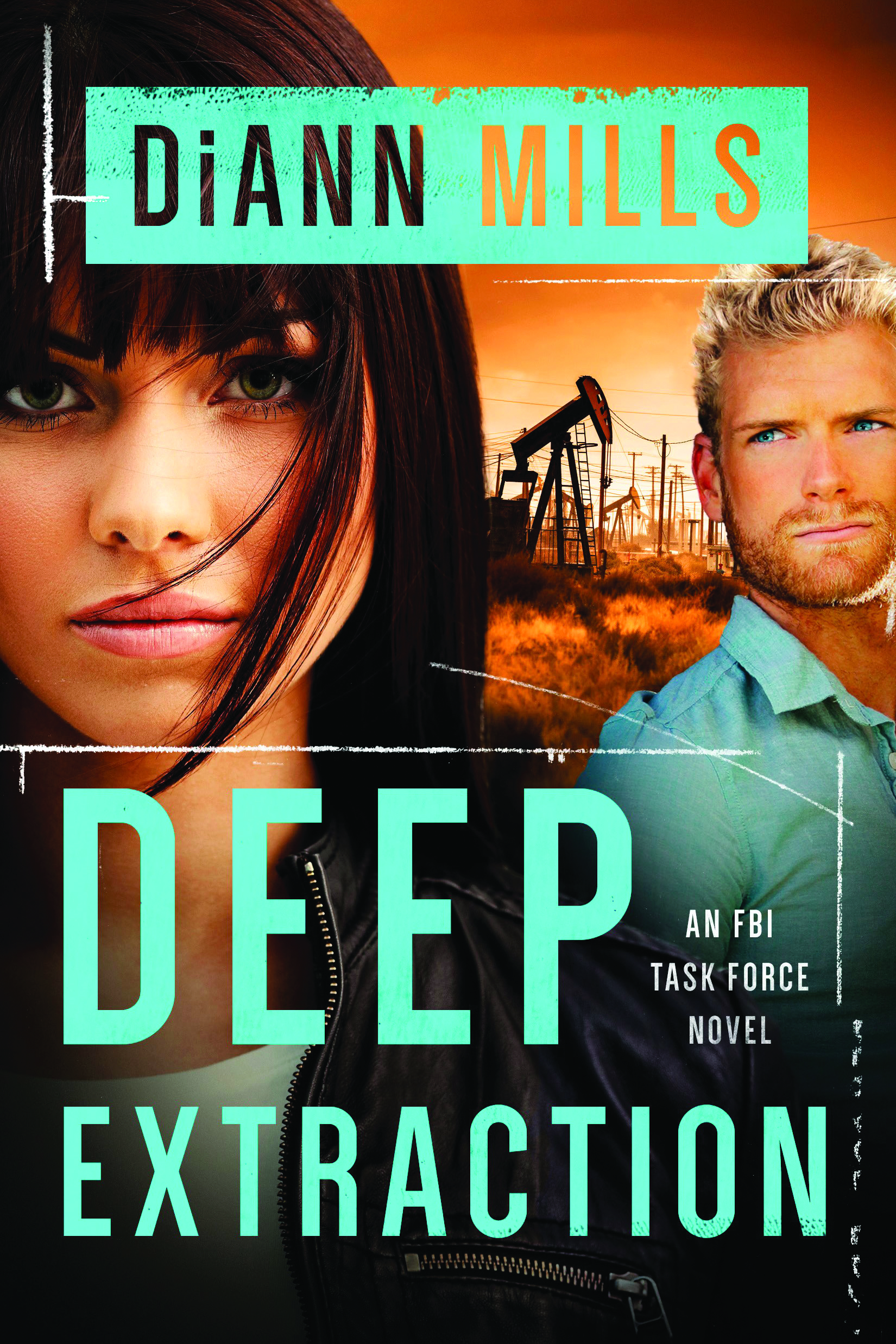
DiAnn Mills is a bestselling author who believes her readers should expect an adventure. She combines unforgettable characters with unpredictable plots to create action-packed, suspense-filled novels.

Her titles have appeared on the CBA and ECPA bestseller lists; won two Christy Awards; and been finalists for the RITA, Daphne Du Maurier, Inspirational Readers’ Choice, and Carol award contests. Library Journal presented her with a Best Books 2014: Genre Fiction award in the Christian Fiction category for Firewall.

DiAnn is a founding board member of the American Christian Fiction Writers; a member of Advanced Writers and Speakers Association; International Thriller Writers, and the Faith, Hope, and Love chapter of Romance Writers of America. She is co-director of The Author Roadmap with social media specialist Edie Melson where she continues her passion of helping other writers be successful. She speaks to various groups and teaches writing workshops around the country.

DiAnn has been termed a coffee snob and roasts her own coffee beans. She’s an avid reader, loves to cook, and believes her grandchildren are the smartest kids in the universe. She and her husband live in sunny Houston, Texas.

DiAnn is very active online and would love to connect with readers on any of the social media platforms listed at www.diannmills.com.

Thursday, November 05, 2015

The Challenge of Finding New Readers

Dan Walsh is the bestselling author of 15 novels, including The Unfinished Gift, The Discovery and When Night Comes. He has won 3 Carol Awards and 3 Selah Awards. Three of his books were finalists for Inspirational Book of the Year (RT Book Reviews). Dan is a member of ACFW and Word Weavers. He lives with his wife, Cindi, in the Daytona Beach area where they love to take walks and spend time with their grandkids. Click here to connect with Dan or check out his books.


*     *     *

Back in the old days--and by old days I mean 5-6 years ago--readers used to find new authors by walking the aisles of their favorite retail bookstore. New novels used to come out in nice hardbacks, which were often presented front and center in the bookstore on carousels, end caps or tables. These books were often pricey. Most readers would only buy at this price for authors they already knew and loved.

When looking for new authors (at least new to them) they might shop the markdown bins or check out the paperbacks. Always on the hunt for a great read. And when you found a book you loved, you hoped that author had written many other books. If so, you'd start making your way through them. And as you did, you didn't really mind if you paid a little more because now you knew...this was an author who was able to deliver a great reading experience.

But now that's all changed. Book lovers in increasing numbers are shopping online these days, which has made life increasingly difficult for traditional publishers. The rules of the game have all changed. All the old ways they employed (to enable readers to find their authors newest books) don't apply anymore. 


This shift to buying from mega online stores, like Amazon, have changed the dynamics of book marketing, maybe forever. Certainly for now. Two other major factors have shaken things up a bit, as well:


  1. There's no longer such a thing as "limited shelf space." And because of ebooks, there's no such thing as "books going out of print." Realizing this, hundreds of authors have refurbished and relaunched their out-of-print books, and are now selling them online directly to the customer.
  2. And hundreds of would-be authors, whose books used to be locked out of the process because they were rejected by traditional publishers, can now "go indie" and upload their books directly to these online stores. There's no one now to stop them. A fair number of traditional authors have joined the ranks of this new indie army.
Both of these things have resulted in a massive explosion of new books available for readers to buy, and at prices that were unheard of just a few years ago. For authors, all of these new and exciting things have come at a great price. Now it is harder than ever for readers to find your book. 

Instead of just a few aisles to browse through, readers are faced with literally millions of choices. Imagine walking through a bookstore 5 times the size of a Sam's or Costco's. Or sitting down to a restaurant with a menu as thick as a phone book. The question is "discoverability." How do you get readers to discover you or your book in the midst of so many choices?

Here are a few things authors are trying:
  • Perma-free - This is the idea of making the first book in a series of novels totally and permanently free. At the back of the book, and in each of the books in the series, you place a direct link for the next book, so all the reader has to do is click, buy the next book and keep reading. Of course, they pay for the rest of the books (but don't mind because they know the author's work now). 
  • Boxed Sets - This idea involves a number of authors in a similar genre banding together to create a 4-5 book set, which the reader can buy for a ridiculously low price. For example, my suspense novel, When Night Comes, is part of a boxed set right now called Fatal 5 (Click Here to check it out). Readers can get 5 suspense novels from bestselling authors for 99 Cents. Why would authors give away a great book for less than a quarter? Because this marketing idea will allow hundreds of new readers to become aware of their books.
  • Targeted Ads - Authors are learning what business people have known for years. It takes money to make money. You have to be willing to spend money to get your book before the eyes of readers who might like to buy it (if they only knew it existed). Massive email newsletters have popped up like BookBub, Freebooksy and Ereader News Today (ENT), which send out tens of thousands of emails every day to readers who've subscribed to their service, highlighting daily specials in the readers' favorite genres. Facebook has also created a marketing opportunity for authors to buy ads that FB will weave into the Newsfeeds of their customers, who they already know like your kind of book.
  • Shameless Plugs - One interesting method is to use the platform of a widely read blog you write for to shamelessly plug your newest book. Like I'm doing now for my newest novel, Rescuing Finley (which you can pre-order now for $3.99). It releases on Nov 19th in ebook and print.
As you can see, connecting readers with the authors and books they love has become quite a complex adventure. Since this is primarily a writer's blog, I'd love to hear some of the creative ways you've found to connect with new readers. 


Monday, October 05, 2015

Writing in Two Genres

Ronie Kendig is an award-winning, bestselling author who grew up an Army brat. After twenty-plus years of marriage, she and her hunky hero husband have a full life with their children, a Maltese Menace, and a retired military working dog in Northern Virginia. She can be found at:
 www.roniekendig.com
Facebook (www.facebook.com/rapidfirefiction)
Twitter (@roniekendig)
Goodreads (www.goodreads.com/RonieK)
Pinterest (http://www.pinterest.com/roniek/)
Instagram (@kendigronie)

Ronie's upcoming release, Embers, has been called "simply amazing!" 

* * * * * * * * * * 

“Establish yourself in one genre, and then you’ll have street credibility to write what you want.”

As a lover of speculative fiction, I was given that advice years ago when I first started actively seeking publication. I loved writing suspense, but I also loved writing speculative fiction. But the market is tough and small for speculative writers within the Christian market.

Those words in that quote were true ten years ago. But not so much anymore, due to a rapidly-changing industry and the advent of digital books. Still, I find myself now with eleven published suspense novels and five novellas under my belt as I tiptoe into the speculative market at long last with my epic fantasy debut, Embers.

http://amzn.to/1OglXWp
Ronie's Falcon (suspense) and Embers (speculative) novels
At this point in time, my releases each year will include one suspense novel and one speculative novel each year. As I venture into this dual-genre writing career, I’ve learned a few things along the way (and I’m still actively learning as I navigate this journey:
  • Priority/Priorities – Stepping out in another genre is, to a degree, like splitting yourself in half. Suddenly, there are two readerships you must address, two genres under which you must divide your time and energy. For this reason, I found it very helpful to establish priorities—both in my personal life and within the respective genres themselves. 
  • Reader Loyalty – I have a great respect for my Rapid-Fire Fiction readers, many of whom have been loyal from my debut release, Dead Reckoning. In stepping into a new genre, and one that—for some readers—is a genre they’ve never read before, I’ve been surprised that some have said they would read whatever I wrote, even my laundry list. That is a tremendous help, a boon and an honor. I do not take that loyalty lightly, so I’ve been careful to maintain a strong, active presence with both genres on my social media pages. 
  • Starting Over – Because my new genre is foreign to some readers, there are some ways in which I am starting all over. I must find the audience that will fall in love with and demand more books. One way I’ve done this is that over the years, I’ve continued reading in both genres, and I have actively promoted and encouraged authors in both genres. Now that I’m stepping onto the playing field of a new genre, I have author-friends who have offered to help. But that’s a very small part of the task. I must also get to know that community, and it must be genuine. I can’t just horn in on their forums just to sell my books. All of us can spot a fake. In those communities, I seek no publicity nor do I promote myself. I listen. And I learn. In a lot of respects, I’m a newbie, so even though I’ve been writing speculative for many years, I glean as much as I can from others in this genre.
  • Mirror Elements – it is a sign of respect to your already-avid readers to find a smooth, natural segue from one genre into the other. Because I love my Rapid-Fire Fiction readers, I made sure that my fantasy novel had adventure, action, and even a military component. I provided ways for those loyal to my suspense novels to dip their toes in speculative fiction. 
  • Website And Social Media – Although some may advocate having two separate identities out there for speculative fiction, I already knew that meeting the demands of social media was already tough. With that in mind, I opted not to have multiple identities. Within my website, my web designer (the inimitable Matt Jones of Jones House Creative) and I took ¼ of the page and converted it to a speculative “world” within the Ronie Kendig – Rapid-Fire Fiction world. That way, I am not really adding much more work to my marketing life. And I promote both suspense and speculative on my Facebook, Twitter, and Instagram accounts, as I have been doing since before I had a speculative novel to promote. 
  • Caution - I will strongly encourage caution about stepping into this two-genre dance. It is not easy, and part of building a loyal readership base is bonding, respecting and rewarding (with good, consistent stories) your readers. My former publisher once told my agent that they kept buying my books, not because I was a runaway bestseller (ha--I so wish), but because I had traction and sustainability. And I strongly believe that was due, in part, to being responsive to and respectful of my readers. 
Since Embers releases this month, I’m still at the beginning of this journey and figure out how to stay true to my oh-so-loyal readers but also draw in new readers.

Do you write in two different genres? If so, do you have an idea or tip to share with us?


* * * * * * * * * * 
Releases October 16, 2015

He's Coming For Them. And the Kingdom. 

Haegan and Kaelyria Celahar are royal heirs of the Nine Kingdoms, but Haegan is physically crippled. What chance does he have against Poired Dyrth, the greatest enemy the kingdom has ever faced, who wields fire with a power none can match? 
Their only hope is forbidden: Kaelyria must transfer her fire-harnessing abilities to Haegan. When she does it comes with a terrible price: Haegan’s disability is healed, but only by being transferred to Kaelyria. This decision causes their father, the King, to unleash his wrath against Haegan. 

Haegan must flee the kingdom alone with two impossible tasks: Find a cure for Kaelyria and stop the coming war with the omnipotent Poired Dyrth. 

Friday, August 28, 2015

Who Decides to Publish Your Book?

The following blog post is shared by permission from the Steve Laube Agency blog    


The editor you met with at a writers’ conference liked your proposal and asked you to send it to her after the conference. She was already talking about format and promotion ideas. Or you submitted a proposal and received an enthusiastic response from the acquisitions editor. Four (or maybe six to eight) months later, a rejection letter showed up in your inbox or mailbox.

What happened?

No matter how much editors like potential books, they don’t have final say in sending contracts A lot of other people are involved in the decision of whether to issue a contract or a rejection letter.

Before becoming an agent I worked 11 years as an acquisitions editor and later as an editorial director for Bethany House Publishers. Most publishers have two physical board meetings to help make the decision whether or not to publish a book. This process varies from publisher to publisher and each company has its own name for its board meetings. Thus many authors get confused when hearing different labels.

Some rejections state that “the book did not get past the committee.” This statement can mean a lot of things. It could even mean it didn’t get past stage one below. So take a comment like that with a grain of salt, or at least get clarification if you wish to know how far your book actually went in the process.

Let’s look at the stages your proposal goes through in this process (all of this presupposes that you already have a literary agent who has helped your craft your proposal so that it will get reviewed by the right person at the right publisher):

Stage One: Editor

The first stage is with the editor, one-on-one. This person must decide which book projects he or she wants to sponsor to colleagues. Most rejections happen at this desk. For some reason it didn’t click. Rarely does anyone else in the company see the rejected proposal at this stage. Some junior editors may show it to a senior editor, but not in a formal presentation meeting.

Stage Two: Editorial Board

The second stage is the editorial board. Editors gather together and pitch their discoveries to other editors. The editors create consensus for the project and occasionally brainstorm a different direction for it. If you get approval at this stage, many editors will call the agent or you and tell you the good news. But this is only a mid-level step.

Stage Three: Publishing Board

The third stage is the publishing board meeting (aka pub board). This is the biggie. Again, each company operates differently, so consider this description as a generalization. In this meeting are the company executives, presidents, vice-presidents, sales and marketing folks, and editorial representatives. I’ve heard of these meetings having as many as 20 people in attendance. Likely it is closer to 10 at the most.

Most editors have worked hard prior to this meeting. They have put together pro-formas that show the projected sales and profitability of the project. Likely they have already gone to the sales department and received a sales projection. Some go as far as gathering printing bids for the book prior to the meeting. Each member of the committee receives the pro-forma and a copy of the book proposal. (I can’t emphasize enough the power of a top notch proposal.). The executives receive this information before the meeting but not all are able to read it in advance.

It is this meeting where every objection possible is thrown at the book. Participants come up with reasons why this idea is a failure and why it should never be published. The discussion can be brutal. The editor is the advocate who defends the book against objections. If it survives this gauntlet, it will likely survive the general marketplace. In my time at Bethany House each project took a minimum of 15 minutes to present and receive rejection or approval. But some discussions lasted an hour.

There were times I went into the meeting expecting a slam dunk and got rejected. Other times I thought I’d get shot down but ended up with approval. An editor considers it a good day when 80 percent of what he or she presents in the pub board meeting gets approved.

Reasons for approval can be everything from pure economics to personal agendas by an executive. If that executive loves the topic, he can push the rest of the meeting toward approval. If everyone is tired and cranky, then the proposal may be doomed for publishing success. This is a subjective business, and nowhere is that more apparent than in the pub board meeting.

At this stage, the editor has company approval of the book. Some publishers authorize the contractual parameters in this meeting. Others have to have a separate meeting with the finance department.
But now is usually when the editor calls you or your agent with the good news. Negotiations begin on the contract, and you are on your way to your next published book.


Steve Laube, a literary agent and president of The Steve Laube Agency, has been in the book industry for over 31 years, first as a bookstore manager where he was awarded the National Store of the Year by CBA. He then spent over a decade with Bethany House Publishers and was named the Editor of the Year in 2002. He later became an agent and has represented over 700 new books and was named Agent of the Year by ACFW. His office is in Phoenix, Arizona.
Originally published Published in The Advanced Christian Writer, September/October 2005. Revised 2009 and 2015.