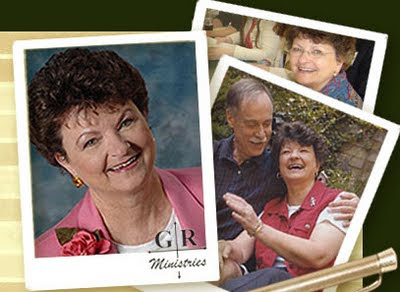





Tess Gerritsen left a successful practice as an internist to raise her children and concentrate on her writing. She gained nationwide acclaim for her first novel of medical suspense, the New York Times bestseller Harvest. She is also the author of the bestsellers Life Support, Bloodstream, Gravity, and The Surgeon. Tess lives with her family in Maine. (PHOTO CREDIT: Paul D'Innocenzo)
Ignoring the H8Rs
by Tess Gerritsen
Recently I came across the premise for a new reality TV show called "H8R," which, for those of us who are text-message neophytes, translates as: "Hater." Here's the description:
On this reality show, celebrities go head-to-head with regular people who don’t like them. They try to win their adversaries over and, in the process, reveal person behind the famous name. Mario Lopez hosts the program which includes two celebrities in each episode.
The haters are not told about the show’s actual premise when they’re recruited. Producers tell them a different type of documentary or show is being shot but extensive background checks are done to ensure the haters are not also stalkers. In some cases, the celebrities nominate their haters, who they know from the Internet or Twitter.
For people who aren't celebrities, it may come as a surprise that celebrities can, in fact, feel personally wounded by cruel remarks made by complete strangers. When Gwyneth Paltrow started amassing hordes of such haters, I wondered how she felt about it. I also wondered why anyone would bother hating a woman just because she's a blonde, beautiful, talented gal who likes to share lifestyle tips. It's the same thing I wondered about people who hate Martha Stewart with such gusto, investing a great deal of emotional energy attacking a woman they don't personally know. When I thumb through her LIVING magazine to gawk at her impossibly elaborate craft projects, I don't feel jealousy or disdain. What I feel is resignation, because I know I'd probably end up hot-glueing my own head to the ceiling fan. I'll never be as capable as Martha Stewart, but that's okay with me.
You don't have to read the National Enquirer to know that the most-envied celebrities are often the public's favorite targets of vilification. It's the people we want to be or look like, the people who have what we want to have, that catch the brunt of public hatred. Celebrities aren't really human, so how could they possibly have human feelings? They're rich, they're beautiful, they're successful, so why should they care if complete strangers spew hateful things about them?
Some people think it's fun and amusing and harmless to hate the Marthas and Gwyneths and Brangelinas, and to express that hatred online so the world can share our bile. But celebrity is only a matter of degree. Just about anyone can be considered a public person these days. Restaurant chefs. Athletes. Policemen.
And writers.
A few weeks ago, novelist JA Konrath posted a blog entry called "Not Caring," about how important it is for writers to develop thick skins.
One of the greatest skills you can acquire as an author is a thick skin.
Once you unleash a story onto the world, it no longer belongs to you. When it was in your head, and on your computer during the writing/rewriting process, it was a personal, private thing. But the moment your words go out into the world, they are subject to the opinion of strangers. What was once personal is now public.
Do yourself a huge favor, and don't listen to the public.
This goes for more than your literary endeavors. If you blog, or speak in public, or tweet on Twitter, you are a Public Figure.
That means some people aren't going to like you.
And you shouldn't care.
You hear this very wise advice from non-writers as well. That we writers shouldn't give a damn about reviews. That writers should stop whining and pull on their "big-girl panties." That being published means you have no right to be sensitive to whatever anyone, anywhere, says about you. But that advice isn't always easy to take, and I know many authors who are still personally wounded by a bad review or snarky comments on Amazon. One very talented debut novelist, a man who's hitting bestseller lists around the world, told me that the hardest thing about being published was learning to take the blows. He knew he was thin-skinned, and he tried to prepare himself for public criticism, yet he was taken aback by how much it hurt.
"Crybaby!" I can hear the public sneering. "Why don't you man up and grow a pair?"
On a readers' forum, I came across comments by two teachers who smugly observed that, unlike crybaby writers, when teachers get performance reviews, they're mature enough to deal with the negative ones. They said that writers are a privileged and lucky group (whose average income, by the way, is less than $10,000) so no one should sympathize with them. Writers should stop whining and be as tough as everyone else whose work gets reviewed by superiors. For crying out loud, writers should learn to be as tough as teachers.

Then, a few months later, a tragic thing happened. In a new policy introduced by the Los Angeles Times, L.A. public school teachers' performance ratings were published in the newspaper. A highly dedicated teacher, despondent over his merely average rating, committed suicide.
I'm wondering if it suddenly became clear to those teachers that public criticism, public exposure, feels like a different thing entirely than does a private performance review. When your boss tells you you need to shape up, that can sting. But when that performance review is online and in the newspapers for your neighbors and colleagues to see and talk about, that's a level of embarrassment that not everyone can deal with.
Not surprisingly, many teachers were upset about the dead teacher's public shaming and suicide. Just as they're upset when they're called lousy teachers by students on Facebook.
Yet that's what writers routinely put up with. It comes with the job -- a job that pays the average writer about as much as a part-time dishwasher -- and we have to learn to deal with it.
But it's not easy. First published at Murderati