Get a Free Ebook

Five Inspirational Truths for Authors

Try our Video Classes

Downloadable in-depth learning, with pdf slides

Find out more about My Book Therapy

We want to help you up your writing game. If you are stuck, or just want a boost, please check us out!

Showing posts with label hope. Show all posts

Wednesday, February 10, 2016

Pregnant and Waiting

by Normandie Fischer
Pregnancy is blessed, but there comes a time when a pregnant woman longs for the actual birth.


The last weeks of pregnancy compress the body and the soul. The mother’s womb has nurtured and cocooned her infant for almost nine months. She feels fat. Her contractions remain unfruitful, and there's often fear—for her baby and for herself. Some women—many women—fear failure and worry that all the work and all the waiting and all the preparation will be for naught. Because what if she fails?


Maybe we wrote it first on a manual typewriter, and it's still not a book!


We feel that way about our stories sometimes, don’t we?

Writers commiserate with one another. We talk about how long the process takes: the imagining, the writing, the polishing, and all that rewriting. The gestation period spans months or years, sometimes even decades. Our book baby’s pregnancy appears interminable. 

Our manuscript sits there, waiting, and fear settles on us. What if all our effort ends in something execrable, something even we as parents hate? What if our precious creation reads like nothing more than dribble, words without meaning, without substance? What if, after all, we’ve wasted all that energy, all those years? What if we fail?

All we want is for everyone to love our words.

On the other hand, what if we've convinced ourselves our work is the most beautiful compilation of words ever created? And what if—and we’ve all heard the horror stories—this masterpiece that came from our very being never finds a publisher?  Or what if our self-published work never finds readers? What if we fail?

To my delight, my daughter wants me at her side during her birthing experiences. As a second child and already larger than Little E, Finn seemed destined to arrive early, which prompted the doctor to suggest I hightail it north before Winter Storm Jonah paralyzed the city. I prepared to leave just as the airports began to shut down, which initiated Plan B. I caught one of the last trains to make it to NYC as the storm speared its way into Virginia, DC, and Pennsylvania, heading north. The next day, New York shut down under a blanket of white. Finn stayed tucked inside, and my daughter waited.

Sometimes our plans for the fast track to publishing fail, and we’re stuck with slower options. And sometimes we find the agent, hear the excitement, anticipate the delivery . . . and all we have is a waiting game.
Birthing seems to take as long as forever and be as far away as space.


The wait for Baby Finn expanded to a week. Then eight days. Nine. On the tenth, the pains strengthened, and we went to the hospital. When the command to push toward birth finally came, the effort seemed to avail little. Finn barely budged.

Sometimes we’ve progressed to the birthing room, yet our work seems stuck. Stuck in editing. Stuck in design. Stuck in a spiral that calls for patience and calm.

During my daughter’s first pregnancy, the doctor forced the labor and then the delivery, and the results weren’t pretty. She changed doctors for this next child, and the Haitian-born obstetrician filled us with confidence because of her calm and her skill. And although Finn took his time, he finally emerged, whole, happy, blessed, and his mother faced none of the complications from the rushed delivery of her daughter.

Rushing to publication is never a good idea. The process of birth takes time. Time for edits and rewrites to make our work the best it can be. Time to create a beautiful cover—which will be the initial point of contact with readers. Time for our work to mature until we’re no longer book-pregnant, but finally a book parent.

And then, of course, the focus shifts.
And we search for readers. Oh, please, let there be readers!


Normandie studied sculpture in Italy before receiving her BA, summa cum laude with special honors in English. Known for her women’s fiction—Becalmed (2013), Sailing out of Darkness (2013), and Heavy Weather(2015)—she ventured into the realm of romantic suspense with the release of Two from Isaac’s House. In early 2016, a novella, From Fire into Fire, will continue the Isaac House saga. Normandie and her husband spent a number of years on board their 50-foot ketch, Sea Venture, sailing in the Sea of Cortez, Mexico. They now live in coastal North Carolina, where she takes care of her aging mother.
Normandie's Website
Facebook
Amazon

Wednesday, June 17, 2015

So Why Write A "Christian" Novel?

By Rachel Hauck

I started building new characters for a new story the other day and as I considered the journey on which my characters would embark, I thought, "Why do I write Christian novels?"

Christian stories get kicked around for being preachy, soft, not well written. Often its friendly fire, too. Accusation from within our ranks.

Sadly at times, those accusations are not without foundation.

Yet, I've read plenty of books in the secular market that were not well written. They were soft. Preachy.

Word on the street is 50 Shades of Grey, the top selling novel of all time, is not well written. I've not read it so I can't personally attest, but criticizing a whole publishing space, Christian publishing, for being "not well written" falls a bit short.

There are many amazing Christian novels, very well written and inspiring.

Yet I can't launch a dog into that larger fight, you know?

It's too broad. Too generic. Too ambiguous.

I have to stay in my wheelhouse. Write what's on my heart. Write WHO I am.

So that's why I write novels with my Christina faith in mind.

Because I cannot deny the hope that is within me.

I want to write stories that inspire people to seek out Jesus.

That give the readers hope. Inspiration.

I write in the romance genre and of all Christian novels, romance has taken the biggest hit.

Critics proclaim Christian romance novels create unrealistic expectations and send women off to fantasize about what they don't have.

This is from More To The Point by Russell Moore:


A lot of this genre, though, is simply a Christianization of a form not intended to enhance intimacy but to escape to an artificial illusion of it. Granted, there’s no graphic sexuality here. The hero and heroine don’t sleep together; they pray together. But that’s just the point.
How many disappointed middle-aged women in our congregations are reading these novels as a means of comparing the “strong spiritual leaders” depicted there with what by comparison must seem to be underachieving lumps lying next to them on the couch? (Newsflash: They can do that every week by comparing their husbands to the pastor!)
This is not to equate morally “romance novels” with the grave soul destruction of pornography. (Shew, glad he cleared that one up!) But it is worth asking, “Is what I’m consuming leading me toward contentment with my spouse (or future spouse) or away from it? Is it pointing me to the other in one-flesh union or to an eroticized embodiment of my own desires? Is this the mystery or a mirage?
Trust me, Mr. Moore's, you don't need a Christian romance novel to point out to some "middle age woman" that her husband is an underachieving lump on the couch.

Women can get that image from a myriad of places if that's what she's looking for.

However! In a Christian romance novel, our characters deal with their own weakness and frailty, and each one, hero and heroine, has their own journey with God.

My characters rarely if ever "pray together."

Christian novels inspire hope. To trust God's will and pleasure in each of us. I've heard from readers and not one has ever said, "I read your book and now I can't stand my husband."

In fact, here are a few examples from readers. All three of these women wrote me from other countries. Indonesia. Poland. Brazil.

After I read your novel. I promise to myself to keep love (my husband) with my way. Unconditionally. Just like Jesus did. I don't expect anything in return. He can love me with his way. I tell to my friend about this also. to encourage them to do the same thing.

I didn't think the Gospels had anything else for me. I'd read them. But after I read your novel, I changed my perspective and I sat and prayed for a long time.


(This reader was 17) I didn't know Christian romances like this existed. I can't wait to read more. I'm going to tell all of my friends. And tonight, I'm going to pray for you.


Tear. Lots of tears while reading these letter.


Do you know how long it might have taken me as a missionary to impact these women in the same way one story did?


Look, I love our missionaries! We need boots on the ground. But look at the power of story to get straight to the heart.


Christian romance inspired them to love. To be kind. To pray. To hold to their virtue. To wait for "the one" God has for them.


I pray for my books to make a difference in this age as well as the age to come. I want them to last for eternity! Not just this life.


That's why I write Christian novels. I'm selfish I guess. I want to put my hand to what will endure forever! Ecclesiastes 3:11 says God has written eternity on our hearts.


I'm not saying every Christian novelist has to write "Christian" novels. Please hear me on this. Each one of us must follow the calling on our heart.


I have many Christian author friends making a difference in the secular market!


I'm saying this is why I write Christian novels.


Those letters from international readers beat any best seller list or award. They affirmed what I do and why.


So why do you write what you write? You write the stories on your heart! All I ask is that you seek the heart of Jesus before, during and after.


Write what will endure. Write to entertain. Inspire. Draw the reader into hope.


Now go be brilliant!


***


Rachel Hauck lives in sunny central Florida with her husband and ornery pets.

A graduate of Ohio State University with a degree in Journalism, she worked in the corporate software world before planting her backside in uncomfortable chair to write full time eight years ago.

She’s the author of EPCA and CBA best sellers, RITA and Christy nominated books. 

She also co-authored the critically acclaimed Songbird Novels with platinum selling country music artist Sara Evans. Their novel Softly and Tenderly, was one of Booklists 2011 Top Ten Inspirationals.

Rachel serves on the Executive Board for American Christian Fiction Writers. She is a mentor and book therapist at My Book Therapy, a conference speaker and worship leader.

Rachel writes from her two-story tower in an exceedingly more comfy chair. She is a huge Buckeyes football fan.

Visit her web site: www.rachelhauck.com.

Sunday, October 26, 2014

GOD INVENTED OMBRE

by Cynthia Ruchti

Ombre. Color that is graduated in tone. From light pink to dark pink. Light gray to charcoal. Or this:


Light radiance to dark rust. 

This far north, the brilliant colors of autumn are in decline. I watched leaves ripped from their moorings by an impatient wind, scattered like the snowflakes that will too soon take their place.  If I could, I would have gathered the gold and reattached the leaves to the tree so I could enjoy this brief season a little longer.

But the tree itself--its presence--reminded me of the fruitlessness of that pursuit and the purpose of the entire life cycle. Not just birth. Not just growth. Death, too.

This tree graces our south yard because its parent tree--we've always thought of it as a she--in the north yard lost its life. The mama tree was magnificently huge, dominating the yard with much sought after shade in the summer and a true spectacle of color every fall. It served as our family connecting point. "If there's ever a house fire or other disaster and we have to evacuate, we'll all meet at the big maple."

Two decades ago, disaster took out our gathering spot. Lightning made an opening for disease. Eventually, we had no choice but to rev up the chain saw and end its to-that-point life. My husband made key chains out of discs cut from smaller branches and memory boxes from planks harvested from the trunk. The family held each other--I know, sappy…and isn't that ironic?--as we watched the tree fall, overcome by the soberness of losing such a great tree. At the time, we didn't know we'd have keychains and memory boxes. All we knew was the loss of a cherished sentinel in the north yard.

From the base of the tree, my husband also dug a sapling.

The above picture is that sapling twenty years later. It had such a slow start, as if it too missed its mama. Failure to thrive. Then, a few years ago, it sported more than a handful of leaves. Not enough to make a scene, or decent shade, but signs of life. Now, it claims its own identity in a different part of the yard, but with an ombre brilliance that reminds us of its heritage.

The sapling might have been mowed down if not for the loss of the parent tree and our desire to pull something living from our losses.

The life lessons lie as thick as the crisp leaves at a tree's base. 

  •  What seems like loss may lead to a new beginning.
  •  Beauty can't help but reproduce itself.
  •  The full picture takes a long time to develop.
  •  Salvaging art from the broken keeps beauty alive.
For the novelist mourning the end of a season, or the loss of a dream, or a redirection that seems either radically different or familiar but decades long in coming, the image speaks of hope and courage.

In His Word, God tells us that unless a seed falls to the ground and dies, it cannot produce the fruit it was intended to birth. 

            John 12:24 CEB--"I assure you that unless a grain of wheat falls into the earth and dies, 
            it can only be a single seed. But if it dies, it bears much fruit."

Much fruit.

Before the rest of the leaves fall from this tree, more insights will emerge. That's the nature of nature.


When has an element of creation spoken a strong message of hope to you?


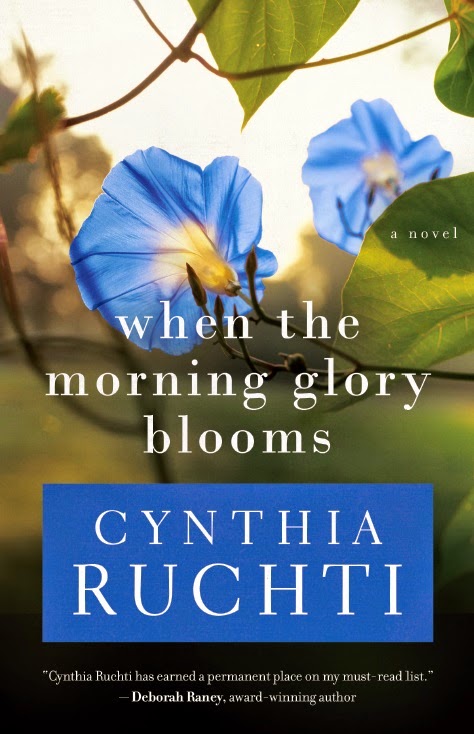
Cynthia Ruchti is an award-winning author and speaker who tells stories hemmed in hope. Her latest releases include Mornings With Jesus 2015 (a compilation of daily devotions with nine other writers), Ragged Hope: Surviving the Fallout of Other People's Choices (nonfiction), and the novels When the Morning Glory Blooms and All My Belongings. You can connect with her through cynthiaruchti.com or www.facebook.com/CynthiaRuchtiReaderPage.

Sunday, August 24, 2014

CELEBRATING FOUR MONTHS EARLY

by Cynthia Ruchti

As of this date, we’re four months from candle-lit, evergreen-scented, hushed and holy celebrations of the birth of the Christ Child.


That’s not what crossed my mind when I woke this morning. It jarred me later, when I wearied of the news—one heartache or atrocity after another, one report of heinous-osity maxing out our vocabularies of the heinous. It smacked my frontal cortex long after my second cup of coffee. It rattled me. I needed rattling.

I’m speaking on the subject of rejoicing at a women’s retreat in less than two weeks. Rejoicing and joy have paddled hard for attention against the floodwaters of international heartbreak, whispers of “Is this another holocaust? God help us!” and losses that turn our nation into mourners. Rejoicing. Joy.

The topical index in the back of my Bible—old school searching—suggested Isaiah 9 as a place to find the word joy. As I turned the pages, I hoped I’d learn more conceptually, too.

Smacked. Jarred. Rattled. Bowed down.

My eyes rested on a verse tucked just underneath the joy reference in that column. “Because every boot of the thundering warriors, and every garment rolled in blood will be burned, fuel for the fire,” Isaiah 9:5 CEB.

Yes! God cares what’s happening! As if I needed the reminder. The perpetrators of the heaviness under which we’re trying to breathe and write and work and laugh when our grandchildren say something funny will be stopped and called to account for what they’re doing.

This is when rejoicing began to push out my portion of international despair—when I read the next verse, the one immediately following the “garments rolled in blood.”

A child is born to us,
    a son is given to us,
And authority will be
    on his shoulders.
He will be named
Wonderful Counselor,
                            Mighty God,           
Eternal Father, Prince of Peace.
There will be vast authority
    and endless peace.
                        Isaiah 9:6-7, CEB

That’s the context? That’s the setup for the treasured announcement promising the Christ Child’s coming?

The text flows seamlessly:

Isaiah 8:21—“They will pass through the land, dejected and hungry, and when they are hungry, they will be enraged and will curse their king and God. They will turn toward heaven and look to the earth, but they will see only distress and darkness, random movement, and the anguish and doom of banishment. (Chapter 9) Nonetheless, those who were in distress won’t be exhausted…The people walking in darkness have seen a great light. On those living in a pitch-dark land, light has dawned. You have made the nation great; you have increased its joy. They rejoiced before you as with joy at the harvest, as those who divide plunder rejoice…You’ve shattered the yoke that burdened them, the staff on their shoulders, and the rod of their oppressor. Because every boot of the thundering warriors, and every garment rolled in blood will be burned, fuel for the fire. A child is born to us,”—No break in the story!—“a son is given to us, and authority will be on his shoulders. He will be named Wonderful Counselor, Mighty God, Eternal Father, Prince of Peace. There will be vast authority and endless peace…”

A “pitch-dark land” is promised a Messiah. For those exhausted by distress, a Messiah. For those confused by “random movement” and “anguish and doom” on every hand, a Messiah to believe in, cling to, rejoice in.

Isn’t that at the heart of every word we speak or write? Onto the darkest of backgrounds, the most trying scene, the gravest crisis, we layer the “Ah, yes, but…!” of the Promise.

Everything changes when Jesus appears on the scene.


Joy. To the world.


Rejoicing in Hope, Cynthia Ruchti tells stories of Hope-that-glows-in-the-dark, the pitch-dark, through her award-winning novels, novellas, devotions, nonfiction, and through speaking events for women and writers. She currently serves as professional relations liaison for American Christian Fiction Writers. You can connect with her through cynthiaruchti.com, www.twitter.com/cynthiaruchti, or www.facebook.com/CynthiaRuchtiReaderPage.


Sunday, May 11, 2014

THE GO-TO PERSON

By Cynthia Ruchti

Even novelists need to consider how they can become the go-to person, according to a recent literary agency blog. This is the go-to author on World War II stories. Here's the go-to person on fingernails-on-the-dashboard suspense. Here's the go-to sweet romance author, the go-to spy thriller author, the go-to young adult dystopian expert, the go-to biblical fiction novelist, the expert on Regencies, the person to turn to for Jane Austen-esque historicals or 1850s Cornish home construction.


When writing an historical novel, or a medical mystery, or a legal thriller, by the time the author is done researching the topic and minute but critical details, he or she has taken steps toward becoming the go-to person. Combine that research with skillfully constructed stories, time, marketing expertise, a healthy reader following, and the favor of God, and an author's name may pop up as the answer to the question, "Who's the go-to author on (fill in the blank)?"

My Bible has remained open to a particular passage for a long time as I soak in the depth of meaning in the fifteenth chapter of Romans. Part of that chapter relates directly to the go-to concept.

I write stories of Hope-that-glows-in-the-dark. But I'm no one's source of hope. God is the go-to person on the subject of hope. The Bible says so.

Romans 15:13 (CEB) has become a landing page for me--and others like me--who see layer after layer of meaning in those clear cut, well-chinked words.

"May the God of hope fill you with all joy and peace in faith so that you overflow with hope by the power of the Holy Spirit."

The God of Hope. Hope is in His very name. After decades of walking with Him, I have a new life verse. This one. The one that holds every promise I need. "May the God of hope fill you with all joy and peace in faith so that you overflow with hope by the power of the Holy Spirit." I was going to add, "Emphasis mine," but in truth, the emphasis is His. In this single verse, God emphasized what we can expect when we abandon ourselves to the God whose name is Hope.

Joy. Peace. Faith. An overflow of hope to affect others. Power.

An OVERFLOW of hope. Imagine. More than enough. An excess. So much hope that it spills over onto others' lives and gives them hope, too.

Why would we look anywhere else than the go-to person on all things hope-related?

I can't yet leave this page in my Bible. I haven't yet absorbed the fullness of what it means, of the promises for how this truth can change my life and my writing.

When my eyes drift to the next column to the left, I read about God as the go-to person for endurance and encouragement, Romans 15:5.

I may never leave this page.


YOUR INPUT: What verse is a go-to verse in keeping you on track in your writing? Your life?


Cynthia Ruchti tells stories of Hope-that-glows-in-the-dark, drawing from 33 years of experience writing and producing a 15 minute broadcast for Christian radio, and from even more decades clinging to the God of Hope. She's celebrating the recent release of another hope-filled novel--All My Belongings, from Abingdon Press. www.cynthiaruchti.com


Thursday, March 27, 2014

Why Do You Write That Stuff?

by Thomas Smith


http://www.somethingstirs.com


Why do we do it?

Why do seemingly rational, well-balanced folks insist on writing about ghosts, the undead, killers, zombies, haunted places, and things that thrive in the dark? Why do we plumb the depths of the dark side of the literary spectrum? Why, you may ask, would someone write horror novels and stories when there are so many other kinds of things to write? 

Maybe the first line from this Associated Press story will help set the answer in context:

“A Louisiana man is accused of decapitating and dismembering his disabled 7-year-old son and leaving the boy’s head near the street so the child’s mother would see it – a killing that brought seasoned police officers to tears, authorities said Monday.”

The story went on to explain that the father was tired of taking care of a son who had cerebral palsy, a heart condition, a feeding tube, and was confined to a wheelchair. Police Chief Scott Silverii said the father’s only explanation for placing the child’s head where his mother would have to see it when she came home was, “…just that he wanted her to feel stupid when she saw the head.”

Dear God in heaven, what drives a man to dismember his own son? His own defenseless flesh-and-blood son?

Evil.

Not badness. Not sickness. Evil.

Now I don’t pretend to speak for any other writer, but I have a feeling many would agree with me when I say even though we write about the struggle between good and evil, we can only examine the battle and the aftermath.

Why?

Ask yourself this: How do you fathom an act of pure evil? How do you “understand” the dismemberment of an innocent child? The serial killing of dozens of strangers? The kidnapping of and the keeping a child/woman as a sexual slave for 18 years à la Jaycee Lee Dugard. How do you fathom absolutely depraved acts committed against children and adults for the sheer enjoyment of it?

You can’t.

Oh sure, society can excuse it, assigning absolution because they feel someone came from a broken home. Because they were abused. Because they were underprivileged. Because they were not afforded the same breaks as some other people. Because they were “legally” ill (as opposed to those who may have a legitimate mental illness). Then they shake their heads, say “tsk, tsk, that’s so sad,” and go on with their lives as if nothing happened.

The fact is no decent person will ever be able to fully fathom the actual participation in such acts. But we can understand something about the nature of evil. we can understand that it is both stimulus and response. It is a force. It is something we can choose to either shun or embrace. It is both the catalyst of an act and the act itself.

Sociologist Fred Katz defines evil as “…behavior that deliberately deprives innocent people of their humanity, from small scale assaults on their dignity to outright murder.” But that is just the tip of the iceberg, because evil, if we are honest, is more than just a behavior. 


James E. Holmes embraced evil before he walked into a movie theater on a Friday night (July 20, 2012), started shooting, and left 12 people dead and 58 people wounded in Aurora, Colorado.

Eric Harris and Dylan Klebold embraced it before they murdered 12 students, one teacher, and wounded 24 additional students at Columbine High School (April 20, 1999).

Adam Lanza embraced it before he killed twenty children and six adult staff members at Sandy Hook Elementary School (December 14, 2012).

And they are only the tip of a bloody iceberg.

So why do horror writers write horror? Why not look the other way and write something else?

We do it so we won’t mistake evil for badness. So we will know the difference when we see it. And we do it so we can show the face of the beast to others. The stories are simply a canvas for a greater truth. A picture of us writ large.

We do it so acts like those above and the ones that will surely follow will revolt us and be more than a horrible news segment soon to be replaced in our memory by Miley Cyrus’ latest butt-shaking shenanigans or the next celebrity break up.

My novel, Something Stirs (yep, I stole the title as a tribute to my mentor and friend, Charlie Grant. His wife Kat said it was OK) was one of the first haunted house novels for the Christian market (though I write on “both sides of the publishing fence”).And one of the things I heard most often at book signings, via email, and in blog comments was, “I can’t read that. I don’t want that kind of thing in my head.”

When the book was released, my editor approached a group about the possibility of having me as one of the authors involved in a large scale signing event. And while I will not reveal name of the person who nixed the idea, their reasoning was that they saw no benefit in “that kind of thing.” They felt it had no redeeming value. So allow me will respond to them and to the ones who don’t want “that kind of thing in their head.”

In short, look at it from my point of view. I don’t mind haunted houses, vampires, werewolves, mad scientists, reanimated corpses, things created from DNA experiments gone wrong, gods who were old when the earth was new, or any other creatures (human or otherwise) that haunt the night. I create them. I direct them. I decide their ultimate fate, as do my colleagues with their creations. And I know before I type the first word that ultimately the evil will be destroyed or contained and hope will prevail. It may get ugly, and it might not be readily apparent, but I know who the good guys are. Even when they surprise me.

I also know that the images we horror writers create can combine to show a larger picture of the power of hope at work in the lives of folks like you and me. The creatures are just window dressing and metaphors. A vehicle for the message. Just like the Amish characters, the romantic couples, and the star crossed lovers separated by war and circumstance. Those stories, through their trials and tribulations, ultimately speak to the power of love and fidelity in the face of all obstacles.

I don’t really like many of those stories. But I get it. And I appreciate that there are many readers for whom those stories are a way to reinforce something very noble in their lives.

My stories are of a much darker nature. But the darkness exists, not to glorify evil, but to celebrate the light. To celebrate goodness. Perseverence. The power of God in our lives. So what exactly is it that has no value in these tales? Is it the notion that there is no life so broken that God cannot touch it and heal it? Is it maybe the power of Christ to intervene on our behalf? Maybe it is the notion that in the midst of darkness there is something noble in the heart of every one of us?

What is it you don’t want in your head? Don’t you want a sense of hope in your head? You don’t want the triumph of good over evil in your head? You don’t want the fact that God loves us in your head? You don’t want the knowledge that no matter what evil the powers of darkness bring to bear against us that we have an advocate with the father, who is Jesus Christ the righteous, and that he will ultimately triumph over the worst Satan has to offer?

OK.

You see, as I’ve said before, the story is simply a canvas on which the truth is revealed. Even in many secular horror and dark fantasy stories, the upshot of the tale is the fact that there is something good and noble in each of us. There is beauty in the world. And there is something greater than all of us (God) that wants nothing more than to lead us away from the darkness and into the light.

You don’t believe me? Check out Dean Koontz’s Odd Thomas series. Or Stephen King’s The Stand.

That being said, this is what I don’t want in my head.

I don’t want the knowledge that Aurora Colorado will never be the same. I don’t want the knowledge that Columbine will never be the same. I don’t want the knowledge that Newtown will never be the same. Because the stuff I write, even the stuff based in fact, will never go beyond the page. It is a series of literary manipulations designed for no other purpose than to move the reader from hopelessness to hope. From darkness to light. From hate to love.

A good horror story is a roller coaster for cowards. And a metaphor for something greater than all of us.

But evil?

That’s real.

And sometimes it needs to be pointed out.

From the Shameless Plug Department: http://www.somethingstirs.com