Get a Free Ebook

Five Inspirational Truths for Authors

Try our Video Classes

Downloadable in-depth learning, with pdf slides

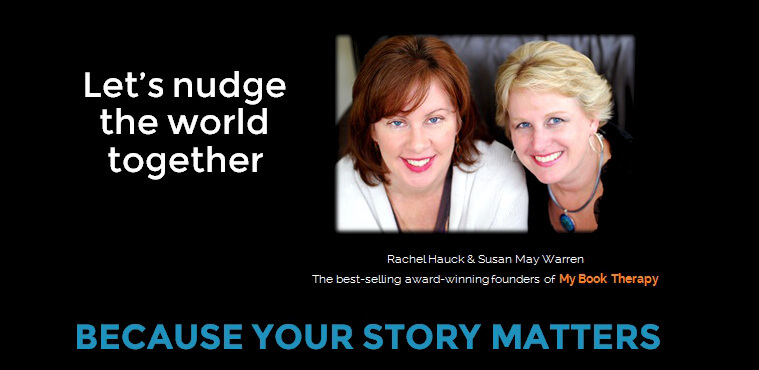
Find out more about My Book Therapy

We want to help you up your writing game. If you are stuck, or just want a boost, please check us out!

Showing posts with label faith. Show all posts

Saturday, November 26, 2016

Why Fiction?

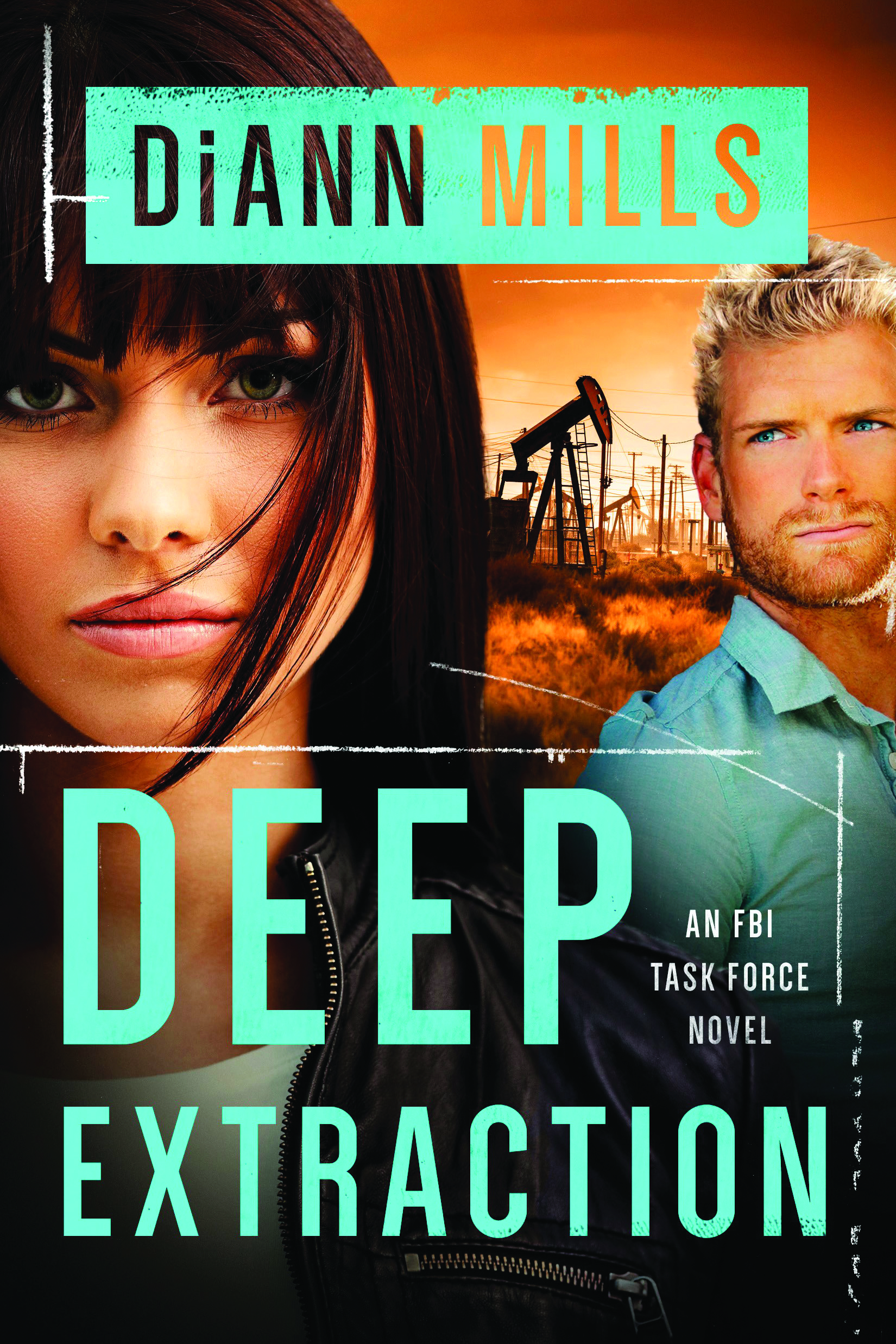
By DiAnn Mills @DiAnnMills

Tweet this: Why Fiction

Christian writers are often posed the questions:


“Why fiction when you could be writing nonfiction?”
 

“If you feel writing is a ministry, then why are you putting your time and effort into fiction?”
 

“A real Christian would be writing something with real sustenance, not fiction.”
 

When I first started writing in 1996, I swallowed my displeasure with those questions and composed a gracious response that sounded like I was playing defense for a losing team. 

Not any more. I’m proud of what I do, and I'm not ashamed of my purpose. After years of following my passion for communicating the written word through story, I simply term the individual questioning my life’s work as a “low information reader.” They mean well. 

"Isn’t nonfiction the means by which people learn how to live life to its fullest and better themselves?"

Not necessarily.
 

How many abused women purchase books about how to prevent a beating? Do those women reach for information on a retailer’s shelf about abused victim’s legal rights, or counseling, or finding courage in the midst of pain?
 

How many victims of human trafficking find freedom by asking their captor to buy them a book about overcoming trust issues or how to escape an inappropriate relationship?
 

How many addictions were resolved by forcing the sufferer to read a book about drug abuse?
 

How many marriages were saved because a woman shoved a counseling book into her husband’s face? 

How many relationships survived because a man insisted his wife read books about how to cook, clean, child care, etc?
 

You get the picture. 

It’s unlikely any of the above examples found solace, peace, answers, escape, or courage in a nonfiction book because they were either too frightened to be found reading it, or they simply weren’t interested. But that victim could read a novel about abuse, human trafficking, an addiction, or a failing marriage and learn how someone changed and grew into a better person. 

A novel provides hope and inspires the reader to make needed changes.
 

A novel is a non-threatening environment that offers sound solutions to real problems. The abuser, the captor, the addicted person, or the unfaithful spouse will not feel exposed when their victims engage in a novel. 

The writer plants the seeds of change and subtlety challengers the reader to grow beyond her own world.
 

If the suggestion of using story to change dire circumstances sounds familiar, then you’ve read your Bible. Jesus used stories to convict, teach, and comfort the people to whom He ministered. He orchestrated a means of entertainment through culture to reach the people of His day. Story still meets a psychological or spiritual need in 2016, and I believe story will be a means of helping people until this earth ceases to spin.
 

I challenge the novelist to explore the passions of her theme and premise. Don’t be afraid to tackle the tough issues with grace and truth within the pages of an excellent story.
 

Now I ask you: Why do you write fiction?

Tweet this: Why Fiction?


DiAnn Mills is a bestselling author who believes her readers should expect an adventure. She combines unforgettable characters with unpredictable plots to create action-packed, suspense-filled novels.

Her titles have appeared on the CBA and ECPA bestseller lists; won two Christy Awards; and been finalists for the RITA, Daphne Du Maurier, Inspirational Readers’ Choice, and Carol award contests. Library Journal presented her with a Best Books 2014: Genre Fiction award in the Christian Fiction category for Firewall.

DiAnn is a founding board member of the American Christian Fiction Writers, a member of Advanced Writers and Speakers Association, Sisters in Crime, and International Thriller Writers. She is co-director of The Blue Ridge Mountain Christian Writers Conference and The Author Roadmap with social media specialist Edie Melson where she continues her passion of helping other writers be successful. She speaks to various groups and teaches writing workshops around the country.

DiAnn has been termed a coffee snob and roasts her own coffee beans. She’s an avid reader, loves to cook, and believes her grandchildren are the smartest kids in the universe. She and her husband live in sunny Houston, Texas.

DiAnn is very active online and would love to connect with readers on any of the social media platforms listed at www.diannmills.com.

Friday, April 08, 2016

Thoughts for the Journey from Bill Myers

As an author and film producer, Bill Myers’s work has won over 70 national and international awards including the C.S. Lewis Honor Award. His books and videos, which include Eli and McGee and Me, have sold 8 million copies. His most recent book, The Jesus Experience - Journey Deeper into the Heart of God, explores how he went from a burned-out evangelical to someone head-over-heels in love with his Creator. www.billmyers.com

VICTORY THRIVES IN DARKEST PLACES

“Mr. Myers, as our director, on the first day of filming, you will be required to burn incense and sacrifice a pig to our local gods.”

I looked at my producer and blinked. “You’re kidding, right?”

She shook her head. “You Westerners, in your arrogance, trample all over our gods and beliefs. As a result, during the filming, someone is always hurt or killed. If you do not perform the ceremony the cast and crew you see before you will not work for you.”

The room grew silent. Tomorrow would be our first day of filming in Hong Kong. Tens of thousands of dollars had already been spent in preproduction. If I did not comply, the movie would be over before it started.
                 
Somehow, I nervously and gently explained that as a Christian I couldn’t perform the a sacrifice.
        
My producer smiled. “This I know. That is why your assistant director will do it for you, instead.”

Talk about being in a jam. If I said “yes,” I’d not only betray my faith, but I’d be dedicating the film to other “gods.” If I said “no,” my cast and crew would walk.
I stared down at the table, silently praying for any suggestions. Then, “out of the blue,” a thought came to mind. It wasn’t much, but it was all I had.

I looked up and said, “First of all, you need to know, I don’t doubt these gods you’re afraid of exist. But we have another name for them.” I swallowed hard. “We call them . . . demons. But you also believe Jesus Christ is a god, don’t you?”
                 
“Oh, yes. Absolutely. One of the top 10. Yes, a great god.”
        
“And if push came to shove, He could probably take on those smaller gods you’re so worried about?”
                 
“Oh, yes. He is a most powerful god.”
        
“Well, He and I are pretty good friends. What if, instead of offering a prayer to those little gods we know He could beat, what if I offered a prayer of protection to Jesus, instead?” I saw the crack of light and pushed on. “Better yet, why don’t we do it together, every day . . . you know, just to be safe?”
                 
Ever so slowly, they began to nod.
        
The results? No one was killed. Not a single person injured. And, by the time we were done, at least two actors, along with their families, put their faith in Jesus Christ. It’s also the most powerful film I’ve directed. I recently spoke to a missionary from South America who said he’s still showing the film, and after 25 years, it’s still bearing fruit.

Why? Because I’m such a genius director? Hardly. Because I’m such a mighty man of God? Guess again. It was simply because I took God at His Word. God never plays defense. He only plays offense. As a sovereign God, if we trust Him, He’ll always flip things around for the good. Maybe not by our standards or by our time frames, but as Paul says, one way or another . . .


“All things work together for the good to those who love the Lord and are called according to His purposes.” Romans 8:28

Sunday, October 11, 2015

A Perfect Complement

by Cynthia Ruchti

"Look how the clouds make a perfect complement to the scene," our host said on our tour of Oregon's beauty. 

Hours earlier, we stood on the shore of Trillium Lake, near Mt. Hood, as clouds rolled in. Soon, we we dodging raindrops to get back into the vehicle that took us to lower elevations, toward our host's home. After the rain spent itself, the clouds thinned again and split apart so we could see edges of light outlining the clouds. With sunset approaching, the outline turned from bright-white to orange to crimson against pockets of blue.

Rather than praise the return of blue or the brilliant color palette of light, our host said, "Look how the clouds complement the scene."

His words made it to my ever-present notebook within seconds. What a great perspective! Too often we see clouds as barriers to the real view. What if instead they are enhancements? The perfect foil, perfect backdrop, for spikes of light, creating something to reflect, ensuring the viewer notices the contrasts?

Rather than resent their presence, wouldn't we then see clouds as a vital part of the picture?

What if the latest rejection is actually brush strokes on canvas to provide a foil for an upcoming acceptance? What if a disappointment is the base for an outline of riotous light? What if having to rewrite the whole second half of your novel because of a sticking point you discovered two sentences from the end produces a more compelling story than the cloudless original?

This is what we saw when we got to Mt. Hood: 


As we toured the grounds and the lodge, we waited for the shroud to lift. We walked to another spot for a different angle. Still encased in clouds. A peak of sun seemed on its way, if we gave it a few more minutes. But the majestic mountain refused to let its face be seen no matter how long we waited or how much we wanted to see the top of the mountain.

The clouds got in the way? In some respects. But in another way of thinking, they added an air of mystery. I had no trouble believing the rest of the mountain was there. Thousands, perhaps millions of others had seen it. Many had captured its image by camera or artist's canvas. It likeness had been sculpted in bronze and stone. Our host told stories of his ski and hiking adventures and helped us imagine how much more of the mountain lay beyond the clouds.

We didn't walk away disappointed, as we might have. The clouds formed a complement to the scene and forced our imaginations and faith to take over.

Novelist, caregiver, parent, teacher, striver, what circumstance clouds are forcing your imagination and faith to take over these days?

Where's Jesus in this?

Mark 9:7 CEB records one of many times in the biblical account when God demonstrated how a cloud can FORM and enhance the scene, not hide it. "Then a cloud overshadowed them, and a voice spoke from the cloud, "This is My Son, whom I dearly love. Listen to him!"


What if that same message came from the depths of the cloud in your view? Isn't it?

Wednesday, June 17, 2015

So Why Write A "Christian" Novel?

By Rachel Hauck

I started building new characters for a new story the other day and as I considered the journey on which my characters would embark, I thought, "Why do I write Christian novels?"

Christian stories get kicked around for being preachy, soft, not well written. Often its friendly fire, too. Accusation from within our ranks.

Sadly at times, those accusations are not without foundation.

Yet, I've read plenty of books in the secular market that were not well written. They were soft. Preachy.

Word on the street is 50 Shades of Grey, the top selling novel of all time, is not well written. I've not read it so I can't personally attest, but criticizing a whole publishing space, Christian publishing, for being "not well written" falls a bit short.

There are many amazing Christian novels, very well written and inspiring.

Yet I can't launch a dog into that larger fight, you know?

It's too broad. Too generic. Too ambiguous.

I have to stay in my wheelhouse. Write what's on my heart. Write WHO I am.

So that's why I write novels with my Christina faith in mind.

Because I cannot deny the hope that is within me.

I want to write stories that inspire people to seek out Jesus.

That give the readers hope. Inspiration.

I write in the romance genre and of all Christian novels, romance has taken the biggest hit.

Critics proclaim Christian romance novels create unrealistic expectations and send women off to fantasize about what they don't have.

This is from More To The Point by Russell Moore:


A lot of this genre, though, is simply a Christianization of a form not intended to enhance intimacy but to escape to an artificial illusion of it. Granted, there’s no graphic sexuality here. The hero and heroine don’t sleep together; they pray together. But that’s just the point.
How many disappointed middle-aged women in our congregations are reading these novels as a means of comparing the “strong spiritual leaders” depicted there with what by comparison must seem to be underachieving lumps lying next to them on the couch? (Newsflash: They can do that every week by comparing their husbands to the pastor!)
This is not to equate morally “romance novels” with the grave soul destruction of pornography. (Shew, glad he cleared that one up!) But it is worth asking, “Is what I’m consuming leading me toward contentment with my spouse (or future spouse) or away from it? Is it pointing me to the other in one-flesh union or to an eroticized embodiment of my own desires? Is this the mystery or a mirage?
Trust me, Mr. Moore's, you don't need a Christian romance novel to point out to some "middle age woman" that her husband is an underachieving lump on the couch.

Women can get that image from a myriad of places if that's what she's looking for.

However! In a Christian romance novel, our characters deal with their own weakness and frailty, and each one, hero and heroine, has their own journey with God.

My characters rarely if ever "pray together."

Christian novels inspire hope. To trust God's will and pleasure in each of us. I've heard from readers and not one has ever said, "I read your book and now I can't stand my husband."

In fact, here are a few examples from readers. All three of these women wrote me from other countries. Indonesia. Poland. Brazil.

After I read your novel. I promise to myself to keep love (my husband) with my way. Unconditionally. Just like Jesus did. I don't expect anything in return. He can love me with his way. I tell to my friend about this also. to encourage them to do the same thing.

I didn't think the Gospels had anything else for me. I'd read them. But after I read your novel, I changed my perspective and I sat and prayed for a long time.


(This reader was 17) I didn't know Christian romances like this existed. I can't wait to read more. I'm going to tell all of my friends. And tonight, I'm going to pray for you.


Tear. Lots of tears while reading these letter.


Do you know how long it might have taken me as a missionary to impact these women in the same way one story did?


Look, I love our missionaries! We need boots on the ground. But look at the power of story to get straight to the heart.


Christian romance inspired them to love. To be kind. To pray. To hold to their virtue. To wait for "the one" God has for them.


I pray for my books to make a difference in this age as well as the age to come. I want them to last for eternity! Not just this life.


That's why I write Christian novels. I'm selfish I guess. I want to put my hand to what will endure forever! Ecclesiastes 3:11 says God has written eternity on our hearts.


I'm not saying every Christian novelist has to write "Christian" novels. Please hear me on this. Each one of us must follow the calling on our heart.


I have many Christian author friends making a difference in the secular market!


I'm saying this is why I write Christian novels.


Those letters from international readers beat any best seller list or award. They affirmed what I do and why.


So why do you write what you write? You write the stories on your heart! All I ask is that you seek the heart of Jesus before, during and after.


Write what will endure. Write to entertain. Inspire. Draw the reader into hope.


Now go be brilliant!


***


Rachel Hauck lives in sunny central Florida with her husband and ornery pets.

A graduate of Ohio State University with a degree in Journalism, she worked in the corporate software world before planting her backside in uncomfortable chair to write full time eight years ago.

She’s the author of EPCA and CBA best sellers, RITA and Christy nominated books. 

She also co-authored the critically acclaimed Songbird Novels with platinum selling country music artist Sara Evans. Their novel Softly and Tenderly, was one of Booklists 2011 Top Ten Inspirationals.

Rachel serves on the Executive Board for American Christian Fiction Writers. She is a mentor and book therapist at My Book Therapy, a conference speaker and worship leader.

Rachel writes from her two-story tower in an exceedingly more comfy chair. She is a huge Buckeyes football fan.

Visit her web site: www.rachelhauck.com.

Thursday, May 21, 2015

A Visit to a Friend's Home Births a Novel

Jo Huddleston is a multi-published author of books, articles, and short stories. Her debut novels in the Caney Creek Series and her latest book, Wait for Me are sweet Southern romances. She is a member of ACFW, the Literary Hall of Fame at Lincoln Memorial University (TN), and holds a M.Ed. degree from Mississippi State University. Jo lives in the U.S. Southeast with her husband, near their two grown children and four grandchildren. Find Jo on her website, her blog, Facebook, and Goodreads.

What sparked the story for this novel?
When I wrote my latest novel, Wait for Me, I had been to a real coal mining community one time. One memorable time. I went home from college with a friend for a weekend. Her home was in the coal mining region in southern West Virginia.

We had arrived at my friend’s home after dark and I did not see any part of the coal community until the next day. My friend took me to the company store. When we left the store and stood on the wide porch, I saw the tipple. An imposing structure towering above all else around it.

The memory of that tipple burrowed deep within my mind. When I began writing for publication, I wanted to write a book about a coal camp and its tipple. I write sweet Southern romances with settings I know. My first published fiction series, the Caney Creek Series, was set in the southern Appalachians of East Tennessee. I decided to release that memory of a coal tipple and set my second fiction series in the coal-mining region of West Virginia.

Share a bit of your journey to publication. Was it short or long?
My journey to publication was interrupted. I had traditionally published three nonfiction titles and over 200 articles and short stories in more than fifty well-known periodicals. I had begun to mull over a novel idea but then I experienced a health issue that prevented me from writing with pen and paper or on a keyboard.

For seven years my body wouldn’t do what my brain told it to do. But I recovered somewhat and could get back to the keyboard. During those seven years I had a lot of time to meditate. A relative marvels that I’ve never questioned “God, why me?” I have not become bitter because of the health issue. I think God just gave me time to understand a lot of things when I was inactive.

I’m a more peaceful, patient, and faithful me. The writing journey is never-ending. How could I not write? What writing ability I have comes from God and I must be the best steward of that gift that I can be.

What would you do if you didn't write?
I’d have more time to read!

What makes you struggle as an author? How do you handle it?
Marketing causes me to struggle a bit. Writing is not a struggle. As for the marketing, I just buckle down and do it. I don’t stress over it and I know how much I can do and what I cannot comfortably do.

Where do you write: In a cave, a coffeehouse, or a cozy nook?
In a corner of a bedroom I have a desk that’s anchored by a laptop, printer, lamp, and ordered stacks of paper. I used this desk while in high school.

Do you prefer the creating or editing aspect of writing? Why?
I prefer the creating aspect of writing. I’m a pantster writer—I plot only in my head. When I write, my story is a stream of creativity that I want nothing to slow or stop. I see my characters say and do things that surprise me and I smile. Writing is a joy. The editing aspect of writing is more like work.

Do you consider yourself a visual writer? If so, what visuals do you use?
Visuals in my mind, from my personal experience or research, not physical visuals I need to see.

What are your top 3 recommendations for a new writer?
1.   Ask God to help you write before your fingers touch the keyboard each day.
2.   Be teachable.
3.   If writing for publication, be patient.

Then what 3 things would recommend not doing?
1.   You can benefit from reading other authors in your genre, but don’t try to copy them. Use your own unique voice to write your story.
2.   Heed the rules of the writing craft. But don’t get so hamstrung by the rules that your creativity suffers.
3.   Don’t try to write for the trends that may appear to be popular. By the time you would finish your manuscript, that trend may have vanished.

What's next for you?
Book 2 in the West Virginia Mountains Series. I don’t have a title yet—I usually get my titles from a scene or chapter in the book as I write.

Can Julie, an only child raised with privilege and groomed for high society, and Robby, a coal miner’s son, escape the binds of their socioeconomic backgrounds? Set in a coal mining community in West Virginia in the 1950s, can their love survive their cultural boundaries?

This is a tragically beautiful love story of a simple yet deep love between two soul mates, Robby and Julie. The American South’s rigid caste system and her mother demand that Julie chooses to marry an ambitious young man from a prominent and suitable family. Julie counters her mother’s stringent social rules with deception and secrets in order to keep Robby in her life. Can the couple break the shackles of polite society and spend their lives together? Will Julie’s mother ever accept Robby?