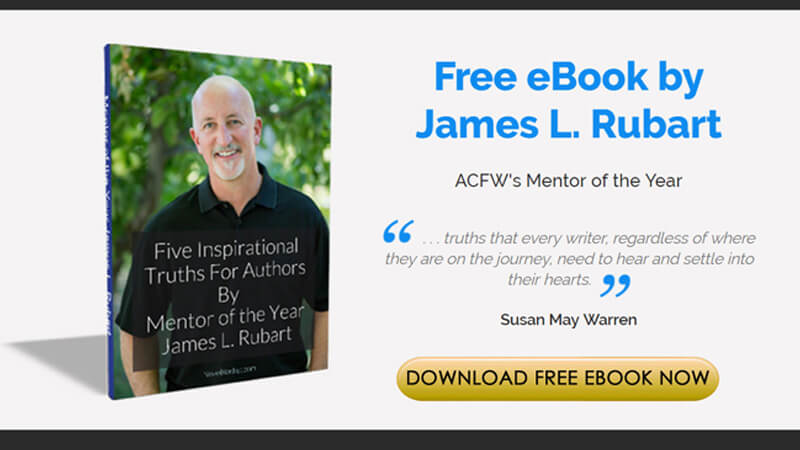

Get a Free Ebook

Five Inspirational Truths for Authors

Try our Video Classes

Downloadable in-depth learning, with pdf slides

Find out more about My Book Therapy

We want to help you up your writing game. If you are stuck, or just want a boost, please check us out!

Showing posts with label drama. Show all posts

Thursday, May 03, 2012

The Great American Musical
That Is Life


In high school, I was involved with every musical the drama department produced: My Fair Lady, The Sound of Music, Carousel. Each of them, including The Music Man, Oklahoma!, and Hello, Dolly! at community theatre, cemented into my brain the belief that life has a soundtrack—and that soundtrack fits with and enhances the actions on stage.

So strong is the connection in my mind between music and story that I cannot think of one without the other. I purposefully leave my iPod on shuffle to test my hypothesis that the right song will play in your life for each dramatic moment—just as it does on stage. And frequently I’m right.

So, you’d think I’d be used to the intersections, but it is still a magical moment when God—because that’s Who I know writes the score of my life—inserts the right song into my libretto.

Enter conflict

I’ve just entered a phase of life that is, while not exactly the Dark Moment, certainly dim.  For the first time in my life, I am unemployed—and it was unexpected. On a recent Sunday, I needed reassurance that God was faithful and would not leave me—that He had the strength even though I did not.

Worship that day began with:
Give thanks to the Lord, Our God and King
His love endures forever
For He is good, He is above all things
His love endures forever

Forever God is faithful. Forever God is strong.
Forever God is with us. Forever. (Chris Tomlin)

From there:
You are the everlasting God, the everlasting God
You do not faint. You won't grow weary

You're the defender of the weak. You comfort those in need.
You lift us up on wings like eagles.
(Chris Tomlin)

And the service ended with Great Is Thy Faithfulness and it’s fantastic line, “There is no shadow of turning with Thee.”

God was pulling a Bill Engvall, “Here’s your sign!”

God speaking

The next Sunday, I am having a hard time seeing the way forward and am worrying about the future. So what does worship start with?
Today is the day You have made. I will rejoice and be glad in it.
And I won't worry about tomorrow; I'm trusting in what You say.
Today is the day.
(Lincoln Brewster, bold added)

In my last week at work, I had to go in to do some work in the office rather than work from home. I didn’t think I could do it. As I’m approaching work, this song plays on my iPod:
When you're alone, your heart is torn, He is all you need.
When you're confused, your soul is bruised, He is all you need.
He's the rock of your soul. He's the anchor that holds
Through your desperate time.
When your way is unsure His love will endure, and peace you will find
Through all your years, the joy, the tears, He is all you need.
(Steve Camp)

When my last day on the job came and I’m driving home, afraid (yet again) for the future:
My life is up and it is down. I try to keep both feet on the ground.
Your love is all that gets me through. All I need on this earth is You.

And I can hear Your voice inviting:
"I'm here. I'll never leave your side.
My stubborn weary child, I am still here.
Please let me lead you on. Your race is already won.
I am your God."
(Leigh Nash)

If you don’t know God, you may be tempted to think I went and found the songs I needed to salve my soul. But the worship service songs are documented and the other two are noted on my Facebook page at the time they happened.

But what does this have to do with writing? Why did I write about this on Novel Rocket, a site devoted to providing you with the propulsion you need to launch your novel dream?

God whispers and roars

If I had read this account in a novel, I would have been tempted to give a little sanctimonious sneer, “Too much, too much. The author overplayed the ‘God’ card.”

Are we willing, in our novels, to let God be God? He is, as C.S. Lewis wrote, an untamed lion. God should always provide, in your novel, whatever your character needs to believe or to take the next step—regardless of whether that seems over the top. This is what He does.

It’s a cliché that “truth is stranger than fiction.” Don’t use that in your book. But don’t be afraid to have your fiction be true—even if it seems strange.

Michael Ehret loves to play with words and as editor of the ACFW Journal, he is enjoying a new playground. He also plays with words as a freelance editor/writer and as a contributor here on Novel Rocket. He has edited several nonfiction books, played with words as a corporate communicator, and reported for The Indianapolis Star.

Monday, April 30, 2012

BOOK CLUB TALK WITH BRANDILYN COLLINS


ABOUT THE AUTHOR:  Brandilyn Collins is known for her Seatbelt Suspense®--fast-paced, character-driven suspense with myriad twists and an interwoven thread of faith. www.brandilyncollins.com

What have been the benefits to you in having relationships with reading groups?

 I love talking to readers about my books and hearing how they related to the characters and story. Each reader reacts to a story depending on his or her past experiences. So you’ll get a wide range of reactions. Also I enjoy being able to tell readers some of the background that went into writing the story, e.g., how the story came to be in the first place, and why I wrote it the way I did.

Where would you like to see your relationship with reading groups grow? How do you think your goals can be met?

 I’d love to see more reading groups take a chance on reading one of my suspense novels. The problem is, there are folks out there who just won’t read a suspense, saying they’ll be too scared, have nightmares, whatever. It seems there’s one in every reading group, so that keeps the group from venturing into suspense. Of course I’m biased, but I tend to think they don’t know what they’re missing!

Do you have a set size a reading group has to be before you'll talk to them on the phone or in person? What do you feel most comfortable doing?


 Me and the real Cherrie Mae.
Not really. Phoning is easy. I can’t do a personal appearance unless the group is very local to me. That is fun, and I enjoy it.

Which type of book club meeting do you prefer? Why?

No set format for me. In general I enjoy a meeting in which people are honest and open about their reactions to the book, and are also willing to hear and absorb my reasons for writing the story the way I did. Also—for any book clubs reading my latest release, Gone to Ground: I’d love to tell the full story of my researching the book, and how I met a wonderful woman named Cherrie Mae, whose name was perfect for my character. The real Cherrie Mae gave me permission to use her name, and later played the part of my character Cherrie Mae in the book trailer. (Have you seen that trailer? It’s great! See it here http://brandilyncollins.com/books/gtg.html )

What have you learned about your book and yourself from book club meetings? If so, what?

Just how vastly different readers’ reactions are! Again, the reason for that lies in personal experience, so there’s nothing I can do about that. No matter my story, even if almost everyone loves it, someone won’t. That’s life.

Did you learn more about your characters than what you had originally intended? If so what?
Terri Blackstock & Bradilyn passing time @book signing - Fun
Sometimes I do—not necessarily just from book club meetings, but from all the emails I receive. Sometimes—again due to personal experience—a reader might read something into a character that I didn’t consciously consider when writing the book. That’s always very enlightening.

Have you been surprised by readers’ reactions to one of your books? Characters? If so, which ones?

I can’t say reactions to any one book have greatly surprised me. In my latest release, Gone to Ground, which features three protagonists each telling her story in first person, overwhelmingly readers choose Cherrie Mae as their favorite character. I’m no longer surprised by that. And really, I can see why. She’s a great gal.

Has your book club experience - getting feed back from reading groups - helped you in writing future books? If so, how has it helped you?

Only in the sense that feedback from readers in general keep me keepin’ on—writing my Seatbelt Suspense®. That trademark carries a four-point brand promise: fast-paced, character-driven suspense with myriad twists and an interwoven thread of faith. Every novel I write must live up to that four-point promise, because readers are expecting that from me.

Why write Christian Fiction? What is the draw for you?

There’s the whole ministry side of it, but I’ll focus on just the writing side here. I find my suspense is far deeper, the characters more three-dimensional, when I can interweave a Christian-themed thread into the story. In suspense characters are pushed to the utmost in conflict—typically a protagonist’s very life is at stake. You’ve heard that saying, “There are no atheists in foxholes.” We understand that. When people are pushed into high trauma, even those who haven’t thought much about God in the past end up praying. End up realizing there may be more to life than just what’s in front of their face. In Christian fiction, I can show that. The human condition is three-fold: physical, emotional, and spiritual. Secular suspense deals with only the first two. But that’s only two layers of our humanity. When all three levels are portrayed, the characterization deepens.

What do you hope readers take away from your new book? Gone to Ground is a Southern mystery-suspense.

If someone has been afraid to read one of my suspense novels, this would be the one to try. It’s very character-driven and not scary. The story in a nutshell: In small-town Mississippi, six murders have occurred. Now to their horror, three women of three different generations realize they know who the killer is—someone dear to them. Independently, not talking to anyone, each woman must make the terrifying decision to bring the man down. But each woman suspects a different man. That’s the story on the surface. The (subtle) interwoven thread of faith has to do with hypocrisy, and how it can creep into anyone’s life. I’d love for some book clubs to read Gone to Ground and discuss how this element of the story affects each character. Other things to discuss in Gone to Ground: (1) The use of dialect for characterization. Did it work for the reader? Most readers say yes. To those who say no—how would the characterization have been affected if it hadn’t been used? (2) Cherrie Mae tends to quote classical literature, using a quote that speaks to the issue at hand. What is each reader’s favorite classical quote? In the back of Gone to Ground is a list of many other discussion questions that probe the story, characters, writing technique, and faith element.

Can you give us a peek at what you are working on now? When will it be out?


Double Blind, another stand-alone suspense, releases October 15. Story in a nutshell: When severely depressed Lisa Newberry hears of a medical trial for a tiny brain chip that can heal her, she knows it’s her last hope. But what if she receives only the placebo? What if something far worse goes wrong …?


 FUN QUESTIONS I JUST HAD TO ASK!! 

What are three things you wouldn’t want to live without? – (Besides family and your Bible that’s a given)

My morning latte, made my moi on my handy-dandy espresso machine,Jogging,My Select Comfort bed

Your friend has a time machine and their going to let you use it for a while. Where would you go and what would you do?

To the future in the year 3000 to see what the world and technology looks like. (If it’s still here.)

What are two places you’d like to visit if you had a chance? Why?

I’ve been to quite a few countries, but not to Australia. That’s the first. Second, I’d like to go back to Fiji. Both beautiful, tropical places.

What three movies could you watch over and over again?

The Blues Brothers. (Makes me laugh.) Scent of a Woman. (Wonderful movie, wonderful acting.) Witness. (Superb screenwriting. Almost every major turning point in the movie has no dialogue. Just brilliant.)

Name three favorite books you read as a child?


I read the Hardy Boys series. And the Bobbsy Twins books. Can’t remember any titles today, but there were plenty of books in both series to keep me busy for awhile.

~ Brandilyn


 Nora: Loved all your pictures Brandilyn. Looks like you and Terri Blackstock had way too much fun (or time on your hands) in Jackson, MS book signing!! Wish I could have been there. Grin! This book and your next one really look good.


I'm Thrilled to announce 
B & H is sponsoring a GIVEAWAY contest for FIVE copies of Gone to Ground.


 Contest starts MAY 19th - 21st @ The Book Club Network www.bookfun.org


MARK YOUR CALENDARS 
See you there! 

Nora :o)
The Book Club Network CEO
www.bookfun.org

Tuesday, February 14, 2012

Dialogue ~ Make it Real!


I cut my authorial teeth on dialogue as a playwright. I was the creative arts director for 11 years at my church. We did everything from the 30-second sermon starter to full-length musicals. 

When I wrote my first few scripts, my actors often used different words than what I'd written, or they changed the sentences around, and even ... gasp ... dropped the golden gems I penned.

As hard as it was to admit, I liked what I heard, so I dissected the changes and found the common ground. I wrote like Snoopy, trying to be literary. Gag. The lines were too perfect and not realistic.

Have you read a book where the dialogue actually pulls you out of the story because it's so stiff and unbelievable? Or worse, it sounds like an info dump, as if the writer's saying, "You won't get this part unless I explain it to you."

Well, thank you Billy Sunday. That'll make me throw a book across the room faster than a politician can empty your wallet.

So what does make good dialogue in a book?

It has to be realistic for starters. And it has to be organic to your character. If you're an Oregonian and writing about a Southern Belle, you'd better have a Cousin Sue Ellen read your manuscript or it may well be stereotyped. The same goes for Sue Ellen writing about a Yankee.

If you aren't sure how the characters would really talk, go to a local mall and hang out in the food court and eavesdrop. Listen to the half sentences, colloquialisms, and especially to the way people answer questions.

One problem is found in the way characters answer questions.

"Good morning, Bob. Where are you headed this fine morning?"
"Good morning, John. I'm heading to the hardware store to get a new float for the toilet."

First of all, we don't really care about Bob's toilet, unless his four-year-old flushed the latest Wiki-leaks state secrets. A bit more realistic might sound like this:

"Morning, Bob. Where you off to?"
"Hardware store."
"Anything I can help with?"
"I got it."
"Okay, holler if you need me."

That's how two neighboring men would have this conversation. If it were women, it still wouldn't be complete sentences, but it might go something like this:

"Morning, Sally. Going shopping?"
"Macy's is having a huge sale, and you know the new slip covers I got for the den sofa? John ruined it with cranberry juice."
"I hear you. Bob got mustard on my bedspread. Why can't they be more careful?"
"I think it's in their genes."
"Yeah, he got mustard on those, too."

Anyway, you can see how their conversation veered off the main track. Another thing in romance is build conflict in dialogue. Jenny B, Jones is great at this. A few lines from Save the Date illustrate this point well:

"Do you know anything about football?"
"You toss around a ball and throw people to the ground. What else is there to know?"
"Okay then, what's a birdcage?"
"The name of the bar where you met your last girlfriend?"
"A cut?"
"A fantasy I have involving your throat."

She never answered his questions seriously and he kept asking instead of commenting on what she said. It was brilliant dialogue for building character and a great example of verbal ping-pong.

And that, my friend, is great dialogue. So listen before you write.