My next fiction project may be the first novel in a series. I started my career as a novelist that way years ago with two stories about the same protagonist. The third novel didn't work out. I haven’t tried to write another series since then but I still like the idea for several reasons, so recently I asked some of my author friends for advice on doing it successfully this time around. Here’s what they told me:
I need to begin by deciding if my series will be open-ended, or self-contained.
A true series is “a number of things or events of the same class coming one after another in spatial or temporal succession” according to Webster’s. That means each novel is independent of the others in terms of plot and the series as a whole has no end in mind. The Sherlock Holmes novels are a good example of the open-ended series. Each Holmes short story or novel is independent of the others. There’s no theme or character development which grows across the series.
This open-ended approach may have more potential financially, because a successful run can last for dozens of titles spanning decades. Plus, they’re easier to write for two reasons. First, they usually involve a formula which readers come to expect and love. Second, the lack of over-arcing character or thematic development makes it easier to produce individual novels that stand alone, which is very important to readers. But because novels in an open-ended series do tend to be formulaic, writing them could become boring after a while.
The self-contained kind of series should probably be called a “serial” to be technically correct. Webster’s defines a serial as “a work appearing (as in a magazine or on television) in parts at intervals.” So this kind of series involves several novels each of which tells part of a single, over-arcing story. The serial type of series has more potential for character and theme development than the open-ended series. In fact, one could argue that the self-contained serial approach has more literary potential than most stand-alone novels, because the author can take a thousand pages or more to explore a character or idea, whereas the days of reader acceptance for thousand page standalone novels are mostly gone.
Of course, with all the character and thematic developmental potential, the self-contained serial type of series is more difficult to write. They require a complicated plotting effort, because the story must develop over multiple novels to reach a satisfying conclusion in the last installment, while each novel must also have its own fully self-contained plot and resolution, in order to avoid “cliffhanger” endings which leave readers frustrated. So I’d have to first think through the long-term story arc, then divide it into stages, each of which would be a separate novel, and then on top of that I’d have to think through short term or self-contained story arcs for each of the novels. Fortunately, I do tend to plot and outline my novels before beginning the first draft anyway. A “seat of the pants” type of author probably shouldn’t try the self-contained kind of series.
Next, I need to decide what’s going to hold my series together.
There seem to be four options: using the same protagonist in every story, using the same setting, the same event(s), or the same secondary characters. Many novels use more than one of these possibilities.
If I go with the same protagonist, my choices will be guided by the open-ended versus self-contained decision I already mentioned. In an open-ended series, the protagonist usually won’t change very much from book to book. Readers expect him to be a strong character with little or no apparent need to grow (think of Holmes again). In fact, part of the fascination of this kind of series is the main character’s nearly super-human ability to rise to any challenge and win the day unfazed.
To carry reader interest over multiple titles, this unchanging protagonist had better be much larger than life. Also, it helps if there’s something mysterious about his backstory. How on earth did this person end up this way? A glimpse of the answer in every novel is usually enough to keep fans reading.
Without occasional hints of something deeper in the background, it’s possible this kind of character will become boring for readers after a while, since a big part of the fun in reading most novels is watching characters grown and change in response to conflict. Also, writing this same of character over and over could become boring. (Of course if I’m called upon to write about a character so often I get bored it’s because readers want more books about him, which is a nice problem to have.)
On the other hand, if I go with the self-contained, serial kind of series, my protagonist should start with serious personal issues that need to be addressed as the series goes along. Frodo in the Lord of the Rings trilogy is one example. Harry Potter is another. In Frodo’s case, there’s the mystery of why he was chosen, and the question of whether he’s up to the challenge. In Harry Potter’s case the issues are much the same. Both Frodo and Harry have intermediate goals which they achieve in every novel, but the biggest questions aren’t answered until the end, and by the time they get there, they are much changed from who they were at the beginning of book one.
The one drawback I can think of to writing a developing character in a self-contained series is the fact that it’s very difficult to continue if the series is a big hit. Once the ring is destroyed and Frodo is back in the shire, what’s left? And once Harry is all grown up and graduated, his young readers may lose interest. There are always prequels and spinoffs, of course, but they are much more risky than simply continuing a series that was intended to be open-ended in the first place.
Of course, it’s also possible to bundle novels into a series without following a single protagonist from book to book. Successful series have been unified by settings, such as an Amish community. Others rely on secondary characters for continuity. I’m told this approach is particularly helpful in the romance genre. In that case once the girl gets her guy readers lose interest, so the girl’s best friend might pick up the lead in book two, with the girl stepping back to a supporting role, then the best friend hands over the lead position to yet a third girl in book three, and so on.
Events, such as a war, historical episode or a significant tragedy have also served to unify a series. Deborah Rainey is currently working on a number of novels which revolve around a single fire, for example. She tells me the fire appears early in some of the novels, and later in others, but in each case the lives of characters in the same small town are changed by that one event. It’s a fascinating concept.
No matter what kind of series I write or how I choose to tie it all together, I’ll have to be very careful to keep good records.
Continuity is going to be hard, because a series will always have many more details to keep straight. So I’ll build files on every character, with a photo from a magazine which I can use for descriptions, plus a defining backstory so I can keep track of motivations, a family tree, and a list of habits, personality traits, preferences and tastes. On top of that, I’ll need to draw maps of all the primary settings so I can keep the geography straight.
If I’m writing a self-contained series I’ll need a time line to remember what season of the year it is so I’ll get the weather and holidays right, and to be aware of how old everyone is getting to be as time goes by. If it’s an open ended series timelines aren’t as important. Some “strong” protagonists are virtually ageless, such as Robert Parker’s “Spencer”.
One thing that concerns me about this idea is the fact that many of my author friends report declining sales for the last few titles in their series.
From our discussions, I think this is due to a couple of factors. First, readers who were there at the start may lose interest after a few books. Not everyone has the attention span required to stick out Frodo or Harry’s entire journey. (I gave up on Harry after book three.) Second, new readers who might be willing to try an unfamiliar author’s stand-alone title aren’t interested in getting involved in the middle of an ongoing series. They assume they’d have to read the prior titles to get up to speed.
This is one advantage to an open-ended series. The cover copy usually makes it clear that each book stands alone with language like, “Athol Dickson’s lovable Joe Blow is at it again in this newest installment in the series.” It’s tougher to convince prospective readers of the stand-alone merit of novels in a self-contained series with cover copy like, “In this third novel of the Smith trilogy, Jane Doe once again faces big trouble.”
Still, the success of long-term series authors like Robert Parker, John D. MacDonald or Sue Grafton proves it’s possible to retain readers if the author avoids over-complicating the character’s relationships and avoids a large, confusing cast of characters. It’s also important to explain necessary backstory details as organically as possible. This is where “show, don’t tell” becomes extremely important. I think it’s best to just leave out as much backstory as possible. And it can’t be overstated that every novel in a self-contained series needs a particularly strong plot-driven reason to read that one novel, something which doesn’t rely on understanding all the inter-relationships and backstories from prior titles. Finally, one thing I’ll never do is leave my readers with a cliffhanger at the end of a novel. A reader who isn’t satisfied when she finishes the last page of a novel won’t want to repeat the experience with the next title in the series.
There’s no doubt writing a series involves a lot of work and thinking that doesn’t apply to writing a stand-alone. But if I can create a fascinating world with characters my readers will learn to love in book after book, it will be worth the effort. And if I manage to pull it off, it will be largely due to the fantastic advice I’ve gotten from my fellow authors and friends who helped me think through this decision. If you’re interested in reading a great series, please click on their names below to visit their websites:
Deborah Raney
Mindy Starns Clark
Sibella Giorello
Hannah Alexander
Bonnie Leon
Robin Lee Hatcher
Beth White
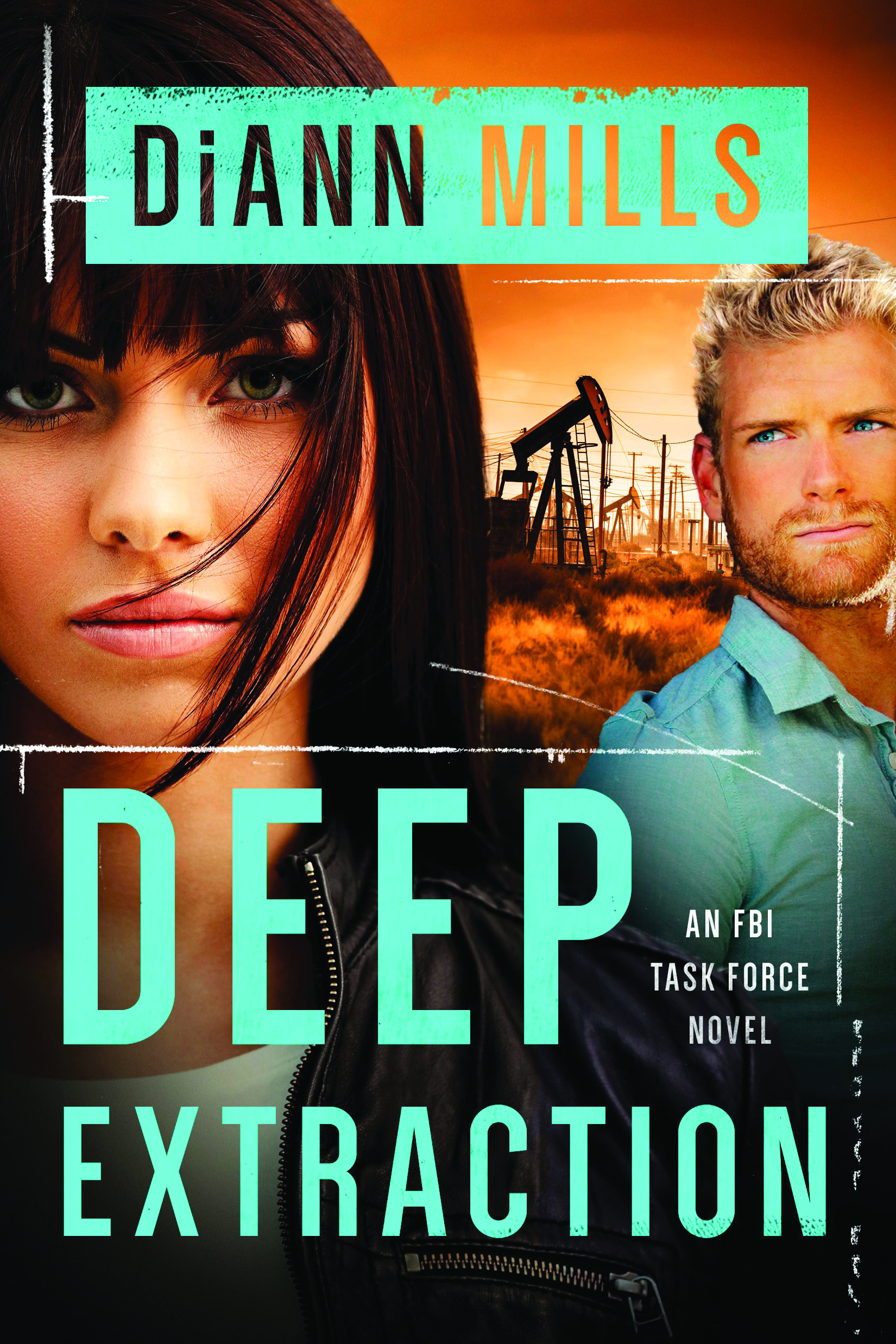
DiAnn Mills
Dorothy Love
Erin Healy
Athol Dickson is a novelist, teacher, and publisher of the popular DailyCristo Christian news and information website. His novels transcend description with a literary style that blends magical realism, suspense, and a strong sense of spirituality. Critics have favorably compared his work to such diverse authors as Octavia Butler (Publisher's Weekly) and Flannery O'Connor (The New York Times). One of his novels is an Audie Award winner and three have won Christy Awards including his most recent novel, Lost Mission. His next story, The Opposite Of Art, is about pride, passion, and death as a spiritual pursuit. Look for it in September, 2011. Athol lives with his wife in southern California.




 During my first phone call with producer Bill Haber, what he said
was: “I love your girls and I think they belong on TV.” He didn’t say
“I love your plots” or “I love your mysteries.” He said I love your girls.
That startled me a bit, because I never envisioned the books as a TV
series. I thought that VANISH or THE SURGEON would make a good movie,
but a series featuring Jane and Maura’s friendship? Huh?