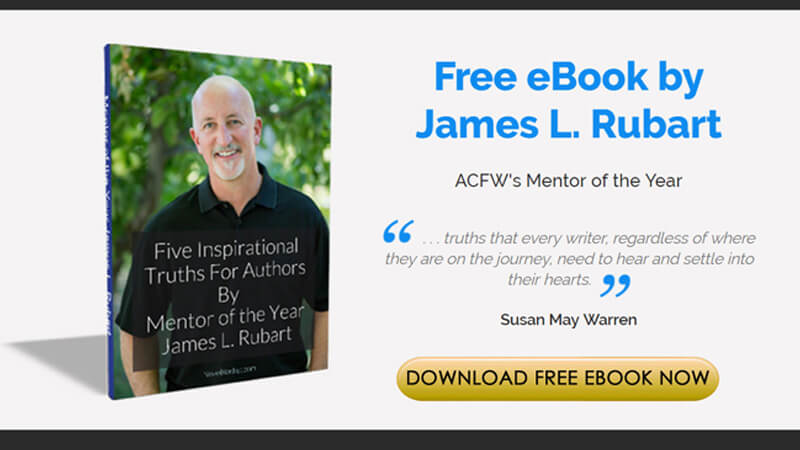

Get a Free Ebook

Five Inspirational Truths for Authors

Try our Video Classes

Downloadable in-depth learning, with pdf slides

Find out more about My Book Therapy

We want to help you up your writing game. If you are stuck, or just want a boost, please check us out!

Showing posts with label Writing conferences. Show all posts

Tuesday, May 17, 2016

One of the Best Writing Conferences of the Year

Looking for an outstanding writing conference this summer? The Oregon Christian Writers Conference should be high on your consideration list.


Why OCW?
  • You'll get to interact with an outstanding faculty
  • Excellent workshops where you'll learn craft, PR, and Marketing
  • Spiritual atmosphere, wonderful worship to refresh you
  • Set in Portland, OR on the banks of the Columbia River

Here's More Info From OCW's Website
Join us at the OCW summer coaching conference, where our faculty of top editors, agents, and award-winning authors is dedicated to helping you reach your writing goals. Daily worship and devotionals are a highlight of our conference as we seek to encourage writers in their faith and writing careers.


Evening keynoter is James Scott Bell. He is author of the #1 bestseller for writers, Plot and Structure, and numerous thrillers, including Try DyingTry DarknessTry Fear (the Ty Buchanan legal thriller series), and Don’t Leave MeFinal Witness, and Blind Justice. His most recent writing books are How to Write Dazzling DialogueWrite Your Novel from the MiddleSuper Structure, and How to Make a Living as a Writer. More at http://www.jamesscottbell.com/
Our Thursday morning closing keynoter is Angela Hunt. With more than four million copies of her books sold worldwide, she is the best-selling author of more than 125 works, ranging from picture books (The Tale of the Three Trees) to nonfiction books to novels. Her books have won the coveted Christy Award, several Angel Awards for Excellence in Media, and the Gold and Silver Medallions from Foreword Magazine’s Book of the Year Award. In 2007, her novel The Note was featured as a Christmas movie on the Hallmark Channel. Romantic Times Book Club presented her with a Lifetime Achievement Award in 2006. Visit her webpage at www.angelahuntbooks.com/
Other Highlights Include:
  • Early-Bird Session “Write Your Novel from the Middle: A Powerful New Approach for Plotters, Pantsers, and Everyone in Between” with James Scott Bell
  • 10 morning coaching classes for advanced, intermediate, and beginning writers. Fiction (including a premium class), nonfiction, memoir, articles, writing for Young Adult and Middle Grades, indie writing, and poetry
  • 24 afternoon workshops and 4 “Nite Owls”
  • One-on-one appointments with editors and agents
  • 3 manuscript reviews by editors and agents
  • Mentoring appointments with professional authors
Tuition for those who register by July 10 is $525 for OCW members, $560 for nonmembers, and $350 for full-time students or conferees under 23. Tuition includes all five conference meals (three dinners and two lunches) and all scheduled conference activities from Monday afternoon through Thursday noon. Lodging is separate.
More at: http://oregonchristianwriters.org/2016-summer-conference/ 
We'd love to see you in August!

Tuesday, February 16, 2016

How to Market Yourself at Writers Conferences

by James L. Rubart

Unless you have a multi-book contract (I’m talking 4+ books) you need to be constantly marketing yourself to publishers. 

Even if you do have a long term contract you need to be marketing yourself because someday that contract will end and (let’s speak this quietly) they might not offer you another contract.  

If you’re newer to the publishing world and want to go the traditional route, and are looking for an agent or that first publishing house to partner with, you need these tips to an even greater degree.

So you’re desperate to stand out. You're looking to make a lasting impact on editors, agents, and other architects of fiction. Use these six techniques when you want to make that impression badly: 

1. Make sure your one sheets say the same thing as other author’s one sheets. Study other author’s one sheets. Write your copy so it’s as close as possible to what your competitors are saying without blatant plagiarizing. 

2. When you meet agents and editors, use language and phrases you’re sure they’ve heard before, such as, “It’s just so nice and just such a pleasure to meet you,” or “Thank you so much for meeting with me, I really think you’ll like my manuscript” or “I hope you’re having a wonderful conference and are meeting a lot of interesting writers.” This will give them a feeling of comfort and familiarity with you. 

3. When developing your marketing material—cards, one sheets, query letters, thank-you notes, etc.—make all of them look a bit different from one another. It allows each to stand on its own and prevents your materials from blurring together. For example use one font for your name on a one sheet and a different font on your business cards.

4. If you put a picture on your card or one sheets, make sure it’s your best, even if the photo is four or five years old. First impressions are critical. 

5. Find a creative gimmick to hand out—like a wrist band—to everyone you meet. Some might resist your offer, but press in and don’t take no for an answer. These kinds of things will be remembered long after the conference is over. 

6. In your editor and/or agent appointments—and even with other writers—ask a few questions, but make sure you do most of the talking. It’s the only way for them to get to know you and understand fully what you have to offer. 

After applying these six techniques, I guarantee you’ll 
succeed in making an “impression badly.” 
Excruciatingly bad. 
Most of you probably figured out my little joke long before we reached technique number six. But since I’ve seen all of the above in heaping doses, it’s probably worth a quick moment of self-reflection to make sure we’re doing the exact opposite of the above points. 

1. One sheets: Yes, study one sheets to see what’s being done. Then do something different. You’re a writer. Get creative. 

For example, instead of your picture on your one sheet, what if you made the background a light watermark of your photo? If done subtly, an editor or agent might even say, “Interesting. Never seen that before.” 

Without saying a word you’ve told them you’re unique and creative. And they’ll take a closer look at your writing. 

2. Opening lines: Every editor and agent I’ve met (so far) at writing conferences is kind and approachable. But they’re human. They get tired of hearing the same phrases. It’s not original to say, “Read any good books lately?” 

They might give you a courtesy laugh, but inside, they’re probably cringing. It’s not original to say, “I really believe God has called me to write and I just really believe he’s given me this book to share with you.” 

Best thing to say? Describe your writing or project in as few words as possible, then let them guide the conversation. 

If they don’t ask a question, ask them a question (see number six below). I realize when nervous, many people are afflicted with verbal vomiting. Resist this deadly affliction. 

3. Marketing material: You must be consistent. There isn’t time to describe the scientific study that confirms this, but trust me, continuity between your cards, one sheets, website, query letter, follow-up thank-you notes, and everything else you present, is critical. 

4. Your photo: I met a talented writer recently who e-mailed me who wanted to hire me for a consultation. After pulling up her website I thought I had the wrong URL. Her site photo must be from around 1995. I didn’t recognize her. 

Keep your photo updated. Do you think editors, agents, and other authors will remember you more easily if the photo on your marketing materials actually looks like the person they met at the conference? 

5. Handing out a gimmick: Don’t unless it’s well done. At one conference I attended a guy forced everyone to take a cheesy rubber wristband. He somehow missed the pained look on the face of everyone he handed them to. (I did remember this individual long after the conference was over, but I doubt it was in the way he wanted.) 

6. Editor and agent appointments: When I work with writers during 15 minute consulting sessions at conferences I’m surprised how often the writers do most of the talking. 

Conferees consistently use twelve to fourteen of their fifteen minutes to talk about themselves. Then they want a few bits of wisdom in the remaining one to two minutes. Doesn’t work. 

Give the editors and agents time to first consider your project, then ask for their wisdom. You’d be shocked to learn how fast editors and agents can tell if your project is right for them or their house. 

Years ago—when I was first breaking in—I had a fifteen-minute appointment with the acquisitions editor for a devotional magazine. After a quick greeting, I handed him a sample of my devotional writing. 

After forty-five seconds he turned and said, “You can write for us, we’ll get you a job.” 

He handed me his card and said he’d be in touch. The whole exchange was over in two minutes. 

The point is good editors and agents know what they’re doing. They have years of insight and wisdom. So tell them briefly what your writing is about; ask a question. Then shut up and listen. Repeat. 


Final Thought 

Be yourself. Not the pretend self. Not the one you think you should be. Not the one everyone expects you to be. Be the real, quirky, interesting, fascinating person that (trust me) is inside. It’s the easiest way to stand out.


James L. Rubart is 28 years old, but lives trapped inside an older man's body. He thinks he's still young enough to water ski like a madman and dirt bike with his two grown sons, and loves to send readers on journeys they'll remember months after they finish one of his stories. He's the best-selling, Christy, INSPY, and RT Book Reviews award winning author of seven novels as well as a professional speaker. During the day he runs his marketing company which helps businesses, authors, and publishers make more coin of the realm. He lives with his amazing wife on a small lake in eastern Washington. More at www.jameslrubart.com


Tuesday, August 18, 2015

How To Make Team Teaching a Smashing Success

by James L. Rubart

Last week I team taught at the Oregon Christian Writers Conference with Susan May Warren and Jeff Gerke. (Great conference BTW.)

Susie and Jeff coming up with brilliant ideas
Even though I’ve known Jeff and Susie for years I’d never presented with them. I was interested in how it would turn out. Why?

We had only seven hours of teaching time. (Yeah, I know that sounds like a lot, but when you have three people who would have no problem filling those hours by themselves I was curious how we’d adapt to each other.)

The Key to Our Success

It sounds simple, but here’s why it worked wonderfully: While we shared our opinions passionately while we brainstormed how the class should work, none of us had any ego in the game. Extremely refreshing. When we taught the class the same attitude prevailed.

I’ve team taught in the past where it became clear immediately that my co-teacher had a King Kong plus Godzilla size ego, and if I was going to say anything I had to forcefully interrupt.

With Susie and Jeff, it was the opposite. We encouraged each other to jump in with an agreement, disagreement, and color commentary at any time. We didn’t care who was speaking as long as it had an impact on the class.

The Awards Banquet--Another Chance to Collaborate

OCW has an awards banquet every year and the three of us decided to amp things up with a running gag about me crashing Susie and Jeff’s MC-ing duties. Looking back at the creation of the skit, I can’t tell you who came up with what and I’m guessing they couldn’t either. It was a completely collaborative effort. None of us cared if their idea was used, we just wanted it to work.

Completely Smooth? Kind Of

Did we ever disagree? Of course. For example, when Jeff or I suggested an idea that Susie wasn’t keen on, she’d say, “I like that idea, but I think we can build on it ...”

Jeff’s translation: “Susie doesn’t like it, thinks it’s stupid, but is too kind to say it that bluntly.”

Then we’d laugh and move on. The point is, we disagreed with gentleness and consideration.

Can we work this way with our editors? Our publishers? Our marketing people? Other authors? Hope so. I know it will produce a better product, and better relationships as well.

One More Memory From OCW

This has nothing to do with the rest of my post, but it’s too funny not to include. You know the cliché when a room is cold that goes, “This place is like a meat locker!” The room we taught in was colder than a meat locker. I kid you not. So at one point Susie did the logical thing and went to her room and grabbed a blanket. 

"Here's how to beat the cold."
Only Three Rules To Follow For An Outstanding Team Teaching Experience

1. Get your opinions out there.
2. Get rid of your ego.
3. Get a warm blanket


James L. Rubart is the best-selling, Christy award winning author of seven novels as well as a professional speaker. During the day he runs Barefoot Marketing which helps authors and publishers make more coin of the realm. He lives with his amazing wife in the Pacific Northwest and loves to dirt bike with his two sons, hike, golf, take photos, and still thinks he's young enough to water ski like a madman. More at www.jameslrubart.com

Tuesday, August 30, 2011

You Don’t Have The Money? Sorry, I Don’t Believe You

For years I told myself I was willing to do whatever it took to be an author.

Like go to a conference.

Not a half day workshop or a gathering of writers at the local library. A full-out writer’s conference with editors and agents. Where I’d have to pitch. Show my work. Risk rejection. Try to make the dream become more than a dream.

I had a specific conference in mind, but every spring when the time to register smacked into my calendar I started dancing the rumba.

You know, the conference fence dance where I wasn’t sure if I was going or not.

And every spring I landed on the wrong side and promised I’d go next year. (For seven years.)

Deep down I didn’t think I was ready to go, wasn’t good enough to go, and I was scared. But I didn’t admit it to myself then. The excuse I used was money; that I didn’t have enough.

You’re not using that one are you? Because that’s all it is. An excuse. Before you lambast me, listen to my logic. By the time the final cha ching fades on the cost of a major writing conference you could shell out anywhere from $500 - $1,200. (Conference cost, hotel, airfare, CDs, etc.)

Yes, that’s some serious coin of the realm, but you have the money. Really.

• Three lattes per week: $5 each x 4 = $60 x 12 = $600
• Monthly cable bill: $50+ x 12 = $600
• Monthly dinners out: $50 x 2 = $100 x 12 = $1,000

“But I gotta have my lattes, Jim!” Uh huh. “I gotta have my cable!” Really? Okay, then have it. But don’t say you don’t have the money to go to a conference.

Say, “Cable TV and lattes and dinners out and new clothes (and whatever else you spend non-essential money on) are more important to me than going to a conference and taking this writing thing seriously.”

My friend Roy Williams says, “The risk of insult is the price of clarity.” I realize I’ve risked insulting some people with the above. That’s not my intent and I am fully cognizant of writers who want desperately to go to a writing conference and have already cut their budgets deep into the bone.

My intent is to reach the people who are like I was. Scared. Feeling unworthy to come. Allowing the dream to stay only a dream. Using the excuse of money to hold them back.

I want to tell them all published authors were once where they are. I want to tell them if they’re serious about writing they’ll make sacrifices to be able to take action. And without question, if you’re intent on being a writer, going to a major writing conference will take your aspirations beyond the next level.

Yes, it costs a lot to go to the Super Bowl, but there’s a vast difference between watching the game on TV and being in the stands.

Yes, it costs a lot to go to a conference, but there’s a vast difference between reading about the publishing industry in a book or magazine and being there live.

So if you can skip a latte or two, laser in on a conference you’ve wanted to go to and commit. If we wind up at the same one, the first Starbucks run is on me.


James L. Rubart is the bestselling and award winning author of ROOMS, BOOK OF DAYS, and THE CHAIR. He’s the owner of Barefoot Marketing and lives in the Pacific Northwest with his amazing wife and two outstanding teenage sons. More at: jameslrubart.com FB- James L. Rubart Twitter @jimrubart