
There are times we don't want to craft a novel. We just want to write one and be done with it.
But those books are closet books no one wants to buy or read. Those are the books that draw rejection slips.
Books are crafted. They have to be thought out, at some level, and orchestrated to some glorious, perfect end.
Books must be a continual flow of the story with daring obstacles that knock the protagonist off course, that challenge is resolve to get to the bottom of the story problem.
In the midst of the story there are overarching themes and questions. The infamous "story question" is the rudder to you vessel.
Will the heroine achieve her dream to star on stage and screen?
Can true love last through the decades? Or will it fade away?
Can one wedding dress be worn by four women and never fade, wear out or need to be altered?
There are other questions I ask as I'm writing:
What can the protagonist do in the end she couldn't do in the beginning?
What does she want?
What is this book about?
Why? I ask "Why?" a lot. When ever I make a declarative statement I follow with a why to get to the deeper meaning.
But all of these MUST be asked and answered in some form to really craft the best possible opening line.
The opening line must indicate some truth, problem or question about the story. It must set the hook, draw the reader into the story.
Far too often I read opening lines that are merely a physical action to begin the opening scene.
"Judy waved to her neighbor as she walked into the house."
Okay... unless she's in garden wars with the neighbor and the next line is, "She dreamed of haunting that woman on a dark and stormy night," waving to the neighbor isn't all that engaging.
It doesn't draw me into the question, the emotion of the story.
Let's look at Judy in the midst of a yard war with her neighbor.
"Judy waved to that crazy Linda as she made her way inside the house. If that woman stepped one foot in her yard this gardening season, she'd haunt her like a ghost."
Now we get a sense that something has gone on between the two women. And frankly, I'm a bit intrigued. What's going on?
Opening lines must set the emotion and feel for our books.
From Conversations with a Book Therapist, Susan May Warren offers this advice:
A Voice. I don’t love starting with Dialogue, because we don’t know who is talking, but sometimes it can be effective in first person.
For example, “Call me Ishmael.” (Moby Dick), or maybe something from contemporary literature, “If you really want to hear about it, the first thing you’ll probably want to know is where I was born, and what my lousy childhood was like, and how my parents were occupied and all before they had me, and all that David Copperfield kind of crap, but I don’t feel like going into if, if you want to know the truth.” (The Catcher in the Rye, J.D. Salinger).
This works because we are immediately introduced to the character and get into their head. Ultimately, we are wooed by their personality.
Rachel Here: I'm not a fan of opening in dialog either, but I opened Once Upon A Prince with, "What did you say?" because I felt like it drew the reader in to the same question as the heroine. "Yea, what did you say?"
Author great Gabriel Garcia Marquez said this about the first line:
“One of the most difficult things is the first paragraph.. in the first paragraph, you solve most of the problems with your book. The theme is defined, the style, the tone. At least in my case, the paragraph is a kind of sample of what the rest of the book is going to be." Gabriel Garcia Marquez…1992 Nobel Prize for Literature (100 years of solitude). Sold over 10 million copies.
Author great Gabriel Garcia Marquez said this about the first line:
“One of the most difficult things is the first paragraph.. in the first paragraph, you solve most of the problems with your book. The theme is defined, the style, the tone. At least in my case, the paragraph is a kind of sample of what the rest of the book is going to be." Gabriel Garcia Marquez…1992 Nobel Prize for Literature (100 years of solitude). Sold over 10 million copies.
Persona. Start your story with the description of someone iconic. Someone that stands out in our minds.
“There once was a boy name Eustace Clarence Scrubb and he almost deserved it.” (The Voyage of the Dawn Treader, C. S. Lewis.)
RH: Isn't that a great line?!
Or, “Scarlett O’Hara was not beautiful, but men seldom realized it when caught by her charm as the Tarleton twins were.” (Gone with the Wind, Margaret Mitchell).
Note that both these voices are omniscient, but you could build a strong character introduction through the voice of a POV character.
Consider the opening to John Irving’s, A Prayer for Owen Meany. “I am doomed to remember a boy with a wrecked voice – not because of his voice, or because he was the smallest person I ever knew, or even because he was the instrument of my mother’s death, but because he is the reason I believe in God.”
If the character will have a profound impact on your story or your POV character, perhaps start with a snapshot of that character.
Reminiscing. Many coming of age stories start with a step into the past, some statement that sums up where the character finds themselves today.
Susie did this in Everything’s Coming up Josey. “It’s important to acknowledge that Chase was right and if it weren’t for him I might have never found my answers.”
Basically, it’s a summary of the past, spoken from the present. And the rest of the book is about proving or revealing the impact of this reminiscence.
Here’s one from The Great Gatsby, F. Scott Fitzgerald. “In my younger and my more vulnerable years my father gave some advice that I’ve been turning over in my mind ever since.”
A Statement. I like to start stories with a sort of starting place. A statement of opinion or fear or hope.
Jane Austen does this in Pride and Prejudice, “It is a truth universally acknowledged that a single man in possession of a good fortune must be in want of a wife.”
When you make a statement, you are setting up the story question in a novel. You’ll spend the rest of the book making a comment about or proving your statement.
I did this in How To Catch A Prince. My opening line, "With each passing day, she remembered she had a secret," set the stage for a huge secret the heroine harbored in her heart.
Secrets always draw us in, don't they? What is the secret! We want to know.
In Princess Ever After, my opening line was a statement and it indicated exactly what I wanted the reader to know about my heroine at the beginning of the story:
"She'd found bliss. Perhaps even true love. Behind the wheel of a '71 Dodge Challenger restored to slant-6 perfection."
This line says my heroine wants for nothing. She's found her passion, her life's goal. Why would she need anything else. Why would she want to go anywhere else?
Well, the story is about challenging that very same opening line!
Let your opening line set the tone of your book. It should grab hold of the theme, the want, the story question in some way.
Change up the way you do it now.
Instead, open with what they are thinking, feeling, experiencing.
I've bought books based on the opening line. And rarely am I disappointed.
Here are a few first lines from some award winning authors:
Here are a few first lines from some award winning authors:
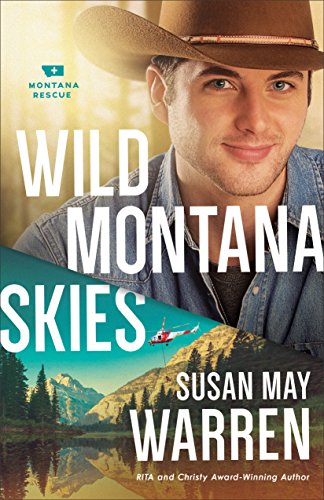
"She’d come 3000 miles to burn to death." by Susan May Warren
Susie says, "I like this because we are immediately worried, but also, wonder what she’s doing there. It makes the reader want more." From Where There’s Smoke—out in June.
"Gabe Talmadge felt the backside of his navel rubbing against his spine. An interesting sensation, he thought before losing consciousness." by Robin Lee Hatcher.
Robin says, "I think it works because the reader knows in a few words that Gabe is in desperate circumstances. I love it for that same reason." From The Shepherd’s Voice (winner of the RITA Award)
"The Kansas sky matched Piper Kendall’s mood—gray and stormy." by Deborah Raney.
Deb says, "We learn where the story is set, what the day is like, how the character feels, and I think we also learn a little about her just by hearing her unusual name." From a work in progress, Going Once, Going Twice.
"Annabelle Grayson McCutchens stared at the dying man beside her and wished, as she had the day she married him, that she loved her husband more." by Tamera Alexander.
Tammy says, "It encapsulates the heroine’s dire circumstance and her most urgent regret in that moment." From her novel Revealed.
"When it comes to burning bridges, I am the Queen of Kerosene." by Julie Lessman
Julie says, "I like it because I think it's somewhat funny and pretty much sets the tone for the rest the book as far as being a story about forgiveness." From Isle of Hope
"There was a time in Africa the people could fly." by Sue Monk Kidd
Great opening—sparks interest and makes you want to read on to see how the author answers that unspoken question. From Invention of Wings.
It was a bright cold day in April, and the clocks were striking thirteen.
—George Orwell, 1984
I write this sitting in the kitchen sink.
—Dodie Smith, I Capture the Castle
The cold passed reluctantly from the earth, and the retiring fogs revealed an army stretched out on the hills, resting. —Stephen Crane, The Red Badge of Courage (1895)
Deb says, "We learn where the story is set, what the day is like, how the character feels, and I think we also learn a little about her just by hearing her unusual name." From a work in progress, Going Once, Going Twice.
"Annabelle Grayson McCutchens stared at the dying man beside her and wished, as she had the day she married him, that she loved her husband more." by Tamera Alexander.
Tammy says, "It encapsulates the heroine’s dire circumstance and her most urgent regret in that moment." From her novel Revealed.
"When it comes to burning bridges, I am the Queen of Kerosene." by Julie Lessman
Julie says, "I like it because I think it's somewhat funny and pretty much sets the tone for the rest the book as far as being a story about forgiveness." From Isle of Hope
Great opening—sparks interest and makes you want to read on to see how the author answers that unspoken question. From Invention of Wings.
It was a bright cold day in April, and the clocks were striking thirteen.
—George Orwell, 1984
I write this sitting in the kitchen sink.
—Dodie Smith, I Capture the Castle
The cold passed reluctantly from the earth, and the retiring fogs revealed an army stretched out on the hills, resting. —Stephen Crane, The Red Badge of Courage (1895)
***
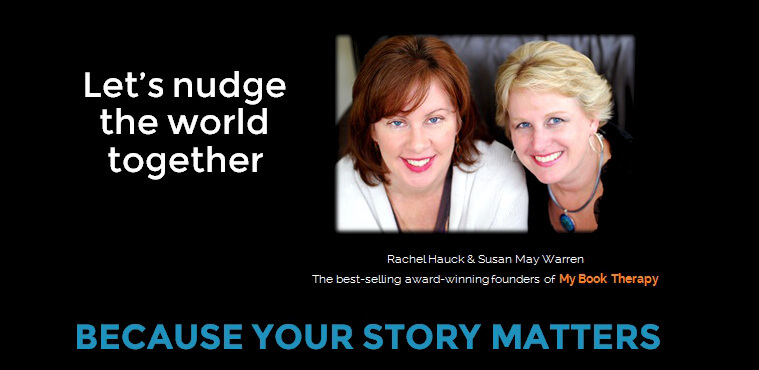
 New York Times, USA Today and Wall Street Journal bestselling author Rachel Hauck lives in sunny central Florida.
A graduate of Ohio State University with a degree in Journalism, she worked in the corporate software world before planting her backside in uncomfortable chair to write full time eight years ago.
Rachel serves on the Executive Board for American Christian Fiction Writers. She is a mentor and book therapist at My Book Therapy, a conference speaker and worship leader.
Rachel writes from her two-story tower in an exceedingly more comfy chair. She is a huge Buckeyes football fan.
Here latest novel, The Wedding Chapel landed on Booklist's Top Ten Inspirationals for 2015.
Visit her web site: www.rachelhauck.com.