Get a Free Ebook

Five Inspirational Truths for Authors

Try our Video Classes

Downloadable in-depth learning, with pdf slides

Find out more about My Book Therapy

We want to help you up your writing game. If you are stuck, or just want a boost, please check us out!

Showing posts with label Melody Carlson. Show all posts

Saturday, August 04, 2012

Don't Look Back


Guest Post By Melody Carlson

I’m so thankful that we’re all different, and I completely respect that writers have so many varied styles and techniques for their craft. And for that reason I feel somewhat apologetic when I talk about exactly how I write. Especially because I know my seemingly haphazard methods really do baffle some authors. Over the years, I’ve made no secret that I’m truly a seat-of-the-pants writer. It’s just the way I work. I write extremely quickly and I rarely outline—while I’m in a project I run fast and don’t look back. As a result, besides knowing that my novel will get from point A to point Z, I seldom know all the twists and turns I’ll encounter in between. It’s kind of like deciding to drive from LA to New York without planning all the stops along the way. Sounds like a good time to me!
And it’s exactly this kind of spontaneity that keeps the process of writing fun and lively for me. It’s as if I’m experiencing the story right along with my readers—and I totally love that. In fact, I would even call this technique one of the biggest reasons for my success. And I know it relates directly to my longevity (more than 20 years of professional writing) and my productivity (more than 200 books published). Yet at the same time, I know many other successful authors who would kick and scream and pull out their hair if they were forced to write like I do. Vive la différence.
            I suspect I’m just wired to be impulsive and spontaneous—probably because I’ve been like this since childhood. Seriously, I was the girl who’d leap first and look later. Need I mention that I dove from rock cliffs into mountain lakes, or swam across a crocodile infested river in Papua New Guinea? But never mind that, I’m talking about writing now. And although I’m aware that my unstructured writing techniques can seem crazy and risky to some, I do believe there are some valuable tips I can share with many novelists.
            Over the years, I’ve met so many struggling fiction writers who, while striving for perfection and excellence, cannot turn off the ‘editor inside their heads.’ Now I don’t want to undermine the importance of good editing—I completely appreciate my fine editors! However, I do want to remind writers that editing is best performed after the work of writing is completed. I would much rather see an author muddle through a story and reach the end, than to get stymied and waylaid over whether a particular scene or character or even a historical fact is quite right.
You can always go back and fix those things later. In fact, it’s much easier, not to mention much more efficient, to adjust those elements after the story is finished. Because after your tale is told, your perspective is broadened and you are far more objective and confident. Sure, you still might need to toss that first chapter. No big deal, lots of authors do that all the time. Or maybe you need to rethink a particular character or change the setting locale or even the era. But once you have a completed work, it’s so much more natural to make these changes. And besides streamlining your work, you have a finished book! How good does that feel?
So what am I saying? That every author should turn into a seat-of-the-pants writer like me? No, of course not. You still need to respect who you are and your particular writing style. However, I do challenge any of you frustrated writers to go ahead and ‘fire the editor in your head’ (or at least send that editor on sabbatical) and then I encourage you to push yourself to write a little faster and to produce a little more and to run a little harder—without looking back—until you reach the finish line. And then and only then, do you go back and edit. At the very least it will be a good exercise in letting go...or it might open the door to a more fulfilling and enjoyable writing experience for you.

Check out Melody’s writing style in her latest release…RIVER’S END

In the final story of The Inn at Shining Waters, Anna Larson's granddaughter Sarah is beginning to find her independence. But her relationship with her parents suffers as a result and she travels away from all that is familiar.

While the solace of the river calls Sarah back, surprises await upon her return. Three generations of family heartbreak and disappointments converge at Shining Waters as Sarah finds God right in the center of it all.
            

Tuesday, January 03, 2012

BOOK TALK WITH MELODY CARLSON

MELODY CARLSON'S BIO: Melody has written around 200 books for teens, women and children. That's a lot of books, but mostly she considers herself a "storyteller." Her books range from serious issues like schizophrenia (Finding Alice) to lighter topics like house-flipping (A Mile in My Flip-Flops) but most of the inspiration behind her fiction comes right out of real life. Her young adult novels (Diary of a Teenage Girl, TrueColors etc.) appeal to teenage girls around the world.

Her annual Christmas novellas become more popular each year. She's won a number of awards (including the Rita and Gold Medallion) and some of her books have been optioned for film/TV. Carlson has two grown sons and makes her home in the Pacific Northwest with her husband and yellow Lab dog. To find out more about Melody Carlson, visit her website at http://www.melodycarlson.com

What have been the benefits to you in having relationships with reading groups?

Again, it’s about connecting with people. Being a writer can feel lonely and isolated
at times. But when I get a chance to participate in a reading group (via phone,
skype, or in person) I get the satisfaction of an immediate personal response.
And it’s fun to answer readers’ questions and tell some of the back-story to
the story.

Where would you like to see your relationship with reading group grow? How do you think your goals can be met? If so, how?

For starters I’d like to carve more time into my schedule to get involved in more reading groups. My goal is to spend less time writing and more time interfacing, but that’s hard with a writing schedule like mine. Also, I need to get more comfortable with some of the handy electronic tools like skype. And I’d like more free time to travel and visit various book groups. It’s been a goal for a few years now (and getting closer to reality) to do a cross country tour in our motorhome where we visit books stores, schools, libraries and reading groups.

Do you have a set size a reading group has to be before you'll talk to them on the phone or in person? What do you feel most comfortable doing?

I don’t have a ‘set size.’ I’ve done groups as small as four and up to around sixteen.
But I think a group around eight is probably my favorite. Enough people to get
varied opinions, but not so many that it’s overwhelming. Also, I think being
there in person is the most fun…unfortunately it’s not usually practical. Being
on the phone is always easy for me. And skype probably feels more personal to the
readers. One of the most memorable reader group meetings was arranged by a
publicist and because my book setting was a wedding, the publicist provided
wedding-like refreshments and created a bridal shower sort of atmosphere that
the readers just loved. Really fun!

What do you think about ebooks and future sales of your book? How will authors do book signings with an ebook reading crowd?

I know that many of my readers are getting hooked on eBooks and I’m glad that my books
are available electronically (I have about a 100 titles now). However, I’m not using my kindle much and I still like the feel of a “real” book in my hands. But I get it—and it’s a greener way to live. However, it would be difficult to sign an eBook. Maybe I’d take bookmarks or postcards to sign for readers.

Which type of book club meeting do you prefer? Why?

I think it’s fun to meet in a person’s home. That’s probably the writer in me—I like to
see where and how people live. Also, like I mentioned, I prefer groups with around 6-10 readers. More intimate and friendly. But I’m open to whatever setting is best. Mostly it’s nice when the members of the group are good friends—a happy sort of energy happens and I leave feeling good about the time spent.

Do you learn about your book and yourself from book club meetings? If so what?

Absolutely. One time I did a group that had read my novel Finding Alice (about
schizophrenia). It was a very interesting and intelligent group of women, and
some of their observations about the book pleasantly surprised me. As a writer,
I’m not always aware of things I’ve tucked ‘between the lines’ and sometimes it
takes a savvy reader to illuminate it for me. Metaphor is subjective and it’s
fun to see how others react to what you’ve created—and how it touches them in
totally unique ways.


Did you learn more about your characters than you original wrote about? Have you been surprised by readers reactions to one of your books? Characters? If so, which ones?

One thing that’s surprised me is when a reader personalizes the story—so much so that she perceives a character in a much different way than I wrote it. And then someone else in the group might see it completely differently. It reminds me of how our personal experience plays into the way we view the world and
others around us. It’s like the story my grandma used to tell about three blind men describing something they just felt of, but didn’t know what to call it.


One was certain it was a rope. Another felt sure it was a tree trunk. The third knew it was a giant palm leaf. It was an elephant, but they all felt different parts of it.

Has your book club experience - getting feed back from reading groups - helped you in writing future books? If so, how has it helped you?

What might help me most is being reminded that I’m writing for real readers.
People with real problems and real relationships and real lives…and that makes
me want to keep my writing as real as possible. Whether it’s for teens or
adults I like to be sure that my fiction is believable, lifelike and relevant.


You write for very different audiences, which do you prefer writing for the best? Children's, young adult or adult books?

My favorite book to write is usually what I'm presently working on. Right now It's teen nonfiction. But fiction is my first love. And I really do like writing for young adults because of the amazing response I get from the readers. Also it's a different kind of writing - like in my TrueColors series (Nav) I got to write the kind of stories that just don't do that well in the adult market. I love getting into the head of a teen character and taking her through all sorts of things that reflect real life.

**I can't wait to read your newest book The Jerk Magnet! Just saying***

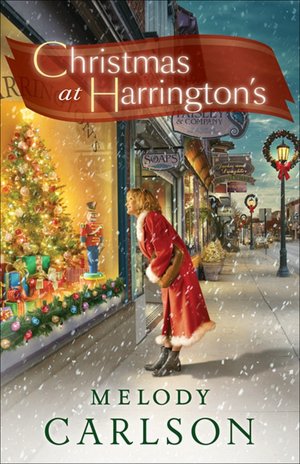
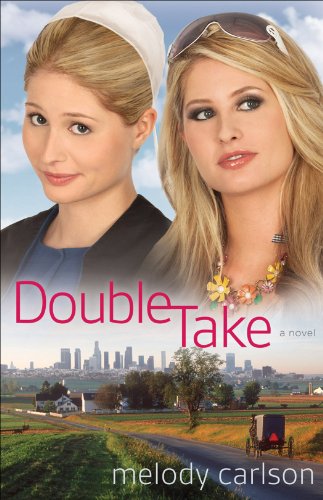
THANKS for stopping by Melody. It was wonderful to catch up with you at the ICRS Conference this summer in Atlanta. I enjoyed Double Take and my book club will be reading Christmas at Harrington's this year. I enjoyed that book too.

Until Next Time

Nora St.Laurent
The Book Club Network
www.bookfun.org

Wednesday, July 08, 2009

Melody Carlson on Faking It

Melody Carlson is an award-winning, best-selling author of more than two hundred books for teens, women, and children. She and her husband enjoy an active lifestyle of hiking, camping, and biking in the beautiful yet mysterious Pacific Northwest, where she says, “A new story seems to lurk around every corner.”

Faking It

I never trained to be a writer. Not in the academic sense anyway. I wasn’t an English major, I never took a writing class beyond high school, I’ve only attended a couple of writers’ conferences (as a conferee). And although I’d always admired authors, I never imagined I could be an author. In fact, despite having published around 200 books, I rarely use the word “author” when describing myself.

If anything, I say I’m a writer, probably because it sounds less presumptuous. Because the truth is I always have this underlying fear that someone is going to say, “You’re not really a writer, you haven’t been trained as a writer, therefore you must be faking it.” And maybe I am.

But I suspect that, from the very beginning, life was training me to be a writer. I could never really make up my mind about what I wanted to be “when I grew up.” As a result, I sampled a lot of jobs. I taught pre-school for a while. I spent a year in a third world country as I considered missions work. I worked for an interior designer as well as an international adoption agency. I dabbled at several other varied and unrelated jobs. But like shopping for jeans, it took a lot of trying on before I found what fit just right.

Even when I got the irresistible urge to begin writing, I had no idea where it would take me. I only knew that I had to write or burst. Sort of like my grandma’s old pressure cooker. She’d leave it on the stove for too long and too high and the next thing you knew green beans all splattered all over the ceiling. That’s how I felt. Like all these words and stories and sentences and characters and settings were boiling inside of me. The pressure was growing and I needed to loosen that release valve and get them out.

And so, without any real direction or (as aforementioned) real training, I began to write—on a yellow legal pad since I had no typewrite or computer at the time. Why would I have authentic writing tools when I wasn’t an authentic author? Then I joined a critique group of “real authors.” Naturally, that made me extremely nervous. Not only had these women been properly trained they were published as well.

I remember feeling like a total fraud in their midst. I even tried to “appear” more author-like by wearing tweed jackets (but hadn’t I always liked tweed?) and then I added dangly earrings (didn’t that make a person look more creative?). And although I loved being in this creative group, I couldn’t help but feel that I didn’t belong. I figured that eventually these genuine bona fide authors would figure me out and cast me from their midst.

Instead, they were encouraging. And they were amazed at how quickly I could “spit out” a story and then another and another. What they didn’t realize (and I probably didn’t either) was that those stories had been bubbling and percolating inside of me for years. But even as I completed several novels (three for teens and one for women) I didn’t feel like a real author.

Perhaps that was because “real authors” got published. And all I seemed to get was rejection letters. And so I began to think if I got published, I would become a “real author.” To my stunned amazement an editor became very interested in my work. She even presented my novels to her publishing committee, but for one reason or another they “declined” every one, which only seemed to prove that I wasn’t really an author.

But then she challenged me to write a nonfiction book, saying, “I think I can get that published.” So, feeling even more like a fake (since I was a fiction writer) I threw together a proposal for a nonfiction book. And they contracted it. But even a contracted book didn’t make me feel like an author. And then I began to work for a publishing company, interfacing with REAL authors (ones with BIG names) and I knew for sure that I wasn’t one of them.

Even as I began contracting more books (novels this time) I questioned my authenticity. I didn’t consider myself part of that elite group—real authors. After all, I didn’t know the secret handshake. I still don’t. Even if I got a good book review, I simply assumed I’d dodged a bullet. If a book sold well, I thought I’d just slipped beneath the radar. Even when I began writing full time, I was pretty sure the gig would soon be up…I’d get caught eventually. The Book Police would show up at my door and say, “You’re under arrest for impersonating an author.”

But then I discovered something that’s helped to change my thinking. Lots of other “authors” feel the same way—like they too are “faking it.” So maybe it just comes with the territory. After all, I am a fiction writer. Most of what I write is “made up” so I guess I am faking it.