Novel Journey

ONE OF WRITER'S DIGEST 101 MOST VALUABLE WEBSITES FOR WRITERS, 2008.

Friday, August 31, 2007

Columnist/Entertainment Writer - Joanne Brokaw


Award-winning freelance writer and columnist Joanne Brokaw covers entertainment and current issues for dozens of Christian and community publications in the U.S. and Canada, including The Christian Examiner newspapers, The Minnesota Christian Chronicle, and The Ozarks Christian News. Her humor column, This Life, appears in The Desert Voice of Southern California and at BuddyHollywood.com; she also writes a slice of life column for the Christian Voice Magazine. She pens a column on The Writing Life each month for ByLine Magazine, and has sold humorous greeting cards to American Greetings.

Her other writing credits include Breakaway and Brio Magazines, OnCourse Magazine, ChristianMusicPlanet.com, AGreaterFreedom.com, Release and SevenBall Magazines, TrueTunes.com and Grassroots.com. She's currently working on several book ideas, including Missions for Chickens; 101 Ways To Love Your Neighbor; and Everything I Need To Know About Faith I Learned From My Dog.

Joanne is the recipient of an Evangelical Press Association Higher Goals Award, and has successfully taken her Border collie, Scout, through his good citizenship obedience class, enabling them both to walk through their neighborhood with a modicum of enjoyment.

She is the co-founder of the Ink Spots and Coffee Grounds writing group, which she hosts with mystery author Phillip Tomasso, III, and is the founder of the Wonder Dog publicity and networking group, connecting and supporting Rochester, NY Christians involved in the music industry.

Share your favorite and least favorite parts of interviewing and profiling musicians.

My favorite part: meeting new people, interviewing up-and-coming artists, and occasionally connecting with an artist and developing a friendship. I meet some of the neatest people.

My least favorite part: dealing with the occasional ego, having to work around tour schedules to get an interview, and feeling like I’m really bugging someone when I’m deadline and need information. And transcribing interview tapes. I hate transcribing interview tapes more than I hate housework.

What one interview has touched you the most?


Wow, there have been a few. But the one band that I will never forget is a long disbanded group called The Combat Junkies. I interviewed them at my first GMA. Hardcore, tattooed, totally out of my comfort zone, and they were the most tender-hearted, kindest young men I’ve ever met. When everyone else went to bed during GMA week, they’d go out on the street and sit with the homeless, just talking about Jesus. They really had hearts to minister to the unloved. Like a thousand other bands, they just couldn’t make it in the business financially, but they remain to me a shining example of what Christian music should really be about. Pray, serve, then play.

You've attended GMA (Gospel Music Association) Week. Do you feel that opportunity has been a valuable career booster? How?

Absolutely. You interact with other journalists, get access to the artists, learn how the industry works, and see the good (and bad) of Christian entertainment. I’ve developed lifelong friendships with people I’ve met at GMA and I’ve made industry contacts that have helped me do my job better. If you want to write about or for the Christian music industry, you really need to go. What I do during that one week keeps me working all year and the contacts are priceless.

Give our readers hints on writing humor…the best hints you've got. The golden eggs and all that.

Wow, that’s a whole book. In fact, if you want to write humor I suggest you check out the book, “The Comic Toolbox” by John Vorhaus, and attend the
Erma Bombeck Writers Workshop.

But a few hints? There are rules about writing humor. Here's a
link that gives more help. The comic equation is Comedy = Truth + Pain, and if enough time hasn’t passed to face the pain, then Comedy = Truth + Exaggeration. Land on the funny, which means don’t give the joke away too soon. Words that start with a hard “g” or “k” sound make people laugh more. (Don’t ask me how, but someone studies these things. “Gerbil” is apparently funnier than “hamster.”) Remember the “Rule of 3”, which is “blank, blank and blank.”

Depending on what you’re writing, the formula will be different. Cards are different than stand up gags which are different than columns which are different than a first grader’s book report.

I could give away more secrets but then I’d have to kill you, and since I faint at the sight of blood, I’d probably just maim you before I passed out, leaving you with a gaping head wound and no one to drive you to the hospital.

Where do your column ideas come from? How do you keep your columns fresh?

My columns come from stupid things I do, stupid things other people do, or stupid things I think about doing but catch myself before I do. Since I am continually doing or saying something stupid, I’m never at a loss for material.

Share some wisdom you've earned while working as a columnist.

Use as few words as possible. Column space is usually limited, so I can’t stress enough the importance of learning to make every word count. Remember that scene in “A River Runs Through It”, where the kid writes an essay and the father keeps telling him to do it again, using half as many words? Learn how to do that.

You've begun writing greeting cards. Do you find your writing style changing through the exercise of telling tiny stories? How? Has it helped in other writing?

Well, humorous greeting cards aren’t really tiny stories. They’re one line gags with very little room for the joke set up. If you were doing a stand up routine, for example, you’d do a few giggle jokes that lead up to some chuckles and pay it all of with the guffaws, because you have time to do that and the goal is to make people laugh. With a card, you have about 20 words to not only make someone laugh, but to convey a sentiment. It’s a “knock knock” joke with a message.

Has it helped in my other writing? Only in that is pays enough to keep me from having to get a real job.

Share the most valuable thing you've learned through writing greeting cards.

That I’m better at buying humorous cards than writing them. I actually spent a week in freelance training at a major card company and I learned that writing humor cards is very hard work. When I asked the in house writers what their favorite cards were, they opened their reject files. Only about 20% of the cards they write actually get used. If you have a problem with rejection, writing humor cards is definitely not for you.

Would you care to share details about any strange writing habits you might have?

I can go for days without seeing anyone except my husband, so I frequently talk to my Border collie, Scout. In fact, I just asked him if he had any thoughts about what strange habits I might have and, much like my husband, he’s ignoring me.

I do take frequent breaks to go outside to play with Scout. In the winter I throw snowballs and he chases them. In the summer, I blow bubbles and he chases them. In fact, he heard just me type the word “bubbles” and is now pulling at my sleeve to go out and play.

My desk is a bit strange. I have a dozen or so toys and photos on my computer top and around my desk - like my quacking stuffed duck and peeping chick, a wind up chicken that lays gumballs, my Buzz Lightyear and Prince Charming Happy Meal toys, pictures of my family, and a “grow your own therapist” toy, which I haven’t opened but am saving in case of emergency. I also have a tea bag tag that says, “If ignorance is bliss why aren’t there more happy people?” and a key chain propped up in front of me that says, “It’s amazing how long it takes to finish something you’re not working on.” So I guess that I’m surrounded by silliness, which begets more silliness.

Any insecurities when it comes to writing – expand on that if it's a yes. If it's no, just skip the question…

Yes. That someday everyone’s going to realize I can’t write.

Favorite authors?

I hate when people ask me this question because I could never list all of my favorite authors (mostly because, now that I’ve turned 40-something I can’t remember their names). But next to my bed are books by David Sedaris, Bill Bryson, Jane Austin, Charles Dickens, John Steinbeck (I just read “Winter of our Discontent” for maybe the 8th time), Alexander McCall Smith, Amy Tan, Sandra Kring, Flannery O’Conner, Maya Angelou, Jon Katz, and about two dozen more, including a humor anthology called “May Contain Nuts”, the Bible, and C.S. Lewis’ “The Great Divorce”.

Columnists who've inspired you.

I grew up reading Erma Bombeck, Ann Landers, and Art Buchwald in the daily paper. I enjoy Bruce Cameron’s columns and Tim Bete is pretty darn funny. I love USA Today’s Craig Wilson. When I get the paper, I read the editorial columnists like Cal Thomas; in fact, I read them all, the ones I agree with and the ones I don’t. And I like to read the My Turn column in Newsweek.

Favorite writing-how-to books.

Making A Literary Life, by Carolyn See
On Writing, by Stephen King
Bird by Bird, by Anne Lammott
The Comic Toolbox, by John Vorhaus
Those are the ones I remember reading ... there are probably more ...

Comedians who've influenced you.

Mary Tyler Moore, Marlo Thomas, and Lucille Ball, of course. I love goofy, funny, insecure, women. (Am I the only one who remembers when Ann Marie served peanut butter on Corn Flakes as party appetizers? My kind of hostess.) And I love Ellen DeGeneres. But growing up, I really, really, really wanted to be like Carol Burnett. When I was maybe 10 years old I dressed up like her washer woman character for Halloween and won a contest. She is the master of the comedy sketch. The “Eunice and Mama” bits still make me laugh until I cry. Yeah, that’s what I want to do when I grow up. Be Carol Burnett.

Do you think the humor market is easier to slide into or columns?

I don’t think either is easy. Like anything writing-related, they both require talent, hard work, natural ability, hard work, and God’s hand guiding you the entire way. Oh, and a lot of hard work. Humor is not easy to write. For every funny joke you hear the writer probably wrote 10 that he threw away. Most people don’t realize that.

How does column writing differ from humor column writing?

A column takes many, many forms - advice, how-to, political, opinion, Q & A, devotional - and any can incorporate humor. But an outright humor column can be a just for the sake of the laugh columns, like Dave Barry. Or you can write an amusing, slice of life columns, like Erma Bombeck. I would never put myself in the same category as Erma Bombeck, but I write more slice of life columns than outright humor.

I’m teaching a class on writing columns this fall at Writers and Books in Rochester, NY for any readers in the area who might be interested.

Do you lean toward humor writing or is it a challenge for you?

I think humorous writing comes naturally for me. I don’t write ha-ha laugh out loud, Dave Barry, aliens are running the IRS kind of humor. I write mildly amusing takes on everyday life. I tend to say things other people only think about, and a lot of my humor comes from admitting my flaws and goof ups. Most people comment on things that strike a chord with them, like when I admitted that I wouldn’t go on a mission trip because I didn’t want to be without my hair dryer for a week. (Apparently I’m the only one willing to admit to being so shallow.) And one column I wrote, “Mind Reading Mommy,” really resonates with moms who are being systematically driven insane by their children.

Writing jokes or stand up comedy? I don’t know if I could do that.

You also freelance for several well-know publications. What is your favorite thing to write about?

I love to tell people’s stories, especially when they might be stories that are otherwise overlooked. At GMA, I tend to interview unknown artists, who have all the time in the world to talk and who have interesting stories that have nothing to do with music. Those are the artists who will hang out with you for hours and that’s always when you find the story. I love writing about missions and serving God, and also about my dog and my cat. I would write more about my husband and daughter but they might never speak to me again, and while the dog and cat are great listeners they don’t give much feedback and I still need someone to tell me when my pants make my butt look big.

Who would you most like to see interviewed at Novel Journey? And do you have any questions you'd like us to ask them?

OK, here’s one. I know he died in 1984, but I’d ask author Philip Van Doren if he liked what Frank Capra did with “It’s A Wonderful Life” and if he ever felt jealous that no one knew the film was based on his short story, “The Greatest Gift”.

Thursday, August 30, 2007

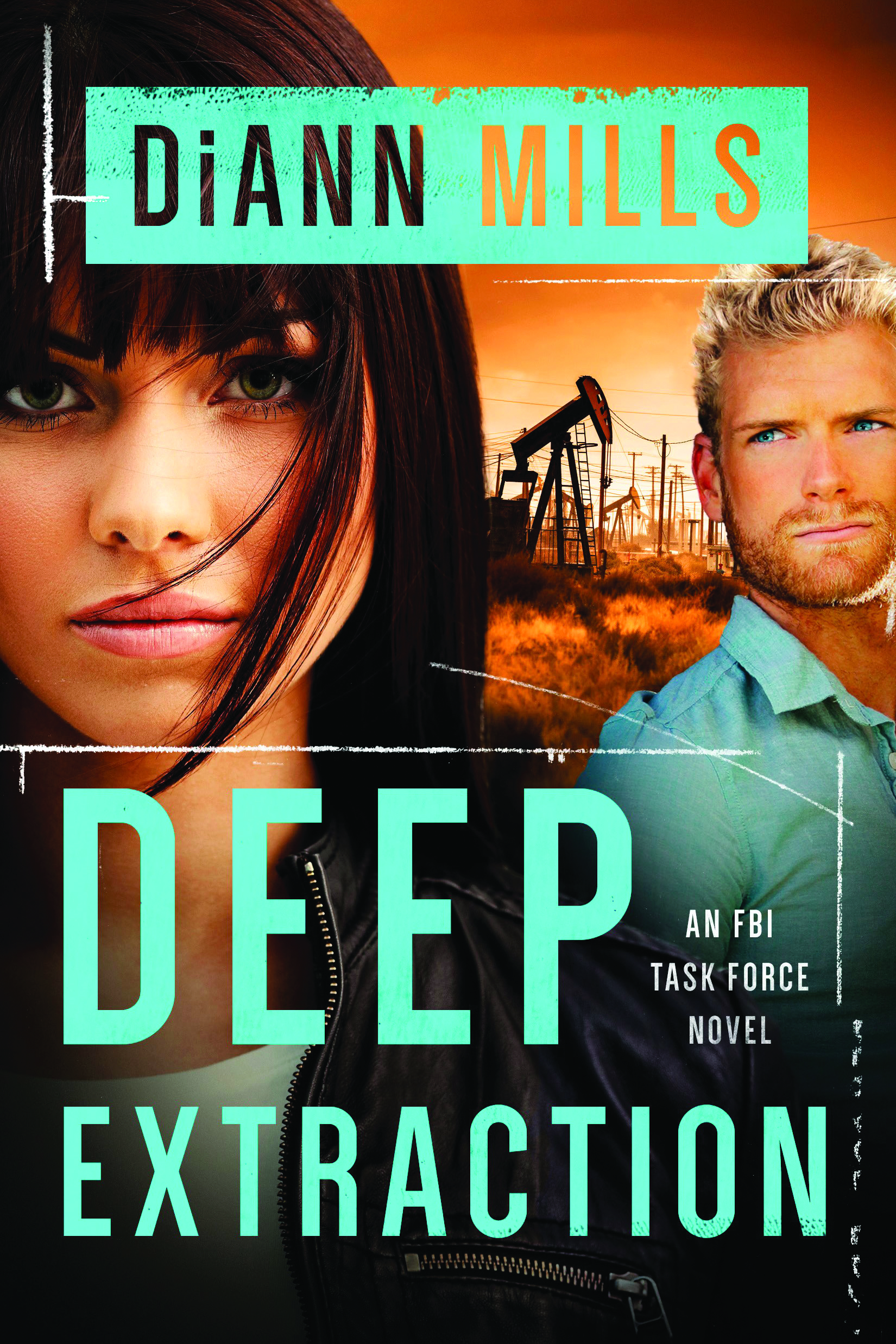
Welcome Guest Blogger ~ DiAnn Mills


DiAnn Mills does some of the most intensive research of any author I know. We sat down at the Blue Ridge Mountains Christian Writers Conference last May and chatted about this book and her trip to the Sudan. I asked her to tell us about it.


Experiencing Sudan

Excitement with a twinge of apprehension settled in my spirit as the plane from Kenya eased onto the runway of Juba, the southern capital of Sudan. I glanced out the window to a mass of rolling dust and desolation and an airport that more closely resembled a metal warehouse, except for the camouflaged-clad soldiers with MK7s slung over their shoulders.


This was the site of my research for When the Nile Runs Red.

I took a deep breath. What have I gotten myself into? Lord, this is going to be an adventure I’ll never forget.

Someone said “TIA.” This is Africa. I smiled and tugged on the straps of my back pack, more for security than a need to adjust its position. My little Bible was inside and about to be covered in Sudan dust.

Several moments later, after soldiers had gone through my baggage, and I was on my way to the ACROSS compound, an interdenominational, international Christian organization. I was thankful to be staying within the walls of a compound, knowing that otherwise I’d be crammed into a tent along the Nile River. I didn’t want to think of the possibility of encountering two-legged or four-legged predators. Taking in every bit of my surroundings, I realized the days ahead of me would stay in my heart forever.

What I saw, heard, tasted, smelled, touched, and intuitively sensed would place the reader in the heart of Sudan - right where I wanted the reader to be. On this research/mission trip, I planned to take pages of notes, snap photos, and conduct personal interviews with the people I met. More importantly, I wanted them to know that Jesus loved them, and I would take their plight back to the States so others would know firsthand about their critical needs. The burden of the job ahead settled like a heavy yoke on my shoulders. Could I do the job entrusted to me?

The sights moved me, sometimes to almost tears. I saw poverty that I will never forget: women drawing water from the Nile and using it without the benefit of boiling it, a lack of sanitation, and thin bodies. I saw a mixture of hope and pain in the eyes of the Sudanese, children at play, and colorful African clothing. A weathered sign indicated an Islamic children’s hospital where before the war ended, boy babies never left the building alive. I saw more goats than I ever wanted to see again.

I heard children laughing and the pop of a gun firing at night. I heard praise and worship to God and witnessed frustration in the voices of those who wanted more for their country. I heard government officials talk of their commitment to southern Sudan and their faith in God. I asked questions and listened to stories of survival and dedication.

I smelled a city with little sanitation, and I longed for them to embrace fragrant flowers and the sweet scent of true freedom. I witnessed men and women pounding goat dung into the ground of their “church” so they could hold services.

I tasted the dust and dirt and noted the Sudanese diet of ugali (cornmeal), vegetables, goat, and fish. Malaria was a part of life, and cholera broke out in the more poverty stricken areas.

People touched me with their joy and their sorrow. I once heard someone say: talk to me and I will get to know you; touch me and I am forever changed. For me, this meant brushing my finger across the vegetation, petting an animal, or embracing someone different from myself. The power of touch pulled me outside of my comfort zone and into the world of the Sudanese. Sometimes it was difficult, but it was never without reward. Instead of my ministering to them, I was blessed beyond imagination.

True research meant giving of myself to benefit others. Sudan will always be a part of my heart, and I look forward to a return trip. I challenge you to step out of your comfort zone and beyond the page to ensure your manuscript receives the research it deserves. Experience your story – and lift your readers above their world into an unforgettable story. And you, like me, will be forever changed.
To view a promo clip of When the Nile Runs Red, click here

Wednesday, August 29, 2007

Author Interview ~ Christy AwardWinner Cathy Gohlke


Cathy Gohlke’s writing has appeared in a variety of publications. She lives with her husband in Elkton, Maryland, where she has worked as a school librarian, drama director for adults and young people, and director of children’s and education ministries. Cathy is the mother of two grown children. “William Henry is a Fine Name” is her first novel.


Plug time. What new book or project do you have coming out?

“William Henry is a Fine Name” won the Christy 2007 Young Adult Award. It is the story of thirteen-year-old Robert, who in 1859 is torn between loyalty to his abolitionist father and his mother’s slave-holding family.

After his best friend, William Henry, is trapped in a deadly scheme to protect secrets of the Underground Railroad, Robert vows never to get involved again. But when he discovers his grandfather’s plan to sell his own son, born of a slave woman, Robert must decide whether to stand by or risk everything to help him escape.

“William Henry is a Fine Name” is a coming-of-age story, a tale of friends, a family, and a nation caught in the chaos of slavery, forced to take a stand.

I’m currently working on a Civil War sequel to “William Henry is a Fine Name.”

How did you come up with this story? Was there a specific 'what if' moment?

From the moment in childhood that I learned of the Underground Railroad I’ve been fascinated by that daring race to freedom and inspired by the courageous runners, conductors, and stationmasters. I’ve wondered if I would have had the courage to step up to the plate, to help others when the risks were so high. Writing this book helped me explore that, and count the costs in saying “yes” to whatever the Lord calls me to do.

The “what if” moment came when I imagined two boys—best friends, one black and one white, caught in the chaos of those times.

Tell us about your publishing journey. How long had you been writing before you got a contract? How did you find out and what went through your mind?

I’d written features for newspapers, periodicals, essays for two books, poetry, short stories, and several skits and dramas for years before I attempted to write a novel. Once I completed the novel I submitted chapters and synopsis copies—whatever each publisher required—to several publishers.
One publisher asked me to rewrite the book for a younger audience—which I tried, but neither of us was happy with the shortened, younger audience story.

So I listed the manuscript with “The Writer’s Edge.” Within a few months three publishers contacted me, asking to see the manuscript. I signed a contract with Moody Publishers on my 50th birthday—which felt like the gift of the century and the start of a brand new life!

Do you ever struggle with writer's block? If so, how do you overcome it?

Some days new writing flows. Some days it reads like a travelogue. Some days just getting a paragraph on paper feels like I’m pulling teeth with a wrench but no Novocain. I persist because I know that once I have words—any words—on paper I have something to work with. I love rewriting, cutting, honing and polishing—if it makes my work better. So, even if I must throw today’s work out tomorrow, writer’s block is not an option.

What is the most difficult part of writing for you (or was when you first started on your writing journey), i.e. plot, POV, characterization, etc?

Plotting was/is my most difficult part of writing.

How did (or do) you overcome it?

It is something I struggle with in each new piece. Outlining the plot helps tremendously, as long as I allow my characters to tell their own story, and as long as I don’t feel married to my outline.

Where do you write? Do you have a dedicated office or a corner or nook in a room?

I write wherever I am. I am blessed with a wonderful home office with windows that look out into woods and down along the banks of the Laurel Run. I do some writing and most of my writing business there. But I often find I need to leave home to write new material—just to get away from the siren song of laundry, dirty dishes, floors that need mopping, closets that need cleaning, phones. . . I can write in the midst of a noisy restaurant or seated in my car in a parking lot or at a table in the park by the river—anywhere I feel no responsibility to interact or do anything else at the moment.

Do you have a word or page goal you set for each day?

A good day is 5 manuscript pages or a scene.

What does a typical day look like for you?

Prayer and Bible reading come first. That is the only typical part of my day. I usually write as long as I can before and after breakfast, then attend to the business part of writing later in the day. Sometimes I write late at night when the house and my mind have stilled. Some days are dedicated to outlining or writing new work, some to research, and some to preparing talks. Some days are slated for volunteer work or for the needs of my family and friends. Some days are dictated by deadlines. Most days are a combination of these.

Take us through your process of writing a novel briefly—from conception to revision.

Something intrigues or fascinates me: it could be a snippet from history, the expression on someone’s face, a conversation I’ve overheard, that morning’s Bible reading, or a twist on something I’ve read in the newspaper. I explore that picture in my mind and people it with story characters. That exploration might include research, people watching, or relaxing enough to watch the mental movies my characters create.

I see parts of the story as movie scenes or stage dramas in my head, and sketch scenes or dialogues from those. Though I don’t know the entire story, I begin a flow chart, and imagine how those scenes might link together. That is when I begin to see the story as a whole, form a general plot, and create an outline. I’ve written with and without a chapter by chapter outline and have found that an outline keeps me on task.

Now I’m ready to write the story. If I get stuck I go back to my outline. If I’m really stuck I’ll skip ahead to a scene I see more clearly in my head and pick up there. I can always go back and fill in what I’ve missed. I read over what I’ve written for the day before I go to sleep at night. My mind sometimes resolves problems as I sleep.

Each new writing day begins with prayer, then editing what I wrote the day before. Editing allows me to dip my feet into the story and regain momentum.

Once the first draft is written I read the entire manuscript, cut, revise, rewrite, and hone. I tighten each chapter’s beginning and ending, edit line by line, working with the arrangement of words, and make certain my characters remain in character and maintain their voices.

When the manuscript is as polished as I can make it I give it to a group of critical readers. I take their comments into consideration, rewrite where I think best, polish, and send it to my editor. That is when the editing process with the publishing house begins, and I realize how much I don’t know.

What are some of your favorite books (not written by you)?

“The Holy Bible”
“In His Steps”--by Charles Sheldon
“To Kill A Mockingbird”--by Harper Lee
“The Mitford Series”--by Jan Karon
“The Adventures of Tom Sawyer”--by Mark Twain
“Ahab’s Wife”--by Sena Jeter Naslund

What’s the best writing advice you’ve heard?

Don’t quit. Write. Write. Write.

What do you wish you’d known early in your career that might have saved you some time and/or frustration in writing? In publishing?

Believe that your book will be a success and prepare accordingly: Plan your next book and begin writing it as soon as you send your first one out. Create a website with appropriate links and updates. Prepare notes for book and related talks. Simplify your life because you will be busier than you’d ever imagined.

How much marketing do you do? What have you found that particularly works well for you?

I’ve done several blog and some media interviews. Book signings and related talks are my main form of marketing. Being willing to speak to various groups: schools, libraries, clergy, youth groups, writing or book groups, storytelling, Scouts, re-enactors, etc., builds community relations and readership. Those talks lead to other invitations and almost always include opportunities to witness for the Lord.

Do you have any parting words of advice?

Give back. Encourage and help other writers. Don’t be afraid of competition. There will never be too many pen warriors to bear the light of truth in this world. Ask the Lord to guide your mind, surrender your desires to Him, and make yourself available and open to His leading. Faithfully hone the gift you’ve been given. Write. Write. Write. Rejoice that you can do the thing that makes your heart sing.

Tuesday, August 28, 2007

Interview with NYT Best-Selling Novelist, Sandra Brown

(Photo credit: Andrew Eccles)

Sandra Brown is the author of fifty-five New York Times bestsellers, including RICOCHET.Brown has published sixty-eight novels, most of which remain in print.

Ms. Brown now has seventy million copies of her books in print worldwide, and her work has been translated into thirty-three languages.

A lifelong Texan, Sandra Brown was born in Waco and raised in Ft. Worth, attending Texas Christian University, majoring in English. Before embarking on her writing career, Sandra worked in television - including weathercasting and feature reporting on the nationally syndicated program "PM Magazine."

Sandra and her husband Michael Brown live in Arlington, Texas.

What book or project is coming out or has come out that you’d like to tell us about?

“Play Dirty” goes on sale Aug. 14. It’s about a former Dallas Cowboys quarterback, who’s just been released from prison after serving a five year sentence for racketeering. (He threw a game.) He gets a very unusual job offer from a multi-millionaire, which has the potential of getting him into even more trouble.

Tell us about your journey to publication. How long had you been writing before you got the call you had a contract, how you heard andwhat went through your head.

I’d been writing for a little over a year. I’d submitted manuscripts that had been rejected. Then I met a bookstore owner who offered to read my next manuscript. She liked it, and on my behalf called an editor at Dell who was launching a new line of romances, Candlelight Ecstasy.


Upon the bookseller’s recommendation I sent the manuscript to this editor, who was watching for it. About a week later she called and offered me a contract on “Love’s Encore”. She asked if I’d written anything else. I had written another romance, about the same length, in the same style and the same level of sensuality. I sent her “Love Beyond Reason”. Thirteen days later she bought it, too.

When you started out, you wrote under several pennames (Rachel Ryan, Laura Jordan, Erin St. Clair). Why?

I was writing for several different publishers. Each had a pseudonym.

You write one book a year. Is this by design and if so, why?

Writing one book a year is a comfortable pace for me. If I had a couple years to write one, I think I’d get bored before I was finished. I’d get lazy, and still probably do the work in the same amount of time. If I wrote more than one a year, I’d feel rushed and pressured. Also, it’s a good schedule for my publisher. They have one new hard cover each year, along with the paperback edition of the previous year’s book.

You’ve hit the NYT bestsellers list over fifty times. What in your opinion are the key ingredients for this type of success?

If you study the bestseller lists, you’ll notice that the only thing the books have in common is that they’re on the lists. Every author on there has found a niche for him or herself. They write their “thing” and they’ve found an appreciative audience for it. I think success relies a lot on tenacity and just plain hard work. To be a success at anything, you’ve got to work at it. So far, I haven’t found a shortcut to writing a book. It can only be done one word at a time.

What are your thoughts on branding? Does it hurt sales to write in multiple genres?

I can only speak to my own experience. In the early 90’s I made a career decision to pursue the suspense market, so I stopped writing genre romances. It was a tough decision because that was a very comfortable arena for me, but I’ve never regretted it. It enabled me to devote all my time, energy and creativity to the bigger, more mainstream market. It was a matter of focusing on where I wanted to go rather than where I was.

What mistakes have you made while seeking publication?

I once tried to follow a publishing trend. It wasn’t a good fit for me. My editor at the time advised me to follow my impulses and gut instinct, to write with my voice and not try to adapt to a fad. It was excellent advice.

What’s the best advice you’ve heard on writing/publication?

Read, read, read everything. And write, write, write every day.

What’s the worst piece of writing advice you’ve heard?

“There’s nothing wrong with popular fiction, but you might want to try to write a real book some day.” That’s not exactly “advice,” but it’s the most condescending, obnoxious statement I’ve ever had said to me -- by a man who confessed that he doesn’t read because he doesn’t have time.

What’s something you wish you’d known earlier that might have saved you some time/frustration in the publishing business?

[From time to time we'll be holding back particularly insightful answers to bring to you in our Newsletter, along with other great stuff. (This is one of those times). You will sign up to the left to read Sandra's eye-bulging, heart-twisting, bone-grinding answer ... er, you SHOULD sign up to the left ... um, COULD sign up? Pretty pretty please with a leather-bound thesaurus on top?]

What are a few of your favorite books? (Not written by you.)

“Testimony of Two Men” by Taylor Caldwell
“Magnificent Obsession” by Lloyd Douglass
“Mila 18” by Leon Uris
“Resistance” by Anita Shreve
“The Flame and the Flower” by Kathleen Woodiwiss

What piece of writing have you done that you’re particularly proud of and why?

Well. . . I liked the Texas! Trilogy: Lucky, Chase and Sage. I liked “Envy.” It’s impossible to say because I can’t be objective. A book that I don’t like so well is the favorite of the next fan who writes me.

Do you have a pet peeve having to do with this biz?

Authors who talk trash about other authors, especially in public.

Take us through your process of writing a novel briefly—from conception to revision.

I get the idea and work with it until it lets me know it wants to be a book. (Some ideas don’t.) Then I write a 10-15 page synopsis for my editor, in which I let her know who the main characters are, what the big problem is, how that problem is going to get worse, and how it will be solved.

This is a road map, nothing more. I know where I’m going, just not how I’m going to get there. After I begin writing, I rarely consult the synopsis again. I put the characters in place, get them into big trouble, and then let them show me where this scene or that scene will take place. Some of the best plot twists, even I didn’t see coming until it was right there. Some of the best characters weren’t even in the synopsis.

I do four drafts: the first is the plotting draft, the second is the crafting draft, the third is for pacing and to make sure all the loose threads are tied up, the fourth is for polishing.

Do you have a dream for the future of your writing, something you would love to accomplish?

I’d love for each book to become #1 on the New York Times bestseller list. I’d love a feature film done right and with a great cast.

What is your favorite and least favorite part of being a writer?

My favorite – writing the books.
Least favorite – the business side of it.

How much marketing/publicity do you do? Any advice in this area?

It varies from year to year. Sometimes I do a lot, then I taper off. In my opinion, the best you can do for your fans is to sit your butt in the chair and write the best book for them you possible can.

Have you received a particularly memorable reader response?

The letters I receive from service men and women are especially touching. They tell me how my books provide escape from the danger they face daily. These letters never fail to bring tears to my eyes.


Sunday, August 26, 2007

In Praise of Bad Reviews

Mike’s stories have appeared in Relief Journal, Forgotten Worlds, Alienskin, and Dragons, Knights and Angels, with articles in The Matthew’s House Project, Relevant Magazine and the forthcoming 316 Journal. He is included in the upcoming Coach’s Midnight Diner anthology and was one of ten authors picked for Infuze Magazine’s Best of 2005 print anthology. Mike is an ordained minister, has led numerous small groups and developed discipleship-training curriculum for several churches. He and his wife Lisa live in Southern California, where they have raised four children. You can visit him at http://www.mikeduran.com/.


By Mike Duran

Disclosure: The opinions below are not necessarily those of Novel Journey. We haven't seen the movie and therefore offer no kudos or criticism. (No Ted, we won't disclose Mike's address (unless you provide five autographed box sets of the Black, White, Red trilogy... and let us interview The Mask.)


"In the arts, the critic is the only independent source of information. The rest is advertising." -- Pauline Kael, U.S. film critic. Newsweek (New York, Dec. 24, 1973).

If anybody should tell the truth, it’s Christians. So why is it so hard to find one who does reviews?

Next to a 1-year subscription to Netflix, the best thing for a financially challenged movie lover is an objective, trustworthy reviewer. I learned long ago not to trust Larry King. (Does this guy like every film ever made, or what?) Trying to build a book, movie and/or music library can be costly. So the last thing I need is for someone to tell me “Norbit” is a “must-see.”

But when it comes to honesty and objectivity, many Christian reviewers deserve a thumbs-down.

Take for instance the film version of Ted Dekker's novel, “Thr3e,” released earlier this year. Christian bloggers had been pumping up the film for a while, and there were genuine reasons to be excited. For one, it recognized a terrific Christian author who has effectively bridged the gulf between the ABA and CBA. But the film also marked the launch of FoxFaith Movies -- a division of Fox aimed at "faith friendly" fare. So “Thr3e” was an important event.

But was the movie any good?

I strongly believe in supporting Christian artists. But endorsing mediocre work often perpetuates a stereotype that "Christian art" is really just second-rate propaganda. We are viewed as an insular fraternity whose sole aim is to further our cause -- whether through film, literature or music -- often at the expense of those mediums. As such, Christian reviewers of said works tend to be myopic cheerleaders for their creative counterparts, implementing a radical double-standard and eschewing objectivity in favor of four stars.

I'm afraid that double-standard was at work with “Thr3e.”

After visiting half a dozen Christian blogs and e-zines that praised the film and gave it resounding endorsements, I was excited. Perhaps “Christian art” was making inroads. Until I went to Rotten Tomatoes which gives the film an overall 8% out of a possible 100% on its "Critics Tomatometer."

Here's a sampling of what some critics said about the film:


"This is one of the most confusing, horribly written movies I've ever seen..." Thom Koschwanez Seattle Post-Intelligencer

"Ultimately aimed at a Christian audience looking for genre entertainment with a certain sense of propriety, the film tries to serve two masters and doesn't quite deliver for either." Maitland McDonagh TV Guide's Movie Guide

"Suspenselessly directed by Robby Henson, Thr3e commits the eighth deadly sin -- boredom." Lou Lumenick New York Post


If Thr3e is any indication of what we can expect from the emerging trend of studio-funded faith-based movies, we may find ourselves wishing The Passion of the Christ had been a box-office bomb." Jeff Shannon Seattle Times

"Thr3e is r3ally, r3ally aw4ul." Phil Villarreal Arizona Daily Star

So whom should I believe, secular critics or Christian bloggers? For me, the answer is a no-brainer.

Beauty is in the eye of the beholder, you say. Art criticism is a subjective affair. Just because a book or movie gets bad reviews, does not mean it’s worthless or unredeemable. God used a jackass, for heaven’s sake. Why can’t He use “Norbit”? But someone who can't tell the difference between “Norbit” and “Citizen Kane” is either dense or biased.

And when it comes to “Christian art,” Christian reviewers are far too biased. Don’t think so? Then why do so many “Christian reviews” feel like puff pieces? An occasional thumbs-down goes a long way in my book. And maybe that’s why so many amateur reviewers seem so irrelevant -- They don’t give enough bad reviews. Instead, most Christian reviewers seem to feel obligated to give good reviews to their brethren.

I have some theories about this apparent lack of objectivity in Christian reviewers:
First, there’s a fundamental confusion about love and approval. Somehow, we think that a negative review is unloving. Yet Scripture commands us to “speak the truth in love” (Eph. 4:15). Speaking the truth can be painful, and is sometimes interpreted as vindictive and mean. But as long as we maintain the right spirit, we should be permitted to say a book/movie is boring, anti-climactic or uneven without being viewed as a mud-slinger.

Second, I believe Christians are so eager to see the Gospel advanced that we’re willing to wink at mediocre presentations of it. In other words, as long as a “Christian film” gets in theaters or “Christian book” is published, we’re happy. Meanwhile, artistic standards are supplanted by the god of saturation.

Third, many Christian reviewers are trying to break into/stay in the industry they’re reviewing. No doubt, this is a tightrope. I’m required to “speak the truth,” but if I’m hoping to sign with or stay with Publisher X, then giving X’s authors a negative review could be career suicide. So as a result, we’re left to bury bad reviews, abandon objectivity, and bequeath five stars when two-and-a-half would suffice.

About now I’m on everyone’s hit list. Hey, I want to see Christian artists succeed and a Christian worldview proliferate. But let me suggest that we would get more respect and, ultimately, produce a better product if the faith community was more critical of her artistic representatives. We need more bad reviews – not for the sake of being mean, but for the sake of being honest. Sure, we’re going to disagree about books and movies. It’s the nature of art appreciation. After all, “Norbit” probably does have some inspired parts. Just don’t try to convince me it’s the next “Citizen Kane.”

I’d love your feedback on this issue… especially if it’s positive.


If you have access to a radio or computer tomorrow, you can support Christian fiction

Best-selling Navy JAG novelist, Don Brown, will be on the nationally-broadcast radio talk show Truth Talk Live with Stu Eppeson, this Monday, August 27th at 5PM Eastern Standard Time, to discuss his Naval Justice series.

His novels include: Treason, Hostage, Defiance, and upcoming Black Sea Affair, all published with Zondervan.
If you'd like to listen, you have two options.

You may, (1) can either listen live via the internet or satellite radio, or
(2) you can do a Google search for your local station carrying the program in your part of the country.


Here are your links for the web and satellite radio, if you’d like to listen online.
You can listen live, at 5PM Eastern Time on the internet at http://www.kvtt.org/ This is a 100,000 watt FM Station in Dallas, Texas, with a very strong signal. If you've got a decent computer, this station is great. Click in the upper right section of the main screen to the box entitled “Listen Online Live.” Or you can listen on satellite radio, on the Sirius network, Channel 161.

If you’d like to call in with comments or questions, you can call from anywhere in the United States at 1-866-34-TRUTH or 1-866-348-7884, from 5 to 6 PM, EST on Monday. Also, please feel free to pass the word to other listeners.

Sunday Devotion- The Upside of Trouble

Janet Rubin


“When I look back on my childhood I wonder how I survived at all. It was, of course, a miserable childhood: the happy childhood is hardly worth your while.”
Angela’s Ashes, Frank McCourt

“Now it is a strange thing, but things that are good to have and days that are good to spend are soon told about, and not much to listen to; while things that are uncomfortable, palpitating, and even gruesome, may make a good tale, and take a deal of telling anyway.”
The Hobbit, J.R.R. Tolkien

I love these quotes because they hold such truth, especially for a writer. Those of us who engage in the pursuit of good story-telling understand that a tale is nothing without conflict, and a story with none isn’t much of a story at all.

As we hone our craft, we try to create conflict and increase tension in our stories. We put our characters in terrible positions, emotionally torture them, put them up against great odds. Authors love to write a conflict (both internal and external) and tragedy-filled tale, and people love to read it. However, conflict simply for the sake of conflict is not enough. There must be a resolution or something learned...a satisfying conclusion of some sort. We love to cheer for the character who has beaten the odds, overcome the struggle, or grown in some important way.

However, we only love trials when they are fictional. And, more importantly, not about us. But as it turns out, trials not only make a good story, but also a better person. The Bible tells us that trials develop character:

James 1:2-4 Consider it pure joy, my brothers, whenever you face trials of many kinds, because you know that the testing of your faith develops perseverance. Perseverance must finish its work so that you may be mature and complete, not lacking anything.

People who have walked with the Lord for a long time will tell you that it was during the hard times in life that they learned to trust and love God, during the worst of times that they grew and learned what really matters in life. Because we know that God is good and that He loves us, we can know that any trial He allows to enter our life is for our good:

Romans 8:28 And we know that in all things God works for the good of those who love him, who have been called according to his purpose.

As writers, we get a double blessing: greater character and more story material; surely those tough experiences will end up sprinkled into future tales, and they will make our stories even more relatable for our readers.

Lord,
Thank You that You work all things for our good. We thank You for both the good and bad times and trust You to complete the good work You’ve started in us. May You be in our stories—the stories of our lives and the stories that we write. If trials are needed to make our lives ones worth living and our stories ones worth reading...Your will be done.


Amen

Labels:

Saturday, August 25, 2007

Novel Journey's Newsletter

It's time that Novel Journey had a newsletter. So, we're starting one.

What are we going to put in our newsletter?

Hmmmmm . . . .

Well, parts are a surprise (which either means I don't have a clue, or it's so good we're not risking our ideas being swept out from beneath us). One segment will feature a portion of Q&A withheld from our blog interviews. We'll keep you updated on what we're reading, bits of industry news, and whatever else happens to takes our fancy.

To sign up, please click on the link below.


Friday, August 24, 2007

Writers Digest's Humor Columist - Kevin Alexander ~ Interviewed.

Kevin Alexander is the this Writer's Life columnist for Writer's Digest, a frequent contributor to Boston Magazine and currently finishing his MFA in creative writing at Emerson College. In his spare time, Kevin enjoys watching people work out and text messaging.


For starters, Kevin, let's cut to the chase…did you have to kill someone, sleep with someone, or extract sensitive and damaging, delicate details that should not be made public to land your gig at Writers Digest? Or did you go the traditional boring route i.e. hard work and perseverance? Do share highlights of your story…


Well, Kelly, I'll tell you: as I imagine every young "go-getter" in the writing industry could attest, i've certainly had to kill and sleep with my share of people to try and get ahead, but unfortunately, my gig at Writer's Digest wasn't one of those (many, many) occasions.


The quick boring answer is this: about three years ago, while in journalism school, I produced a satire on how to write a literary masterpiece for my grad school magazine. Naturally, I assumed that said satire was aesthetically and intellectually perfect/hysterical and so I sent it out to all eleven writing magazines found in Writer's Market.


Ten of these magazines rejected me, some of them very quickly and personally, including one very, very small mag with an angry, ugly editor that will go unnamed, who told me my main problem was my satire "lacked any humor, had needless swears, and was all around terrible". That's basically an actual quote.

But about a month or so after I'd started going into therapy to combat the social-emotional strain of all of these rejections, (now editor-in-chief) Maria Schneider called me and said that although they couldn't use my satire due to its high quantity of swears, they thought it was funny and were wondering if I would be interested in writing anything else. So I wrote two more features for them that they didn't hate and then they asked me whether I wanted to have a monthly column following "my writing life". And--as I'm sure my editors could attest-- it's been a honeymoon of glorious proportions ever since.


Tell us a bit about your novel(s) and the status?


I find it excruciatingly boring to talk at length about the contents of my novel, other than to say that it involves sexual assault, a thinly veiled college campus, several friends, two story lines, and nudity. Lots of nudity. As for the status, a (bad) draft of said novel is done. And, actually, I just set aside a block of time to do a severe re-write before my MFA program starts back up in the Fall and then I will spend all of the Fall preparing to defend it as my thesis. And then it will go out to one of my friends who's an agent, my thought process being that it will be too awkward for her to reject me because we're friends, and so she will feel obligated to try and bring it into the world, where it will hopefully fall somewhere in between Catcher in the Rye and The Second Nancy Drew/ Hardy Boys Super Mystery: A Crime for Christmas on the literary scale.

Give our readers hints on writing humor…the best hints you've got. The golden eggs and all that.


I wish I had some sort of golden humor eggs to impart. Or just golden eggs in general. The truth is for me, so much of humor writing is getting an idea or a premise and testing it out. Most of the times it doesn't work and i'll have to put it down or throw it out, but just getting an idea down when it comes to you is key, which is about as unhelpful a tip as I can give. It would probably be as useful if I said just be really, really funny.


The only real tip I have is a phrase I keep above my desk in my plush and expensively decorated apartment. It says: "Just tell the story. Forced humor= Kill Yourself!!" Which, of course, is a direct quote from Strunk and White's The Elements of Style.


Where do your column ideas come from? How do you keep your columns fresh?


I get most of my column ideas from repeated readings of Mitch Albom's The Five People You Meet in Heaven or from my multiple DVDs of that show with Paris Hilton and Lionel Ritchie's adopted daughter.


Would you care to share details about any strange writing habits you might have?


Well, I tend to pace around my room, talking out ideas to myself, which frightens my roommate, who's a dentist. I also wait until the last moment to do everything and then stress about it uncontrollably, which prevents people from liking me.


Any insecurities when it comes to writing – expand on that if it's a yes. If it's no, just skip the question…


I have millions of insecurities when it comes to writing. Probably too many to list, although i imagine they fall within the normal realm of a neurotic writer. But, I will admit, having had to sort of put my personal life out into the open with my column and blog, that I tend to care way too much about how other people are reacting to my work, and when I get negative letters--and trust me, I've gotten my share-- it's still very, very hard for me to shake things off and not let them affect me. I'm fragile, Kelly, very, very fragile.


What might we be seeing in the upcoming months on the pages of Writers Digest from Kevin Alexander?


Just about everything. Like I keep telling everyone, I'm very "with it". I've got a profile of an up and coming novelist named James Boice, a Q and A with Tom Perrotta about his new book, my hilarious yet useful column, and quite possibly a quiz (if i ever get around to editing it) entitled Does Your Editor Hate You? So i'm all over the map, whatever that means...


You work with writing gurus. What is the best writing advice you've heard?


Just do it. Um, actually maybe that was from a Nike commercial, but honestly, it's the best advice. Just write. And write. And write. Like anything, you can only get better, although--who are we kidding--I've probably already peaked.


What is the worst writing advice you've encountered?


My friend and self proclaimed writing guru Casey Hurley once told me that "writing was like going to the dentist except with pens". To this day, I still have no idea what the hell he was talking about.


What is your favorite piece of writing – one you've written?


One of my favorite non-Kevin Alexander pieces is called "The American Male at Age Ten" by Susan Orlean, which is in her The Bullfighter Checks Her Makeup collection. It's just the most fantastic piece, funny, informative and so, so pitch perfect; encapsulating what it means to be a boy at that age. She's amazing. Which leads me to my own favorite story, which was the first one I ever got published in a major magazine. It was called "Boys Life" and told the story of what it was like to be a 13 year old boy through the eyes of these three different eighth graders. I completely ripped off the idea for it from Susan Orlean, but I love how it ended up coming out. Plus it won some sort of very minor award, which my mom immediately framed and then lost.


Favorite authors?


I love so many writers that it's very difficult for me to choose, and I tend to separate the magazine writers I like from the novelists, but here are a few of my favorites in both categories: Sam Lipsyte, John Jeremiah Sullivan, David Foster Wallace, Tom Junod, Richard Ford, James Alan McPherson, Bill Buford, Roddy Doyle, Gary Shteyngart, Susan Orlean, Benjamin Alsup, Chuck Klosterman, Jonathan Ames, George Saunders, Zadie Smith, Nick Hornby, Thomas King, Sherman Alexie, Michael Lewis, Charles Portis... I could seriously go on forever.


Columnists who've inspired you.


Everyone always assumes that I love Dave Barry and so they always buy me Dave Barry books and calendars and ask me if I wish I was him. And although the answer is obviously, yes, I wish I was Dave Barry because I assume he's relatively wealthy, I don't really read him. Surprisingly, I actually have a hard time reading humor strictly for humor's sake, unless its satirical or pretty dark. Most of the time, I need it to have an alternative purpose as well. But I'm ducking the question and rambling so I'll just say that I like Chuck Klosterman's column in Esquire and we can move on.


Favorite writing-how-to books.


The Forest for the Trees by Betsy Lerner, Bird by Bird by Anne Lamont, I've probably read On Writing Well by William Zinsser 60 times.


Comedians who've influenced you.


In high school my friends and I used to watch this bootlegged VHS of a David Spade special on HBO over and over and over and over again. Come to think of it, we were pretty lame. But it remains my favorite stand up bit of all time. The humor from that was so infused into my own speech that the first time I played it for my girlfriend in college, she goes, "Oh, I see. You're not actually funny or creative at all. David Spade is funny." So I've stopped showing girls that tape.


Do you lean toward humor writing or is it a challenge for you?


I didn't set out to be any sort of humor writer. I very much just wanted to write books, magazine articles and teach college, and have summers off to sleep in and teach urban dance workshops, but i think I've always been interested in humor and, on a certain level, I can't help it: I have a very hard time taking myself seriously.


You also freelance for several well-know publications. What is your favorite thing to write about?


I think nearly 95% of magazine writers respond to this question with, "I like quirky, irreverent stories about people" but, um...I like quirky, irreverent stories about people. I just like the stories where I can sit back and observe. I'm a dreadful investigative reporter, and I hate calling people I don't know, and I get very nervous asking people things, especially if they're uncomfortable, so just being able to observe is my comfort zone. I'm kind of pathetic like that.


Anything you'd like to leave us with, either about Writers Digest or your other pursuits?

I think if someone actually made it to the end of this Q and A, they should get some sort of endurance award or maybe a free DVD of the final season of One Tree Hill. Sorry for being so damn verbose.

But seriously, if people aren't totally sick of me, they can read my very random weekly blog or check out my "This Writer's Life" columns in the actual magazine. And all of my Boston Magazine articles are up on their website if you just search for my name.


Finally, I'd like to give a "shout out" to the guy who was sitting next to me on the plane, reading most of my answers to these questions over my shoulder, but trying to be, like, subtle about it. So holler at your boy, Patrick Davidson of Burlington, MA! I hope you liked what you read!

Thursday, August 23, 2007

Author Interview ~ Cecelia Dowdy

Cecelia Dowdy has been an avid reader since she learned to string letters together to form words. One of her college professors tried to convince her to get an English degree since he felt she was a great writer. Years later, after receiving her BS in Finance, she took his advice, and started pursuing her literary career. She loves to read, write, and bake delicious desserts. Traveling is favorite hobby, and she's been to ten different countries—so far. She enjoys listening to old tunes with her husband on Saturday nights. They reside with their toddler son in Maryland.

Plug time. What new book or project do you have coming out?


First Mates came out in 2005.


My [third] novel, John’s Quest, is coming out in March 2008.


How did you come up with this story? Was there a specific 'what if' moment?

I thought of the storyline because of my day job. I work for a non-profit physics organization. There are a lot of scientists at my job, and one day I wondered, since they were scientists, if they believed in God. I suppose that was my specific, ‘what if’ moment. John’s Quest is about a science professor who is an agnostic-he’s unsure if God exists.

Tell us about your publishing journey. How long had you been writing before you got a contract? How did you find out and what went through your mind?

I had been writing for five and a half years before I was offered a contract. I found out through an email! When I received my first book contract, all I could think was Hallelujah! Praise the Lord! I’m finally published!

Do you ever struggle with writer's block? If so, how do you overcome it?

Yes, I struggle with that a little bit. I usually put the project aside and start a new one. When I’m not actively working on a project, that’s when I’ll think of ways to fix my manuscript, getting over any roadblocks that may have occurred.

What is the most difficult part of writing for you (or was when you first started on your writing journey), i.e. plot, POV, characterization, etc? How did (or do) you overcome it?

POV! I had no concept of POV. I would head hop like crazy. Although I’d always been an avid reader, I guess I never realized the whole POV issue until I started writing novels. Another difficult part of writing was show, don’t tell. I usually tended to tell more than show, and that would bog the story down with a lot of narrative sentences.
To overcome these issues, I joined critique groups, and I also read books about the craft of writing. One book that really helped me out was Self Editing For Fiction Writers.

Where do you write? Do you have a dedicated office or a corner or nook in a room?

I have an office, and I used to write only in my office. Now that I have a toddler, it’s easier for me to write sitting in a living room chair with a laptop computer. I write like this because my toddler watches TV and if I’m in the same room, he won’t bother me. If I go upstairs to my office, he’ll find me, and tug my hand, begging me to come into the living room and sit with him while he watches his kiddy shows.

Do you have a word or page goal you set for each day?

Not really. I usually try and write at least 20 pages in a weekend, but I don’t always reach that goal.

What does a typical day look like for you?

Since I’m not a full-time writer, I get most of my writing done early in the morning and on weekends. A typical weekday I spend time commuting to work and working my day job. I usually write between five AM to six thirty AM each day. My hours on the weekend vary depending on other obligations (like family time.)

Take us through your process of writing a novel briefly—from conception to revision.

I start with the character sketches. Sometimes I may find a picture in a catalog or magazine that resembles the way the character looks in my mind. I go through a baby name book and a book of surnames to name both hero and heroine. I then go through a detailed questionnaire, where I answer questions about the characters’ backgrounds, occupations, goals, dreams, pet peeves, etc. When I’m doing this the internal conflict may become apparent. I can see how these two characters, based upon their backgrounds, would have a hard time having a long-lasting romantic relationship.

After the characters are developed, I do an outline of the story. The outline is very vague, and consists of about 18-20 sentences in numerical order in an Excel or Word document. Using the outline as a guide, I start writing the book! After I’m finished with the first draft, I go through and read the novel, do some editing, rewording, etc. I’ll usually go through three drafts before I consider the novel to be complete. Before I submit it to the publisher, I read through it aloud, just to be sure the sentences flow smoothly and sound natural.

Also, while I’m still in the draft mode, that’s when I’ll do research about any unique subjects in my novel. I start with Google, and sometimes I have contacted people in certain occupations to ask questions so that the story seems plausible.

What are some of your favorite books (not written by you)?

My goodness, I’ve read so many good books over the years that it’s hard to pinpoint all of them. I guess it’s easier for me to name some of my favorite authors than specific books. I love anything by Robin Lee Hatcher, Tracie Peterson, Janette Oake, Jacquelin Thomas, Sharon Ewell Foster, and Victoria Christopher Murray. I also like a few books by Frank Peretti, Ted Dekker, Tim LaHaye and Jerry Jenkins….the list could go on and on, but those are the ones I like off the top of my head.

What’s the best writing advice you’ve heard?

Keep your day job. Really. When I attended my very first RWA conference in the mid-nineties, I met some authors for the first time. I had stars in my eyes as I asked their advice about making a living writing! I was floored when I discovered that writers are not very well compensated for their novels! I had dreams of quitting my day job, sitting at my house, penning novels all day. I was thinking I’d make enough money to get a nice house, with a swimming pool, and I’d be sitting out there with my laptop, and writing books. I guess I was really daydreaming when I thought like that!

What do you wish you’d known early in your career that might have saved you some time and/or frustration in writing? In publishing?

I wish I had studied the craft more and joined a critique group earlier than I had. I wrote alone for a few years, and I didn’t discover what I was doing wrong until I had been critiqued. I also wish I’d studied the craft of writing more before I whipped out so many pages of useless text. I have several unpublished novels sitting in my basement because I didn’t take the time to study what to do, how to place those words on the page, until I’d been writing for a few years. When I finally ‘got it’ it was like a light bulb went off in my head, and I could finally say, “Eureka!”

How much marketing do you do? What have you found that particularly works well for you?

Since my first book was only available through Crossings (Doubleday’s Christian Book Club) and Black Expressions (Doubleday’s African-American Book Club), there was not much marketing that I could do. The book was not in stores and in order to get the book, you had to be a member of one of those book clubs.

My second novel was a category romance, and I sent postcards to some churches, advertising my book. I also took out an ad in Romance Sells (RWA’s publication that’s distributed to book stores.) Since category romance is only on the shelf for a month, an author is limited in the amount of promotion she can do with such a limited timeframe.

Meanwhile, I try to be active online by doing a blog, and I also do drawings for free books to those who comment on my blog. I also take questions from unpublished authors who seek advice about writing. I publish the questions and answers on my blog, also. I also invite people to join my mailing list, and I use these contacts to promote my novel as the publication date draws near.

Do you have any parting words of advice?

If you want to publish a novel, you need to develop a thick skin, and don’t let rejections affect you. Also, attend writers’ conferences. Writers’ conferences are an awesome way to connect with other writers, editors, and agents.

Wednesday, August 22, 2007

Author Interview ~ Ruth Axtell Morren

Ruth Axtell Morren studied comparative literature at Smith College, spent her junior year in Paris, taught English in the Canary Islands, and worked in Miami, FL before moving to the Netherlands, where she began seriously pursuing a writing career in historical romance fiction in between raising a family.

Her first book, Winter Is Past, a regency-era inspirational, came out in December, 2003.
Recently, Ruth and her family decided to move back to the Netherlands so their children could learn the language and culture of their birth. This year, Ruth’s third book, Lilac Spring, was translated into Dutch. Winter Is Past has been published in Italian by Harlequin. Ruth’s second novel, Wild Rose (2004) was selected as a Booklist “Top Ten Christian Fiction” in 2005. Currently, she is working on her 8th manuscript to be published by Steeple Hill.

Plug time. What new book or project do you have coming out?

The Healing Season came out July of this year. Right now I’m working on another single title regency for Steeple Hill, tentatively titled The Making of a Gentleman. It’s the story of a fugitive who escaped the hangman’s noose and a Christian woman who regularly visits the prisoners at Newgate, and her attempts to reform him.

NJ: To read a review of The Healing Season, click here.


How did you come up with this story? Was there a specific 'what if' moment?

Quite a few years back, I was researching another regency and I read two small snippets of information. One was about a woman who actually did help prisoners at a time when prison conditions were horrific. The other was about how a man sentenced to be hanged received a pardon from the Prince Regent simply because the prince was touched by the man’s wife pleading on her husband’s behalf.

Those two details became the inspiration for my ‘Pygmalion in reverse’ story.

Tell us about your publishing journey. How long had you been writing before you got a contract? How did you find out and what went through your mind?

I had been writing seriously for fourteen years. About four years into that time, I received my first real encouragement: my second manuscript finaled as a Golden Heart entry for historical romance.

Little did I realize at that time what a long journey I would still have to being published. Shortly after that, the Lord began to deal with me toward a deeper walk with Him. At first that drew me toward writing inspirational fiction. Then I came to a moment of truth, when I realized the Lord wanted it all. He required that I put my writing on the altar, even if it meant never writing another word of fiction again. I put it all aside, including any researching of even an idea.

Instead, this time, which turned two years, became a time of rich spiritual growth. At the end of this period, I woke up with the fragment of a dream. That dream evolved into a story idea for a Christian romance in the regency period. I had never even thought of attempting to write something in the regency period, even though I am a die-hard Jane Austen fan.

With much fear and trembling, (after seeking God’s direction if this was truly from Him), I began researching what eventually became my first published novel, Winter Is Past. The time between idea and contract ended up being four years. But at the end of that period, when I received “the Call” from an editor, it was to offer me a 3-book contract, an almost unheard of deal for a new author.

Do you ever struggle with writer's block? If so, how do you overcome it?

Not so much writer’s block, as just facing that everyday challenge of sitting down at my desk and writing that first draft. Also, what I think is every author’s fear (I recently read Sandra Brown mention it in an interview), “Can I really do this one more time?”

What is the most difficult part of writing for you (or was when you first started on your writing journey), i.e. plot, POV, characterization, etc? How did (or do) you overcome it?

When I first started, eons ago, I think it was plotting. Characterization was the most fun; I loved dialogue (still do). It was just coming up with that story line…
I think reading books on the craft of writing helped; also multiple critiques, judges’ comments, etc.

Nowadays, it’s trying to capture the essence & uniqueness of the story during that first draft stage (Nora Roberts’ comment about treating every book as absolutely your very first one helped a lot with this).

Where do you write? Do you have a dedicated office or a corner or nook in a room?

Until recently when we lived in a huge house in Maine, I shared a spacious office with my husband. Then we moved to the Netherlands, where space is at a premium, so I have a tiny corner of my bedroom. Ah well, as long as the ideas keep coming….

Do you have a word or page goal you set for each day?

During the first draft stage, I shoot for ten pages a day. But I don’t sweat it too much if I don’t make the mark, as long as I write something (more or less five days a week). With 3 children, you can’t be tied too much to a rigid schedule.

What does a typical day look like for you?

Wake up and begin praying (these days usually in bed). Then read the Bible, then breakfast, a few clean up chores, then shower & dress, then on good days, by 9:30 or 10 a.m., sit down at the computer and begin writing. And keep writing until my youngest son comes home from school (in Holland elementary school age children can come home for lunch). Then keep writing some more till they all come home from school around 3 or so.

A lot of the real work, however, doesn’t happen at the computer. It happens in the afternoons when I go on my walk or bike ride and think about what happens now in the story. Or, it’ll come to me at 3 a.m. when I’ll wake up and my mind will fill with scene and dialogue ideas. Or at 5 a.m. I know then it’s useless to try to go back to sleep until I groggily jot as much down (sometimes in the dark) as I can.

Otherwise, by morning, it’ll be gone.

Take us through your process of writing a novel briefly—from conception to revision.

Ideas can come from anywhere, during researching as mentioned above, from dreams, from a secondary character in a WIP. If they’re sustainable, the idea will usually start taking shape into a full story within matter of days, and I have to interrupt the current WIP enough to just go with it and jot down any ideas/scenes/dialogue that come to me.

Then I put that away in a folder until I can come back to it.

When the time comes, I write a proposal (first 3 chaps. + synopsis). If my editors approve it, then it gets contracted & scheduled. When I begin working on it under deadline (trying to allow myself 6-7 months for a single title; 4-6 mos. for a category length), I do the historical research and begin plotting as I do this, and keep sketching out any scenes/dialogue that come to me during that stage.

When I reach some sort of critical mass, I know it’s time to start writing at my computer. That’s when I try to discipline myself to the 10 pp/day. Then once that first draft is finished, I go over and edit it a couple of times, then email it chap. by chap. to my critique partner. When I go over her suggestions, I still read through it a few more times (depending on deadline pressure by this time) before emailing the whole thing to my editor.

What are some of your favorite books (not written by you)?

I just finished the last installment of Karen Hancock’s Guardian-King series, which absolutely blew me away.
Jane Austen (everything, favorites being P & P and Persuasion)
I recently rediscovered Grace Livingston Hill from my high school days
The Curate of Glaston by George MacDonald
Also, recently read The Kite Runner—very good
Pieces of Silver by Maureen Lang, a new author, whose story I liked very much.

What’s the best writing advice you’ve heard?

Only do it if you can’t imagine not writing (regardless of whether you ever sell your work or get any recognition for it)

What do you wish you’d known early in your career that might have saved you some time and/or frustration in writing? In publishing?

Keep the day job. (grin)

How much marketing do you do? What have you found that particularly works well for you?

Very little, having neither the time, budget nor much talent in that area. Recently, I’ve felt that I also have to hand the whole “promotion” thing over to the Lord. It’s up to Him to give my books favor; to open up promotional opportunities, etc. And He has been doing this, usually in ways I didn’t expect.

Do you have any parting words of advice?

I’ve just been reading Karen Hancock’s writing blog and she has some very good advice about keeping it all in perspective—it’s for God’s glory. When that gets out of whack, it all suffers.

A Teaser...

For all of our readers who love to laugh...do not miss Friday August 24th. Writers Digest humor columnist Kevin Alexander will drop by NovelJourney to share a bit of wisdom and a lot of sarcasm.

And now for today's author interview ...

Tuesday, August 21, 2007

Novel Journey Scholarship Recipient Announced:

We've been toying awhile with a Novel Journey scholarship but kept putting it off for lack of funds and time. God has a way of encouraging worthy causes though.

While Ane and I were attending the Blue Ridge Mtn Writer's Conference this past May, a young lady who I remembered giving me encouragement at my first conference sat next to us and mentioned she would love to attend ACFW's conference but funds were a problem.

She has several manuscripts to show for her dedication. She's ready to take her writing to the next level and hopefully in the next few years be ready for publication.

We'd like to thank the following sponsors for helping to absorb some of the cost of sending this young lady to the upcoming ACFW (American Christian Fiction Writers) conference:

______________________________________________
GLASS ROAD PR


_________________________________________________
AVON INSPIRED (Harper Collins)


_________________________________________________
A BIG thank you to these sponsors and congratulations to Brenda Carroll, our first scholarship recipient. We're looking forward to big things from you!

Brenda Carroll:
-Emory & Henry graduate
-transplant to Summerville, SC
-brand-spankin'-new to ACFW
-secretary in the Lowcountry chapter
-4 unpublished manuscripts (3 historical, 1 contemporary ya)
-terrified of editors

Monday, August 20, 2007

Christian Small Publisher's Association ~ Sarah Bolme


Sarah Bolme is the director of Christian Small Publishers Association (CSPA), the owner of Crest Publications, and the author of 7 books and numerous articles. She is also the editor of the CSPA Circular, the bi-monthly newsletter of Christian Small Publishers Association. Sarah’s passion is educating others to help them improve their situation.


What is Christian Small Publisher's Association and its purpose?

Christian Small Publishers Association (CSPA) is a professional association for publishers who produce materials for the Christian Marketplace. The purpose of CSPA is to assist publishers in marketing in the Christian marketplace. We believe that there is strength in numbers. Together, small publishers can accomplish more than each one working alone.

CSPA assists publishers in gaining affordable access to the Christian marketplace in three main ways. The first is through information. CSPA provides our members information on affordable resources available for marketing in the Christian marketplace with tips and ideas for making the most of these resources. The second is through networking. CSPA provides opportunities for our member publishers to network with each other to learn from each other and help each other promote their titles. The third way CSPA provides affordable access to the Christian marketplace is through cooperative marketing ventures with our member publishers. These cooperative advertising opportunities help keep book promotion affordable for small publishers.

CSPA started in January 2004 with three publishers and has grown to over 50 member publishers in the past three years. To learn more about Christian Small Publishers Association and the benefits we provide our member publishers, please visit our website at
www.christianpublishers.net.


What are the hurdles that come along with publishing via a small press?

The biggest hurdle in publishing a book is the promotion of a book. I think writing and publishing are the easier parts of producing a book. Promotion is the most difficult piece. Any publisher with a million dollars to put into a marketing campaign for a book is almost guaranteed to have a best seller. Small publishers don’t have this kind of money. The challenge for small publishers is effectively promoting books on a limited budget.

With any small business the members of the enterprise wear many different hats. So it is with many small publishers. Often small publishers don’t have one person whose sole job is publicity. Instead this task is included with other jobs. If care is not given, publicity can get pushed aside when the urgency of other tasks are more demanding.


What are the benefits?

Large publishing houses give a book one year to become a best-seller. If a book is not a best-seller within a year, the book goes out-of-print. Large publishers have no incentive to keep the book in-print. On the other hand, small publishers thrive on back-lists. Small publishers take on books knowing that they may not become best-sellers, but usually are willing to keep the book selling for a couple of years if the author is willing to work with the publisher to continue to promote the book. For authors this is a great benefit.

It is hard to see a book you have labored to bring into fruition die after a short shelf life. Knowing that your book will be available for purchase for a few years is great fuel for an author. Not only does it give incentive to continue to promote your book, but also drives the desire to develop additional books for a growing readership. This of course benefits both the author and the publisher in the long run through bringing additional book sales and revenue.


What might surprise authors to know about small publishing houses?

Small publishers don’t just publish no-name authors. Some well-known Christian personalities are published by small publishing houses. One example of this is Green Key Books. This publishing company was born about 5 years ago and one of their first authors was Josh McDowell. Another example is Parsons Publishing House. This brand new small publisher just produced a book by Ron Kenoly.

You've written a book, "Your Guide to Marketing Books in the Christian Marketplace." What have been your experiences with this subject?

There are many books available on marketing books. These books are wonderful resources with great marketing ideas and resources. Sadly, most of these books lack information on resources for marketing to Christian consumers and book buyers in the Christian marketplace. My book, Your Guide to Marketing Books in the Christian Marketplace, is the only marketing book designed exclusively for the Christian marketplace.

As the director of Christian Small Publishers Association (CSPA), I have spent the past four years gathering information on the specific resources to reach the Christian market. This book is a compilation of these resources. It is the book I wish I’d had when my husband and I started a publishing company to produce Baby Bible Board Books™ in 2002.

Your Guide to Marketing Books in the Christian Marketplace has garnered rave reviews and won a bronze award in the Writing/Publishing category from the IPPY Awards. One Christian small publisher who had been in the business for nine years reported that she learned about resources she was not previously aware of from the book.

How does marketing in the Christian marketplace differ from the secular?

Overall, the marketing techniques used to sell books are the same in both markets. The difference is the avenues which these techniques are used. The Christian marketplace has its own trade journals, industry tradeshows, media outlets, and bookstores. Knowing these resources is essential for reaching this market.

Within the Christian marketplace there are a number of nuances that publishers and authors need to be aware of. Different denominational beliefs segment the marketplace. Many consumers and book buyers are tuned into their segment of the marketplace whether that is Pentecostal, Urban, Catholic, or Episcopal. Knowing these differences and how a book fits within each segment is important for effective marketing. For example, a non-fiction book from a Southern Baptist perspective would not do well in an Episcopal Christian bookstore.


What hurdles exist for Christian authors in the secular world of bookselling?

The secular marketplace has become very open to Christian books in the past few years. Christian best-sellers such as The Prayer of Jabez and The Left Behind series paved the way for the secular booksellers to embrace Christian books and increase the number of these books they offer their customers. I believe the doors are wide open for Christian books in the secular world of bookselling.


Can you give authors some tips to getting both their non-fiction and fiction books noticed by book buyers and consumers?

The other day I picked up a children’s book in a bookstore. On the cover, at the top, in large letters it read “Jan Karon.” I immediately thought, “Oh, a new children’s book by Jan Karon (the best-selling author of the Midford series).” On closer inspection, I noticed that the cover really said “Jan Karon Presents.” This was not a book by Jan Karon, but a children’s book by an obscure author who was savvy enough to get Jan Karon to endorse the book so that readers would recognize her name and buy the book.

Endorsements by known personalities get book buyers and consumers to notice a book. The Christian marketplace is no exception to this truth. Rather, it is probably even truer for the Christian marketplace. Due to the religious beliefs that are held by Christian consumers, this market is largely driven by name recognition; either publisher or author. Relying on name recognition enables retailers and consumers to be assured that they are receiving products that hold to their basic tenets.

The Christian marketplace is a hard place for an unknown Christian name to enter and be accepted as a credible “Christian” product. If you are a relatively unknown Christian author, the best tip I can give you to be noticed by book buyers and consumers is to obtain an endorsement from a well-known Christian author or personality. If a Christian consumer or retailer does not recognize the publisher or author of a book, but recognizes the name of an endorser of the book, they know that it is a “safe” product to purchase, whether for their store or personal use.

Another tip to get your book noticed is: Don’t give up! Many authors and publishers quit too soon. Selling books is a marathon not a sprint. Again, recognition is key. Research shows that it takes consumers a minimum of 12 exposures to a new product before they act on the information they have received and purchase the product. It is no different with books. Each time book buyers and consumers see or hear about your book, the chances that they will purchase your book increase.

Parting words?

Christian Small Publishers Association has launched a new book award to bring recognition to books by small publishers in the Christian marketplace. This award, Christian Small Publishers Book of the Year Award, will be given in 2008. Nominations for this award are being accepted through November 15, 2007 in three categories: Fiction, Non-fiction, and Children’s. Eligibility guidelines and nomination information can be found on CSPA’s website at
www.christianpublishers.net.

Sunday, August 19, 2007

Sunday Devotion: Lies from the enemy to a writer

Janet Rubin

Who do you think you are? You’re pathetic. You don’t have anything to say that’s worth hearing.

You aren’t actually going to let people read that, are you? You know they’ll laugh, right? You’ll look like an idiot. People will think you are arrogant and foolish for even thinking they’d want to read your drivel.

Well, you went and did it—put your amateur ramblings out for all to see. Can you imagine what they are thinking about you? You should be embarrassed.

She told you your writing blessed her? She didn’t mean it. She just felt bad for you.

Those people liked it too? Well, just look at them! They wouldn’t know Shakespeare from Danielle Steele. Don’t feel too good about compliments from them.

Okay, you have a point. That fellow is pretty smart, and I don’t think he’d give an insincere compliment. In fact, I was wrong. You know…. You’re really something. Quite talented. Very, very special. Your readers are lucky to have you. The compliments are nice, aren’t they? Feels good to be noticed, admired. Why don’t you write something else so you can get more praise?

You are so wicked! Full of pride. I thought you were doing this for your precious savior. Seems to me you think it’s all about you. I bet God is disgusted with you. You’re a hypocrite—don’t even practice what you preach. You should turn in your pencil.

Excuse me, I hate to interrupt your writing, but I wanted to remind you of the laundry, the dust, your other responsibilities. You’re becoming quite a sloth. All this time spent being creative is pretty self-indulgent. Selfish, selfish, selfish.

Hey, hello! Listen to me. Quit that infernal singing. I’m trying to talk to you. [Curses under his vile breath]. Oh forget it, they never hear me when they’re praying. But, I’ll come back later. I’m getting tired though. She just keeps writing and writing, and even when her heart isn’t right; HE uses it for His kingdom. Ah, what’s that? Not another one thinking about putting his soul’s ponderings in print? Better get busy discouraging him…
Philipians 4:8 8Finally, brothers, whatever is true, whatever is noble, whatever is right, whatever is pure, whatever is lovely, whatever is admirable—if anything is excellent or praiseworthy—think about such things.

Labels:

Saturday, August 18, 2007

Notable Fiction

Since it's Novel Journey's goal to bring attention to good fiction, I thought I'd use my post this week to share one of the best books I've read this summer.

Take a break from this busy weekend and read the first chapter of Tosca Lee's Demon: A Memoir. This is an amazingly thought-provoking book, one that will not disappoint.


Copied from Demon: A Memoir by Tosca Lee, copyright 2007. Used by permission of NavPress, www.navpress.com. All rights reserved


Chapter One

It was raining the night he found me. Traffic had slowed on Massachusetts Avenue, and the wan light of streetlamps reflected off the pavement. I was hurrying on without an umbrella, distracted by the chirp of a text message on my phone, trying to shield its illuminated face from rain and the drizzle off storefront awnings. There had been a mistake in my schedule, an appointment that I didn’t recognize and that I had stayed late at the office for — until six forty-five — just in case. Our office manager was texting me from home now to say she had no idea who it was with, that the appointment must have belonged on Phil’s calendar, that she was sorry for the mistake and to have a good night.

I flipped the phone shut, shoved it in my bag. I was worn out by this week already, and it was only Tuesday. The days were getting shorter, the sun setting by six o’clock. It put me on edge, gnawed at me, as though I had better get somewhere warm and cheerful or, barring all else, home before it got any darker. But I was unwilling to face the empty apartment, the dirty dishes and unopened mail on the counter. So I lowered my head against the rain and walked another two blocks past my turnoff until I came to the Bosnian Café. A strap of bells on the door announced my entrance with a ringing slap.

I liked the worn appeal of the Bosnian Café with its olfactory embrace of grilled chicken and gyro meat that enveloped me upon every arrival and clung to me long after leaving. That night, in the premature darkness and rain, the café seemed especially homey with its yellowing countertops, chipped mirrors, and grimy ketchup bottles. Cardboard shamrocks, remnants of a forgotten Saint Patrick’s Day, draped the passthrough into the kitchen, faded around their die-cut edges. A string of Christmas lights lined the front window, every third bulb out. On the wall above the register, a framed photo of the café’s owner with a local pageant queen, and another with a retired Red Sox player, had never been dusted. But no one, including me, seemed to mind. I stood in the entry waiting for Esad, the owner, to notice me. But it was not the bald man who welcomed me.
It was the dark-haired stranger.

I was surveying the other tables, looking for inspiration — chicken or steak, gyro or salad — when he beckoned. I hesitated, wondering if I should recognize him, this man sitting by himself — but no, I did not know him. He impatiently waved again, and I glanced over my shoulder, but there was no one standing in the entryway but me. And then the man at the table stood up and strode directly to me.

“You’re late,” he said, clasping my shoulder and smiling. He was tall, tanned, with curling hair and a slightly hooked nose that did nothing to detract from his enviable Mediterranean looks. His eyes glittered beneath well-formed brows. His teeth
were very white.

“I’m sorry. I think you have the wrong person,” I said. He chuckled.

“Not at all! I’ve been waiting for you for quite some time. An eternity, you might say. Please, come sit down. I took the liberty of ordering for you.” His voice reminded me of fine cognac, the Hors d’Age men drink aboard their yachts as they cut their Cohíbas.

“You have the wrong person. I don’t know you,” I insisted, even as he steered me toward the table. I didn’t want to embarrass him; he already seemed elegantly out of place here in what, for all practical purposes, was a joint. But he would feel like an elegant fool in another minute, especially if his real appointment — interview, date, whatever — walked in and saw him sitting here with me.

“But I know you, Clay.”

I started at the sound of my name, spoken by him with a mixture of familiarity and strange interest, and then I studied him more closely — the squareness of his jaw, the smoothness of his cheek, his utter self-possession — wondering if I had indeed met him before. But I hadn’t, I was certain of it now. One of Esad’s nephews arrived with a chicken sandwich and two cups of coffee.

“Please,” the stranger said, motioning to a vinyl-covered chair. Numbly, stupidly, I sat. “You work down the street at Brooks and Hanover,” he said when the younger man had gone. He seated himself adjacent to me, his chair angled toward mine. He crossed his legs, plucked invisible lint off the fine wool of his trousers. “You’re an editor.”

Several thoughts went through my head in that moment, none of them savory: first, that this was some finance or insurance rep who — just like the pile of loan offers on my counter at home — was trying to capitalize on my recent divorce. Or, that this was some aggressive literary agent trying to play suave.

Most likely, though, he was a writer. Every editor has stories to tell: zealous writers pushing manuscripts on them during their kid’s softball game, passing sheaves of italicized print across pews at church, or trying to pick them up in bars, casually mentioning between lubricated flirtations that they write stories on the side and just happen to have a manuscript in the car. I had lost count of the dry cleaners, dental hygienists, and plumbers who, upon hearing what I did for a living, had felt compelled to gift me with their short stories and children’s books, their novels-in-progress and
rhyming poetry.

“Look, whoever you are — ”

“Lucian.”

I meant to tell him that I was sure we didn’t publish whatever it was he wanted me to read, that there were industry accepted ways to get his work to us if we did, that he could
visit the website and check out the guidelines. I also meant to get up and walk away, to look for Esad or his nephew and put an order in — to go. But I didn’t say or do any of these things, because what he said next stopped me cold.

“I know you’re searching, Clay. I know you’re wondering what these late, dark nights are for. You have that seasonal disease, that modern ailment, don’t you? SAD, they call it. But it isn’t the disorder — you should know that. It isn’t even your divorce. That’s not what’s bothering you. Not really.”

I was no longer hungry. I pushed away the chicken sandwich he had ordered and said with quiet warning, “I don’t know who you are, but this isn’t funny.”

He went on as though he hadn’t heard me, saying with what seemed great feeling, “It’s that you don’t know what it’s all for: the hours and days, working on the weekends, th belief that you’ll eventually get caught up and on that ultimate day something will happen. That everything will make sense or you’ll at least have time to figure it out. You’re a good man, Clay, but what has that won you? You’re alone, growing no younger, drifting toward some unknown but inevitable end in this life. And where is the meaning in that?”

I sat very still. I felt exposed, laid open, as though I had emptied my mind onto the table like the contents of a pocket. I could not meet his gaze. Nearby, a couple — both of their heads dripping dirty blond dreadlocks — mulled over menus as the woman dandled an infant on her lap. Beyond them, a thickset woman paged through People, and a young man in scrubs plodded in a sleep-deprived daze through an anemic salad. I wondered if any of them had noticed my uncanny situation, the strange hijacking taking place here. But they were mired in their menus, distractions, and stupor. At the back counter, a student tapped at the keypad of his phone, sending messages into the ether.

“I realize how this feels, and I apologize,” Lucian said, folding long fingers together on his knee. His nails were smooth and neatly manicured. He wore an expensive looking watch, the second hand of which seemed to hesitate before hiccupping on, as though time had somehow slowed in the sallow light of the diner. “I could have done this differently, but I don’t think I would have had your attention.”

“What are you, some kind of Jehovah’s Witness?” I said. It was the only thing that made sense. His spiel could have hit close to anyone. I felt conned, angry, but most of all embarrassed by my emotional response.

His laughter was abrupt and, I thought, slightly manic. “Oh my,” he said, wiping the corners of his eyes. I pushed back my chair. H
is merriment died so suddenly that were it not for the sound of it still echoing in my ears, I might have thought I had imagined it. “I’m going to tell you everything,” he said, leaning toward me so that I could see the tiny furrows around the corners of his mouth, the creases beneath his narrowed eyes. A strange glow emanated from the edge of his irises like the halo of a solar eclipse. “I’m going to tell you my story. I’ve great hope for you, in whom I will create the repository of my tale — my memoir, if you will. I believe it will be of great interest to you. And you’re going to write it down and publish it.”

Now I barked a stunted laugh. “No, I’m not. I don’t care if you’re J. D. Salinger.”

Again he went on as though I’d said nothing. “I understand they’re all the rage these days, memoirs. Publishing houses pay huge sums for the ghostwritten, self-revelatory accounts of celebrities all the time. But trust me; they’ve never acquired a story like mine.”

“Look,” I said, a new edge in my voice, “You’re no celebrity I recognize, and I’m no ghostwriter. So I’m going to get myself some dinner and be nice enough to forget this ever happened.”

But as I started to rise, he grabbed me by the arm. His fingers, biting through the sleeve of my coat, were exceedingly strong, unnaturally warm, and far too intimate.

“But you won’t forget,” he said, the strange light of fanaticism in his eyes. His mouth seemed to work independently of their stare, as though it came from another face altogether. “You will recall everything — every word I say. Long after you have forgotten, in fact, the name of this café, the way I summoned you to this table, the first prick of your mortal curiosity about me. Long after you have forgotten, in fact, the most basic details of your life. You will remember, and you will curse or bless this day.”

I felt ill. Something about the way he said mortal . . . In that instant, reality, strung out like an elastic band, snapped.

This was no writer.

“Yes. You see,” he said quietly. “You know. We can share now, between us, the secret of what I am.”

And the words came, unbidden, to my mind: Fallen. Dark Spirit.

Demon.

The trembling that began in my stomach threatened to seize up my diaphragm. But then he released me and sat back. “Now. Here is Mr. Esad, wondering why you haven’t touched your sandwich.” And indeed, here came the bald man, coffeepot in hand, smiling at the stranger as though he were more of a regular than I. I stared between them as they made their pleasantries, the sound of their banter at sick odds with what my visceral sense told me was true, what no one else seemed to notice: that I was sitting here with something incomprehensively evil.

When Esad left, Lucian took a thin napkin from the dispenser and set it beside my coffee cup. The gesture struck me as aberrantly mundane. He sighed. “I feel your trepidation, that sense that you ought to get up and leave immediately. And under normal circumstances, I would say that you are right. But listen to me now when I tell you you’re safe. Be at ease. Here. I’ll lean forward like this, in your human way. When that couple over there sees my little smile, this conspiratorial look, they’ll think we’re sharing a succulent bit of gossip.”

I wasn’t at ease. Not at all. My heart had become a pounding liability in my chest. “Why?” I managed, wishing I were even now in the emptiness of my apartment, staring at the world through the bleak window of my TV.

Lucian leaned even closer, his hand splayed across the top of the table so that I could see the blue veins along the back of it. His voice dropped below a whisper, but I had no difficulty hearing him. “Because my story is very closely connected to yours. We’re not so different after all, you and I. We both want purpose, meaning, to see the bigger picture. I can give you that.”

“You don’t even know me!”

“On the contrary,” he said, sliding the napkin dispenser away, as though it were a barrier between us. “I know everything about you. Your childhood house on Ridgeview Drive. The tackle box you kept your football cards in. The night you tried to sneak out after homecoming to meet Lindsey Bennett. You broke your wrist climbing out of the
window.”

I stared.

“I know of your father’s passing — you were fifteen. About the merlot you miss since giving up drinking, the way you dip your hamburgers in blue cheese dressing — your
friend Piotr taught you that in college. That you’ve been telling yourself you ought to get away somewhere — Mexico, perhaps. That you think it’s the seasonal disorder bothering
you, though it’s not — ”

“Stop!” I threw up my hands, wanting him to leave at once, equally afraid that he might and that I would be knowing that there was this person — this thing — watching
me. Knowing everything.

His voice gentled. “Let me assure you you’re not the only one; I could list myriad facts about anyone. Name someone. How about Sheila?” He smirked. “Let’s just say she didn’t return your message from home, and her husband thinks she’s working late. Esad? Living in war-torn Bosnia was no small feat. He — ” He cocked his head, and there came now a faint buzzing like an invisible swarm of mosquitoes. I instinctively jerked away.

“What was that?” I demanded, unable to pinpoint where the sound had come from.

“Ah. A concentration camp!” He looked surprised. “I didn’t know that. Did you know that? And as for your ex — ” He tilted his head again.

“No! Please, don’t.” I lowered my head into my hand, dug my fingers into my scalp. Five months after the divorce, the wound still split open at the mere mention of her.

“You see?” he whispered, his head ducked down so that he stared intently up into my face. “I can tell you everything.”

“I don’t understand.”

“I’ve made a pastime of studying case histories, of following them through from beginning to end. You fascinate me in the same way that beetles with their uncanny instinct for dung rolling used to fascinate you. I know more about you than your family. Than your ex. Than you know about yourself, I daresay.”

Something — some by-product of fear — rose up within me as anger at last. “If you are what you say, aren’t you here to make some kind of deal for my soul? To tempt me? Why
did you order me coffee, then? Why not a glass of merlot or a Crown and Coke?” My voice had risen, but I didn’t care; I felt my anger with relief.

Lucian regarded me calmly. “Please. How trite. Besides, they don’t serve liquor here.” But then his calm fell away, and he was staring — not at me but past me, toward the clock on the wall. “But there,” he pointed. His finger seemed exceedingly long. “See how the hour advances without us!” He leapt to his feet, and I realized with alarm that he meant to leave.

“What — you can’t just go now that you’ve — ”

“I’ve come to you at great risk,” he hissed, the sound sibilant, as though he had whispered in my ear though he stood three feet away. And then he strode to the glass door and pushed out into the darkness, disappearing beyond the reflected interior of the café like a shadow into a mirror. The strap of bells fell against the door with a flat metal clink, and my own stunned reflection stared back.


Rain pelted my eyes, slipped in wet tracks through my hair against my scalp, ran in rivulets down my nape to mingle with the sweat against my back. It had gotten colder, almost freezing, but I was sweating inside the sodden collar of my shirt as I hurried down Norfolk, my bag slapping against my hip, my legs cramped and wooden, nightmare slow.

The abrupt warmth inside my apartment building threatened to suffocate me as I stumbled up the stairs. My ears pin-tingled to painful life as I fumbled with my keys. Inside my apartment at last, I fell back against the door, head throbbing and lungs heaving in the still air. I stayed like that, my coat dripping onto the carpet, for several long moments. Then a mad whim struck me. With numb fingers, I retrieved the laptop from my bag and set it up on the kitchen table. With my coat still on, I dropped down onto a wooden chair, staring at the screen as it yawned to life. I logged into the company server, opened my calendar.

There — my six-thirty appointment. It was simply noted: L.

Friday, August 17, 2007

Misha Stone - The Seattle Public Library ~ Interviewed


This begins a series of interviews designed for improved relationships between authors and the places that sell or provide their titles. We begin in the northwest and will continue on throughout different regions and cities.


My name is Misha Stone and I am a Fiction Librarian with The Seattle Public Library. I have been a Librarian for 5 years, and started out as a Children’s Librarian. I grew up in the Pacific Northwest, got my undergraduate at Marlboro College in Vermont, and my Library and Information Science degree from the University of Washington.

I love fiction (obviously) and read voraciously, at least when I am not playing with my 7-month-year-old son, Blix. I like literary fiction, chick-lit, cult fiction, domestic fiction (women’s lives and relationships), biographies, and fantasy. I have a personal book blog that took a hiatus while I was on maternity leave that I plan to revitalize very soon:

Do you face any "get the book to the reader" obstacles that are particularly troublesome?

Well, one of my biggest frustrations with connecting books with readers is that a library is not a bookstore. More often than not, we do not have in just the thing that I want to hand to a patron. Often a reader wants something right then, and placing a hold won’t do. Also, the most popular titles have long hold queues and while the Library tries to keep a hold ratio of 5 copies per patron request, the wait can still sound daunting to patrons.

Another difficulty with connecting books with readers happens when I discover that we don’t own an entire series. For one reason or another, say if our copies got discarded after they fell apart, a book is out of print, or we never did own a copy, I often discover that we are missing book 3 or even 1 of a series. Additionally, it is common to find that we don’t own the entire series downtown and must request books in a series from other branches.

The other major difficulty facing libraries are stolen books. Every year a large percentage of our books go missing or are swiped from the shelves.

What determines a book's placement in the library (special displays/events etc.)?

In my department we try to rotate our displays on a monthly basis with new themes and layouts. We also have a few semi-permanent displays: Good Books you may have Missed, African-American authors, and Romance. We all select books for display for different reasons and with different criteria, depending on the display focus or theme. I choose books that look good and that I think patrons will want to check out. In many cases I look for positive reviews. But more often than not I browse the shelves looking for items that will appeal to a broad range of patrons.

As for events, the Fiction department does a small number of author events every year, simply because we don’t have the staff to support a larger series. This makes us more discerning in who we choose, and causes us to only want to put our time and money into authors that will draw a large audience. Some authors we have hosted in the past year: Sarah Waters, Joanne Harris, Anna Quindlen.

The Seattle Public Library’s
Center for the Book, however, plans many more literary events throughout the year and also organizes the Seattle Reads events every year.


Describe the decision making process for the books you buy/order?

Ordering is centralized at The Seattle Public Library, so I have very little to do with ordering. Our input is solicited for some reordering lists and our Technical and Collection Services department welcomes our suggestions. For more information on our criteria for how we manage our collection, our collection policy is available on the web site:


Of all the creative author marketing and publicity you've encountered, what have/has been the most effective results for both your library and the author?

Good question. I guess this can vary, depending on the author and book.

The local papers and radio stations, KUOW in particular, have done a good job of promoting our programs. We have also started podcasting.

We also are fortunate enough to have retired librarian Nancy Pearl, who founded the “What if All Seattle Read the Same Book” program that has now exploded across the country, and who is one of the most enthusiastic readers in the nation here in our city promoting books, authors and author events. I think she’s totally our secret weapon. She has that charismatic power that Oprah has to influence and make an author or book take off.


Of all the marketing and publicity angles you've seen – what would you suggest that an author not do or not invest in?

I probably have less insight into this than others might (ie. people much more involved in publishing and author events), but I guess I would say that online publicity is a good way to go.

Miranda July is a good example:


Create your own word-of-mouth buzz! Get on blogs, get linked.


Can any one set up an author visit with your library including self-published or POD publishers etc? How can an author begin this process with your library?

As for our department, we usually go through a local bookstore or publisher rep, so self-published just wouldn’t work so well for us. The Center for the Book, who organizes many more author events, may have a different answer.

As for how to start the process, contact your local library and give them plenty of notice. Library’s work much slower, in general, than other organizations and businesses when it comes to events.


Does an author's presence or availability to you and your patrons make a difference when ordering books? Are there any personal touches that you can recommend to authors?

Well, we have an abiding interest in making sure that we have a strong local collection throughout the collection. The Washington Book Awards is another showcase of local talent that the Library participates in. But presence or availability is simply less important to us, as I see it, than say a local bookstore. All I could really suggest as “personal touches” would be anything that makes you easy to work with.


What determining factors have you recognized among sleepers (surprise great sellers)?

Ooooh, great question. I think of any of the big runaway hits in the past few years, it’s got to be story. Readers want a riveting story that will just take them away, absorb them, transport them. Harry Potter did that, Da Vinci Code did that, so did Freakonomics, for that matter. That’s simplifying things a lot, obviously, but story is really the common thread.
I wish I had a more interesting theory to share.

What fiction genre is loaned the least in your library?

I don’t know if there is any genre that doesn’t circulate. Working at a large urban downtown library, I find that everything from classics to westerns to romance checks out. Readers of all kinds come downtown.


What fiction genre is the quickest to be checked out?

Urban Fiction (we never have enough and it is sadly a high-theft genre)
Cult Fiction
Mystery
Science Fiction
Horror (also high theft)

Describe today's fiction reader based on your observations.

That’s a broad question so I can only give a broad answer. There are so many different kinds of readers out there. Also, reading is a highly personal pursuit and tastes and moods change depending on where people are in their lives. Everyday I work with readers all over the spectrum: readers who will devour anything and everything; readers who are just rediscovering reading; teen readers who enjoy graphic novels, manga, teen and adult fiction; readers who only read “book group” books.

What I find in my work is that the readers of today want help finding the right book for them. There are so many books published every year, so many books on the shelves, and readers just want help navigating and narrowing down. We do this in my department through readers’ advisory interviews (library-speak for helping patrons find good books to read), creating booklists, read-alike lists and now online personalized reading lists, all available from our “Reader’s Corner” page:


Your loyal patrons value…

Personalized service. At our Central Library and at our branches, our regular patrons, much like in “Cheers,” like to go somewhere where they or their reading interests are known and remembered.


What one or two things could you share with NovelJourney readers that might surprise them regarding what goes on within the walls of libraries?

One thing that I know surprises people: we don’t get to read on the job!

Do your personal feelings or opinions regarding publishing houses, authors, genre have any bearing on where books are placed?

No

What can an author do to encourage their local librarians?

If I understand this question correctly, and this is a question aimed at how authors can get their names and books out there, then there is no better way than getting to know your librarian, providing copies of your book and hoping they suggest your work to readers.

What might an author do to make a local librarian crazy? (As in what NOT to do, of course.)

Oh, gosh, I wouldn’t presume to know. But being nice is always a plus.

Thursday, August 16, 2007

Author Interview ~ Elizabeth Goddard

Elizabeth Goddard obtained her Bachelor of Science degree from North Texas State University in Computer Science. After spending several years in high-level software sales, Beth retired to become a full-time mother. She has since discovered that her job as a home schooling mom of four is much more stressful than anything she encountered in the corporate world.
When she’s not writing or home schooling, she’s serving with her husband as he pastors a local church in Southern Oregon. She enjoys hiking in the Redwoods or camping on the Oregon coast with her family. Be sure to visit her website.

Plug time. What new book or project do you have coming out?

Seasons of Love will release with Heartsong Presents in December 07. Here’s the back cover copy:

Be still and know that I am God.

Riley O’Hare knows she needs to slow her life down, so when Grandpa Sanderford asks her to give up her climb on the corporate ladder, move cross country, and take over the family farm, she actually considers it. When her brother dies and she becomes the guardian for his child, her mind is made up. With hardly a backward glance, Riley packs up and moves to Massachusetts, hoping to find the peace and stillness she desires.

With the death of his business partner and computer programmer, Zane Baldwyn’s company has nowhere to go. As he looks to replacing John, strange things begin happening. Computers are stolen, someone follows him, and his offices are broken into. Zane begins to wonder if John’s death was really accidental.

Riley has a farm to save and Zane a mystery to solve. Somehow the two goals seem increasingly drawn together and soon Riley and Zane find themselves in danger. Can they find the key they need before disaster strikes?

How did you come up with this story? Was there a specific 'what if' moment?

I’ve always wanted to write a story set on a cranberry farm, and since this story was to be set in Massachusetts for the proposal, the opportunity finally arrived. The growing and harvesting of cranberries fascinates me and is a big part of the story.

Add that I can’t write a story without at least an element of suspense. With my computer science background, I’ve included the search for a clue to find the decryption key—a password to unlock hack-proof code—before it’s too late. Am I too cryptic? Of course, I don’t want to give too much away.

Tell us about your publishing journey. How long had you been writing before you got a contract? How did you find out and what went through your mind?

Like many authors, I’ve had the writing urge for many years—at least thirty. Uh oh. Now I’m giving away my age. I took a Writer’s Digest course, but still didn't have any direction. I loved to read and wanted to write a novel, but fear kept me from pursuing that goal. I was afraid I’d waste time working on something that would never be published, and I really wasn’t sure that’s what God wanted for me. But God kept burning this desire into me until finally I worked through Marlene Bagnull’s Write His Answer: A Bible Study for Christians. I had to discover if God had truly called me to write.

It was during that time in 2001 that I attended my first writer’s conference and met DiAnn Mills. By the time I made the conference, I no longer had to question God’s call. She encouraged me to become a member of then American Christian Romance Writers (now ACFW). I joined one of their critique groups and began to realize my dream. Still, with very young children at home I had limited time. Many months would pass between spurts of serious attention to writing.

I haven’t been able to complete a novel without a manuscript request. It seems I need that pressure to work. Though I’d had several requests for full manuscripts and completed those, they’d all been rejected. The request for the full manuscript for Seasons of Love came from a synopsis only. I hadn’t even written three chapters. So, I wanted to kick myself. Instead I lived in my office, putting my life and family on hold until I finished. Then began the long months of waiting—eight months to be exact.

When I received the email from the editor I knew immediately that it was the usual rejection. Instead, congratulations filled the first line. I ran upstairs to tell my daughter the good news, but halfway up realized I hadn’t read any further than the first line. I ran downstairs then finished reading the email!

Do you ever struggle with writer's block? If so, how do you overcome it?

I have a funny form of writer’s block—I can’t decide which story to do first. With so many ideas swimming in my head, it’s difficult to focus on only one. Though this may not sound like writer’s block, I’ve found it can be just as debilitating, keeping me from moving forward with any one project. I’m still working to overcome it.

What is the most difficult part of writing for you (or was when you first started on your writing journey), i.e. plot, POV, characterization, etc? How did (or do) you overcome it?

The most difficult part of writing for me is getting that first chapter, that opening scene, right. I may rewrite the first few chapters several times and still not feel they’re good enough. It’s difficult to look at your first chapters and see them the way others see them. When I struggle with the opening scene for too long, I move to the next project (see above) and it’s at that point that I know what my opening scene needs to be. Probably, it’s a simple matter of stepping back from the story.

Where do you write? Do you have a dedicated office or a corner or nook in a room?

I love this question! Someone recently posted photos of various author’s offices on their blog. They all had something in common—an official office with a nice desk and chair, but they chose to write elsewhere. It’s the same with me. I have a separate office with a desk, but I choose to write on a comfy chair in a sitting room, or in my bed with the door locked—if I really need privacy. At times, I’ll sit in the living room on the sofa with my kids while they’re watching television. Though this isn’t preferred because one little distraction can disrupt my line of thinking forever, it’s important that I’m with my family.

Do you have a word or page goal you set for each day?

Sure I have those goals. Ha! But I rarely achieve them. I found that once I start writing-whether the goal is five hundred or two thousand words, I can’t pull away from the story, so I end up writing all day when possible. What works best for me is to focus on a writing project for an entire day rather than breaking it into a certain amount of time or words every day. I’m not one who can easily switch gears. If I start my day doing housework or errands, it’s difficult to stop. It’s the same with writing.

What does a typical day look like for you?

I always start my day with coffee and news, after getting breakfast for the kids of course. It’s funny that I love novels and movies but rarely watch TV other than the news. Then I check email—a very bad habit and time consuming. Worse is Instant Message. I think I could have written volumes without these two vices.


I work best if I faithfully follow my to do list. That way I don’t go crazy thinking of everything I need to do, but rather just check things off the list. Unfortunately, I’m a big procrastinator so it might take me hours, or even days to get my head into a new project. Despite my answer to the previous question, regardless of how I start my day, I try hard to be working on a writing project by one o’clock if not earlier.

Take us through your process of writing a novel briefly—from conception to revision.

I’ve tried several methods to write a novel from the Snowflake Method—the ultimate analytical tool for heavy-duty outliners—to pure writing from the seat of your pants. Like many authors, I fall somewhere in between.

But first a concept has to be turned into a complete story idea—characters and plot. I love to watch the news or the Discovery or History channel to get ideas. Something will intrigue me such as Cranberry farming, which happened to catch my attention several years ago.

What works best for me is to have a chapter synopsis in place to help keep me focus. As I get deeper into the story I begin to see things that need changed or deepening of the plot or added subplots. Still I will refer back to the synopsis to stay on course. With so many interruptions and distractions—four children (not counting my husband) and a Jack Russell Terrier—I need that synopsis to keep me on track.

What are some of your favorite books (not written by you)?

I love the Mark of the Lion Series by Francine Rivers, and Song of Albion by Stephen Lawhead. I also love science and techno thrillers like Oxygen, the Fifth Man, and Double Vision by Randall Ingermanson, and John Olson’s soon to be released Fossil Hunter.

What’s the best writing advice you’ve heard?

Never give up.

What do you wish you’d known early in your career that might have saved you some time and/or frustration in writing? In publishing?

I don’t think there is anything that could have saved me time or frustration. After all, it takes time to work on craft and learn to write—years even. I do, however, think that I wasted time during those years when I didn't pursue writing because I had no direction, nor was I sure of God’s call. I listened to my fears rather than stepping out in faith and taking a chance. After I finally began writing seriously, there were times I wanted to quit, but I refused to quit because if I did, then I would never know. . .

How much marketing do you do? What have you found that particularly works well for you?

I spend time blogging, have a website and I’m on Shoutlife, but I won’t do major marketing until I have my book cover. I wish as writers, all we had to do was write. Unfortunately, we have to market ourselves as well. I’m hoping that my background in sales and marketing will help me with that.

Do you have any parting words of advice?

And whatever you do, whether in word or deed, do it all in the name of the Lord Jesus, giving thanks to God the Father through him. Colossians 3:17

Yes, don’t forget for Whom you’re writing.

Visit Beth's blog and visit her ShoutLife page

Wednesday, August 15, 2007

Welcome Guest Blogger ~ Allison Bottke


Thanks for having me as a guest here at Novel Journey. Jerry is a hard act to follow, but I’ll do my best.

I’ve had the pleasure of meeting Jerry (and his lovely wife) many times. In fact, I’m teaching once again at his Christian Writers Guild Writing for the Soul Conference in Colorado Springs in 2008 The fact I’ve met Jerry Jenkins boggles my mind. The fact I call many of today’s bestselling CBA authors “friend” boggles my mind.

In thinking and praying about what to write for this Guest Blog posting, I kept coming back to the topic of making our dreams come true. A few short years ago, I was an unpublished author dreaming about being published. I scoured my Christina Writers Guide from cover to cover and conducted countless mailings to acquire my first agent. The first volume in the God Allows U-Turns anthology series was published in 2001. Today, there are 23 non-fiction and fiction books under the recognized God Allows U-Turns “brand.”


I am living a dream come true. So can you.


Today is Day 14 in my first International Blog Tour. I’m visiting one blog after another to promote my second novel: One Little Secret.


NJ: You can access Allison's tour schedule here.


Although I’m responding to each blog host individually, a common theme has begun to appear in the questions.

“Many of our readers only dream of accomplishing the things you have. What would you say is the first step to turning your life around and making your dreams come true?”

Hands down—it is believing that you can—believing that you are worthy—believing that God has called you to a grand and glorious purpose. Believing that your dreams can come true! God wants all of us to live joy-filled lives. He has placed desires and dreams in our hearts not to torment us, but to encourage us and guide us.

I grew up watching the Wide World of Disney on TV every Sunday night. I hummed the theme song for decades, “When you wish upon a star, makes no difference who you are, anything your heart desires, will come to you…” But it’s more than wishing on a star. It’s believing that God has a purpose for your life, and doing whatever it takes to understand that purpose and achieve that dream while walking in God’s will for your life.

I was 35-years old when I made the choice to fill the empty place in my heart and soul with an intimate relationship with Jesus. It was a choice that changed my life—and the story that unfolded as a result of that new direction u-turn is far more grand and glorious than I could ever have imagined on my own.

One Little Secret is a small part of my journey. Yes, it’s a dream come true—being published as a novelist. But I know in my heart that I owe it all to a Sovereign God whose plan for my life requires me to adhere to living a life of spiritual integrity—and that takes conscious choices each and every day I’m alive. Being a Christian who walks the talk isn’t easy—not by a long shot. Scripture tells us, “Choose this day whom you will serve,” and that means more than going to church on Sunday.

With every book I am blessed to have published, comes a deep feeling of responsibility. God has greatly blessed me, and it is my desire to write work that will glorify Him. Long story short, life is a series of choices each and every moment we are alive—“choose this day whom you will serve.”

I guess what I’d like to say is that if I can do it—so can you. The fact I’ve been published at all boggles my mind. I want to encourage readers who have a desire to write to never give up! I also want them to stop judging themselves against other writers. I’m a high school drop out with a ninth grade education and a GED. I quit school after the 9th grade to run away from home and get married. I was going to live happily ever after in my fairy tale dream.

But that’s NOT what happened. As a teenager, I was looking for love in all the wrong places. As a Boomer Babe, I know a whole lot more about life, love, and the pursuit of happiness. I also know a whole lot more about pursuing the dreams of our heart…walking in God’s purpose for our life, and making life-changing U-Turns. Boomer Babes Rock is all about living the great American dream. It’s about deciding today… that THIS is the break-out year when you’re going to make things happen—and happen in a BIG way! And that’s what One Little Secret is about. It’s about a dynamic woman who takes a risk to make her lifelong dream come true.

Ane, writing is not about formal education, or who you know, or how long you’ve been at it. It’s about perseverance and risk and belief in yourself—and knowing that inevitably, God will make a way where there seems to be no way. Thanks, Ane, for hosting me on Novel Journey today. It’s been a joy visiting with you and your readers.

I invite Novel Journey readers to tell me what they think about One Little Secret. I really do want to hear reader feedback. I’m working on my next novel to release in summer of 2009, and I take to heart reader comments. They can reach me here:
and please, I’d love to invite everyone to participate in the Hollywood Casting Call Contest where a lucky winner can win an all expense paid trip to Hollywood! Visit my web site and select the actors and actresses you think would make the best lead characters in One Little Secret! Check it out here:

And …we have a monthly newsletter that we call a “Dream-Zine,” I’d love to invite your readers to subscribe.


And one final thing, we have a co-authored blog with six best selling authors blogging each and every day – BOOMER BABES WITH BRILLIANT DREAMS.


NJ: Be watching for Allison's new 3-book series from David C. Cook, due out in 2009 titled VA VA VA BOOM!

To see the review of One Little Secret, go to Novel Reviews.

Tuesday, August 14, 2007

Jerry Jenkins Interview, Part II

Jerry Jenkins, former Vice President for the Moody Bible Institute of Chicago, is the author of more than 150 books, including the best-selling Left Behind series. Sixteen of his books have reached the New York Times best-seller list (seven in the number one spot). Also the former editor of Moody Magazine, his writing has appeared in Reader's Digest, Parade, Guideposts, and dozens of Christian periodicals.


His non-fiction books include as-told-to biographies with Hank Aaron, Brett Butler, Bill Gaither, Orel Hershiser, Luis Palau, Walter Payton, Nolan Ryan, and Sammy Tippit among many others. The Hershiser and Ryan books reached the New York Times best seller list. The 2002 Baker book, Behind the Stories, tells more about Jerry Jenkins himself in the chapter, The Test of Success.

Jerry Jenkins helped Dr. Billy Graham with his memoirs, Just As I Am, also a New York Times best seller. Jerry owns Jenkins Entertainment, a filmmaking company in Los Angeles, which produced the critically-acclaimed movie Hometown Legend, based on his book of the same name. Hometown Legend was listed as one of the Top 10 family films of 2002 by Good News Communications' MOVIEGUIDE.

Jerry Jenkins also owns the Christian Writers Guild, which aims to train tomorrows professional Christian writers. As a marriage and family author and speaker, Jenkins has been a frequent guest on Dr. James Dobson's Focus On the Family radio program. Jerry Jenkins wrote the nationally syndicated sports story comic strip, Gil Thorp, from 1996-2004.

Jerry and his wife Dianna have three grown sons and three grandchildren.

You talk about having thick skin. How thick is your skin? Knowing how successful you are, as many lives as you've changed, does it still bother you if you get a bad review?

I've never had a bad review ... just kidding. I don't follow my own advice. Developing a thick skin is not easy. It's kind of ironic, because I do in my writers workshops what I call a thick-skinned writers critique, and I'll take someone's work, anonymously—we don't tell what the writer's name is—but put it on the screen and we edit it. And it's really brutal. Then I might go home and have somebody do that to me--a publisher and it's this needs more or less.

I don't want to be falsely modest, but I've been a book editor as well, so when I turn a book in, my goal is to make it as perfect as it can be so they have to do very little on it. They say they want more of this or less of that, of course I get the change and for the first twenty-four hours, I might be a little hurt and go, "Don't they realize I know how to write?"

So it's even at your level?

It's never going to get easy. Of course, my goal in life, as most people's goal is, is to have everyone love me in addition and think everything I do is perfect. But it's something I have to remind myself all the time. I mean, I've written a lot of books and it's still a thrill to see a new one, to see a project come out with your name on it and know you've put all of yourself into it. And it still hurts to get criticized and edited, too.

The Left Behind books really brought a whole lot of attention to Christian fiction as a whole. Now that we have that attention on us, where would you like to see Christian fiction go?

Well, in many ways, I'd like to see more cross over. I mean, ironically, you wouldn't have expected Left Behind to cross over, because it was overtly evangelical, Christian publisher, Christian writers, Christian theme and we're talking about the rapture of the church, the return of Christ—who would have expected that to be the one that crossed over and became a star in the secular market?

People often talk about how many doors that opened to Christian fiction and you see a lot more Christian fiction in the general market bookstores. But I want to see a hit. You can't manufacture that. We didn't manufacture it. On one hand you can say it's a God thing and on the other the market decides. They read and talk about it. It happens in non-fiction. We've seen the Prayer of Jabez, we've seen The Purpose Driven Life. I'd like to see Christian fiction crossing over.

There are two schools of thought. One is that we start out with a message and we write the story around the message. The other is we just tell a good story and as Christians, our worldview will come out. Where do you stand on that?

I read the competition. I read the other NY Times best selling fiction, and I rarely read a secular novel that doesn't have a message. When you read between the lines, there's a message. Even Stephen King has a message. James Patterson has a message.

John Irving wrote The Cider House Rules. Here's a writer who's a brilliant writer, a wonderful book, who has a message that I would probably diametrically oppose—in real life, I'd disagree with him. Yet when he won the academy award for best movie based on a novel, and he got up there and thanked the pro-choice people and everybody, I applauded him, because he's not pretending he doesn't have a message. He's pro-choice. I would be pro-life. He's not denying that he has a message.

I say yeah, we have a message. If Left Behind was just a novel, say it was a sermon, pretending to be a novel, it might have been popular for a little bit because of the subject matter, but then it would have died. To have sixteen books do as well as they did, something's working. But yeah, it was a message, so I think obviously we have a message. You have to know what your message is before you start, but then make sure that your craft is writing, that your fiction is right, because if it just looks like a sermon disguised as a novel, it isn't going to work.

On that same line, do you think as a Christian author, that we have an obligation to present the Gospel in every novel that we write?

I don't. That may sound surprising, because every Left Behind book there's what we call believable, reproducible conversion experience, something Dr. La Haye really wanted. I do the writing on those. Sometimes it took me as long to write the conversion scene as it did the rest of the book put together, because you want it to be realistic.

One of the keys is to make sure you have enough skeptics in there and people who don't agree and don't believe that wind up losing out in the end. On the other hand, I'm working on a children's series with Chris Fabry, and it's more of a C.S. Lewis/Tolkien feel. It's fantasy, a parable about God and Jesus. There's not conversion scenes in there but you get the point. It's just like there's not a conversion scene either in Narnia, yet you can tell that Aslan the lion is Christ resurrected.

In my mind, it's important to write fiction from a Christian worldview, and do the best work we can. I would not say if it doesn't have a conversion scene that it's not a Christian novel.

We all have something in our writing that we're strong at and then something we struggle with a little more. What would you say, craft wise, that is more of a struggle for you than other things?

I think for me, because of my background in journalism, I tend to be a minimalist. I think that helps a lot in non-fiction. I'd get to the point I'd omit needless words, I really try to write tight and economically. In fiction, people want you to slow down, to set the scene. Now I don't necessarily like to read that type of writing, unless it's really good.

I read Cold Mountain, by Frasier, his debut novel. He would spend pages on description, and it was so brilliant, I loved it. But with most people, it's the same old, same old. Sun peeking through the trees this and that. I want you to use as few words as possible to set the scene and then get on with it. I tend to do that. But I've had to force myself to say people are settling in reading, and now with this latest novel being so long, it's going to be a settle in and read kind of novel—take people a few days. Part of it is because I've slowed down to set the scene.

Last question: Have you ever walked into a store, or into your house and nobody was there, and you thought maybe you were left behind? (laughs)

Actually, there was a time when Diana and I were first married, and didn't have any kids. I was talking to her, and turned away to do something else. When I turned back around, she was gone. I thought, oh she's in the bathroom. But she wasn't. In the bedroom, but she wasn't. Looked in the den, and she wasn't there either. This was a small house. That was about it. I'm like, where could she be? As it turned out, she actually was in the den, on the couch, laying in a shadow. So when I looked in there, I assumed she couldn't be there. It was like she'd disappeared.

So you're thinking, how ironic that I was left behind. You're thinking hey this is going to be good media! (laughing)

Well, except it was so long before Left Behind, but it reminds me of a good line. There was a woman at Moody where I worked, who was talking to her boss at the elevator. She turned to say something to me. I could tell by the look on his face, he forgot something, so he slipped away to his office. She turned back around and he was gone. She had the greatest line, I remember. She said, "Wow, I hope it wasn't the rapture. I had it figured the other way around."


Monday, August 13, 2007

Jerry Jenkins Interview, Part I


(We inteded to air this video in its entirety, but our equipment wasn't the best and Jerry is soft-spoken, so it was too difficult to hear him. We apologize.)


Jerry Jenkins, former Vice President for the Moody Bible Institute of Chicago, is the author of more than 150 books, including the best-selling Left Behind series. Sixteen of his books have reached the New York Times best-seller list (seven in the number one spot). Also the former editor of Moody Magazine, his writing has appeared in Reader's Digest, Parade, Guideposts, and dozens of Christian periodicals.


His non-fiction books include as-told-to biographies with Hank Aaron, Brett Butler, Bill Gaither, Orel Hershiser, Luis Palau, Walter Payton, Nolan Ryan, and Sammy Tippit among many others. The Hershiser and Ryan books reached the New York Times best seller list. The 2002 Baker book, Behind the Stories, tells more about Jerry Jenkins himself in the chapter, The Test of Success.


Jerry Jenkins helped Dr. Billy Graham with his memoirs, Just As I Am, also a New York Times best seller. Jerry owns Jenkins Entertainment, a filmmaking company in Los Angeles, which produced the critically-acclaimed movie Hometown Legend, based on his book of the same name. Hometown Legend was listed as one of the Top 10 family films of 2002 by Good News Communications' MOVIEGUIDE.


Jerry Jenkins also owns the Christian Writers Guild, which aims to train tomorrows professional Christian writers. As a marriage and family author and speaker, Jenkins has been a frequent guest on Dr. James Dobson's Focus On the Family radio program. Jerry Jenkins wrote the nationally syndicated sports story comic strip, Gil Thorp, from 1996-2004.


Jerry and his wife Dianna have three grown sons and three grandchildren.


(Interview conducted at ICRS in Atlanta 2007 in the Tyndale hospitality suite.)


Gina Holmes: We're sitting here at ICRS with Jerry Jenkins, author of the Left Behind Series and many, many other fantastic novels. Thanks you so much for being on Novel Journey.

Jerry Jenkins: My pleasure.

Gina: First of all I just have to say that you are Novel Journey's biggest fan, is that correct?

(Jerry chuckles)

Gina: Before we got on the air, he was just telling me how much he loves our site. (Gina laughs)

Jerry: I'll handle the fiction.

Just kidding. I know that you've probably been asked this question to death, but it's your first time on NJ so I'm going to have to ask it. What is it do you think it is about the Left Behind books – they're the best selling series of all time – what is it do you think that appealed to the masses?

I think it was the great writing. (He's grinning as he says this) Actually, I think it was like a perfect storm. People are interested in spiritual things. I think they're looking for something beyond themselves within a scary time. People are buying books by the Pope, the Dali Lama, and eastern mystics, gurus and all that. I think they hear about fiction based on Bible prophecy, it fits in the same realm.


And then ... it's just a great idea. It's a great story. The idea that people could just disappear right off the face of the earth, in the twinkling of an eye and then seven years of tribulation and the glorious reappearing of Christ. I think something elementally does work with that fiction. People love the characters. They want to find out what happens next. That's what you want from any novel. And when Dr. La Haye and I are out signing books, people tell us, "Your book changed my life." Well, when novelists hear that, they love it!

And secular novelists even hear it. Someone reads a classic and they go "Your book changed my life." When somebody tells us that, they mean it literally. Literally changes them from darkness to light, from death to life. Nothing you can hear can be more important than that.

What are you working on now?


I'm working on the longest novel I've ever written. It's twice as long as any Left Behind novel. It's called RIVEN; it comes from the Rock of Ages, "From Your riven side which flowed." I just finished the manuscript, and I have to do my final run-through before I send it in to Tyndale, but it came out at 872 pages.

Wow.

My feeling is it's either my Magnum Opus or my swan song. It's my 177th book and I've never had more fun writing a book or more of a challenge. It's basically a death row story. I have no idea how commercial it'll be, but I feel like it's something special.

I guess a novel that's 872 pages, if you weren't Jerry Jenkins, might be a tough sell.

That's true, and in fact when the publisher met with me when I was about ¾ of the way through and it was already 1 ½ times the size of Left Behind, I thought they were gong to say, "All right wrap it up." But they said, "Don't cut a word, just let it tell itself out." So they're happy with it so far.

They're going to publish it as one novel.

One novel, yeah. It doesn't break. It has to tell out. With creative type setting, design, and good editing we'll get it to work.

So there's going to be a Riven one through fifteen?


(laughing) I hope not.

Riven, the video game?

(Laughs)

If you could go back to the Jerry Jenkins who was just starting out, who had all these aspirations of writing novels, magnum opuses, Left Behind series, what would you tell him?


I'd say stick with baseball. Try to make a career out of that. (chuckles) No, I got some good advice when I was a young writer. People who I idolized and wanted to meet, I'd ask them what would you tell me or somebody who wanted to be a writer for a career?


One of the things was to never say no. If you're a writer, be a writer, and if you're looking for assignments and get assignments, don't turn them down. Now it happens that I'm in a position I can turn down assignments. I don't have to take everything that comes along, but when I did have to do that, I never considered it a burden. It was a privilege.


When you realize how much competition there is, it's the people who are available, and flexible, and adaptable, willing to work with an editor who succeed. Probably the best advice I know now is to develop a thick skin and to realize every piece of published fiction is not a solo, it's a duet between you and the editor and a publisher. So learn to work with them. You do get to a point, too, where you gain enough pedigree that if you disagree with them, you can say so. Sometimes they even agree with you and let you change it back. But in the meantime, you need to do what the publisher wants you to.

You talk about having thick skin. How thick is your skin? Do you get reviews that hurt your feelings? Now at this point, knowing how successful you are, as many lives as you've changed, does it still bother you if you get a bad review?


To Be continued tomorrow ...


Sunday, August 12, 2007

Cindy Sproles


Therefore, if anyone is in Christ, he is a new creation; the old has gone, the new has come! – 1 Corinthians 5:17

Elise reached for the sheet of paper that emerged slowly from the printer. She stood tapping her foot and wiggling her fingers as the printer hummed. The sheet dropped into her hand, “At last,” she muttered.


Sitting down at the table, she placed the final page of her manuscript in place. She leaned back in her chair and gently brushed her hand across the stack of white sheets. A sense of pride and accomplishment crept through her – six months of hard work had finally ended.

Her critique group had read and re-read the book and she felt like she had rewritten it at least four times. Finally, it was complete. The rest was in the hands of her agent. Today, not only marked the conclusion of the book, but the beginning of a long wait, and more so, it meant it was time to consider a new idea.

Writers never really stop writing; even after a project is complete, they continually “tweak” their work. Some call it compulsion, others call it dissatisfaction, either way, a piece of writing is never really done. Those with the love to write tend to follow close in the Father’s example – a story may be written, but it’s never really complete.

Where would we be if once God created us, He considered us completed pieces of work? We would flounder and stray – move without direction. Our lives would be meaningless. However, this is not how our Lord views us. He is constantly working on us, moving in us, “tweaking” us into the perfect piece of work He knows we can be.

Christ writes new stories in young lives and revives old ones into new and vibrant examples. His love for us is constantly presenting a new chapter in our lives. For some, it takes years to pull the storyline together, while for others the words fall into place with ease. Either way, the fact remains that our Lord is always present, longing to add a word here or there. Because of His sacrifice, we are His new creation. The old is gone and the re-written version is yet to finished. Once we’re written, the long wait begins for publication.

As John tells us at the end of his book, “Jesus did many other things as well. If every one of them were written down, I suppose that even the whole world would not have room for the books that would be written.” ( John 21:25) Jesus, the author of our lives, is always working, ever perfecting, and never losing sight of His works in progress.

Prayer: Father, please create us anew, tweak us and perfect us, so that we might be pleasing in Your sight.

Labels:

Friday, August 10, 2007

What's Being Covered

This week, I thought I'd share something different. The entire business of publishing fascinates me from beginning to end. Having worked as a publicist and now in a bookstore, I still keep tabs on who's covering what. I thought I'd share what fiction books are currently (summer 2007) being covered in the mainstream media's magazines and top newspapers.

Why am I featuring this? Well, this gives the basic idea of what type of books are currently catching media's attention. Some publishers will ask something like: "What sort of media outlets, besides Oprah, would you like to see your book featured on or in"? The Oprah clause is only a half joke. There are a lot of newcomers who want to see their book picked up by major media without realizing what major media is picking up.

So, I thought I'd post what novels have made it into magazines and major newspapers during the months of June and July. The outlets are varied, Entertainment Weekly, New York Times, Ladies Home Journal, Red Book . . . you get the picture.
It's not a complete list. I've skipped trade magazines. This list does not include TV and radio.

Make of it what you will.


Helpless, by Barbara Gowdy

In this haunting and suspenseful novel of abduction and obsessive love, Gowdy draws on her trademark empathy to create a portrait of love at its most consuming and ambiguous to uncover the volatile point at which desire gives way to the unthinkable.

Sammy's House, by Kristin Gore (covered by multiple outlets)

The heroine of Gore's bestselling inside-the-beltway romp, "Sammy's Hill," returns, and this time the laughs are richer and the stakes are higher--at home and in the house (the White House, that is).

Life's a Beach, by Claire Cook (covered by multiple outlets)

By the bestselling author of "Must Love Dogs," the story of two grown-up sisters who fight like cats and dogs--but call each other at least twice a day.

A Model Summer, by Paulina Porizkova (covered my multiple outlets)

Told with grace, this incisive, beautifully written first novel by a former supermodel explores the glamorous and gritty world she inhabited.

Summer Reading, by Hilma Wolitzer

For those who loved "The Jane Austen Book Club," award-winning author Wolitzer has written the quintessential summer novel--about friendship, romance, longing, and, especially, the love of good books.

On Chesil Beach, by Ian McEwan (covered by multiple media outlets)

In a novel of remarkable depth and poignancy, McEwan has caught with understanding and compassion the innocence of a newly married couple--both virgins--in 1962, when marriage was presumed to be the outward sign of maturity and independence.

Slipknot, by Linda Greenlaw (covered in multiple outlets)

From bestselling author Greenlaw comes her exciting fiction debut of a snappy, spirited, and irresistible mystery series featuring marine investigator Jane Bunker.

Bad Luck and Trouble, by Lee Child (covered by multiple outlets)

From the first shocking scenes in Child's explosive new novel, Jack Reacher is plunged like a knife into the heart of a conspiracy that is killing old friends and is on its way to something even worse.

After Dark, by Haruki Murakami

With his trademark humor and psychological insight, Murakami's power of observation plays out in this sleek novel of encounters set in Tokyo during the witching hours between midnight and dawn.

Lulu Meets God and Doubts Him, by Danielle Ganek (covered by multiple media outlets)

Just as "The Devil Wears Prada" demystified the world of high fashion, Ganeks delightfully funny and insightful first novel paints the oddly captivating New York City art scene as it exists today.

The Year of Fog, by Michelle Richmond

Heartbreaking, uplifting, and beautifully told, this work is a riveting tale of how life can change in an instant and of one woman's faith in the redemptive power of love.

Sheer Abandon, by Penny Vincenzi

Three young women met at the start of their student travels; one of them abandoned a baby girl at Heathrow a year later. Kate, now a beautiful teenager, sets out to find her birth mother--a quest that unexpectedly brings the women together and exposes this long-buried secret.

Peony in Love, by Lisa See

Immersed in the richness and magic of the Chinese vision of the afterlife, transcending even death, Sees novel beautifully explores the many manifestations of love and addresses the age-old desire of women to be heard.

A Private Hotel for Gentle Ladies, by Ellen Cooney


Fresh, high-spirited, and wonderfully seductive, this irresistible tale follows a woman's search for her true self--a journey that takes her to the most surprising places.

The Infidelity Pact, by Carrie Karasyov

An ill-conceived pact between four L.A. housewives to each indulge in a year-long extramarital affair leads to freedom, revenge, sex, drugs, and murder, in this hilarious and biting solo debut by a coauthor of "The Right Address" and "Wolves in Chic Clothing."

The Manny, by Holly Peterson (covered in multiple outlets)

What does a savvy mother do when her beloved son needs a role model and his workaholic father cant deliver? She hires "The Manny."

Before, by Irini Spanidou

From the author of "Gods Snake" and "Fear" comes Spanidous first novel in seven years--a book that shines a light on what it means to be beautiful, and to be possessed, by oneself, and by others.

Thousand Splendid Suns, by Kahled Hosseini,

Propelled by the same superb instinct for storytelling that made "The Kite Runner" a classic, Hosseinis latest novel is at once an incredible chronicle of 30 years of Afghan history and a deeply moving story of family, friendship, faith, and the salvation found in love.

The Beautiful Miscellaneous, by Dominic Smith


From the critically acclaimed and award-winning author of "The Mercury Visions of Louis Daguerre" comes the moving story of a son trying to make peace with the crushing weight of his fathers expectations.

Humorist/Erma Bombeck Conference Director - Tim Bete

I’m a former newspaper columnist and author of two books, In The Beginning...There Were No Diapers (2005, Sorin Books) and Guide to Pirate Parenting (2007, Cold Tree Press). My parenting advice has been published in dozens of newspapers, magazines and Web sites, including The Christian Science Monitor, Atlanta Parent, Big Apple Parent, Northwest Family, FathersWorld.com and ParentingHumor.com. I’m married with four children and have 19 combined years as a dad -- 133 in dog years -- which makes me an expert at answering the questions, "Are we there yet?" "Why?" and "What's that smell?"

I’m formerly the editor of Early Childhood News magazine, and have written advertising copy for General Mills, IBM, Rayovac and Worldbook. I’m currently the director of the University of Dayton's Erma Bombeck Writers' Workshop and also Communication Director for St. Mary Development Corporation.

My hobbies include pushing my luck, skating on thin ice and fishing my kids' toys out of the toilet.

What benefits can fiction writers gain with the study of humor writing?

Including humor or a humorous character in a novel adds a second dimension to a story.

Often humor can be used to lighten a situation or provide a break for the reader between particularly heavy chapters. I think Dickens did that well. Most of his stories have a humorous character or two. Besides, novels replicate aspects of our lives and most lives include quite a bit of humor.

Share details regarding the Erma Bombeck contest and conference.

The University of Dayton's Erma Bombeck Writers' Workshop is held every other year in Dayton, Ohio, to commemorate the legacy of one of the greatest American humorists. The next workshop will be held April 3-5, 2008. Speakers will include Garrison Keillor, Martha Bolton and Mike Peters, among others. Sessions focus on humor and human interest writing as well as how to get published. The workshop fee is $350 and includes all meals. For more information, see Humor Writers


What does the Erma Bombeck conference offer that a fiction writer might not find in any other large conference?

The Bombeck Workshop is the only workshop that focuses on humor and human interest writing. If you're trying to infuse your novel with humor, the Bombeck workshop is the place to go. Many of the attendees and speakers are novelists.

How long have you been involved in the conference and contest and how did you get involved?

I've been involved with the workshop since it began in 2000. I was just beginning to write humor and was already working for the University of Dayton, so it was natural to get involved. The workshop stared as a one-time event but it was so popular that we’ve continued it.

The Erma Bombeck Writing Competition is held every year in conjunction with the
Washington-Centerville Public Library. More than 1,000 writers enter each year. There's no entry fee and cash prizes. The best way to get information is to subscribe to the free newsletter at Humor Writers. The contest is announced in the newsletter.

In your experience, is the humor market wide open, or tighter than other markets? Give some feedback. What about Christian humor vs. other markets?

The humor market is huge because it can be added to any existing market. For example, you can write a humorous essay about golf for a golf magazine or a funny story about cats for a cat magazine. There are few humor-only magazine (e.g., The Funny Times, MAD, Cracked) but many, many publications that accept humor. The Home Forum section of the Christian Science Monitor is a great place to get published.

I’ve written both secular and Christian humor. There are markets for both. The key is to know the publication to which you’re trying to sell. Your humor has to have the right tone for the publication. Some like over-the-top humor while others prefer more subtle humor.

Can some be taught to be funny or is it a nurture/nature issue?

Writing humor is natural for me. You have to write in your own voice. If your voice is funny, then write that way. If your voice isn't funny, don't force it.

I’ve heard a lot of debate on whether humor writing can be taught. Mel Helitzer, who taught comedy writing at Ohio University for many years and spoke at the first Erma Bombeck Writers' Workshop, says the ability to write humor can be taught.

One time Mel was talking with Woody Allen. Woody didn’t believe that humor writing could be taught. Mel’s response was, “You mean you don’t know how to teach it.” That’s an interesting observation. Just because you don’t know how to teach something, doesn’t mean it can’t be taught.

I have my own theory. I think humor writing can be taught to a certain degree. There are tricks of the trade – such as how to set up jokes – but the most successful humor writers have a little "faulty plumbing." Here’s my faulty plumbing theory of humor writing. Like most great ideas, it came to me in the bathroom.

We had just finished building our house. I had to use the bathroom and sat down on the toilet. Immediately, I felt a warm sensation, similar to being in a sauna. I jumped up and noticed steam rising from the toilet bowl. The plumber had reversed the hot and cold water pipes, so we had hot water in our toilet. The hot water was going where it wasn't supposed to go. It was in the wrong place.

Humor writers' brains are like toilets -- not that I had to tell you that. But not ordinary toilets -- they are toilets in which ideas go to the wrong place. Ideas are put together that aren't supposed to go together. Humor writers have faulty plumbing -- they have hot water in their toilets. And unlike the toilet in our house, humor writers' minds cannot be fixed. It's a permanent condition.

Let me give you an example. One day my daughter was playing with her Big Bird doll. She was feeding the doll a piece of plastic chicken. What comes to mind for most people? “Isn’t she cute feeding Big Bird?"

This is what comes to my mind: If the movie “Silence of the Lambs” was performed by Sesame Street characters, Big Bird would play Hannibal Lecter – get it, Big Bird is eating chicken! That’s a sick, twisted thought. It’s faulty plumbing. I have hot water in the toilet.

Do you find that writing with humor can help you say something that might not be accepted as well delivered another way? Please share...

Absolutely! Erma Bombeck said, “In writing humor, the only thing that is important is that you get close enough to the truth to reach people and far enough away not to offend them.” Humor is based in truth. Erma also said, “There is a thin line that separates laughter and pain, comedy and tragedy, humor and hurt.” You need to be careful that your humor isn’t too harsh.

Give our readers hints on writing humor…sure-fire ways to add a humorous tone to writing that feels dry.

Most humor has to do with putting two unlikely ideas together. Start with the existing situation in your novel and brainstorm some "what if" scenarios. For example, if two characters are arguing and start throwing things at each other, what might they throw?


Pillows? chairs? Jello? Bricks? Eggs? You can feel the mood – and humor -- of the scene change based on what's being thrown.

There are three basic parts to a humor piece: the topic, the format and the individual jokes. Many writers move straight from the topic (say, Valentine's Day gifts) to individual jokes (e.g., I bought my wife a vacuum cleaner for Valentine's Day. She said it sucked) without considering the format. This often results in a list of jokes that work better as a stand-up routine than as a coherent, printed piece. Formats provide a starting point and framework that tie the topic and jokes together. The format is the skeleton of the piece. It’s up to the writer to put the meat on it.

You’ve heard dozens of jokes that begin with, “Three writers walk into a bar,” and end with, “The third writer looks at the bartender and says ...” Standard formats like this work for jokes without diminishing their humor. Recognizing and using them allows you to sit down and write funny material whenever you want—not just when an idea hits you. Formats provide ready-to-use concepts so you can produce material faster and funnier—and sell more pieces.

For example, the diary format provides a chronological structure (e.g., day one, day two) that escalates in exaggeration from the first entry to the last. I used the diary format to write, "No Rest for the Weary," which I sold to several regional parenting magazines. My piece described the first five sleepless days and nights with a new baby in our house and escalated from "Day 1: Yawning" to "Day 5: Comatose."

The advice format parodies the "Dear Abby" style, using a Q&A structure in which both the question and answer are made up by the writer. Pulitzer Prize-winning newspaper columnist Dave Barry uses an advice format for his "Ask Mister Language Person" pieces, in which he provides "the grammar, punctuation and vocabulary skills you need to verbally crush your opponents like seedless grapes under a hammer."

The process of running a topic through different formats may provide the concept to write an entire piece. Just as often, however, reviewing possible formats leads to an idea that doesn’t fit neatly within any one of them or creates a new format altogether. The more formats you discover, the easier it is to write your next piece.

Favorite writing-how-to books.

The Deer on a Bicycle: Excursions into the Writing of Humor by Patrick F. McManus
How to Write Funny: Add Humor to Every Kind of Writing by John B. Kachuba

Comedy Writing Secrets by Melvin Helitzer

The Frugal Book Promoter: How to Do What Your Publisher Won't by Carolyn Howard-Johnson

On Writing by Stephen King

Bird by Bird : Some Instructions on Writing and Life by Anne Lamott

Writing the Breakout Novel by Donald Maass

Comedians who've influenced you.

Bill Cosby, Steve Martin, Dave Barry

Where do you find inspiration for your books?

I have hotwater in the toilet, remember?!

Would you care to share details about any strange writing habits you might have?


I wore a pirate hat and drank a lot of beer while writing Cap'n Billy "The Butcher"
MacDougall's Guide to Pirate Parenting: Why You Should Raise Your Kids as Pirates and 101 Ways How to Do It."

Thursday, August 09, 2007

Author Interview ~ Michelle Buckman


Michelle Buckman is the author of contemporary fiction, most recently The Pathway Collection, a new young adult series. She lives in South Carolina with her husband and five children. Her favorite pastime is strolling along the beautiful Carolina beaches.


Plug time. What new book or project do you have coming out?


Maggie Come Lately, released in June, is the first book in a new young adult series called The Pathway Collection with NavPress.


Book two, My Beautiful Disaster will be released in Oct.


How did you come up with this story? Was there a specific 'what if' moment?

The opening scene came to me years ago. I wrote it and set it aside, going back to add plot ideas and snippets of scenes as they came to me. I knew it was going to be a story about a teenage girl struggling with the desire to be popular and the shallowness she finds there when it does happen. However, it wasn’t until I attended a meeting at church about how to spot child molesters in our midst that the full plot developed and the theme took on a thread about abstinence with an underlying tension created by the darker side of situations kids face nowadays.

Tell us about your publishing journey. How long had you been writing before you got a contract? How did you find out and what went through your mind?

I always wanted to be a writer, but got a degree in computer programming because it was more practical. After my first child was born, I combined the two talents and wrote computer manuals at home. From there, I began freelancing for corporations as well as regional and national publications. All the while, I wrote fiction on the side. I threw away my first three manuscripts. The fourth was a winner (according to my critique group), and sure enough it sold and was published in 2005.

There were many times I was tempted to give up my dream of being a novelist, but ther parable about the Talents haunted me and I felt God wanted me to invest in my writing. So, in 2002 I made a New Years resolution that I would set aside all writing and devote the entire year to getting published, and if I didn’t land a contract, I would quit writing until my children were grown and gone. Well, with only one week remaining—on Christmas Eve of all days—I got a call from an editor as he was running through an airport. He bought and published my first book. As you can imagine, that was a pretty exciting Christmas.

Do you ever struggle with writer's block? If so, how do you overcome it?

I’ve never had writer’s block because I don’t write books linearly. I write whatever scene is most prominent in my mind, fill in here and there, then stitch the book together at the end, so I’m never stuck struggling with what to write next. I just follow what the characters are showing/telling me.

However, I have had burn out from working too many hours at the end of a project. I allow myself time off to refresh and renew my spirit. Sometimes that means an entire month of absolutely no writing at all.

What is the most difficult part of writing for you (or was when you first started on your writing journey), i.e. plot, POV, characterization, etc? How did (or do) you overcome it?

I love playing with POV, and every book is all about character, so I’d say plot is the hardest. I can’t say I have a simple answer. I just play with ideas and listen to the character. To me, the plot has to unfold so seamlessly that the reader can’t imagine it happening any other way, or ever imagine that I had trouble deciding what was going to develop. I try to think outside the box and not let anything be predictable. If an automatic plot point comes to mind, I usually determine it’s too easy and force myself to go a different direction.

Where do you write? Do you have a dedicated office or a corner or nook in a room?

I’ve always had a dedicated office—until now. God surprised me with a late-life baby (born in January), and rearranging rooms to accommodate the crib and paraphernalia means sticking my desk in my bedroom. However, my best writing is during my weeklong writing retreats at the beach. I go by myself in the off season and write constantly while I’m awake, walk down the beach for breaks and inspiration, and sleep when I’m too tired to write any more.

Do you have a word or page goal you set for each day?

Usually I work toward a page count determined by the contract deadline, but I tend to write in scenes, so I stop when I’ve finished enough scenes to fill the quota.

What does a typical day look like for you?

Much different now than six months ago. My older kids have all been trained to understand I’m not to be disturbed while writing (in fact one daughter acts as my assistant and often does research and review for me). I home school some of my kids, so before January, my routine used to be getting the kids started on their home school work first thing in the morning, and then I would sit at the computer and write, pausing when they needed help, and breaking to do certain subjects with them, but basically I’d write from 9 till 2.

Now I’m having to figure out how I used to do this when they were babies! Most of my work is being done in the wee hours when the baby is sleeping and there’s nothing else to distract me. (Who needs sleep?)

Take us through your process of writing a novel briefly—from conception to revision.

Usually the character is sparked by observing a stranger doing something odd, and then the character seems to come to life in scenes. As the character develops—sometimes over the course of a year or more in brief notes and disjointed scenes while I’m working on other projects—I begin to learn what conflict she is trying to overcome, and from there the story pulls together.

By the time I’m ready to work full force on that project, the story is clear in my mind and it spills out. I’m a perfectionist about polishing each scene, writing and rewriting it immediately so that when I move on, it’s done. Revision is usually more smoothing out than anything, and then of course there are line edits and such from editorial.

What are some of your favorite books (not written by you)?

Patchwork Planet and all else by Anne Tyler
Prince of Tides by Pat Conroy
Everything by Maeve Binchy
The Old Curiosity Shop by Charles Dickens

What’s the best writing advice you’ve heard?

Read, read, read. (I learned by studying others.) And network.

What do you wish you’d known early in your career that might have saved you some time and/or frustration in writing? In publishing?

I wish I had earned a degree in literature, and that I had attended more conferences—both would have shortened my journey I think. But God’s timing is perfect, so maybe it wouldn’t have made any difference.

How much marketing do you do? What have you found that particularly works well for you?

I struggle with marketing. I prefer to sit at home and write. Nevertheless, I’m being asked to speak at more and more events, and I feel that’s the best marketing tool.

Do you have any parting words of advice?

Persistence is key to making it happen.

Wednesday, August 08, 2007

Author Interview ~ Kacy Barnett-Gramckow


Kacy Barnett-Gramckow has written numerous devotionals for various publications. Her novels, The Heavens Before, He Who Lifts the Skies, and A Crown in the Stars have been translated into Dutch and Thai and will be released this summer in hardcover large print.

Plug time. What new book or project do you have coming out?

While I don’t have a new contract (yet!) I have a number of Biblical fiction ideas and proposals floating around in my brain and in my computer, plus two that are actually going out to editors soon. In addition I’ve begun to research an 1800’s novel, based on a true story, of five Jewish children--one was my great grandfather--who were orphaned and adopted out to different families in the west.

How did you come up with this story? Was there a specific 'what if' moment?

My mother and I were looking through old family pictures one day--some taken in the late 1800s. I was delighted by one picture in particular, of five children--from early teens down to an adorable infant--scrubbed clean, neatly dressed, and proudly posing for a picture. “The baby was your great-grandpa,” my mother explained. Quietly, she added, “Their parents died soon after this picture was taken.” I also learned their parents--my great-great grandparents--were Jewish.

Naturally, I’ve pondered by these family revelations. What if my great-grandfather hadn’t been orphaned? Would I have been born into the Jewish faith instead of Catholic turned Berean-Baptist? And the most poignant question of all: What emotional and spiritual effect did this have on my great-grandfather and his siblings?

My research is just beginning and could take many months. Interestingly, I’m more daunted by an 1800’s timeline than I was by my Neolithic Genesis Trilogy era.

Tell us about your publishing journey. How long had you been writing before you got a contract? How did you find out and what went through your mind?

I started writing in 1985, purely on an in-law-inspired whim. At least I thought it was a whim. Looking back now, I realize the Lord is more intentional about my writing than I was--and He is also infinitely more patient. My sister-in-law, Kathi Macias, had become an editor; seeing her work inspired me to become a writer. My first published writings were actually devotionals, which Kathi convinced me to create.

Writing novels was not quite as easy and publication was definitely slower. While I was practicing on a historical novel in 1996, I was mentally sideswiped by the plot of The Heavens Before, which explores the Genesis Flood. I wrote The Heavens Before in six months. The contract, however, wasn’t as forthcoming. Editors, I learned, prefer authors with agents, and I had none. I finally signed with an agent in May 2003 and had an offer from Moody Publishers in October.

My feelings? Numb. This is happening to someone else. Later, when the contract was in my hands, full of legalese, I was frightened. Since then, I’ve learned that I’m not as independent as I believe; I have to have a family member (preferably my husband) nearby while I’m signing a contract. They don’t have to say anything, or even be aware that I’m signing the contract. They simply have to be nearby.

Do you ever struggle with writer's block? If so, how do you overcome it?

Yes. My personal writer’s block cure is to watch a historical movie. I watch the movie, dissect dialogue, study details, then return to my manuscript and dissect dialogue and study details in my words. Do they work? Is the scene progressing or is it stagnant. If it has become stagnant, I toss out the scene and start again. Chocolate and potato chips sometimes help the process along. If my sons are nearby, I’ll eat the chocolate and the potato chips together. You have to give your children things to worry about.

What is the most difficult part of writing for you (or was when you first started on your writing journey), i.e. plot, POV, characterization, etc?

POV. In fact using the wrong POV is often the cause of my writer’s block. Changing the scene from the protagonist’s point of view to the antagonist’s point of view is frequently the answer, but the one I welcome the least. Perhaps because I don’t relish understanding my villains as intimately as I do. It’s very disturbing.

Where do you write? Do you have a dedicated office or a corner or nook in a room?

I enjoy being a nomad. If the corner of our office area isn’t comfortable on a particular day, I pick up my laptop and go to the dining room table, or I grab a breakfast tray and create a makeshift work area in the bedroom.

Do you have a word or page goal you set for each day?

When I’m seriously involved with a manuscript, my goal is to write a chapter a week. I don’t set daily word counts because I find them too stressful. My personal schedule is too unsettled.

What does a typical day look like for you?

If I’m not at my day job, I plan the day’s meals, tackle a bit of cleaning, then plug into my computer. I write until the evening meal absolutely has to be served, then I return to my computer.

Take us through your process of writing a novel briefly—from conception to revision.


What? Do you think I plan these things? Seriously, I’m very seat-of-the-pants. Usually I simply dive into the research and scribble pages of notes, then branch out from there with a synopsis and the first chapter.

What are some of your favorite books (not written by you)?

Psalms. Genesis. Exodus, Leviticus . . . . As for books authored by mortals, I really don’t have favorites. I love biographies, dictionaries, historicals, mysteries, some speculative/fantasy fiction, and cookbooks. I’ll peruse almost any genre.

What’s the best writing advice you’ve heard?

Be persistent. Study your craft and be willing to learn.

What do you wish you’d known early in your career that might have saved you some time and/or frustration in writing? In publishing?

Writing takes time. And simply getting your writings published is not the end of your work. Marketing is the other side of the coin--a challenge that every aspiring author must be willing accept.

How much marketing do you do? What have you found that particularly works well for you?

I enjoy postcard campaigns and I LOVE online interviews. (Thanks for inviting me here, Ane!) I’m also becoming more comfortable with cable show appearances—as long as I don’t break the camera or cause the sound equipment to fail. I’ve joked with my publisher’s marketing director that I ought to arrive at all studios with a warning label plastered on my forehead: Can cause electronics to fail.

Do you have any parting words of advice?

Accept advice from experts and realize that criticisms aren’t personal. Editors love the written word as much as their authors do, and they want to offer readers the best story possible.

Tuesday, August 07, 2007

Author Interview ~ Judy Alexander

Judy Alexander lives in Santa Ana, California. She’s been blessed with a very full life with her husband Gene: two sons (ages 21 and 14), a church family, interesting work opportunities as a corporate writer and photographer, and hobbies (horseback riding and gardening).You can learn more about the writing life at http://www.judyalexander.com/


What book or project is coming out or has come out that you’d like to tell us about?


My first published novel, Desert Medicine ,will be released in November by Kregel Publications. In Desert Medicine, a newly divorced young mother of twins who runs a plant nursery, discovers the true meaning of family and grows spiritually while helping an eccentric older woman from her church.


This colorful woman relates her own feisty search for family, beginning as an abused girl in 1930s Panhandle Texas, sent to live in border town Calexico, California, with a maiden aunt who runs a home hospital.

Tell us about your journey to publication. How long had you been writing before you got the call you had a contract, how you heard and what went through your head.


A fourth grade teacher, Miss Jacobsen, helped me discover my talent for creative writing. But that was a talent that I didn’t take seriously again until years later, after a college degree in business, a failed marriage, and a young son. That’s when the call to write fiction became so strong that I could not longer ignore it. A writing conference in Santa Barbara convinced me that I should try writing a novel.

Because I’d been told that I had a God-given gift for writing, I planned to apply hard work, take writing courses, join a writing critique group, and upon completion of the first draft of my novel, receive a publishing contract.

Reality was quite different from my expectations. Instead, I spent five years researching and writing my first novel. For another couple of years, I sent the novel to editors and agents, who all rejected it. Finally, a writing mentor, Jo-Ann Mapson, told me to put my first novel into a drawer and start my next one

Jo-Ann did me a favor by suggesting I give up, at least temporarily, on my first effort. She told me that I had other novels inside of me and that I should let them out. So, I spent another six years writing Desert Medicine (during this time I was also working part-time as a marketing communications writer and raising two boys.) By the time I finished in October 200, I was once again sure that I’d soon be published. When agents and editors didn’t snap up my book, I drug my husband to New York, and we physically showed up at the offices of several publishers and agents. While the trip was interesting, it resulted in no sales.

The next six years I spent in alternating spurts: first revising and sending out Desert Medicine, giving up for a time (there was a limit to the amount of rejection I could handle), then trying again. I started yet another novel, this time no longer believing that I’d be published, but simply because after all these years of early morning writing sessions, I’d become addicted to my quiet time alone with my laptop computer, or maybe it was the early-morning chocolate-spiked coffee that called to me.

Finally, I decided that I either had to throw myself into another edit of Desert Medicine or give up on it completely. I read about a writer’s conference in Nebraska (where I have relatives) at which an advanced workshop leader would read an entire novel manuscript. Fortunately, my instructor, Brent Spencer, was a kind, insightful writer and editor who told me to not give up on Desert Medicine, and then gave me concrete editing ideas. This was in June 2005.

Almost a year later, I attended the Festival of Faith & Writing in Grand Rapids, Michigan, a semi-annual event that I’ve attended many times because it’s a gathering place of my favorite writers who also happen to believe in God. That year, the organizers offered an online posting of book proposals, so I posted a marketing plan and first chapter of Desert Medicine. When I got back from the convention, I found an email from Steve Barclift of Kregel Publications, expressing an interest in the manuscript.

So, about 15 years later than I’d expected, I had a book contract.

Do you still experience self-doubt regarding your work?

Yes! This seems to be true for my other artistic endeavors, too (I’m also a photographer.) I vascillate so precipitously between unrealistic self-confidence and unwarranted self-disgust. I’ve gotten better at continuing to write even when I doubt the wisdom of doing so. I figure that I may not be a good writer, but at least I will have learned self-discipline, so that on the days when the ideas flow, I’ll know how to sit in my chair and get the work done.

What mistakes have you made while seeking publication?

My biggest mistake was being too reticent about networking, especially in the beginning. At one writers’ conference at Squaw Valley, I wrote to several agents before the event, but then failed to introduce myself to them because the organizer mentioned on opening night that we shouldn’t be obnoxiously pushy. When I returned home, I received a letter from an agent asking why I hadn’t introduced myself after writing such a warm letter. Publishing fiction is a business, and therefore, the more people in the industry that you know, the better off you are when you go job hunting, or, in this case, looking for a book contract.

What’s the best advice you’ve heard on writing/publication?
Persistence, persistence, persistence.

What’s the worst piece of writing advice you’ve ever heard?
If you’re a good writer, you’ll eventually be published. I don’t believe this is true. Talent alone will not lead to publication. Author Elizabeth George says that you need three things to get published: talent, hard work, and perseverance. And you can get by with just two: hard work and perseverance.

What’s something you wish you’d know earlier that might have saved you some time/frustration in the publishing business?

I’m not sure I was mature enough earlier on to realize that no one was going to “discover” me. When I started, I had a rather magical view of the process of getting published: I thought that you have God-given talent, you use that talent, and the world gathers around to admire your talent. Instead, publishing is a lot like most of life: You learn your craft either formally in school or from others in the business, you practice your craft almost every day, and then you meet people in the business and show them what you can do.

What has taken me a long time to learn is to allow others to help me edit my work. What assisted me in the area was having a day job as a marketing communications writer in the corporate world where I saw the value of teamwork and watched my articles improve with editing. I doubt that I would have learned these things if I’d stayed home alone for years in my writing shed.

Is there a particularly difficult set back that you’ve gone through in your writing career you are willing to share?

When I was already ten years into my endeavor to be a published author, and I’d completed my second novel (the same Desert Medicine that is coming out in November), I was sure that I’d find an agent and publisher almost immediately. From reading how-to books, I knew that most writers found an agent because they were referred by a published author. So, I took writing classes from a local author whose work I admired, and she recommended me to her agent. I was positive that I’d “made it.” So, I was completely devastated when that agent declined to represent me. To further make that time difficult, a fellow student was accepted by the same agent and quickly had a big-budget, two-novel deal!

What are a few of your favorite books?
I love anything written by Anne Tyler. She truly excels at subtext: What people say and what they mean are not in synch. That disparity adds great tension. She’s also the master of metaphor, detail, and dialogue. Now that I’m a writer, I often get distracted when reading a novel because I’m analyzing the author’s techniques. But with Anne Tyler, I lose myself in the story and have to force myself to reread to see how she structured a scene.

What piece of writing have you done that you’re particularly proud of and why?
I'm very proud of Desert Medicine. I really poured myself into writing this book, and then I edited and edited, many more times than I’d anticipated. The result is a moving story that seems to be larger than myself. I feel about Desert Medicine the way that I feel when I look at my grown son: How did a boy with a flawed mother turn into such a fine young man?

Do you have a pet peeve having to do with the business?

It doesn’t pay very well for most of us, myself included. Many of the published writers I know have to have day jobs.

Take use through your process of writing a novel briefly—from conception to revision.

I would not recommend my process to anyone. It is very slow and lacks efficiency, but here it is: I journal and journal about anything and everything. Then I go back to my journal and see what issues are haunting me and what characters are stuck in my head, and then I pull those sections into a separate file.


I try to figure out if there’s a story that would hold all these random ideas and feelings. I basically have lots of wall paper and carpet samples, but no framing. So, I try to build a frame, and then add back in my wallpaper and carpet. But it takes a lot of editing to get that frame, and even then, I find out that I’ve put three sinks in the kitchen, and I have to throw out the big brass sink, even though it’s so picturesque, because the kitchen needs an oven instead. What keeps me going is that during this time, I feel God’s nudging and help in the form of research materials or people who cross my path and fill in the gaps in my narrative. Writing a novel makes me very observant and daily life feels richer and more meaningful because it’s potential fodder for my next chapter.

Do you have a dream for the future of your writing, something you would love to accomplish?

I’d love to publish 10 novels. I’ve got another one almost done, so that means that I’ll have to write another eight.

Was there ever a time in your writing career you thought of quitting?

Most definitely! A year and a half ago, I was writing down my New Year’s resolutions and wondering if one of them should be to allow myself to stop writing, but then I realized that I’d grown addicted to my early-morning writing times, or at least to the Starbucks coffee that I drink at that time.

What is your favorite and least favorite part of being a writer?
I love the daydreaming, anything-is-possible early stages of writing. I’m not the most willing editor, even though I’ve seen time and again that my writing only begins to shine if I edit, or allow someone to help me to edit.

How much marketing/publicity do you do? Any advice in this area?
Kregel Publications, my publisher, has great rapport with Christian bookstores, which gives Desert Medicine entrée into the large Christian market. Kregel has a very supportive, proactive marketing and publicity team. I plan to support their efforts with as much self-marketing as I can.

Because I taught a college-level public relations course, it would be inexcusable of me not to apply some of what I taught to my own life, even though at times it feels awkward. I’ve updated my website. I’ve made postcards with the cover of my book that I pass out to friends and at conventions. I’ve hired a friend to serve as a freelance publicist, for those situations where it’s better for a third party to promote me, such as when contacting a radio producer. In the near future, I plan to reach out to book clubs.

Have you received a particularly memorable reader response?

Because the book hasn’t yet been released, most of my readers have been at my publisher. I was so flattered when I visited there in February and they put out a sign saying Kregel Welcomes Judy Alexander. That was the first time I really felt like an author. Several of the employees said that they’d read my book and were happy to be working on it.

Parting words?

You know in your gut whether or not you are a writer. If you are, then you will keep going, even if your life is full of responsibilities. In the meantime, keep your sense of humor and be very kind to the people who live with you and accommodate your idiosycrocies.

Be willing to encourage other artists. I feel that it’s now my turn to help other writers. I hope this interview serves as part of that effort. Fellow writers can contact me at
judy@judyalexander.com. God’s blessings on your creative endeavors!


Monday, August 06, 2007

Author Interview ~ Jamie Carie


Born and raised in the small, historical town of Vincennes, Indiana, Jamie is the oldest of five children. As she grew close to God and developed her relationship with Him, Jamie discovered a heart welling with songs and poetry. After college, she married, had a brief stint as an office manager and then, after having two sons, decided it was more fun to stay at home with her boys. When her oldest turned five, she began to write novels in earnest. Jamie loves to write late at night when the house is quiet and the darkness beckons her imagination. She is currently working on her third novel. Visit Jamie’s website at http://www.jamiecarie.com/ to learn more.


What book or project is coming out or has come out that you’d like to tell us about?


My debut novel, Snow Angel, is coming out September 2007. I signed a three book deal with B&H Publishing last summer and this is the first book of the three.

Tell us about your journey to publication. How long had you been writing before you got the call you had a contract, how you heard and what went through your head.


I started my first novel when my eldest son was five (he’s 16 now!). It was pretty bad, a meandering plot of scenes from my favorite novels strung together like mismatched beads on a necklace. But it was a crash course in novel writing, and I was so proud to have finished it, all 120,000 words! Knowing that it wasn’t good enough to try to publish, I began my second novel. Snow Angel was born on a frosty night in an old farmhouse in Fishers, Indiana, where the cold floor gave me plenty of motivation for the snow scene. After the first chapter, I knew I had something good, something special. A couple of years later, armed with my jewel, I sat out to get it published.


And so began some of the hardest years of waiting that I have yet endured. When I look back on it, I can hardly believe all the crazy things that happened. (I feel the need to insert a graph or table, some timeline or something to explain it all:). I began my search for publication by doing the conference thing, meeting with editors and learning the submission process, studying the publishing houses and markets for romance novels. Then I sent out several query letters to both ABA and CBA publishing houses. It took months and sometimes years to hear back, but each one was a rejection letter. I wasn’t sure what to do next, so just kept researching and waiting.


My first break came in 2000 when Time Warner started an online writing group called iPublish. There was a lot of talk at that time about ebooks and how big they might become, so TW thought to tap into that market with an online community of writers providing the content for these ebooks. I signed up to be a beta tester for the website (praise God for the internet!) and within a couple of months got a call from an editor with Time Warner.


They LOVED my book and felt that in this new format they could stretch out into something on the inspirational side with little risk on their end. Now, I wasn’t crazy about the whole ebook idea, but by that point, I was pretty desperate, so I signed the contract, hoped that my book would be so successful that they would eventually print it and looked at the whole thing like a possible springboard for my career.


After 9/11 I received the news that Time Warner was shutting down the ebook division and letting all the ebook authors out of their contracts. One of the editors went to bat for my book to be traditionally published in trade paperback because she loved it so much. These were months of living on gut-wrenching hope, but it was determined that it was too inspirational.


I sank into a minor depression for a couple of months after that and didn’t write anything. I kept praying and asking God what was going on, wondering what His will was for my life.

It felt horrible to think of letting my dream go, but I wanted to prove to Him and myself that it wasn’t bigger than He was to me.

(I went through this process several times during the ensuing years!). But my desire to write soon surged through me so strong that I was back at the keyboard. By this time I was knee-deep into homeschooling my two boys which lead to various writing opportunities with our co-op (skits, poems, short stories, teaching writing, etc.) and doing some newsletter work for my church. But I wanted to write novels and decided to begin another one and send out queries again.


Now I could at least add my Time Warner experience to my cover letter which I hoped would give me some credibility. In 2002, I got a letter requesting the full manuscript from Avalon. Their blub said they were the “family channel” of romance novels and I thought it might be a good fit. The only problem was that I had a 110,000 word novel and Avalon only wanted 80,000 words. I started cutting like crazy. Anything that wasn’t “jump off the page” good was cut. At first, this was really hard to do. But after awhile I noticed something. The story gained pace and emerged stronger than I could have imagined. Like a diamond being cut, it really began to sparkle and shine. Excited, I mailed it in.


That was the beginning of two harrowing years of next to no communication from the publisher. I called, I emailed, I begged, they just kept putting me off. Finally I threw up my hands (probably railed at God about how unfair life was) and sent it off to a few more publishers.


If you’re wondering if I was looking for an agent during these times, the answer is, of course! But I had always heard that getting an agent was even harder than getting a publisher on a first time book, so I had little hope there. But I did try hard. One day, I was online looking up agents and came across an agency that I had never seen before. They had an online form (Praise God for the internet, again!) so I thought I wouldn’t have to wait quite so long to hear back and . . . why not? I was shocked to get a call from one of their agents who had just relocated to Indianapolis. Within minutes of talking, he asked if I would like to meet him somewhere with the manuscript. With my five year old son’s hand firmly clasped in mine (I’d had a third son by then) we walked around a Boarders book store in search of my new agent.


I was a nervous wreck as I handed it over to him, believing he was my ticket to publication. He read it and loved it. So again, I signed the papers without knowing very much about him. Now this man was a really wonderful person, but he had never sold fiction before, only non-fiction in the technology field. He was able, however, to get the editor at Avalon to finally give me an answer (I think he sent her chocolates – really). The answer was “no.” It just didn’t quite fit their list.


During the next ten months, I continued to have great hope that my agent would sell my book. At the end of the tenth month with him, realizing he hadn’t sent out more than two proposals, I decided to take a leap of faith and part ways. This terrified me, because now I was back on my own, but I honestly thought I could do a better job myself, and I kept hearing that still, quiet voice say, “I’ll be your agent.”


“Really?” My slacker-faith self asked.


“If I am for you, who can be against you?”


“Really?” I whispered as tears began to flow down my cheeks.


Armed with fresh faith, two novels finished and the beginning of the third one, I set out to query every possible Christian and non-Christian publishing company that had ever published a romance novel. I poured over each word and sentence in that query letter. I used a sample proposal from a well-known agency as a template and polished my 40 page proposal until it glared it was so bright.


Then, in November 2005, I sat at my kitchen table and looked at the giant stack of brown envelopes. A part of me felt hope, a part of me felt fear, but a big part of me said, “This is it Lord. If this doesn’t work, I’m going back to college, getting a degree in advertising or something creative. I have too much creative energy inside me not to be doing something with it. Then, surprisingly, my sister dropped by on her way to work. Jennifer is something of a prayer warrior and we laid hands on the stack and prayed over it, asking God to bless each proposal.


Within two months I had a bite from Bethany House and B&H Publishing. Bethany eventually bowed out due to the fact that they had an “A-list” author already doing a series on Alaska. B&H gave me a call. I took the call out onto the deck where it was quiet.


“We want to publish your book.”


Long, deep breaths. Was this real? Would it work out this time? I was excited but wary. “I would love that.” I said simply. And, in the months that followed, I found that I would. God even provided me with a wonderful agent to help navigate the contract! His timing is perfect, but it was hard to wait for the fruition of that.

Do you still experience self-doubts regarding your work?


There are two sides here. The side of self and the side of faith. Self says, I can’t do it. I’m not worthy in any way. Faith says, God created me for a purpose and part of that purpose is writing. Self says, why would anyone care what you have to say? Faith says, where I lack, He fulfills, where I am weak, He is strong. Where I doubt, He will fill up, where I am not, He simply . . . is. The I AM. The great I AM. On my good days, I am filled with this faith.

What mistakes have you made while seeking publication?


I don’t know that I made any mistakes. The road to publication looks so different for each of us. My road was hard. I felt like I was pregnant for about eight years and at times I thought I was going to have to give up or lose my mind. But in that, I learned so much . . . am still learning so much. It’s in the journey that I think, I hope, I will have something to give back to others trying to live their dream. Dreams are like vapor. Making them real is like the straining of flesh and bone. I don’t have any regrets. Only hope.

What’s the best advice you’ve heard on writing/publication?


“Cut your wrists and bleed into the work.” Whenever I try to be superficial, super-Christian, or anything false, God always brings me back to my humble rib beginnings. And I’ve learned to accept that a rib can be a beautiful thing when it’s God-breathed. Our weaknesses are His glory when we trust Him with them.


The other really good piece of advice I’ve gotten is, “it’s all about relationships.” People don’t buy into products and services. They buy into people. I tend to easily closet myself in the solitude of my writing world. But I have to get out of my own head long enough to care about those around me – my family, my friends, my co-workers, my readers. They have so much to teach me!

What’s the worst piece of writing advice you’ve heard?


Learn what the markets want and try to replicate what has been successful in the past. If you are bleeding into your work, you don’t much care what is currently selling. God knows the future, the next month, the next year. If you are seeking him and listening to your heart and the experiences He has given you, you will write something that is “relevant.”

What’s something you wish you’d known earlier that might have saved you some time/frustration in the publishing business?


Don’t be so afraid to check into things. This business is slow. I was so terrified of offending an editor that I sat around and waited for years for things to happen when I should have been a bit more proactive. If you value your work, you owe it to yourself to check into agents, publishing houses, writing groups, etc. Make sure they are the right fit before diving in.

Is there a particularly difficult set back that you’ve gone through in your writing career you are willing to share?


There were so many setbacks. It’s been a grinding time of patience, long-suffering, faith when there was no reason to have any, and love for this work that I just couldn’t stop doing. I learned that perseverance is indeed the winning factor. I thank God for the faith He gave me, otherwise, I would have quit long ago. And also, I’m so grateful for the prayers of my family and friends. There were Bible study groups along the way that prayed with me throughout the journey. I can honestly say, to my knowledge, every single one of us has had answers to the prayers we prayed together. I’m so thankful for those people and those prayers. They carried me.

What are a few of your favorite books? (Not written by you.)


Laura Kinsale’s “Flowers from the Storm.” Laura writes historical romance, but my goodness, I’m breathless at the prose. She strikes a perfect balance of plot, characterization, dialog and setting. I’ve studied her books at length. Other than her, I have lots of current and then fading favorites, but really, the Bible has everything we need as writers. If it was the only book on the planet, we could learn everything we ever needed to know from that one book.

What piece of writing have you done that you’re particularly proud of and why?


I’m really proud of Snow Angel. I love chapter one – the snow scene. I rewrote it so many times, pouring countless hours over each phrase, and now, I still tear-up every time I read it. I also love the climax at the end of chapter 17. I am undone when I read it. God gave me that scene, pure and simple. Then, there’s the end, the last few pages. I pretty much sob over it each time; it’s so full of beauty.


I am also proud of a couple of short stories and poems I’ve written. It’s such a different feel to write in these other forms. I love it. Turning brisk and gutsy for a short story, or leaning into the feel, the mood, the single caught thought of a poem or a lyric. There is great beauty to all the twists and turns of this thing called writing.

Do you have a pet peeve having to do with this biz?


Not so far. I’ve worked and wished so hard that I am nothing but full-bodied, arms outstretched grateful to get to do this thing. I only hope that the readers love this story, are as blessed core-deep by it as I was by writing it. It’s a love letter from God to me and then from God to His creation. I feel so privileged to be doing something like this, an interview.

Take us through your process of writing a novel briefly—from conception to revision.


Ah, the outline vs. fly-by-the-seat-of-your-pants debate. Well, Snow Angel and the one I just finished, I call it Isabelle’s story for now as we’re still working on the title, has been rather gut-wrenching. I outline, then I change the outline as I write, then I re-outline, then the characters take over (blast them!) and then I have to outline again! But I know when a scene isn’t working and then I’ll stop, take a breather and go back to it. If it’s flowing, I let it run until it runs dry.


Plotting is probably my greatest challenge because if I let the characters have “their heads” they soon run me in the ground and leave me wondering what’s happening next. On the other hand, I have to let them breathe and be real; I just have to know when to rein them in. The second book, Serena’s story, also yet to be titled, was completely different. My outline went like clockwork and the novel only took five months to write. I love it when that happens.

Do you have a dream for the future of your writing, something you would love to accomplish?


When I walk away from a powerfully impacting movie or novel, I often say to God, “I want that. I want to give people that same inspiration that I’m feeling from that.”

What is your favorite and least favorite part of being a writer?


At this point, I am loving every aspect. There are challenges yes, but I’ve wanted this career for so long that the challenges are welcome. I love deadlines! I can’t wait to sign books and talk to readers. I hope to pray with them and hear their dreams too. More details to come on my website at
www.jamiecarie.com

How much marketing/publicity do you do? Any advice in this area?


I’ll do anything they tell me to do and anything this crazy, idea-filled brain God gave me can come up with! I do believe once Snow Angel gets out there, that it will sell itself (yea, it’s that good:) but I love a grand adventure and that’s what this journey is to me . . . a very grand adventure. My advice? Walk through any door God opens. Do it afraid, even. Walk on some water!

Have you received a particularly memorable reader response?


Not yet! Please email me!

Parting words?


Time is precious thing these days. If you are reading this interview, if you read any of my writing, I hope and pray that God will bless your time investment. God gave me this prayer for the reader’s hearts. You know how we come to any creative endeavor with all our background, our experiences, our values and morals, our mental boxes of whom and what God is? (This isn’t a bad thing, it’s just how we judge life). Well, sometimes, if we know something is from God and trustworthy, what if we could let all of that go and clear the way for a direct connection between God’s heart and ours. In that place, I believe, God can speak to our innermost being. That’s where miracles happen – the miracle place of an open heart and open ears. My prayer is that God’s heart will be poured out into that reader’s heart. That He will reveal some new part of Himself that leaves them breathless and in awe and changed. The arts were created for us to have an opportunity to reflect Him to the world. It’s such humbling gift to be able to write or paint or sing or act a script in such a way that minds and hearts are opened to Him. That’s my prayer for my work.

Oh, a final note: If you would like to be included in a drawing, I’m giving away five advanced copies to anyone who would like to read and review Snow Angel. Just go to my blog and comment with your name and email address on the “Book Giveaway” blog entry. Thanks!
http://jamieprose.blogspot.com/


Sunday, August 05, 2007

Sunday Devotion: When You're a Blessing, Beware!

Janet Rubin


God gave you a gift. He wants to use it to bring you fulfillment and joy, and to bless others. If you’ve found your way to Novel Journey, you are probably using that writing gift. Perhaps you are a novelist or someone pursuing that dream. Maybe you write articles or devotionals, in magazines or online. I’m doing some of that.

One of the coolest things we can experience is the joy of hearing from a reader who says, “Wow, what you wrote really blessed me. God used it to encourage/convict/teach me…” How humbling. It is at those moments that we begin to remember that it isn’t about us, or getting shelf space at Borders. It isn’t about getting awards or doing book signings. And it certainly isn’t about the money. We are a part of something bigger. Kingdom business.

But watch out! Just as you begin to savor that feeling—that exciting idea that God is using our writing in a big way—the attacks begin. Satan might not bother a closet writer too much, someone who is too insecure to show their writing to anyone. But someone who is prayerfully writing and putting their stuff out there? Someone whose work is making a difference to someone else (even just a few people)? He wants to take those people out.

How he goes about it varies. He may whack you with fear or temptation or sickness or depression. He may try to suck you into feeling prideful, taking all the credit instead of giving glory to the One who gave the gift. He may try to convince you that your writing isn’t going anywhere, and that you ought to quit and take up fly-fishing or origami instead.

One of the reasons the enemy is often able to trip us up is that, in general, us writers are an insecure lot. We have a hard time believing that anything we are doing is important enough to warrant an attack. Despite our active imaginations, we have difficulty believing a real battle is going on around us, and that our writing matters so much. As long as Satan can keep us thinking that there isn’t a threat, he has the upper hand. But we need to find the truth in Scripture:

Ephesians 6:12 For our struggle is not against flesh and blood, but against the rulers, against the authorities, against the powers of this dark world and against the spiritual forces of evil in the heavenly realms.

The threat is real. Fortunately, we are not powerless against the attacks, and we are not alone:

1 John 4:4 You, dear children, are from God and have overcome them, because the one who is in you is greater than the one who is in the world.

And God has given us resources, like armor. Ephesians 6:14 “Therefore put on the full armor of God, so that when the day of evil comes, you may be able to stand your ground, and after you have done everything, to stand”.


He sends angels to fight on our behalf. Psalm 91:11 “For he will command his angels concerning you to guard you in all your ways”

God himself protects us. Psalm 5:11 “But let all who take refuge in you be glad; let them ever sing for joy. Spread your protection over them, that those who love your name may rejoice in you.”

We also have intercessors, Jesus and the Holy Spirit, rooting for us. Romans 8:26 “the Spirit himself intercedes for us with groans that words cannot express.” How cool is that?

So be aware. God wants to use you, and Satan wants to eliminate you. Your work does matter. So put on your armor, stick close to the Shepherd, and be strong in the Lord.

Father,
Thank you for making us writers and giving us the honor of being involved in Your kingdom work. Please keep us safe from the enemy’s attacks and help us to seek You continually. Amen


Labels:

Thursday, August 02, 2007

First Ever Arete Award Recipient . . . Annette Smith, A Bigger Life


About the Author:

In 1997, Annette was working as a home health nurse. She traveled the back roads from house to house, caring for ill and injured, homebound people. Because of her unique position in the lives of relative strangers, she often found herself bearing solitary witness to intimate behind-the-scenes situations full of grace and meaning. The desire to honor both a particular patient and a poignant scene involving the woman and her husband prompted Annette to write a fictionalized story, The Anniversary.

That first story appeared as a column in the Houston Chronicle newspaper and as an essay in Today’s Christian Woman magazine. Later it became a chapter in Annette’s first and best-selling book of short stories, The Whispers of Angels, that has sold more than 100,000 copies

Since then, Annette has penned four more books of stories, two volumes on parenting, and the Coming Home to Ruby Prairie trilogy.

Annette and her husband Randy, a High School teacher and coach, make their home on a wooded lot in Quitman, Texas. They are the parents of two young adult children, Russell and Rachel, both out on their own. Wally, a grateful, rescued mutt provides warmth and entertainment and keeps the Smith’s empty nest from feeling too lonely.
In addition to writing, Annette continues to serve part-time as a registered nurse. She finds the people she works with and the patients she cares for provide great inspiration for her fiction.

About A Bigger Life:

Joel Carpenter did not plan for his life to turn out like this. He never meant to be a single dad, working at a hair salon in Eden Plain, Texas. But at twenty-seven, he finds himself juggling custody of his preschool son with Kari, the ex-wife he still loves, and sharing Sunday dinners with a group of other single dads.

Joel regrets the choices that brought him to this place, but it's not until the worst happens that he learns how much he still has to give.

This is a story of love in the midst of heartache, and friendship in the midst of real, everyday life.

Why a new award? Glad you asked ...

From Ane:
Gina, Jessica and I all have extremely different tastes in books. It's rare for us to like the same book, let alone love it. While we may agree on good writing, great characterization, excellent plotting, etc., there still remains that elusive element that creates the long lasting impression.

Yet it happened this year. We're exited to say the least. And that's why we created the Arete Award. Strange name, right? Well, we're 3 strange chicks! Actually it isn't so strange. It means pinnacle or ridge line. We thought it appropriate for what we want to award it for.

The first thing to impress me in this book was the narration, the deep POV, and flawless emotion portrayal. The author put a whole new twist on an otherwise normal story. I read at night most often, and most often don't make more than a few chapters. I read this book in one sitting, and when I closed it, it lived on in my memory. As a reviewer, I read 2-3 books each week, sometimes more. Once I've written my review, most will be shut away in my memory's attic, collecting dust and forgotten. But a few will stay on the bookshelf, remembered and loved. This is one of those books.

From Gina:
What I loved about this novel:

The main character was written from the point of view of someone much different than the author and was one hundred percent believable.

There was nothing pretentious or "writerly" about it. The author's voice didn't interfere with a story filled with truisms. Bad things happened to good people. Good people screwed up royally.

There are consequences for sin, and often it isn't just the sinner who pays, but those who love him/her. But, in this book, as it is in life, divinity catches humanity's fall.

This novel was a perfect example of what I love about good writing—it stays out of the way of the story, tells the truth, entertains, and makes me examine my own life, changing me in small or big ways forever.


From Jessica:
First about the book. About six months before I read this novel, Ane, Gina and I had casually tossed around the idea of creating an award for Novel Journey. Why not? Our whole mission is to bring attention to fiction. Then one day on the phone with Ane, I mentioned this incredible book I was reading and how it broke the "rules" but the author did it so well, it actually made the story instead of hurting it.


She responded that she was reading a book just like it. It didn’t take us long to discover it was the same book. Gina read the book and loved it too. Thus we found our first recipient.

Now about The Arete. Our decision to pursue it brought about a huge discussion because: A.) We wondered whether we were actually allowed to create an award, and B.) How on earth could we be justified in choosing a book, since we don't read every book that's released (and neither did we want a slew of books sent our way for consideration.)

Our solution, we have no formal system. That would be work. We don't need extra work. However, it does have to be a book that all three of us agree upon. It has to be a book we feel sets a high bar. And though we've not officially set this as a rule, in theory we agree it should be a book that has great crossover potential. And, oh yes, it has to be a book so good that we're willing to spend money to purchase the award.

Yes, The Arete is an actual award, which, in an emergency it could be used as a bookend or to prop open a door. So there's a double benefit to being a recipient!

Lastly, and personally I think this is the fun part, we just award The Arete at will, without announcing candidates. The first recipient of the Arete (pronounced ar-a-tay) doesn't even knows he/she has an award.

Want to know what book is so good it made the gals at Novel Journey take on yet another project? Stop by tomorrow.

Wednesday, August 01, 2007

Can We Do That?


Author Interview ~ Sandra Glahn

Sandra Glahn, ThM, teaches in the media arts program at Dallas Theological Seminary, where she edits the award-winning magazine Kindred Spirit. The author of six books and co-author of seven others, she is pursuing a PhD in Aesthetic Studies (Arts and Humanities) at the University of Texas at Dallas. Her first solo medical thriller, Informed Consent (Cook), is slated for an August 30 release. She is the co-author of three other medical-suspense novels, which include the Christy Award finalist, Lethal Harvest.

Plug time. What new book or project do you have coming out?

Informed Consent (Cook). It’s about a resident in infectious diseases who’s the next Einstein of research. While working on a way to revive water submersion victims, he makes a breakthrough discovery, but during the media frenzy that follows, he gets distracted. In his negligence he allows his son to contract a life-threatening virus. Ultimately he has to decide whether to let his son die or violate the rights of a young transplant donor—a choice which forces him to stand face-to-face with the unfathomable love required to sacrifice an only son.

How did you come up with this story? Was there a specific 'what if' moment?

The story had a thousand or more “what if” moments. I’m pursuing a PhD in Aesthetic Studies, and I worked on the setting, characters, a lot of the plot, as well as my narrative voice during three novel-writing classes taught by a novelist who writes fiction reviews for Publishers Weekly. And I got some great feedback from fellow students who don’t believe in Christ about ways to address faith issues more naturally. I also took a Dante class, which influenced my choice to give my characters five of the seven deadly sins. (I’m saving the other two for a future work.)

But the elements in the plot designed to keep readers up at night came through a brainstorming session with a medical doctor, William Cutrer, with whom I’ve coauthored three medical thrillers, one of which—Lethal Harvest—was a Christy Award finalist in the suspense category.

Tell us about your publishing journey. How long had you been writing before you got a contract? How did you find out and what went through your mind?

[I'd been writing] about a decade. After I graduated from college, I worked for a 700-employee company where my boss thought I had some writing talent. I got my start twenty years ago working as the editor of employee publications. When the company sold, everybody got laid off. I mourned over leaving a job I loved, but it was the best thing ever for my career. Suddenly I had 700 business contacts all over the city.

I started a free-lance writing business, and one of my first clients was the music producer for Barney and Friends. Another of my clients was Dallas Theological Seminary (DTS). I edited (and still edit) their magazine, Kindred Spirit. I dabbled in some classes in DTS’s media arts program, and I learned about Joseph Campbell and myth and about Hebrew narrative and Gospel storytelling. I figured if I could tell better stories, I’d write more engaging non-fiction. I had no aspirations ever to write a book.

But my husband and I were experiencing infertility, and at that time we found nothing on the market that helped us think biblically on the subject. When it came to considering in vitro fertilization, the standard answer was “Don’t do it!” Yet we needed to know the whys and hows. As part of a DTS class assignment, I met with a book publisher, and at the end of our conversation he mentioned that his daughter had just experienced an adoption disaster. I told him if he’d publish something on infertility, I’d edit it for free. I was on my way out the door when I said it, and he shot back with “Why don’t you write that book?”

I was so stunned I had to sit down. Up to that point, I’d been writing professionally for at least ten years, and I’d never considered writing a book. As I saw it, the money was in business writing, not book publishing. But sometimes you have to tell your story.


So I teamed up with Dr. Cutrer, a seminary-trained medical doc, and we wrote When Empty Arms Become a Heavy Burden (Broadman). And after that we wrote six more books together, including Sexual Intimacy in Marriage (Kregel), the third edition of which just released last week.

Our foray into fiction began when we saw stem-cell research coming, though we never imagined it would make its way into headlines. We encountered the related issues in our work with fertility patients, and we wanted to sound a warning. Yet we knew if we wrote a non-fiction book on the subject, we’d sell two copies—one to each of our moms.

At that time, Kregel was looking to expand their fiction line, and we proposed a work of fiction about stem-cell research. Bravely they took the plunge with us. We went on to write a sequel, and then Kregel released us to move to WaterBrook for a third one, in hopes of breaking into the crossover market. But for a variety of reasons, including 9-11, False Positive didn’t do as well as our previous titles had.

Zondervan then asked us to write two non-fiction books in partnership with the Christian Medical Association (CMA)—one on infertility and one on contraception that explored in depth whether the pill causes abortions.

When we finished those, we both had projects we wanted to pursue on our own. I launched the Coffee Cup Bible study series, which has four titles with two more due at the end of this month—Cappuccino with Colossians and Premium Roast with Ruth (AMG). And Dr. Bill, as he is known, wrote a book on pregnancy for teen moms.

Do you ever struggle with writer's block? If so, how do you overcome it?

Never. I know…I almost feel guilty saying it. I attribute that to my second grade teacher, who had me write one story a day and raved about whatever I wrote. By the time I was old enough to realize nobody’s that good, it was too late.

A brain has two sides, right? The creator and the editor. And she allowed the creator to run wild without introducing the editor. Ever. And as a result I have an extravagant sense of confidence about the first draft. Then I re-read it, and it stinks. Totally. But it’s too late. It’s already out there. And nobody ever complains about editor’s block. I’m not saying I recommend her style. Surely a second-grade teacher should help a student with grammar and spelling, right? But she never mentioned it. And that approach worked for me.

Today I teach some of those DTS writing classes that I once took, and when I work with students, I find that often the cause of their writers’ block is that they haven’t written the famous Anne Lamott first draft. When they try to tweak and perfect before getting the lousy stuff down, they freeze and can’t write any more. My teacher gave me such a gift. I have tried to locate her so I can thank her, but haven’t found her yet.

What is the most difficult part of writing for you or was when you first started on your writing journey?

I still struggle with expressing character emotion. I feel like I’ll insult the reader if I stop to say “the shock of the news hit like a two-by-four in the back of the head.” I figure if I tell the horrible circumstance, the reader has enough imagination to feel what any normal soul would feel. I want to say simply “His dad died in a plane crash,” and let the reader fill in the blanks. Yet he or she needs more than that. Everybody experiences shock and grief differently. For some the room spins. For others it shrinks. For some it grabs in the pit of the stomach. Or it feels like a physical jolt.

It’s part of my job as a developer of character to choose how this character will react and respond. When the emotions get intense, I need to slow down and let the reader enter the character’s head. But I’d rather get on with the plot.

Where do you write? Do you have a dedicated office or a corner or nook in a room?

I have an office in my house, but I never write there. The desktop computer’s too high and within minutes, my shoulder aches. I prefer the bedroom. There I have a dusty-blue stuffed chair with a matching ottoman where I sit with my laptop, which is linked to the network. My husband calls that chair “mission control,” because I have a TV remote, a VCR remote, a DVD remote (I need a universal remote!), a CD remote, and my laptop. Oh, and the cordless phone and my cell.

From that chair I answer email, write books, craft blog rants. . . I love that corner.

Do you have a word or page goal you set for each day?

No. I never know more than a few months ahead of time what days I’ll teach and when I’ll have to attend class. My dabbling at DTS turned into a cap and gown, and as I mentioned, now I serve on the faculty there. So every semester I teach a class, take a class, and try to write a book.

My most productive writing time is from 10 a.m. until 2 p.m., and then again after eight at night. In the earlier morning, I answer email. After two p.m., I answer phone calls, run errands and handle more email. If I have to teach from nine until noon on a Monday, I don’t get home until about 2, and I can’t gear up to write again until nighttime. I wish I could write in one-hour slots, but I can’t. I need longer blocks because it takes me so long to ramp-up and ramp-down. Often I have to write in the blocks on the edges of the day—mostly the night edges.

What does a typical day look like for you?

I start the day by making dinner. Throwing something in the crockpot after I get up prevents me from having to stop in the late afternoon. Every other day I work out. Daily I answer email and read the New York Times email version and the blogs to which I’ve subscribed. And I run errands. (Every third day or so, I update my blog.)


Depending on my schedule for the semester, I teach for three hours, go to class, do homework, or work on my WIP. On days I teach, I try to set up meetings at the school so I don’t have to return on days when I don’t have to teach. It astonishes me how much work and discipline it takes to be a laid-back artsy person! We have dinner as a family and often we’ll watch a movie together. Then once our daughter is on her way to bed, I write again.

On Sunday I worship and rest and read (nothing required). I have Gene Peterson to thank for that. Rest is to the week what holes are to lace.

Take us through your process of writing a novel briefly—from conception to revision.


Once I have a germ idea, I come up with the beginning, middle, and end. Then I figure out the in-between points, thanks to Randy Ingermanson. (Some of my writing students shot a video on the fiction-writing process in which they included a parody of the mess I made on the board when I tried to draw his snowflake method. They amused themselves.)

Next, I create the main characters. I have four pages of questions I answer for each. About thirty percent of novel-crafting for me is the pre-writing imaginative work on the plot and character sketches.

Then I choose a setting. I ask myself how I can use setting to communicate something. Where was Jezebel when she stole the vineyard? In Jezreel. Where was she years later when dogs ate her? Jezreel. The setting tells more than a place. It says something about the character of God. So I try to choose a setting that communicates on a deeper level.

All the time I’m making these choices, I deliberate about the best way to tell the story. First-person? Third-person? Who will be the main POV character? Why?

After that I craft a proposal. It starts with a one-paragraph synopsis. While my agent shops it around, I develop the summary into a chapter-by-chapter outline. And then I make a file for each chapter and start dumping in ideas.

When my agent has some success, he calls. Here’s what happens from there…

Editorial person really likes it
He or she takes it to the marketing meeting
I wait forever for that meeting to happen
Marketing approves it
I wait for them to agree on an offer
They issue an offer
I reel from the shock of how low it is
I negotiate
I wait for them to draw up the contract
I receive and sign the contract
I write the book
I send the book to the publisher.
They send the first half of the advance
I spend it all in one place
I wait for them to edit it
I wait a while longer for them to edit it
They send back the manuscript with lots of changes needed immediately
I edit it again
I wait
And wait
They send a galley proof, which they need back immediately
I edit it yet again
I watch helplessly as the release date gets delayed--again
I wait forever for my progeny to arrive in the mail
Finally, I hold my masterpiece in my hands
I find a typo

What are some of your favorite books (not written by you)?

The Brothers K, Tale of Two Cities, Are Women Human?, Under the Unpredictable Plant, The Pink Maple House, The Philippian Fragment, A Wrinkle in Time, Pepito’s Story, Miss Happiness and Miss Flower, A Severed Wasp, The Man Who Was Thursday, Romeo and Juliet, The Book of Common Prayer, War and Remembrance, The Red Tent, Kite Runner, Gilead, and Peace Like a River.

What’s the best writing advice you’ve heard?

If you want to be a fabulous writer, start with the Bible. Here are a few examples of how that advice has paid off…

If you want to your characters to be compelling, give the “good guys” some weaknesses.
Consider Hebrews 11, often called “The Faith Chapter.” With the exception of a few like Abel, we could just as easily title it “The Foul-Up Chapter.” We find murderers, adulterers, hookers. Despite their flaws, however, they have one thing in common: faith. Moses is humble, but he has an anger management problem. Peter is spirited but impulsive—just ask Malchus.

Even Jesus, though he has no flaws, is still different from what many of us expect of a perfect person. He’s unpredictable, saying stuff like, “On the outside you look good, but inside you stink like a coffin” or “You bunch of snakes.” Not exactly “How to Win Friends and Influence People.”Use figures of speech. Ortega y Gassett said, “The metaphor is probably the most fertile power possessed by man.”

Consider the numerous metaphors for God. A rock. The Good Shepherd. A strong tower. Our Father. The Door. The Bread of Life. The Alpha and the Omega. Provider. Healer. We find several hundred names for God alone, each of which communicates something different.We find negative metaphors in the Bible, too. Jude 1:1–12 includes a string of them: “These men are … hidden reefs in your love feasts … clouds without water, carried along by winds; autumn trees without fruit, doubly dead, uprooted; wild waves of the sea, casting up their own shame like foam; wandering stars, for whom the black darkness has been reserved forever.”

And what about hyperbole? “If your right hand causes you to sin, cut it off.”
What do you wish you’d known early in your career that might have saved you some time and/or frustration in writing? In publishing?

I wish I had known the publisher has final say on the book title. And they also have the final word on whose name goes first on the book, regardless of the deal you and your “co” have worked out. We had planned to take turns having top billing. That was naïve. Totally.

How much marketing do you do? What have you found that particularly works well for you?

I do more than I used to, less than I “should.”

What works best is totally of out of my control: the sovereignty of God. When our first novel, Lethal Harvest, came out, it hit the CBA best-seller list. Okay, so it was number 19 on that list. Still, it made the top twenty. As it happened, the book is about characters dealing with stem-cell research, and at the time that phrase was not yet in the headlines. The day we released it, it was announced that the human genome had been mapped, and suddenly we saw enormous interest in bioethics. The timing on that was completely out of our control. My students asked my secret to marketing that book, and I could only say “God.” Seriously.

It works both ways, though. In the middle of trying to market our third novel, False Positive, terrorists flew planes into a couple of skyscrapers, the Pentagon and a field. So suddenly nobody wanted to talk about a plot set in a pregnancy resource center.

In addition when it comes to marketing, I’ve had to make a major career choice to do less marketing than I need to. Because I teach writers at DTS, I have a teaching load and a PhD course load. (The accrediting institution allows me to teach based on my portfolio, but both the seminary and I believe I need “doctor” in front of my name if I plan to keep teaching grad students.) I see my teaching job as a form of discipleship, because the more solid Christian thinkers and graphic-novel writers and poets and storytellers and movie-scripters I can help launch into publishing, the more widely I expand the boundaries of my own ministry. They have already gone into places with their life messages that I could never reach. Some of them you have featured in this column.

Yet I can’t be a wife and parent and professor and editor and student and also do the marketing I need to do. And there I have to trust God. It requires faith. Sometimes my students have to exercise faith to lower their standards and get “B’s” instead of “A’s” so they can be good spouses or parents or both. And sometimes I have to exercise faith to pursue fewer TV and radio appearances and certainly fewer book signings, but it’s the only way I can do what I know I’m supposed to do. So I’ve had to redefine success. Success is not having a book that hits the bestseller list. It’s being the best writer I can be and staying faithful to the calling. The kingdom of God comes first, not the kingdom of Sandra.

So what doesn’t work is marketing at the expense of wisdom. And what also doesn’t work for me is using people. I try to promote others and open doors for them and pave the way for their success, so I “get” networking. But sometimes people treat marketing connections the same way people treat potential underlings in a pyramid scheme. They act like they’re your good friend, and then you find they invited you to dinner only because they want you to edit their manuscript for free or offer an endorsement or introduce them to a Christian celebrity (DTS has a few of those). If people want that stuff, I wish they’d ask straight-up instead of making me feel used. So I probably pursue fewer connections I have that I could use (in the best sense of the word) because I’ve been burned a time or two.

Having said that, I maintain a web site (aspire2.com) and a blog (aspire2.blogspot.com). I send hundreds of postcards (printed at vistaprint.com), and I serve on the boards of organizations like the Evangelical Press Association and the women’s advisory board for bible.org, which gets about four million hits every year. I have something to give to these organizations, and I expect nothing in return, but the connections don’t hurt.

One last thing: Kregel is a marketing machine. I’ve published fourteen books with six houses, and every Kregel book I’ve ever done has earned out its advance, and is still being aggressively marketed.

Do you have any parting words of advice?

Back before I’d ever published anything, I used to look at all the books on the market and think, “Do we really need another novel?” “Why yet another book on marriage,” or “Why would someone want to publish another Bible study on Sermon on the Mount?”

What I came to know years later was that each author’s unique sphere of influence provides a platform through which some readers are more apt to hear from that author than from others—even if the others are more eloquent. So there will always be a need for more books, new books, even on “old” topics. Richard Baxter wrote wonderful stuff for Puritan audiences, and it stirs me when I read it today.

Yet I still love reading about the same topics covered by Eugene Peterson and Calvin Miller. Not only do these men live in my own time, but I have also had the honor of interviewing both. That contact makes me want to buy everything they’ve written.My former mentor, Dr. Elizabeth Inrig, in Redlands, California, is someone whose name I might never have heard had she not served our church in Dallas. Yet having sat under her teaching and seen the way she and her husband, Gary, live out their faith (and have personally cared for me through some difficult days), I approach her written works with a particular openness to learn.

Because of this, every year I exhort my journalism students to go ahead and write on topics that interest them or in the genres they love, even if someone else has already done it better. Several years ago after hearing this little lecture, one of my students showed up the next week with a quote that I have since cherished. It’s from St. Augustine’s De Trinitate (On the Trinity), translated by Edmund Hill:Not everything … that is written by anybody comes into the hands of everybody, and it is possible that some who are in fact capable of understanding even what I write may not come across those more intelligible writings, while they do at least happen upon these of mine.

That is why it is useful to have several books by several authors, even on the same subjects, differing in style though not in faith, so that the matter itself may reach as many as possible, some in this way others in that.So my advice: If you are at all inclined to write, do it. Don’t let that voice telling you someone else has already “done it better” stop you from writing. Perhaps that better-written book will never make it into one of your readers’ hands and you will get to be the fortunate soul through whom someone’s life is forever changed.