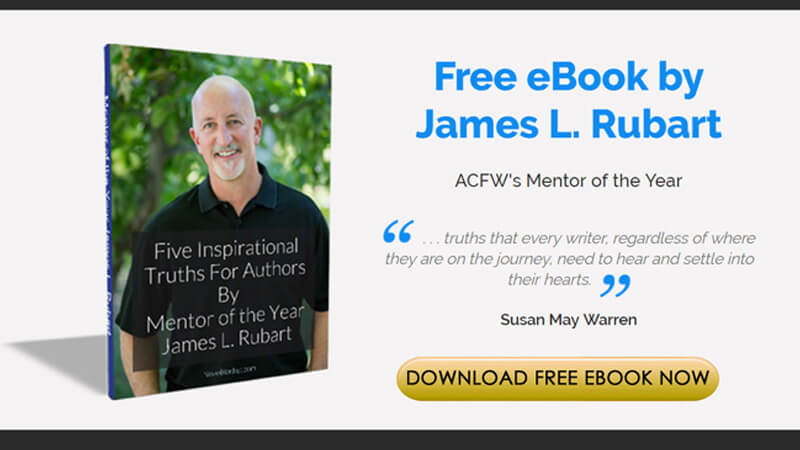
Get a Free Ebook

Five Inspirational Truths for Authors

Try our Video Classes

Downloadable in-depth learning, with pdf slides

Find out more about My Book Therapy

We want to help you up your writing game. If you are stuck, or just want a boost, please check us out!

Monday, August 21, 2006

Author Interview ~ Alison Strobel

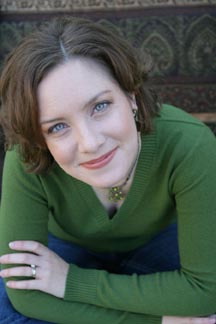
Born and raised in the suburbs of Chicago, Alison began writingstories in elementary school, following in the footsteps of herjornalist/author father, Lee Strobel. She moved to California in 2000,which provided her with the idea for her first novel, "WorldsCollide." She lives in the infamous OC with her husband, Daniel, andtheir daughter, Abigail.


What book or project is coming out or has come out that you’d like to tell us about?
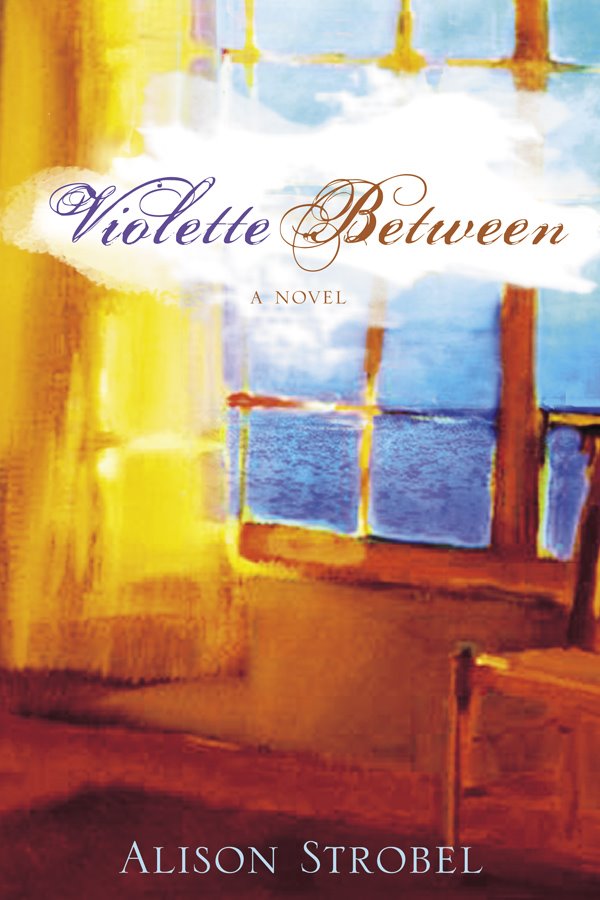
My newest release, Violette Between, poses the question, “Would you give up your future if you could relive your past with a loved one you’d lost?” Violette finds herself stuck in her memories with her deceased husband, and must choose whether to remain with him or lose him again by going on with her life. Complicating matters is Christian, the man with whom she is currently involved, and he’s not willing to give her up that easily.


Tell us about your journey to publication. How long had you been writing before you got the call you had a contract, how you heard and what went through your head.

I’ve been writing ever since I understood what a sentence was. I distinctly remember composing a story in first grade and being frustrated with my small vocabulary, because there were things I wanted to describe but just didn’t have the words for yet. All through school, writing was my sole academic passion. I didn’t care if it was a research paper or a creative story, I took every opportunity I could to write. My fourth grade teacher had story starters for us to work on when we’d finished everything else, and I became famous (in 4B, anyway) for the ideas I came up with. That was when I got my first taste of the satisfaction that comes with seeing other people enjoy what I’ve written. From there on out, writing for others became as much a passion as writing for my own enjoyment.

In 2000 I moved to California, and on my first drive through Hollywood I came up with the concept for Worlds Collide. I wrote the book over a year and a half in my free time. I never planned on submitting it anywhere, because I knew how difficult it was to get published and I didn’t really have any other ideas for books—I saw this as a personal project that would end up living on the top shelf of my closet and never be seen by anyone but my mother.

Also, I worried that, if I did try to submit it somewhere, publishers would see my last name and think either A) ”This is our chance to get the Strobel name in our catalog!” or B) “Maybe if we’re good to her we can get her dad to sign with us, too!” I also worried that people in general would assume I was only published because my dad had pulled strings for me and that I was just riding on his coattails.

In 2002 Waterbrook Press started trying to recruit my dad to write fiction with them. During one of his conversations with their fiction editor, Dudley Delffs, he mentioned that I’d written a book, and Dudley asked if I’d let them see it. I sent it to him with a note saying I wasn’t interested in publishing with them if they were only interested in the last name on the cover.

Six weeks later Dudley called and told me they were interested—and would be just as interested if the author had been listed as Jane Doe. There were a few weeks of editorial and publishing board meetings for it to get through, and on October 8th, while on a bus with my fellow teachers from the private school where I worked, I received the call from Dudley that they not only wanted to give me a contract for Worlds Collide, but for a second book as well!

I remember sitting there with all my coworkers staring at me as I nodded dumbly to what Dudley was saying. One of them whispered, “Do you think it’s good news?” Someone else said, “I see tears, but she’s smiling!” It was so much fun to be surrounded by friends when I got the news—they’d all been praying for this for the last few months, and to be able to jump up and say, “You are not going to believe what they just offered me!” was priceless.

Do you still experience self-doubts regarding your work?

ALL THE TIME. I think every serious author realizes there’s always room to improve, and with that knowledge comes the realization that what you’re doing right now might not be that great. I worry that my friends and family are the only ones buying my books (or bullying others into buying them, too), or that I’m never going to get another contract, or that my first two books were total flukes and I’ll never be able to finish another writing project again. Oh yeah, plenty of self-doubt.

What mistakes have you made while seeking publication?

Well, honestly, I didn’t seek publication; it kind of came seeking me. I do wish, however, that I’d tried to get an agent when I saw that a publisher was interested, because I didn’t have anyone to be my advocate when it came time to review my contract.

What’s the best advice you’ve heard on writing/publication?

Being a writer means there’s always room for improvement. Find a mentor, go to conferences, and read, read, read, read, read.

What’s the worst piece of writing advice you’ve heard?

I read something recently about how you should never start a book with the main character in the kitchen, driving a car, or waking up. But that implies that no one’s imagination is good enough to come up with a way to make those things interesting. You could start a book with someone in front of a firing squad, and if you’re not a good writer or not very imaginative, you could make that scene as dull as reading stock quotes. If your book opens with the main character driving a car off a cliff—well, that’s definitely got potential to be interesting! I also read something about not “head hopping”—changing points of view between characters.

I did that with Worlds Collide between three characters—and I also changed tenses!—and I’ve yet to have anyone think it was confusing. Telling someone they shouldn’t write a certain way is bogus, I think—write the way you feel led to write, the way the story comes to you. If you don’t do it well but you’re humble and open to critique and help from an editor or other writers, then they’ll be able to help you fine-tune it so that it works.

What’s something you wish you’d known earlier that might have saved you some time/frustration in the publishing business?

It’s better to go to your editor at the beginning of a story to hash things out when you’re stumped or things don’t seem to be flowing than to wait until the end and end up having to change 200 pages of text instead of just a chapter. With Violette Between I had difficulties from day one, but I just kept writing and trying to tweak it and experiment, and three months before my deadline my editor and I finally sat down and said, “What on earth can we do to save this thing?” Dudley came up with the angle that worked, and I ended up trashing everything—180+ pages—and starting over. Only one scene was salvageable (the reveal of Violette’s new studio, for those of you who decide to read the book). As I lugged myself to the library all summer to work I kept thinking, “Why didn’t I talk to Dudley earlier?!”


Is there a particularly difficult set back that you’ve gone through in your writing career you are willing to share?

So far it’s been a pretty short career; other than having to rewrite my entire manuscript in three months things have gone pretty smoothly! Right now my biggest struggle is just finding time to write—our first child was born in December, and she’s at the stage now where she wants you to play with her; she’s not content to sit in one of her activity centers or on the floor with her toys for long. When I’m really in the mood to write, it’s hard to set the laptop aside and read (or rather, recite from memory) “The Belly Button Book” for the hundredth time. I just keep reminding myself that writing will always be with me, but Abigail’s only a baby once!

What are a few of your favorite books? (Not written by you.)

Ooh, I love to recommend books! Okay, let’s see…Microserfs by Douglas Coupland, A Tree Grows In Brooklyn by Betty Smith, A Voice In The Wind by Francine Rivers, The Giver by Lois Lowry, The Hiding Place by Corrie ten Boom, Idoru by William Gibson, The Diamond Age by Neal Stephenson…although my answers might be completely different in a week; it kind of depends on the mood I’m in at the time.

What piece of writing have you done that you’re particularly proud of and why?

My first novel, Worlds Collide, because it was the first book I ever finished writing. I tried writing novels when I was in college, and I never got past the first couple chapters. I remember typing out the last line of Worlds and bursting into tears because—well, because the ending of that book always makes me cry when I read it, but also because I’d done it, I’d written an entire book. It was a shock. Even if it had never gotten published I would have been proud of it because it was such a huge personal accomplishment.

Do you have a pet peeve having to do with this biz?

I’m really frustrated with the limitations put on authors in the CBA. It’s very difficult to write authentic characters when you’re told you can’t use certain words or let your characters engage in certain behavior.

Can you give us a view into a typical day of your writing life?

I wish I could—that would mean I have a typical writing day! It used to be that I would write in the late mornings into the afternoon; that’s my most productive time. Now it’s whenever Abby is napping and there’s not eight piles of laundry to be done or a sinkload of dishes needing to be cleaned. Or it’s when my husband is able to take her for a few hours. It’s been harder than I expected to get back into writing after taking a break when Abby was born, so I’m still trying to figure out how to get back into the swing of things.

If you could choose to have one strength of another writer, what would it be and from whom?

Easy: Jodi Picoult’s flair for figurative language. It’s wonderful. She was a poetry major in college and it shows. I love almost all her books—but there’s no one book that I like more than the others, which is why none of hers are in my list of favorites. Actually, may I have two? The second would be Terry Pratchett’s ability to describe so much with so few words. William Gibson has the same strength. I covet their economy of words.

Do you have a dream for the future of your writing, something you would love to accomplish?

I wish I could live off my writing. Every writer’s dream, right? I know it’s a long shot, but to be able to make a living doing only what I love would be heaven.

Was there ever a time in your writing career you thought of quitting?

Not yet, but ask me again in five years and I’m sure there will have been at least one time, if not many!

What is your favorite and least favorite part of being a writer?

My favorites: Creating new realities. Being able to live vicariously through my characters. Exploring the consequences of things I’d never do in real life. My least favorites: Editing. The discipline writing requires. Reading something I’ve written and thinking, “I know there’s a better way to say that, I just can’t figure out what it is.”

How much marketing do you do? Any advice in this area?

Not as much as I should. I get overwhelmed by marketing. And I feel like I’m blowing my own horn and bragging when I do it. I’m afraid people will think I’m prideful, like I think this is the greatest book ever written or something. I wish I had advice—I feel like I need other people’s advice!

Parting words?

I have a blog on my website (blog.alisonstrobel.com), and I’ve started getting in on some blog tours, so stop on by to win free books and hear about some of the new stuff coming out from other Christian authors.

For those of you in book clubs: I’ve started doing Q&A sessions via the phone or in person (if you live close by) with groups that read my books, so if you’re interested please contact me through my website (alisonstrobel.com). It’s been so much fun to hear what people read into what I’ve written, and we’ve gotten into some great discussions.


Friday, August 18, 2006

Radio Part 2


Last week, I passed on some pointers of what not to do or say on air. This week, let's talk about what to do. Since the majority of your radio interviews will be from home, we'll focus on those.

1.) Give yourself some time to prepare and review those notes. Moms, I suggest having your sitter take the children from the house.

2.) Make sure that you are calling from a grounded telephone line. Even if you know your cell service would never drop out, why take the risk?

3.) Remember to turn off your call waiting. (And if by some horrible chance you forget, try not to speak during those beeps, but don't let it distract you from the task at hand. Worse things in life have happened.)

4.) All the listener is going to know of you is your voice. Speak clearly and sound confident. Some professionals suggest using short sentences to avoid grammar mistakes.

5.) Have index cards with your notes laid out before you---this will help you to avoid the background noise of rustling papers.

6.) If you stumble and it's a recorded interview, ask if you can start that question over. If you're live, just keep going.

7.) Be interactive with your host. First and foremost, you want to win them. If they are engaged, the conversation will flow easier and be more entertaining. By complimenting their best questions, you will also compel the listeners to pay attention to those answers.

8.) Do not be afraid to ask the host to repeat a question or clarify.

9.) Most of all, relax and be yourself. Allow your enthusiasm for your book to shine through.

Thursday, August 17, 2006

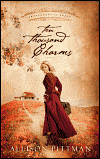
Author Interview ~ Allison Pittman


Allison Pittman is the author of Ten Thousand Charms, the first book in the Crossroads of Grace Series from Multnomah Publishers. Writing Christian fiction is a new career for Allison, who taught English at Judson High School for 16 years. She is a founding member and co-president of the Christian Writers Group of the Greater San Antonio area where writers meet weekly, studying craft and working toward publication. She also serves as the director of her church’s Theater Arts Group ministry, writing scripts for worship services and full-length programs for the Christmas season. Allison and her husband Mike have three wonderful sons—twins Jack and Ryan, and Charlie.

What new book or project would you like to tell us about?


My first novel, Ten Thousand Charms is out in bookstores now. It was released in May, and has been doing well (better than I expected, actually, given all the precautionary language that floats around a first release). It is the first in a series called “The Crossroads of Grace.” The second book, Speak Through the Wind is due out in March, 2007.

Tell us about your publishing journey. How long had you been writing before you got a contract? How did you find out and what went through your mind?

Compared to other stories I’ve heard, by publishing journey was a relatively easy one. Before settling into writing Christian fiction, I knew I wanted to write something; I just didn’t know what. Writing fiction fit my life at the time—no deadlines or hard commitments. I fiddled around with Charms for several years (thinking, nobody’s ever going to read this anyway), but my first pitch to Multnomah at the Glorieta Christian Writers Conference was a successful one. My editor, Rod Morris, was interested in the project (which consisted of only 7 chapters at the time). He asked me to submit a proposal, which I didn’t do because during the ensuing year, I only added a few more chapters. At the next year’s conference, I spoke with him again, and he still liked the story. Still wanted a proposal. This time, I followed through. By the next year’s conference, I was just a few conversations away from a 3-book contract.

Do you still have self-doubts about your writing?

You have no idea. It’s paralyzing. I’ll agonize for weeks about what to write for my website journal—never mind that in doing so I’m leaving the same entry up for far too long. Everything just sounds so stupid in my head, I can’t imagine the journey through my fingers to my keyboard guarantees any substantial improvement. Going through the editing process on my first book meant a wave of nausea every time I had a new batch of chapters back from my editor. For the first read-through, I put my hands over my eyes and look through my fingers. When I write skits for my church drama ministry, I watch the actors who are performing my scripts, and I can hardly breathe until I get the first bit of audience laughter. Yeah, I have doubts.

Was there ever a time in your writing career you thought of quitting?

Yes, but frankly, all of those thoughts came before I actually got started. I spent a lot of time swearing that I was never going to write, could never be published, had no talent, wasn’t willing to make the sacrifices…all before I had that first taste of success and acceptance. Since then, there’s been no looking back.

What mistakes did you make while seeking an editor or agent?

I don’t have an agent right now, and if that’s a mistake, time will tell. In selecting an editor? Absolutely no mistakes. None. The aspects of my novel that receive the most praise from my readers are those aspects that were suggested by my editor.

What’s the best writing advice you’ve heard?

Hmmm…I’ve heard so much. But for writing fiction, I think it’s this: there’s a huge difference between what you (the author) need to know about a character’s back story and what the reader needs to know. Include background information sparingly and judiciously. Make it a part of who the character is now, without necessarily explaining why.

What’s the worst piece of writing advice you’ve ever received?

“Write what you know.” What I know is boring. Instead, write what you wish you’d known.

Do you have a pet peeve having to do with this biz?

I do, but let me first give a disclaimer saying that this is something I see declining. For a long time, I think Christian fiction focused more on bouncing the Gospel between beautiful, upright people, rather than crafting compelling stories. That’s changing. A lot. We’ve got sinners and suspense and the supernatural all happening now.

What do you wish you’d known early in your career that might have saved you some time and/or frustration in writing? In publishing?

I’m still so new in this career, I have no idea if I’m in need of “saving.” Make me a deal? Ask me to do a new interview when Book #3 comes out, and I’m sure I’ll have a lot to say!

Was there ever a difficult set back that you went through in your writing career?

Last year, trying to finish Book #2, teach school full time, being a wife and mom—it was all so, so hard. Our household was crazy, and I was a stressed-out mess.

What are a few of your favorite books?

I love A Tree Grows in Brooklyn by Margaret Smith. I read it at least once a year. It is a perfect, perfect story.

Bel Canto by Ann Patchett should be required reading by anybody who wants to write a novel. She has a cast of perfectly crafted characters in what amounts to a massive crowd scene (which are bears to execute), and she moves through POV changes like Gene Kelly dancing on the “tab” key. It is pure craft and magic. And I actually had a girly crush on her character, Son, in The Patron Saint of Liars. I found myself giggling and blushing during his more charming scenes.

I’ve read everything written by Anne Tyler. She makes Baltimore, MD seem almost other-worldly. The Accidental Tourist and The Amateur Marriage are masterful.

If it weren’t for Lynn Austin’s Eve’s Daughters, I wouldn’t be writing Christian fiction. That book made me want to join her ranks.

What work have you done that you’re especially proud of and why?

I am, of course, proud of my first novel and the warm reception it’s getting out there, but I have to say that I’m also pleased with the writing I’ve done for our church’s Theater Arts Group—especially the Christmas programs. A few years ago I wrote one that is a true Abbot and Costello-esque comedy that was absolutely hilarious. Our Christmas Eve audience is about 2,000 people, so it’s nerve-wracking, but tremendously rewarding. It’s immediate gratification with laughter and applause.


Do you have a scripture or quote that has spoken to you lately in regards to your writing?

Go, eat your food with gladness, and drink your wine with a joyful heart, for it is now that God favors what you do. [Ecclesiastes 9:7] I took a great step out on faith and took a year off teaching to complete my third novel, feeling completely that it was what God wanted me to do.

Can you give us a look into a typical day for you?

I really don’t have a typical day. I can give you all of the elements, but they don’t occur in any particular order. There’s time spent in prayer and reading my Bible, brushing my teeth, making meals and snacks and cleaning up, going to baseball or soccer practice and games, watching TV (I’m an American Idol-aholic), training my dog, loving my husband. Oh yeah. Writing.

Do you have a word or page goal you set for each day?

I’m a feast-and-famine girl there. I can go for weeks without writing anything, then hole myself up for a weekend and slam out four chapters. I’m part of a critique group, and we owe each other 12 pages every Monday to be taken home for review. If nothing else—no matter what was going on—I made sure I had my 12 pages for my group.

Are you an SOTP (seat of the pants) writer or a plotter?

I’m a plotter with really good intentions. Unfortunately, I’m somewhat of an ADHD plotter, and once I’ve plotted something out, I often forget to rein in my characters and they’ll take me a bit off course. I’ve gotten some of my best scenes that way. Want real laugh? Read through my original synopses for Ten Thousand Charms and Speak Through the Wind. Then read the book. The two are little more than distant cousins.

What author do you especially admire and why?

I alluded to them in an earlier question…but they bear repeating. Ann Patchett for her craft. Anne Tyler for sheer story-telling. Lynn Austin for being so fantastic in the realm of Christian fiction. Maeve Binchy is masterful at handling huge numbers of characters and intricate story lines; when you read her books, you have no idea how many people, places and plots your brain is being asked to keep track of. If you stopped to think about it, you’d go crazy. And, my personal hero, Laura Ingalls Wilder for being so honest and brave.

What is your favorite and least favorite part of being a writer?

My favorite part is anytime anybody says, “I loved your book…” followed by some specific tid-bit. My least favorite? Convincing my husband that I’m working!

How much marketing do you do? What's your favorite part of marketing?

I don’t do nearly enough. Much of that goes back to the self-doubt in the earlier question. Plus, I’ve never really liked to call a lot of attention to myself. Guess I’ll have to learn to do that. But really, I think I need to get a hold of a good publicist or agent—somebody who will just tell me where to go and what to do. I’m most comfortable in my flamingo shorts and purple t-shirt, pounding away on my keyboard.

Do you have any parting words of advice?

It is virtually impossible to publish something that hasn’t been written. You aren’t allowed to say that you want to be a writer unless you are in a directed habit of committing words to paper (or screen!) Keep at it, and find an audience. Remember, though, an audience is somebody who is blessed by your words, not somebody who pays for them.

Wednesday, August 16, 2006

Author Interview ~ Christine Schaub

Christine Schaub is an accomplished writer, speaker, actor and pianist. Finding Anna, her debut novel, launched the Music of the Heart series, followed by The Longing Season. Both books received instant acclaim from reviewers and are endorsed by Library Journal, Church Libraries, CCM Magazine, Foreword Magazine and myriad online publications. Schaub lives in Nashville, Tennessee, and invites readers to visit her at www.christineschaub.com.


What new book or project would you like to tell us about?

The Longing Season—the second book in the Music of the Heart series—just released to critical acclaim. This historical series tells the stories behind the writing of our most famous hymns, and The Longing Season is the two-year odyssey behind John Newton’s life and the set-up of “Amazing Grace.” The series is endorsed by Library Journal, Church Libraries, CCM Magazine, Foreword Magazine, and myriad online publications, was translated into Dutch, and went hardcover with Crossings Bookclub.

Tell us about your publishing journey. How long had you been writing before you got a contract? How did you find out and what went through your mind?

I am a rather reluctant novelist. My writing journey started with a BA in journalism, which led to ten years in corporate communications. My specialty was short, snappy copy—headlines, taglines, product descriptions, sales letters. Meanwhile, I was writing and performing five-minute monologues of the hymn stories at conferences, churches and businesses across the Midwest.

When I moved to Nashville, I decided to pursue screenwriting and developed these hymn stories into teleplays—screenplays for television movies. In the midst of shopping the teleplays, I was offered a chance to turn the stories into novels and develop a ready-made audience for the movies. And here’s where I slammed on the brakes. “Nope. Not interested.”

But in the car after the meeting, my film agent turned to me and hissed, “You are a writer. Your assignment is a novel. Write it.” When I argued that I was not a novelist—was a short-story writer at best, he countered with, “A novel is just thirty short stories.” When I argued that I didn’t know the first thing about novel writing, he blasted me with, “Look, just go to the bookstore and get a book—‘How to write a novel.’ It can’t be that much harder than what you’re already doing.”

So I drove to Borders, stomped over to the writing section, and picked up the book, Writing the Breakout Novel by Donald Maass. I followed the directions, wrote four sample chapters and submitted them with a series proposal written by my agent. Two months later, the VP of Bethany House Publishers called and offered me a multiple-book series contract.

And then I thought, what have I done? I’m not a novelist, never wanted to be a novelist, have no interest in being a novelist. But I wanted to get the movies made, so I knuckled down and wrote a novel. Finding Anna—the story behind the hymn “It Is Well With My Soul”—debuted the series October 2005, and it’s been a whirlwind of writing and marketing ever since.

Do you still have self-doubts about your writing?

Of course! I think every successful writer has those late-night moments of shutting down the computer, thinking “Brilliant! Brilliant!”…then waking up hours later, thinking “Fool! You’re a fraud!” Self-doubt creates self-editing and leaves one open for constructive criticism.

Was there ever a time in your writing career you thought of quitting?

Definitely—but only because of the frustrations inherent in the publishing industry. Thank goodness for binding contracts, or people would be quitting all the time.

What mistakes did you make while seeking an editor or agent?

I have wonderfully talented editors and feel like I really dodged the horror-story bullet on that front. My agent mistake was in keeping a film agent in the publishing industry. Those are two very diverse industries with different rules and expectations. My first agent and I had an amicable parting and I’ve since signed on with a literary agency.

What’s the best writing advice you’ve heard?

Write what you know. If you’re politically savvy and like to read thrillers—write them. If you’re constantly seeking out a romance—write it. If you love plots with historical settings—research and write them.

What’s the worst piece of writing advice you’ve ever received?

One writing mantra goes: “Just write randomly, then throw it all out and start over.” That’s an enormous, unpaid waste of time and energy. One wouldn’t apply that mantra to cooking or driving or even doing laundry…so why attempt that with the task of writing?

Do you have a pet peeve having to do with this biz?

For a business in communication arts, publishers are notoriously bad communicators. They offer very little information, and it’s like pulling teeth to get basic updates out of them, like sales status, marketing budget, reviews, promotions.

What do you wish you’d known early in your career that might have saved you some time and/or frustration in writing? In publishing?

I wish I’d understood the publishing industry better—knew what upfront questions to ask, what contractual clarifications to make, how do get marketing/publicity excited about my books.

What are a few of your favorite books?

From mainstream fiction: A Prayer for Owen Meany, by John Irving; the Stephanie Plum series by Janet Evanovich; the Mitford series by Jan Karon.
From Christian fiction: Redeeming Love, by Francine Rivers; anything by Ted Dekker.

What work have you done that you’re especially proud of and why?

During a five-year writing break, I worked at an alternative school with at-risk youth. I was a group therapist and learned to become more of a listener than a problem-solver…and I taught these kids that if you can laugh about it, you can fix it.

Do you have a scripture or quote that has spoken to you lately in regards to your writing?

In Matthew 6:34, Jesus said, “Do not worry about tomorrow, for tomorrow will worry about itself. Each day has enough trouble of its own.” The best I can do is set goals and do what I can to meet them. God will work out the rest.

Can you give us a look into a typical day for you?

I like to tell people that if they peered through my living room windows on any given day, it would look like I’m doing a whole lot of nothing. The muse shows up when she wants to—sometimes at 9:00 am…sometimes at 10 pm. So after the coffee and newspaper, my day is up for grabs. If I’m not feeling particularly creative, I’ll do some organizational work, or marketing, or research, or laundry. Eventually, the ideas come and I’m a flurry of creative genius. (Christine chuckles)

Do you have a word or page goal you set for each day?

Absolutely not. That’s an unrealistic expectation for me. But I do have a subconscious reckoning in the back of mind that flashes little messages, like “if you don’t get two chapters written this week, you’ll never make the deadline.”

Are you an SOTP (seat of the pants) writer or a plotter?

I’m a rabid outliner. Sometimes I outline within the outline. I outline the book, chapter-by-chapter, with dates, settings and topic sentences. Then I’ll often outline chapters in action “beats”—a screenwriting technique.

What author do you especially admire and why?

For my genre, I greatly admire Francine Rivers—she has the gift of storytelling, with emotion so deep and dialogue so clever that I forget to analyze plot.

What is your favorite and least favorite part of being a writer?

I love the flexibility of writing at home—the corporate 9-to-5, one hour for lunch rules were always a struggle for me. But I sure miss that regular paycheck! And the benefits…oh how I miss those health, dental, visual, paid vacation perks.

How much marketing do you do? What's your favorite part of marketing?

I do a tremendous amount of grassroots marketing—postcards, emails, website, book signings, store visits, interviews. I really enjoy interacting with my readers through my website and at book signings.

Do you have any parting words of advice?

The person who cares the most about your book—and your writing career—is you…not the publisher, not your agent, not the reviewers or stores or magazines, not even your mother. So, you have to become almost fearless in making your book a bestseller.

Tuesday, August 15, 2006

Itching to Network!


The ACFW conference is only five weeks away! I'm already laying out my clothes to pack, printing my proposals to pitch and choosing candy for the chocolate party. I bought my plane ticket and a new spiral notebook for all the notes I'll take in my classes (After my first conference, I kept the notebook by my elbow to refer to as I wrote. Deb Raney taught the class I took, and I filled the pages with copious notes, then came home and edited my manuscript). I've talked to my agent about which editors to see, and I've polished my pitch until it gleams.

But most of all, I'm looking forward to networking, renewing old friendships and putting skin on the new cyber friends I've made this year.

Writing is a lonely profession, especially for a people-person like me. The community of writers is as essential as breathing to me. Who else can I talk to about my passion? My non-writer friends look at me like I'm an "E" shy of a full keyboard when I tell them my heroine took over my story and turned her back on the hero. I can't wait to share a Starbucks Venti Mocha Frappachino with another writer who nods and relates when I lament how my antagonist won't cooperate.

The ACFW Writers conference is the place to be—meeting agents and editors from the best CBA publishing houses. Contracts will be signed and awards given out. Who will you meet this year? Will it be that one special person who holds the key to your writing career?

Join me in Dallas and find out! You can register by clicking
here

See you there! I'll be laughing and towing Gina around, so look for me. :o)

Monday, August 14, 2006

Itching to Pitch?

I was asked to say something of interest for the ACFW (American Christian Fiction Writers) conference blog tour. I said sure and this is my attempt at fulfilling that promise. Let me inform you that I am by no means an expert. I’ve never sold a book. I may never sell a book. That disclosure out of the way, I can say I’ve had a bit of experience in the area of pitching my work and am glad to share what I’ve learned, for all it’s worth.

Here goes.


You’ve signed up for an editor appointment most likely. Just the one. Does that mean you have one shot at pitching an editor during the conference? Heck no. I pitched an editor in the hallway, one in the elevator, one over lunch, etc. You get the picture. I had two scheduled editor appointments last year but ended up getting six or seven requests for manuscripts because I pitched everyone who might publish in my genre.


TIP: be courteous and ask if you can pitch before you accost the poor
unsuspecting publishing folks. Otherwise you’re just being rude.

The first key to successful and confident pitching is to know your story. You will be asked who your protagonist is. Know the answer. What genre is it? Is it finished? If not, when do you expect it to be? Do you have writing credits? Who do you see your story appealing to? Anticipate the questions and be prepared to look like you know what you’re talking about. Fake it till you make it and any other cliché that applies.

The next key is to have a one minute back of the book type blurb memorized to pitch to an editor. We call this an elevator pitch. Because, like me, you may literally be pitching it in an elevator. Though it could be anywhere, more than likely, over a meal. I practiced mine last year for weeks before the conference. My friends and I would cold-call each other and say, “Tell me about your book.” This practice was nerve wracking but paid off big time at the conference.

You also want to have a longer synopsis type pitch memorized for when the editor says, "Tell me more."

The next tip I have for you is to RELAX. These editors and agents are just regular folks who love words just like you. Meet them. Make eye contact. Tell them calmly about your story. Answer their questions. Make small talk. Smile and wish them well.

I kind of treat my appointments like a job interview. That’s how I dress and how I present myself. I think I get a good response from this. I try to be courteous of the editors needs as well. If they are dying to go to the bathroom, for heaven’s sakes, be kind and let them, even if it takes up your full appointment time. They’ll let you pitch them later and will be a whole lot more receptive to hearing what you have to say because they’ll know you’re a decent person who takes pity on others. It’s doubtful that one editor appointment is going to make or break you.

Don’t suck up. People see through it and no one respects that. Again, be kind, be courteous. That’s enough.

Another good idea is to find out what editors are going to be at the conference. Google them. Find out all you can about them, especially what they look like so when you see them alone, you can introduce yourself and ask if you can tell them about your book.

Chances are they’ll say yes. Find out what their house publishes and don’t bother the editors who don’t do your type of story. I wouldn’t pitch a Steeple Hill editor,
The Demon Chaser for instance. Don’t waste their time.

Take a deep breath before pitching, smile, slow down your talking, sit on your hands if you need to keep them from shaking and don’t tell them your nervous. Drawing attention to your jitters only makes it more pronounced.

Most editors will probably listen to your spiel, ask you a few questions and then tell you to send them a proposal. Thank them and say farewell. That’s the best response you’re going to get and doesn’t mean anything other than you get another chance to prove yourself.

Oh yeah, if an editor is reading your manuscript, do yourself a favor and zip your mouth. They’re reading your stuff. That’s what you want.

I’m looking forward to seeing you all there!
(Just look for the happy red-head (Ane) and the boisterously laughing brunette she tows around.)


Saturday, August 12, 2006

Preparing for the ACFW conference

Mick Silva, acq. editor for WaterBrook, posted fantastic tips on preparing for the upcoming ACFW conference. here