Get a Free Ebook

Five Inspirational Truths for Authors

Try our Video Classes

Downloadable in-depth learning, with pdf slides

Find out more about My Book Therapy

We want to help you up your writing game. If you are stuck, or just want a boost, please check us out!

Saturday, June 17, 2006

Top Ten

No particularly interesting news for you today but for fun we thought we'd try a top ten list. We'll need your help. (This is meant to be tongue in cheek so please no angry emails. It's a JOKE.)

Top Ten Things you can get away with once you're a NYT best-seller.

10. Call your agent just to ask if he thinks you should get blonde highlights or red.

9. Sign other author's books with your name.


There, I got us started. Anyone have a good one?

I'll post the list next Saturday if we complete it.

Friday, June 16, 2006

Your Press Release ~ A Reflection of You


by Rebeca Seitz
Glass Road PR

Press releases – they’re the only face many media outlets will see of you. Just like your book proposal, your press release may be blithely tossed aside by its recipient, or devoured word by word.

Part of that outcome rests in the quality of the release. Since we have control of that, let’s look at ways to ensure a fabulous release is the result of your hard work.

First, ensure your release looks like an entertainment release. Add your book cover to it, in color. If you have room, add a small picture of yourself. This lets the recipient know the release isn’t about news, it’s about entertainment.

Second, write copy that informs, but does not sell. For instance, “Thousands of readers have already flocked to the stores to purchase advance copies of this book,” works better than, “Don’t miss the boat! Hurry to your neighborhood bookstore before all copies are gone!” The first sentence is informative and gives the media rep a fact to use in a story. The second is more consumer-oriented and is meant to increase sales.

Third, if you have a personal story, tell it. Did you scale Mount Everest to research your main character? Say that! Work for six months in soup kitchens to write a story about the homeless? Tell it! Media love the human interest angle of the story behind the story.

Fourth, and finally, be certain to include contact information for the media rep to get further info.

Remember, the release should be a reflection of you and your book. Whether you or your publicist writes the release, the end result should not be a form that’s been filled out. Instead, the release is you, standing with hand extended to media, saying, “Hi, nice to meet you.” Make sure when that release looks in the mirror, it’s seeing your reflection.

Thursday, June 15, 2006

Linda Wichman ~ Author Interview

Biased by her Celtic heritage, some of Linda’s (Holloway) Wichman’s fondest memories were spent in imaginary worlds behind the covers of a book. She sites Charles Dickens, Jules Verne, H.G. Wells, C.S. Lewis, J.R.R. Tolkien and Mary Stewart to have influenced her. A (RWA) Romance Writers of America member, she became a Historical Romance Finalist in the 1984 (RWA) Golden Heart Contest. She is also an active affiliate of (ACFW) the American Christian Fiction Writers.

Her first published novel, Legend of the Emerald Rose, a historical fantasy romance, debuted January 2005 through Kregel Publications. In September 2005, Legend of the Emerald Rose won the ACFW 2005 Book of the Year for General Fiction at The American Christian Fiction Writers Conference in Nashville, Tennessee. More recently she became a finalist for The 2006 Christy Award — Visionary and a nominee in the 2006 International Retailers Choice Award — General Fiction.

What new book or project would you like to tell us about?

I have several, but will share two. I’m excited about the 2nd book of The Emerald Rose series, Briar’s Rose . . .The Legend Continues set during the 3rd Crusade. I adore feisty Tamar fitz Alan and Templar Knight, Somerled mac Gillebride — descendants of Shadoe and Rayn. I’m hoping all my research paid off, and the readers enjoy Stuart/Stewart lineage weaved into the ongoing legend of the Emerald Rose. 'Tis an intangible veil between truth and illusion . . .from what the eye perceives and the pure heart knows.

Also, I’m writing my first contemporary romance Catch A Falling Star. This modern story of two star-crossed lovers is infused with humor, romance, suspense, with the underlying theme of the horrific offense of incest, that often goes undetected or far worse, unpunished. I hope that besides enjoying an entertaining love story, some readers will find a healing solace from their own childhood abuse. Being a survivor of incest, I’m very much a part of the heroine, Eliza Smyth. “I’m a good girl, I am!” Eliza Doolittle –My Fair Lady.

Tell us about your publishing journey. How long had you been writing before you got a contract?


I’ve been creating imaginary characters since I was five and began to write around eight. I’m fifty-three, so you can do the math. I started to pursue publication over twenty-five years ago. It’s been a remarkable journey of learning curves, most of them positive.

How did you find out and what went through your mind?

My agent called me and sounded pretty serious, upset even, and told me to sit down. So I dropped onto a stair rung and held my breath. Next thing I heard was, “Linda, Kregel wants to offer you a contact for LER. Whatcha think?”

Think!! Who could think? I literally went brain-dead. After nearly thirty years of wanting to hear these words I was speechless! Not something that often happens to me—the speechless part. I realized I had someone other than God, my critique partners and agent who believed I could tell a good story. This meant I had to fulfill a legal contract. I almost puked. Instead, I chewed some antacids, praised God, and then kissed my husband—stupid!

You're a Christy Award finalist. How was that process? How did you find out about being a finalist?

Although, I’d won the 2005 ACFW Book of the Year award, I never expected to final in another reader contest. Then I got a ‘congratulation email’ from my ACFW friend, Ronie Kendig, but figured she was sharing someone else’s good news. When I realized she meant me, I called her to verify she wasn’t on a caffeine high. Sure enough, it was for real! Finalizing in the Christy has further left me in awe of God’s sovereignty. He is faithful.

Do you still have self-doubts about your writing?

Always! The day I stop doubting will be the day I stop writing. I know that God blessed me with this aptitude and that I am to glorify Him with every word. But I share the same doubts most writers have. There are days I read what I wrote and think, ‘Man, oh, man, this stinks.’ Still, I don’t ever want to forget that in the blink of an eye God can take away this gift. Nor do I want over-confidence to hinder my footsteps on God’s narrow path. I am blessed to have family and friends with sharp hatpins for those times my head expands beyond my shoulders. They keep me humble.

Was there ever a time in your writing career you thought of quitting?

Yes, several times. I even asked God to take this desire from me as I realized that my marriage and family were suffering because I had become obsessive about writing. However, God never took the desire away, if anything, He cultivated that aspiration even stronger. He then opened my eyes to see that my priorities had to change. Once I put Him first, family second, and writing third, I became happier and more receptive to the fact God wanted me to write.

What mistakes did you make while seeking an editor or agent?

Oy! Let me count the ways. Don’t worry I won’t. But I’d rather relate something that was more of a learning curve than a mistake. As a finalist in the RWA 1984 Golden Heart contest several agents courted me. One was Sandra Brown’s agent—you know that New York best selling author. I almost signed with the agent but when she suggested I rewrite my novel, I said no. Yes, pathetic I know—Dumb, dumb, and dumber!


She actually wanted me to switch to contemporary romance, because historical romance had been tapped out. She was right. Yet again, I said no. We parted on good terms and have spoken over the years. I now realize that experience was a double-edged sword. Had I signed with her, I probably would have been published in the secular market.

Thankfully, God knows best. I was young, green, and because I wasn’t in a solid relationship with Jesus I wouldn’t have handled success in a mature Christian manner. Back then, I was writing bodice-ripper romances—my lame justification—was that my heroes and heroines were always married before those explicit sex scenes. Sad, huh? However, God knew the condition of my heart and was patiently grooming me to write for Him. To this day I remain grateful that I don’t have the baggage of erotic romance.

However, I suggest that if a respected agent wants to partner with you, buck-up and listen to him/her, coz, they have loads more publishing experience than you, a greenhorn author.

What’s the best writing advice you’ve heard?

Read! Read! Read! It’s the best writing exercise you can practice. Remember C.S. Lewis said, “We read to know we are not alone.” But as writers we also read to know what our readership do and don’t want to read.

What’s the worst piece of writing advice you’ve ever received?

Guess I’ll go with the most recent. “I can’t believe you’re wasting your time writing another Arthurian legend story. They’ve been done to death! Who in the world is going to read that dribble?” At the time, I felt devastated and discouraged. Now I smile!

Do you have a pet peeve having to do with this biz?

Um, funny you should ask. I know I’m opening a can of worms, but here goes. As an author with a calling for outreach, I am frustrated that the CBA has cloistered itself from the mass secular market. My heart aches whenever I enter secular bookstores and find a scant handful of (Celebrity) Christian authors on the secular shelves, while the majority of us are shoved in a back corner called, ‘Inspirational Fiction.’


How in the world—literally, do we reach the lost, hungry souls who don’t frequent Christian Bookstores? Why can I find a romance with a hero/heroine that embrace Buddhism or New Age on the secular romance shelves but few Christian hero/heroines? So where should the blame fall?

Regretfully, the blames falls upon our own community of Christian publishers, authors, agents, and readers who don’t want to be linked with secular fiction, even on the store shelves. This is not a slam against edification, because I’m a huge supporter of edification fiction and read it every day. But my evangelistic heart remains restless. True, God set us a part from the world, but He didn’t intend for us not to be in the world. So, I loosely quote Francine Rivers about that very sensitive subject, “We did it to ourselves.”

I for one, commend Silhouette for placing Steeple Hill romances beside their other romance lines. Meanwhile, I continue to fantasize that someday we can enter the mission fields of secular bookstores and find our novels not just in the Inspirational section, but side-by-side a secular romance or vampire thriller. Thus, allowing non-believing readers the opportunity to choose between a well-written novel with the Message of Good News—or not. But that will never happen if we don’t make ourselves accessible to the souls God has called us reach for His namesake.

What do you wish you’d known early in your career that might have saved you some time and/or frustration in writing?

That reading how-to-books, taking writing courses and workshops won’t magically make you a better writer; that only happens when you plant your derriere in front of your keyboard, apply what you’ve learned, and write every day—no matter what.

In publishing?

Agents and editors aren’t infallible. They are human beings who make mistakes just like the rest of us. Some are accountable, others aren’t. No matter how it goes down, learn to forgive, forget, and move on. And never, ever burn your bridges.

Was there ever a difficult set back that you went through in your writing career?

A few years after the RWA Golden Heart contest, I was in a car accident that resulted in a whiplash that triggered years of migraine headaches and neck pain. Eventually, I had two upper cervical surgeries and three knee surgeries. I spent about ten years not being able to write for any length of time nor pursue publication for fear I’d be unable to follow-through on a contracted deadline. During that time, God tutored me in patience, perseverance, and faithfulness.

Just when I had healed enough to write, I returned to the outside workforce to subsidize our children’s Christian high school education. I recall crying my heart out, but God planned those eight years for me to grow in my walk with Him. My experience in corporate sales exposed me to people and situations I’d never had encountered in front of my pc — more writing fodder. Again, I’m thankful to God for those growing pains and the great relationships I established.

What are a few of your favorite books?

Oy! So many. This Present Darkness, Frank Peretti. The Gleannmara Series, Linda Windsor. Arena, Karen Hancock. More recent – Dragonquest, Donita K. Paul. A Bride most Begrudging, Deeane Gist. Front Porch Princess, Kathryn Springer. Reluctant Burglar, Jill Nelson -- debuting August 2006.

What work have you done that you’re especially proud of and why?

Well, I’ve completed eight novels to date and started dozens more, but I confess that ‘Legend of the Emerald Rose’ will remain at the top of my ‘I am Proud List’ for a long time. Mostly, because it’s creative seeds were planted in me when at age ten I read, The Stone and the Sword, by T.H. White. I veraciously consumed everything on King Arthur and the Knights of the Round Table. Yet, it took about thirty-five years before I ventured to answer the question few authors have successfully pursued. What happened to Camelot after King Arthur died? The difference I believe is that my version has a happily-ever-after conclusion. At least, I hope that is how most readers feel.

Do you have a scripture or quote that has spoken to you lately in regards to your writing?

God speaks to me daily, but when I read 1 Corinthians 9:19-23 of The Message, I so related. “`Even though I am free of the demands and expectations of everyone, I have voluntarily become a servant to any and all in order to reach a wide range of people: religious, nonreligious, meticulous moralists, loose-living immoralists, the defeated, the demoralized — whoever. I didn’t take on their way of life. I kept my bearings in Christ — but I entered their world and tried to experience things from their point of view. I’ve become just about every sort of servant there is, in my attempts to lead those I meet into a God-saved life. I did all of this because of the Message. I didn’t just want to talk about it; I wanted to be in on it!”

Yeah, that pretty much describes my writing, especially my Internet, secular fanfiction stories that reach thousands of readers everyday. But that’s another story . . .

Can you give us a look into a typical day for you?

Did you say typical? Gulp. See, I’m a SOTP author, but I do have a loose routine. 6:00-6:30 a.m. I stumble down the steps into my kitchen. If I arrive there before my hubby leaves for work I make a grand entrance of perkiness, but he’s long known I collapse on the sofa and snooze another half-hour. Then, I boot up my pc and while it’s doing its ‘thing,’ I get coffee and breakfast. Next I read, answer, and generate email. I’m usually writing by 7:00 a.m.

My structured time with God remains a WIP. I prefer to do that while I drink my coffee. But when I flounder, I break around 9:00 a.m. and sit with God for a while, then back to work.

I wrote LER listening to Celtic music and Michael W. Smith’s, instrumental ‘Freedom,’ CD. Mine’s in need of replacement. Guess what’s on my wish list?

Before I write, I usually read what I wrote the day before. When I need a break, I do housework or edit my critique partner's WIP. During the summer I sit on my back porch with the laptop and write until it gets too hot, then retreat inside.

I usually have a working lunch and write until 4:00 p.m. After supper I spend time with my hubby then return to writing and wind-down around 8:00 p.m.

Do you have a word or page goal you set for each day?

No. I but I always have a date goal for the first draft — which varies. I tend to write faster and freer if I don’t have a daily word count. I know I can average 3-5 pages a day, more if I’m feeling frisky.

Are you an SOTP (seat of the pants) writer or a plotter?

SOTP. However, I am always plotting ideas and creating new novel folders. My imagination is on maximum overload. I’m A.D.D., but consider it a blessing for creativity. Don’t tell anyone, but I’ve become more structured in my old age, which scares my husband and worries my son and daughter.

What author do you especially admire and why?

C.S. Lewis. Because in a time when neither fantasy nor Christian allegory were popular, Clive crafted an unforgettable story about four children, a wardrobe, and a lion, that opened the floodgates for the rest of us. Still, it’s bittersweet that it took over 50 years for the world to publicly acknowledge this God-filled man. I like to think Jesus gave Clive an open wardrobe’s door to see how God used him for His glory in this immoral world.

What is your favorite and least favorite part of being a writer?

Favorite: I love the entire process of writing, especially the research and then the creative right brain part. I enjoy hearing from readers and writing back. I love to mentor new writers. I enjoy sharing what I’ve learned, and watching them develop into mature writers.

Least favorite: That like most artistic people I’m often not taken seriously. Many family and friends don’t consider writing an occupation, even though I’m now published.

How much marketing do you do?

Lots. I do interviews, book signings, and speaking engagements, etc. I regularly visit the local secular and Christian bookstores and know their managers. And yet, although I’m an extrovert, I’m not comfortable tooting my own horn. Go figure.

What's your favorite part of marketing?

Meeting new people.

Do you have any parting words of advice?

Today’s writers are contemporary bards. So, write the tale you’re yearning to tell. Because chances are that God branded that story on your heart long before it formed in your noggin. He is after all, the author of our lives.

Wednesday, June 14, 2006

An interview with ... me.

In case any of you wanted a voyeuristic view into my boring life, Gina Conroy interviewed me recently. She asked a lot of questions about homeschooling, which I used to do, and balancing the writing life, which I try to do but rarely do well. Since she was kind enough to throw me a bone and feature me, least I can do is plug it.

Here's the link: click here

Notes From the Blue Rudge Mountains Christian Writers Conference

The BRMCWC was held May 21–25, 2006 in LifeWay's conference centre in beautiful Black Mountain, NC. Author Yvonne Lehmann is the conference coordinator extraordinaire. I have attended this conference for a few years, but was unable to make it this year. Rose McCauley attended and was good enough to share her impressions with us.

Yvonne Lehman opened the gathering by making her appearance as a slow but steady turtle, encouraging us to persevere to the finish line in our journey as writers. She and many other speakers during the conference encouraged us to write our best for the Lord and gave us examples of His creativity and how we can use the power of that creativity in our writing.


Each morning opened with praise and worship led by the inspiring group Promise. Wednesday showcased a special patriotic musical offering by a youth choir and orchestra from First Baptist Church in Ada, OK. Twice McNair Wilson, a former Disney Imagineer, wowed the audience with his dynamic performances on creativity and spirituality.

The rest of our mornings were filled with continuing classes on various writing genres. The faculty was wonderful—all multi-published, award-winning authors. In the afternoons, we had a wide array of electives and were also able meet with editors and agents. Each night featured another praise and worship service and more great speakers. Tuesday night we watched a movie based on Deb Raney's book, A Vow to Cherish.

On Wednesday evening, we were treated to a banquet where the winners of the writing contests were announced. Steve Youngblood was awarded second place, and Tracy Leigh Brown won first place in the Novels Category of the contest. All first place entries were judged for the Award of Excellence and Tracy won that.

In the midst of this entire jam-packed schedule, we found time to fellowship with old friends, meet new ones, pray with others. Ridgecrest has a number of shady porches filled with swings and rockers, inviting attendees to sit and relax.

My mornings were profitably spent in a fiction mentoring clinic with Gayle Roper and six other aspiring writers. I would encourage anyone to take this very helpful class. I was able to take a couple of Ron and Janet Benrey’s inspiring classes in the afternoon.

Some highlights of the conference were: the continuing classes; Eva Marie Everson’s and Allison Bottke’s heart-wrenching testimonies; Gail Martin’s and Gayle Roper’s calls to excellence; and McNair Wilson’s comedic but thought-provoking sketches. In short, everything was a highlight for me!

I came to the conference not knowing whether I should even try to continue writing. I left with a plan, a purpose and the knowledge that God can use me to accomplish His will.

Rose McCauley is published in 4 non-fiction anthologies and is continuing to work on getting published in fiction.

Next year, the conference will be held May 20-24, 2007. Information can be found at:
http://www.lifeway.com/lwc/mainpage/0,1701,M=200375,00.html - scroll down until you see Blue Ridge Mountains Christian Writers Conference.

Tuesday, June 13, 2006

THE PERIPATETIC NOVEL


An essay by J. Mark Bertrand


The best novels are not didactic, they are peripatetic.

The word didactic, of course, means “intended to instruct,” but it carries connotations of pedantry and moralizing. To be didactic is to wear one’s spectacles on the tip of one’s nose.

Peripatetic is an altogether more active term. Quite literally, it means “to walk.” Although the peripatetic school of philosophy was founded by Aristotle, who is said to have wandered back and forth while giving his lectures, I have always associated the term with Socrates, a thinker from the streets. I can imagine him walking and thinking, thinking and walking, working out a line of argument as he rambles, bringing a pattern out of confusion.

In On Moral Fiction, John Gardner argues that just as scientists have their ‘scientific method,’ fiction has its method, too. “Fiction goes after understanding,” he writes, “by capturing, though imitation, ‘the ineluctable modality of the world’—that is, characters who subtly embody values and who test them, with clear but inexpressible results, in action.”

In other words, just as the scientist validates theories through experiment, the novelist tests ideas through character and action. He works them out through the process of story, thinking on his feet.

That is peripatetic fiction.

“What would happen if….”

It’s the question that drives all fiction.

That ‘if’ can contain a person, a situation, or even an entire world. The ‘if’ is the given, but it isn’t the story. The story is the ‘what would happen,’ the working out of the ‘if’ through character and plot.

As a novelist, I can know the ‘if’ before I begin to write, but I never fully know the ‘what would happen’ until it has happened, until I’ve worked it all out on the page. The ‘if’ is to me what a hypothesis is to a scientist—good as far as it goes, but useful only as a starting point. To turn the ‘if’ into a novel, I have to apply my method.

“I didn’t know what I really thought until I tried to write it down.”

How many times have you heard this before? Perhaps the simplest way for the average person to discover what she really thinks about a subject is to have to write it down. How many times has the blank page or blinking cursor clarified a muddled mind? How many of us begin with the intention of setting the world straight, only to find once the words are down that we have nothing really clever or useful to add to the conversation?

The same thing happens with writing. Sometimes an ‘if’ never develops into a ‘what would happen’—at least, not in my hands. I’ve had plenty of ideas that would be perfect for someone else to write, but only a few that have worked perfectly for me. Not because I couldn’t think of anything to write, but because I couldn’t think of anything different to write.

If the writing comes too easily, if a chapter seems to be “writing itself,” that’s often a sign that the author is channeling stale ideas, plugging in scenes and characters she’s seen a thousand times before. That’s not so difficult. Most people can jumble the familiar pieces and reassemble them in a reasonable way. Some make a living at it.

Good for them.

The test of a peripatetic novelist, though, is that she works things out for herself. She doesn’t borrow from the public domain if she can help it.

“Begin with the end in mind.”

You can write without taking such chances, of course. To borrow a phrase from Stephen Covey, you can “begin with the end in mind,” skipping over the process of testing. Maybe the result will be didactic, and maybe it won’t. But it will never be peripatetic, because the peripatetic novel must be worked out. It must be packed and unpacked, layered and fractured and puttied over. It is a disarmingly complex thing, because it involves the whole engagement of a human mind—the author’s. Which is why peripatetic novels often require the whole engagement of the reader’s mind to appreciate—something many novels simply do not require.

“Nihil est in intellectu quod non prius in sensu.”

This is the axiom of the peripatetic school of philosophy. “Nothing is in the intellect that was not first in the senses.” A warrant for empiricism, certainly, but also not a bad piece of advice for novelists. Ours is not an abstract labor. We deal in particulars, in the realm of the senses. We create scenes by observing details and mannerisms, eschewing arguments in favor of images and impressions.

At some point, every novelist sets aside her notes and says, “Let’s run with this and just see what happens.” I doubt there are very many writers, for example, who ruthlessly outline individual scenes in advance. Most of us are content to bring characters together in a particular place with only the vaguest notion of what needs to result, and we’re prepared to make do if an entirely different, unexpected outcome follows.

Peripatetic writing applies that same willingness to the entire project. The novelist says, “These are my ideas. These are the characters who subtly embody them, the people I will test through action. Now, let’s see what happens.” The incidents of plot, the moral choices of heroes and villains, all of it becomes a working out of ideas, a process of discovery in which the author finds out what she really thinks. Whenever the results seem stale, when the paths are too predictable, too familiar, the peripatetic novelist backs up and tries again, dealing as much as possible with raw materials and avoiding pre-manufactured characters and plots.

In essence, the novelist’s method is incarnational. When Gardner talks about the relationship between character and idea, he doesn’t say that characters “stand for” or “represent” certain ideas. Instead, he uses the word “embody.” To embody an idea is to pull it down from the ether of abstraction and give it physical presence, to locate it in the tangible world, to situate it in the aforementioned realm of the senses.

The process ought to hold great mystery for Christian novelists, who profess faith in the word made flesh. As a metaphor, incarnation has been applied to the arts by Christian aestheticians for some time now, but it seems particularly apropos in fiction. Embodiment is essential to our creed. We shuffle off this mortal coil in hope of a happy return. Deep down we have this conviction that things aren’t meant to be abstract, so an art form that depends on making them solid serves us well.

“...clear but inexpressible…”

So the peripatetic novel is a laboratory where ideas are tested and conclusions of one sort or another are drawn. Gardner says these results are clear, but they are also inexpressible. This is why book discussions, as rewarding as they are, tend to be inconclusive affairs. Readers can’t help feeling that when they reduce their experience of the novel to an ‘opinion,’ they have failed to do justice to what really happened on the page. The book’s truth can’t be easily distilled into a slogan—if that were possible, the author wouldn’t have needed to write a novel to express himself.

Of course, we have read more than our fair share of books that can be reduced to slogans. (There is even a school of thought in publishing that holds that any book that can’t be so reduced—then transferred to an index card, a business card, or the head of pin, depending on the theorist—is not, commercially speaking, even worth writing.) But these were not peripatetic novels. They were not records of an author’s search for truth. They were merely vehicles for a truth he already possessed.

The painter Edward Knippers has something interesting to say about the relationship of art to the art object—in this case, the relationship of the idea to the story. “With propaganda,” he writes, “I can look at the art object, get the idea, and then have the idea with no further reference to the art object. There is no longer any symbiotic relationship between the idea and the object. I think fine art has a symbiotic relationship with the object. You cannot have the meaning totally separate from the object at hand.”

This comes from Knippers’ essay “Subject and Theme” collected in It Was Good: Making Art to the Glory of God. The symbiotic relationship between art and object, between the message and its means of expression, is what makes the truth of a peripatetic novel both clear and inexpressible. When the truth is distilled, like flesh pulled away from bone, it ceases to be what it was. In a sense, peripatetic novels lend themselves to interpretation by resisting the most definitive pronouncements.

I’ve been re-reading a fine example of the peripatetic novel recently, Walker Percy’s The Moviegoer. A few years ago, some friends got together and decided to read every book on the Modern Library Top 100 list, starting with #100 and working our way up. The Moviegoer is #60, a nice round number that gives those of us who’ve read all or most of the intervening books a real sense of accomplishment. Seven of us gathered for the Percy discussion, and everyone loved the book. We had a hard time, though, accounting for how it kept our interest. There’s a lot of alienation and apathy, but not a lot of action. What was it that kept the book moving forward?

My theory was simple enough. The Moviegoer is that rare thing, a novel of ideas that, like a math problem, shows its work. Binx Bolling, the smug, detached but somehow endearing protagonist, has undertaken a philosophical search, and Percy seems to have immersed himself in the search as well. As a result—and I can’t even begin to explain how this happens—the reader joins the search, too, at least in sympathy. Binx walks and talks his way through a problem, and it’s Percy walking and talking through him. Because of that deep commitment of artist to art, the reader finds himself walking and talking, as well, without ever having made the decision to do so.

It is a remarkable feat of peripatetic writing, a better illumination of this line of thought than anything I could offer (which is why I mention it now, at the end of my piece, and not at the beginning, which would have made my musings irrelevant).
Of course, what the method produces when applied by me or your will look completely different than Percy’s clear, inexpressible result. That’s the method’s beauty.


Peripatetic novels have a process in common, not an outcome. They don’t look alike. (Who would want them to?) The only thing they share, really, is a high order of creative engagement between the novelist and his work, and a willingness to discover unanticipated conclusions.
And all it takes to write one, at the end of the day, is a willingness to walk.


J. Mark Bertrand is a writer who lives with his wife Laurie in Houston, Texas. He has a BA in English from Union University and an MFA in Creative Writing from the University of Houston, where he worked as production editor of the literary magazine Gulf Coast. For several years, he served on the board of a non-profit organization that promoted literature, theology, culture studies and fellowship in Houston. Now, in addition to teaching on the faculty of Worldview Academy, an academic summer camp for high school students, he is the fiction editor at Relief Journal. Mark's first novel, The Pattern of Wounds, is now being shopped around for publication. His recent fiction has appeared in The New Pantagruel, Hardluck Stories and InFuze Magazine, recent nonfiction in The Wittenburg Door and Fire By Nite. His flash fiction has appeared in Flashing in the Gutters. His story "Strings" is forthcoming in The Ankeny Briefcase.


Monday, June 12, 2006

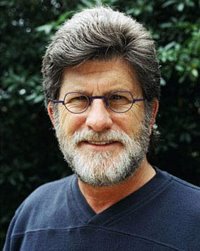
Author Interview ~ Bob Mitchell

Bob Mitchell is the author of three nonfiction books about sports: The Heart Has Its Reasons: Reflections on Sports and Life, The Tao of Sports, and How My Mother Accidentally Tossed Out My Entire Baseball-Card Collection (and Other Sports Stories).
Mitchell studied at Williams (B.A., Phi Beta Kappa, magna cum laude), Columbia (M.A. in French Literature, Woodrow Wilson fellow), and Harvard (Ph.D. in French and Comparative Literature). He spent a year teaching in France on a Fulbright fellowship and was a French professor for eleven years at Harvard, Purdue, and Ohio State, during which time he published four books on nineteenth- and twentieth-century French poetry.


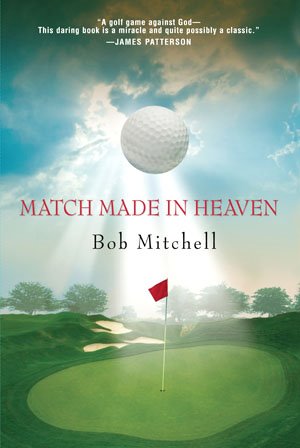
Your novel, Match Made in Heaven, has an unusual premise. Can you tell us about it and what inspired it?

Certainly. In both my novels I try to tell a story that’s never been told before, that doesn’t fit into any literary category, that is different, unusual, startling. Match Made in Heaven is such a concept. It’s about a fifty-year-old Harvard professor (Elliott Goodman) who is being rushed to the OR as he’s having a massive heart attack. He pleads for his life to be saved, and, as luck would have it, God appears on the OR ceiling (dressed in a burgundy golf shirt and tan dockers) and asks Elliott why He should save him.

When the Almighty receives no meaningful reply, He gives Elliott one chance at salvation, challenging him to an 18-hole golf match. Elliott discovers that in His wisdom, God will send down eighteen substitutes, one per hole, to play against him. So, with his life at stake, he ends up playing against eighteen fabulous characters from history: Leonardo da Vinci, W.C. Fields, Moses, John Lennon, Freud, Poe, Socrates…well, you get the picture.

The novel is all about the life lessons Elliott learns from these amazing characters and from the amazing game of golf. At a deeper level, it’s really about why a human life is worth saving and what is so precious about human existence here on earth. The inspiration behind the story is, of course, the old apothegm, “write about what you know about.”

And the three major themes running through my life have been 1. a mad passion for sports, 2. a mad passion for knowledge (I’ve been studying and teaching history, literature, art, music, philosophy, etc. for most of my adult life), and 3. (sadly) a history of heart disease (I’ve had five heart surgeries). These themes have been incubating for over fifty years and finally converged in the conception of this book.

The admixture of these very disparate but intensely passionate parts of my life make me, I think, “uniquely qualified” to write such a book. And, in the final analysis, I think that these two powerful criteria —coming up with a unique, fascinating story and being the only person on the planet who is qualified to write it—are the sine qua nons for writing a compelling and distinctive novel.


What feedback have you received, negative or positive, regarding your portrayal of God or the overall theme of the book?

I have received no negative feedback. There will no doubt be some at some point, and I must say that it doesn’t concern me in the least. I write mainly for myself, and I value the opinions of my wife and my close friends and my publishing team and people I respect and admire. And so far, these people have unanimously agreed that the concept of the book is unique and compelling. Which I knew in my gut from the start, but it’s always nice to hear it from those you respect.

As far as my “portrayal of God goes,” I don’t feel that I portray God at all. He’s a character in the book who appears briefly in the beginning and the end, and he’s the vehicle who allows the golf match to occur in the first place. I guess I do describe him with a wink in my eye (yet respectfully), but it was not my intention to get into his character or deeper nature.


What would you say is the predominant message the reader will glean from reading Match Made in Heaven?

More than glean! The reader will clearly take away a bunch of valuable things from reading the book. Mostly, that life is indeed worth living, that each one of our lives is rich and full and worthy of being lived if we just look inside ourselves. There are so many lovely things about human beings that emerge from playing the game of golf (which is the ultimate sporting metaphor for life), and much to be learned. Mostly that ya gotta have heart.

It is a book about the triumph of the spirit when it is “up against it.” It is about courage and resilience and limits and humility and joy and a lot more. And that’s why not only people who are nuts about golf will enjoy it, but also people who aren’t especially interested in the game. That’s what is so satisfying, for me. I’ve in fact converted a number of people who “detest golf” (their own words), yet who have really loved the book. Go figure.

What made you decide to write the characters using unusual dialogue choices, like God saying, “Ciao!”, or Leonardo da Vinci, “Bingo!” etc.?

Once again, I think when you write fiction, you have an obligation not to use clichés but to describe people and things in your own, “new” language, like no one else before you.
(Btw, that is why I think that the issue of plagiarism in fiction writing is so
disgustingly repellent. Not just because it is a morally reprehensible act,
but because it goes against the very reason why one writes fiction—to be
creative and different, to describe and express the world in a uniquely personal
way that changes the way people see it, i.e., in the ordinary and expected
way. But I digress….)
In this case—and to answer your question—I wanted to describe the characters in the book, including the Almighty, in a way that would be both consistent with what I know about them, historically and from their writing or creations, and also in an idiosyncratic way that would make them entertaining and distinctive. (Besides being serious, this book is great fun!) Ergo, God says “Ciao!” and Leonardo speaks with a sprightly tongue and Moses has a New York accent and Freud is cranky and Joan of Arc curses in peasant French and Picasso lisps and Beethoven expresses himself in musical notes (being deaf) and Shakespeare (and Elliott, in that chapter) speak in iambic pentameter and Babe Ruth is continuously burping and Ben Hogan doesn’t speak at all.

This “quirkiness” gives the book, I think, a wonderful vivacity and humor that, hopefully, will make the reader want to turn the pages to hear and see more.

You have a juicy endorsement from James Patterson on the cover. How did that come about?

Blurbs are very tough to get. Many of the blurbs I was able to get for the back cover came as a result of networking and lots of hard work (plus, if I may say so, a great product!). Some came from people like former Senator Bill Bradley and sportscaster Bob Costas, who have both read and liked a number of previous books I have written.

In the case of Patterson, it happens that we were writer colleagues years ago at a major New York advertising agency. I had fond memories and thought I’d contact him. He’s also a golf nut and a very bright man, and I thought that the combination of the cultural subject matter and the golf would appeal to him. Obviously it did, and he was good enough to write me a superb blurb for the front cover. Proving that you never know what will happen if you don’t try.

Where did you learn to write fiction?

I didn’t. Maybe I differ with a lot of writers on this, but (for me at least) I don’t think you can learn to write. Not really. I think you can improve yourself and learn things about the craft of writing. But for me, writing is a desperately personal and devastatingly difficult act, and to do it well, you have to have an extremely well-developed gut. By that, I mean an inner instinct or “voice” that tells you, unfailingly, that this is the right word and not that one. That this is the right rhythm, the right tone. I’ve never been to a writer’s conference. I don’t think this inner quality (which we all have but is better developed in some) is something you can “pick up” or learn.

In my case, I didn’t learn to write fiction; the instinct and the fire were always there. It took me sixty years to write my first novel (I just finished my second), but despite that fact, I have been writing fiction my entire life, in a sense, been incubating thoughts and ideas and words and feelings and my inner writer’s voice for a very long time. I’ve always had the instinct necessary to write in this form, but my life has never given me the luxury of working full-time on it until now.

So, to answer the question, where? I learned to write fiction inside of me, in my gut, which I trust completely and implicitly. The French philosopher Blaise Pascal (speaking of it in a purely religious sense) called this inner instinct coeur (“heart”), when he said (my translation) “The heart has its reasons that Reason doesn’t have a clue about.” For me, my coeur (literally and figuratively!) is the closest to God I can get. Not being a “religious” person, I am, however, deeply spiritual. And as far as writing is concerned, this inner instinct about the right thing to do is as close to a moral imperative as I can get my mind around. It is my version of a higher being, and, happily I think, it can be found right inside of me! It is what pushes me forward in my writing and makes it uniquely mine, and of that I am extremely proud.

What mistakes have you made while seeking publication?

Ah. You know, I don’t generally think in terms of “mistakes” or negatives. When I make mistakes, they are for me simply ways to get to a positive. (Lao-tzu said it best in his Tao Te Ching: “Failure is an opportunity.”) In the case of Match Made in Heaven, though, I can honestly say that it went absolutely, well, as Linda Richman of SNL would say, “like buttah”! I was very lucky to have begun the process with an absolutely amazing agent, Joëlle Delbourgo, who championed the book from the very beginning. And then, she sold the book to an old friend and colleague of hers, Michaela Hamilton at Kensington, who is equally amazing as my editor. Both of these women have been dreams to work with—supportive, inclusive, positive, enthusiastic. The book, just out in early May, is already in its second printing, has been translated into five languages and counting, has terrific distribution, seems to be selling well… No, I can’t think of any mistakes in this case!

What’s the best advice you’ve heard on writing/publication?

As it happens, I’m not a big fan of advice. In general, I trust my gut, my coeur (as I mentioned above), rather than listening to what others have to say. Why? Because it is my experience that matters in my writing, my instincts, my voice. Of course, I listen all the time, try to be receptive. But I just think that you can really make a mistake by listening to what others tell you what to do! But I feel compelled to answer your question anyway, so I will.

Probably the only advice I really treasure on writing (publishing is another matter, which I won’t get into now) is that of one of the great writers of all time, the German poet Rainer Maria Rilke. In his book Letters to a Young Poet (I recommend this to all writers, despite what I said above!), Rilke tells the young poet Kappus the following, which I’ve always taken to heart (so to speak):

“This most of all: ask yourself in the most silent hour of your night: must
I write? Dig into yourself for a deep answer. And if this answer rings
out in assent, if you meet this solemn question with a strong, simple “I must,” then build your life in accordance with this necessity; your whole life, even into its humblest and most indifferent hour, must become a sign and witness to this impulse.”

Why do I think this is great advice? Because too many writers don’t appreciate how very difficult it is to write—NO!, not only don’t appreciate it, but don’t LOVE this very difficulty!

There’s a Latin aphorism I love, per aspera ad astra: “to the stars through adversity.” This is what writing is all about. You must love the process, the struggle. Too many writers write for the wrong reasons—money, fame, glitter, to see their name in print, whatever—instead of taking Rilke to heart: If you write, you have to be writing because you must write. Otherwise, you are in for a rude awakening!

What’s the worst piece of writing advice you’ve heard?

Oh, most of what I hear isn’t really worth repeating here! I suppose anyone who tells you that you are writing for an audience, for a nameless, faceless crowd out there. For me, I write for myself, and everything after that will take care of itself. I don’t write to please anyone—not my wife or my agent or my editor or my readers. Of course, I love it when all of these people love what I do and support my efforts, but to be motivated to please anyone but your inner self is, to me, treachery. If you please yourself and your coeur, the love and approval (and sales!) will follow. To paraphrase Field of Dreams, “write it, and they will come!”

Is there a particularly difficult setback that you’ve gone through in your writing career you are willing to share?

Again, per aspera ad astra! I hope that whatever setbacks I have gone through were all learning experiences and not really setbacks. Remember: “Failure is an opportunity”! I guess the biggest “setback” of note, from which I learned a valuable lesson, is that before my present agent, I had another one, who was not good for me. Didn’t share my vision or my passion for writing. Didn’t have the right contacts. Und so weider…. I was with him for over a year (for another, nonfiction project), and I finally decided to find someone else.

When I (my wife, actually) revived Match Made in Heaven from a dusty shelf, I sent the two chapters I’d written to my new agent, Joëlle, and the rest is history. So my advice to writers, if they care to listen, is to not settle until they find an agent who shares their vision and their passion. (It also helps to have an agent who knows the business like the back of his/her hand, like Joëlle does: She was a very successful editor and publisher, on the other side of the publishing coin, for twenty-five years!)

What are a few of your favorite books? (Not written by you.)

As it happens, I don’t read much “popular” fiction. I received a wonderful liberal arts education (Williams, Columbia, Harvard) and learned to love the classics, and that is what I still read today. They are the best books ever written (hence, “classics”!). Among my favorites are Flaubert’s Madame Bovary, Tolstoy’s War and Peace, Dostoyevsky’s Crime and Punishment, Cervantes’s Don Quixote, Proust’s epic, A la recherche du temps perdu, and anything by Shakespeare or Dickens. As far as poetry goes, I love Dante, Mallarmé, Valéry, Rilke, Neruda, Dylan Thomas, Wallace Stevens, and Hart Crane, among many others.

What piece of writing have you done that you’re particularly proud of and why?

Actually, both novels I’ve written: Match Made in Heaven and my new one, The Secrets of Solomon Stein. For many reasons, but chiefly because I think I have created, in both cases, books that are very different, in concept and plot and style, from anything else ever done in the history of writing. And I hope to continue to do this in future novels.

Do you have a pet peeve having to do with this biz?

No, not really. Although I am active in many of the “post-scriptural” activities (production, marketing, etc.), I try not to have “peeves.” Mostly because I know that publishing is a business, and a tough one, and I am not a business person per se (either by temperament or training) and whatever happens in that arena is out of my control, or in the control of my editor or publishing house or agent. Which makes me think of another great quote from the Tao Te Ching, one that I really love: “Do your work, then step back. The only path to serenity.” And anyway, for me, peeves suck out your energy, which you should be expending on your writing! So I concentrate on my writing, period, and leave the rest to the publishing pros.

Can you give us a view into a typical day of your writing life?

Sure. Typically, I awake at around 2-3AM. I grind my coffee beans the night before, so I don’t wake up my wife. I sip my coffee slowly and work at my laptop, or, longhand, with my various pens and writing pads, until about 8AM. A lot of this time I am either writing or, more important, incubating. Plot ideas, structure, scenes, dialogue, character development... Not to sound Zen, but for me, the act of nonwriting is maybe even more important than the actual act of writing. Then breakfast and conversation and reading the paper with my wife, Susan, until about 10AM. Then, I write from 10AM to 5PM, with a bunch of breaks, including three walks with my two Labrador retrievers (Koslo and _Mocha), situps, rollerblading, and maybe twice a week various errands in town. By 5PM, I will have been engaged in the act of writing for roughly ten hours, and by this time, my brain is fried.

This is the perfect time to pour myself a nice Balvenie single-malt Scotch (four ice cubes, splash of soda—well, you asked!), sit on my bed with the pages I have written that day on my lap, watch the news or a game on TV, and edit. I do all my editing at the end of the day, never while I am writing. It is a different discipline, which can impede the creative process. I find I can do it well while relaxing after the struggle of cogitating and writing is done. Then dinner with my wife, etc., etc. Go to sleep around 10PM, then start all over again at 2-3AM the next day…

If you could choose to have one strength of another writer, what would it be and from whom?

Probably Dickens, who could create idiosyncratic, unforgettable characters like no one else, before or since. Mind you , I do not covet or try to emulate! But I do admire and love Dickens so much and appreciate his enormous talent in this particular area.

Do you have a dream for the future of your writing, something you would love to accomplish?

No. Well, I just hope to be able to continue writing, to continue to love the entire process of struggle, incubation, cogitation, struggle, creation. It is absolutely awesome. I have accomplished everything in loving this incredible act, and, as I said earlier, after that, things will take care of themselves. I think it is a mistake to want to “accomplish” anything. What? Have a bestseller? Write the Great American Novel? Make lots of money? No, I am doing what I love to do, and that is the only thing I can control.

Was there ever a time in your writing career you thought of quitting?

Never, never, never, never, never. Quit doing something I adore? Writing is an end in itself for me, so why quit something that gives me such incredible pleasure and meaning for my life? That makes me happy—eager!—to get up every morning? Now, that doesn’t make sense, does it?

What is your favorite and least favorite part of being a writer?

I’ll take this in reverse order. I have no least favorite part. Believe it or not, I love it all, and that, for me, is the absolute key (that’s the “favorite part” part). If you don’t love the “least favorite” parts, then you don’t love the process. If you don’t love the frustrations and the setbacks and the failures and the rejections, then you don’t understand the magic. You’ve got to love it, warts and all, because it is that difficult! So I see writing as all positive, all growth and learning and joy.

How much marketing do you do? Any advice in this area?

I have been very active in marketing the book, and my editor has, happily, encouraged me to be proactive in this vital area. From seeking blurbs to doing signings and readings to hiring and working with publicists to doing interviews and feature articles to looking into film opportunities to consulting with the director on the making of the audiotape to creating a website (
www.bobmitchellbooks.com), I have been encouraged to become involved in all of these necessary acts of love.

Advice? Again, this is a very personal matter, but I’d only say that you should do everything in your power to get the issue of your love, the product of your passion, the offspring of your suffering…out there. Many writers tend to be shy and unaggressive, I guess, but (I am putting aside my Rilke cap and donning my Edward G. Robinson one now) publishing is a business, y’see, yeah, and ya gotta be aggressive, baby, ya gotta get out there an’ fight an’ scrap an’ claw, y’see, yeah…

Parting words?

For the first time in my life, I am speechless! No, just kidding. Not to repeat myself, but writing, like many other things in life, is all about passion. If you don’t have it, then it is far too difficult an enterprise to take up and be serious about. Without this passion, this love for language, for self-_expression, it is just all pain and suffering, period, as an end instead of a means. It’s funny, but the word passion (like the word patience!) comes from the Greek pathein and the Latin pati, “to suffer.” (Ya gotta love it!) I rest my case.