Get a Free Ebook

Five Inspirational Truths for Authors

Try our Video Classes

Downloadable in-depth learning, with pdf slides

Find out more about My Book Therapy

We want to help you up your writing game. If you are stuck, or just want a boost, please check us out!

Showing posts with label cozy mysteries. Show all posts

Tuesday, April 28, 2015

Understanding Work-for-Hire

By Elizabeth Ludwig

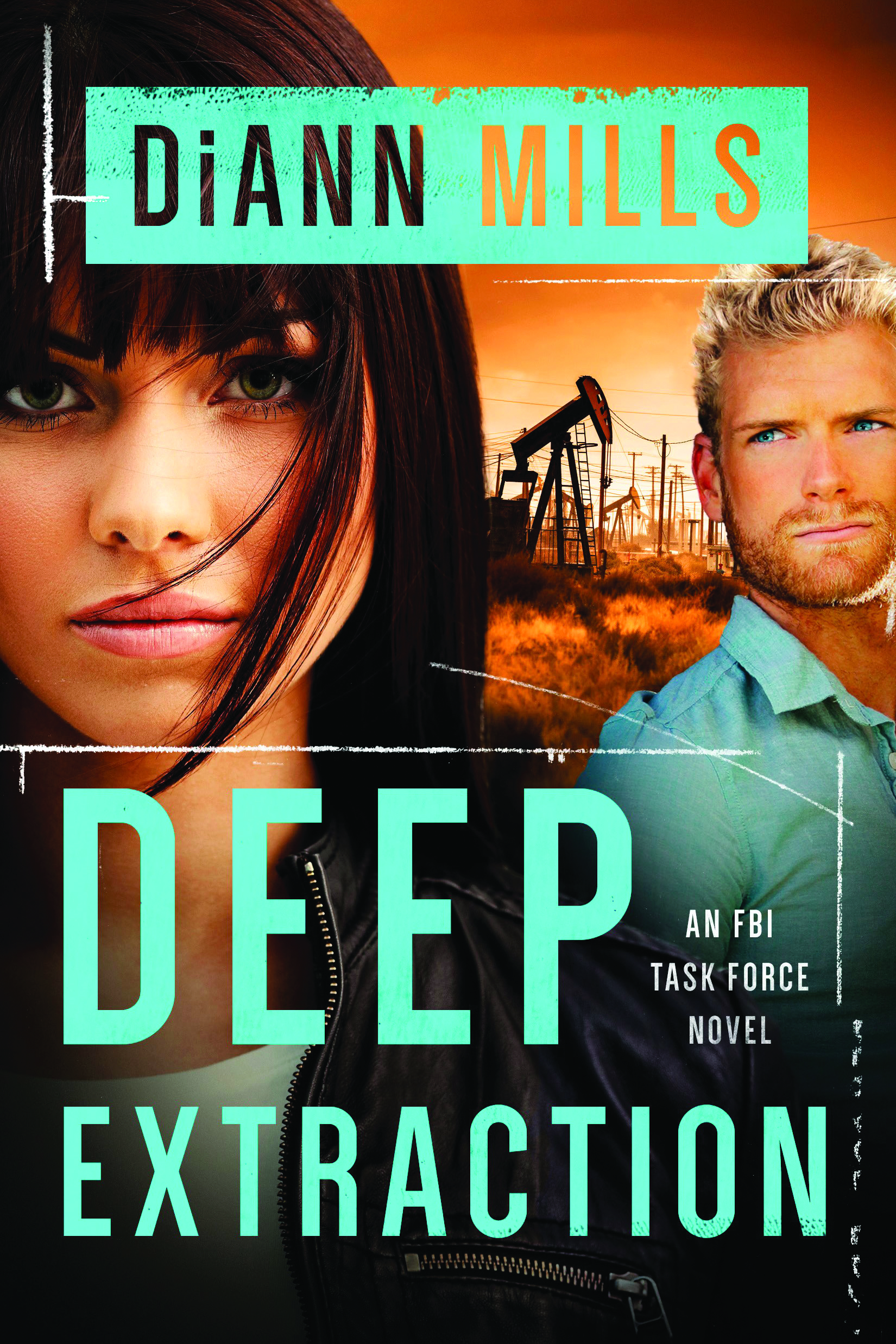
I started a new project last year…one that I have been fairly quiet about as I learned the ins-and-outs of the subject I was about to tackle. You see, for the first time in my career, I was undertaking an Amish cozy mystery (see below for a preview of my new book cover!). And it was a work-made-for-hire project for Guideposts. Two things I had never before done! God has certainly been stretching my boundaries and making me see beyond what I thought was possible. 

But what exactly is a work-made-for-hire, and why did I agree to do it?

Weighing Work-for-Hire
A work-made-for-hire (sometimes abbreviated as work for hire or WFH) basically just means that the author agrees to create a work as part of their job and that both the author and the company they are writing for agree in writing to the WFH designation. The author does not own the work, but is contractually obligated to submit the work on the same basis as they would any other standard publishing agreement.

I should also note that in standard publishing agreements, the person who actually creates a work is the legally recognized author of that work. According to copyright law in the United States and certain other copyright jurisdictions, if a work is "made for hire", the employer—not the employee—is considered the legal author.

Confused yet?

Where Hope Dwells, 2015
So then, what are the benefits to WFH? I admit, there is some disagreement over this. For me, the benefits were simply signing on to work for a major publishing house and everything that entails, IE: access to marketing, promotion, readership, networking, etc. It also enabled me to expand my publishing credentials, earn valuable writing experience, and finally, to “get my foot in the door with an attractive publisher”, for lack of better explanation. All of these swayed me in favor of the idea of a WFH project.

 Others would disagree and say that they are not willing to give up ownership of a created work, especially if they were not going to get credit for the work by having their name printed on the cover (which can also happen, but didn’t in my case).

Both views are arguably correct. I suppose the bottom line would have to lie in the heart of the author and what they are attempting to achieve. What do you think? Is a work-made-for-hire something you would ever consider? I’d love to hear what you think! 
 
-->
Elizabeth Ludwig is the bestselling author of Christmas Comes to Bethlehem, Maine and the highly successful Edge of Freedom series from Bethany House Publishers. Her popular literary blog, The Borrowed Book, enjoys a wide readership. Elizabeth is an accomplished speaker and teacher, often attending conferences and seminars where she lectures on editing for fiction writers, crafting effective novel proposals, and conducting successful editor/agent interviews. Along with her husband and children, she makes her home in the great state of Texas. To learn more, visit ElizabethLudwig.com.

Thursday, September 18, 2014

Permafree as an Indie Marketing Strategy~Interview with Traci Tyne Hilton

Today I'm thrilled to introduce Traci Tyne Hilton, a Christian indie author who has been so helpful to me personally, and an inspiration to so many other authors. She is a busy gal (as you will see!), but I wanted to tap into her wisdom on the effectiveness of using permafree as a marketing strategy, which is the latest buzz in indie circles. Permafree books are books that STAY free on Amazon and/or various other outlets, thus pulling readers in to read more books by that author (usually in a series). 

One of the things I love about being an indie author is that we share sales figures and marketing strategies. Please take time to thank Traci for sharing her experience with us. I'm pinning this post for easy reference! ~Heather Day Gilbert

Permafree as an Indie Marketing Strategy

Interview with Traci Tyne Hilton


Author Traci Tyne Hilton
HG: First off, how long have you been self-published, Traci? I know you were one of the earlier writers to take this route (and I know it has paid off for you!).

TH: It’s funny to think of myself as an early adopter, because it feels like just yesterday, but my first indie title came out in paperback around February of 2010, and then as an ebook that fall.

HG: On the issue of permafree e-books (I believe the definition of that is "permanently free" e-books), how did you decide you were ready to make one of yours permafree? And was it the first in series?

TH: I decided to go permafree with the first book in my series because I was basically desperate. I was terrified to do it, but I knew I had to make a change.

So, I had been doing pretty well, considering I didn’t know what I was doing, didn’t have a background in publishing, didn’t have a budget, didn’t have much of a plan, and wanted something I could do from home while raising my kids. I was making about a thousand dollars a month, and felt great. Then, November 2012 rolled around and I made…almost nothing. Or it felt that way. I was down to about $200 a month with no idea of how to make more.

I had already tried becoming a twitter-master (fifty tweets a day, links to helpful posts, fun quotes—a link to my books here and there.) I had tried writing fast and publishing fast (as fast as I could, anyway) and I had tried being a part of Kindle Select and running short promos. I had run Ereader News Today ads, Pixel of Ink ads, I had posted all over facebook. I don’t know, if someone had suggested it, I had tried it, and not just one little try, I had gone all out. And…I had short term success. Moments of good sales, but absolutely nothing lasting.

I had to find the secret magic trick that would make my books sell (Click to Tweet!), or give up and go back to paying attention to my kids!


I said to a friend of mine who was known for never compromising on his advice, “You are bossy and successful. Tell me what to do and I will do it. Whatever you say.” He said make my first book free and write more books. So I did, and it worked.

HG: Did you notice an immediate sales bump for other books in the series when you made the first permafree?


TH: Yes, definitely. You remember I was desperate because after two years of publishing and growing an audience my royalties had dropped to about $200 a month, right? Well, the first month the first Mitzy book was free—and I only had three books in the series at the time—I made $2800. I was immediately sold. I mean, think about that…three books made me $200. I made first book free, and two books made me $2800. I’d say that was an immediate result!

HG: What long-term effects have you seen from your permafree decision?

TH: The biggest change, besides making heckuva lot more money, is that I now have an active fan base! It’s a blast to get fan mail, and to hang out with people on facebook who are there because they like my books!

HG: When would you NOT recommend an author go permafree with his/her book?

TH: I would not recommend permafree if:


-The author only has one book

-The author’s titles are not in the same genre

-or, if in the same genre the books are too different to be grouped into some kind of series

-The author is philosophically against free. (There are plenty of authors who consider free promotions damaging to literature. I would never try and talk them out of their convictions.)

-If they are my direct competition. JUST KIDDING! I have happily talked lots of other Christian Cozy authors into trying it out, and I think they are all pretty happy with their results. (Check out the authors of Cozymysterymagazine.blogspot.com to see what I mean!

     HG: I know that of all my marketing strategies to date, going free a few days with my books has brought the most results in terms of temporary sales boost. Would you say going permafree has been the best marketing strategy you have tried? If not, what is?

TH: Writing a series that follows one lead character and making the first book of that series free is the only marketing technique I have tried that has produced an increase in sales that lasted longer than about three days. (Click to Tweet!) Every other technique—and I have tried them all—was less effective in producing both short and long term sales (for me.)

HG: Finally, on a non-permafree note, how many books do you think an author needs to have out before making a full-time income on self-publishing, if you could give us an estimate? I've heard five books.

TH: I think an author needs to publish a minimum of three books a year to make a living. The point at which they start making a living is different for everyone. But it is the steady stream of quality new releases that makes a person able to live off their writing rather than a set number of books already published. Three is really the minimum for most people, and since it’s August, and I’ve only published one so far this year, I had better say goodbye, and get back to work! Thanks so much for the chat!


***Thank you, Traci! Readers, what about you--has a free book ever hooked you into buying a series or reading more from an author? Indie authors, if you have tried this strategy, how has it worked for you?***


Click to Find on Amazon
Traci Tyne Hilton is the author of the new Tillgiven Mystery Series, The Mitzy Neuhaus Mystery Series, and The Plain Jane Mystery Series. She was the Mystery/Suspense Category winner for the 2012 Christian Writers of the West Phoenix Rattler Contest, and has a Drammy from the Portland Civic Theatre Guild. Traci serves as the Vice President of the Portland chapter of the American Christian Fiction Writers Association.


Traci earned a degree in History from Portland State University and still lives in the rainiest part of the Pacific Northwest with her husband the mandolin playing funeral director, their two daughters, and their dogs, Dr. Watson and Archie.


More of Traci's work can be found at http://www.tracihilton.com


Click to Find on Amazon


Tuesday, June 21, 2011

Whither Goest the Christian Cozy? by guest blogger Ron Benrey

Ron Benrey co-authored with his wife Janet, nine Christian cozy mysteries. He also writes nonfiction books; his latest is “Know Your Rights, a Survival Guide for Non-Lawyers.” Visit Ron's website and check out the Benreys’ blog.


Whither Goest the Christian Cozy?


A few years ago, the director of a major Christian writers’ conference asked Janet and me to develop a four-session workshop on writing cozy mysteries. Participants wanted the course, we were told, because several major Christian publishing houses had announced they were shopping for cozies.


We were a tad bewildered by the sudden interest in cozies. Neither of our two cozy series — “The Pippa Hunnechurch Mysteries” and “The Royal Tunbridge Wells Mysteries” — had achieved stellar sales in Christian bookstores. In fact, we’d begun to doubt there was a significant market for Christian cozies.


Nonetheless, we developed the how-to-write cozy course and also took advantage of the new publishing opportunity: we sold “Glory Be,” the first of our “Glory Mysteries.”


Fast forward to this year, when I participated in several discussions about why Christian mysteries in general — and Christian cozies in particular — don’t do well in the fiction marketplace.


That the Christian cozy is dead seems to be conventional wisdom these days. The chief evidence is that:


1. Christian publishers terminated those dedicated cozy mystery lines.


2. It’s exceedingly difficult to get agents and editors to read cozy mysteries these days.


Happily … the report of the Christian cozy’s demise is an exaggeration. Our novels about the Royal Tunbridge Wells Tea Museum and Pippa Hunnechurch are selling quite nicely as eBooks, thank you very much. So are several other Christian cozies we use as “benchmarks” to gauge the marketplace.


What’s going on?


For starters, there’s no doubt that the market for cozies does fluctuate. Some publishing gurus say that the shifting demand for cozy mysteries is a barometer of societal angst. Before you laugh, consider their argument: Cozies apparently do well in the aftermath of wars, during economic upheavals, and in times of widespread uncertainty. That’s when readers seek out novels that show good triumphing over evil, honor traditional values, and have tidy endings in which the world is put right again.


If this nifty theory is true, 2011 is ripe for a cozy renaissance. Maybe that’s why our own cozies are attracting readers these days.


Or maybe—I think this is the more likely explanation—the answer lies in the new, improved Internet based book-selling infrastructure. It’s become lots easier for readers to find Christian cozies, because some online booksellers have resolved the cozy-mystery “shelving dilemma.”


For a perfect example of this, visit CBD.com. Navigate to the “Browse for Fiction” and you won’t find a “Mystery” or “Cozy Mystery” category. You will see a hefty “Suspense & Intrigue” catergory … and an even bigger “Romance” category. And you’ll discover cozy mystery novels in both.


The typical cozy mystery is somewhat suspenseful, but it’s hardly a thriller. Similarly, the typical cozy has romantic elements, but it’s not a true romance. A reader looking for a Christian cozy isn’t likely to browse among the suspensers or the romance novels. When our books were first available in bookstores, they were often in all the wrong places.


Search engines change the game, because readers can type in “Christian Cozy Mystery” — and immediately find a bunch. That happens at Amazon — and at CBD — but curiously, not at Nook.


For search engines to work, of course, someone has to actually look for Christian cozies.


Other publishing gurus argue that Christian cozy mysteries have lackluster sales because the novels were written for an audience that doesn’t exist. Secular cozies, this idea goes, are “clean and gentle reads” that are acceptable to many Christian readers, even if they include a few Christian publishing don’ts.” (Drinking, a modest cuss word or two, even the occasional discrete sex scene, to name a few.) Since vast numbers of secular cozies have been published, why would a reader bother seeking out a Christian cozy?


No reason at all—unless the reader wants a genuine cozy mystery that also contains a Christian message. I believe that readers buy genuine Christian cozies for the same reason they purchase Christian historicals, romances, time travel stories, and westerns. They enjoy reading Christian genre fiction.


I hope you noticed that I used “genuine” two times in the previous paragraph.


I believe that the real reason that Christian cozies have a checkered sales history is that most so-called Christian cozies ... weren’t.


A gentle Christian mystery with a pun-ish title, a clever cat, and a lighthearted cover illustration is not necessarily a cozy. Neither is a cheerful Christian romance with some satiric dialog and a murder or two. Cozy fans know the difference.


A genuine cozy mystery offers:


Clever plot twists that create an intriguing puzzle for readers.


An exotic setting that becomes a “character” in its own right. For example: an English village, an elegant manor house, an ccean liner in mid-Atlantic, a private island, a yarn shop, unusual college, or—in one of our series—a tea museum.


A memorable amateur sleuth with attitude. Much of the fun of a cozy is watching a quirky, but likeable amateur outthink the proper authorities.


An unusual “MacGuffin”—the thing the characters care about. In many mysteries, the MacGuffin is money; in a thriller, it’s often some sort of document (like the “letters of transit” in “Casablanca.”). Cozy MacGuffins often involve arcane pursuits, such as bell-ringing, trout fishing, odd crafts, executive recruiting, even curating a tea museum.


A friendly murderer who is invariably an upstanding citizen—the sort of person you’d be delighted to invite to dinner at your home. He or she is driven by straightforward motives—greed, jealously, revenge, or self-protection—and typically commits bloodless murders. Psychopaths or serial killers need not apply.


Idealized stakes rather than realistic dangers. The protagonist must resolve a matter of life and death—but nothing in a cozy is all that serious.


Cozies encourage page-turning, but at a less frenetic pace than a thriller. A reader can set down a cozy and pick it up the next evening.


Christian cozies add a Christian message that must be carefully constructed so that it doesn’t overpower the novel’s coziness. A non-preachy Christian message makes the pendulum swing both ways: While it’s undoubtedly true that many Christian-fiction readers like secular cozies, many secular readers enjoy Christian cozies.


If I may be forgiven a possibly prideful observation, it more difficult to write a Christian cozy than many writers (or editors) imagine.


They read like simple novels, but are surprisingly complex to build. Our full-length Christian cozies have five plots:


1. Main plot—which should never be the plot about identifying the murderer. This plot “drags” the sleuth into the mystery and keeps him/her/them engaged, unable to go home and leave matters to the local cops.


2. Murder plot—which includes the backstory of the crime that led to the murder.


3. Romance plot—which must not overwhelm the main plot. (Too many romantic mysteries were mislabeled “cozies” in recent years.)


4. Christian plot. It delivers the novel’s Christian message.


5. The “Other Plot”—which is usually humorous. (Ours have ranged from a story about unusual pets, to the challenge of a too-small house, to the search for an associate pastor.)


We began writing cozy mysteries because we love to read them. And we don’t plan to stop. We’re currently working on a pair of new Christian cozies that will expand two of our series.


So whither goest the Christian cozy? These days, into lots of Kindles and Nooks — and quite a few bookshelves. We say, Long Live the Christian Cozy Mystery!


Dead as a Scone


Murder is afoot is the sedate English city of Royal Tunbridge Wells … and the crime may be brewing in a tea pot!


Nigel Owen is having a rotten year. Downsized from a cushy management job at an insurance company in London, he is forced to accept a temporary post as managing director of the Royal Tunbridge Wells Tea Museum. Alas, he regrets living in a small city in Kent, he prefers drinking coffee (with a vengeance), and he roundly dislikes Flick Adams, PhD, an American scientist recently named the museum’s curator.


But then, the wildly unexpected happens. Dame Elspeth Hawker, the museum’s chief benefactor, keels over a board meeting—the apparent victim of a fatal heart attack. With the Dame’s demise, the museum’s world-famous collection is up for grabs, her cats, dog, and parrot are living at with Flick and Nigel—and the two prima donnas find themselves facing professional ruin.


But Flick—who knows a thing or two about forensic science—is convinced that Dame Elspeth did not die a natural death. As Flick and Nigel follow the clues—including a cryptic Biblical citation—they discover that a crime perpetrated more than a century ago sowed the seeds for a contemporary murder.