Get a Free Ebook

Five Inspirational Truths for Authors

Try our Video Classes

Downloadable in-depth learning, with pdf slides

Find out more about My Book Therapy

We want to help you up your writing game. If you are stuck, or just want a boost, please check us out!

Showing posts with label antagonist. Show all posts

Monday, November 04, 2013

The Relatable Antagonist - Guest Post by Patty Smith Hall

Patty Smith Hall has been making up stories since her parents forced her on Sunday drives into the Georgia countryside when she was kid. Now she's happy to share her wild imagination and love of history with others, including her husband of 30 years, Danny, two smart and gorgeous daughters, and a Yorkie that she spoils like a grandbaby. She resides in North Georgia. 

Visit Patty


 * * * * * * * * * *


I have a problem with ‘a person.’ Sounds terrible, I know, but it’s true. When I was growing up, this kid always caused me grief--locking me up in the makeshift hut he and my other male cousins had built on the edge of my grandparents’ backyard; threatening to punch me if I didn’t do his homework. As we hit adulthood, our views on life were so far apart, the chasm between us was as wide as the Grand Canyon.

But recently, I saw this person in a different light. Almost a month ago, my sweet, sassy grandma went home to be with her Jesus so for the last week or two, we’ve been going through her things, getting her house ready to go on the market. Family and friends have chipped in with the work, doing everything from repainting rooms to holding an estate sale. It was doing one of these work days that I found myself working alongside my nemesis. For most of the day, we worked quietly--probably in fear that we’d say something to set the other off--then one of us would start with some story about Grandma that would have us laughing despite ourselves.

It was in those few moments as the laughter waned, that I noticed it, this pensive expression that would cross his face. Then he’d turn away and quietly go back to work. In that brief moment, he had shared my grief of losing Grandma and I found my heart softening toward him just a bit.

Which got me to thinking about characterization. For the most part, writers make heroes and heroines truly heroic and villains, less than desirable, but how much deeper would our stories become if we gave our antagonist traits that make our readers(albeit grudgingly) feel for them, maybe even identify with them?

No character is all good or totally rotten. They’re a mixed bag of personality quirks or mixed-up beliefs that sway the reader’s opinion of them. Take Scrooge for example. Here’s a character that, on the surface, is unlikeable in every way--he’s greedy, stingy, treats the two people who share his life (his nephew and Bob Cratchit) horribly and self-centered.

Only when we dig deeper do we discover Scrooge’s demons--he was abandoned by his father, sent away to school where he lived without family for most of his childhood, then lost his beloved sister in childbirth. With a knack for making money, he placed his faith in the one certainty that hadn’t abandoned him--gold--when what he wanted most in life was security and love. Doesn’t everyone desire to be loved? Is it any wonder we’re cheering Scrooge on by the time the third ghost shows up?

So how can we make our antagonist more relatable? Knowing their motivation. What makes them the person they are? How does their life experience effect the actions they take? Like our hero/heroine, knowing the motivations behind our antagonist’s actions could give us the key to opening someone’s eyes to the blind spots in their own relationships which will affect the readers long after they’ve turned the last page.


* * * * * * * * * * 

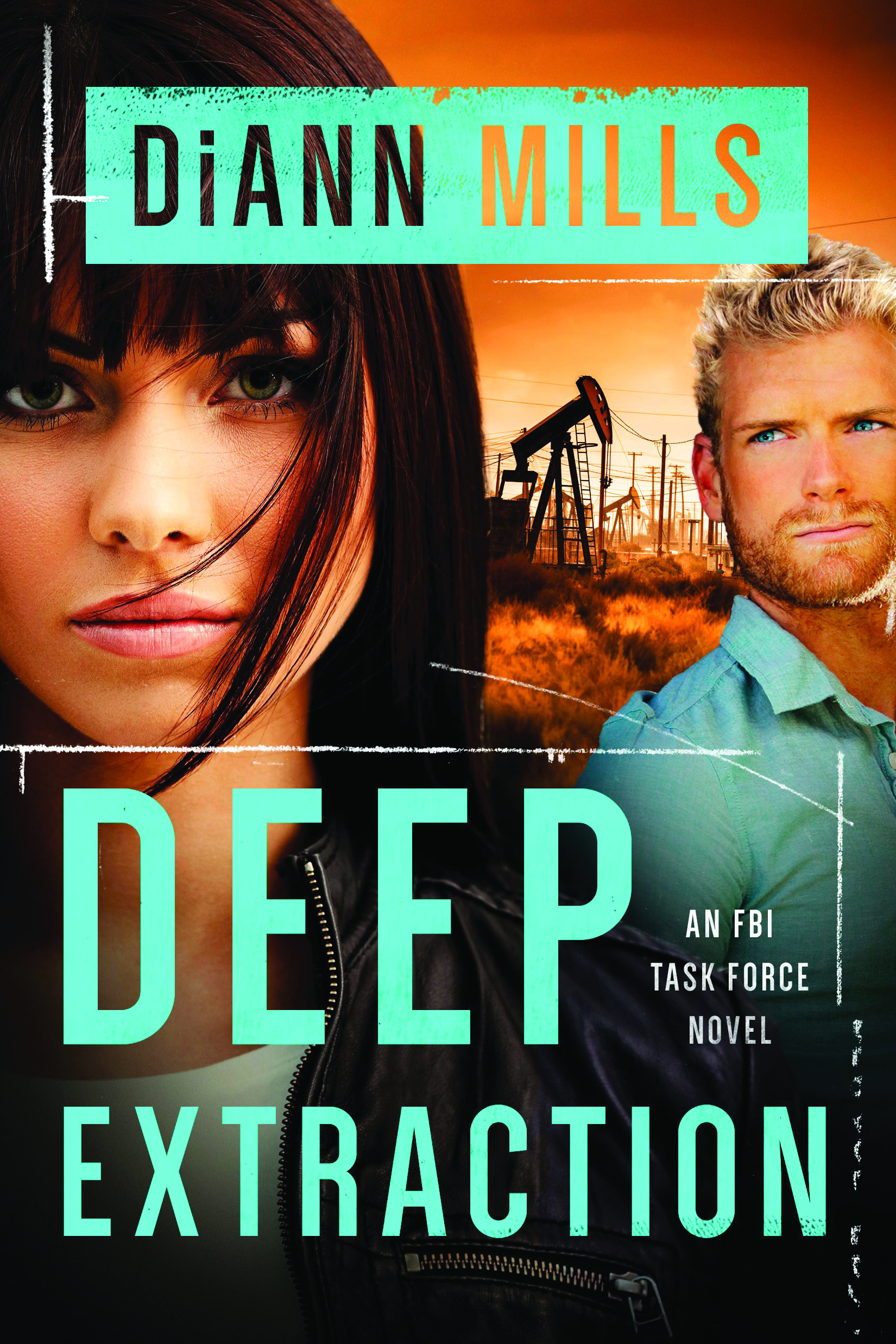
The Doctor’s Bride  

Dr. Joshua McClain is headed west

First stop: Hillsdale, Michigan, to break the marriage contract his late mother arranged between him and Katie Clark. Years ago, Katie left him behind in Charleston. But after a train crash, he comes face-to-face with Dr. Kathleen Clark, his childhood friend all grown up. When Josh shows up in town, claiming they're betrothed, Katie refuses to consider an arranged marriage. She'll marry for love or not at all. Besides, he's headed for Kansas Territory; her practice is here in Hillsdale. So why are they both finding it hard to break their betrothal and say goodbye?

Wednesday, August 24, 2011

Heroes and Slugs by Jennifer Slattery

Jennifer Slattery is the marketing rep for the literary website, Clash of the Titles. She writes for Christ to the World Ministries, the Christian Pulse, Samie Sisters, and Reflections in Hindsight and has written for numerous others including Afictionado and the Christian Fiction Online Review. In 2009 she placed first in the HACWN writing contest and in 2010 she was a CWG Operation First Novel finalist, placed second in the Dixie Kane and fourth in the Golden Pen. Find out more about her and her writing at jenniferslatterylivesoutloud.com and find out more about Clash of the Titles, the fun literary site where authors compete and readers judge at www.clashofthetitles.com

Heroes Versus Slugs—How Different Are They?

Last February at the Christian Writers Guild “Writing for the Soul” conference in Denver, Abingdon Press Editor Ramona Richards and I shared an interesting conversation on slugs. You know, those losers that slime through every novel, leaving a nasty trail in their wake. There’s nothing more satisfying than creating a truly evil antagonist who makes your teeth grind and your stomach convulse. Except, perhaps, creating a love-hate relationship between your antagonist and your reader.

According to Ramona, effective antagonists are those that blind side you or leave you conflicted. They’re the ones that believe they’re doing good in doing bad and evoke feelings of empathy in the reader…only to unleash the slime once the reader’s defenses are down. This is a fine line writers must tiptoe. If you make your antagonist too evil, your novel becomes predictable. Yet, if you give your slug too many admirable traits, you risk reader revolt. Walking the love-hate tight-rope may be dicey, but it’s not impossible. Read on to find out how Clash of the Titles competitors do it.

Ann Gaylia O’Barr, author of Singing in Babylon, digs deep into her antagonist’s psyche, showing the reader why he turned into a slug in the first place. “The antagonist often has been twisted by a hurt in his own life,” O’Barr says. “He has chosen to react by causing more hurt. Some antagonists regret their choice to hurt once they see what they have done. Others feel quite justified. They see the world as mostly competitive, a Darwinian survival of the fittest. They must survive no matter who they hurt.”

Naomi Musch, author of the Green Veil, loves uncovering her antagonist’s baggage. “Getting into the skin of a dark, nefarious mind and still revealing his sympathetic side is terrific fun!” Musch says. “My favorite bad guys always have some human, likeable side. They can be charming, helpful, witty, and attractive. They don't have to be entirely bad, just misguided.”

Although Erin Rainwater, author of the Arrow that Flieth by Day, disagrees. “I know that the ‘rule’ is to make even the slugs have some element of virtue, like the serial killer who adopts and cares for an abandoned puppy,” Rainwater says. “Personally, I like the villain to be pure evil. The ultimate villain, Darth Vader, is a prime example. True, Vader turned out to have a soft heart for his suffering son, and found redemption at the end of his life, but it took three entire movies before we discovered this was even possible.”

And what about those heroes? Are they always heroic? A regular Ken Doll meets GI-Joe? Not quite. Cardboard characters weigh heavy on the page and lull readers to sleep. We want our heroes to be heroic, not saintly. We want to see their struggles, their moments of defeat, and their ultimate triumph.

According to Christine Lindsay, author of Shadowed in Silk, the most endearing heroes have a dash of vulnerability. “I love to see the interplay of vulnerability and strength in a man taking place simultaneously,” Lindsay says. “A number of years ago I saw this hand tremor in my husband when he was being mistreated in a horrible way… I gave [my hero in Shadowed Silk] the same trembling hand, as well as my husband’s steady gaze that never wavers from what is right or his commitment to getting the job done.”

According to aspiring author, Joanne Sher, “A great hero conquers his fears, gets his (or her) strength from those around him, and isn't afraid to fail.”
Clash of the Titles’ Senior Editor and author of Wounded Spirits, April Gardner, says a hero needs flaws. Big ones. “The bigger the character flaws, the harder they have to work to overcome all those obstacles we, as authors, throw in their paths,” Gardner says. “Hard work creates tension, and the more tension the better the read. We all have massive flaws, so why not put them in our characters too?

In fact, often it is through our hero’s failings we can best see his strength and the deep recesses of his heart.

What about you? Think of some of the novels you’ve read this past year. Any heroes stand out? If so, why? And what about those villains? Do you like your slugs to be slimier than snot or do you prefer to see a bit of sugar sprinkled in?