Get a Free Ebook

Five Inspirational Truths for Authors

Try our Video Classes

Downloadable in-depth learning, with pdf slides

Find out more about My Book Therapy

We want to help you up your writing game. If you are stuck, or just want a boost, please check us out!

Showing posts with label Suzanne Woods Fisher. Show all posts

Wednesday, August 14, 2013

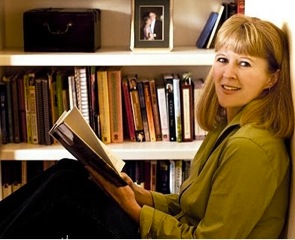
Bestselling author Suzanne Woods Fisher


Suzanne Woods Fisher is a bestselling, award winning author of fiction and non-fiction about the Old Order Amish for Revell Books. Her interest in the Amish began with her grandfather, who was raised Plain. A theme in her books (her life!) is that you don’t have to “go Amish” to incorporate the principles of simple living. Suzanne lives with her family in the San Francisco Bay Area.

Some say a writer is born and others say anyone can learn. What do you say?

Everyone, I believe, needs to learn how to communicate clearly. But there’s another level of writing that’s hard to teach and comes from deep inside.

Here’s an example: “Everyone at the table became quiet.” Very clear, gets to the point.

Take another look: “Silence fell over the table.” Fewer words, but says so much more! A little bit of magic happens.

So, maybe I’m saying that is a true writer (the kind who can’t not write, who faces hundreds of ruthless rejection letters but keeps on writing) is born. 

Was there a specific 'what if' moment that sparked your latest release story?

The Letters, Book 1 of ‘The Inn at Eagle Hill’ series, was inspired by a true story in which a Mennonite investment fund manager was found guilty of mismanaged funds. Many investors were Plain (Amish and Mennonite).

Although entitled to make claims to the SEC to receive funds from liquidated assets of the investment company, they chose not to. Instead, Plain communities across the country took up donations to help reimburse those who had lost money in the fund.

As I pondered this story, I thought about the wife of the fund manager. How had her life changed after her husband had been sent to jail? Think of the shame and humiliation she had to endure. How aware had she been of her husband’s financial dealings? What was it like for her to be left holding the family together? 

Hmmm…an idea started to form.

And that’s how this series first took shape in my imagination.

Do you have a full or part time day job? If so, how do you balance your writing time with family and work?

After raising four children, I am able to write full time. In theory, I have an empty nest. It’s never very empty, though (not complaining!). Amazing how hard it is to have quiet time to write. Life keeps interrupting.

Did anything unusual or funny happen while researching or writing this book?

Major distractions! My oldest son got engaged, my oldest daughter had her second baby, my youngest daughter was offered a teaching job at an international school (which meant a big move), and my youngest son started talking about needing some surgery on his foot.          

Do you consider yourself a visual writer? If so, what visuals do you use?

I don’t think I would have considered myself to need visuals, but with the growth of Pinterest, I think I’m going to become one. I heard of one historical fiction author who has pins of old fashioned clothing on a board. So smart!

Are you a plotter, a pantster, or somewhere in between?
        
Seat-of-the-pants-er. There is a point where the story takes off and has a life of its own. It just happened to me the other day…a minor character suddenly came to life and took over the story. Outrageous! Which meant, of course, a ton of re-writing. And yet…it’s a better story.

Have you discovered some secret that has helped your process for writing?

Yes. There is no secret.

What are your thoughts on critique partners? 

So important! I have two or three “first draft” readers who are invaluable to me. They give clear and honest feedback that improves the story immeasurably. 

Do you prefer the creating or editing aspect of writing?

Creating a novel is very stimulating. A little stressful, too, until the story comes together. It’s a fascinating process: discoveries through interviews and research often takes a plot down an unexpected path. I am probably more relaxed in the editing stage. I think of it as icing the cake.


What's the most difficult part of writing for you ~ plotting, setting, characterization?

Twists and turns. I love surprising a reader with unexpected discoveries, but it takes a lot of subtle planning. A jolt out of the blue needs to make sense.

What's your strength in writing (characterization, setting as character, description, etc)?

I’ve been told that my forte is creating characters that jump out of the page and into a reader’s heart. It’s not hard for me to create a fully dimensional character. I remember the first time I realized what that meant. In The Choice, there’s a very compelling male lead character who ends up getting killed in an accident. My friend Karen read the book and called me, upset. “You killed Daniel!” she said.

“I know,” I said, in a sympathetic tone. 

Karen was not going to be fobbed off that easily. “Stop acting like you have no control over this!”

Did you have any surprising discoveries while writing this book?

The entire series was a surprising discovery! At one point, I wondered, What was I thinkin’?! Every part of it was a challenge. There’s a tight time frame (18 months) and an overriding story arc that flows from Book 1 (The Letters) to Book 2 (The Calling) to Book 3 (The Revealing). It kept me up at night! How to drop subtle clues in book 1 that will be resolved in the other books but not be distracting to the current storyline.

And yet I’m a firm believer that each book needs to stand on its own legs and be a satisfying read. I recently endorsed a bestselling author’s third in a series and found I was completely, utter lost. I couldn’t follow the story without having read the other two books. Not fair! I just can’t do that to a reader.

The third in ‘The Inn at Eagle Hill’ series has been written and is “in house” at Revell for editing. I think I accomplished what I set out to do. I’ve even had a few readers tell me The Letters is my best book. (Ah! Music to an author’s ears.) Still, writing this series has left me with a great appreciation for prolific authors. I have been s-t-r-e-t-c-h-e-d.

Where do you write: In a cave, a coffeehouse, or a cozy attic nook?

Believe it or not, I write In a tiny laundry room that I share with two big dogs. Ridiculous! Somehow, it works.

What’s the best writing advice you’ve heard?

Just yesterday, I read a quote by Peter De Vries that is spot-on: “I write when I’m inspired. And I see to it that I’m inspired every morning at nine o’clock.”

Do you have any parting words of advice?

“Do not despise these small beginnings, for the Lord rejoices to see the work begin” (Zechariah 4:10). This was a Bible verse a friend shared with me as I took the plunge from writing for magazines to novels. A wonderfully encouraging word, from the Word, to spur a writer forward.

Thank you, Novel Rocket, for hosting me today and sharing your readers with me. I love to connect with readerly and writerly types. You can find me on-line at www.suzannewoodsfisher.com.

The Letters
Book 1 of ‘The Inn at Eagle Hill’ series (Revell)

Welcome to a place of unconditional love and unexpected blessings.

When widow Rose Schrock turns her Amish farmhouse into a bed and breakfast, she expects there might be problems. The reaction of her cantankerous mother-in-law for one. Disapproval from the church for another. But what she doesn’t expect is that the guest at the Inn at Eagle Hill will spill their problems in her life and into her heart. She also never expects the kind of help and support she gets from Galen King, the quiet and rugged horse trainer next door. Love, Rose discovers, can bloom in the most unexpected ways.

With inspiration from a true story and her signature plot twists, bestselling author Suzanne Woods Fisher invites you back to Stoney Ridge for a fresh story of simple pleasures and strong faith in a complex world.

Wednesday, January 11, 2012

Slow ... But Never Late


Suzanne Woods Fisher is the bestselling author of The Choice, The Waiting, The Search, and A Lancaster County Christmas, as well as nonfiction books about the Amish, including Amish Peace. She is fascinated by faith-based communities. Her interest in the Anabaptist cultures can be directly traced to her grandfather, W.D. Benedict, who was raised in the Old order German Baptist Brethren Church in Franklin County, Pennsylvania. Suzanne is the host of Amish Wisdom, a weekly radio program, and a columnist for Christian Post. She lives with her family in the San Francisco Bay Area. You can find Suzanne on-line at www.suzannewoodsfisher.com. She loves to hear from readers! 

Slow but Never Late

“Be still before the Lord and wait patiently for Him, do not fret” (Psalm 37:7, niv).

I’m 52 years old. Sometimes, I feel like I’m late to this author gig and trying to catch up fast.

While my children were growing up, I free-lanced for magazines. My four kids have been a source of constant material—I would focus on whatever puzzling part of child raising I was facing at the time (oh so many!) and try to figure it out by talking to experts, reading books, then spin it all into an article. Always, always with takeaway value (the bulls-eye for magazine work.)

As my kids headed off to college and started their young adult lives, I took a deep breath, tried to silence all of that self-doubt that buzzed around me like a restless mosquito, and wrote a novel. Just a little one. Published it with just a little small press. No big deal. But that little book won some awards, which caught the eye of an agent, who opened the door to an editor at Revell.

As of this very morning, over the course of three years, I will have signed twenty-one contracts with Revell. Amazing! Just amazing. Only God could open those doors, just in time. God is often slow, but never late.

Of course, four years ago, I had no clue that any of this would unfold. I kept plugging along [in my "office,"] working on my craft, writing proposals, tweaking work-in-progress. If you had asked me, I would have said that I fully expected my writing future to be pretty bleak. Filled with long, long, long waits.

But if you asked me now, I would say that God’s timing was ideal. Not only was the timing spot-on for the right connections to occur with editor and agent, but the timing was right for me. I was getting ready to handle these obligations, but I wasn’t ready yet. Not four years ago, not ten years. Or twenty. I needed seasoning. A lot of it.

Does God ever seem slow to you?

I do. I call Him the “just-in-time God.”

What other career, besides writing, does waiting play such a leading role? Waiting for a response to a query. Then waiting to hear back about a requested manuscript. Waiting to find out if a publisher shows a spark of interest. Finally, waiting for a contract to follow.
Waiting, waiting, and more waiting. Waiting feels like inactivity.

Three thousand years ago, the Israelites had the same restless anxiety as they waited for God. If they didn’t see action, they assumed it was because there was no action.

During the forty days in which Moses was up on Mount Sinai with God, the Israelites lost patient and were filled with doubts. “When the people saw that Moses was so long in coming down from the mountain, they gathered around Aaron and said, ‘Come, make us gods who will go before us. As for this fellow Moses who brought us up out of Egypt, we don’t know what has happened to him’” (Exodus 32:1).

You know the rest. Aaron complied and made a golden calf for the Israelites to worship. God gave Moses the heads-up to get down the mountain but fast. “When Moses approached the camp and saw the calf and the dancing, his anger burned and he threw the tablets out of his hands, breaking them into pieces at the foot of the mountain” (Exodus 32:19).

The wait overwhelmed them. Those foolish Israelites assumed that apparent inactivity on God’s part meant impotence. But here’s the thing: the exact opposite was true. God was delivering the Law to Moses. He was handcrafting the stone tablets to provide structure and peace within their society. He was teaching Moses how to worship. He was tenderly caring and providing for the Israelites’ future.

Think how differently this situation could have turned out had the Israelites waited patiently, expectantly, faithfully. Odd to think that in their anxiety, they had a desire to connect with...something greater than themselves. What if they had had taken the “wait” and substituted it with “worship?” Imagine if their attitude had been the same as the writer of Lamentations: “In this stillness, I wait, Sovereign God. It is good to wait quietly for you.” (Lamentations 3:26, tlb).

Think how differently situations could turn out in our own life if we could only wait quietly for God. If we used times of waiting—for a query letter to be answered or for an editor to respond—as reminders to worship God?

Do you ever feel as if inactivity on God’s part equals impotence? During periods of apparent inactivity God may be preparing a wonderful opportunity for you in your writing career. Who knows what is going on behind the scenes? All that we really know is that our work is committed to Him and that includes its outcome. Never forget that God is working on your behalf. He might be slow, but He is never late.

“With the Lord a day is like a thousand years, and a thousand years are like a day.” (2 Peter 3:8, niv).

The Keeper

Life on Windmill Farm hasn’t been the same since Julia Lapp’s father has had trouble with his heart. But that doesn’t stop Julia from hoping for a bright future. She has planned on marrying Paul Fisher since she was a girl. Now twenty-one, she looks forward to their wedding with giddy anticipation. But when Paul tells her he wants to postpone the wedding—again—she is determined to change his mind. She knows who is to blame for Paul’s sudden reluctance to wed: the Bee Man.

Roman Troyer, the Bee man, travels through the Amish communities of Ohio and Pennsylvania with his hives full of bees, renting them out to farmers in need of pollinators. A mysterious man who relishes his nomadic life, Roman especially enjoys bringing his bees to Stoney Ridge each year. But with Julia seriously at odds with him, Windmill Farm is looking decidedly less appealing.

Can Julia secure the future she’s always dreamed of? Or does God have something else in mind?