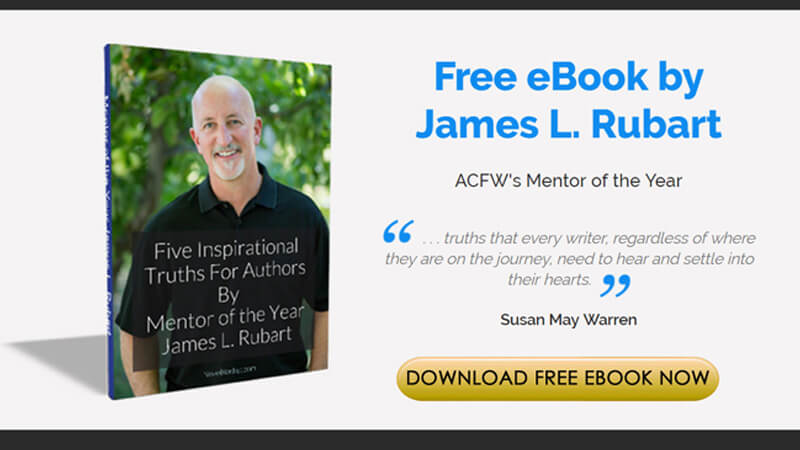
Get a Free Ebook

Five Inspirational Truths for Authors

Try our Video Classes

Downloadable in-depth learning, with pdf slides

Find out more about My Book Therapy

We want to help you up your writing game. If you are stuck, or just want a boost, please check us out!

Showing posts with label Mike Duran. Show all posts

Monday, January 25, 2016

Are There Too Many Writing "Experts"?

In his controversial book The Cult of the Amateur, Andrew Keen argued that one of the downsides of democratization is the empowering of amateurs. Nowadays, anyone with a social media platform -- no matter how unprofessional, extreme, inflammatory, wrong-headed, or downright wacko they happen to be -- can broadcast their thoughts to the world. Pure volume of "hits" can empower just about anyone. Which creates a problem. As Keen puts it:
By empowering the amateur, we are undermining the authority of the experts.
This principle is at work, I believe, in the writing community. What makes someone a "writing expert"? Are there any real writing "experts" anymore? What qualifies writing advice as good advice? And with the market in so much flux, is it possible that those we once viewed as "experts" must surrender their market cred to the more forward thinking?

For this reason, nowadays, being an aspiring author can be rather overwhelming. There is so much writing advice available, much of it contradictory, it's hard to discern the "experts" from the "amateurs,"  who to listen to and who to dismiss. Heck, are "experts" and "amateurs" even legitimate categories anymore?


I recently met with my critique group and we were brainstorming about ways to pool our talents to help ourselves and other writers. It was a fun discussion that caused us to reflect more on our own career paths and some relatively new models that could benefit groups like ours. (I go more in-depth into the details of that discussion in this post: What Writers Talk About When No One's Listening.) The big question for me was what qualifies me to give advice to other writers?


I am a hybrid author (2 trad published novels, 2 self-published); in many respects, I'm probably an "average" sampling of the writing community. I've been pursuing a professional writing career for almost a decade, am agented, have attended writers conferences, taught at writers conferences, have a decent résumé, and don't mind offering my two cents about writing when asked. I have a completed non-fiction project and an Urban Fantasy in the chutes for publication. So I'm still truckin'.


But by many counts, I'm still an amateur. At least, I'm no "expert."


I haven't earned back royalties for my first two trad novels. I have no formal education in writing, no BA or MFA in Creative Writing. I'm not a New York Times bestseller. None of my stories have been optioned for movies. I haven't won any awards, so I'm not an "award winning author." My full-time job is in construction for a school district -- I'm not even a full-time author!


So what qualifies me to give advice to authors about writing?

That's how I put it to my critique group that day. And was soundly rebuked. "You may not be an 'expert,'" they said. "But you have something to offer other writers." Listen, it's encouraging to think that my advice or observations could be helpful to someone. Really. But at what point is my "expertise" just a blasted opinion? Or an educated guess? In other words, I'm no "expert." I'm just an average writer plugging away, learning the ropes, trying to get my voice heard amidst the cacophony. If someone can glean some wisdom from my mishaps, mis-adventures, and advice, that's icing on the cake.

But I'm no expert.

And half the writers who are now considered "experts" aren't much different than me.


The new world of publishing, the one that empowers authors and wrests control from those myopic gatekeepers, has turned amateurs into experts. The rise of indies, across the board, has been a good thing. A great thing! The downside, however, is that just about anyone can position themselves as in-the-know. Land a significant endorsement, pay for a good cover, start some social media chatter and, bingo, you're an authority. 

I can't help but side with Keen's observation -- by empowering amateurs, "we are undermining the authority of experts." At the least, we are diminishing the advice of seasoned writers and publishing professionals in favor of what works, what's affordable, and what's trending.

Things are changing SO fast in the writing industry, it could rightly be asked whether or not there ARE real experts anymore. However you answer that, it's the opposite that I fear: That anyone who has published a book or two, has a website, and an internet connection, can now be considered an "expert."


* * *

Mike Duran is a monthly contributor to Novel Rocket, and is represented by the rockin' Rachelle Gardner of Books & Such Literary. Mike's novels include The TellingThe Resurrection, an ebook novella, Winterland, and his newly released short story anthology Subterranea. You can visit his website at www.mikeduran.com, or follow him on Facebook and Twitter.


Monday, October 27, 2014

What Changes in the Christian Fiction Industry Mean for Indie Authors

For the longest time, the Christian fiction industry seemed somewhat impervious to changes in publishing and the economy. For instance, back in June 2009, at the front-end of the recession, Christian Retailing reported


Defying current sales trends, Christian fiction continues to grow, offering a bright spot for retailers, publishers and readers in a bleak economy.

But in 2014, reality appears to have finally caught up. Take for example, Publishers Weekly reporting of the most recent ACFW conference which notes up front that 


"...four publishers closed, paused, or slimmed down their fiction lists."

The "slimming down" and "shrinkage" of front list titles is important for an industry with a limited number of big houses. But despite the "winnowing," industry reps framed the changes in an opportunistic light: 


A lot of the buzz this year was about “hybrid” authors, defined fluidly but generally meaning authors publishing via some mix of digital, indie, and traditional means. ACFW offered a session on the indie option. “The biggest challenge in ACFW is trying to serve indie members,” said Colleen Coble, novelist and CEO of the group, which has more than 2,600 members worldwide. “We still are going to be very focused on traditional publishing, but we don’t want to leave behind the indie writers.”

Although the number of fiction slots may be shrinking at traditional publishers, industry veterans saw plenty of opportunities, even if those opportunities look different in a changing business in which agents can be publishers and authors must be social media-savvy marketers. Major established fiction publishers aren’t pulling back, and there is room for the new, small, and nimble as digital becomes the accepted vehicle for risk management and author audition.

(A possibly interesting sidenote: PW appears to have changed its initial headline from "Christian Fiction Writers Meet Amid Shrinkage, Growth" -- see Tweet below -- to "Hybrid Publishing is Hot at Christian Fiction Conference," the article's current title. Feel free to speculate as to the reason for this change.)
A result of this "shrinkage" seems to have whittled the industry down to its core audience: 


As the Christian retail channel continues to contract, general romance readers are an especially attractive market for Christian/inspirational publishers. HCCP has begun exhibiting at the RT Booklovers Convention, where Katherine Reay’s Dear Mr. Knightley, a debut novel that won two Carol Awards this year, gained readers and traction. Changes in the way Christian readers express their faith--toward greater engagement with the broader culture--have affected book content, Hutton noted. “A different demand is being placed on the books by the readership,” making them more attractive to general readers, she said.

From my perspective, this is a mixed bag. On the one hand, it's fantastic to see Christian writers seeking "greater engagement with the broader culture." In this case, that means crossing over into the general market. The downside, again from my perspective, is that "general romance readers are an especially attractive market for Christian/inspirational publishers." So while market / industry changes are causing publishers to look more to the general market with more nuanced "book content," general romance remains the go-to Christian genre

As a hybrid author, it's the industry's changing stance on independent authors which fascinates me. The ACFW (American Christian Fiction Writers, the world's largest Christian writers association) recently made significant policy changes by allowing indie authors and publishers potential inclusion into their ranks (see THIS post on the ACFW website as they address policy changes). This coincides with mainstream publishers making "room for the new, small, and nimble as digital becomes the accepted vehicle for risk management and author audition." Of course, it's that caveat -- "risk management and author audition" -- that makes digital publishing through a mainstream house rather unattractive to many indies. Either way, it's easy to see the Christian publishing industry and the ACFW's renewed emphasis on indies as begrudgingly reactionary rather than forward thinking

Whatever your perspective on all this, the changing economy, the morphing book business, and the "shrinkage" in the Christian fiction industry potentially provides a great opportunity for Christian indie authors. Not only is it good to see mainstream industry insiders finally making room for authors outside their approved circle, it concedes important ground to an elusive, but very important demographic: the Christian reader / writer who doesn't like Christian fiction. The affirmation of the "Christian indie author" is important for a number of reasons. Here's five of them: 
  • Christian indie authors potentially broaden the reach of Christian storytelling. If a goal of Christian publishing is to expand the harvest field, empower more Christian artists, and draw more readers to the Light, then having more Christian artists tilling the soil and sowing seeds is a good thing.
  • Christian indie authors force the industry to adapt. Like any industry, the Christian publishing industry can calcify and fossilize. Conceding ground to indie authors forces the industry to rethink its methods, values, systems, goals, and product.
  • Christian indie authors can broaden our conception of what Christian fiction is or can be. The mainstream Christian market, whether intentionally or unintentionally, reinforces a concept of what Christian fiction is. The indie author is not bound by the typical guidelines used to frame the culture's concept of Christian fiction.
  • Christian indie authors are free to cull genres typically ignored and under-represented by Christian publishers. The predominance of certain genres in the Christian market -- women's fiction, Amish, romance, historical -- have forced, or limited, the representation of other popular genres (like horror, crime, sci-fi, steampunk, literary, comedy, space opera, Western, epic fantasy, etc., etc.). The indie author, however, is not bound by such genre restrictions.
  • Christian indie authors can potentially reach audiences who don't like Christian fiction. Mainstream Christian fiction appeals to, and is marketed to, a specific demographic of person. The indie author is free to attempt to reach people who would typically not buy Christian fiction or shop in Christian bookstores.
 
The changes in the Christian fiction industry potentially provide a great opportunity for Christian indie
authors. Not only does it empower more authors, it enables us to potentially expand our understanding of Christian storytelling and get it into the hands of readers who typically shun mainstream inspirational fiction. The indie and hybrid author could prove to be the most important thing that has happened to Christin fiction in a long time.


* * *

Mike Duran is a monthly contributor to Novel Rocket, and is represented by the rockin' Rachelle Gardner of Books & Such Literary. Mike's novels include The TellingThe Resurrection, an ebook novella, Winterland, and his newly released short story anthology Subterranea. You can visit his website at www.mikeduran.com, or follow him on Facebook and Twitter.

Monday, September 22, 2014

"Clean Fiction" as White Magic


by Mike Duran @CerebralGrump

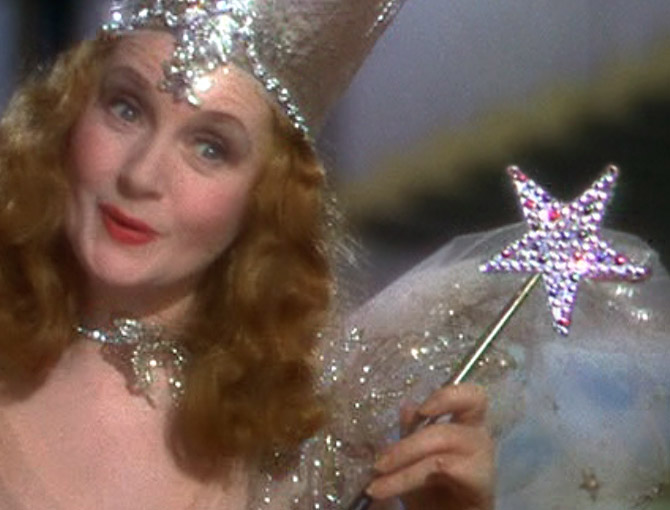
glindaA while back, in a discussion about Christian speculative fiction and where it’s heading, I suggested that “‘bad theology’ has shaped much of mainstream Christian fiction.” One aspect of this “bad theology” is the belief that reading “clean fiction” — and by this, Christians normally mean fiction without sex, profanity, excessive violence, occult themes, etc. — is better for one’s soul, more in line with holiness and godliness, than reading darker, more R-rated stuff. 

“Clean fiction” is part of the toolbox of evangelical holiness and separation from the world.

So it wasn't much of a surprise when televangelist Pat Robertson claimed that watching horror movies can invite demons into ones soul. My rather snide response was, “Of course, watching horror movies can invite demons into your soul. So can watching The Bachelor, Jimmy Fallon, and Carl Sagan’s Cosmos.” Point being: Horror movies aren’t inherently evil; the devil is an “angel of light” and can use seemingly good things to deceive. 

An undiscerning, undiscriminating, unbelieving, naive, morally confused mind is more a gateway to the demonic than are horror movies. 

E. Stephen Burnett commented that Robertson’s response is typical of a bigger problem: “Christians pushing ‘white magic’ in response to ‘black magic.’ Burnett continued:


I believe Christians invite the work of Satan more often when they react to supposed devilish “black magic” work and therefore resort to “white magic” methods of protection to control their environments, protect the dynasty, promote fertility and agriculture, etc. …
…evangelical divination methods can include the “prosperity gospel,” prayer-as-mantra, that “prayer mat” that comes in the mail, listening to new revelation from voices, and even (I’m afraid this is going to be very unpopular) putting faith in manmade corporation-building methods to build churches rather than having faith in God’s Spirit to make our efforts bear fruit.
This got me thinking — which I will do out loud — and you can tell me where I’m wrong.

I think E. is spot-on in his assessment. There are many “evangelical divination methods.” Of course, we don’t see them as divination methods. Nevertheless, they are little different than the spells, counter-spells, protective spells, and iconography employed by many occultists. We just attach biblical jargon and imagery.
  • “Pray this.”
  • “Bless that.”
  • “Stay away from these people, places, or things.”
  • “Repeat these words and believe them with all your heart.”
  • “Don’t watch, listen to, or speak that.”
I would include Christians’ penchant for — I could say “obsession” with –  “clean fiction” as a possible “evangelical divination method.” In other words, we’ve come to believe that reading THIS as opposed to THAT, reading THIS word as opposed to THAT word, including THIS description as opposed to THAT description, makes a story more or less worldly or other-worldly, holy or unholy.

The problem with that approach is that it puts stories, more specifically words, in the category of… magic. We see the correct combination of words, or the exclusion of specific words, as possessing an inherent power, for good or evil. As such, Christian fiction is the “white magic” that counters the spell of secular fiction, which is “black magic.” 

Here’s the problem: The word “shit” does not have magical powers.

The belief that keeping THAT word out of my story makes it intrinsically less worldly and more holy, is akin to white magic. It’s little different than the sorceress who believes that uttering THIS word invokes THAT power and refraining from THAT word prohibits THIS power.

Of course, there is a legitimate biblical basis for avoiding crap, and taking heed to what we read, listen to, and view. But just because someone reads Christian fiction, watches only “family friendly” films, or doesn’t curse, does not automatically make them any more holy, healthy, or happy than someone who doesn’t. In fact, the Bible warns that there may be a subtle danger in consigning ourselves only to what is “clean” (see: Pharisees).

In other words, reading “clean fiction” does not cast a protective spell over ones mind and heart. You still need discernment! In fact, the notion that “clean fiction” is actually safer and better for us  might actually deceive us and distance us from God!

The desire to keep our minds focused on what is “pure, lovely, and admirable” is a great thing. Heck, it’s biblical! Nevertheless, that same Bible says that Satan disguises himself as an “angel of light” (II Cor. 11:14). In other words, Satan is more likely to deceive us with something that looks good (“clean”), than something that looks evil. Just because some stories are free of profanity, violence, and nudity, does not make them impervious to spiritual deception. In fact, the desire to read only what is “free of profanity, violence, and nudity” may itself be a spiritual deception. 

Okay. So that’s my theory. 

How is our rigid avoidance of profanity and R-rated content NOT superstition, a form of white magic that believes the absence and exclusion of specific words makes one more holy?

* * *

Mike Duran is a monthly contributor to Novel Rocket, and is represented by the rockin' Rachelle Gardner of Books & Such Literary. Mike's novels include The TellingThe Resurrection, an ebook novella, Winterland, and his newly released short story anthology Subterranea. You can visit his website at www.mikeduran.com, or follow him on Facebook and Twitter.