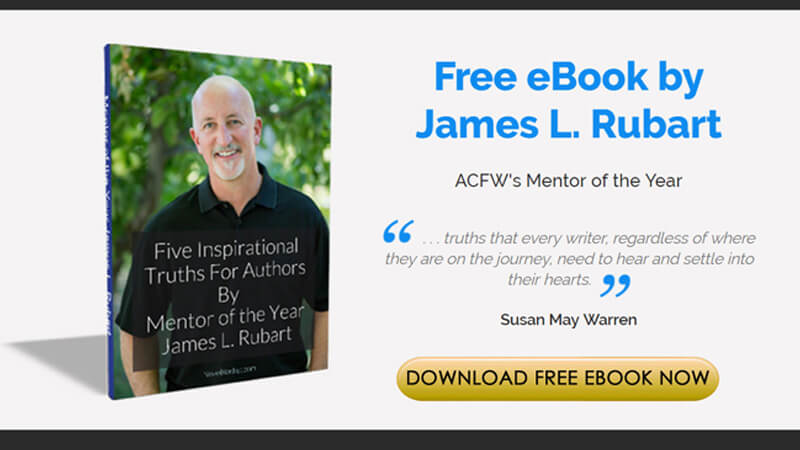

Get a Free Ebook

Five Inspirational Truths for Authors

Try our Video Classes

Downloadable in-depth learning, with pdf slides

Find out more about My Book Therapy

We want to help you up your writing game. If you are stuck, or just want a boost, please check us out!

Showing posts with label Literary Agent. Show all posts

Wednesday, July 20, 2011

Introducing Debut Author Pam Hillman


Award-winning author Pam Hillman writes inspirational fiction set in the turbulent times of the American West and the Gilded Age. Her debut book, Stealing Jake, won the American Christian Fiction Writer’s Genesis contest and was a finalist in Romance Writers of America’s prestigious Golden Heart contest. She lives in Mississippi with her husband and family.Contact Pam at her website, http://www.pamhilllman.com.

How did you come up with this story? Was there a specific 'what if' moment?


I honestly can’t remember how I came up with the exact idea for the pickpocket theme, but it was the old adage of opposites attract. If she’s a thief, he’s a lawman. Okay, she’s a reformed thief…or is she? Livy is short for Olivia, which came from Oliver Twist, so that was my jumping off place.

Tyndale House Publishers used to publish 2 Heartquest anthologies a year. Tyndale has been my dream publisher from the beginning, and I submitted novella proposals several times trying to break in. Stealing Jake (then Stealing Jake’s Heart) was one of those submissions. Tyndale put out guidelines for a Cowboy Christmas anthology, so the story had to involve Christmas and have a historical setting. Stealing Jake didn’t make the cut for the anthology, but I loved the idea so much that I went back to it later and turned it into a full-length novel. It just happened to be the novel my agent and I were shopping when word went out that Tyndale was launching the Digital First Initiative.


Every novelist has a journey. How long was your road to publication? How did you find out and what went through your mind? 

I’ve been writing most of my life, but seriously started pursuing publication a little over 15 years ago. I found out about the offer through an email from my agent, Steve Laube. Honestly, at that point, the business side of me kicked in. Old habits are hard to break. I didn’t get the giddy feeling everyone talks about, until Seekerville hosted a first sale party for me and we had over 400 comments. Now, that was fun!


Do you ever bang your head against the wall from writer's block? If so, how do you overcome it? 
I’ve heard some people say there is no such thing as writer’s block, but there are times when I am not productive. Whether that’s because the plot hasn’t gelled, the characters aren’t fleshed out enough, or I ate too many burritos for lunch is debatable. I just read my notes, brainstorm with the Seekers, or write the scene from a different pov, or go online and research something. When all else fails, I write through it, and come back and fix it later.

A romance starts, “Boy meets girl, boy loses girl, boy gets girl.”

I can build off of that.

Do you consider yourself a visual writer? If so, what visuals do you use?

I don’t use a lot of external visuals to get motivated. Most of what I see is in my head. But every so often, I’ll find a picture that speaks to me. I have picture of a grape arbor on my desktop that plays an important part in another manuscript I’ve been working on. I can look at that breezy arbor and imagine all sorts of scenes with my hero and heroine.

Novelists sometimes dig themselves into a hole over implausible plots, flat characters or a host of other problems. What's the most difficult part of writing for you?

The most difficult part is digging myself out of the hole you mentioned! I get my characters and my plot into a blackberry briar patch all the time. I know what I want to happen, but realize it’s going to be pretty difficult getting from A to B, and almost impossible to jump to Z.

How do you overcome it?


I wrestle with it for awhile. Plot, brainstorm, research a bit. Try a few rabbit trails. Bring in reinforcements if needed. Eventually, I fight my way out of the briars, scratched and bleeding, dragging my characters with me. But the resulting blackberry cobbler is just as good as I dreamed it would be. And when I get to share it with others, as I have with Stealing Jake, it’s even better!

Where do you write: In a cave, a coffeehouse, or a cozy attic nook?


I write on my laptop at home in the den, or at the dining room table. Sometimes I hole up an empty Sunday school room at church. An attic nook sounds so inviting!

What does a typical day look like for you?


Like many authors, I have a day job, so a typical day is to hit the ground running. Write, check email, do a little ACFW business, go to the day job, check email on my lunch break, then start the whole process over as soon as I’m off work. I have to structure my days off very carefully to get everything done.

Some authors report writing 5-10 thousand words a day. Do scenes flow freely from your veins or do you have to tweeze each word out? 

It’s amazing how I can visualize a scene, but when it comes time to write it, getting it down does feel like pulling hair off a caterpillar with a pair of tweezers. But then sometimes I’ll get in the zone with a scene that just flows like a mountain stream, and after an hour or two, I’m amazed at the amount of work I’ve accomplished. So, bottom line, my production is fairly unpredictable!

What’s the best writing advice you’ve heard?

Write every day. Better yet, finish one manuscript and start another one, don’t just keep working on the same manuscript forever and a day.

Do you have any parting words of advice?

Find a group of writers who are serious about publication, and stick to them like glue. The Seekers formed in 2005 with the goal of praying all fifteen into publication. We met our goal in May 2011 when I became the last one to receive a contract. We cheer successes, and bemoan failures, then we prop each other up for the next round. Find a group or form one. It might take a while to find just the right fit, but you’ll be glad you did.


When Livy O'Brien spies a young boy jostling a man walking along the boardwalk, she recognizes the act for what it is. After all, she used to be known as Light-fingered Livy. But that was before she put her past behind her and moved to the growing town of Chestnut, Illinois, where she's helping to run an orphanage. Now she'll do almost anything to protect the street kids like herself.
Sheriff's deputy Jake Russell had no idea what he was in for when he ran into Livy--literally--while chasing down a pickpocket. With a rash of robberies and a growing number of street kids in town--as well as a loan on the family farm that needs to be paid off--Jake doesn't have time to pursue a girl. Still, he can't seem to get Livy out of his mind. He wants to get to know her better . . . but Livy isn't willing to trust any man, especially not a lawman.Interwoven throughout is a group of street kids arrested in Chicago and sold as child labor. Leading this band of ragamuffins is young Luke, a scared, determined orphan intent on rescuing his little brother at any cost. To read the prologue and first chapter, go to http://http//pamhillman.blogspot.com/2007/11/stealing-jake-prologue.html



Monday, May 24, 2010

Kathy Carlton Willis~The Difference between an Agent and a Literary Publicist


Today’s Novel Journey article is by Kathy Carlton Willis, wife to Russ, pastor’s wife to many, author, editor, publicist and a certified CLASSeminars speaker. Kathy Carlton Willis Communications encompasses her many passions. Learn more about how she reflects Christ as she shines the spotlight on others at: http://kcwccomm.blogspot.com/ or http://www.kathycarltonwillis.com.

Often in my travels, I’m confused for an agent or I’m asked what’s the difference between what I do and what an agent does. Maybe you’re curious, too.

First, let’s look at the similarities.

Literary Agents and Literary Publicists:

  1. Are cheerleaders for you and your projects—they want to see you succeed.

  2. Tell others about your work in hopes of connecting you to the ones who will help you get to the next level.

  3. Sometimes provide career-counseling advice, to coach you as you strategize steps to attaining your goals.

  4. Often help you doctor your book proposals to make them sing before submitting them to acquisitions editors and others.

Literary Agents are unique in that:

  1. They are focused on presenting your book proposals to acquisitions editors and publishers with the hope of attaining a book contract for you.

  2. They are paid a commission-style fee, often 15-20%, for arranging these deals, and for mediating any future communication between the authors and publishing houses.

  3. They often carry a heavier client load than publicists, due to the nature of their role. Publishing houses can take a while to decide on proposals, so the agent moves on to pitching other clients while waiting for responses.

  4. They often know more legalese regarding contract law than what is required of publicists to know.

  5. Their databases are filled with contacts in the publishing world, including what each editor is looking for at any given time.

Literary Publicists are unique in that:

  1. They are focused on selling YOU rather than your projects. This involves pre-book contract branding and post-book contract media publicity.

  2. They are paid by the hour or by the campaign, by the author or by the publishing house, depending on the agreement.

  3. Independent publicists carry a limited client load so they can handle the hectic demands of networking with media during all those newsworthy moments.

  4. They know the ins and outs of book promotion and marketing.

  5. Their databases are filled with contacts in the media world, including how each media rep prefers to be pitched (e-mail, fax, phone call or mail).


I’m in the position of assisting clients with writing their book proposals and their books, so I have a little more invested than some publicists who focus more on the post-release publicity. Because of that, I can often act as a liaison to connect authors with publishing houses prior to them attaining an agent. We’ve found that agents are more likely to pick up an author once they know the proposal is being considered at the publishing board committee meeting, or perhaps even being extended a contract offer. My clients ask me why they even need to “throw away 15 percent” to an agent if I’ve already helped them get a deal—why not just get an attorney to consult on the contract? I recently e-mailed this reply to a client asking this very question:

Most say it’s worth the 15% you pay to an agent in exchange for what you get in return. Not just their legal knowledge of reading the contract, but having enough industry knowledge to know what SHOULD be in that contract, what CAN be negotiated (not just your pay, but different rights that need protected or discussed, like international rights, e-book rights, your percentage of discount on purchasing the book for your book table, etc.). Even great attorneys don’t know industry standards for the publishing world unless they deal with it every week.

It’s not that you can’t trust this publishing house to offer you a respectable deal—it’s just that this is a BUSINESS and they are in the business of trying to save as much money as they can by offering low—especially to a first time writer. An agent can negotiate a better deal for you. An attorney won’t do that. They will just tell you if it’s okay to sign the dotted line.

The truth is, many writers end up finding their own book deals, rather than their agents, but they still are willing to have the agent do the negotiating and all the follow up that happens AFTER the contract is signed. An agent’s work isn’t over when the contract is signed—there’s so much to do that slips through the crack if you don’t have an agent to have your back every time you have a dispute over things like edits, cover design, production deadlines, etc.

So, while it’s not essential—and you certainly CAN hire an attorney familiar with literary contracts, I would recommend acquiring an agent to represent your best interests.”

Friday, May 01, 2009

Novel Journey's Interview with Donald Maass

Author bio: A literary agent in New York, Donald Maass’s agency sells more than 150 novels every year to major publishers in the U.S. and overseas. He is the author of The Career Novelist (1996), Writing the Breakout Novel (2001), Writing the Breakout Novel Workbook (2004) and The Fire in Fiction (2009). He is a past president of the Association of Authors’ Representatives, Inc.

The Fire in Fiction: Passion, Purpose and Techniques to Make Your Novel Great
, by Donald Maass

In his new book, New York literary agent Donald Maass illuminates the techniques of master contemporary novelists. Some authors write powerhouse novels every time. What are they doing differently on the page? Maass not only explains, he shows you how you can right away use the techniques of greatness in your current manuscript.

The Fire in Fiction from the publisher.
The Fire in Fiction from bn.com
The Fire in Fiction on amazon.com

1.) First and foremost, I’d like to thank you for granting Novel Journey this interview. Being a highly sought after agent, I know you are pressed for time.

You’re welcome, we’re having a busy year despite the recession—four books on the NY Times Best Seller list this week.

I’ve read your upcoming release, The Fire in Fiction, and can’t praise it highly enough. Many writing advice books address beginners and cover the basics; yours delves into the elusive skills a writer needs beyond those first steps. Will you tell us about this release and what inspired you to take on the project?


Have you ever been let down by a favourite novelist? You eagerly snap up a new title but, ugh, it’s just plain off. Then there are others who write a great novel every single time. How do they do it? That question intrigues me. It’s the reason I wrote The Fire in Fiction: Passion, Purpose and Techniques to Make Your Novel Great. I wanted to learn, and explain, what those master novelists are doing differently on the page.

2.) One of the elements I loved about The Fire in Fiction was your encouragement to work until the book is right. As writers, we often hear that in order to survive we must be capable of producing one or more books a year—lest we lose our audience and future contracts. But what if it takes an author two to five years to craft a good book?

Writing a great novel at a book-a-year pace is extremely difficult. I watch clients struggle with that challenge. One empowering thing to know is that the bigger the impact a novel has, the longer readers will wait for the next one. Think about it. It was ten years between Silence of the Lambs and Hannibal, thirteen years between Catch 22 and Something Happened. Those gaps didn’t hurt sales, but those were great novels.

3.) Tell us the problems you address in your book that often plague the lacklustre manuscripts you see.

You can tell when an author is on auto-pilot. The manuscript gets bogged down. It wanders. It’s low in tension. You skim. Add to that stereotypical characters, predictable plots, cliché-ridden prose, churning exposition, buried dialogue—you get the idea. It is distressing how often manuscripts are like that, even manuscripts from published authors. But The Fire in Fiction is not about what not to do. It is about the techniques that make a novel a masterpiece.

4.) In Fire in Fiction, you address the difference between storytellers and status seekers. Will you give us a quick definition here?

For thirty years I have observed fiction careers. I’ve seen them succeed and fail. The more I see, the more I feel that novelists fall into two broad categories: those whose desire is to be published, and those whose passion is to spin stories. I think of these as status seekers and storytellers.

You can’t tell the difference right away, but over the course of a career it always emerges. Status seekers focus on self-promotion and obsess about the industry. Storytellers ignore that stuff and focus on improving their novels. Guess who succeeds and who fails?

5.) You seem like a straight shooter, someone who believes in the art and craft of fiction and is very vocal about it. You’re known for saying it is what’s between the covers of a book that sells it. You’re accredited with saying that marketing plays a small role in a book’s success and that writers shouldn’t worry about promotion until their fifth or sixth book.

I can’t help but to disagree. I would argue that many of today’s laurelled authors are known because of their first novel. (Jhumpa Lahiri, Lauren Weisberger David Guterson, Alice Sebold, Sue Monk Kidd, Mark Haddon, Nicholas Sparks, Rebecca Well, Emma McLaughlin and Nicola Kraus, Helen Fielding, Harper Lee, Audrey Niffengger, Geraldine Brooks, Arthur Golden, Charles Frazier, Elizabeth Kostova, Susanna Clarke, etc.)
My theory is that a storytelling author should pursue every bit of marketing and promotion available to start that word of mouth process, rather than hoping some librarian will pluck the book off a dusty shelf someday and discover it’s a gem. It’s a short twelve weeks from being stocked at Barnes and Noble to landing on their bargain bin table. After spending years working on a novel, shouldn’t an author strive to give their story not only the best agent, the best publishers, but also the best marketing?

Sorry, we’re going to disagree on this one. It’s true that many of the novelists you mention above hit big with their first novels. But look closer. Many of those books started out with no promotion at all. Only after sales began to climb did publishers hop on board and begin spending. That accelerated what was already happening. Great stories are the engine. Promotion may be the gasoline but gasoline won’t propel a two-cylinder putt-putt very fast--or push a broken engine very far down the road.

I agree that, at the end of the day, stories are engine that runs the machine. No doubt about that.

I did look closer and researched some of the debut novelists mentioned. I chose 8 books, but feel confident I’d find similar results with the other books. In every novel I researched, I show that major outlets (such as: New York Times, Entertainment Weekly, Washington Post, Vogue, TIME) featured the novels the same month the book was released, or within a relatively short period of time.

With
200,000+ books published a year, and something like an average of 5,000+ books being featured on a national level—someone was working very hard to gives these books a prominent spot. I even researched The Memory Keeper’s Daughter, which has been hailed as a sleeper success, and found the novel held some of those coveted spotlights.

Magazine leads often are pitched up to a year in advance, while nationally recognized newspaper reviews require a 4-6 months lead time. In my experience, those novels have required a publicist touting them in order to have a slim hope of being featured. Nicolas Sparks received a million advance on his first novel, which shows the publisher’s faith in his book. We know that shelf space on the “New Arrival” shelf are paid placement in bookstores, and that the books featured in these outlets are often the ones most easily found.

Perhaps we could agree in the middle? That there are two fairly distinctive paths—those who are either gifted (or worked hard to prefect their craft beforehand) and stand a greater chance of being launched from the get go, and those who gradually grow book by book and build their audience slowly until they are ready for a bigger push around book 5 or 6?

Why does media get excited about a novel? What starts the bandwagon rolling? Publisher hype? That’s a prod, obviously, but media far more often than not take a pass. What gets them excited is the same thing that gets word of mouth going: a great story. It all comes back to that. Up and down the ladder it all starts there.

6.) You don’t address word count in your book—in fact you even use an example of how John Case took over a hundred pages to set up his thriller. A writer may realize the importance of building up certain types of stories, but how can an unpublished writer pitch their book with a word count that is higher than 100-125K?

You don’t hear editors complaining about word count when a novel is a powerhouse. That said, let’s admit that a book longer than 125K words is pretty long. There are pricing problems. You can run into resistance from chain buyers, particularly for a debut author. Very long books can also present binding problems. If you are a first time novelist, you have to ask whether your novel truly justifies more than 125K words. Quite honestly, most first novels do not.

7.) Your agency has one of the highest reputations in the industry. What do you feel sets you apart?

Gosh, thanks. We specialize in fiction. Developing fiction careers is our specialty. Many agencies say they do that, but some are mainly focused on deals. We take a more strategic approach. Fiction careers build over a number of books. Keeping things moving steadily, staying with one publisher, growing an audience with consistent storytelling and reliable publishing…those are the things that work. It requires patience. It’s not as exciting as announcing an auction every day, but long term it yields the best results.

8.) Success is said to change everyone its visits. How would those close to you say it has changed you?

I think I’ve gathered a good deal of helpful experience. I know where the problems lie in fiction careers. I have more confidence now because I understand how many writing and publishing problems can be solved. On the down side, I am busier. I am also less patient with lousy and lazy novel writing. That, truly, is the root of most career problems. It’s why I write books like The Fire in Fiction. So much frustration and angst on the part of fiction writers can be avoided.

Oh wait, sorry, your question was about those close to me. How would they say I’ve changed? I’m happier, more relaxed. I don’t stress as much. And hey, I still weight what I did in college. That hasn’t changed--it’s just more of a struggle.

9.) Agents are always telling their clients that networking at writers’ conferences can’t be stressed enough. Do you agree and if so why?

I don’t agree. There are highly successful authors who never attend conferences. On the other hand, conferences can be a great place to learn. For developing fiction writers they can be a boost. Plus, it’s nice to hang around other writers. But please don’t think that networking at conferences is the same thing as building an audience. It’s not. It can’t be. Even if you networked your tush off at a conference every other weekend, you couldn’t begin to win the number of fans that it will take to make you successful.

10.) There’s a lot of confusion about what exactly entitles a book to be called a bestseller. Will you define when an author or publisher can claim that status?

“Bestseller” is starting to sound over-used, isn’t it? One tiny little blip one week on the USA Today list and wham! “Bestselling author” is plastered on the paperback. But let’s be generous. Getting on the extended New York Times Best Seller List still means you are selling a lot of books.

But what, technically, qualifies? Who knows? I care about claiming the status only as it relates to packaging. It helps some authors to proclaim the status—but also hurts others. It doesn’t help, say, to over-hype literary fiction. In general, I feel that this whole business of becoming a “best seller”, whatever that means today, is a distraction. How many readers come back for your every new book? And why do they love your fiction? That’s a better focus.

11.) What should newcomers strive to learn about the publishing industry before they enter the arena?

Learning the landscape is good. What is an independent editor vs. an acquiring editor? Where does an agent fit in the process? There is a procedure to querying editors and agents that’s basic. Newbie novelists need to know that stuff.

12.) Walk us through your average day?

You’re kidding. Average? Every day is different. Okay, certain things always are happening. Writing pitches. Making marketing plans. Submissions. Contracts and collecting payments. (We process hundreds of contract every year.) Tons of e-mail. Inquiries from producers and screenwriters about film rights. This week we worked on our Rights List for the London Book Fair. Queries and manuscripts, including up to 500 e-mail queries a week.

We’re pretty organized, but good grief I’m getting a headache just thinking about it all. Next question?

13.) If you could take your present-day knowledge and counsel yourself when you first entered this business, what would say?

That’s an excellent question. I’m going to give you a brutally honest answer. This will not make me look good, but if I could travel back in time and give advice to my young agent self it would be this: Don’t take on so many mid-career crisis cases. There’s a reason things are going wrong for them. Take on only great fiction. An author with a fantastic debut novel has a better chance of a strong career than a published author with bad writing habits and a chip on his shoulder.

14.) Will you name a few clichés you could live without ever seeing again?

“Unruly hair.” “As if on cue…”

15.) Often, when writers sign with an agent, they’ve only met them in passing or never had a face to face meeting. Will you tell our readers what are some good ways to get to know your new agent better without appearing pushy or desperate?

No one’s going to take my advice on this because early on, the need for contact and validation is huge. All I can advise is, take it easy. A successful career takes more than one book and more than one year. You’ve got time. Let the process be the natural framework for getting better acquainted.

16.) Advice for aspiring novelists or parting words?

As you know, I teach advanced fiction workshops all over the country. But if I could teach only one thing, it would be the technique I call “micro-tension”. That’s the line-by-line tension that keeps a reader constantly wondering what will happen—not in the story, but in the next few seconds.

How is micro-tension done? Ah, you can find out by reading……The Fire in Fiction. (Wait a minute, that was self-promotion…shoot.)

Thanks, Jessica.