Get a Free Ebook

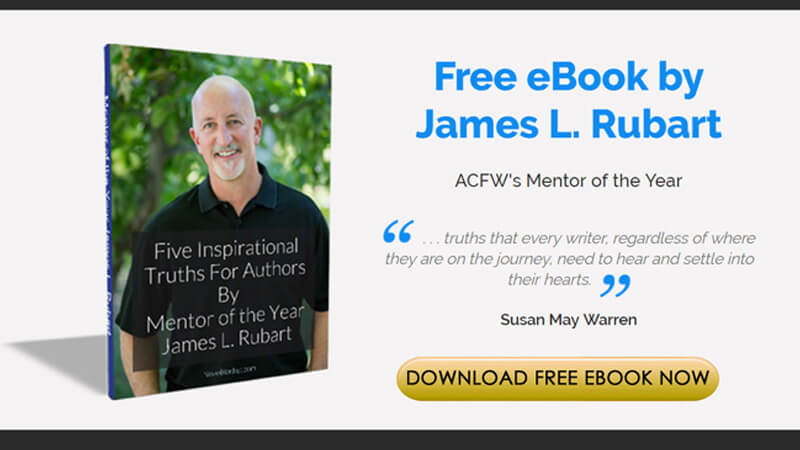
Five Inspirational Truths for Authors

Try our Video Classes

Downloadable in-depth learning, with pdf slides

Find out more about My Book Therapy

We want to help you up your writing game. If you are stuck, or just want a boost, please check us out!

Showing posts with label Historical Romance. Show all posts

Saturday, September 12, 2015

Kristi Ann Hunter's Debut Book Sweeps RWA & ACFW Awards

Kristi Ann Hunter graduated from Georgia Tech with a degree in Computer Science but always knew she wanted to write more than code. The power of stories and their ability to bring people together has always enthralled her. Kristi is an RWA Golden Heart contest winner, an ACFW Genesis contest winner, and a Georgia Romance Writers Maggie Award for Excellence winner. She lives with her husband and three children in Georgia, where she divides her time between family, church, and the pursuit of the next perfect story.

What sparked the story for this novel?
When Miranda appeared in A Lady of Esteem I knew she wouldn’t meet the love her life in any way that was conventional. I also knew that she needed to learn that she was stronger than she knew. That meant her story needed a very unusual man and a rather uncommon situation. Thus A Noble Masquerade was born.

Share a bit of your journey to publication. Was it short or long?
While it felt like eons while I was living it, comparatively my road to publication was a rather short five years. Because my ability to write a query is, shall we say, lacking, I turned to contests for exposure. The first few years gave me great experience and advice and I put everything I’d learned into writing A Noble Masquerade. The book did extremely well, winning both the RWA Golden Heart and the ACFW Genesis awards and gaining the attention of an editor at Bethany House. The rest is, well, beginning as the first book in the series has only been out a few days.

What would you do if you didn't write?
That’s hard to say. I spent nearly a decade in corporate information systems writing code and working with databases. Before I began writing, though, we started a family and decided it was best for us if I stayed home with the children. So if I weren’t writing, I guess I’d be a little more on top of the laundry and actually remember to make dinner.

What makes you struggle as an author?
Time management. Juggling life and writing drives me nuts. Good thing all the best writers are a little bit crazy.

How do you handle it?
I signed a contract with a deadline. That lights a fire under anyone. I also am blessed with an enormously supportive husband who makes sure I have the time to do what God has called me to do.

Have laptop ~ can go anywhere
Where do you write: In a cave, a coffeehouse, or a cozy nook?
Anywhere and everywhere. I have a laptop that goes with me almost everywhere. I’ve written at dance class, the back corner table of Chick-fil-A, the car pool line, the church lobby, the kitchen table, the treadmill, the floor of my kids’ bedroom, and even, on occasion, I’ve sat at my desk.

Do you prefer the creating or editing aspect of writing? Why?
Before I started working with Bethany House I would have absolutely said the creating. I hated editing so much that instead of doing major revisions I would simply rewrite the thing. I do not recommend this. It is rather time consuming.

However, after working with some really amazing editors, I’ve come to appreciate the process of cutting and shining the diamond. The finished product is very satisfying.

Do you consider yourself a visual writer? If so, what visuals do you use?
I am a very visual writer, but I’m also an audible writer. I have pictures on both the wall and my Pinterest board that represent characters, scenes, ideas, clothes, and setting. When I’m in the very beginning of a book’s creation, though, I rely heavily on music. Themes, characterizations, and plot lines are often inspired by different songs. I’ll put together a playlist and go back to it whenever I feel stuck in the story.

What are your top 3 recommendations for a new writer?
  1. Write. I know too many new writers that spend all their time studying writing and never actually write. Forget everything else until you’ve actually managed to put a complete story on paper. Don’t worry, it’s going to suck, but at least you’ll know you have it in you to put a story onto the page.
  2. Get to know writers that are beyond you in their careers. If you’re a complete newbie, make sure you’re rubbing shoulders with those who’ve been around a while. If you’re starting to pursue publication, spend some time getting to know published authors. Not only does this keep you motivated to move forward, you learn valuable lessons about the next phase of your career.
  3. Remember that God made you to be you, not me or any other author in existence. Your stories, voice, style and path to publication will not be the same as anyone else’s and that’s okay. In fact, that’s a good thing. 
Then what 3 things would recommend not doing?
  1. Do not ignore the industry and how it works. The first thing I did in serious pursuit of a writing career was attend a conference and pitch my book. The conference was in October and I wondered if they’d love it so much they’d fast track me and I’d be giving books for Christmas presents. Try not to hurt yourself laughing over that one. 
  2. Do not think you instinctively know how to write. I came across that submission from that first conference the other day and I about died remembering how proud I had been. I had so much to learn about the craft of writing. There’s still more to learn. Never assume you know how to write and have nothing to learn.
  3. Do not spend your time on things that don’t advance your goal. Do you want to be a blogger? Then by all means, devote your time to making amazing content that can be spread around the world through your many social media contacts. Do you want to be a novelist? Make time to write the novel! You can’t do that if you’re blogging 500 quality words every day. 
What's next for you?
The next book, of course! Miranda’s sister, Lady Georgina has been getting in everyone’s way, but it turns out she has a powerfully motivating secret for doing so. All her well-laid plans may be for nothing if she keeps running into the one man that could ruin everything.

I’m also doing a lot of things to try to get out and meet some of my readers. I adore my readers. If you live in or near Georgia, check out my webpage to see some of the events you can come meet me at.

A Noble Masquerade

Lady Miranda Hawthorne acts every inch the lady, but inside she longs to be bold and carefree. Entering her fourth Season and approaching spinsterhood in the eyes of society, she pours her innermost feelings out not in a diary but in letters to her brother's old school friend, a duke--with no intention of ever sending these private thoughts to a man she's heard stories about but never met. Meanwhile, she also finds herself intrigued by Marlow, her brother's new valet, and although she may wish to break free of the strictures that bind her, falling in love with a servant is more of a rebellion than she planned. 

When Marlow accidentally discovers and mails one of the letters to her unwitting confidant, Miranda is beyond mortified. And even more shocked when the duke returns her note with one of his own that initiates a courtship-by-mail. Insecurity about her lack of suitors shifts into confusion at her growing feelings for two men--one she's never met but whose words deeply resonate with her heart, and one she has come to depend on but whose behavior is more and more suspicious. When it becomes apparent state secrets are at risk and Marlow is right in the thick of the conflict, one thing is certain: Miranda's heart is far from all that's at risk for the Hawthornes and those they love.

Saturday, January 10, 2015

Michelle Griep ~ Off the Leash

Michelle Griep’s been writing since she first discovered blank wall space and Crayolas. She seeks to glorify God in all that she writes—except for that graffiti phase she went through as a teenager. She resides in the frozen tundra of Minnesota, where she teaches history and writing classes for a local high school co-op. An Anglophile at heart, she runs away to England every chance she gets, under the guise of research. Really, though, she’s eating excessive amounts of scones. Follow her adventures at her blog WRITER OFF THE LEASH or visit michellegriep.com, and don’t forget the usual haunts of Pinterest, Facebook or Twitter. 

Have you always wanted to be a writer?

Yes, except for a short season when I kicked around the idea of becoming an astronaut. Two problems with that, though. First off, I hate science and math, both of which are slightly necessary to succeed in an aerospace career. Secondly, it was a total deal breaker when I found out that astronauts don’t actually wear cool Lt. Uhura uniforms.

If you weren’t a writer, what would you be doing?

I’d be running a B&B in England. Near a castle. On a moor. With Mr. Rochester as my neighbor. Wow. Did I mention I’m an out-of-the-closet Charlotte Bronte fan-a-maniac?

Why do you write?

Because being a pirate is frowned upon and I’m pretty sure no one will pay me to eat brownies all day. There’s also the simple matter of quieting the voices in my head by capturing them onto paper so I can have some peace.

What does your family think about your crazy career choice?

My husband knew I was certifiably insane when he married me, so no problem there. As for my kid, my oldest son thinks it’s great but only reads audio/technical textbooks. My second son reads my rough drafts, cutting out scenes that are too sissy and/or adding in some sweet moves to my fight scenes. My oldest daughter is too busy fixing her hair to notice that I write. And my youngest daughter is pretty sure Hollywood will make blockbuster movies of my stories, and can I please get her into a starring role?

What’s your favorite part of the writing business? What’s your least favorite?

I’m not going to lie . . . getting paid for penning down my daydreams is sweet perk. 

My least favorite writerly chore is marketing. There’s a reason I’m not a salesman. I stink at it.

After becoming a published author, what surprised you the most?

The freak magnet effect. When people hear I’m a published author, suddenly I’m their BFF. I’m convinced that 99.9% of the population is wannabe-writers with not only novel ideas, but entire epic trilogy tales.

What event, writer, or book has most impacted your writing life?

My critique partners. These gals are ruthless. They’re cute when they wear their cheerleader costumes but my-oh-my…my head’s been on a platter many times over for lazy writing or a sagging plot. These writing buddies are always there for me whether I’m riding the crest of victory or weeping from rejection. I couldn’t play this game without them.

What are 3 things about yourself that might surprise your readers?

I can dance a mean polka. I hate fruit. Yes, really. No, I don’t even like strawberries. And I’m a recovering Trekkie. Old school, that is, none of this New Generation nonsense.

What’s one piece of writing advice that’s most benefited you as an author?

Buy the book Self-Editing for Fiction Writers. Go ahead. I’ll wait. This is one book you need to have on your shelf.

What do you struggle with most, as a Christian Fiction writer? How do you overcome it?

One of the biggest traps to snap it’s sharp jaws into a writer’s neck is measuring yourself up against sales numbers. It’s a constant battle to remind myself that my immeasurable worth is found in what Jesus did on the cross, not on having my name in the #1 slot of the New York Times Bestsellers.

How much of yourself is in your characters?

There’s a piece of me in every character—even the villains. Not that I have a split personality, mind you, but this phenomenon is pretty universal amongst writers. In fact, I’ve got a favorite quote from John Milton that sums it up quite nicely:

“For books are not absolutely dead things, but do contain a potency of life in them to be as active as that soul was whose progeny they are; nay, they do preserve as in a vial the purest efficacy and extraction of that living intellect that bred them.”

But sometimes your heroes are a shade on the dark side. Why?

Most heroes are too good to be true. I like to dress mine in unpredictability. Someone who’s not necessarily safe to be around but always has his loved one’s best interests at heart and will put his head on the chopping block to save them if need be. This reminding you of anyone? The same could be said for Jesus. I hope readers make that connection, subconsciously at least. Heroes are not always what we expect them to look like on the outside.

What type of books do you write?
 
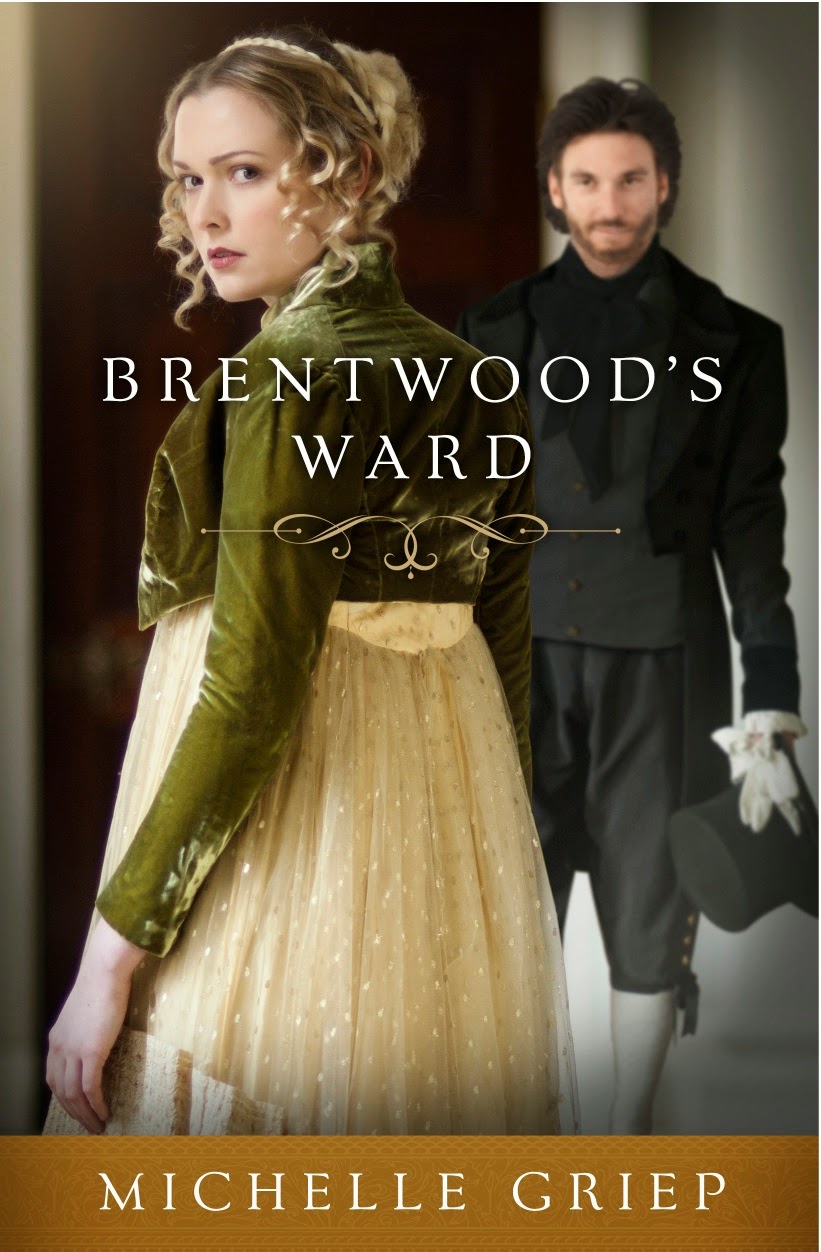
The kind that keep you awake late into the wee hours, heart pounding, curious to find out what’s going to happen. And long after you’ve read the last page, stories that won’t leave your mind for days. But if you simply mean genre, then historical. My latest release is BRENTWOOD’S WARD. Here’s a blurb:

There’s none better than NICHOLAS BRENTWOOD at catching the felons who ravage London’s streets, and there’s nothing he loves more than seeing justice carried out—but this time he’s met his match. Beautiful and beguiling EMILY PAYNE is more treacherous than a city full of miscreants and thugs, for she’s a thief of the highest order . . . she’s stolen his heart.

Available in paperback, ebook, and audiobook formats at Amazon, Barnes and Noble, and other fine booksellers.

Why write this book? What was the inspiration?

What attracted my interest as an author was an old newspaper advertisement put out by Henry Fielding, the founder of the Bow Street Runners. It encouraged the public to send a note to Bow Street as soon as any serious crime occurred so that “a set of brave fellows could immediately be dispatched in pursuit of the villains.” I wondered about those “brave fellows” and what kind of villains they might come up against, and thus was born Nicholas Brentwood.

Parting comments?

Go for the dark chocolate. It’s healthier.

Wednesday, September 18, 2013

Debut Author Ruth Trippy Reveals Character Inspiration


Ruth Trippy was born in western Michigan to a Dutch family with values similar to the Victorian era she loves. She left home to teach high school language arts in Florida where she explored her love of apologetics. She also worked as Public Service Director for a radio station in Ft. Lauderdale. Ruth and her husband reside outside of Atlanta, Georgia, and have two grown children. 

Some say a writer is born and others say anyone can learn. What do you say?

Both make up the equation, I think. There has to be some kind of spark, or intelligence or sensibility that is a gift. But then the real work begins: learning the craft of writing. A few writers are like Mozart. They get an idea in their heads, write it down and it’s beautiful from the get go. Most are like Beethoven. They struggle to express their idea, reworking it many times, then finally—it’s beautiful.

Was there a specific ‘what if’ moment that sparked your latest release story?

When I read George Howe Colt’s The Big House and learned what characterized Boston Brahmins—and recognized many of the same traits in my family members—the character of Edward Lyons took off, because I knew him.

Do you have a full or part time day job? If so, how do you balance your writing time with family and work?

I teach piano part time, have since I was fifteen. But balance—what’s that? I’m constantly looking for the perfect “lifestyle” where I feel all warm and cozy and inspired. Simplifying my life—again and again—has helped. Mental outlook is key: Sarah Young’s Sept. 3 devotional in Jesus Calling, depending on God, is wonderful.

Did anything unusual or funny happen while researching or writing this book?

Unusual, yes. My childhood nemesis provided inspiration for the character Loydie, the mischievous boy. During a Michigan winter, “my” Loydie made me walk in a deep ditch covered with ice. I was terribly afraid, not knowing when the ice would break. Years later I saw him at a high school reunion. We mended our fences, and he looked forward to reading this novel. As a high school basketball coach, he was in great shape, but a few months ago died suddenly from a heart attack, before the novel was released.

Do you consider yourself a visual writer: If so, what visuals do you use?

I don’t use visuals in the normal sense. My “visuals” are people and settings from my past and, of course, others are completely made up, but all expand to have a life of their own as the story develops.

What is your writing MO? Are you a plotter, a pantster, or somewhere in between?

Somewhere in between. I know where the story is generally headed, but as I continue to research while writing, new information will suggest another character or scene or additional layer. Often while I’m having my time with the Lord in the morning, something will pop into my head for the story and I quickly jot it down on a post-a-note. I figure it’s from the Lord!

Have you discovered some secret that has helped your process for writing?

I read before I go to bed each night, usually fiction, because it feeds me emotionally, “fills the well,” which is a big part of writing. Then I trust the Lord to help me draw from that well the next day.

What are your thoughts on critique partners?

The right critique partners are invaluable; we all have our blind spots that need to be detected, especially someone like me whose writing background was “spotty.” My novel is a better book not only because my critique partners are savvy, but I worked hard to keep them entertained!

Do you prefer the creating or editing aspect of writing?

Editing! I’d better, because I do so much of it. In fact, I think of myself as a Rewriter—rather than a Writer. I feel a great affinity with Beethoven’s painstaking method of working.

What’s the most difficult part of writing for you – plotting, setting, characterization?

How about all of the above. Every once in a while I get an idea and the words just flow. Also, I’m not a writer who can lie down on the couch and dream up the next scene. I get as far as the opening and then my mind goes round and round on a merry-go-round. Like the Israelites who had to put their feet into the water for the Red Sea or Jordan River to part, I have to physically put pen to paper or type words into my computer before a character or scene starts developing.

What’s your strength in writing (characterization, setting as character, description, etc)?

Hmm. I don’t think I have a strength, it all comes so hard. However, I do have a fire deep inside of me—a moral premise—that I hope comes out as my characters live their story. I write intuitively, often not knowing what I’ve really written, how it’s coming across to a reader. Only recently, when I read a couple of random passages of SOTR did the Lord allow me to see it as someone reading it for the first time. This was encouraging after feeling in the dark about my writing for so long.  

Where do you write: In a cave, a coffeehouse, or a cozy attic nook?

I have this lovely study where I do most of my work. However, when I get “creative,” papers and books start piling up Everywhere, and it doesn’t look so lovely any more.


Did you have any surprising discoveries while writing this book?

Yes, the color red and its many shades kept cropping up: the red leather of Tennyson’s book of poems, the deep red roses at a dinner party, the dusky pink of Celia’s dress. I finally saw that it was Edward Lyons’ favorite color so let it blossom in the story.

What’s the best writing advice you’ve heard?

Be persistent. Don’t give up. After years of writing, I was given the Persistence Award at a writing conference. That was years ago. And finally now, I’m published.

Do you have any parting words of advice?

Be willing to learn from others, even when you think your scene, chapter or manuscript is polished to a wonderful sheen. Writing can be a humbling business. Now I’m glad I wasn’t published when I thought I was ready—that I had to wait, was forced to keep growing. My son, a virtual non-reader, read The Soul of the Rose and expressed with wonder in his voice, how real the characters were. A reaction like that made the waiting worthwhile. 
  
Soul of the Rose

“And the soul of the rose went into my blood…”

This line from a Tennyson poem captivates young Celia Thatcher, who supposes every woman’s heart hopes to be that rose that enchants a man.

Celia is searching for her own sense of hope after the tragic death of her closest friend. In 1876, she starts life afresh by taking a job in a Massachusetts bookstore. There she soon catches the eye of not one but two men: the elite but unkempt Edward Lyons and the charming law student Charles Harrod. One is hiding from his past and from God. The other promotes a religious belief Celia had never before considered. Both leave Celia wondering if either is right for her.

When one of her suitors is accused of murder, Celia is challenged with a deeper choice: should she follow her heart or her faith?