


Get a Free Ebook

Five Inspirational Truths for Authors

Try our Video Classes

Downloadable in-depth learning, with pdf slides

Find out more about My Book Therapy

We want to help you up your writing game. If you are stuck, or just want a boost, please check us out!

Showing posts with label Christianity. Show all posts

Wednesday, October 07, 2015

Resolved: To Finish That Book!

 by Linore Rose Burkard

       I sometimes move from Point A to Point B in ways my kids don't appreciate or agree with. Bear with me, and I'll show what this has to do with writing and procrastination. 

         We were discussing the preoccupation with zombies  ("The Walking Dead," Pride and Prejudice and Zombies, The Night of the Living Dead franchise, and so on). While this may seem silly to Christians, I told my kids the obsession with zombie-ism is actually a deep-down acknowledgment in the heart of man that
1: We are made to live forever; and  2. We really ARE zombies--dead men walking--apart from regeneration in Christ.
 The fascination with zombie-ism is an attempt to deny the REAL facets of an afterlife such as hell and darkness and separation from a holy God. So in a way, zombie-ism is reasonable--It feels reasonable, that is, because the heart knows it is dead, but persisting in existence. Zombie-ism is  popular because it acknowledges "an" afterlife while denying judgment and the real afterlife. 
          "No, mom, that's not it," my daughter insisted. "It's just--for fun. People like to be scared and zombies are scary."
         I agreed that they're scary--"The moreso because they're real! Dead men walking all around us, heading to hell."
         We agreed to disagree. I switched topics. "You know why people love super-heroes?" She waited, wondering where I was heading.  
         "Because the super-hero is god-like, all powerful, does good and saves the day--but without judgment. There's no super-hero worth his salt who will condemn you for being gay, pro-choice, or anti-God. In fact, they won't condemn you for doing anything that is contrary to scripture but SOCIALLY acceptable. They'll stop the bad guy who's a thief, because theft is not socially or politically correct. But try and find Superman when a clerk doesn't issue a marriage license to a gay couple and he's nowhere to be found."  
          My daughter shook her head at me.  "You don't get it, Mom. Super-heroes are just--fun!"
          "Of course they are! God without rules!" 
          Now, what has this got to do with writers and writing?
          Nothing. Not directly. But I'll take you from Point A to Point B on a writing topic, and I'm just as sure the points connect here as I was about zombies and super-heroes. It has to do with why writers waste time. (Actually, it pertains to anyone who meanders their time and energies into anything that isn't part of their God-given calling.) I'm not talking about having multiple interests and hobbies as evil. I'm talking about avoiding the real thing you are called to do and filling it with other stuff. When you do that, you are putting off your holy calling. It is procrastination at its worst.  As an expert at the art, I can say with conviction that:  
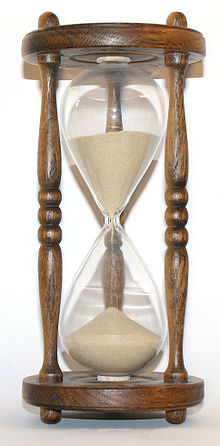
     Procrastination, in these cases, is a denial of mortality.
            (I can hear my daughter: "No, Mom, that isn't it!") But it is. It is other things as well, (fear, reluctance, laziness, perhaps) but it is also a denial of mortality. Why? Because when I procrastinate,  it's like saying,  "I have time. I'll get to it. Later. I will, I know it." 
       How do I know? I DON'T. I just like to believe I do. I don't want to acknowledge that time is precious, that I have none, really, to waste.
        Procrastination denies that we are a like a flower--blooming today, gone tomorrow. In reality, all we ever know for certain is that we have now.
         Johnathan Edwards, that incredibly effective 19th century preacher, wrote this:
                    "Resolved, never to do anything which I would be afraid to do if it were the last hour of my life." 
Edwards was acutely aware that we'll give account of how we spend our currency of time, and that it is terribly, terribly, finite.
 
      It is a high and lofty attainment, perhaps, to live as Edwards did. To resolve to never fritter away the hours we are given in anything less than our holy "assignments."  (This doesn't mean we work ourselves to death. Rest is also a God-given assignment!)
          But it is something to strive for.  When I procrastinate as a writer, I deny the reality of my mortality. But since death is real, and coming, let us "press on to the high calling" given us in Christ. Let us not do anything we'd be afraid to do if it were the last hour of our lives.
         Has God called you to write a particular something? A book, perhaps? Say with me: "Resolved: To finish that book!" 
         You may need to resolve to do something else according to your calling. Talk to a child. Reconcile with a relative. Whatever it is, let me encourage you to do it. At least, to begin. To work towards it. Today!


   Linore Rose Burkard is a great procrastinator. But somehow she manages to write historical romance, and, as L.R. Burkard, YA Suspense. When not writing, Linore is a homeschooling mom, wanna-be homesteader, and (in case you haven't noticed) an endless re-writer of her bio. 
      
          Newest Fiction: PULSE
What if everything you depend upon--transportation, grocery shopping, the internet, cell phones--came to a sudden, crashing halt?
Three teenagers and their families must survive when America's worst nightmare occurs; the failure of the electric grid due to an electromagnetic pulse...(Read More..).
                              ....Has the world collapsed forever?
                                Who will survive when technology fails? 

Tuesday, December 20, 2011

Dead Spots By Author Dan Walsh


Dan Walsh is a member of American Christian Fiction Writers (ACFW). His first novel, The Unfinished Gift won 2 ACFW Carol Awards. His newest book and 4th novel, Remembering Christmas, came out in September. Dan recently signed a 4-book deal to write a fiction series with Dr. Gary Smalley, bestselling author with over 6 million books in print. For those who haven’t read Dan’s novels, reviewers often compare them to Nicholas Sparks, Richard Paul Evans and Jason F. Wright. He writes fulltime in the Daytona Beach area, where he lives with the love of his life, Cindi, his wife of 35 years. They have two grown children, both married, and one grandson. As they await more grandchildren, they enjoy the company of two mini-aussies, Bailey and Darcy. You can reach him or find out more about him at www.danwalshbooks.com .


Dead Spots? Really?

Doesn’t sound like a very Christmassy title for a blog article running in December, by an author whose featured book is called Remembering Christmas. Don’t get me wrong, I love Christmas and all the joy and cheer the season brings. I don’t just enjoy Christmas books, but Christmas movies, Christmas music, the decorations and one of my favorite holiday treats, egg nog lattes.

But I felt compelled to write about something different this time, instead of talking about my latest book or some helpful writing tips. Instead, I want to turn our attention to the subject of mission. To look at one aspect of our mission as writers of Christian fiction.

Let’s face it, we write stories. That’s how we communicate. And we’re Christians, lovers of Christ, those called to be His witnesses to a dying world. By His grace, we know “the reason for the season.” Whether we weave a strong gospel message into our stories or just write from a Christian worldview, our books are referred to as “Christian fiction.”

As fiction writers, we always have to be on the lookout for being too preachy. Nobody wants that in fiction books. That’s not why people read fiction, even Christians. We’ve got a ton of great teaching books on Christian living and theology we can turn to for that. And some amazing devotionals. Not to mention the thousands of preachers in Christian churches who can “tell us like it is” every Sunday.

People read fiction for a different reason. Fiction, good fiction, like good music, has a way of coming in the back door and grabbing hold of our hearts. Through the lives of characters and the things we put them through, and their reactions to those things, we tell a tale. It’s there where the “Christian” aspects of our fiction have a chance to shine through.

I think one of the ways we can do this in our writing is by drawing attention to the “dead spots” in our consciences; the things God sees, wants us to see, but we rarely do. Mainly because, well…we don’t want to. We prefer not to look in these directions. They may cause pain if we do, not physically but emotionally. Seeing them might make us feel guilty, because they point out our selfishness and our indifference to the suffering of others.

Jesus was notorious for pointing out dead spots.

Even as I write this, so many Gospel examples come to mind (and I have so little space). But let’s consider one very familiar story Jesus told (talk about an amazing storyteller). The Good Samaritan. The whole point of this parable was to awaken us to see people the way God sees them, and to point out how easily we turn and look the other way, preferring not to see.

We all know how we want to be treated by others. The most glaring evidence of The Fall is that humans constantly and continually fail to treat others this way. Some victimize others, treating them horribly. Others turn and look the other way, preferring not to see. Jesus calls us to “Love our neighbors.” To treat them the way we want to be treated, to love them as He loves us.

I think one aspect of the mission of Christian fiction is to look for ways to get mankind to see these dead spots we all have. To find ways to “come in the back door” with our stories and grab people’s hearts, so that they do see, and look long enough to allow the heart of God to provoke us to actually want to respond to the call of Christ to love and care for others as He does. To get us to see children, husbands and wives, friends, co-workers, strangers…even our enemies in a new way.

Christian fiction gives us a wonderful opportunity to do this, to confront our own hearts as well as draw others attention to things God cares so much about. And at this time, this “season of giving” my own heart was confronted and drawn to something God cares about by a Facebook invitation I received from Novel Rocket’s very own award-winning, bestselling author Gina Holmes.

So please, take a moment to see for yourself. Click this link and read about one way you can make a big difference in the lives of others. http://www.inspireafire.com/940/. I hope you all have a wonderful and joyful Christmas. There is much to be joyful about.

For unto us a Child is born, unto us a Son is given; and the government will be upon His shoulder. And His name will be called Wonderful, Counselor, Mighty God, Everlasting Father, Prince of Peace.” (Isaiah 9:6, NKJV)


Remembering Christmas

Rick Denton lives his life on his terms. He works hard, plays hard, and answers to no one. So when his mother calls on Thanksgiving weekend begging him to come home after his stepfather has a stroke, Rick is more than a little reluctant. He's never liked Art and resents the man's presence in his life, despite the fact that his own father abandoned the family when Rick was just twelve. When what was supposed to be just a couple days helping out at the family bookstore turns into weeks of cashing out old ladies and running off the homeless man who keep hanging about, Rick's attitude sours even more.

Still, slowly but surely, the little bookstore and its quirky patrons--as well as the lovely young woman who works at his side each day--work their magic on him, revealing to Rick the truth about his family, his own life, and the true meaning of Christmas. With skillful storytelling, Dan Walsh creates a Christmas story will have readers rememberin
g every good and perfect gift of Christmas.


Saturday, June 19, 2010

Guest Blogger ~ Ron Benrey, Part II


Ron Benrey is a widely published writer who has coauthored nine Christian romantic suspense novels with his wife Janet. Ron wrote two novellas independently and has written ten non-fiction books. His latest book, Know Your Rights, is an easy to understand guide to everyday law, will be published in December. Ron taught writing courses at the University of Pittsburgh. He currently teaches at major writers’ conferences on topics ranging from plotting and publishability, to Fiction After 50®, the fine art of becoming a novelist later in life. Ron holds a degrees in electrical engineering, management, and law. He’s a member of the Bar of the Commonwealth of Pennsylvania. Ron and Janet live in North Carolina.

NJ: Ron delivered this keynote to the Blue Ridge Mountains Christian Writers Conference in May, 2010. This is Part II.

Let Novel-Writing Teach You Christianity ... and Vice Versa, Part II

Once I felt certain that my model was a true two-way street, the inevitable happened. I’d apply the fiction-writing analogy every time I listened to a sermon. I’d often leave church with fresh guidance about writing novels. And cheerful feelings about a dull sermon.

The first tidbits I gleaned were fairly minor. A sermon about the lack of information about Jesus’ early years convinced me to eliminate all details, no matter how interesting, that don’t directly advance the story. And, a message about Judeans finding signs and wonders in the miracles done by Jesus drove home the point that showing is better than telling.

Then came my first high-powered epiphany. It happened when our pastor preached on Ephesians 2:10: “For we are God’s workmanship, created in Christ Jesus for good works, which God prepared beforehand, that we should walk in them.” His message stressed that each of us was created for a purpose.

The obvious fiction-writing parallel is that every character I create must have a definite purpose. Every character, even the extras, must advance the story. Or heighten the drama. Or reveal a truth that reinforces the novel’s theme.

I’d only just wrapped my brain around this concept, when the analogy delivered another startling insight: As the creator of a fictional world analogous to God’s Creation, I should love my characters. This broad notion morphed into a sharply focused commandment. Don’t invent any characters you won’t (or can’t) love.

A while ago, I thought about writing women’s fiction because Christian publishers buy so much of the stuff. Well, I struggled mightily and wrote several angst-filled chapters. But I knew, really truly knew, that I’d never love those characters.

Delete! I felt wonderful afterwards.

My musing about lovable characters led me to deeper ponderings about story: We all know stories must move forward, and story movement can happen in plot events or in the hearts of characters who change during the progression of events. I began to wonder: Is Christ’s story plot-driven or character-driven? I finally decided the Gospels demonstrate an interesting hybrid. The Hero followed a complex plot line, but emerged with his inner natures unscathed. However, the men and women who interacted with Jesus experienced industrial-strength character arcs.

Will this work in a novel? I hope so. It’s the plotting scheme I’ve used in two new novels I’m planning.

At this point I have to issue a safety warning. Mostly to keep me safe. My next observation, which flows directly from the fiction-writing analogy, will annoy-off many Novel Journey readers.

Awhile back, our pastor sermonized on Ephesians Chapter One, Verse 5. That’s the teaching that God chose us for redemption before the foundation of the world. In my opinion, the unmistakable insight for novelists is we should know the destiny of every character before we write our first chapters. In other words, be an outliner rather than a seat of the pants novelist (what some call “instinctive writers”).

Think about it! Planning ahead is the way God manages his Creation. Perhaps it’s also the right way to create fictional worlds.

Enough controversy! Let’s retreat to the shelter of an obscure theological mystery, an aspect of the Biblical creation story that I call the enigma of Adam and Eve. I’ve always wondered why God didn’t zap the pair and start over with two humans smart enough to obey instructions? After all, His “investment” to that point was only a few hundred pounds of clay and dust, and two whiffs of His breath.

The fiction-writing analogy suggests an answer. Anyone who’s been to a meeting of a fiction critique group knows that novelists fight fiercely to not modify their creations. We wince at minor changes and we disdain major rewrites, even when key players go off the rails. We also strive to rehabilitate errant characters, because we do love them. We’re delighted when our prodigal creations begin to behave.

Coincidentally, I worked this out a few days before a guest pastor talked about freewill and humankind’s proclivity to disobey God. Naturally, I applied the analogy, because I (like most novelists) have run into heroes, helpmates, and villains who won’t cooperate, who seem determined to do their own things.

The reason, I think, is that we must give our lead characters a kind of freewill: Somehow, I have to keep Me the author out of the characters I invent, or else they will parrot my likes, my dislikes, my personality, my world view, my age, and my gender. I want female characters to act like women, kids to act like kids, and none of the men to echo me.

Because I simultaneously juggle dozens of plot and personality issues I have to assign each character to an individual part of my mind and let these “people partitions” (as I call them) run on “autopilot.” Like it or not, some characters will go astray. I think that’s how fictional freewill works. However, I’m open for other suggestions.

Recently, I used the fiction-writing analogy to examine a problem that is plaguing the novel-writing biz. The traditional route to publication has become so challenging, that some frustrated novelists are thinking about switching to something with greater odds of success. Say, responding to a Nigerian email scam.

Does the fiction-writing analogy have anything to say on the subject? Another big Yes, indeed. A recent sermon on covenant theology convinced me that those of us who create fictional worlds also make covenants with our characters. After all, they rely on us to uphold and sustain them.

Christianity affirms that the Creator of the Universe keeps his promises. However, Christianity also teaches that a creator can make a new covenant when it becomes necessary. And so, with apologies to Jeremiah:

Behold, the days are coming, declares the Novelist, when I will make a new covenant with the characters I create, not like the covenant that I made to put them in local bookstores. For no longer do readers buy novels that way, but chiefly at Wal-Mart, Amazon, supermarkets, and airports.

And this is the new covenant that I will make after these days. I will write my characters’ lives on Kindles and iPads. I will embrace ebook publishing and Print on Demand. My characters will dwell securely at Winepress and Lightning Source. I will not bemoan the loss of the traditional publishing model, but espouse the new paradigm.

For no longer shall each reader find book reviews in newspapers, or browse bookshelves, and read blurbs on the back covers. But savvy readers shall say: “We know this Novelist for his website, for his blogs, for his Twitter Tweets, and for his other social networking.” I shall establish this new covenant so my characters will thrive and prosper. They will know that I am their Novelist, and they shall entrance my readers forever.

Hey! It could happen.

Friday, June 18, 2010

Guest Blogger ~ Ron Benrey

Ron Benrey is a widely published writer who has coauthored nine Christian romantic suspense novels with his wife Janet. Ron wrote two novellas independently and has written ten non-fiction books. His latest book, Know Your Rights, is an easy to understand guide to everyday law, will be published in December. Ron taught writing courses at the University of Pittsburgh. He currently teaches at major writers’ conferences on topics ranging from plotting and publishability, to Fiction After 50®, the fine art of becoming a novelist later in life. Ron holds a degrees in electrical engineering, management, and law. He’s a member of the Bar of the Commonwealth of Pennsylvania. Ron and Janet live in North Carolina.

NJ: Ron delivered this keynote to the Blue Ridge Mountains Christian Writers Conference in May, 2010. He was gracious enough to allow Novel Journey to print it here.

Let Novel-Writing Teach You Christianity ... and Vice Versa

Much of what I know about Christianity I learned from writing novels. I agree that’s a weird approach to studying theology. But what has surprised me even more is Christianity returned the favor and gave me lots of great advice about writing fiction.

To understand how all of this came about, you need to know I was a stubborn non-believer for most of my life, someone who saw Christianity as foolishness (to use Paul’s word). I considered the Incarnation the most nonsensical teaching of all. I couldn’t begin to accept that a Jewish carpenter in a jerkwater Roman province was also God.

But one August afternoon in 1998, I had a weird idea. I could write myself into my own novel. Ron Benrey, the author, could create a literary self-portrait: Ron Benrey, the character. If I did that, Me in the novel would be fully Author and fully Character, at the same time. I realized that a fictional self-portrait is a nifty way to model the Incarnation.

All at once, my mind shifted gears. When I thought of Jesus as God’s self-portrait, the other Christian teachings I’d rejected stopped seeming foolish. In about 30 seconds, I rocketed from non-believer to believer.

I know that my ideas about literary self-portraits didn’t pop into my head by accident. They were precisely what I needed to grab hold of the Incarnation. However, the fiction-writing analogy upsets some believers. I’ve been told on several occasions that true creativity belongs to God alone, that only He creates stuff ex nihilo (out of nothing). Although we think of ourselves “creative,” novelists merely move around pieces of God-created stuff. Consequently (the naysayers claim) comparing human creativity to God’s is the very essence of wrong thinking.

I’ve found that most of the folks who reject my favorite analogy aren’t novelists. They’ve never put together a complex storyline, or tamed an unruly character, or squeezed a three-hundred page story into a one-page summary. Novelists may not be creators with a capitol C, but it sure feels like we create fiction out of nothing.

Happily, there are sound arguments in favor of the fiction-writing analogy. Exhibit One is a statement from Dorothy Leigh Sayers, the late British mystery novelist, the creator of Lord Peter Whimsy. Dorothy was also a highly respected self-taught theologian, much like her good friend C. S. Lewis.

She wrote, “It may be perilous, as it must be inadequate, to interpret God by analogy with ourselves, but we are compelled to do so; we have no other means of interpreting anything. Man measures everything by his own experience. He has no other yardstick.”

That’s why scripture is chock full of figures of speech: similes, metaphors, and analogies: God as a Father. The Kingdom of God as a mustard seed. God’s grace as the wages paid to workers in a vineyard. Jesus as the Lamb of God, and a king, and a vine.

Two of the most important figures of speech are God the Creator and God the Maker of the Universe. Dorothy notes they also have meanings that reflect our human experience. “If they didn’t, they’d mean nothing at all to us.” This is because, “The experience of the creative imagination is the only thing we have to go on when we formulate the concept of creation.”

More evidence for the defense comes C. S. Lewis. He wrote, “Shakespeare could in principle, make himself appear as author within his play Hamlet, and write a dialog between Hamlet and himself. The ‛Shakespeare’ within the play would of course be at once Shakespeare and one of Shakespeare’s creatures. It would bear some analogy to the Incarnation.”

I consider “some analogy” a perfect example of British understatement! However, I admit that Clive Lewis was right to be cautious. All analogies are limited. They break down if you push them too far. We’re not characters living inside God’s novel. Nonetheless, thinking of myself as a creator of fictional worlds has yielded a steady stream of mind-opening theological perspectives.

One of the earliest came during an unusually lively meeting of my fiction critique group. I don’t remember why, but the discussion turned to whether mystery fans are loony because they enjoy reading about murder and mayhem. Someone said: “Mystery novelists are even loonier, because we enjoy writing about murder.” Someone else said: “True! In fact, everyone likes fictional homicide except the unfortunate characters we create. Imagine how they’d complain, if they could.”

For example, a victim might say: “You invented me, then killed me off in my prime. Why do such a thing?” And then the murderer might counter: “You made me poison the victim ... and then you punished me for what I did. That’s not fair!”

While everyone else chuckled at the idea, and tried to invent snappy responses to their characters’ complaints, I thought about my fiction writing analogy. Back then, I was just beginning to study Scripture. I knew that a familiar Bible passage applied perfectly to the situation, but I couldn’t recall which one. Later that night, I tracked down Isaiah 55:8-9: “For my thoughts are not your thoughts, neither are your ways my ways, declares the LORD. For as the heavens are higher than the earth, so are my ways higher than your ways and my thoughts than your thoughts.”

For the first time, ever, I truly “got” that creatures can never understand the mind of the Creator. But that doesn’t mean we should stop trying to make sense of Christianity’s mysteries.

The Incarnation is the central miracle of our faith, but the Big Kahuna of Christian confusion is the Trinity. How can there be three divine “persons,” yet only One God? You’ve probably heard the maxim: “Try to deny the Trinity and you’ll lose your soul; try to understand the Trinity and you’ll lose your mind.” Some attribute that saying to Augustine of Hippo, although I think it was made up by some frustrated seminarian.

My original self-portrait analogy encompassed two out of the three persons. Is there a fiction-writing analog for the Holy Spirit? Yes indeed! Think of the “God-like” narrator in a third-person omniscient novel. The narrator guides the story, orchestrates the action, explains the heart and mind of every character. The narrator never appears, but is present behind the words.

If I wrote an omniscient novel with me as the protagonist, we’d all be there. Me the author/creator. Me the omniscient narrator. Me the rich, handsome, spectacularly lovable hero. (Clearly I’m writing a Romance.)

Of course, if the self-portrait model holds water, the Spirit analog should also be present in first-person fiction, and also in a third-person POV novel that doesn’t have an obvious narrator. He can be, if he precedes from Me the Novelist. I can send my Spirit analog to convict the lead characters, to comfort them, and to establish their all-important internal goals. And these days, I do send him.

My Spirit analog is at work in every story I write: poking, prodding, guiding, shaping the protagonist and the antagonist. And here’s another weird admission. I include my Spirit analog on my list of characters. I also give him specific tasks in my plot outline. Readers don’t know he’s present. Neither do the hero or the villain. But Spirit’s behind their consciences, their perceptions, their abrupt changes of heart.

This process of integrating the Spirit analog in my fiction writing went so smoothly, that months passed before I realized the self-portrait analogy had flipped roles. Christianity was giving me useful advice about writing fiction. I expanded my analogical experiments to see what else I could learn.

If you run the fiction-writing analogy backwards, a novelist seems to have modest powers of divinity, starting with transcendence. We’re outside “story time,” even if our novel spans a gazillion years. We can start writing at the end, or at the beginning. We can jump to any point in between. We’re also outside “story space.” We can switch locations instantly. The speed of thought is much faster than the speed of light. And once we get to the story time and story place of our choosing, we’re omnipotent down to our fingertips, with the power to make our will be done in our fictional worlds.

Whoa! I can hear you thinking: "Christian novelists ain’t so sovereign. We’re stuck with the “no-no” rules ordained by Christian publishers." In fact, nothing stops us from bursting the bounds of the Christian fiction genre when we write. However, remember that omnipotence doesn’t include the power to do things that don’t make sense, like squaring a circle, or committing a logical fallacy.

The term “Christian fiction” is a label for a specific genre. Like any other genre (say mystery, romance, or historical) there are rules that reflect reader expectations. An author who sits down to write a “Christian novel,” but ignores the requirements of the genre, produces a different kind of novel. Not wrong, mind you; but different. That’s true whether the author seeks a traditional publisher or plans to take an alternative route to publication.

Tomorrow, we'll bring you the second half of this post. You won't want to miss it!

Sunday, May 10, 2009

This is No Tall Tale: An Interview with John Bunyan

The following is an excerpt from a lengthy interview with John Bunyan, 17th-century English preacher and author (1628 – 1688) (not to be confused with Paul Bunyan, the big lumberjack dude with the even bigger blue ox, Babe).

For ease of reading, Mr. Bunyan's responses have been translated from Olde English into the modern vernacular.


Thank you, Mr. Bunyan, for taking the time to speak with us here at Novel Journey.
The pleasure is all mine. Ever since Chuck Dickens told us about his gig with you in Decemb
er, all of us in Writer Heaven have been itching for a chance to get in on it.

Happy to oblige. Since you're in the habit of hobnobbing with dead
writers, you're probably aware that Rudyard Kipling once referred to you as "the father of the novel." Which is, as you may have guessed, why we're interviewing you for Novel Journey. But what do you think of that appellation? Does it surprise you that your work, The Pilgrim's Progress, is said to be the most widely read book in the English language? Or that it's been translated into more than 200 languages?
Yes, all t
his surprises me. I never set out to create an art form, nor to make myself famous. It was my intention merely to illustrate the typical Christian walk, so that my fellow pilgrims might recognize the pitfalls along the way and realize that they are not alone in their journey.

I'd have to say you accomplished your purpose. No matter where or when we live, we recognize ourselves in your protagonist, Christian; and the supporting characters and the situations portraye
d are familiar to us as well.
That's to be expected. Our Savior is the Savior of all. All who receive Him enter into a common salvation, a common experience, and a common inheritance. What's more, we all share a common Enemy. Why would this tale not ring true for anyone on the same path?

Can you tell us a little bit about how you came to create this timeless allegory? Didn't I hear that you wrote it in prison?

I can't say what you've heard, but I did, in fact, write it while incarcerated.
Both parts of it, during separate imprisonments.

Both parts?
Part I, written in 1678 during my first imprisonment, deals with Christian's journey f
rom the City of Destruction to the Celestial City. He goes there via the Wicket Gate, which stands at the entrance to the straight and narrow King's Highway, the only road leading to the desired destination. The reader walks with Christian as he first seeks deliverance from the burden of sin he carries from his birthplace, until he comes to the sepulcher where the straps that bound his burden to him break, and it rolls away into the grave. From there he progresses, now relieved of his load, through many dangers and protracted battles until he and his companion, Hopeful, cross the River of Death to Mount Zion and are welcomed into the Celestial City.

That's th
e story we're most familiar with. What's Part II?
The second section, written during my second prison term in 1684, deals with the pilgrimage of Christian's wife, their sons, and the maiden, Mercy. I added this part to show that women and children as well as men can be brave pilgrims.

So what
's the deal with these prison terms? Were you some sort of criminal?
Obviously I was! Prior to my own journey by faith through "the Wicket Gate" of salvation
, I was, like St. Paul, the chief of sinners. In my youth I led a life of wild abandon to such a point that I was known as the ungodliest fellow for swearing anyone had ever heard.

It could be said, then, that you've always had a way with words.
Ha! Verily! And it was words that got me in trouble afterward, too, for I was arrested for preaching without a license.


You needed a license to preach?

Oh my yes, that was quite an issue. The Church of England didn't take kindly to recusancy, which was the failure to comply with their established brand of religion. All ministers were required to be ordained and licensed by the Church of England; all services had to use the rites and ceremonies set forth in the Book of Common Prayer; no more than five people who were not members of the official church were allowed to congregate together at any time. And Nonconformist ministers – that is, those not approved and licensed – were forbidden to live within five miles of a parish from which they had been banned, and were forbidden to teach in school
s. In 1672, King Charles II issued the Declaration of Religious Indulgence rescinding the penalties for recusancy, but withdrew it three years later.

I had no idea that sort of thing ever went on in England, but it makes sense, now that I think about it. When I studied American history in school, we learned that the Pilgrims came to the New World seeking religious freedom. I just never heard any particulars about what it was they fled.

I'm surprised at your ignorance, for the situation went on for, like, forever. The laws punishing non-compliance with the state religion first appeared in the mid
dle of the sixteenth century and remained on the books for nearly 300 years. You Americans have no idea what you have in your amazing Constitution. When your country was founded, governmental protection of freedom of worship was unprecedented in history. Even today it's increasingly rare, from what I hear.

Thanks to you, I'm beginning to have a greater
appreciation for that. How much time did you spend behind bars?
I was arrested a number of times, but only imprisoned but thrice. I was first to be confined for a period of only three months, but when I refused to conform or to desist from preaching, my term was extended to nearly twelve years. In 1666 I was released for a few weeks, but was again arrested for preaching and returned to the Bedford gaol for another six years. It wasn't all bad, however for during that time I had the opportunity to preach to an imprisoned congregation of about sixty souls.


Something in this story reminds me of the Apostle Paul.
Yes, quite. His sufferings, triumphs and writings all greatly eclipsed mine, but I cannot deny the weak similarities between my experiences and his.


You said you were imprisoned three times, but you mentioned only two just now.

I was released from my second imprisonment in January of 1672, when Charles II issued the Declaration of Religious Indulgence. Soon thereafter, I received one of the first licenses to preach under the new law. I formed a nonconformist church from my surviving parishioners, established over thirty new congregations, and increased the Bedford congregation to 4,000. They used to call me "Bishop Bunyan" in those days. But when King Charles withdrew the Declaration, I soon found myself back in gaol. This time, however, I had only six months to endure. I was released due to the kind intervention of the Quakers. This came as quite a surprise to me, as I'd earlier fiercely disagreed with Quaker teachings and took part in debates with some of their leaders in the 1650s. The Lord works in strange ways, does He not?

He certainly does. But I notice you've mentioned Bedford a number of times. This caught my attention, because I grew up in a town by that name.

As did I, and I lived most of my life in the vicinity. Where was your Bedford?


In the state of Ohio.

I see. I hate to break it to you, but all the Bedfords in your country – and I
understand many of your states have one -- are but pale imitations of my hometown. No offense intended, just stating the facts.

None taken. Was there a school there in Bedford, a college or a seminary, where you received your education?

I had very little schooling, actually. All told, only two or three years' worth, and that was given with a view toward preparing me for the tinker's trade, which my father practiced before me. It was a lowly profession, and I worked in it for a time. My first wife and I were so poor, we had not even a dish and a spoon between us. No, I cannot boast about the educational opportunities my Bedford provided me.


You wouldn't characterize yourself as a scholar, then.

My only textbook was the English Bible, but I knew it well. I was somewhat influenced by a 1575 translation of Martin Luther's Commentary on the Epistle to the Galatians, and during my second imprisonment I made good use of John Foxe's Book of Martyrs. But as St. Peter said in his second epistle, in God's holy word "He hath given unto us all things that pertain unto life and godliness." I never truly needed any other text.


Yet you were a prolific writer. I'm told you authored some sixty books and tracts.

I wrote what my Savior put on my heart. In prison, I had no shortage of pens and paper. I have to believe the Lord put me there with endless time, ample supplies, and an ever-flowing well of worship within me, for a reason.

I'm inspired by your story, Mr. Bunyan. Not just by your famous allegory, but even more, by your life story, the things you've shared with us today. Do you foresee a time when we in this country will have to make a choice as you did? Do you think that following the Lord will one day bring us official persecution?
I'm just a dead writer, not a prophet, so I can't say. Should the circumstances you describe arise, however, you know what you must do. Remember the words of our Lord as recorded by the pen of St. Matthew, "Blessed are they which are persecuted for righteousness' sake: for theirs is the kingdom of heaven." If that is the path you must tread, you shall travel in the best of company.

Saturday, December 27, 2008

To Resolve or Not to Resolve


Marcia Lee Laycock was the winner of The Best New Canadian Christian Author Award for her novel, One Smooth Stone. She lives in central Alberta Canada with her husband, two adolescent golden retrievers and a six-toed cat.

I was delivering Christmas cards last week and stopped in to the small gym where I have been noticeable only by my absence lately. I admit I felt a little guilty going in the door. The owner greeted me with a wide smile and we wished one another a Merry Christmas. Then I said, “One of my New Year’s resolutions will be to get here more often.” My friend shook her head. “Oh don’t do that, don’t make yourself feel guilty about it!” Then she stammered a bit. “But …. I don’t mean …. Do come back!”

We laughed and I assured her I would.

I’ve been thinking about what she said ever since. I’ve been thinking about guilt. It does seem to be a big part of what we do at this time of year. We feel guilty for all the things we didn’t do in the past year - like finish that novel or write that article that’s still in draft form in the computer -and most of us resolve to do better. So guilt isn’t such a bad thing, if, and that’s a big if, we make the changes necessary in our lives. If guilt is unresolved it becomes an unhealthy thing and can lead to bitterness and anger that will only make us miserable. But guilt that leads to change, that’s healthy guilt.

So I have decided to make that New Year’s resolution, and a few others – like finish that novel and write that article - and I’ve gone a step further. I have a plan for carrying it out. Often that’s the key. If we just dwell on our guilty feelings and set no goals or plans for how to change, nothing constructive will happen. Unhealthy guilt will result.

I’ve heard many people scoff and say that all religion does is make you feel guilty. They are absolutely right. But Jesus has gone a step further. He has set out a plan that wipes away the guilt. All we have to do is move from religion to relationship. Accept Him as our brother, our friend, our saviour, and no amount of guilt can hold us down.

The word guilt appears a few times in the Bible. My favourite is in the book of Hebrews, chapter 10, verse 22 – “let us draw near to God with a sincere heart in full assurance of faith, having our hearts sprinkled to cleanse us from a guilty conscience and having our bodies washed with pure water.”

I like those words, “assurance”, “cleanse” and “washed with pure water.” Though the guilt of our sin may bear us down, there is forgiveness. No matter what we have done, or what has been done to us, God forgives, and we are set free “by a new and living way opened for us through the curtain, that is, his body…” (Hebrews 10:20).

The best resolution any of us can make as we move into 2009 is to get to know Him more. I pray we will all resolve to do so. It’s the only way to get rid of all that guilt.