Get a Free Ebook

Five Inspirational Truths for Authors

Try our Video Classes

Downloadable in-depth learning, with pdf slides

Find out more about My Book Therapy

We want to help you up your writing game. If you are stuck, or just want a boost, please check us out!

Tuesday, September 12, 2006

Author Interview ~ Mary Demuth ... Take II

What book or project is coming out or has come out that you’d like to tell us about?

Wishing on Dandelions, the sequel to Watching the Tree Limbs. In it, I take the character Marnatha to the age of 17 where she encounters suitors, a possible move, and a really obnoxious character named Georgeanne Peach. Though this one doesn’t deal specifically with the same subject matter as the last book (childhood sexual abuse), the reader will see the character grapple with its ramifications. Racism is hit pretty hard as well.

In terms of this book, the cool thing was that NavPress bought Watching the Tree Limbs and another yet unnamed book. I was able to convince them that Maranatha needed to live on to another book. I’m hoping that someday, she’ll live to see another book, but that’s out of my hands. (Maybe we should start a campaign… call it “Let Maranatha live!”)

Even with the high praise you received on your first novel, Watching the Tree Limbs, do you still experience self-doubts regarding your work?

Yes, particularly in novel writing. Now that I’m published, particularly with Watching the Tree Limbs, publishers are a bit freaked out by me. They call me edgy, which is funny to me. They think I write too darkly. I would contend that in order to shine redemption, you have to show life as it is, and that, my friends, can be dark. Plus, the whole idea of story is conflict, conflict, conflict. Yeah, sometimes I wish I could write all sweetness and light, but then the world we live in collides with my characters, making a great big hairdo of a mess.

What mistakes have you made in this business?

Not understanding how very much an author must promote her books. Although I have found I really enjoy it, I didn’t realize how nutty it would be to promote three books in one year. So, I doubt I’ll try to do that again.

What’s the best advice you’ve heard on writing/publication?

Write from your passion.

What’s the worst piece of writing advice you’ve heard?

Write what you know. (There are all sorts of things I don’t know. I’m thankful for that. If I only wrote what I knew, I wouldn’t grow intellectually.)

What’s something you wish you’d known earlier that might have saved you some time/frustration in the publishing business?

That this is a business. I was one of those idealistic writers with eyes wide open, thinking nostalgically that everything would just plain happen once editors saw my “brilliance.” Ha! You need more than good writing to make it in this business. I remember in college someone asking me what I would major in. I’d scoff and say, “Well, I know it won’t be business.” Now, I’m a businesswoman—and oddly, I love it. But I didn’t expect to do so much on this side of the desk.

Is there a particularly difficult set back that you’ve gone through in your writing career you are willing to share?

This waiting period right now as I wonder if my fiction will be published again.

What are a few of your favorite books?

I just finished (I know, I’m slow) the Poisonwood Bible. I heard that Kingsolver wrote EVERY scene from EVERY POV and then chose the right one that worked for the story. That’s like writing five books, folks. Utterly amazing. Great prose. A wonderful study in creating obvious difference in POVs.

What piece of writing have you done that you’re particularly proud of and why?

Currently it’s Building the Christian Family You Never Had (WaterBrook, 2006). I sweat blood while I wrote that book. I almost put it down, but Jesus kept at me to keep writing it. And now it’s been blessing readers who don’t want to duplicate the homes they were raised in. I heard of one gal who is not married yet (and determined not to get married). She read the book and said, “Now I have hope that I can overcome my past.” She’s now open to marriage and having children. That’s why I wrote that book—to show readers that Jesus can heal them so they don’t have to parent the way they were parented.

Do you have a pet peeve having to do with this biz?

All this shuffling around gets to me. One week you have a champion at a publishing house, the next week they’ve decided to move on to a “better place.” Why oh why do people keep moving around? Makes me crazy.

Do you have a dream for the future of your writing, something you would love to accomplish?

I’d like to see my first novel, Crushing Stone, be published by an ABA house. It’s out there right now, and I’m in that anxious waiting mode.

Was there ever a time in your writing career you thought of quitting?

As the French say, “Pas de tout” (not at all). I love this job!


How much marketing do you do? Any advice in this area?


I read this from www.raintoday.com and it really helped me: “The most effective way to promote a book, the survey found, was through the Internet, followed by coverage in trade magazines that report on an author's particular field. Book signings were far down the list . . .” So I have worked hard at establishing my web presence. I keep my website (www.relevantprose.com ) updated. I blog regularly at www.relevantblog.blogspot.com and www.pioneerparenting.blogspot.com . I’m a guest blogger at the Masters Artist (http://tpr.typepad.com/themastersartist/). And soon, I’ll be joining eleven of my Christian Author’s Network friends in doing a blog exclusively about how to market and promote books at http://canblog.typepad.com/ . This one goes live September 1st. I’m really excited about how corralling a group of crazy authors to speak about one subject. Be sure to check it out.

Parting words?

It’s a marathon, this writing journey. Don’t rest on your laurels if you’ve been published once or twice or ten times. Always, always improve the craft with each project. Stay teachable. Be humble. Give Jesus ALL the glory.
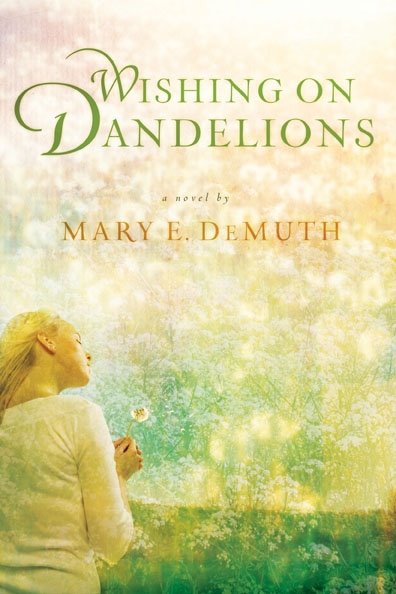


In stores now.

Monday, September 11, 2006

Risk, Faith, and September 11

“As the body without the spirit is dead, so faith without deeds is dead.” (James 2:26, NIV)

James oft-repeated words about the linkage between works and faith should have a corollary in this season of remembrance as we approach the fifth anniversary of the September 11th attacks. That corollary would read: “faith without risk is dead.”

In a sense, risk defines faith. Without the risk of failure, disease, trials, tribulations, and temptation—or the chance that we could perish apart from Christ—there is no need for faith. The two exist hand in hand, risk and faith.

Do you remember what you were doing on September 11, 2001? Were you there in person, or was your heart in your throat as you learned of the devastation early that morning? Now take yourself back to Monday, September 10, 2001. What were your prayers that day, your concerns and your dreams? I can’t remember September 10th. You probably have the same response. Yet the risk of Tuesday, September 11th, defines much of my faith walk during that period of my life. I lost three friends at the Pentagon that day, and I landed in Washington in the midst of the attack.

On Sunday September 10th take the time to reflect on how you would respond if you knew that a repeat of September 11th was imminent the next day. Would that risk of devastation challenge and inspire your faith? Would it bring you to your knees? For many of us, the answer is “yes.”

Risk brings us to the foot of the Cross every day, seeking God’s guidance, His ministering spirit, His forgiveness and His strength. Don’t run away from risk. Put on the full armor of God, take up the shield of faith, and wade into each day’s battle smiling . . . with absolute confidence that God has you in His hand.

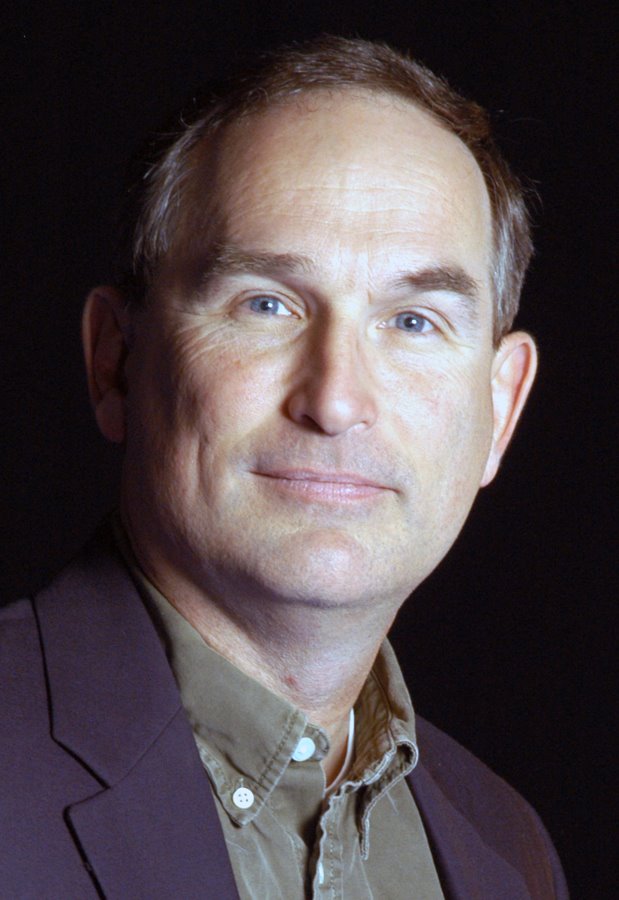
Austin Boyd


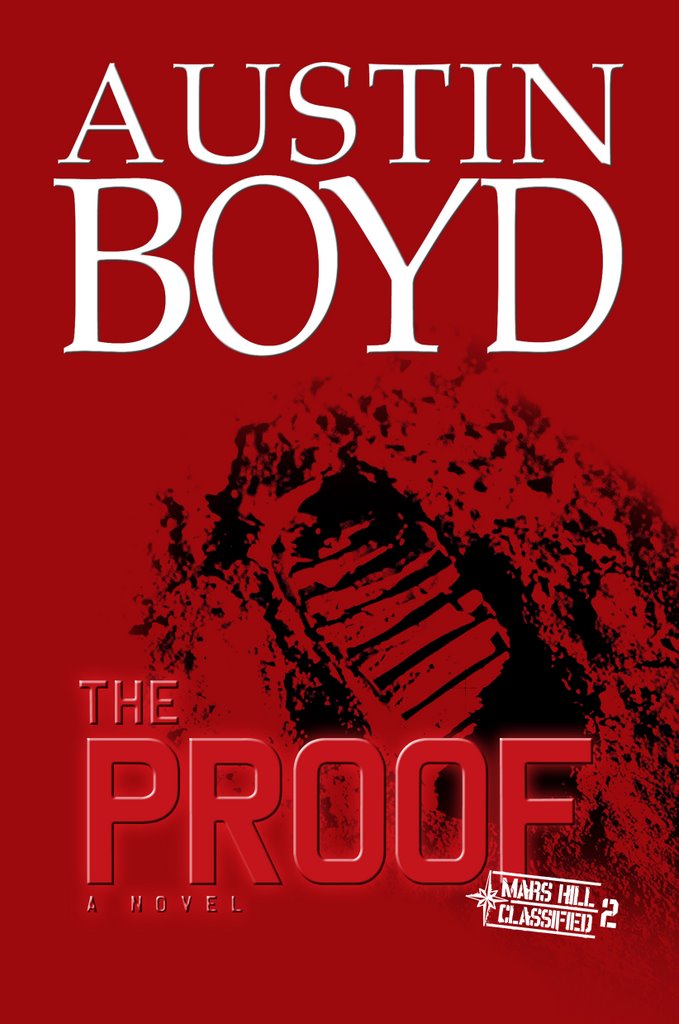
Austin Boyd is a decorated Navy pilot, spacecraft engineer and an astronaut candidate finalist. He lives with with his wife and four children in Huntsville, Alabama where he directs business development for a NASA and defense contractor. His latest novel, THE PROOF, is in stores now.

Friday, September 08, 2006

Part Two -Interview with Pat Durham, Image Coach

Last week we featured the first part of an interview with Pat Durham, image coach. This week we finish.

"For 13 years, Pat has been assisting her clients develop to their fullest potential. As an image coach, Pat deals in all areas of personal appearance, voice, developing the content and delivery of presentations and instruction in business and social etiquette."

I want to thank Pat again for her graciousness in giving this interview. Don't forget to bookmark her site [Diversity Unlimited]

Enjoy!


Speaking of what you're selling, what do you think about authors looking like their genre? For example, a suspense author, looking suspenseful? Or a romance author looking very feminine?

I believe that people who write mysteries have a deep sense of drama within themselves. If they did not, I do not believe they could write their genre convincingly. So there's nothing wrong with adding a bit of drama to what they are wearing. And for the person who is writing for the feminine market, I believe that a little bit of lace, perhaps something that looks antique, makes a wonderful soft touch. We shouldn't pass up the opportunity.

If someone hired you as a personal shopper, what would that consist of?

I recommend that we start by analyzing their color. Let's make sure they are in the right color family. Then we'd look at their fashion personality. Maybe because of their mom, older sister, etc., they've been dressing in a style that is not them. Maybe someone has told the person how to dress and they look like they're wearing somebody else's clothing. We'd also do a figure analysis. Perhaps they are wearing clothing that doesn't present them in the best possible way.

Once we've corrected those things, we are well on our way. Then I would suggest they come in and we do a makeover. I show them the proper way to care for their skin, the best way to apply their daytime makeup, and I'll give tips as to what the camera likes and what it does not.

After that, I take them to a master hairstylist. They will be looking in the mirror while the hairstylist and I are talking about what I see. I'll tell the stylist what I think will compliment the person, and she'll tell me whether it will work with their hair type. Sometimes I think their hair should do something that I find out can't be done. My client has a choice at that point in time. They can go back to their hairstylist and say "this is what I want to have done," or they can work with the hairstylist I have taken them to.

Then, I would suggest they go through their closest and take out everything they haven't worn in the last year. Either give those items a new home or give them a decent burial. One of the two. Get rid of it. You're not using it. Don't keep it in your closet. You think you have clothing but you don’t. If it doesn't fit, for heaven sake get rid of it. Once you have your wardrobe pared down, I will tell you how you should put it in your closet so you can get dressed in the best time. (Now having said that, if you've got a system that works for you, by all means do that.)

It's a lot cheaper for them to do this step on their own. I charge an hourly fee and I charge a lot. This saves them money. Then I can come in and look through their closet and tell them, "I know you like this but this is not a good choice for you," or "Be sure to keep this."

Usually one of the things I suggest is buy a good quality, tailored blazer—that will cover a multitude of sins.

What mistakes do you most commonly see with hair and makeup?

The most common mistake is that people are using the wrong color on their hair—a color that is not complimentary to their skin tone and therefore washes them out. That I would say is the number one mistake. The number two mistake is not having the best hairstyle for the shape of their face. I see that over and over again.

Give an example of what hairstyles match different faces.

The face has three different sections to it, if you're looking at it as an artist looks at it. You want it to be balanced.

So if you have a very prominent forehead you would be sure to want the hair to come down onto the forehead, in a wispy sort of way. That breaks up that long line taking place between the eyebrow and the hairline. Now if you have a very short area between the eyebrow and the hairline, then you would want to take the hair away from the face and pull the eye upwards.

A person who has a round face would not want to have a round hairdo. They would want a hairdo that softens the roundness of their face—something that is complimentary as opposed to recreating the same form all over again.

You have the same problem if you were decorating a living room. If you have a room filled with round things, you need to compliment it with square, rectangular, perhaps even triangular objects. It's the same thing with a face. I am in my sixties, and when a person hits my age, usually long hair is not a good option. We need to think about how we can visually pull the face upwards. It's an optical illusion, that's what all this is—dressing, the hair, and the makeup. An optical illusion.


Tell me about coaching someone through a television interview.

First of all they have to start with knowing their subject. They must know their subject inside and out. I also encourage them to know their interviewer. What is the age of this person? What is the gender? Where is this person coming from—in other words, is this a Midwest prospective? East coast? Is it from Texas, as we're a whole nation unto ourselves? Prepare. Prepare. Prepare.

Then when the interview comes you will feel as comfortable as possible.. Let's face it, it's always a little unnerving.

Also, the way you sit is extremely important. Our mother's and aunties were right. Sit up straight, and for heaven sakes, if you're a woman, don't cross your legs. If you're going to wear a skirt, make sure it covers. That is so distracting. Your audience will not be able to concentrate on what you are telling them, because they're looking at other areas of your body.

If it's a live presentation, there is a way I teach you to approach the camera.

Let's talk radio interviews. Your services help people with their inflection and tone of voice. Some people grow tense waiting for the interview to start. What tips do you give clients to help?

One of the things that I do myself, and I recommend this for everyone, is that I have this little diction ditty that I go through. What it does is helps me to focus. It also helps me with my diction, my inflection, my breath control. I have other diction exercises like: yellow lilies, yellow lilies, yellow lilies, and just say that over and over. If you concentrate on those type of things, it helps to keep your mind off of what is about to take place.

So you advise not focusing on the interview itself?

I do because you've already done your preparation. Sometimes it's good to relax. It's all there. You know you've got it. Now you need to get your thoughts focused. It's being able to center yourself.

Just remember you're the expert. You have to remember who you are. You're it. The person must have thought you were worth having at an interview or they wouldn't have asked you. They're going to ask you questions, and you just need to answer them as truthfully as you can.

I believe we have to prepare, we have to dress up, we have to show up, and we have to smile. After that, it's really out of our hands. There are just some things we cannot control.

How do you prepare someone for the big one-- public speaking?

Yes, this is the big one.

Well first, you must be in character before you arrive. I tell people this all the time. When I'm on my way to a presentation, I am getting in character. When that door opens, I am not Grandmamma, not mom, not wife, and I'm not sister. I am Pat Durham, image coach. That's who I am. And I walk in with that confidence. I am the person that they have asked to come and are paying handsomely to speak.

You arrive in character. You don't wait until you walk through the door because then it's too late. You've already lost it, because who knows who you will meet in the parking lot. They are part of your audience.

I try to connect with every person I can. I want to garner as many friends as possible before I go up on stage. I think that's the most wonderful thing you can do for yourself—and for them, because that makes them very open and waiting for what you have to say. They may have said to someone else, "Oh I met her out in the parking lot and she's just going to be dynamite. I can't wait to hear her speech."

And then, the first thing you must do is engage your audience. You want to connect and engage them. If you find your fears are getting away from you, then I suggest you look somewhere else, the very back of the room. I know some people pretend that their audience is naked, if that works for you, go ahead. (Laughing) But to me, that's very distracting.

You cannot just walk in and be a bump on the log. You have got to network.

If someone wants to hire you, do they fly in? Do you have workshops?

I do have workshops and they post on my website. The most cost effective way would be to look at upcoming workshops, what their focus is going to be about, and then deciding what would best suit them. That's one way.

It's best to have a one-on-one. That is absolutely the ultimate. For someone out of state, this can be a challenge but they can fly in and work with me. I can come to them, but of course, they would be paying for my travel and lodging expenses.

It is a working progress. It's not going to happen over night. It's not a one-hour shot. I do have a lot of clients who are working to move to the next level. That's the whole deal. They want to move to the next level, and they know they are not equipped to get there, but they're so close they can taste it.

The minute someone says "Will you work with me?" I go into overdrive. It's just ridiculous. I can't shut it off. This is the most exciting thing to do. Nothing could be more rewarding. It's just like painting a beautiful painting. They're just these wonderful works of art in progress and I get to help put some of those splashes of paint on the canvas. It's just wonderful.

Thursday, September 07, 2006

Author Interview ~ Lenora Worth


Lenora Worth decided she wanted to write in the fourth grade. While the other children moaned and groaned, Lenora went to work and wrote her first story. In 1993, she sold her first book, “River’s Call”, to Avalon Books. Since then, Lenora has written 25 books for Love Inspired, many of them award winners, including “The Reluctant Hero,” nominated for the 2000 RT Reviewers Choice for Best Love Inspired. Before writing full-time, Lenora worked in marketing and public relations for a cable company and a credit union. She is active in RWA (Romance Writers of America), and served as President of Faith, Hope, and Love, the inspirational chapter of RWA. She currently writes a monthly opinion column for a local magazine. Originally from Georgia, Lenora has lived in Louisiana for over twenty-five years.

What new book or project would you like to tell us about?


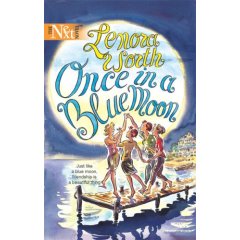
I’m working on several projects right now. I just got a three book contract with Love Inspired for one romance and two romantic suspense stories. Also, I have a book out in October 2006 from Harlequin’s Next—Once In A Blue Moon. It was fun to write and it’s sweet rather than steamy.

Tell us about your publishing journey. How long had you been writing before you got a contract? How did you find out and what went through your mind?

I have been writing most of my life. I wrote for several years before I got serious about trying to sell. I worked in marketing for years, but quit after my second child came along. I started writing full-time then. In 1993, I sold my first book to Avalon. I had the flu so when the editor called, I thought I was dreaming. I almost hung up on her. That call made me feel much better, though!

Do you still have self-doubts about your writing?

I always have self-doubts. I have this thing—we call it the Elnora Syndrome. Whenever I get a new contract or a nice royalty statement, I am shocked and amazed and wonder if they “just feel sorry for me.” That’s the joke amongst my writing friends. But the work is never as good on paper as we seem to see it inside our heads. And I wonder when someone is going to shout out that I’m a complete fraud!

Was there ever a time in your writing career you thought of quitting?

Never. I always have to write, even when I’m not selling. It’s just part of my being. There have been times when I get frustrated or when I wonder why I thought writing a certain book was a good idea. But I have never thought of quitting. Not yet, anyway. It’s too much fun.

What mistakes did you make while seeking a publisher or agent?

I guess my biggest mistake was not learning how to write a great synopsis before submitting. Then the second mistake, not having a book completely fleshed out and plotted before sending it in. I’ve learned since the early days to work hard on the dreaded synopsis and to work even harder on the complete manuscript. I try to send in the very best of both, and yet, I still fall short (in my mind.)

What’s the best writing advice you’ve heard?

Writers write. That’s it. You write through bad days and good days. You write through stress and family issues. You have to make yourself write—because this is a real job. It’s hard sometimes, but we have to just do it.

What’s the worst piece of writing advice you’ve ever received?

A judge once told me that my contest entry “sucked.” That really hurt. Couldn’t she have worded that a little more diplomatically? I learned from her heavy-handed critique that not all writers write the same way. She had a different style from me. I also learned to give gentle, constructive advice to new writers. I still remember the pain of her words.

Do you have a pet peeve having to do with this biz?

That’s it—the biz. The business side of writing sometimes drives me crazy. But it is necessary and we have to learn how to deal with that—the deadlines, the promotions, the setting up of book signings, the let-downs, the rejections, and the cash flow that sometimes almost dries up between books. The bottom line is always this—publishers need to make a profit. And that sometimes means they can’t be nice or be your best friend. But … all of that aside, it is still the best job in the world!

What do you wish you’d known early in your career that might have saved you some time and/or frustration in writing? In publishing?

I wish I’d learned to listen to editors without taking their suggestions so to heart. I’ve had some wonderful editors, but a couple really put me through the ringer. I tried to do what they asked, and still got insulted and fussed at. Since then, with the great editors I have now, I’ve learned how to be firm but professional. I can beat my head against the wall, but when I talk to an editor it will be with a smile on my face and the overall good of the story in the back of my mind.

I’ve also learned to be careful when whining. Words of compliant can come back to haunt you in this business. We have to always walk inside the light, so to speak. Never say anything you wouldn’t want someone to repeat. Know who you can trust when you just need to vent a little bit.

Was there ever a difficult set back that you went through in your writing career?

It started out as a set back, but turned into an answered prayer. I had sold five books and had sent in what I hoped would be number six to a certain publisher. I had a new editor and this editor didn’t like anything I sent in. I thought I was finished, but in the meantime my agent told me about the new inspirational line at Harlequin/Silhouette.

So after two rejections from my current publisher, I went on to sell immediately to Steeple Hill. It was a match made in heaven, literally. I am now where I want to be and I’m very pleased about that. So …. We have to always look for the opportunity in set backs!

What are a few of your favorite books?

Favorite books—Gone With The Wind (I was born and raised in Georgia). Rebecca—love that whole premise. Flowers In The Storm—who wouldn’t love that book about a tormented duke and the woman who saves him with her gentle love! I have many, many more. I read a lot of Christian fiction now since that’s the area in which I write. I love all the works of my fellow Love Inspired writers and try to read amongst them as often as I can.

What work have you done that you’re especially proud of and why?

I’m especially proud of my very first Love Inspired—The Wedding Quilt. That book was based on the death of my sister because of a drunk driver. Writing the book helped me to forgive and heal and it’s helped others, too. It remains one of my best-selling books ten years later. (It was released in 1997.)

Do you have a scripture or quote that has spoken to you lately in regards to your writing?

I keep this by my desk and read it at least once per day: “Show yourself in all respects a model of good deeds, and in your teaching show integrity, gravity, and sound speech that cannot be censured, so that an opponent may be put to shame, having nothing evil to say of us.”—Titus 2: 7 - 8

Can you give us a look into a typical day for you?

Typical day—get up, exercise, read the paper over coffee, read e-mail, then get to work. I usually write from ten in the morning until around 2 or 3 in the afternoon. Then peanut-butter-and-jelly sandwich and a nap to rest my brain. I might go back at night and proof and edit or do research. I don’t work much on weekends unless I have a deadline approaching.

Do you have a word or page goal you set for each day?

I try to get about ten to twelve pages in per day, or two chapters per week.

Are you an SOTP (seat of the pants) writer or a plotter?

Definitely seat of the pants. I get the basic premise full-blown in my brain, then I work from there.

What author do you especially admire and why?

I admire Nora Roberts for her tenacity and her sage advice to other writers. I admire Deb Raney for her sweet grace and her ability to make me see that things I might consider set-backs are really blessings. I admire most any writer, regardless of the path they might choose, simply because writing is very hard work and I respect the artist in all of us.

What is your favorite and least favorite part of being a writer?

Favorite—being alone in a room with books all around me and a blank page waiting for me. Least favorite—having to leave that room to actually promote the books I write! I don’t like jealousy and pettiness and we see a lot of that out there. I don’t like people who jump to conclusions about Christians. Christians are humans, too!

How much marketing do you do? What's your favorite part of marketing?

I don’t do a lot of heavy marketing. I run a couple of ads here and there, have notepads stamped with my name and titles, send out reader letters and updates once a year, do signings as often as possible and hand out books wherever I go. My favorite part of marketing is meeting readers who really do like my books. That’s worth all the effort!

Do you have any parting words of advice?

Words of advice. Keep your eye on the prize and never give up. If you want to write commercial fiction, learn to be professional and assertive, but never let the writing take over your entire life. It has to be fun and rewarding, not so stressful that you begin to dread your dream. And remember, goals are just dreams with deadlines. You can dream big, but set little workable goals to get you where you want to be. Oh, and always pray. That is the best advice!

Wednesday, September 06, 2006

Author Interview ~ Leisha Kelly


Leisha Kelly is the author of four best-selling historical fiction books, including Julia's Hope, Emma's Gift, Katie's Dream, and Rorey's Secret. She is also the author of Tahn and Return to Alastair. She has served many years on her local library board, continuing to bring good reads and educational opportunities to her community. Once a waitress, café manager, tutor, and EMT, Leisha is now a busy novelist and speaker who is active in the ministries of her church. She lives with her family in Clayton, Illinois.

What new book or project would you like to tell us about?


We are in the editing stages for my third “Tahn” book, to be called “The Scarlet Trefoil”. That book will be released by January, 2007. And I have just completed the next in the “Wortham” stories, entitled “Sarah’s Promise”, due out in August of 2007.

Tell us about your publishing journey. How long had you been writing before you got a contract? How did you find out and what went through your mind?

I’ve actually been writing since I was a kid, but I didn’t get brave enough to try to sell one of my novel ideas until just a few years ago with my husband’s encouragement. My first attempts on my own were completely fruitless, and I soon decided I was starting with the wrong story. I tried again with a completely different manuscript (I always have more than one going), and that story netted the interest of an agent. But he sold another of my stories first.

When Fleming H. Revell, a division of Baker Publishing Group, asked for “Julia’s Hope”, I had only the first three or four chapters completed. I learned about it over the phone and I was excited, of course. Speechless, maybe. But I was also thinking, “Oh, man - now I have to hurry up and finish this thing and it had better be good”. So it was some degree of pressure right from the start.

Do you still have self-doubts about your writing?

Absolutely. With every single story. Frequently, and most of the way through, I am thinking: “is this really working?” But oh, it is joyous to get caught up in a scene, or to come to the end of a manuscript with a sense of satisfaction, knowing that the whole thing does indeed work, at least for me.

Was there ever a time in your writing career you thought of quitting?

Yes. Confession time. This year. Recently. I have been tired, with a lot of outside things to handle, and I bit off quite a lot in the way of deadlines this year. Three manuscripts to my publisher. I have two in editing or revising stages now, and one more to finish (a Christmas novella which I feel pretty good about). So I believe with the help of the good Lord, I’ll manage all three deadlines all right. But still, I don’t plan to do that again any time soon.

We homeschool, so I have the kids and lesson plans to think about. And just one story is enough pressure all by itself. Especially when I am always thinking that my readers will expect each book to be as good as or better than the last. I think I’m my own worst critic and such a perfectionist. I find that I have to take each individual story before the Lord to get my own head in the right perspective and focus before I can finish.

And this year I’ve found myself thinking, “wouldn’t life be easier if I was doing nothing but homeschooling and church activities for awhile?” But even in that thought, I find myself looking forward to having the time to “play” with stories I don’t have a deadline for. So I guess I wouldn’t really quit at all, just slow down a little.

What mistakes did you make while seeking a publisher or agent?

I think I didn’t ask enough questions. Maybe I still don’t.

What’s the best writing advice you’ve heard?

Believe in what you’re doing. Trust your heart. Write regularly and find somebody who can understand why you need to.

What’s the worst piece of writing advice you’ve ever received?

Forget novels. It’s practically impossible to break into that world.

Do you have a pet peeve having to do with this biz?

Business details that keep me away from actual writing time. Maybe that’s one reason I don’t ask more questions.

What are a few of your favorite books?

I have so many favorites. In His Steps by Charles Sheldon, Pilgrim’s Progress, by John Bunyan. I read and enjoy so many books, so many different authors and styles, that this is a difficult question for me.

I think it is pretty amazing the way J.R.R. Tolkien (Lord of the Rings) can draw you into a story and make you forget someone sat down and made it up. And Leif Enger illustrated to me what “the willing suspension of disbelief” really means by writing scenes in Peace like a River that, though incredible, seem perfectly natural.

Early in my writing life, Janette Oke’s The Gown of Spanish Lace was memorable for me because she didn’t hesitate to portray a male hero from “the wrong side of the tracks” and his pathway toward redemption. Jan Karon’s story about the Mitford wedding amazed me because the whole book was just about that one thing, just the wedding. And yet it was so totally entertaining and uplifting with such outstanding characters.

Kathleen Morgan’s Daughter of Joy made me cry (in a good way). And there are so many other books I have loved; some old like Silas Marner, or written for youth like My Side of the Mountain or Where the Lilies Bloom. As well as more contemporary names like Beverly Lewis, Frank Peretti, Lori Wick, and Terri Blackstock, just to name a few.

What work have you done that you’re especially proud of and why?

Both of my series, taken as a whole. The Tahn story, with all three books, is something of an epic I absolutely had to tell. A good vs. evil, perilous romp from deadly darkness to the all abiding light of God’s mercy and love.

And the Worthams. As I work on the sixth book following the same family of characters, their lives continue to touch me and others. People say these are characters they can relate to, like their grandparents or their mother, or great aunt Bess. In life situations that could have happened just down the road from where you live. I’m a little proud of that because people find them so believable. And lovable.

Do you have a scripture or quote that has spoken to you lately in regards to your writing?

Proverbs 3:5 & 6. “Trust in the Lord with all thine heart; and lean not unto your own understanding. In all thy ways acknowledge him and he shall direct thy paths.”
Those words have spoken to me over and over in my writing career so far.

Can you give us a look into a typical day for you?

I’m not sure there is such a thing. As my answer to the next question will show, my days do not pan out alike. But usually, since most of the year is school year, my regular days run something like this: wake, read scripture with a little quiet time, start kids on their “first thing in the morning” list. Then breakfast and a morning school routine, lunch, another quiet time, and more school.

Kids are usually on their own projects by 2 p.m. at which time I work and their dad takes over many things they might need attention with, including taking them to scout meetings, Tae Kwon Do, piano lessons, and such. I try to work till supper, then spend some time with the family again, before getting back to work for an hour or more (sometimes too many more) before I go to bed.

Sometimes I can also work in the morning when they are working independently, and sometimes I need a quiet separation with the Lord so much that I go and spend my quiet time alone in our church at a time I know no one else will be there. Those have been some precious and important moments for me.

Do you have a word or page goal you set for each day?

A variable one depending on what I’m working on. If I am writing a rough draft for which I have a deadline, I like to cover five pages or more, and I can sometimes turn out several times more. But if I am immersed in editing and revision, I may not be writing any new stuff at all. And if school or other business of life requires my extensive attention for some reason, like if I’m teaching a co-op class, dealing with extended family, or whatever else, I’m doing well to produce a page a day of new material. I have spurts too. Days when it’s time to attend to other business, and other days when I do almost nothing but write till I’m practically stiff from sitting at the computer so long.

Are you an SOTP (seat of the pants) writer or a plotter?

I guess a little of both. My first impulse is to say SOTP, because so often I just sit and let the story roll out the way it will, surprising even me sometimes. But I do loosely plot a story in advance, not with a formal outline, but with what I call a scene progression – my list of the significant things that need to happen before the story’s end in roughly the order in which I expect them to occur. I add to that and change it frequently, and delete the parts I’ve already completed until I can draw the story to a close.

What author do you especially admire and why?

This might seem a little strange, but I think of Laura Ingalls Wilder quickly, because she wrote such fun and informative stories which are enjoyed by virtually any age group, from pre-schoolers cuddled in a lap being read to, all the way to adult. That kind of appeal is pretty amazing. But there are many other admirable authors I could name. On my list are always John Bunyan (Pilgrim’s Progress), who wrote a timeless classic in the face of great obstacles. And C.S. Lewis who had amazing versatility and powerful messages for young and old (The Chronicles of Narnia, The Screwtape Letters, Mere Christianity, etc.).

What is your favorite and least favorite part of being a writer?

I guess my favorite thing about writing is the process itself, the story taking shape and growing till I know it really works, and then the satisfaction of a finished product. But I also love the interaction with readers, especially when they tell me some meaning that one of my books has had for them. Then I feel truly blessed, that God has touched me to touch somebody else, and I want more of that.

And if I have to declare a least favorite part, it would be business. Any of those necessary details that follow along with writing, but aren’t really writing.

How much marketing do you do? What's your favorite part of marketing?

My favorite is definitely meeting and speaking to readers at book signings and such. That has been a lot more fun than I expected. I expect to continue to do quite a bit of that. But I really don’t do a great deal of marketing compared to some people I’ve heard of. It would be hard to do a lot more and still meet my obligations and have time for family, etc.

Do you have any parting words of advice?

Don’t buy the idea that chance has you on this world and there’s no real meaning to any of it. Baloney. God put each and every one of us here for a reason. We each have a purpose. You may not know what yours is yet, but seek and you will find. We all are called to serve in some capacity and part of that for me is writing stories which honor Him.

It may be completely different for you. Perhaps you make and share cookies, write cheerful office memos, brighten someone’s day at a nursing home, or teach a five-year-old to tie his shoelaces. Realize how important you are to the people around you and be the greatest blessing you know how to be every day. You’ll find yourself blessed at the same time.

Monday, September 04, 2006

Author Interview ~ John Robinson

John Robinson is fifty-four years old, and is married to the finest woman on the planet, his wife Barb. The father of two grown sons and grandfather of two, in 2003 John retired after thirty years as owner of a successful financial planning firm. He is author of the acclaimed Joe Box suspense series, and has made some good friends in the Christian publishing world. These include Karen Kingsbury, Al Gansky, Wanda Dyson, and Christy-winner James Scott Bell, all of who used their talents to help John hone his craft. His works include Until the Last Dog Dies, When Skylarks Fall, and To Skin a Cat, all published through RiverOak.


What book or project is coming out or has come out that you’d like to tell us about?


First, Gina, thanks again for inviting me! My latest book, To Skin a Cat, is the third in the Joe Box series. This one features our intrepid PI going up against a porn king, who’s taking his twisted view of sexuality to a new—and dangerous—low. It should be on store shelves around September 1.

Tell us about your journey to publication. How long had you been writing before you got the call you had a contract, how you heard and what went through your head.

Oddly, I believe I received the writing call on my life in early childhood. I loved spinning stories; sometimes I’d get in trouble for it! But I didn’t get serious with writing until I was nearly forty-seven, in 1999. That’s when I got the idea of an end-times novel with a twist. Without going into too much gory detail, the thing was a trunk novel in the truest sense of the word. But I feel my obedience to the Lord in sitting down and pounding the thing out was rewarded in His giving me the Joe Box character.

Do you still experience self-doubts regarding your work?

Absolutely. And I truly feel that any writer says they don’t have those seasons of doubt is living a fantasy. For myself, I just need to remember exactly Who it is that’s doing it. As the Word says, He who’s begun a good work in me is faithful to finish it (my own paraphrase).

What mistakes have you made while seeking publication?

Oh geez, that’s easy. My very first Joe Box book was shopped without an agent (bad move). Every CBA house that saw it took a pass, saying it was “too dark…too edgy…too…everything.” That’s when I made the mistake of going with a certain secular house which trumpets itself as a “traditional publisher” (bear in mind, this was in 2000, when there was very little on the ‘Net concerning them).

Later, after acceptance, I found out to my horror they were not only a print-on-demand outfit (the kiss of death in fiction), they literally take on everything that comes to them. Long story short, it took time, and a lot of prayer, but I finally got the rights to that book back in February. It’s since been rewritten, with a different main character, and my agent has been shopping it.

What’s the best advice you’ve heard on writing/publication?

Two pieces, really. One, always keep plugging away; writing really is as much a test of endurance as anything else. And two, seeing how the publishing industry is a very small fraternity, never burn your bridges. Fatal mistake.

What’s the worst piece of writing advice you’ve heard?

(laughing) “Kid, we’re gonna make you a star!” (from the infamous “traditional publisher” named above). Needless to say, that didn’t happen.

What’s something you wish you’d known earlier that might have saved you some time/frustration in the publishing business?

I really wish the critique group I’d been a member of early in my writing career had had more fiction writers in it. Some feedback would have helped.

Is there a particularly difficult set back that you’ve gone through in your writing career you are willing to share?

Sure, the same one I mentioned with that unnamed “publisher” a few paragraphs earlier. The whole experience was a complete, drippy-fanged, full-tilt-boogie nightmare. I’ve since heard stories of their dealings with other writers literally killing those writers’ desires to ever write again. That’s plain evil.

What are a few of your favorite books? (Not written by you.)

ABA non-fiction, I’d say anything penned by P.J. O’Rourke or Tom Wolfe. CBA non-fiction, T.D. Jakes and David Wilkerson. For ABA fiction, I love Dean Koontz and Robert A. Heinlein. For CBA fiction, I have several favorites. Al Gansky, as well as Angie Hunt, Brandilyn Collins, Jim Bell, Wanda Dyson, oh man, a bunch...

What piece of writing have you done that you’re particularly proud of and why?

I’d say the first Joe Box novel that was commercially-published,
Until the Last Dog Dies. I suppose it’s because it was such an absolute God-thing that it was ever picked up at all. I dunno why now and not then. Maybe the market had changed enough from 2000 that the CBA was ready for a guy like Joe.

Do you have a pet peeve having to do with this biz?

Yeah! Everything about it is so…freaking…slow-w-w-w…! Lord, sometimes I feel the shifting of the tectonic plates beneath our feet is the Indy 500 compared to getting a book out.

Can you give us a view into a typical day of your writing life?

Since I’m not writing fulltime (yet), I try to squeeze in a couple of hours at night, after I get home from work. Sometimes, though, if I’m on a roll, that couple of hours may turn into four (or five).

If you could choose to have one strength of another writer, what would it be and from whom?

Another easy one: the productivity of either Dean Koontz or SF writer Harry Turtledove. How those guys can hammer out so much incredibly-good writing in the same 365-day year I occupy drives me bats. But I’m glad they do; more good stuff for me to read!

Do you have a dream for the future of your writing, something you would love to accomplish?

Yes. One day, by the grace of God, I’d love to be a fulltime writer/speaker.

Was there ever a time in your writing career you thought of quitting?

Sure. What time is it? (laughs) Seriously, I have to battle that constantly. It’s like there’s a tiny little man living inside my brain who constantly says stuff like, “Just who do you think you are, fake-boy? Breathing the same air as your ‘favorite writers’…you’re pathetic. Why don’t you just hang it up and forget it?” Keeping his pie-hole shut isn’t an easy task. Has to be done, though.

What is your favorite and least favorite part of being a writer?

My favorite part is probably the re-writing of a piece. In other words, I now have the skeleton down; it’s time to flesh the dude out. I’d say my least favorite part is actually sitting down to begin writing a new novel. That blank white screen staring back at me can look as desolate as the blind side of Mars.

How much marketing do you do?

I have a website and a blog; does that count? Plus I post a lot on writers’ online groups, making sure I include my website in my sig line. In addition, this year (2006), will be my second time teaching at the Glorieta Christian Writers Conference. That, I love.

Any advice in this area?

Not really. I’m open for some good advice myself!

Parting words?

Keep on keeping on. God isn’t a respecter of persons; if He did it for me, He can do it for anyone. Thanks again, Gina. This has been rather cool!


Author Interview ~ Tess Gerritsen

Tess Gerritsen is a Phi Beta Kappa graduate of Stanford University. Tess went on to medical school at the University of California, San Francisco, and was awarded her M.D. in 1979. After completing her internal medicine residency, she worked as a physician in Honolulu, Hawaii. In 1987, Tess's first novel was published. CALL AFTER MIDNIGHT, a romantic thriller, was soon followed by eight more romantic suspense novels. She also wrote a screenplay, "Adrift," which aired as a 1993 CBS Movie of the Week starring Kate Jackson. Her thriller, Harvest was released in 1996, and marked Tess's debut on the NEW YORK TIMES bestseller list. Film rights were sold to Paramount/Dreamworks, and the book was translated into twenty foreign languages. Now retired from medicine, Tess writes full time and lives in Maine.


What book or project is coming out or has come out that you’d like to tell us about?


THE MEPHISTO CLUB will be published on September 12. It’s the sixth in the Jane Rizzoli crime thriller series. When ancient symbols and Latin phrases are found scrawled on the wall at a Christmas Eve murder scene, Jane follows a trail of Biblical clues to track down a killer who may be one of the Nephilim – a descendant of a “fallen angel” from the Old Testament.


Tell us about your journey to publication. How long had you been writing before you got the call you had a contract, how you heard and what went through your head.

I had written three unpublished manuscripts before I sold my first novel to Harlequin Intrigue books. I had just landed a literary agent who – and I still find this astonishing after all these years – mailed me a LETTER to tell me that my first book was sold.

So when I got a call from a Harlequin editor asking me to fill out a “cover art” worksheet, I was still in the dark that I had sold my book. After a few minutes of an “Alice-in-Wonderland” conversation, it finally dawned on me that Harlequin had bought CALL AFTER MIDNIGHT. The details are a little hazy to me, but I think I was quite calm about it. After I hung up the phone, I went for a long walk. I didn’t really have anyone to call – I knew so few writers – so for the rest of the day, I just went about in a euphoric daze, thinking: “I’m going to be published! I’m going to be published!”

Do you still experience self-doubts regarding your work?

With every single book. I’m working on my twentieth now, and I still wake up at night, in a sweat, wondering if I’ll be able to make this one work. I think that self-doubt is what makes us always strive to write better stories. Once we become self-satisfied, the work surely suffers.

What mistakes have you made while seeking publication?

I didn’t realize what a really GOOD agent can do for you. I was satisfied with my first agent for far too long – heck, I was just happy to have any agent! He offered no guidance, no career planning. He never recognized that I had what it took to move beyond category romance, and he was satisfied to just forward manuscripts to the editor and collect his commission.

Only after I discovered that he’d been withholding royalties from me did I finally understand I needed to move on. I should have remembered that he was working for ME – not vice versa.

What’s the best advice you’ve heard on writing/publication?

When you’ve turned in your book, get right to work on the next one. So much of a writer’s success depends on writing quickly and consistently. I’ve seen too many writers sell their first book, only to disappear from the publishing scene entirely, because they never sold their second book. Maybe they got blocked, or they took too much time finishing the next project. You are so easily forgotten in this business, and if more than three years have passed since your first book was published, you might as well be back to being a debut author.

What’s the worst piece of writing advice you’ve heard?

“Don’t start writing until you’ve got your book completely outlined.” Now, that may work for other writers, but for me, that’s terrible advice. My own technique involves feeling my way through the story, discovering shocking plot twists, and getting to know my characters along the way. If I outline, then I don’t allow myself to go down the unexpected alley, where sometimes the most surprising things happen. Every writer needs to find the technique that works for her – and it may be something entirely different from what other writers do.

Is there a particularly difficult set back that you’ve gone through in your writing career you are willing to share?

My book GRAVITY did not sell well. It was my fourth medical thriller, and my favorite of all my books, but its sales were so disappointing that I realized my career could very well be starting its “death spiral”, when bookstores order fewer copies, leading to fewer sales, leading to even fewer orders.

Demoralized, I took a year off to re-group, and to think about what I should write next. Certainly not a technical thriller like GRAVITY – I’d discovered that women just didn’t like that sort of book, and if you don’t have your women readers, you’re sunk. So I took my time and wrote, on spec and without a contract, THE SURGEON. Unlike my earlier four books, it was not a medical thriller but a crime thriller.

To my surprise, it re-energized my sales, and started me back on my bestseller track. That experience taught me that, to survive in this business, a writer sometimes has to remake herself.

What are a few of your favorite books? (Not written by you.)

Philippa Gregory’s THE VIRGIN’S LOVER, Rosamunde Pilcher’s THE SHELL SEEKERS, Larry McMurtry’s LONESOME DOVE. My reading tastes go all over the place!

What piece of writing have you done that you’re particularly proud of and why?

As I mentioned earlier, I’m most proud of my thriller GRAVITY, which is about NASA and the space program. Not only did it incorporate my own love of science and medicine, it also forced me to tackle something entirely new – the techno-thriller. Of all my books, it seems to be the one that my male readers love the most.

Do you have a pet peeve having to do with this biz?

Yes. How little respect is given to genre fiction. Most book reviewers focus only on literary fiction, and they seem to regard crime writers and romance writers and science fiction writers as if we’re the unwashed masses.

Can you give us a view into a typical day of your writing life?

I try to write about four pages a day, and I start around mid-morning and just keep working until either I’ve reached my quota, or it’s time to eat supper! I write the old fashioned way, using pen and paper for my first drafts. Only when I get to my second draft do I start using the computer. But I’m easily distracted, and in the course of my workday, I’ll stop to check out my vegetable garden, or play my fiddle, or answer email.

If you could choose to have one strength of another writer, what would it be and from whom?

I’d love to have Stephen King’s ability to write utterly believable characters. And his completely focused work habits!

Do you have a dream for the future of your writing, something you would love to accomplish?

I’m working on it now; I’m writing an historical thriller about medicine in the 1830’s. It’s a brand new challenge for me, and I’m loving every minute of it! (In between the moments of hating it!)

Was there ever a time in your writing career you thought of quitting?

Every time I get a lousy review! Even now, I get terribly discouraged when one of my books gets slammed. I wonder why anyone would want to put themselves out there for public humiliation by book critics. I wonder if maybe the critics are right, that I’m a no-talent nothing. I begin to think that maybe I should just retire and become an archaeologist instead. But then a new story idea hits me, and I remember that, yes, I’m a writer.

What is your favorite and least favorite part of being a writer?

My favorite part: being paid to explore subjects that fascinate me. My least favorite part: having to worry about whether my books are selling.

How much marketing do you do? Any advice in this area?

Luckily, I’m now in the position where my publisher does most of my marketing. But I still do a number of things myself. I maintain a website. I print up bookmarks so I have something to give away when I do signings. I speak at libraries and bookstores. And for MEPHISTO CLUB, I hired my own publicist.

Parting words?

Storytellers are born, not made.