Novel Journey

ONE OF WRITER'S DIGEST 101 MOST VALUABLE WEBSITES FOR WRITERS, 2008.

Thursday, August 31, 2006

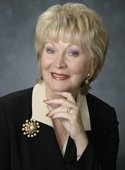
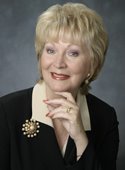
Author Interview ~ Patricia Davids


Pat was born in the farming and ranching country of central Kansas. As the only girl with four brothers, it was inevitable that she grew up to be a tomboy. Her love of books began early in life. In 1996, Pat’s love of reading evolved into a serious desire to write, and she began work on her first novel. After seven years of writing and three completed, revised, and revised again manuscripts, all she had to show for her efforts was a pile of rejection letters. In the summer of 2002, Pat revised her third book for yet another time and the rest is history. To read Pat's very interesting complete bio, click here.

What new book or project would you like to tell us about?


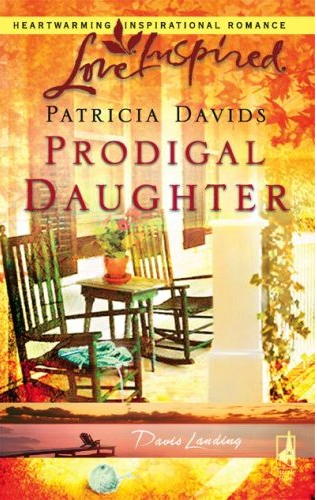
Prodigal Daughter is a November 2006 release from Steeple Hill. Melissa Hamiton has returned to Davis Landing broke, pregnant and embroiled in a serious family crisis. Attorney Richard McNeil is determined to help the troubled young woman find the courage and faith she needs to face her past mistakes and make a new life for herself. The problem is - he soon finds his interest in her is more than professional.
I'd love to tell you about the ms I just finished, only I haven't finished it yet. I'm struggling with a story that I thought I was in love with. As it turns out, the idea was good but an idea does not a novel make. The book is called, The Color of Courage, and it is about a woman soldier in the mounted color guard at Fort Riley, Kansas. When I get it done, it will be an August 2007 release from Steeple Hill.

Tell us about your publishing journey. How long had you been writing before you got a contract? How did you find out and what went through your mind?

I have always wanted to write. I’m a born storyteller, but being a wife, mother and full time NICU nurse didn't leave much time for hobbies. It wasn't until my daughter left home that I began to think seriously about writing a book. My husband was very supportive. He happily read the first chapter of my novel and said , "This is good." Boy, was I thrilled. I wrote and wrote and gave him the second chapter. He read it and said, "This is filler."

NOT the response I was hoping for. In researching how to write a romance novel, I discovered RWA. Everything I know about writing I learned from my local chapter, The Wichita Area Romance Authors, and Romance Writers of America. I finished my first novel, landed an agent with it and thought I had it made. WRONG. After six years of collecting rejection letters for my contemporary romances I began to think it wasn't going to happen for me. Then, Deborah Raney came to speak at my writer's group.

What a blessing she is! I had no idea that there was a market for inspirational romances. Since my stories already had a strong element of faith, I made the revisions easily to my third manuscript and within a few months I got "the call" from my agent that Steeple Hill wanted to buy His Bundle of Love. My thoughts? Whoopee! Whoopee! It can't be true. It is! Whoopee!

Then, I realized that God had only been waiting for me to find the right direction for my talent.

Do you still have self-doubts about your writing?

People who know me will tell you that I have an overabundance of self confidence. I think everything I write is wonderful. Thankfully, I have critique partners who will tell me when what I write is missing the mark.

Was there ever a time in your writing career you thought of quitting?

Sure, the thought crossed my mind more than once, but I’m a very stubborn person. I wanted to make sure that every editor who ever rejected my work would one day regret it. I bad. [A.M.: Nah, just human.]

What mistakes did you make while seeking a publisher or agent?

None, really. That is the beauty of organizations like ACFW and RWA. They can teach you about the pitfalls of the business and how to improve your craft. They are wonderful groups.

What’s the best writing advice you’ve heard?

Put your behind in the chair and put your fingers on the keyboard. That is the only way your book will get written.

What’s the worst piece of writing advice you’ve ever received?

Add more sex to your books and they’ll sell.

Do you have a pet peeve having to do with this biz?

I hate it when someone says that romance novels are smut but they’ve never read one. Or when they say, “Inspirational romance? Isn’t that an oxymoron?”

What do you wish you’d known early in your career that might have saved you some time and/or frustration in writing? In publishing?

I might wish that I had learned about inspirational romances sooner, but in truth, I believe things happen for reason. Rejections were good for me. I had to walk the path I was given in order to become a better person as well as a better writer.

Was there ever a difficult set back that you went through in your writing career?

This year my husband became very ill and nearly died. I couldn’t write for almost three months and that placed me really behind on my current contract. But now I’m going to finish this book on time. I can do it. I can do it. I have faith.

What are a few of your favorite books?

Ah, my deep, dark secret. I know this sounds terrible, but I don’t read romances, inspirational or otherwise. I’m currently reading The Shadow of the Wind by Carlos Ruiz Zafon. It is the most beautifully written work I have ever seen.

I will read anything by Elizabeth Peters and I loved all the medieval mysteries by Ellis Peters.

What work have you done that you’re especially proud of and why?

I’m very proud of my career as a neonatal intensive care nurse. Those babies are truly the least of God’s children and I have been blessed to help heal hundreds and hundreds of them. I have also been there to lay dying children in their mother’s arms and weep with them when no amount of high tech, modern medicine can help. You might not think that is a blessing, but I know that it is.

Do you have a scripture or quote that has spoken to you lately in regards to your writing?

Ecclesiastes 3:4 A time to weep, and a time to laugh; a time to mourn, and a time to dance.
This is my favorite and I think upon it often.

Can you give us a look into a typical day for you?

Do I have to? You’ll think I’m weird. Okay, Monday through Thursday I rise early by 10:00 or 10:30 am. I drink my coffee on the front porch and feed the cat. Then, I’m off to the YMCA for my Arthritis Water Aerobics class and ten minutes in the hot tub. After that, I fix lunch for my husband if he is up, read and write e-mails and think about getting started on my manuscript.

I do as little housework as I possibly can and think about getting started on my manuscript. I’ll run a few errands and waste enough time until 7:00 pm or so then I’ll make supper. After supper I watch TV with my hubby until 10:00 pm and then I get to work on my book. I write from 10:00 until 2:00 am and then I go to bed. The last half of the week I work 12 hrs night shifts in the NICU, eat and sleep and that’s it. No writing on work nights.

Do you have a word or page goal you set for each day?

I try for 5 pages a day. With my current deadline looming, it is up to 10 and may hit 20 in a few weeks.

Are you an SOTP (seat of the pants) writer or a plotter?

Both. I plot, but the stories sometimes take on a life of their own and I let them.

What author do you especially admire and why?

I’ve been scolded by one fan who said that I shouldn’t admire Nora Roberts because she writes explicit sex scenes and as a Christian I need to be more careful how I witness. Truthfully, I haven’t read any of Nora’s books, but the woman writes eight hours a day, and turns out five to six books a year. I admire her success, but even more, I admire her dedication to her work.

What is your favorite and least favorite part of being a writer?

I love making everything turn out all right in my stories. I love happily ever after endings.
The least favorite part of being a writer is facing a blank page and wondering where to start.

How much marketing do you do? What's your favorite part of marketing?

I’m proud to say that I’ve done three book signings because they scare me to death. I great at talking to people, but I’m terrible, terrible, terrible at remembering names. I make everyone spell their name for me before I write it in their book. I have a website and I’ve spoken to nearly a dozen varied groups about writing and my career. I love doing that. I’ve given interviews to two local papers and they were fun to do. I guess you could say I just love to talk about myself.
Steeple Hill has been doing a wonderful job of promoting my next book, Prodigal Daughter, as part of the Davis Landing series.

Do you have any parting words of advice?

If you want to be a writer, put your behind in the chair and put your hands on the keyboard. That’s the only way the book of your heart will see the light of day.

Wednesday, August 30, 2006

Author Interview ~ Donn Taylor


Donn Taylor led an Infantry rifle platoon in Korea, served with Army aviation in Vietnam, and worked with air reconnaissance in Europe and Asia. Afterwards, he completed a PhD degree at The University of Texas and taught English literature at two liberal arts colleges. He and his wife live near Houston, Texas, where he writes fiction, poetry, and articles on current topics.

What new book or project would you like to tell us about?

Something new for me after writing suspense: a light-hearted mystery set on the campus of a small denominational college. It’s also the first time I’ve used first-person point of view. The narrator is a reclusive professor reluctantly forced into the role of amateur sleuth. He has a lot to learn. The story capitalizes on my years as faculty at two such liberal arts colleges, but I’m certainly not describing any actual college or actual person in the novel. I also have an allegorical poem gradually working into shape.

Tell us about your publishing journey. How long had you been writing before you got a contract? How did you find out and what went through your mind?


My only contract thus far is with a regional trade-paperback publisher, Panther Creek Press. I’d published individual poems in various journals, of course, but I spent about four years teaching myself to write a novel and collecting rejections from ABA publishers. The president of Panther Creek Press, Guida Jackson, had heard me read two chapters of The Lazarus File to a critique group. She contacted me about publishing it, explained the details, and I said “yes!” before she could change her mind. I think I was too busy trying to grasp the contract details to think about anything else. Lazarus, by the way, was planned as an ABA suspense novel, but in the writing it took a distinctly Christian direction. I suppose a novel will always reflect the author’s worldview.

For those interested in spies, airplanes, and characters who keep their promises, Lazarus is still available through Amazon.com.

I’m still looking for my first contract with a national publisher.

Do you still have self-doubts about your writing?

Constantly. W.H. Auden wrote that when a poet finishes a poem, he never knows if there will be a next one: he never knows if he’s a poet or an ex-poet. The same has been true with all my writing as far back as graduate school. My first thought is always the enormity of the task and my inability to get my mind wrapped around it. I’ve learned to begin with prayer—not for success, but (after I’ve covered all the people and issues I can think of that need prayer) to do my best on the project. Then I get to work, and things eventually fall into place. I’m always skeptical of writers and composers who say, “The Lord gave me this.” Yet I know I’ve never written anything significant without Him.

Was there ever a time in your writing career you thought of quitting?

I’ve never considered not writing, but I’ve often considered leaving the big projects (novels) alone and concentrating on writing poetry for my own pleasure. But somehow, another significant idea always comes up and I’m back to novel writing. A year ago I’d never thought I’d write a mystery or a first-person POV.

What mistakes did you make while seeking a publisher or agent?

When I first started writing fiction, I underestimated the amount I’d have to learn to convert from technical writing and academic writing to fiction. It took me several years to work into it. With national publishers and agents, I’m apparently still making mistakes. My last two rejections of a suspense novel complimented “good writing…professionally done,” but they didn’t think they could market it successfully from a new author. Those rejections tell me I’m on the right track, so I’ll keep knocking on the door until someone opens it.

What’s the best writing advice you’ve heard?

1. Craftsmanship, craftsmanship, craftsmanship.

2. From the poet James Dickey: “You never finish a poem. You only abandon it.” The same applies to other writing projects.

What’s the worst piece of writing advice you’ve ever received?

To write very short sentences in order to make it easy for the reader to understand. Following this advice leads to a literary world without necessary transitional relationships (like and, but, because, however, consequently). Better advice is to vary sentence lengths according to the complexity of the ideas expressed and the reading level of the intended audience. If we dumb everything down into very short sentences, we’ll reach a point where. Each. Sentence. Consists. Of. Only. One. Word. Or. L.E.S.S.

Do you have a pet peeve having to do with this biz?

Actually, I have two. The first is novels with supposedly adult characters who respond like junior-high students to members of the opposite sex. Don’t they ever grow up? The second is the attempt to solve rhetorical problems with ersatz grammatical rules like “Don’t end a sentence with a preposition.” (The rhetorical principle is to end with a strong word, not a weak one.)

What do you wish you’d known early in your career that might have saved you some time and/or frustration in writing? In publishing?

Then, now, and always: efficient ways of targeting the market.

Was there ever a difficult setback that you went through in your writing career?

I don’t think so. This may be because I’m not yet far enough into it, or it may be that I’m old enough to know you have to work through a lot of no’s in order to find a yes.

What are a few of your favorite books?

First and always, the classics: Homer, Sophocles, Virgil, Dante, Ariosto, Spenser, Shakespeare, Donne, Milton, George Herbert, Tennyson. From the Bible: Ecclesiastes and Hebrews. In modern books: Woolf’s To the Lighthouse, Forster’s, A Passage to India. In commercial fiction: Anything by the Western writer Ernest Haycox. Gavin Lyall’s The Wrong Side of the Sky. T. Davis Bunn’s The Book of Hours. Georgette Heyer’s The Unknown Ajax. Carol Umberger’s Scottish Crown Series, especially The Mark of Salvation.

What work have you done that you’re especially proud of and why?

Outside of writing, I’m proud to have served my country in two wars. In writing: 1. The poem “Married Love,” which portrays the grandeur and holiness of marriage through symbol and image without direct statement. 2. Scenes in Lazarus in which hero and heroine are tempted by sexual desire but reject it in favor of keeping faith with their responsibilities. One reviewer, an ex-Marine, wrote: ”Taylor … displays the rare ability to convey emotion without resorting to profanity and to convey passion without specifying body parts.” I consider that high praise.

Do you have a scripture or quote that has spoken to you lately in regards to your writing?

“Unless the Lord build the house, They labour in vain that build it….” (Psalm 127:1)

Can you give us a look into a typical day for you?

I’m not sure there is one. Mildred and I are usually up by six and like to enjoy a three-mile walk through our community’s hike and bike trails. We talk about a lot of things, often about my current writing project. Then we have a light but leisurely breakfast over newspapers, to include discussion of what we’ve read. I open the computer and check for e-mails (important because we manage our church’s e-mail prayer chain). That done, I get down to writing while Mildred takes care of the phone and other distractions. We get reacquainted over lunch and check in briefly on Fox News. Then more writing and miscellany until supper. I wish I could say we do all this efficiently, but life seems to hold an inexhaustible supply of interruptions.

Do you have a word or page goal you set for each day?

I set a minimum of 1000 words, but I usually get a good bit more. Unfortunately, I sometimes throw half of it back the next day.

Are you an SOTP (seat of the pants) writer or a plotter?

A bit of both. I have the major plot points and major character trajectories firmly in mind before I start. Before writing each scene I know where it will end, but I don’t know the route it will travel until I start writing. Sometimes a character takes on a life of his own and I have to revise the plot. This happened with the character Ramon in Lazarus. He began as a hijacker whom I planned to use only to get hero and heroine together. But then Ramon said he didn’t want to murder the hero because he’d have to confess it to a priest who already had enough troubles, so why would the hero add to the priest’s troubles by getting himself murdered?


After that speech (see the original in the excerpt on my Web site,
www.donntaylor.com), I had to find ways to keep him in the story. He ended up as a key player, a cross between Shakespeare’s Falstaff and Walker Percy’s moviegoer. Readers say he’s the best character in the book. So much for elaborate plans before writing!

What author do you especially admire and why?

Commercial author? The mid-twentieth-century Western writer Ernest Haycox. He infused the standard Western and slick-magazine plots with reasonably well-rounded characters (vice the usual flat characters). He also wrote concise dialogue that revealed characters’ motivations while implying the complete worldview on which they were based. (Haycox’s philosophy was naturalism, but he portrayed it well.)

What is your favorite and least favorite part of being a writer?

Favorite: Teaching other writers how to write poetry, including teaching classes at writers’ conferences and working with new poets one-on-one. Least favorite: The fact that most of my friends, including those in my church, have no clue as to what I actually do. Maybe that’s a good thing: it sure keeps me humble.

How much marketing do you do? What's your favorite part of marketing?

In my present state, the best answer I can give is “as much as I can.” Favorite part? Learning new things and meeting interesting people.

Do you have any parting words of advice?

Advice to myself as well as others: For life: “Seek ye the Lord while He may be found,” and don’t waste time on anything trivial. For writing: Keep improving your craft and don’t expect good results to happen quickly.

Tuesday, August 29, 2006

Author Interview ~ Tracey Bateman

Tracey Bateman has sold more than 450,000 books since her first novel in 2001, including her more recent anthologies, A Stitch in Time and Kansas Home (which has sold over 120,000 copies). Her novels have been presented with such honors as three 2004 American Christian Writer’s Awards, two 2002 American Christian Writer’s Awards, and several Heartsong Present Reader Awards. In 2004, an anthology Bateman coauthored occupied the CBA bestseller list for several months. She is currently the President of American Christian Fiction Writers. Bateman, along with her husband and four children, makes her home in Missouri.


What book or project is coming out or has come out that you’d like to tell us about?

So many books so little space…

My second Claire Everett book was just released June 15. My second Penbrook Diaries book will be out with Barbour in December Called THE FREEDOM OF THE SOUL, and the (and this is so sad) last of the Claire books I LOVE CLAIRE will be released in January.

Tell us about your journey to publication. How long had you been writing before you got the call you had a contract, how you heard and what went through your head.

I started writing as a kid like most of us do, and just stopped. When I was 26 I went back to college, because with three kids at home I needed to get out of the house for sanity’s sake, and getting a real job was out of the question. So I took this writing class—the one all college Freshes have to take, and fell in love with writing.

My first long paper turned out to be a “short” story that my ten-year-old grad student teacher gave me two grades for and let me forego my next paper since this one was twice the length the paper was supposed to be.

I only got a B on it but I was HOOKED on storytelling. I ended up dropping out my junior year when I got pregnancy (yes, number four was on the way—I failed biology), induced migraines. But between headaches and throwing up, I found some online information, critique groups, etc. And started learning to write.

I targeted Heartsong (so there, Chip MacGregor!!) and did everything I could to fit their line. It eventually worked and after about a year I submitted my first thing, got a nice rejection from Tracie Peterson, quickly submitted book number two, and eighteen months later At about 6 pm, I got the CALL from Becky Germany that they loved the book(okay, I embellished that one—I don’t think they ever actually said “love”) , wanted to publish it and rush it into publication to fill a hole in their schedule.

The thought that went through my mind was…holy crap, she called the wrong number. Second thing was, how quick can I get off this phone so I can go celebrate eat—if it had been a rejection I would have mourn ate. Pizza—the food for all occasions.

Do you still experience self-doubts regarding your work?

Oh man. All the time. I still can’t believe anyone would be dumb enough to pay me for the crap I write. OUCH. Okay. So my publisher doesn’t kill me for saying that… I think as writers we have this love/hate relationships with ourselves. We are ultra critical but know we have what it takes, because if we didn’t, we never would have stuck it out this long—if we could just find that right storyline, the right words, and really, what does Francine have that I don’t (besides a few million adoring fans? ).

Self doubt creeps in and makes me cringe, cry, study, work harder, cover my head and dream of quitting, and lastly but the most important, during particularly rough times, it sends me to the couch to watch—yes I do—lifetime movies. I’ve finally adopted Joyce Meyers’ philosophy regarding this business….do it afraid. Do it when you don’t feel like you can, Do it when it stinks, do it when you’re tired, arms ache, kids are yelling, etc. Self-doubt can and will paralyze you.

So my advice to anyone experiencing the sudden urge to pack it in and forget the whole thing (and I won’t mention any names that start with a T and end with a N), take a couple of days to regroup and then get your BE-hind back in the chair and knock out your wordcount for the day.

What mistakes have you made while seeking publication?

None when it came to the business side…on the PERSONAL side, I’ve spent too much time in the chair and not enough time playing with the kids—now they’re big kids and I missed out on a lot of fun with them. I missed church to meet deadlines (still do but I’m determined to STOP IT).

I’ve dropped all of my service to my local church because I’m too busy to stay committed to it. So there is a definite price to pay when those contracts start coming in. I need to learn better balance.

What’s the best advice you’ve heard on writing/publication?

From Bodie Thoene’s book about writing (and I can’t remember the title it was AGES ago), she introduced me to The Writer’s Market Guide and said find the publisher who takes at least 25% of their books from new authors and target them. So that’s why I went with Heartsong when my dream was to write for Bethany (who rejects me on a regular basis I might add—but I’m not bitter).

Sometimes God gives you what you need instead of what you want. Six years after I first started writing for Heartsong, I’m still partnering with the Barbour company in addition to a couple of others.

What’s the worst piece of writing advice you’ve heard?

Anyone can get published if they work hard enough. It’s just not true. You have to pursue this business with intelligence and do it right. There are only so many slots available. Sometimes you can look at certain writers and just KNOW they’re going to make it big—Camy Tang comes to mind.

Others might get one or two small books published and it’s easy to see that’s all that will ever come of it. Work hard, yes. But work smart. Get to know people, and work your behind off getting better. Find a niche no one else fills or fill the same one better than the ones filling it at present.

What’s something you wish you’d known earlier that might have saved you some time/frustration in the publishing business?

I was pretty methodic in my approach, so I think I had a real natural progression. I wrote for Heartsong until I felt it was time to try for an agent. With fifteen books and a couple of great recommendations, I got my agent, (Steve Laube—yes I’m a name dropper), the best in the business as far as I’m concerned. And sidebar…I think it’s a HUGE mistake to find an agent when you don’t need one. If you are only writing sweet romances for a company with a standard contract, why would you share your dough?

Wait until you’re ready to branch out into the broader market THEN it’ll be worth their time and your money for the good agents to take you on. After Steve made me sweat it out for FOUR freakin’ months, he agreed to represent me and has placed everything we’ve submitted over the last three years with the exception of one proposal that could have been revised or sent elsewhere, but I decided to submit something else and that one sold.

Is there a particularly difficult set back that you’ve gone through in your writing career you are willing to share?

The one setback I had was more of a retreat. The summer of 1999, God spoke to me that I had been striving for something that He was going to bring to me anyway and that he wanted me to enter a season of rest and let him work. So He instructed me to stay offline and stop writing for an undisclosed amount of time. I was just to trust. It was HARD. But God was clear and the one thing I can say I’m good at is obedience. I spent the summer and first part of the fall relearning to clean house and reconnecting with my family.

The season ended the night Rebecca Germany called me about buying my first Heartsong.

What are a few of your favorite books? (Not written by you.)

Tisha, Gone with the Wind, A Tale of Two Cities, Little Pilgrim’s Progress (because the big one makes my eyes cross), newer books: All three of the Mark of the Lion books by Francine Rivers. I think they’re better than Redeeming Love even. I read them at least once, usually twice a year. Anything by Lisa Samson.

What piece of writing have you done that you’re particularly proud of and why?

The Color of the Soul—the first of the Penbrook Diaries with Barbour. Because it delves into race issues and women’s issues and Barbour allowed me to be honest. It was so challenging to write and having finished it, even though it’s not the biggest seller out there, I feel a sense of accomplishment. It’s a book that could make a difference.


Do you have a pet peeve having to do with this biz?

I think my biggest pet peeve is that the people who win the awards like the Christys don’t sell books!!! Come on people. BUY books that say something. Books that are written with a deft hand and mega talent like Athol Dickson’s River Rising, or ANYTHING by Lisa Samson who is, in my opinion, THE best writer in the CBA.

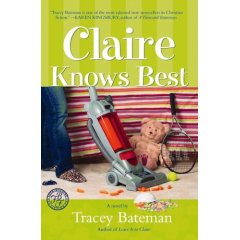
We are going to lose these major talents to the ABA if we don’t start giving them their due. When I read their books, I read for two reasons…first because the story won’t let me go. Next for the purpose of studying the craft. Books on craft bore me, but if I can read a well-written novel, I can learn scads. And I do from writers like this. But these writers will either jump ship to the ABA or compromise the very qualities that make them so unique and start writing what is selling (and who needs more of that?) if the reading public doesn’t start flocking to stores and buying their books. GO BUY A BOOK BY LISA SAMSON. (and no, I don’t hang out with her nor is she paying me for advertisement. ) Oh yeah, buy CLAIRE KNOWS BEST too.

How many books on average do you write a year?


Four or five. They range from 70 to 85K words. I’m just a hot commodity right now and trying to find a good place to settle in. I’m busy with three publishers. I have a heart love for one, a sense of feeling like a celebrity with one, and an optimistic feeling that one will be where I land and stay and build my career, but that remains to be seen. I’d like to slow down, write for one publisher and build my career within that company. I know which one *I* want, but I have to pay the bills, so it’s not an option at the moment. In a couple of years….Please God?

How do you accomplish that? Extensive plotting? Long hours? Forgoing the bathroom and food?

Forego food? What are you on? Procrastinate, procrastinate, procrastinate,….Oh my gosh!!! Two weeks to deadline…MOM will you keep the kids this week??????? WRITE WRITE WRITE. That’s my world.
Can you give us a view into a typical day of your writing life?


I just did. Seriously, I don’t have a set schedule. Schedules make my ears bleed. I have a certain word count I would LIKE to get done each day. I like to sleep, so during the summer I sleep in and stay up late. If I can’t concentrate to write during the day, I take a nap and work after everyone’s in bed. Most days I’d rather watch TV. I learned from Debbi Bedford that twenty minutes of walking is for my mind, forty for my body. So if I’m feeling really sluggish, I’ll think about walking and four hours later, if I actually go do it, I DO feel more alert. I live a life of organized chaos.

If you could choose to have one strength of another writer, what would it be and from whom?

From Susan May Warren (writer extraordinaire with Tyndale and Steeple Hill Café). I would adopt her brilliant mind for plotting. It is so hard for me and comes so naturally to her. I hate brainstorming with her when I’m stumped on my books because our conversations go something like this:

Susie: What’s this character’s GOALS you have to know what she’s working for before you can figure out how to get her there.

Tracey: Goals Shmoals--How should I know what her goals are? I hoped You’d tell ME. If you’re not going to plot my book for me, I’m hanging up.
Seriously, I’ve never been strong on plotting. But I’m even worse now that I’ve been writing mom lit and chicklit. You can have a basic idea and then let the characters run away with the story and it’s GREAT. Susie plots her shopping list. I’d love to think more that way. I take a shopping list to the store and never look at it. That’s sort of how I plot. Write a few things down, and never look at it again.


Do you have a dream for the future of your writing, something you would love to accomplish?

I want to write to women’s hearts. And eventually have a speaking ministry to go along with it. I have endured and overcome a lot of junk in my life. And learned tons along the way. Surely God has a reason for not taking me out early on when I deserved it. If I can serve Him by serving his precious jewels, I would love to do that.

I’d also like to be an agent some day (Don’t Laugh Steve—I’m eyeing a few of your clients!)

Was there ever a time in your writing career you thought of quitting?

Not really. There have been times I wished for some time off. But I haven’t reached the point where I’m willing to sacrifice financially in order to take a break.

What is your favorite and least favorite part of being a writer?

Favorite…on the lowest, most shallow level…getting paid and not having to work outside my home (I’m really lazy but I gotta feed and clothe my kids).

But on a higher plane, my favorite part is being in a position to be a voice in a world where it’s hard to rise above the other voices out there. If three people get the takeaway message from my book, then I’ve done my job. God has blessed me so much, I won’t take that for granted.
My least favorite part of the job is (sorry Jeane) radio interviews. I just feel like such a social bottom dweller and get really nervous about talking interviews. I don’t think fast on my feet unless I’m kidding around.


How much marketing do you do? Any advice in this area?

I think utilizing the power of the internet is going to be key. I was talking to my publisher about this during CBA, and he said to get it figured out. So I’m trying. But I’m not very good at it. I don’t do a lot of marketing personally unless someone makes me because I just don’t know what I’m doing. That’s why I work for houses that have strong marketing departments.

I’m going to start working on better blog habits and doing online interviews etc. I’m revamping my website and plan to start a newsletter this summer. That’s the best I can do for now.


Parting words?

Boy I’m trying to be wise, but I got nothing.

Monday, August 28, 2006

Author Interview ~ Ramona Cecil

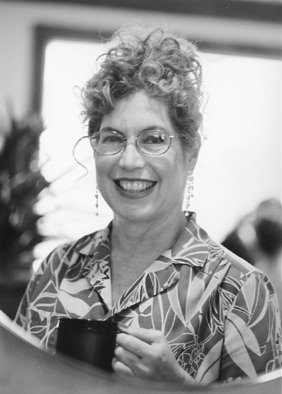
Ramona K. Cecil is a wife, mother, grandmother, free-lance poet, and inspirational romance writer. Now empty-nesters, she and her husband of thirty-three years make their home in Seymour, Indiana. Although she’s been published in poetry for over two decades, Larkspur is her debut novel. When not writing, her hobbies include reading, gardening, and visiting places of historical interest. You can visit her at www.ramonakcecil.com


What book or project is coming out or has come out that you’d like to tell us about?


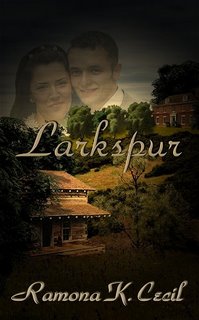
I’d like to tell you about my inspirational historical prairie romance, Larkspur, which will be coming out this November, 30th by Vintage Romance Publishing. The story, set in 1835 in a small, Indiana farming community I named Larkspur, was inspired by Conner Prairie, a living history museum near Indianapolis, Indiana. A young woman who’s lost all confidence in the medical elite of the time, practices and preaches Dr. Samuel Thomson’s botanical approach to healing. She has vowed, with God’s help, to save people from the harsh practitioners of conventional medicine. That vow becomes more resolute as well as more difficult to keep when a young doctor arrives fresh from the university and prepares to set up a medical practice in Larkspur.
Tell us about your journey to publication. How long had you been writing before you got the call you had a contract, how you heard and what went through your head.


I have been writing poetry as far back as I can remember. Truly, I remember asking my mother to write down my poems because I hadn’t yet, learned to write. I’ve always been an avid reader. Story ideas were always running through my mind, but I’d stuck to my poetry and hadn’t pursued any of the stories. About twenty-three years ago, I decided I’d try to write a book. I love history, especially Indiana history. One of my favorite places to visit has always been Conner Prairie. Their perpetual year is 1836. On one of my visits there, the idea of Larkspur was planted in my brain. I had no notion how to write a book, so I just started with that grain of an idea and began pounding away at my electric typewriter. I did hours and hours of research (still knowing nothing about the craft of writing). To help with my research, I bought a wonderful, vintage Indiana history book, Historic Indiana by Julia Henderson Levering published in 1910. It is still one of my treasures and a resource I could not do without.

While helping my husband raise our two daughters and working different jobs outside the home, I set the manuscript aside. In the mid 1980’s, I began selling my Christian poetry to a publisher of inspirational gift items. Over the years, I’ve sold over eighty verses to them. I get a kick out of finding my poems on internet sites from time to time.

In 1999 I got a computer and decided to dust off my old manuscript of Larkspur. I rewrote it, and then began writing other stories; two contemporary novellas, another historical romance novel, and a historical novella. At this point, my only education in how to write came from reading inspirational romances and Penelope Stokes’ book, Writing & Selling the Christian Novel. In 2002 I entered Larkspur in the Northeast Indiana Romance Author’s Opening Gambit contest. It placed third and I was both elated and encouraged. About that same time, I found (actually, God led me to) American Christian Romance Writers (now American Christian Fiction Writers) and I joined the group. I wouldn’t be getting published now if it hadn’t been for that decision. I have learned so much from so many wonderful, generous, Christian writers.

I joined a great critique group, began taking online writing courses, and actually began seriously learning the craft. I submitted Larkspur to a publishing house and it was rejected. I wasn’t happy about it at the time, but now I realize it was another stone—okay, a rough stone—in my road to publication.

Last year, an ACFW member posted a notice about Vintage Romance Publishing’s Vintage Inspirations Contest for inspirational stories. Using some of the advice I’d received along with the rejection, I reworked Larkspur and sent it in. Here, I have to thank two wonderful writers, critique partners, and great friends, Staci Wilder and Kim Sawyer for setting aside their own work to critique the story for me. I never imagined I would win. I simply considered it an opportunity for Vintage Romance Publishing to see a sample of my work.

When I learned I was one of three finalists, I was bowled over! I remember going to the Vintage Romance Publishing web site and just sitting and staring at the computer screen. I could hardly believe I was reading my name and the name of my story. So you can imagine how amazed I was a few weeks later, when I received the call from Vintage Romance Publishing’s chief editor telling me I’d won! I was standing when I took the call and had to immediately sit down. I knew part of first place prize was a contract with Vintage Romance Publishing. At long last, I was going to be published! I just couldn’t get my mind around it. She was telling me what to expect but I was in such shock most of it didn’t register. Fortunately, she e-mailed me later with the same information.

Tell us about Vintage Romance Publishing.

Vintage Romance Publishing is a small, but rapidly growing publishing house based in Goose Creek South Carolina. They publish only historical fiction, which is one of the things that drew me to them. They publish both secular and inspirational romance. Visit them at www.vrpublishing.com

Are there benefits to working with a small press? (If so, what?)

I love the friendly, intimate feel. It’s like working with a group of friends, which is exactly what it is. Right from the start, I felt truly welcomed. The entire group of editors and writers are super-supportive and helpful. I’ve already learned so much about the publishing and marketing process.

Do you still experience self-doubts regarding your work?

All the time. There always seems to be that little insidious whisper in my ear saying, “Why do you think you can do this?” I don’t know how many times I’ve petitioned God saying, “If I’m not supposed to do this, please let me know.” After each of these petitions, He has always sent an encouragement. I just try to ignore the negative thoughts and remind myself that this work is for God. If He didn’t want me to be at this place, at this time in my writing life, I wouldn’t be here. I do think self-doubt is good in some ways. It keeps pushing me to strive to do better work. I keep the verse from Ephesians 3:20 beside my computer. “Glory be to God, who by His mighty power at work within us is able to do far more than we would ever dare ask or even dream of. . .”

What mistakes have you made while seeking publication?

I once paid to submit Larkspur to a publication that periodically sends blurbs of stories to publishers. There are several of these floating around. For me, anyway, it was a waste of money.

What’s the best advice you’ve heard on writing/publication?

To remember that this is about God, not about me. The most important thing is the journey, not the destination. As difficult as it is sometimes, this is the work God has given me to do. A second piece of advice was to keep working, never quit learning your craft, and never, never, never give up!

What’s the worst piece of writing advice you’ve heard?

That’s a tough one. I have been immersed in such wonderful writing advice since I joined ACFW, it’s hard to remember back to when I might have heard a piece of bad advice. Because I’d reworked this story so many times, someone once told me to give up on it. I’m glad I didn’t take that advice.

What’s something you wish you’d known earlier that might have saved you some time/frustration in the publishing business?

I wish I had found ACFW sooner. A writer needs support—at least I do. I don’t see how anyone can do this alone. Find a good writers’ support group, get into a good critique group, and take advantage of all the free advice and writing courses offered by groups like ACFW. It is a well-spring of invaluable writing information, freely and lovingly shared.

Is there a particularly difficult set back that you’ve gone through in your writing career you are willing to share?

I suppose it would have to have been the rejection of Larkspur. But despite all the tears I cried at the time, I don’t see it as a negative now. The story was not ready to be published at that time. I learned so much from that experience, and the great advice I got helped me to make Larkspur a much better story.

What are a few of your favorite books? (Not written by you.)

I’ve read so many great ones it’s hard to pin down. As a young person in Indiana, I loved all the Gene Stratton Porter books. Laddie was my favorite. Drums Along the Mohawk by Walter D. Edmonds is another book that springs to mind. Lately, Francine Rivers’ Redeeming Love; Louise Gouge’s Ahab’s Legacy series; anything by Lauraine Snelling, Janette Oke, and two of my critique partners, Kim Sawyer, and Staci Wilder. Truly, besides thoroughly enjoying their writing, just reading their work has helped improve my own writing by leaps and bounds.

What piece of writing have you done that you’re particularly proud of and why?

I like a poem I wrote called “If” for a Christian. It was published by Dicksons, Inc. and is written in the same style as Rudyard Kippling’s poem,“If.” I feel I did a credible job of capturing the style of Kippling’s original poem, while giving my poem a Christian bent. Also, I’m always most in love with my current work-in-progress. Right now, it’s a piece of romantic women’s fiction entitled, The Heritage. It takes place in my county in Indiana in 1812. I think the conflicts in this story are particularly compelling.

Do you have a pet peeve having to do with this biz?

I suppose it would be writing query letters. I’m not sure how good I am at it, and it’s so important that an author present their work in an attention-grabbing and compelling way.

Can you give us a view into a typical day of your writing life?

My husband works a late shift, so we are both night owls. I usually get up around 10:00 in the morning and turn on my computer and check e-mails and blogs. I don’t really get down to writing business until after my husband leaves for work at 4:30 PM. Between then and 2:00 AM, I work on writing, editing, research, critiques—whatever happens to be on the docket for the evening. I like to spend at least four hours just writing new material.

If you could choose to have one strength of another writer, what would it be and from whom?

I wish I could write as fast as Kim Sawyer and with such breath-taking attention to details.

Do you have a dream for the future of your writing, something you would love to accomplish?

I would like all the stories I’ve written—and will write in the future—to be published. But that is up to God. Mostly, I would just like to feel I’ve used the talents and opportunities God has given me in a way that most pleases Him.

Was there ever a time in your writing career you thought of quitting?

At least once or twice a month. I think how much easier it might be to simply do a nine-to-five job. But I love writing too much. The stories won’t let me be and God keeps dragging me back to the computer screen. It’s like a comment made by a character in one of my short stories. “I’m not looking for easy. I’m looking for worthwhile.”

What is your favorite and least favorite part of being a writer?

My favorite part is the writing and the research. I love both. I even enjoy the rewrites. I’m not as fond of writing a synopsis.

How much marketing do you do? Any advice in this area?

I plan to do huge amounts of marketing. I’ve put together a web site—something I never thought I’d be able to do. Aside from some hair-pulling moments, I find myself actually enjoying the work, and am planning some promotional contests on my site. I had postcards made with the cover of my book on one side and a blurb about the book and my contact information on the other. I never leave home without at least a half-dozen of these cards. I have given them to both friends and total strangers, and have received very positive responses. I’ve even been approached by the district manager of the merchandising company that stocks our Wal-Mart with inspirational books. I might have an opportunity to do a book signing, there. Already, I’ve been promised book signings at my church and local library.


Besides sending out multiple press notices about my book’s release, I will be visiting bookstores with a gift basket containing my book and other goodies. I plan to approach Christian radio stations and let them know I’m available for interviews. I love talking about my work, so I’ll be making myself available to speak to various church groups and possibly, historical societies. I’m presently working toward securing a book signing appointment at Conner Prairie. My advice concerning marketing would be to never pass up an opportunity to market your book.

Parting words?

Thank you so much for giving me the opportunity to talk about Larkspur and the writing journey God has set me upon. I truly feel humbled and blessed that He has chosen me for this work. With His help, I can do all things, but without Him, I can do nothing. I pray that God will continue to bless my work and use it as a true ministry for Him. I leave you with John 15:16. “You did not choose me, but I chose you and appointed you to go and bear fruit—fruit that will last. Then the Father will give you whatever you ask in my name.”


Saturday, August 26, 2006

S'up Saturday

Gina's Internet is down so I'm filling in for her. This week she planned to announce Tracy & C.J. Darlington's new site: TitleTrakk—an interactive website where you can have fun while learning more about your favorite authors and musicians.

Personally, I love this idea since it merges books with music.

"TitleTrakk.com is kicking things off with a huge prize giveaway of 25 books & cds. Sponsored by Inpop Records & Glass Road PR, the grand prize will include cds from Superchic[k], Mat Kearney, Paul Coleman, Tree63, and Petra, plus novels from Brandilyn Collins, Ginger Garrett, Austin Boyd, R.K. Mortenson, Mary DeMuth, and more. A complete list is available at the website’s contest page:
http://titletrakk.com/Contests.html"

[
Click here] to go visit and sign up for their newsletter.

Link to iTunes Podcast

Jessica Dotta - Interview with Maggie Anton - Interview with Maggie Anton

Friday, August 25, 2006

Pod Cast with Maggie Anton

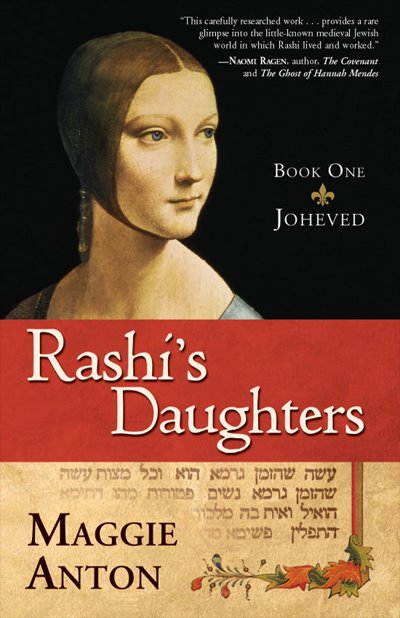
Maggie Anton is the award-winning author of Rashi's Daughters—a series that explores the world of the great Talmud scholar Rabbi Shlomo Yizhaki through the eyes of his three daughters.

When I first invited Maggie to come on Novel Journey for a podcast interview, it was her prestigious awards that piqued my interest. That changed, however, when Book One—Joheved arrived and I started to read.

Maggie Anton offers her readers an amazing look at Jewish worldview all the while transporting her readers back to medieval France.

Interviewed by Jessica Dotta


Rashi's Daughters is a novel of historical fiction by Maggie Anton chronicling the lives and loves of Rashi's three daughters, Joheved, Miriam, and Rachel. Rashi, the great medieval Jewish scholar, had no sons, but his grandsons became the greatest scholars of their generation. This book explores the lives of the ignored generation - Rashi's daughters.

Thursday, August 24, 2006

Author Interview ~ Terry Fowler


Tarheel born and bred, TERRY FOWLER makes her home in Wilmington, North Carolina where she works for the city government. Besides writing, her interests include reading, gardening, genealogical research and serving in her church. She currently has an anthology entitled NORTH CAROLINA in the stores. You can learn more about Terry at www.terryfowler.net

What new book or project would you like to tell us about?

Currently I’m working on the idea I hope will be book three of what I've called my Cornerstone series. All the books are based on members of Cornerstone Community Church and it's been great fun getting to know all these new characters.

Heartsong Presents will publish the first book, Christmas Mommy, later this year and the second, Except for Grace, in 2007.

Tell us about your publishing journey. How long had you been writing before you got a contract? How did you find out and what went through your mind?

My journey took twenty years. My first submission was rejected in October 1978 and Heartsong Presents published my first book in October 1998. I never got the call. A snail mail letter had me crying tears of joy and praising the Lord as I called my family and friends.

Do you still have self-doubts about your writing?

I think any author would have to be incredibly self-confident never to have doubts when it comes to their writing. There are times when what I’ve written strikes me as total garbage and others when I can’t believe I wrote what I’m reading. Then there’s always rejection no matter what the source.

Was there ever a time in your writing career you thought of quitting?

After accepting Christ as my Savior in 1992, I knew I could no longer write secular romance. I asked God for a market and then one day I opened a packet of advertising cards and found Heartsong Presents.

What mistakes did you make while seeking an editor or agent?

I hope the fact that I’ve always been a rule player when it comes to submissions has kept me from making mistakes. I read in the lines and get tip sheets to be sure I stay on track. I haven’t gone the agent route yet so I can’t say about that.

What’s the best writing advice you’ve heard?

Write. I firmly believe that the only way any writer can get published is to keep writing and get their work to the editors. They can’t buy what they don’t have.

What’s the worst piece of writing advice you’ve ever received?

All advice has its place. What we may consider bad advice at the time can actually become some of the best we’ve ever received if we take time to listen.

Do you have a pet peeve having to do with this biz?

I don’t really have any pet peeves. I know giving control of my writing to God helps me maintain a positive attitude.

What do you wish you’d known early in your career that might have saved you some time and/or frustration in writing? In publishing?

I wish I’d had access to the internet back when I started writing. I think it’s one of the most valuable assets available to today’s writers. And preparing a manuscript on a computer rather than a typewriter is so much better.

Was there ever a difficult set back that you went through in your writing career?

I suppose the years of rejection were the worst set back I suffered. I got some form letters but I felt blessed when an editor took time to comment in a way that helped me improve. There were times when I threatened to quit but as my sister often told me I could stop breathing easier than I could give up writing.

What are a few of your favorite books?

Dee Henderson’s O’Malley series
Gail Gaymer Martin's The Christmas Kite
Several of my fellow Heartsong Presents authors

What work have you done that you’re especially proud of and why?

I’m equally proud of every book I’ve written, published or unpublished. So many times unpublished writers think they've not accomplished anything because they wrote a book that wasn't published but in truth the great accomplishment was finishing the book.

Right now, my anthology, North Carolina, is in the stores and it’s been great hearing from friends and readers who have seen it on the shelves.

Do you have a scripture or quote that has spoken to you lately in regards to your writing?

Every book I write has its own specially chosen scripture that serves as my theme for the book.

Can you give us a look into a typical day for you?

I work a full time job Monday through Friday so I write over lunch breaks, in traffic, evenings, weekends, and any other time I find an opportunity.

Do you have a word or page goal you set for each day?

The only time I’ve ever set writing goals was recently when I had a short deadline to meet. I wasn’t sure I could write a book that fast but I was able to figure out how many words I needed to write each week and completed the book in plenty of time.

Are you an SOTP (seat of the pants) writer or a plotter?

I’ve always been seat of the pants. I have a tendency to write scenes as they come to me. A snippet of an idea starts to grow and I create. However, Heartsong Presents asks for chapter by chapter breakdowns and I’m finding those are a great tool.

What author do you especially admire and why?

Dee Henderson. Her O’Malley series has been a keeper for me. I enjoyed the way she took this group of characters and made me care about them so much.

What is your favorite and least favorite part of being a writer?

I love writing. That 'what if' seed of an idea takes on a life of its own and we're taken on the ride of our life. When someone asks how did you come up with that? it's hard to explain. The actual business of being a writer – edits and such – is the hard part.

How much marketing do you do? What's your favorite part of marketing?


Marketing is a weakness for me. I need to focus more attention on getting my work out there. I have a website at present.

Do you have any parting words of advice?

When those rejections arrive, allow yourself a short pity party and then get back to work. Study the market, take advantage of every opportunity to improve your writing, and persevere.

Wednesday, August 23, 2006

Author Interview ~ Susan Wales


Susan Wales is the author of several books including Standing on the Promises, Social Graces, The Pleasure of Your Company, Faith in Gods and Generals, and The Chase, which she co-wrote with Robin Shope. Susan is married to Hollywood producer Ken Wales. They live in Pacific Palisades, California, with their daughter, Megan.

What new book or project would you like to tell us about?


The Replacement, a political thriller that delves into the pharmaceutical industry, is the sequel to my first novel The Chase co-authored with Robin Shope in 2004. Jill Lewis, a top investigative political reporter, in Washington D. C., is the heroine of these intriguing tales of suspense intricately woven with a touch of romance.

The Replacement is a stand-alone, but you will enjoy so much more if you first read The Chase. Jill Lewis is at the height of her career with a hunky fiancé, also an up and comer in the political world when The Chase opens. But as you turn the pages, Jill’s life unravels when her source is proved a phony. Her life becomes even more complicated when she discovers that her father who recently died in a car accident was possibly involved in the political scandal she is investigating . . . not to mention, threatened!

I can say no more because I’ll spoil the story for my cherished readers! The Replacement takes up where The Chase left off, but it’s also full of intrigue, and yes, a surprising romance . . . but most of all—DANGER! One reader describes it as scary as Psycho! What a compliment!

Tell us about your publishing journey. How long had you been writing before you got a contract? How did you find out and what went through your mind?

Author James Patterson said he was turned down several times on his first novel but he won the Edgar Prize for mystery for his first book, and since then he’s sold a zillion books, so believe me, I’d much rather have had his problem, but truthfully, my journey was easy . . . I had a non-stop flight to publishing. I was too naïve to know it was supposed to be difficult. As single women, my writing partner Ann Platz and I prayed for husbands and collected miraculous love stories from magazines and books to read whenever we became discouraged. I’m sure many of you can relate!

Ann miraculously met her husband John, and several years later, I met my husband Ken in a miraculous circumstance. As a result, Ann and I were called into a ministry to pray and encourage singles. “One day we’ll do a book,” we promised! Years later when my daughter Megan went away to college, Ken asked me what plans I had for my life as an empty nester. I knew my time to write had come at last! I called up a publisher with the idea, and by the second sentence, he was sold. Ann and I published our first book, A Match Made in Heaven!

Do you still have self-doubts about your writing?

Not about writing per se, but my doubts come from— will the books I spend months writing and putting my whole heart into make it into the hands of the reader? Ann and I naively believed our first book would sell a million copies. Go ahead laugh! Although our book sold less than a million, a divorcee who had plans to kill herself one Christmas night, faxed me a letter that explained how she hesitated before taking the pills to pick up our book that her mother had stuffed in her stocking Christmas morning. It was a last minute gift she’d bought on Christmas Eve as she stood in line at Wal-Mart. The book gave the divorcee such hope that she chose life instead. That was huge for me!

God spoke to my heart through that incident. I learned never to be concerned about the sales because when he calls you to write a book, it may be for just one person. Helping to save that one life made all those years spent writing Match Made in Heaven worth every moment of hard work! I’m not sure the publishers will be happy with my one reader philosophy . . . but after that letter, it was easy for me to relinquish my book sales to God. Now I just pray that the books get to the people who need to hear the message.

Was there ever a time in your writing career you thought of quitting?

Writing never, but after my first novel, I considered specializing in writing only gift books. My agent convinced me that I was a great storyteller and should stick with novels. I probably couldn’t have quit anyway . . . it’s an addiction you know!

What mistakes did you make while seeking a publisher or agent?

Believe me, I’ve made zillions of mistakes in every area of my life, but this is one area in which I’ve been very blessed.

What’s the best writing advice you’ve heard?

Our school librarian Mrs. Awbrey gave me the stellar advice to read every book I could if I wanted to write, so I emerged upon a serious bookworm phase in junior high. My parents grew concerned, and told me if I wanted to have something to write about, I had to live life too and not keep my nose in a book all the time, so I began going out a lot!

Later they regretted their advice, but they were right. Ha! I have tons of experiences to write about. Today when I’m writing and I’m tempted to slip into my hermit phase, I force myself to socialize. My husband Ken also shared with me the great advice Walt Disney gave him, “Bambi’s mother had to die because every story must have jeopardy.” Thanks Walt and Ken . . . It’s the jeopardy in our books that makes them work!

What’s the worst piece of writing advice you’ve ever received?

To write a movie script. It is so difficult to go between scripts and books because it’s the actor and not the dialogue in a script that shows the character’s reaction, but in books, you have to describe it. I have adapted books to a screenplay for top screenwriters, but my work is technical, and it’s their rich dialogue that really makes the script soar.

Do you have a pet peeve having to do with this biz?

I love this business, and I honestly can’t think of a pet peeve at the moment.

What do you wish you’d known early in your career that might have saved you some time and/or frustration in writing? In publishing?

I wish I had taken some refresher courses in creative writing courses and read some how-to books before I dove into writing. Now I study, take courses, and really hone my craft striving for excellence in every aspect of my writing. In publishing, I wish I had realized publishers really are the experts and listened more during the process of my first couple of books. They’re not infallible, but they really do know what they’re talking about!

Was there ever a difficult set back that you went through in your writing career?

Absolutely! It’s humiliating and humbling, but I learned more about writing from my setback than anything I’ve ever experienced in my career. Everything in my writing career had gone fairly smoothly until then . . . I had never missed a deadline even if it killed me, so when the time arrived to turn in this particular book, I was super busy, but I just sent it in, even though I knew in my heart the book was far from what it should be. A part of me hoped I would luck out and they would love it anyway, and whatever was wrong could be fixed in the editing process, but when the editor read it, she said, “Sorry, this is not good enough.”

Yikes! Your whole world flashes before your eyes shattering your dreams shatter into itsy bitsy pieces, but I gained so much from that humiliating debacle. I learned a tough lesson . . . It’s the lesser of two evils to miss a deadline than to turn in a pathetic book. Deadlines are important so alert the publisher ahead of time if you sense you have a problem along the way. They don’t bite . . .promise! Most important is communication. Don’t make excuses for yourself, just apologize and swallow your pride admitting you have a problem. From someone who’s been there . . . it is a great lesson in humbleness and grace!

What are a few of your favorite books?


Thanks to my school librarian, I love the classics. To Kill A Mockingbird, Les Miserables, Jane Eyre, Rebecca, and The Count of Monte Cristo.

What work have you done that you’re especially proud of and why?

My first novel – The Chase. After Robin and I wrote it, Novelist T. Davis Bunn read a few pages and recommended that we live with it a year before trying to get it published! Although we were itching to have it published, I had an enormous amount of respect for Davis, so we took his advice. For the next year I pulled it apart word-by-word, and then I had a friend read it, and share with me her thoughts. I sent the manuscript to Robin and together, we “fixed” it. It was a long haul, but it was such a wonderful feeling when my agent called to tell me Baker wanted to publish it, and the enthusiasm the acquisitions editor had for our work. If you haven’t been there, I hope all of you can know that feeling, one day!

Do you have a scripture or quote that has spoken to you lately in regards to your writing?

I have this Scripture and this quote taped to my desk.

My teaching is not my own. It comes from Him who sent me . . . He who speaks on his own does so to gain honor for himself, but he who works for the honor of the One who sent him is a man of truth. John 7:16

I have this quote pasted on my desk:

The writer must be willing all else, to take chances, to risk making a fool of himself—
even risk revealing the fact that he is a fool. —Jessamyn West, author of Friendly Persuasion

Can you give us a look into a typical day for you?

I’m an early riser; sometimes up as early as five a.m. First I pray, and then I have my devotional, and then I go downstairs for breakfast. Instead of coffee, I have a Diet Coke with tons of crushed ice. I know, I know it’s unhealthy, but Southerners will understand my addiction. In California my husband warns me repeatedly not to confess that I’m addicted to Coke!

After breakfast, I work sixteen-hour days if I don’t have a real estate appointment, the career that supports my writing habit. I also produce the MOVIEGUIDE® Awards each year, and I have a meeting for that, and when it’s in production I can only write late at night. After Ken and I have dinner, I write, and then I exercise. My husband thinks it’s not good for you to exercise so late, but it’s just the way my body clock works.

I go to bed with my husband, and after he goes to sleep I slip out of bed and tiptoe downstairs to my office and write, sometimes until the wee hours of the morning. On those days I go to bed around four and sleep until nine. Occasionally, I take luxurious naps in the afternoon. My husband is very social so I force myself to go out a couple of times of week with him. Once I go it’s rare that I don’t hear something or see something wonderful that really adds to my writing so I’m grateful Ken’s a social butterfly!

Do you have a word or page goal you set for each day?

No goals. My problem has never been writing enough . . . my problem is forcing myself to stop writing.

Are you an SOTP (seat of the pants) writer or a plotter?

I am a plotter because that’s the way I’ve been taught, but I don’t particularly like it because as I’m writing, I’ll come up with a zillion better ideas. As a result, I end up throwing my outlines in the trash and writing another one. Fortunately, my agent and publisher like the better ideas.

What author do you especially admire and why?

The author of To Kill A Mockingbird, Harper Lee from Monroeville, Alabama, not far from where I was born. After reading Lee’s book as a young person, I knew I had to write. Mockingbird is not only one of the best books I ever read, but I was awed by what it did for race relations in America. Lee hasn’t written a book since Mockingbird, but she assisted her childhood friend, Truman Capote, in writing his book, In Cold Blood. Capote is also thought to be the model for the character Dill in her book.

Another author I adore is Alabamian Rick Bragg, the New York Times journalist, who wrote Ava’s Man and All Over But the Shoutin’. Rick once started an article . . . "This is a place where grandmothers hold babies on their laps under the stars and whisper in their ears that the lights in the sky are holes in the floor of heaven. This is a place where the song 'Jesus Loves Me' has rocked generations to sleep, and heaven is not a concept, but a destination." It doesn’t get much better than this! I’ve been so inspired and moved by Bragg’s writing from his heart that when the last book of the Jill Lewis series is out in February, I plan to concentrate solely on Southern literature. I’ll still write thrillers with love stories woven through them, but they’ll have a southern flavor.

What is your favorite and least favorite part of being a writer?

Creating characters. I just adore people! When writing my first novel The Chase, I developed a crush on Craig, one of the characters in the book. When I confessed this to my writing partner, she admitted that she had a crush on him too! Oh, I hope our husbands won’t read this . . . Ha! That’s the great thing about being writer creating the perfect man—romantic, handsome, and attentive! Not that my husband’s not, of course!

The sedentary lifestyle is my least favorite. As my four-year-old granddaughter Hailey said recently, “GaGa, your bumper just keeps getting bigger and bigger!” Out of the mouth of babes! I work hard on my treadmill, trying to walk those calories away, but I’ve gotten behind; no pun intended!

How much marketing do you do? What's your favorite part of marketing?

I’m lousy at self-promotion, but I love every other aspect of marketing. However, I’ve hardly done any on my fiction, because I haven’t figured out how to do it yet. Novelists don’t get the radio or TV interviews other authors get unless you’re famous. The Internet is fast becoming the best place to market books, so I’m terribly excited and humbled that you’ve invited me to do this interview! What a great service you have!

I’ve gone on a few book tours, and I loved dashing from city to city appearing on TV, and going to book-signings to meet the readers . . . there’s nothing more rewarding than this to an author . . . talking to readers about the story and hearing their take on your characters! Readers have helped me improve my writing by sharing their thoughts. Please email me, cherished readers -
susanwales@gmail.com. I plan to become more attentive to my website in the future . . . susanwales.com.

Do you have any parting words of advice?

There are writers out there far better than I who remain unpublished. The difference between those writers and me is that I just sit down and do it. I want to encourage wannabe writers to find the time in your schedule to write. I can assure you that your passion for writing will supply all the time and energy you will need. Also, write what you know, not what you are told will sell. Write from your heart. Just sit down and do it, and send me an autographed copy of your book when you’re done! Blessings to all!

Tuesday, August 22, 2006

Author Interview ~ Candice Speare

Candice lives in Maryland with her husband, Brad, and Winston, the African Grey parrot (who is really in charge). She has one daughter, a sailor in the U.S. Navy. With three books scheduled for release in 2007, Candice stays busy writing. In addition, she works part-time as a freelance content editor. She also volunteers one or two days a week at the Frederick County Sheriff’s Office Police Academy where she uses her secretarial skills to help the staff, as well as participating in recruit training scenarios. Candice hopes that as people are entertained by her fiction, they will also catch a glimpse of God’s love for people, and His desire for people to grow and be whole.


What book or project is coming out or has come out that you’d like to tell us about?

The Trish Cunningham Mystery series, published by Heartsong Presents: Mysteries, Barbour’s new cozy mystery line. The first book, Murder in the Milk Case, is due out in January, 2007. The second book in the series, called Band Room Bash, is due out in June 2007.

Check out
www.candicemillerspeare.com where you’ll find more details about the series, all the usual author stuff, and my blog.


Tell us about your journey to publication. How long had you been writing before you got the call you had a contract, how you heard and what went through your head.

I’ve been seriously writing for seven years, but my journey started way before that. In the early nineties, while I home schooled my daughter, I took writing courses by mail through what was then called Christian Writer’s Institute. I wrote several books, which will never, ever see the light of day, but nothing came to fruition.

In 1999, I met some other inspirational writers via the internet. We began an online critique group. I started to participate in online chats and workshops. During that time, I heard about the formation of a new group called ACRW (now ACFW).

In 2000, my husband and I moved to Dallas, Texas so he could finish his pastoral degree. I joined ACRW. Soon after our move, I was invited by two ACRW authors to join a critique group. Despite rejections and disappointments, from that point on, I felt as if I was in a forward motion that I couldn’t stop even if I tried.

When we moved back to Maryland, I signed with an agent. Every time I thought about not pursuing publication, something happened to encourage me. Writing to be published was something I couldn’t escape.

The fact that Murder in the Milk Case was my first book sale is an irony in the truest sense of the word. In December 2004, a secular author took an interest in the book. This author wanted me to polish the manuscript and said if she loved it as much as she thought she would, she would open doors for my agent to contact her editor at Berkley Prime Crime.

Boy, that seemed like a dream come true. I finished the book, but I wasn’t comfortable. I wasn’t sure I wanted to change my focus from inspirational to secular fiction. Caveat here: Please understand that I have no problem with authors who do. I just wasn’t sure that was the direction I should take.

So, I prayed. One minute, I thought I should go one way; the next, I thought I should do the other. Then I got my answer the way God usually talks to me—with peace and clarity at five in the morning. (I always ask God why I can’t get my clarity of mind at, say, ten at night. I think it’s because the only time my brain is really still is when I first wake up.)

No, I didn’t hear a thundering voice coming through the bedroom ceiling or see a burning bathrobe and words etched upon my closet doors. I just woke with the realization that I’d spent six years building contacts in the CBA. I was familiar with the market and the editors. I had built relationships with CBA authors and fellow writers. To move over to the ABA meant starting over. Did I really want to give up years of hard work?

Well, duh. How practical was that? But, then, we do serve a practical God. However, lest you think everything was rose petals and chocolate dipped strawberries after that, it wasn’t. I continued to receive rejections. For Murder in the Milk Case, as well. I second-guessed myself many times. Hey, I’m human.

Then, almost a year to the month that I made the decision, my agent emailed me. Barbour wanted to see Murder in the Milk Case in whole. But I had to cut 50,000 words from the manuscript. Could I do that? Yes. Of course. Sure. Easy. Just cut out like three or four subplots. Yep. Give me three weeks. I did it, but it wasn’t easy.

We submitted it, and I waited, but not too long. I got the offer the Monday before Christmas. What a Christmas present that was! My husband woke me up that morning with a call from my agent. I was so sleepy, I kept wondering if it was all a dream. He grinned from ear to ear. The rest of my family was ecstatic. I think my mother and sister called everyone they knew within a few days. My good writing buddies were doing happy dances.

But here’s the weird part. I thought that when I finally got a contract, I would feel different. That somehow my confidence level would immediately increase, and I would feel like a real author. I might even feel like I knew more things. That didn’t happen. If anything, I initially felt less confident. Almost overwhelmed. Like I was naked on a stage and everyone was staring at me.

That feeling has passed and reality has set in, but still, when I’m asked to do things like this interview, I think, what? You want to interview me? You’re joking, right? Yes, I’m an author, but I’ve realized that I know even less than I thought I did. One book doesn’t guarantee anything. And the pressure has shifted. My focus is no longer finding an editor who believes in me. Now I need to make sure each book is better than the last. I need to learn to market myself. And I need to look ahead and plan where I want to go next.

Do you still experience self-doubts regarding your work?

Everyday. Sometimes I sit at my computer and think, who am I? I don’t have a fancy degree, exciting resume, or an electrifying career that will impress everyone so much they’ll be knocking down my door to ask me to write books. I envy those who are doctors, cops, FBI agents, or something else really cool. I’m just a housewife whose career was secretarial and administrative work. That’s about as exciting as watching grass grow. But then God reminds me that He is the one in charge. I only need to be obedient.

What mistakes have you made while seeking publication?

Not many, really, because I’ve had good advice. Any mistakes were due to inexperience. Looking back, there’s little that I could have done differently given the circumstances and what I knew at the time.

What’s the best advice you’ve heard on writing/publication?

Study, learn, and join the right critique group. Join writing organizations. Take classes. Be teachable. Be appreciative for help. Don’t talk badly about people—editors or fellow authors. Keep your word. Meet your deadlines. The world of publishing isn’t that big and a good reputation is a terrible thing to lose.

Remember that Christian fiction is a business, not a ministry. Don’t expect editors to be like pastors. Editors and publishing committees make decisions based on the facts—what’s good for their publishing house. An author might have written the best story since the Chronicles of Narnia, but if it won’t work for the house, the editor won’t buy the book.

Bottom line? Publishing is a moneymaking business. Even in the Christian market. If they don’t make money, they don’t have jobs.

And the last, very best piece of advice I’ve heard: Writing is work. To be successful you must write and not just when you feel “inspired.” Once you’re published, writing is a job. If you don’t meet a deadline because you didn’t feel like writing, your editor won’t understand—and won’t buy another book from you. If you treat writing as a job early on, you’re ahead of the game. Just write. Often the feeling and inspiration come after you begin.

What’s the worst piece of writing advice you’ve heard?

That I should quit my critique group because the members wrote inspirational romance. The person telling me that said that Christian romance is degrading and insulting to women. Instead, I should find some literary writers to hang around with. The foolishness of that advice speaks for itself. I won’t dignify it with further comment.

What’s something you wish you’d known earlier that might have saved you some time/frustration in the publishing business?

That I should develop my closest writing relationships with dependable, encouraging, stable people—those who will be there to lean against in the good times and the bad times. The life of an author is just too hard without adding the stress of constant close contact with people whose responses and behavior are erratic.

Do you have a scripture or quote that has been speaking to you lately?
My life’s theme: James 3:2-18, Galatians 5:22-23, and 1 Corinthians 13. (Or, the fruit of the Spirit.)


I’ve been a Christian for thirty years. For much of that time, I served in leadership positions at church. I’ve seen a lot of good in people, but I’ve also seen a lot of bad. The bad boils down to one simple thing: A lack of the fruit of the Spirit. Love, joy, peace, patience, kindness, goodness, faithfulness, gentleness, and self-control.

Really, it’s simply the nature of Christ. As we grow in the Spirit, we become more like Him, and then begin to exhibit His characteristics. That is my life’s goal.

Is there a particularly difficult set back that you’ve gone through in your writing career you are willing to share?

Yes. Two years ago, I received the worst rejection of my life. It went beyond professional and into personal. I took three months to recover from that. I was positive that everyone must feel about me the way that editor felt, and I was doomed to failure. I was wrong, but a rejection of that magnitude is very difficult to get over.

What are a few of your favorite books? (Not written by you.)

I don’t think I can answer that question. My favorite author is usually the one I’m reading at the present time. I read so many books I can’t possibly make a list. I read suspense and mystery almost exclusively, both ABA and CBA. If I begin to name titles and authors, I will fill one whole blog.

What piece of writing have you done that you’re particularly proud of and why?

Since I don’t have a whole bunch of published books behind me, I don’t have much to look back on. Right now, each book that I complete is something of which I’m proud. And each book I finish is better than the last one I wrote. I’m always striving to become a better writer.

Do you have a pet peeve having to do with this biz?

Oh, my, yes. I can’t turn my mind off. I think about writing all the time. Perhaps it’s my fault or just a personality trait. But because so much of what I do is inside my head, it’s hard to stop thinking. That kind of intensity can lead to burn out.

Can you give us a view into a typical day of your writing life?

My husband says I’m terribly disciplined/hyper-focused—sometimes too much so. Unless I’m working outside the home at my volunteer job, I get up in the morning, eat my breakfast, then go to work. I take a lunch break then go back to work. Late afternoon, I exercise, make dinner, and afterwards do other writing related activities like critiques and working on my website. Then I go to bed and get up the next day and start over.

And I’d like to add something here. I firmly believe that we are stewards of our bodies. Unfortunately, I learned that the hard way--I got discouraged at a certain point in my life, then I got depressed and fat. That exacerbated health issues I already had. Over the last three years, I’ve been regaining the ground I lost and losing the pounds I gained (fifty pounds down and counting). If I don’t take care of me, everything in my life will be impacted negatively, including my writing. A quality diet and a good mix of exercise (aerobic, strength building, and stretches) is an essential part of my writing life. It clears my mind and strengthens my body for those inevitable writing marathons.

If you could choose to have one strength of another writer, what would it be and from whom?

How can I answer that? I have to think about those of CBA published authors I know the best. And I can’t pick just one. How about the acceptance and love of Chris Lynxwiler. The discipline and graciousness of DiAnn Mills. The open arms of Lena Dooley. Wanda Dyson’s passion for God. Lisa Harris’s missionary heart. The commonsense and encouragement of Susan Downs. And that doesn’t even begin to include all the other people who have been kind to me and willing to answer the questions of a neophyte.

Do you have a dream for the future of your writing, something you would love to accomplish?

This is hard to answer because a dream for me is sort of nebulous. Something that may or not come to fruition. I don’t like to work toward something that I’m not sure is possible. I guess you could say I’m reality based and practical (which can sometimes be a real pain). I separate my dreams from my goals, which are solid and attainable by making a plan and taking definite steps toward them.

Let me give you a for instance. I could say that my dream is to become a top selling CBA mystery author whose books feature prominently on the shelves of stores. That’s not something I can take concrete steps to make happen because there are too many variables. However, I can have a realistic goal that could lead to the possible fulfillment of that dream—like, I will write the best stories I can and give my readers a great reading experience so they want to buy my next book. Then I will market my books for maximum exposure.

So, I guess in answer to what I think is your intent in the original question, I want to continue writing suspense and mystery for the Christian market. I’d like to publish suspense that appeals to a broad spectrum of people, as well as my fun, tongue-in-cheek mysteries. I want each book to be better than the last. (And seeing a book of mine prominently displayed for sale on a shelf in a store would be pretty cool.)

Was there ever a time in your writing career you thought of quitting?

I laughed when I read this question. The short answer is, absolutely. The long answer is I wanted to quit trying to be published. I don’t think I could ever stop writing. That’s just who I am and how I express myself the best. I even enjoy writing emails. But the last two years were especially difficult. I was always so close yet so far.
Receiving requests from editors for full manuscripts then the ultimate (albeit mostly nice) rejections. However, each time I was ready to shoot my computer and say I’d had enough, God brought someone or something into my life to encourage me to continue.

What is your favorite and least favorite part of being a writer?

The following, all of which are both good and bad:
I’m in charge. Good because I don’t have anyone telling me how I have to structure my time or my career. Bad because my career depends so much on me. I’m the creative, production, and marketing departments all wrapped up in one. Sometimes I wish for someone to tell me what to do and an inbox filled with chores that I don’t have to think up myself.

I don’t punch a time clock. Nobody tells me when to start or when to stop. Like, hey! You’ve been working for ten hours! Your eyes are bloodshot. You can’t see. You aren’t thinking anymore. It’s time to stop!

I’m alone a lot (except for the animals), and I live in my head. I’m an introvert, so being alone isn’t a chore most of the time, but sometimes I wish that I had somebody in a cubicle next to me at whom I could lob paper wads.

How much marketing do you do? Any advice in this area?

Since I’m only newly contracted, I’m just learning about marketing, but I can see that it’s essential. I recently took a class on marketing and learned that what an author should do depends upon personality, the types of books he/she writes, and the publisher for which he/she writes.

For instance, I’m writing for a book club, so my concentration will be building a relationship with my readers, paying particular attention to my website, blog, and other forms of interaction with them. Word of mouth is important—starting with mine. I talk about my books everywhere--the doctor’s office, my volunteer job, my hairdresser.

I’ve already contacted everyone I know in all the places I’ve ever lived to discuss publicity for my work. Network, network, network. I’m building a marketing plan for the future. Having a vision is a good thing.

In addition, I’m a co-founder of
Keep Me In Suspense, a website and blog for the authors and readers of CBA suspense.

What do you think about the argument that CBA writing is substandard compared to ABA books?

For a time, I felt that the CBA was substandard to the ABA. But things are changing very quickly now. In fact, I recently examined how many ABA books I stopped reading after the second chapter. Then I did the same for CBA books. I’d say the two are equal. There are as many great/good/okay/bad books in the ABA as there are in the CBA. And the CBA is only getting better. However, I’d like to see more suspense and mystery in the CBA.

Parting words?

Very few other occupations offer so much opportunity for rejection and criticism. The old platitude, if you can’t stand the heat, get out of the kitchen, definitely applies to writing.

If you fold under a hard critique from a good friend, finally getting published will be difficult, as well. Editors often want changes, and they don’t like to work with someone who argues with them. Even harder, at some point, someone out there will make it their business to let you know they don’t like you, and/or they don’t like your work. We might write for the inspirational market, but like I said above, this is a business, and sometimes it’s cutthroat.

A calling and gift for writing makes room for itself—in God’s timing. Whether or not someone is called and gifted to write is something only they can determine. Some people are simply not meant to do what they’re trying to do—whether that’s writing or some other occupation. Some are meant to do what they’re doing, but aren’t willing to work hard or be flexible and learn, so they either aren’t successful, or aren’t as successful as they could be. They flounder, or get hurt, letting life happen to them, not sticking with commitments. They never finish anything.

I believe the world is full of a lot of very talented, unpublished writers. Some of those people are more talented than the ones whose books are published. The difference between them is tenacity, a willingness to be taught, and a burning desire to succeed that can’t be quenched.

Monday, August 21, 2006

Author Interview ~ Alison Strobel

Born and raised in the suburbs of Chicago, Alison began writingstories in elementary school, following in the footsteps of herjornalist/author father, Lee Strobel. She moved to California in 2000,which provided her with the idea for her first novel, "WorldsCollide." She lives in the infamous OC with her husband, Daniel, andtheir daughter, Abigail.


What book or project is coming out or has come out that you’d like to tell us about?

My newest release, Violette Between, poses the question, “Would you give up your future if you could relive your past with a loved one you’d lost?” Violette finds herself stuck in her memories with her deceased husband, and must choose whether to remain with him or lose him again by going on with her life. Complicating matters is Christian, the man with whom she is currently involved, and he’s not willing to give her up that easily.


Tell us about your journey to publication. How long had you been writing before you got the call you had a contract, how you heard and what went through your head.

I’ve been writing ever since I understood what a sentence was. I distinctly remember composing a story in first grade and being frustrated with my small vocabulary, because there were things I wanted to describe but just didn’t have the words for yet. All through school, writing was my sole academic passion. I didn’t care if it was a research paper or a creative story, I took every opportunity I could to write. My fourth grade teacher had story starters for us to work on when we’d finished everything else, and I became famous (in 4B, anyway) for the ideas I came up with. That was when I got my first taste of the satisfaction that comes with seeing other people enjoy what I’ve written. From there on out, writing for others became as much a passion as writing for my own enjoyment.

In 2000 I moved to California, and on my first drive through Hollywood I came up with the concept for Worlds Collide. I wrote the book over a year and a half in my free time. I never planned on submitting it anywhere, because I knew how difficult it was to get published and I didn’t really have any other ideas for books—I saw this as a personal project that would end up living on the top shelf of my closet and never be seen by anyone but my mother.

Also, I worried that, if I did try to submit it somewhere, publishers would see my last name and think either A) ”This is our chance to get the Strobel name in our catalog!” or B) “Maybe if we’re good to her we can get her dad to sign with us, too!” I also worried that people in general would assume I was only published because my dad had pulled strings for me and that I was just riding on his coattails.

In 2002 Waterbrook Press started trying to recruit my dad to write fiction with them. During one of his conversations with their fiction editor, Dudley Delffs, he mentioned that I’d written a book, and Dudley asked if I’d let them see it. I sent it to him with a note saying I wasn’t interested in publishing with them if they were only interested in the last name on the cover.

Six weeks later Dudley called and told me they were interested—and would be just as interested if the author had been listed as Jane Doe. There were a few weeks of editorial and publishing board meetings for it to get through, and on October 8th, while on a bus with my fellow teachers from the private school where I worked, I received the call from Dudley that they not only wanted to give me a contract for Worlds Collide, but for a second book as well!

I remember sitting there with all my coworkers staring at me as I nodded dumbly to what Dudley was saying. One of them whispered, “Do you think it’s good news?” Someone else said, “I see tears, but she’s smiling!” It was so much fun to be surrounded by friends when I got the news—they’d all been praying for this for the last few months, and to be able to jump up and say, “You are not going to believe what they just offered me!” was priceless.

Do you still experience self-doubts regarding your work?

ALL THE TIME. I think every serious author realizes there’s always room to improve, and with that knowledge comes the realization that what you’re doing right now might not be that great. I worry that my friends and family are the only ones buying my books (or bullying others into buying them, too), or that I’m never going to get another contract, or that my first two books were total flukes and I’ll never be able to finish another writing project again. Oh yeah, plenty of self-doubt.

What mistakes have you made while seeking publication?

Well, honestly, I didn’t seek publication; it kind of came seeking me. I do wish, however, that I’d tried to get an agent when I saw that a publisher was interested, because I didn’t have anyone to be my advocate when it came time to review my contract.

What’s the best advice you’ve heard on writing/publication?

Being a writer means there’s always room for improvement. Find a mentor, go to conferences, and read, read, read, read, read.

What’s the worst piece of writing advice you’ve heard?

I read something recently about how you should never start a book with the main character in the kitchen, driving a car, or waking up. But that implies that no one’s imagination is good enough to come up with a way to make those things interesting. You could start a book with someone in front of a firing squad, and if you’re not a good writer or not very imaginative, you could make that scene as dull as reading stock quotes. If your book opens with the main character driving a car off a cliff—well, that’s definitely got potential to be interesting! I also read something about not “head hopping”—changing points of view between characters.

I did that with Worlds Collide between three characters—and I also changed tenses!—and I’ve yet to have anyone think it was confusing. Telling someone they shouldn’t write a certain way is bogus, I think—write the way you feel led to write, the way the story comes to you. If you don’t do it well but you’re humble and open to critique and help from an editor or other writers, then they’ll be able to help you fine-tune it so that it works.

What’s something you wish you’d known earlier that might have saved you some time/frustration in the publishing business?

It’s better to go to your editor at the beginning of a story to hash things out when you’re stumped or things don’t seem to be flowing than to wait until the end and end up having to change 200 pages of text instead of just a chapter. With Violette Between I had difficulties from day one, but I just kept writing and trying to tweak it and experiment, and three months before my deadline my editor and I finally sat down and said, “What on earth can we do to save this thing?” Dudley came up with the angle that worked, and I ended up trashing everything—180+ pages—and starting over. Only one scene was salvageable (the reveal of Violette’s new studio, for those of you who decide to read the book). As I lugged myself to the library all summer to work I kept thinking, “Why didn’t I talk to Dudley earlier?!”


Is there a particularly difficult set back that you’ve gone through in your writing career you are willing to share?

So far it’s been a pretty short career; other than having to rewrite my entire manuscript in three months things have gone pretty smoothly! Right now my biggest struggle is just finding time to write—our first child was born in December, and she’s at the stage now where she wants you to play with her; she’s not content to sit in one of her activity centers or on the floor with her toys for long. When I’m really in the mood to write, it’s hard to set the laptop aside and read (or rather, recite from memory) “The Belly Button Book” for the hundredth time. I just keep reminding myself that writing will always be with me, but Abigail’s only a baby once!

What are a few of your favorite books? (Not written by you.)

Ooh, I love to recommend books! Okay, let’s see…Microserfs by Douglas Coupland, A Tree Grows In Brooklyn by Betty Smith, A Voice In The Wind by Francine Rivers, The Giver by Lois Lowry, The Hiding Place by Corrie ten Boom, Idoru by William Gibson, The Diamond Age by Neal Stephenson…although my answers might be completely different in a week; it kind of depends on the mood I’m in at the time.

What piece of writing have you done that you’re particularly proud of and why?

My first novel, Worlds Collide, because it was the first book I ever finished writing. I tried writing novels when I was in college, and I never got past the first couple chapters. I remember typing out the last line of Worlds and bursting into tears because—well, because the ending of that book always makes me cry when I read it, but also because I’d done it, I’d written an entire book. It was a shock. Even if it had never gotten published I would have been proud of it because it was such a huge personal accomplishment.

Do you have a pet peeve having to do with this biz?

I’m really frustrated with the limitations put on authors in the CBA. It’s very difficult to write authentic characters when you’re told you can’t use certain words or let your characters engage in certain behavior.

Can you give us a view into a typical day of your writing life?

I wish I could—that would mean I have a typical writing day! It used to be that I would write in the late mornings into the afternoon; that’s my most productive time. Now it’s whenever Abby is napping and there’s not eight piles of laundry to be done or a sinkload of dishes needing to be cleaned. Or it’s when my husband is able to take her for a few hours. It’s been harder than I expected to get back into writing after taking a break when Abby was born, so I’m still trying to figure out how to get back into the swing of things.

If you could choose to have one strength of another writer, what would it be and from whom?

Easy: Jodi Picoult’s flair for figurative language. It’s wonderful. She was a poetry major in college and it shows. I love almost all her books—but there’s no one book that I like more than the others, which is why none of hers are in my list of favorites. Actually, may I have two? The second would be Terry Pratchett’s ability to describe so much with so few words. William Gibson has the same strength. I covet their economy of words.

Do you have a dream for the future of your writing, something you would love to accomplish?

I wish I could live off my writing. Every writer’s dream, right? I know it’s a long shot, but to be able to make a living doing only what I love would be heaven.

Was there ever a time in your writing career you thought of quitting?

Not yet, but ask me again in five years and I’m sure there will have been at least one time, if not many!

What is your favorite and least favorite part of being a writer?

My favorites: Creating new realities. Being able to live vicariously through my characters. Exploring the consequences of things I’d never do in real life. My least favorites: Editing. The discipline writing requires. Reading something I’ve written and thinking, “I know there’s a better way to say that, I just can’t figure out what it is.”

How much marketing do you do? Any advice in this area?

Not as much as I should. I get overwhelmed by marketing. And I feel like I’m blowing my own horn and bragging when I do it. I’m afraid people will think I’m prideful, like I think this is the greatest book ever written or something. I wish I had advice—I feel like I need other people’s advice!

Parting words?

I have a blog on my website (blog.alisonstrobel.com), and I’ve started getting in on some blog tours, so stop on by to win free books and hear about some of the new stuff coming out from other Christian authors.

For those of you in book clubs: I’ve started doing Q&A sessions via the phone or in person (if you live close by) with groups that read my books, so if you’re interested please contact me through my website (alisonstrobel.com). It’s been so much fun to hear what people read into what I’ve written, and we’ve gotten into some great discussions.


Saturday, August 19, 2006

S'up Saturday

Hi all. With my new full-time nursing job and taking care of my sweet boys home from school, I've felt a little like I'm in a pressure cooker. This too shall pass. Thank God I have Ane and Jessica to help out or I'd be drowning.

There is quite a bit of news to report, however, sometimes I get information that isn't supposed to be public so I'll need to verify it's okay to share it with you. More changes in the CBA but that's the norm as you know.

We've got great interviews lined up for the rest of this month including: best-selling ABA author--Tess Gerritsen, Tracy Bateman, Candice Speare, Alison Strobel Morrow, Ramona Cecil, Craig Parshall, Donn Taylor, Merrillee Whren, Susan Whales, and a whole bunch of other folks that I'll mention later.

We're also working on some more commentaries and a few surprises which we have to work the kinks out of before announcing.

I want to thank everyone for their ongoing support of Novel Journey, Novel Reviews and of God honoring fiction. Even if not everyone agrees on what that looks like. God bless you all.

See you next week.


www.freephoto.com

Friday, August 18, 2006

Radio Part 2


Last week, I passed on some pointers of what not to do or say on air. This week, let's talk about what to do. Since the majority of your radio interviews will be from home, we'll focus on those.

1.) Give yourself some time to prepare and review those notes. Moms, I suggest having your sitter take the children from the house.

2.) Make sure that you are calling from a grounded telephone line. Even if you know your cell service would never drop out, why take the risk?

3.) Remember to turn off your call waiting. (And if by some horrible chance you forget, try not to speak during those beeps, but don't let it distract you from the task at hand. Worse things in life have happened.)

4.) All the listener is going to know of you is your voice. Speak clearly and sound confident. Some professionals suggest using short sentences to avoid grammar mistakes.

5.) Have index cards with your notes laid out before you---this will help you to avoid the background noise of rustling papers.

6.) If you stumble and it's a recorded interview, ask if you can start that question over. If you're live, just keep going.

7.) Be interactive with your host. First and foremost, you want to win them. If they are engaged, the conversation will flow easier and be more entertaining. By complimenting their best questions, you will also compel the listeners to pay attention to those answers.

8.) Do not be afraid to ask the host to repeat a question or clarify.

9.) Most of all, relax and be yourself. Allow your enthusiasm for your book to shine through.

Thursday, August 17, 2006

Author Interview ~ Allison Pittman


Allison Pittman is the author of Ten Thousand Charms, the first book in the Crossroads of Grace Series from Multnomah Publishers. Writing Christian fiction is a new career for Allison, who taught English at Judson High School for 16 years. She is a founding member and co-president of the Christian Writers Group of the Greater San Antonio area where writers meet weekly, studying craft and working toward publication. She also serves as the director of her church’s Theater Arts Group ministry, writing scripts for worship services and full-length programs for the Christmas season. Allison and her husband Mike have three wonderful sons—twins Jack and Ryan, and Charlie.

What new book or project would you like to tell us about?


My first novel, Ten Thousand Charms is out in bookstores now. It was released in May, and has been doing well (better than I expected, actually, given all the precautionary language that floats around a first release). It is the first in a series called “The Crossroads of Grace.” The second book, Speak Through the Wind is due out in March, 2007.

Tell us about your publishing journey. How long had you been writing before you got a contract? How did you find out and what went through your mind?

Compared to other stories I’ve heard, by publishing journey was a relatively easy one. Before settling into writing Christian fiction, I knew I wanted to write something; I just didn’t know what. Writing fiction fit my life at the time—no deadlines or hard commitments. I fiddled around with Charms for several years (thinking, nobody’s ever going to read this anyway), but my first pitch to Multnomah at the Glorieta Christian Writers Conference was a successful one. My editor, Rod Morris, was interested in the project (which consisted of only 7 chapters at the time). He asked me to submit a proposal, which I didn’t do because during the ensuing year, I only added a few more chapters. At the next year’s conference, I spoke with him again, and he still liked the story. Still wanted a proposal. This time, I followed through. By the next year’s conference, I was just a few conversations away from a 3-book contract.

Do you still have self-doubts about your writing?

You have no idea. It’s paralyzing. I’ll agonize for weeks about what to write for my website journal—never mind that in doing so I’m leaving the same entry up for far too long. Everything just sounds so stupid in my head, I can’t imagine the journey through my fingers to my keyboard guarantees any substantial improvement. Going through the editing process on my first book meant a wave of nausea every time I had a new batch of chapters back from my editor. For the first read-through, I put my hands over my eyes and look through my fingers. When I write skits for my church drama ministry, I watch the actors who are performing my scripts, and I can hardly breathe until I get the first bit of audience laughter. Yeah, I have doubts.

Was there ever a time in your writing career you thought of quitting?

Yes, but frankly, all of those thoughts came before I actually got started. I spent a lot of time swearing that I was never going to write, could never be published, had no talent, wasn’t willing to make the sacrifices…all before I had that first taste of success and acceptance. Since then, there’s been no looking back.

What mistakes did you make while seeking an editor or agent?

I don’t have an agent right now, and if that’s a mistake, time will tell. In selecting an editor? Absolutely no mistakes. None. The aspects of my novel that receive the most praise from my readers are those aspects that were suggested by my editor.

What’s the best writing advice you’ve heard?

Hmmm…I’ve heard so much. But for writing fiction, I think it’s this: there’s a huge difference between what you (the author) need to know about a character’s back story and what the reader needs to know. Include background information sparingly and judiciously. Make it a part of who the character is now, without necessarily explaining why.

What’s the worst piece of writing advice you’ve ever received?

“Write what you know.” What I know is boring. Instead, write what you wish you’d known.

Do you have a pet peeve having to do with this biz?

I do, but let me first give a disclaimer saying that this is something I see declining. For a long time, I think Christian fiction focused more on bouncing the Gospel between beautiful, upright people, rather than crafting compelling stories. That’s changing. A lot. We’ve got sinners and suspense and the supernatural all happening now.

What do you wish you’d known early in your career that might have saved you some time and/or frustration in writing? In publishing?

I’m still so new in this career, I have no idea if I’m in need of “saving.” Make me a deal? Ask me to do a new interview when Book #3 comes out, and I’m sure I’ll have a lot to say!

Was there ever a difficult set back that you went through in your writing career?

Last year, trying to finish Book #2, teach school full time, being a wife and mom—it was all so, so hard. Our household was crazy, and I was a stressed-out mess.

What are a few of your favorite books?

I love A Tree Grows in Brooklyn by Margaret Smith. I read it at least once a year. It is a perfect, perfect story.

Bel Canto by Ann Patchett should be required reading by anybody who wants to write a novel. She has a cast of perfectly crafted characters in what amounts to a massive crowd scene (which are bears to execute), and she moves through POV changes like Gene Kelly dancing on the “tab” key. It is pure craft and magic. And I actually had a girly crush on her character, Son, in The Patron Saint of Liars. I found myself giggling and blushing during his more charming scenes.

I’ve read everything written by Anne Tyler. She makes Baltimore, MD seem almost other-worldly. The Accidental Tourist and The Amateur Marriage are masterful.

If it weren’t for Lynn Austin’s Eve’s Daughters, I wouldn’t be writing Christian fiction. That book made me want to join her ranks.

What work have you done that you’re especially proud of and why?

I am, of course, proud of my first novel and the warm reception it’s getting out there, but I have to say that I’m also pleased with the writing I’ve done for our church’s Theater Arts Group—especially the Christmas programs. A few years ago I wrote one that is a true Abbot and Costello-esque comedy that was absolutely hilarious. Our Christmas Eve audience is about 2,000 people, so it’s nerve-wracking, but tremendously rewarding. It’s immediate gratification with laughter and applause.


Do you have a scripture or quote that has spoken to you lately in regards to your writing?

Go, eat your food with gladness, and drink your wine with a joyful heart, for it is now that God favors what you do. [Ecclesiastes 9:7] I took a great step out on faith and took a year off teaching to complete my third novel, feeling completely that it was what God wanted me to do.

Can you give us a look into a typical day for you?

I really don’t have a typical day. I can give you all of the elements, but they don’t occur in any particular order. There’s time spent in prayer and reading my Bible, brushing my teeth, making meals and snacks and cleaning up, going to baseball or soccer practice and games, watching TV (I’m an American Idol-aholic), training my dog, loving my husband. Oh yeah. Writing.

Do you have a word or page goal you set for each day?

I’m a feast-and-famine girl there. I can go for weeks without writing anything, then hole myself up for a weekend and slam out four chapters. I’m part of a critique group, and we owe each other 12 pages every Monday to be taken home for review. If nothing else—no matter what was going on—I made sure I had my 12 pages for my group.

Are you an SOTP (seat of the pants) writer or a plotter?

I’m a plotter with really good intentions. Unfortunately, I’m somewhat of an ADHD plotter, and once I’ve plotted something out, I often forget to rein in my characters and they’ll take me a bit off course. I’ve gotten some of my best scenes that way. Want real laugh? Read through my original synopses for Ten Thousand Charms and Speak Through the Wind. Then read the book. The two are little more than distant cousins.

What author do you especially admire and why?

I alluded to them in an earlier question…but they bear repeating. Ann Patchett for her craft. Anne Tyler for sheer story-telling. Lynn Austin for being so fantastic in the realm of Christian fiction. Maeve Binchy is masterful at handling huge numbers of characters and intricate story lines; when you read her books, you have no idea how many people, places and plots your brain is being asked to keep track of. If you stopped to think about it, you’d go crazy. And, my personal hero, Laura Ingalls Wilder for being so honest and brave.

What is your favorite and least favorite part of being a writer?

My favorite part is anytime anybody says, “I loved your book…” followed by some specific tid-bit. My least favorite? Convincing my husband that I’m working!

How much marketing do you do? What's your favorite part of marketing?

I don’t do nearly enough. Much of that goes back to the self-doubt in the earlier question. Plus, I’ve never really liked to call a lot of attention to myself. Guess I’ll have to learn to do that. But really, I think I need to get a hold of a good publicist or agent—somebody who will just tell me where to go and what to do. I’m most comfortable in my flamingo shorts and purple t-shirt, pounding away on my keyboard.

Do you have any parting words of advice?

It is virtually impossible to publish something that hasn’t been written. You aren’t allowed to say that you want to be a writer unless you are in a directed habit of committing words to paper (or screen!) Keep at it, and find an audience. Remember, though, an audience is somebody who is blessed by your words, not somebody who pays for them.

Wednesday, August 16, 2006

Author Interview ~ Christine Schaub

Christine Schaub is an accomplished writer, speaker, actor and pianist. Finding Anna, her debut novel, launched the Music of the Heart series, followed by The Longing Season. Both books received instant acclaim from reviewers and are endorsed by Library Journal, Church Libraries, CCM Magazine, Foreword Magazine and myriad online publications. Schaub lives in Nashville, Tennessee, and invites readers to visit her at www.christineschaub.com.


What new book or project would you like to tell us about?

The Longing Season—the second book in the Music of the Heart series—just released to critical acclaim. This historical series tells the stories behind the writing of our most famous hymns, and The Longing Season is the two-year odyssey behind John Newton’s life and the set-up of “Amazing Grace.” The series is endorsed by Library Journal, Church Libraries, CCM Magazine, Foreword Magazine, and myriad online publications, was translated into Dutch, and went hardcover with Crossings Bookclub.

Tell us about your publishing journey. How long had you been writing before you got a contract? How did you find out and what went through your mind?

I am a rather reluctant novelist. My writing journey started with a BA in journalism, which led to ten years in corporate communications. My specialty was short, snappy copy—headlines, taglines, product descriptions, sales letters. Meanwhile, I was writing and performing five-minute monologues of the hymn stories at conferences, churches and businesses across the Midwest.

When I moved to Nashville, I decided to pursue screenwriting and developed these hymn stories into teleplays—screenplays for television movies. In the midst of shopping the teleplays, I was offered a chance to turn the stories into novels and develop a ready-made audience for the movies. And here’s where I slammed on the brakes. “Nope. Not interested.”

But in the car after the meeting, my film agent turned to me and hissed, “You are a writer. Your assignment is a novel. Write it.” When I argued that I was not a novelist—was a short-story writer at best, he countered with, “A novel is just thirty short stories.” When I argued that I didn’t know the first thing about novel writing, he blasted me with, “Look, just go to the bookstore and get a book—‘How to write a novel.’ It can’t be that much harder than what you’re already doing.”

So I drove to Borders, stomped over to the writing section, and picked up the book, Writing the Breakout Novel by Donald Maass. I followed the directions, wrote four sample chapters and submitted them with a series proposal written by my agent. Two months later, the VP of Bethany House Publishers called and offered me a multiple-book series contract.

And then I thought, what have I done? I’m not a novelist, never wanted to be a novelist, have no interest in being a novelist. But I wanted to get the movies made, so I knuckled down and wrote a novel. Finding Anna—the story behind the hymn “It Is Well With My Soul”—debuted the series October 2005, and it’s been a whirlwind of writing and marketing ever since.

Do you still have self-doubts about your writing?

Of course! I think every successful writer has those late-night moments of shutting down the computer, thinking “Brilliant! Brilliant!”…then waking up hours later, thinking “Fool! You’re a fraud!” Self-doubt creates self-editing and leaves one open for constructive criticism.

Was there ever a time in your writing career you thought of quitting?

Definitely—but only because of the frustrations inherent in the publishing industry. Thank goodness for binding contracts, or people would be quitting all the time.

What mistakes did you make while seeking an editor or agent?

I have wonderfully talented editors and feel like I really dodged the horror-story bullet on that front. My agent mistake was in keeping a film agent in the publishing industry. Those are two very diverse industries with different rules and expectations. My first agent and I had an amicable parting and I’ve since signed on with a literary agency.

What’s the best writing advice you’ve heard?

Write what you know. If you’re politically savvy and like to read thrillers—write them. If you’re constantly seeking out a romance—write it. If you love plots with historical settings—research and write them.

What’s the worst piece of writing advice you’ve ever received?

One writing mantra goes: “Just write randomly, then throw it all out and start over.” That’s an enormous, unpaid waste of time and energy. One wouldn’t apply that mantra to cooking or driving or even doing laundry…so why attempt that with the task of writing?

Do you have a pet peeve having to do with this biz?

For a business in communication arts, publishers are notoriously bad communicators. They offer very little information, and it’s like pulling teeth to get basic updates out of them, like sales status, marketing budget, reviews, promotions.

What do you wish you’d known early in your career that might have saved you some time and/or frustration in writing? In publishing?

I wish I’d understood the publishing industry better—knew what upfront questions to ask, what contractual clarifications to make, how do get marketing/publicity excited about my books.

What are a few of your favorite books?

From mainstream fiction: A Prayer for Owen Meany, by John Irving; the Stephanie Plum series by Janet Evanovich; the Mitford series by Jan Karon.
From Christian fiction: Redeeming Love, by Francine Rivers; anything by Ted Dekker.

What work have you done that you’re especially proud of and why?

During a five-year writing break, I worked at an alternative school with at-risk youth. I was a group therapist and learned to become more of a listener than a problem-solver…and I taught these kids that if you can laugh about it, you can fix it.

Do you have a scripture or quote that has spoken to you lately in regards to your writing?

In Matthew 6:34, Jesus said, “Do not worry about tomorrow, for tomorrow will worry about itself. Each day has enough trouble of its own.” The best I can do is set goals and do what I can to meet them. God will work out the rest.

Can you give us a look into a typical day for you?

I like to tell people that if they peered through my living room windows on any given day, it would look like I’m doing a whole lot of nothing. The muse shows up when she wants to—sometimes at 9:00 am…sometimes at 10 pm. So after the coffee and newspaper, my day is up for grabs. If I’m not feeling particularly creative, I’ll do some organizational work, or marketing, or research, or laundry. Eventually, the ideas come and I’m a flurry of creative genius. (Christine chuckles)

Do you have a word or page goal you set for each day?

Absolutely not. That’s an unrealistic expectation for me. But I do have a subconscious reckoning in the back of mind that flashes little messages, like “if you don’t get two chapters written this week, you’ll never make the deadline.”

Are you an SOTP (seat of the pants) writer or a plotter?

I’m a rabid outliner. Sometimes I outline within the outline. I outline the book, chapter-by-chapter, with dates, settings and topic sentences. Then I’ll often outline chapters in action “beats”—a screenwriting technique.

What author do you especially admire and why?

For my genre, I greatly admire Francine Rivers—she has the gift of storytelling, with emotion so deep and dialogue so clever that I forget to analyze plot.

What is your favorite and least favorite part of being a writer?

I love the flexibility of writing at home—the corporate 9-to-5, one hour for lunch rules were always a struggle for me. But I sure miss that regular paycheck! And the benefits…oh how I miss those health, dental, visual, paid vacation perks.

How much marketing do you do? What's your favorite part of marketing?

I do a tremendous amount of grassroots marketing—postcards, emails, website, book signings, store visits, interviews. I really enjoy interacting with my readers through my website and at book signings.

Do you have any parting words of advice?

The person who cares the most about your book—and your writing career—is you…not the publisher, not your agent, not the reviewers or stores or magazines, not even your mother. So, you have to become almost fearless in making your book a bestseller.

Tuesday, August 15, 2006

Itching to Network!


The ACFW conference is only five weeks away! I'm already laying out my clothes to pack, printing my proposals to pitch and choosing candy for the chocolate party. I bought my plane ticket and a new spiral notebook for all the notes I'll take in my classes (After my first conference, I kept the notebook by my elbow to refer to as I wrote. Deb Raney taught the class I took, and I filled the pages with copious notes, then came home and edited my manuscript). I've talked to my agent about which editors to see, and I've polished my pitch until it gleams.

But most of all, I'm looking forward to networking, renewing old friendships and putting skin on the new cyber friends I've made this year.

Writing is a lonely profession, especially for a people-person like me. The community of writers is as essential as breathing to me. Who else can I talk to about my passion? My non-writer friends look at me like I'm an "E" shy of a full keyboard when I tell them my heroine took over my story and turned her back on the hero. I can't wait to share a Starbucks Venti Mocha Frappachino with another writer who nods and relates when I lament how my antagonist won't cooperate.

The ACFW Writers conference is the place to be—meeting agents and editors from the best CBA publishing houses. Contracts will be signed and awards given out. Who will you meet this year? Will it be that one special person who holds the key to your writing career?

Join me in Dallas and find out! You can register by clicking
here

See you there! I'll be laughing and towing Gina around, so look for me. :o)

Monday, August 14, 2006

Itching to Pitch?

I was asked to say something of interest for the ACFW (American Christian Fiction Writers) conference blog tour. I said sure and this is my attempt at fulfilling that promise. Let me inform you that I am by no means an expert. I’ve never sold a book. I may never sell a book. That disclosure out of the way, I can say I’ve had a bit of experience in the area of pitching my work and am glad to share what I’ve learned, for all it’s worth.

Here goes.


You’ve signed up for an editor appointment most likely. Just the one. Does that mean you have one shot at pitching an editor during the conference? Heck no. I pitched an editor in the hallway, one in the elevator, one over lunch, etc. You get the picture. I had two scheduled editor appointments last year but ended up getting six or seven requests for manuscripts because I pitched everyone who might publish in my genre.


TIP: be courteous and ask if you can pitch before you accost the poor
unsuspecting publishing folks. Otherwise you’re just being rude.

The first key to successful and confident pitching is to know your story. You will be asked who your protagonist is. Know the answer. What genre is it? Is it finished? If not, when do you expect it to be? Do you have writing credits? Who do you see your story appealing to? Anticipate the questions and be prepared to look like you know what you’re talking about. Fake it till you make it and any other cliché that applies.

The next key is to have a one minute back of the book type blurb memorized to pitch to an editor. We call this an elevator pitch. Because, like me, you may literally be pitching it in an elevator. Though it could be anywhere, more than likely, over a meal. I practiced mine last year for weeks before the conference. My friends and I would cold-call each other and say, “Tell me about your book.” This practice was nerve wracking but paid off big time at the conference.

You also want to have a longer synopsis type pitch memorized for when the editor says, "Tell me more."

The next tip I have for you is to RELAX. These editors and agents are just regular folks who love words just like you. Meet them. Make eye contact. Tell them calmly about your story. Answer their questions. Make small talk. Smile and wish them well.

I kind of treat my appointments like a job interview. That’s how I dress and how I present myself. I think I get a good response from this. I try to be courteous of the editors needs as well. If they are dying to go to the bathroom, for heaven’s sakes, be kind and let them, even if it takes up your full appointment time. They’ll let you pitch them later and will be a whole lot more receptive to hearing what you have to say because they’ll know you’re a decent person who takes pity on others. It’s doubtful that one editor appointment is going to make or break you.

Don’t suck up. People see through it and no one respects that. Again, be kind, be courteous. That’s enough.

Another good idea is to find out what editors are going to be at the conference. Google them. Find out all you can about them, especially what they look like so when you see them alone, you can introduce yourself and ask if you can tell them about your book.

Chances are they’ll say yes. Find out what their house publishes and don’t bother the editors who don’t do your type of story. I wouldn’t pitch a Steeple Hill editor,
The Demon Chaser for instance. Don’t waste their time.

Take a deep breath before pitching, smile, slow down your talking, sit on your hands if you need to keep them from shaking and don’t tell them your nervous. Drawing attention to your jitters only makes it more pronounced.

Most editors will probably listen to your spiel, ask you a few questions and then tell you to send them a proposal. Thank them and say farewell. That’s the best response you’re going to get and doesn’t mean anything other than you get another chance to prove yourself.

Oh yeah, if an editor is reading your manuscript, do yourself a favor and zip your mouth. They’re reading your stuff. That’s what you want.

I’m looking forward to seeing you all there!
(Just look for the happy red-head (Ane) and the boisterously laughing brunette she tows around.)


Saturday, August 12, 2006

Preparing for the ACFW conference

Mick Silva, acq. editor for WaterBrook, posted fantastic tips on preparing for the upcoming ACFW conference. here

Friday, August 11, 2006

S'up Saturday

S'up Saturday

Gina's working a killer schedule right now, so I'm filling in for her today. I'm happy to announce the winner of Thursday's give-away. Kathleen Morphy will be receiving the autographed copy of Tamera Alexander's Rekindled.

Coming up next week, we have the ACFW conference-talk blog tour and interviews with Christine Schaub and Allison Pittman. And I'm sure Jessica will be bringing you more great marketing tips on Friday.

Have a blessed Lord's day, and try to remember when your two-year-old flushes your favorite snow-globe down the toilet-all life is fodder for fiction.

Radio


Recently, I attended a media/publicist meet-and-greet. Both media and publicists were invited to prepare a short speech in advance. One man, a radio host, stood up and said something to the effect of, "I'm going to share with you three things NOT to say or do on radio. Please, please, please, share with your authors what I'm about to tell you."

So for this post, instead of offering advice on what to do, I'm going to tell you what radio hosts dread. Here's basically what he said:

1.) Please make sure they do not ask me on air if I've read their book. Producers and hosts are inundated with work. Generally, it was the pitch that interested them, they have a Q&A, and they are going to wing it from there. They expect you to be able to hold your end of the interview and answer their questions about your work. (However, there are some that will not promote the book until they personally know what it says cover to cover. Yet even then, I suggest not asking them this question.)

2.) Please have them answer the questions. A few weeks ago I talked about how to pitch. In that post, I made up a book about an earthquake, then made up a pitch about the hidden dangers the author uncovered in his research. If a producer wanted to feature that author—it would be because he thinks his audience will be fascinated to learn about the hidden dangers.

Imagine if the host says to the author, "So tell me about hidden gas pockets that could cause a city to sink underground during an earthquake," and the author says, "You know, in my new book I talk about these dangers, and I think every reader should buy my book to understand them. In fact, the hero of my book faces these dangers and at one point has to make the choice between rescuing his girlfriend or his dog. It's utter chaos everywhere. Everyone who has read it loved the fast paced action." ---How would you feel as that producer? They just opened up their program, giving an author publicity, and instead of entertaining their audience, the author has turned the show into an infomercial.

You will get the chance to talk about your book. Some hosts will even interrupt the program multiple times to say, "Were talking with [author's name] and his new book, [book's name.] It's published by [publisher's name.]

If the audience finds themselves absorbed in the interview, they naturally will become interested in the book. More so than if they felt the author came on and tried to sell them something.


3.) Please have your authors keep their answers under 3 minutes in length. At first, I found that request odd—after all, haven't we all heard that it's really the author that is leading the interview? However, since hearing this advice, I've noticed that some interviewees can start on a tangent and keep going—and going—and going.

The media is looking to entertain their audience. This is also in your best interest. Pay attention to your host. If he tries to ask you a question or break in, and please don't cut him off.

And there you have it. As always, I'd love to hear your thoughts. Upcoming, we have a podcast with an image coach and an amazing new author. Hope you guys are having a great week.

Thursday, August 10, 2006

Author Interview ~ Tamera Alexander


An avid reader of historical fiction, Tamera Alexander’s professional background is in business management and corporate conference coordination. She’s led women’s ministries for over twelve years and is active in music ministry, facilitating small groups and Bible studies, and mentoring other women. A business graduate of Harding University, Tamera lives with her husband and their two teenagers in Greeley, Colorado. Visit her Web site at www.tameraalexander.com.

Autographed copy of Rekindled to be given away:

Leaving a comment or a question for Tammy enters you in the drawing for an autographed copy of Rekindled.

What new book or project would you like to tell us about?

Revealed, Book 2 in Fountain Creek Chronicles, releases in November and I’m excited to share the story about Annabelle Grayson and Matthew Taylor, characters we met in Rekindled. Here’s a snippet from the back cover of Revealed:

Words, once spoken, can mend a broken life…or cripple it. But words left unspoken can haunt the soul, inflicting a far deeper wound.

Annabelle Grayson has been given a second chance at life, but she can’t claim it with the cloud of her past still hanging over her in Willow Springs. After her husband dies, she advertises for a trail guide to accompany her to land waiting for her in Idaho—and a most unlikely candidate applies for the job.

Matthew Taylor is a man on the run, with consequences of past mistakes pursuing him at every turn. Meeting Annabelle Grayson the first time was unpleasant enough, but when she crosses his path again, her presence in his life—and what she reveals—is devastating. If given a single wish, Matthew would turn back time and right a grievous wrong. If given a second wish, he would make Annabelle Grayson pay.

Your first book shot to the bestseller list in CBA. Tell us about your publishing journey. How long had you been writing before you got a contract? How did you find out and what went through your mind?

It was a real thrill to see Rekindled make the CBA Bestseller List in May 2006 (this report reflects sales figures for two months prior, which in this case was March, the month Rekindled released). I appreciate everyone who ran out to buy it that first month, and I also appreciate the marketing team at Bethany House. They’re a great publishing family and I count myself blessed to be partnered with them.

While I’ve always enjoyed writing and dabbled it in when I was younger, I never formally studied the craft of writing until recent years. I first considered trying my hand at writing a novel in 1999. But I need to go back a bit farther to really get to the “seed” of where all this started for me.

In 1995, my mother-in-law, Claudette Harris Alexander, shared a book with me, one she thought I would really enjoy. I was busy and let time go by without reading it. She asked me again if I’d read it. I said no, but that I would! The best laid plans, good intentions and all that… I never did get that little book read. Very unexpectedly, Claudette died that year from a brain aneurysm. Weeks passed, and as I was cleaning bookshelves downstairs, I happened across that little volume and immediately sat down and read it. Claudette was right! I felt an immediate connection with the thread of hope woven through that gentle love story—Love Comes Softly, by Janette Oke, originally published by Bethany House Publishers in 1979.

That sent me searching for more inspirational fiction published not only by Bethany House, but elsewhere in the Christian Booksellers Association market (CBA). I devoured it, and developed a strong interest then in historical fiction. A few years later as my husband and I were driving back to Colorado from Texas late one night, I finished a novel, turned to my husband and said (only joking at the time), “I could write one of those.” Without blinking, he said, “Well, do it.” Competitive at heart, I nodded and said, “Okay.” My first novel made it to the final review board at Bethany House Publishers in 2000, after which I received a very nice rejection letter. That novel is now safely ensconced in my desk drawer—right where it should be ! Writing that first story was a learning experience for me that I took to heart, then I immediately set about seriously studying this craft of writing. I joined American Christian Fiction Writers (www.americanchristianfictionwriters.com), a professional writer’s organization that helps train and equip Christian writers in the art and business of writing for publication.

The knowledge I’ve gained through that organization, along with the relationships I’ve made there with other writers, have made all the difference! In October 2004, Bethany House offered me my first contract, a 3-book deal to write historical fiction (Rekindled, Revealed, Remembered). Then just this month, I signed another 3-book deal to write another historical series with them. I feel so blessed to be doing something that I love, and I pray that God—the Relentless Pursuer—will use my stories to draw others closer to Christ.

Do you still have self-doubts about your writing?

Am I still breathing? I believe self-doubt is as natural to a writer as communicating with your characters. It’s a given, and it’s simply part of this “job.”

By and large, writing is a very solitary occupation. I love to laugh, I love sharing with and being around people. And when you're alone for so long it can become lonely, you feel shut off from the rest of the world (which you are because you’ve barricaded yourself in your office with an IV-coffee-drip until you’ve met that daily word count!!). Left on your own like that, a person can start questioning their ability to see the task through.

In walks Insecurity.

There’s something about insecurity in a writer’s life; it creeps in most unexpectedly and tends to want to set up camp. It’s funny because in the past I’ve heard from talented multi-published authors who are downright certain that the last book they’ve just turned in will likely be their last. They think, “My publisher is now going to discover I really can't write and they're going to cancel my contracts.” I used to laugh at that, thought it was so funny—before I became published. Now it has a frighteningly familiar haunt to it.

In recent weeks, I’ve struggled with that “voice” that says I’m inadequate to this task. I just keep returning to the forever truth found in 2 Corinthians 12:9. So when that voice says, “You…are…not…adequate.” I chose to respond aloud (speaking it aloud is very important), “Yes, you may be right, but His power is made perfect in my weakness. So go back where you came from.” Then I pop in one of my favorite songs, The Voice of Truth by Casting Crowns, and get right back to the task of writing. After grabbing an iced latte, of course.

Was there ever a time in your writing career you thought of quitting?

Not yet. This is still the best—and hardest—job I’ve ever had!

What mistakes did you make while seeking an editor or agent?

Not finding an agent sooner! They’re worth every bit of that 15% commission and then some!

What’s the best writing advice you’ve heard?

To write, write, write. Every day. Keep in the habit. Don’t wait to be “inspired,” just do it!

What’s the worst piece of writing advice you’ve ever received?

“Be careful, editors will try to change your voice.”

Ugh!! Nothing could be further from the truth! Editors (waving to Karen Schurrer, my fabulous editor at BHP) take your work and make it so much better than it could ever be on your own. Sure, there are going to be discussion points. If it’s something a writer feels strongly about, then kindly express those thoughts to your editor and work through it. For me, my partnership with Karen has helped my books to be so much stronger and she’s helping me become a better writer.

Do you have a pet peeve having to do with this biz?

Maybe not a pet peeve per se, but I always smile when a new writer is shy to share their plot for fear someone else is going to “steal their story idea.” There is nothing new under the sun in relation to stories. Depending on who you listen to, all stories fit into anywhere from 7 to 32 frameworks. What a writer does is to take a story and give it a twist, making it their own.

What do you wish you’d known early in your career that might have saved you some time and/or frustration in writing? In publishing?

Knowing how to write perfectly from the get go would’ve been nice, and knowing how to do that now would also be great.

First, learning how to write takes time and lots of work, but it CAN be taught. Granted, there is innate talent in some writers but the structure of writing (plot, pacing, characterization, setting, etc…) can be taught. However there is no “short cut.” We learn to write better by first writing, writing, writing.
Second, be open to criticism. It’s hard to hear what needs to be changed, I know, but just as “one man sharpens another” so one writer can sharpen another.

Was there ever a difficult set back that you went through in your writing career?

I’m just out of the gate so haven’t experienced any difficult setbacks. Yet. There’s always time, and my own ingenuity, to get me in trouble.

What are a few of your favorite books?

Mark of the Lion Series by Francine Rivers
Redeeming Love by Francine Rivers
The Victory Club by Robin Lee Hatcher
Beneath a Southern Sky by Deborah Raney

What work have you done that you’re especially proud of and why?

I’m not sure this is what you’re after but I’d say it’s my family. A family isn’t a “work” per se, but rather a “work in progress,” and one that I only get to help with. God is the main designer in that arena. I love my husband and our two teenage children with a passion. Nothing is as important in my life as they are, or gives me as much joy.

Do you have a scripture or quote that has spoken to you lately in regards to your writing?

Hebrews 12:1,2a New Living Translation:
Therefore, since we are surrounded by such a huge crowd of witnesses to the life of faith, let us strip off every weight that slows us down, especially the sin that so easily hinders our progress. And let us run with endurance the race that God has set before us. We do this by keeping our eyes on Jesus, on whom our faith depends from start to finish.

This passage challenges me to run my own race in this life. Not someone else’s, but the race that God has specifically designed for Tamera Alexander. I’m to keep my eyes on Him, instead of the race someone else might be running beside me.

Can you give us a look into a typical day for you?

In a perfect world I’m up by 6:00. Tend to Jack (our 4 month old Silky, that may take five minutes or an hour depending on how the training is going), do breakfast, get ready, do email, etc… Then am at my desk ready to write no later than 8:30. I take about 30 minutes around 11:30 for lunch but try to take a quick break every hour or so and move around. I also exercise 45 minutes per day, rarely missing. I do this mid-day to get the juices flowing again, then quit around 4:00.

Of course, on deadline, which I am now, all the above goes out the window and it’s a free for all! I write constantly, day and night, don’t cook, don’t clean the house, and my dear family fends for themselves.

Do you have a word or page goal you set for each day?

Depends on my deadline, but I try to write at least 2000 words per day. Some days more, some less, depending on what happens with the family and the new puppy!

Are you an SOTP (seat of the pants) writer or a plotter?

I’m a blend. The organizer in me, trained by years of business, makes note like crazy but I don’t plot out every scene before writing. I love (and sometimes loathe, depending on how things are going) the discovery process along the way!

What author do you especially admire and why?

Robin Lee Hatcher. She has been an inspiration to me in her writing and in her walk with Christ. She’s very open about her struggles (her book Beyond the Shadows is a great example of this openness and must read!), and I appreciate how she always looks to Christ for strength and guidance.

What is your favorite and least favorite part of being a writer?

My favorite thing is having written. My least favorite thing is writing. And I’m soooo not kidding! Writing is hard work and not for the faint of heart of thin of skin.

Your background is in marketing. Has that helped you for marketing your own book? How much marketing do you do? What's your favorite part of marketing?

Yes, my marketing background has definitely helped me. While I do some marketing on my own there are two things I have to keep in mind when forming a marketing plan for my books:
1) There is no way that my marketing dollars can equal my publisher’s marketing dollars. The best way I can market my book is give the Marketing Department all the information they need to design the cover that will fit my story and my target market, and to help sell the book to their buyers. Therefore, I created an extensive Marketing Form that I complete for each book. I’ve gotten great feedback from Bethany House on this form and from the Marketing people too!
2) The best advertisement will always be “word of mouth.” So my first marketing goal is to write the very best book I can.

Trivia about Rekindled’s cover (which went through several different designs before we landed on the final design): Paul Higdon and the creative art team at Bethany House did a wonderful job on this cover, and I appreciate their hard work! The dress the model is wearing is vintage 1860s which Bethany House chose from an assortment of photographs they received from a vintage clothier in California. They hired a model and did a photo shoot that perfectly captures the feel of the love story in Rekindled. The dress is also one that Jane Seymour wore in her TV series, Dr. Quinn, Medicine Woman.

Do you have any parting words of advice?

I’d say it would be to wait on God’s timing. That’s something that God has been working on in my life right now. Timing. So often I’m impatient for what I think needs to be happening in my writing/family life or (on the flip side) I think I’ve already learned a particular lesson so “why on earth am I still in this situation!” If I could consistently live my life in the shadow of His throne, how much more focused and effective I’d be.

Again, this scripture helps me remember this: Hebrews 12:1,2a, New Living Translation: Therefore, since we are surrounded by such a huge crowd of witnesses to the life of faith, let us strip off every weight that slows us down, especially the sin that so easily hinders our progress. And let us run with endurance the race that God has set before us. We do this by keeping our eyes on Jesus, on whom our faith depends from start to finish.

Wednesday, August 09, 2006

Author Interview ~ Tracie Peterson


Tracie Peterson, bestselling, award-winning author of over seventy fiction titles, lives and writes in Belgrade, Montana. As a Christian, wife, mother, writer, editor and speaker (in that order), Tracie finds her slate quite full. After signing her first contract with Barbour Publishing in 1992, her novel, A Place To Belong, appeared four months later and placed as favorite historical for 1993. She has over twenty-four titles with Heartsong Presents' book club (many of which have been repackaged) and stories in six separate anthologies from Barbour. From Bethany House Publishing, Tracie has several historical three or four book series as well as many stand alone contemporary women’s fiction stories. Voted favorite author for 1995, 1996 and 1997 by the Heartsong Presents' readership, and awarded Affaire de Coeur’s Inspirational Romance of the Year 1994, ACRW’s Book of the Year in Inspirational Long Historical Romance for 2002 and other awards. Tracie enjoys the pleasure of spinning stories for readers, and thanks God for the imagination He's given. Tracie also teaches at a variety of conferences, giving workshops on inspirational romance, historical research and anything else that offers assistance to fellow writers. Recently Tracie resigned as Managing Editor for Heartsong Presents after heading that line up for three years.

What new book or project is would you like to tell us about?

I have several new book projects in the works. One is for a new historical Philadelphia romance, another is a new 3 book contract for a historical New York series with Judith Miller. I also will have a contemporary story coming out next year and the conclusion to the Alaskan Quest series coming out in November of this year.

Tell us about your own publishing journey. How long had you been writing before you got a contract? How did you find out and what went through your mind?

I had wanted to write since I was very young. I always thought it would have to be a hobby, however, even if I could get published. Everyone told me how difficult and unlikely it would be to get published, but I kept hoping. I had published some articles in magazines and Sunday School take-home papers when I got on with a local Christian Newspaper in Topeka, KS. I did a volunteer column and enjoyed that a great deal, but my heart was in novel writing. I sent out hundreds of letters requesting guidelines from a variety of secular and Christian publishing houses.

One day when I was at my lowest, I begged God for answers. I was at my regular job and remember just praying and pleading for God to either show me where to take my writing or to take the desire out of me to write novels. That afternoon I received a call from a man at Barbour Publishing. He introduced himself and said, “I have your letter requesting guidelines for historical romance. It just so happens we’re putting a bookclub together and need both historical and contemporary stories. Do you have any contemporary romance?”

I told him no. Not only that, I told him I wasn’t interested in contemporary romance and he spent the next 10 or 15 minutes convincing me to send him something anyway. I did, but reminded him in my letter that I had a complete historical novel all ready to roll. A couple of weeks later he called and asked me to send in the historical which I did and two weeks later he called to offer me a contract. That was November 1992 and the first book A PLACE TO BELONG came out in February 1993 and was voted by the members of the bookclub as favorite historical that year.

Do you still have self-doubts about your writing?

In the early days I did, because I still thought it was about me and what I had to offer. God quickly dealt with that, however, and I learned that it was completely about Him. I don’t have a college degree, I couldn’t even get into high school creative writing class (the teacher said I didn’t show enough talent or imagination), so I know that I have nothing to offer in an of itself, but through God I have everything I need. I know the books are a ministry for Him and that He can take it where He wants it to go. There’s no room for doubt when God is at the helm.

Was there ever a time in your writing career you thought of quitting?

Just that day before I got the call from Barbour, I really wanted my work to be what God wanted and to go where He wanted it to go. I know that for now—this season—writing is what I’m called to do. However, I’m trying to put it completely in God’s hands and not make it who I am. I belong to Him – not to writing. I know He will never be taken from me, whereas the writing could end tomorrow. I need to have that foundation firm, or I’ll never be of any use to anyone.

What mistakes did you make while seeking a publisher or an agent?

When I first got started – long, long ago, I didn’t bother to do my research or homework where it came to guidelines and knowing the publishing house and what they needed. I figured rules were made to be broken and surely they would make exceptions for me. They didn’t of course. It was a hard lesson.

What’s the best writing advice you’ve heard?

When I first got started writing I read mostly secular romance. Jude Deveraux was a favorite author of mine – still is – and I wrote to her telling her how I hoped one day to be published as well. She wrote back the best advice I’ve ever had regarding this business. “Write what you know, learn what you don’t, and never give up on the dream.”

What’s the worst piece of writing advice you’ve ever received?

I was writing small romances and wanted to break out and do longer novels. I had been requested by a popular Christian publishing house to submit something. The editor sent me back a rather curt note suggesting that maybe I should just stick with the small romances and not attempt longer books. Of course I didn’t listen. The thing is, however, while her advise was wrong – it also caused me to look at my work and try to figure out why she would suggest such a thing. So God used even the worst piece of advice to His glory.

Do you have a pet peeve having to do with this biz?

The pretense of us all being one happy family of Christian authors is something that bugs me. There is a lot of backstabbing that goes on and it really grieves me. In the Christian publishing world we are encouraged to get together and pray for each other and tell our troubles. We are encouraged to support one another and help one another and all of that is fantastic. However, in many cases I’ve seen people hurt because of this. Jealousy runs amuck and feelings get hurt. It saddens me that we allow the world to influence us and come between us.

What do you wish you’d known early in your career that might have saved you some time and/or frustration in writing? In publishing?

That guidelines need to be followed and respected. Editors have very little say over what the publishing house wants or doesn’t want. The guidelines are in place to save you, as well as the publisher, time with projects that don’t fit.

Was there ever a difficult set back that you went through in your writing career?

The difficult times I’ve endured came due to family crisis rather than writing block or problems with publishers. I’ve really been blessed not to hit any major walls where writing was concerned. I believe in varying my projects and doing a variety of time periods, as well as both fiction and nonfiction and I believe that has saved me from burn-out.

What are a few of your favorite books?

I love Jane Austen and Louisa Mae Alcott books. I read a lot of classics as a child. I enjoy the historical detail and plotting from writers like Kathleen Woodiwiss and Jude Deveraux, and Rosemund Pilcher, as well as Liz Curtis Higgs, Judith Pella, Judith Miller and others. There are so many awesome authors offering quality stories these days, it’s hard to pick just a few.

What work have you done that you’re especially proud of and why?

I feel good about working on projects that are glorifying to God. I know He has guided each project, so I feel strongly about each one. When one of my books draws a person closer to God or helps them to find salvation, I know I’ve done the job I’m here to do.

Do you have a scripture or quote that has spoken to you lately?

Deuteronomy 4:31 (KJV) For the LORD thy God is a merciful God; he will not forsake thee, neither destroy thee, nor forget the covenant of thy fathers which he sware unto them.

Can you give us a look into a typical day for you?

There are no typical days for me. Summer is hectic so generally I accomplish family stuff through the day and write at night. During the school year I generally get up and spend some quiet time with the Lord, read email, then write. Afternoons are generally spent researching or plotting out additional stories.

Do you have a word or page goal you set for each day?

I write a chapter a day. That’s the goal.

Are you an SOTP writer or a plotter?

Definitely a plotter. I work with a detailed chapter by chapter outline that acts as a road map. It helps me eliminate problems like holes in the plot, characters that I fail to pull through the story, etc. I seldom have much of anything in the way of rewrites and I credit the synopsis for this. With a detailed chapter synopsis I get a good idea of how many days it will take to actually write the book. Of course this is only after the research is in place and the outline figured.

What author do you especially admire and why?

I think it would be impossible to pick just one. I have many I admire for various reasons. Some are authors who have worked through great adversity, others are authors who make me laugh and cheer my day. Ultimately they are all authors who leave me with something to take away.

What is your favorite and least favorite part of being a writer?

I love to use my creativity and love of history. It allows me to travel for research and work with my husband. Least favorite would probably be the paperwork and business end of managing the corporation.

How much marketing do you do? What's your favorite part of marketing?

Very little. I really don’t feel cut out for marketing or for the public side of being an author. However, I like to do what I can to promote the books. I love getting the fan mail and knowing how God is using the books for His glory. Nothing touches me more deeply.

Since you're also an editor, let's chat about that. How long have you been an editor?

I started working as a content review editor with Barbour as early as 1994. Over the years one thing led to another and I got involved in acquisitions and eventually took over as Managing Editor of the Heartsong Presents romance line. Recently I decided that this season of my working experience was over and am currently transitioning to give Heartsong back to Barbour.

Did you write before or after you became an editor?

Definitely before.

As an editor, what's that special something you look for in a book?

A compelling story that keeps me turning the pages. Recently I had a proposal that I sat down to consider. Before I knew it, I had forgotten to take notes or pay attention to the regular details that usually catch my eye. The author had pulled me into the story so quickly, that I knew it was a keeper.

What are some things that set off red flags in a manuscript?

There are so many. Characters who aren’t consistent or who come across with so much negative baggage that you’d rather see them in therapy than in a book. A reader needs to be able to bond with the main characters and if they are too nasty or grief stricken or mean spirited, it’s usually going to alienate your reader.

There are also issues with poorly constructed plots. I see authors who have great beginnings and endings, but the middle drags. Pacing is critical to books and the middle has to compel the reader forward. I also see a lot of books where the author has given too much information up front. Backstory can generally be woven throughout the book and needn’t be imposed on the reader first thing.

What makes a manuscript stand out from the rest?

Professional presentation, strong pacing, characterization and storyline.

We all hear how subjective this business is. Can you elaborate on that?

Anything that can be listed in the “arts” is going to be subjective. One person might love musicals or another modern art, but no one thing generally appeals to everyone all the time. Writing is that way as well. You see bestsellers all the time that people either love or hate.

The same is true for manuscripts that are being reviewed by the editors. Some stories are going to click and some won’t. Some styles are going to speak to the reader and some will not. I mentioned above that I like the work of Kathleen Woodiwiss, yet I’ve had many people say they don’t like her work because she gives too much detail on setting. I love detailed settings and feel that Woodiwiss blends it in so well that setting almost becomes a secondary character.

I encourage authors to remember it’s as simple as flavors of ice cream. Some like chocolate, some just want vanilla, and on top of that there will always be that group of folks who would walk through fire for licorice flavored anything. It’s all a matter of taste.

Added to this – when it comes to publishing houses, some work is simply not going to fit the image they want, or else it’s been done before, or they already have something in the works coming out. A lot of times authors think, “Ah ha. If the Left Behind series is what’s selling, then I’ll write that kind of book.” But the publisher is saying to themselves, we want something fresh and new – something to hook the readers just like the Left Behind series did, but yet they aren’t looking for a repeat of the same thing.

What's the best piece of advice you can give our readers about getting published?

Hone your skills. Read all kinds of books, but especially the genre that interests you. Some people have said, “But I worry that I’ll accidentally copy someone else’s plot line.” I think the risk of this is really a moot point. There are only a few basic plot lines anyway. I always tell writers of romance – don’t get miffed or worried when people say it’s formula work. Every genre has its formula in one way or another – it’s what you do with that formula that makes it yours.

Let's say I have an intriguing query, a well developed synopsis and my three sample chapters are strong. Why might I still get a rejection?

Easy. The publisher may have three similar projects on their desk from authors who are well established or contracted to produce X number of books from them. When they already have an author on the pay-roll so to speak with an exclusive contract, they’re going to try to go with that author. Along with this - it could be that the publisher already has a book releasing that is too similar to what you’ve proposed.

Another reason and this is why we really need to be professional in all we say and do, authors gain bad reputations for being high maintenance or difficult. I have had contracts in the past that came from problem authors. I’ve never been eager to move into repeat situations even when stories were interesting and strong. I’ve talked to numerous editors from various publishing houses who feel the same. Editors talk amongst themselves and if you have a bad reputation it’s going to follow you.

If a writer is rejected and reworks the manuscript, can he/she resubmit it?

Generally speaking – the publisher/editor will ask them to do this if they really want to see the manuscript again. If I received a rejection letter with many suggestions for revision and the publisher didn’t note whether they’d like to see it again, I would write and ask, but I would just presume that this is what it meant. Most of the time editors don’t have time to give a critique of a proposal, while other times they offer advise, but almost always if they like the story and want to see it again, they will ask.

Would you recognize a resubmission? If you did, would you be able to see it with fresh eyes?

Yes. I keep notes on proposals for a certain amount of time. Some manuscripts just stick out like sore thumbs. Long ago I had someone submit the same proposal about three times within a matter of two or three months. I finally wrote a letter telling them that I had received the manuscript three times, had rejected it three times and would appreciate it if they would not resubmit it again. Two weeks later it came back to me with a different title and under a different author name. (grin) I rejected it a fourth time and after that didn’t see it again.

The only way resubmission would work for me would be if I asked for the proposal or manuscript to be resubmitted. I’m sure this would vary a little with various editors, but I doubt it would vary much.

Do you have any parting words of advice?

Pray and spend time seeking the Lord no matter what job He gives you to do. This is especially critical, however, if you view writing as a means to share the Gospel and encourage the body of Christ.

Set aside time to write each day. Even if it’s just 15 minutes. Even if you just write one page. That’s 365 pages in a year and that’s pretty much a book.

Get the guidelines and follow them. Do not presume publishers will change the rules for you. The best place to talk about this even being possible is at conferences during private meetings. Even then, I don’t really encourage it.

Ultimately I would offer others the same advice given me.

Write what you know, learn what you don’t and never give up on the dream.

Tuesday, August 08, 2006

Author Interview ~ Wayne Batson

Wayne Thomas Batson graduated from the University of Maryland, College Park and received his first graduate degree in Counseling. He has continued his studies with 36 credit hours of graduate-level Reading courses, and has spent the last fifteen years teaching Reading and English to middle schools students. He lives in Eldersburg with his beautiful wife of twelve years and his four wonderful young children.

The Door Within, Batson’s first novel length work in publication, has received favorable reviews from Publisher’s Weekly, School Library Journal, Aspiring Retail, Armchair Reviews, FaceOut Books, Mybookshelf.com, and popular author/speaker Josh McDowell. Rise of the Wyrm Lord is the second book of an epic fantasy trilogy for readers 10 thru adult.

If you’d like to know more about Wayne and his books visit: www.thedoorwithin.com

Interview by Kelly Klepfer


What book or project is coming out or has come out that you’d like to tell us about?

The Final Storm releases nationwide by September 5th. This is the end of The Door Within Trilogy, and definitely the most powerful of the three books. In it readers will see Paragor’s ultimate push to take King Eliam’s crown. Readers will witness the catastrophic power of the Wyrm Lord and the Seven Sleepers. And…readers will be reunited with a surprise old friend!

Tell us about your journey to publication. How long had you been writing before you got the call you had a contract, how you heard and what went through your head.


I’ve been writing since the 6th grade—won a Halloween Short Story contest, and they gave me chocolate! The connection was made: good writing=chocolate. There I knew I wanted to write.

After that I did very little fiction until years later, 1993 as a 6th grade Language Arts Teacher myself, I sponsored a short story writing contest for my students. Funny how things come full circle, isn’t it? My students challenged me: “Mr. Batson, you make us do this work. Why don’t you write a story?” So, I did.

Year after year my students helped shape The Door Within from the 17 page short story handwritten in green ink on looseleaf to a 180 page manuscript in 2001. In 2001 I tried to get the book published by sending it out myself. But I didn’t have a clue. First the manuscript still wasn’t where it needed to be artistically, and second I didn’t understand how publishing houses depend on agents.

Summer of 2004 after contracting with my agent Gregg Wooding, we traveled to a writer’s convention in Atlanta. There we met with 11-12 publishing houses. Thomas Nelson showed immediate interest.

But it wasn’t until November of 2004 that I actually got the call to say, “We’d like to offer you a contract for The Door Within.” I was in my kitchen. My agent called, and said “Wayne, are you sitting down? Thomas Nelson wants not just The Door Within, but all three books of your trilogy AND they want to put them out in hardcover!” The thought that went through my head was, “Thank you, God, for not giving up on me.”

My wife had just come up the basement stairs, and I told her the news. She broke down into hysterical tears. All I could do was hug her.

Tell me a little bit about yourself.

I’m 37, married to a phenomenal RN, father of four bright young children. I teach middle school Reading in Howard County, Maryland. In my spare time…

I dabble in 3D art, play electric guitar, golf, PS2, and of course, I read voraciously. I’m addicted to nachos in all of their cheesy goodness and find myself more than a little annoyed at restaurants who serve nachos and do not obey The Moundage Principle.

I surfed to your site and found out that you must love teens...share some thoughts about teenagers.

Tweens and teens, really. By God’s grace I have NOT forgotten what it was like when I clawed my way through the 11-17 corridor. And as a teacher, I am reminded of it everyday. Once kids enter middle school, it’s like they leave the kind world behind and enter a place that is full of danger and cruelty—much of it self-inflicted. We adults sometimes forget the enormity of what they experience, the level of emotion, and the intellect.


Do you still experience self-doubts regarding your work?

I don’t doubt the ideas. The story concepts that pop into my head are very cool, but where I really doubt is in the area of my written craft. I have so much to learn, and I read so many authors who are artistically WAY beyond my scope. I’m in awe of the language used by authors like Cornelia Funke and of course Tolkien. I also doubt my ability to meet deadlines. I’m a full time teacher. I’m a father of four wonderful young children. I lead a Bible study. So as much as I want to write, I find myself staring at a relentless calendar. Trouble is, I don’t want to just get by in ANY of those areas. I absolutely HAVE to excel. A lot rides on every single endeavor.

What mistakes have you made while seeking publication?

Sending out the manuscript before it was ready. If an editor looks at your work and it’s not there, they may never look at your work again. The other thing was not having an agent to begin with. Aspiring writers, repeat after me: “I will get an agent. Publisher do not read work submitted unless it comes through an agent.” LOL There are a few who get away with it, but very few.

What’s the best advice you’ve heard on writing/publication?

It wasn’t so much one piece of advice, but I consider a Graduate level poetry class to be a turning point in my skills. This wonderful, critical teacher, Kathy Mangan taught me the importance of using active verbs, concrete nouns, and imagery. My writing began to change for the better during her class.

What’s the worst piece of writing advice you’ve heard?

I actually had an editor in 1994 tell me that if I want to write for kids that I needed to dumb down my writing. I was a good thing that I taught middle school kids and knew better. But I think back then, the prePotter days, that this was the prevailing attitude in kids fiction. Hogwash, I say. Kids are thinkers, and more than that, they are still honest enough to ask the big questions and listen to the answers.


What inspires your creativity?

Ideas come at me everywhere. Often during praise music in church, I’ll get an idea for a poem or a story. I listen to a seriously eclectic mix of music, but my favorite is Progressive Metal. Bands like Dream Theater, Fly Leaf, Angra, and The Orphan Project conjure up an incredible, crunchy brand of symphonic music that sends my imagination spinning.

The biggest spark of creativity comes from my constant asking of “What if?” Most of my concepts come from taking regular life and putting the “What if?” spin on it. For example: A story about raking leaves one fall in the backyard wouldn’t thrill the average reader. But WHAT IF while raking the leaves, you uncovered a trap door that hadn’t been there before? Or maybe there are skeletal remains beneath the leaves. Or maybe the leaves begin to swirl on their own and form a face. You get the idea.


When you sit down to write and get lost -hit the sweet spot- can you describe what takes over your fingers and silences the inner editor?

When I’m in the zone, hit the sweet spot, on a roll—when the pages are flying, it’s usually when my mind goes to the movies. Literally, I start to see scenes unfold in my mind like I’m watching a flick on the big screen. I see everything, from the nervous expression on the heroine’s face to the dark force lurking around the corner. It all comes in a rush, and my fingers can hardly type fast enough to keep up with the ideas. I use sticky notes all the time to quickly scrawl down those blessed rushes of ideas as they come. I guess that’s why my writing area looks like a Technicolor blizzard just hit.

When I wrote the scene where Aidan (DW’s protagonist) enters Falon’s Labyrinth, the whole chapter just flooded into my mind. My fingers scorched the keyboard—they really ought to make Teflon keypads, y’know—and the scene just exploded into reality. It’s still one of my favorite scenes. I guarantee you Falon’s Labyrinth offers a surprise that no one will see coming!


What’s something you wish you’d known earlier that might have saved you some time/frustration in the publishing business?

The agent thing is one. The other is I wish I’d known how important it is to hook the reader early. Tommy Nelson lopped off my first four chapters of The Door Within simply because it was too much character development and not enough HOOK. Hook ‘em first---then you can clue them in on the other stuff.

Do you have a scripture or quote that has been speaking to you lately?

2Corinthians 7-18: Powerful stuff. “We are hard pressed on every side but not crushed, perplexed but not in despair…” That is so where I am right now. Life has taken a few unexpected turns for me and my family. I don’t understand it, but I know He does. I need to trust in things unseen and remember His faithfulness.

Is there a particularly difficult set back that you’ve gone through in your writing career you are willing to share?

Missing my deadline for The Final Storm. That was hard. The book just ballooned on me. What was supposed to be an even 300 pages went to something like 375. So much had to be cut. This was a terribly hard time because it was during my Christmas break, and I felt horrible having to take time from my family.

What are a few of your favorite books? (Not written by you.)

Tolkien’s LOTR, Cornelia Funke’s Inkheart, anything by thriller writers Doug Preston and Lincoln Child.

Spiritually speaking - what has curled your toes and rocked your world lately? Any impact on your writing?

Frank Peretti’s This Present Darkness was my first experience with Christian fiction. And it really curled my toes. Made me want to spend every waking hour praying, for I actually had images in my mind of the spiritual battle being fought. In a way, you might say that inspired my writing of the DW Trilogy. For, I too wanted to make people wonder if there might be more going on than what we see before our eyes.

I’ve also been rereading Mere Christianity by C.S. Lewis. I’ve been profoundly impacted by the section where Lewis talks about people vain search for “that mysterious something.” As Lewis explains, we are all trying to quench our thirst for Heaven with something material and fleeting. It just won’t work. None of us will ever be truly satisfied until we leave this world. Of course, that’s not to say that we cannot experience tastes of Heaven here on earth. Every chance we get to serve God offers us a taste. But there is much much more to come.


What books have you read lately that you do or don’t love and why?

Disappointment – A YA title that started off with a compelling premise but went south in a hurry. And for a YA title, I thought the violence was way too intimate. That may be unclear. I don’t mean everpresent or even gratuitous violence. I mean intimate, violence of a sort that troubles you—atrocity kind of violence. I read the scene twice because I just couldn’t believe what was in there.

I was extremely impressed by Cornelia Funke’s Inkheart and Inkspell. Funke’s creativity is just mind-blowing. I still can’t believe she writes all of her novels in German. The language is so beautiful in the English translation.


What piece of writing have you done that you’re particularly proud of and why?

The ending of The Final Storm. I promised big things in the first two books. I couldn’t fathom the prospects of falling short at the end. I SO wanted to have the end provide that perfect mix of satisfaction, action, and melancholy. Some of the early reviews say I’ve done just that. If so, thank you God.

Do you have a pet peeve having to do with this biz?

Pet Peeve #1: The deadlines are crazy! #2 I hate having to do all the little things that go along with the book like synopsis, summary, teaser blurbs, press releases—there are just an endless number of little things that you have to do, and many times, they all come due while you are feverishly trying to complete a set of edits!

Can you give us a view into a typical day of your writing life?

I’m weird, but then again, I guess you already know that. But I don’t have a set schedule. I’m not like Stephen King who writes ten pages a day EVERY day. I teach all day, try to be a Dad and Husband when I get home, and then write when the kids are asleep. Good thing I’m a night owl.

If you could choose to have one strength of another writer, what would it be and from whom?

I’d like to have God’s ability to create something from nothing. Lol. Really, I have more book ideas than I know what to do with—going on 18-20 book concepts that I think are solid. But finding the time to write them all—now that’s hard.

I love Stephen King’s use of active verbs. I love Peretti’s grasp of the spirit world, I love CS Lewis’s incredible way of weeding through distractions to capture life in such marvelously compelling language. I love Mildred Taylor’s vocabulary and Preston and Child’s creepiness.

Do you have a dream for the future of your writing, something you would love to accomplish?

After the Isle of Swords pirate series, I want to work on another fantasy. But this one is something on a massively epic scale, a life’s work kind of thing. I’ve been working at it on the backburner for some months now, and it keeps getting bigger and more interesting all the time.

Was there ever a time in your writing career you thought of quitting?

Never thought of quitting but almost did by complacency. There were some years where I became too content with letting the manuscript lay dormant, all the while telling people, “Yeah, I’m working on a book.” I became lazy and apathetic. God was very patient with me.

What is your favorite and least favorite part of being a writer?

My favorite part bar none is doing public readings of my stories. I do accents and dramatic voices—really getting into character! I love reading my stories to kids and watching them react.

My least favorite is having to write, edit, and promote all at the same time.

How much marketing do you do? Any advice in this area?

TONS. I assault the blogs and websites that cater to my audience. I do “drive by” booksignings all over. I visit schools, travel to conventions, do press interviews. My advice: do all of the above and always look for new ways to get the word out about your book. I don’t mean stapling a flyer of your book to the neighbor’s cat, but almost anything else!

Parting words?

To the kids: Ask the big questions. Look beyond The Door Within. There are answers for those honest enough to see.


Monday, August 07, 2006

Author Interview ~ Ginger Garrett

Ginger Garrett’s first biblical novel, Chosen: The Lost Diaries of Queen Esther, established her within the niche of biblical fiction. Dark Hour, her second scriptural fiction account, is the first book of her SERPENT MOON trilogy. To learn more, visit www.gingergarrett.com.


What book or project is coming out or has come out that you’d like to tell us about?

This year, two new books:

Dark Hour: the true story of Jezebel’s daughter and her attempt to destroy the lineage of Jesus Christ

Queen Esther’s Secrets of Womanhood: a rite-of-passage for young girls, initiating them into being a woman by walking them through the story of Esther. It’s for moms to buy and read.

Tell us about the forthcoming books of the Serpent Moon Trilogy.

Each novel moves backwards in time. After Dark Hour and Jezebel’s daughter, we’ll move back and look at Jezebel herself in Midnight Throne. Then we’ll slink back again to the three women who tried to destroy Samson in Huntress Night.

What made you decide to write about the evil women of the Bible?

The stories are so juicy! And often when we hear them in church, they are told from a man’s perspective. I like writing about women, for women, because together we can get into the heart of the story, and of a woman’s experience.

Tell us about your journey to publication. How long had you been writing before you got the call you had a contract, how you heard and what went through your head.

On New Year’s Day 2000, I made a resolution to learn everything I could about the publishing process. I read books, learned to write proposals, and visited bookstores. After I was confident that I knew publishing etiquette, I began contacting publishers and agents, hoping to get a book on infertility published. I had only been writing for a few months. By the end of the year, I had an agent, and after that, a small deal for a small book. But any opportunity is a good opportunity, and my agent helped me sell a nonfiction book to the same publisher right away. That book became the novel, Chosen: The Lost Diaries of Queen Esther’s Secrets. It was unheard of to change a category like this when you’re in the middle of writing, but the story took over my best-laid plans.

Do you still experience self-doubts regarding your work?

Only every day. Other than that, never.

What mistakes have you made while seeking publication?

I needed to relax and let the process work. It’s a very slow process, and you need to take up a hobby while you wait. Then once you have a contract, you need flaming-fast fingers and loads of caffeine. I think everyone who wants to publish needs to spend as much time as possible learning the art and science of good writing, especially if you’re talented. If you get a contract, you can get swept into the publishing machine so fast that there is no time for perfecting your art.

What’s the best advice you’ve heard on writing/publication?

“Don’t save your best stuff.” If you have a great piece of dialogue, or description, don’t save it for the “perfect story.” Throw it in today, in case you get hit by a bus tomorrow.

What’s the worst piece of writing advice you’ve heard?

“Have a glass of wine to loosen writer’s block.” If you do, you’ll wake up with a page full of nonsense and your face will have keypad marks on it.

What’s something you wish you’d known earlier that might have saved you some time/frustration in the publishing business?

You can’t give yourself the same amount of time to write your second book as you did your first. Every day, you need time to write, time to edit, time to run the business, time to market your last title, and time to research. The second book takes longer, because you are multi-tasking now.

Is there a particularly difficult set back that you’ve gone through in your writing career you are willing to share?

I hated writing Dark Hour. It was my “first” novel, even though Chosen: The Lost Diaries of Queen Esther has been nominated as the best novel of the year from the Christian publishing industry. It was hard writing in a new style, and the research was difficult. Then all hell broke loose.

I turned it in, only to be told on a Friday that I had to rewrite the whole book in another style, in two month’s time. The next morning I found out I was pregnant with my fourth baby. I threw up so much I burned the skin off my lips, but I kept working. I was having panic attacks, feeling a terrible dread sweep over me. It had never happened before, and I couldn’t explain it. My older daughter was hospitalized, and then I miscarried. It was a long winter.
But I am so proud of Dark Hour now. I fought for that book. And I appreciate hearing from readers who were moved by it.

What are a few of your favorite books? (Not written by you.)

The Lion, The Witch and The Wardrobe (C.S. Lewis)
The Call of the Wild (Jack London)
Frankenstein (Mary Percy Shelley)
Bonfire of the Vanities (Tom Wolfe)
James Herriott’s Dog Stories

What piece of writing have you done that you’re particularly proud of and why?

I was proud of both novels, for different reasons. Chosen: The Lost Diaries of Queen Esther, is a balance between real-life events and fiction. Many readers still wonder what was fact and what was fiction. Dark Hour was trickier to write because the cast of characters was enormous, and I had to choose who got “stage time” and who didn’t. Ultimately, I created a timeline that was nearly as tall as I am. To write the book took a lot of critical thinking: what do the readers need to see? What is interesting, but not important?


Do you have a pet peeve having to do with this biz?

You turn in a book and it enters “the black hole.” You don’t know where it is, who is looking at it, or when you’ll be asked to edit. It may mean a wait of a few days, or several months, but all you can do is wait.

Can you give us a view into a typical day of your writing life?

Eat chocolate chip cookies and drink coffee, pack computer and head to a “safe room” which does not contain a phone, fridge, or internet connection. Lament my lonely, difficult job. Turn on computer and write for 4 hours. Turn off computer and feel great about my job and my life, because I actually accomplished something today. Return home to fridge, coffee, chocolate and internet, and spend rest of day answering emails.

If you could choose to have one strength of another writer, what would it be and from whom?

Tolkien—his attention to detail and appetite for creating the “backstory” is legendary. If I get frustrated, I am likely to kill someone off. In the book, of course.

Do you have a dream for the future of your writing, something you would love to accomplish?

I would love for women everywhere to rediscover the ancient stories, to enjoy them as juicy pool-side reads and airplane entertainment. These stories are our heritage. The Old Testament can be an intimidating read for some of us, but I put the stories in their cultural setting, and include details that readers love to find. It’s always nice to “break the ice” with a new generation of readers, who then will go back and read the scriptures to read the biblical account of the same event.

Was there ever a time in your writing career you thought of quitting?

When I had panic attacks, I would have bought every book back if I could have. I had never realized how much I enjoyed living a hermit’s life. Being published is a bit like parading around in your underwear. You do your best to put on a great show, but your flaws get a lot of attention.

What is your favorite and least favorite part of being a writer?

Favorite: chatting with readers. Believing in the power of story.
Least favorite: turning a book in. It’s always a let-down. You simply press “send” on your email and it’s gone. (Until your editor reads it and gets her giant, ugly red pen out.)

How much marketing do you do? Any advice in this area?

I concentrate on bookstores and readers. Bookstore owners, who run independent stores, are a wonderful group of people who need our support. Finding your readers is trickier, but as you collect a database of friends and people of exceptional taste who love your writing J pay special attention to them.

The tide has turned for first-time writers. We can use the internet to find readers and outlets, and market effectively for little money. Don’t get discouraged when big publishers want big names, and not a new author. Remember, giants can’t run fast. Little guys can. You can get more marketing done, and done effectively, in the time it takes for a giant to finish one meeting.

Parting words?

When your first book is registered with the Library of Congress, you’ll receive a notice with your name and birth date. The date of death is left blank. Mine looks like:
Ginger Garrett
1968—
If that doesn’t inspire you to get your best stuff down fast, I don’t know what will!


Saturday, August 05, 2006

S'up Saturday

Ane and Gina and a whole bunch of other folks have been very busy reading books as judges for the ACFW (American Christian Fiction Writers) Book of the Year contest. Ms. Robin Miller coordinated the contest and did a mighty fine job in my opinion.

The finalists in the 2006 ACFW Book of the Year contest! The winners will be announced at the conference in September, as well as the overall highest score which will win the coveted title of ACFW BOOK OF THE YEAR. So, without further ado.....the finalists (in alphabetical order):

In Contemporary Novella Category, the finalists are:
Kristy Dykes with Reunited
Pamela Griffin with Strawberry Angel
Robin Lee Hatcher with Veterans Way
Jane Orcutt with Dear Baby Girl
Lenora Worth with Twas the Week Before Christmas

In General Fiction, which includes Sci-Fi and Young Adult, the finalists are: (6 finalilsts due to a tie)
Bryan Davis with Circles of Seven
Bryan Davis with Tears of a Dragon
DiAnn Mills with When the Lion Roars
Miles Owens with Daughter of Prophecy
Sarah Anne Sumpolec with The Passage
Sarah Anne Sumpolec with The Reveal
Pamela Griffin with Moonlight Masquerade


In the Historical Novella category, the finalists are:
Pamela Griffin with Legend of Mercy
DiAnn Mills with Missing Pages
Kathleen Y'Barbo with Coffee Scoop
Kathleen Y'Barbo with Marrying Kind

In the Lits category, the finalists are:
Kristin Billerbeck with She's All That
Kristin Billerbeck with With This Ring I'm Confused
Diann Hunt with Hot Flashes and Cold Cream
Siri Mitchell with Kissing Adrian
Anne Dayton/May Vanderbilt with Emily Ever After

In the Long Historical category, the finalists are:
Tracey Bateman with The Color of the Soul
Dorothy Clark with Joy For Mourning
Susan Downs and Susan May Warren with Oksana
Deeanne Gist with A Bride Most Begrudging
Tricia Goyer with Dawn of a Thousand Nights

In the Short Contemporary category, the finalists are:
Colleen Coble with Windigo Twilight
Colleen Coble with Shadow Bones
Mary Davis with The Island
Nancy Lavo with Miss Menace
Elizabeth White with Under Cover of Darkness

In the Short Historical category, the finalists are:
Janet Lee Barton with A Place Called Home
Tracey Bateman with Beside Still Waters
Vickie McDonough with Sooner or Later
DiAnn Mills with Renegade Husband
Kathleen Y'Barbo with Bayou Secrets

In the Suspense category, the finalists are:
Terri Blackstock with Breaker's Reef
Colleen Coble with Distant Echoes
Colleen Coble with Black Sands
Wanda Dyson with Intimidation
Creston Mapes with DarkStar

In the Women's Fiction category, the finalists are:
Nikki Arana with The Winds of Sonoma
Eva Marie Everson with Potluck Club
Susan Meissner with The Remedy for Regret
Deborah Raney with Over the Waters
Linda Windsor with Fiesta Moon

Friday, August 04, 2006

What's Your Pitch—II


Last week someone commented, "Everything about me is ordinary to me. How do I look at myself through other eyes and find what would be unique or interesting relating to my book?"

I definitely agree that it's harder to take an outside perspective when it comes to your own work. Since I'm sure others are wondering this, here's some thoughts:


*When you describe your book, take careful note of what questions people ask you. Those questions are a good indication as to what other people find interesting. If you submit your work for critique, pay attention to comments like "Is that really true?" or "Oh my gosh, how did you find that out?" There might be a topic of interest there.

*Combine marketing and publicity with other authors. Have you ever heard of the Deadly Divas? They're a group of mystery writers that tour together, wearing boas and tiaras, adding some fun to their book signings and speaking events.[Click here] to check them out.

*Look at other aspects of your life. Are you a parent? What about speaking about how to handle being a parent and juggling a career?


Just remember, you're there to entertain the media's audience. Think about what would keep people—what would keep you—listening. While most people aren't interested in learning if someone is a plotter or a seat-of-the-pants writer, they might tune in to hear funny stories about the common misconceptions people have about romance writers.


Thursday, August 03, 2006

Author Interview ~ Susan Davis


Susan Page Davis is a Maine writer with 10 novels published or under contract. She has been a teacher and a news correspondent. Her first novel was published when she was 50 years old. Her husband, Jim, is a news editor. They’re involved in an independent Baptist church, and they have six children and three grandchildren (soon to be four). Susan loves history, genealogy, reading, horses, and writing.

You have a few books coming out, I understand. Would you like to tell us about them? Which excites you the most?

The honest answer is, the one I’m currently working on is always most exciting. The characters seem real for those months when I’m “living with them.” But Frasier Island, just contracted to Harvest House for spring release, is close to my heart. It will be my first published romantic suspense, and I’ve always wanted to be published in this genre.


My first children’s book is also coming out soon, a fantasy called Feather, to be released by JouneyForth in November ’06. Writing this was a joy.

My daughter Megan Elaine Davis and I have co-authored a cozy mystery, Homicide at Blue Heron Lake. That comes out in February ’07 with Heartsong Presents: Mysteries. I also have several more historical novels coming out with Heartsong Presents between now and June ’07. I love doing the research and writing about other time periods.

Tell us about your publishing journey. How long had you been writing before you got a contract? How did you find out and what went through your mind?

I started seriously writing fiction in 1999, but waited four years for a book contract. It was rough, and there were lots of days when I wondered if it would ever happen. When I started, I knew my stories were good, but after a year or two of rejection, I started having a lot of doubts. I studied, researched, and rewrote, trying to improve my writing. Then I sold a few short stories to national magazines, and that was a big boost. The day in 2003 when Jim Peterson called me to tell me I’d (finally) sold my book Protecting Amy to Heartsong Presents was the day of affirmation and rejoicing!

Do you still have self-doubts about your writing?

All the time! Especially when I sell in a new genre. I wonder how Feather will stack up against popular children’s fantasies. I wonder if Frasier Island will pull people into the story the way I hope it will. With my historical novels, it’s usually, “Did I do enough research? What if I missed something important?” And I always wonder if I’ve managed that fine line in romance—heartwarming, but not sappy.

Was there ever a time in your writing career you thought of quitting?

Oh, yeah. Every time I got a rejection. I have a huge binder full of them now. And I still get them, but now I have a great agent, Tamela Hancock Murray. She takes the direct hit for me and sends me a sympathetic email saying she’s sorry, but so and so isn’t interested in my book right now. It’s a whole lot easier having someone else deflect the blows. It doesn’t seem so personal. I know being multi-published has helped a lot in that area, too. I know now that if one publisher rejects a book, another may love it. They don’t hate me, or even necessarily hate my book. Combine that with God’s sovereignty, and it’s like wearing a bulletproof vest.

What mistakes did you make while seeking an editor or agent?

When I first tried to get an agent, I sent letters to agencies telling them about my great book and how I’d sent it to a million publishers and gotten a big stack of rejections on it. That told them I’d already run it past a lot of editors they might have had a chance with, and it probably also told them there was something wrong with my presentation.

What’s the best writing advice you’ve heard?

Keep writing. If you get stuck on a particular spot, skip over it and go on with the story. Later you can come back in fill in the gaps, but keep going!

What’s the worst piece of writing advice you’ve ever received?

“Why don’t you just self-publish that novel?”

Do you have a pet peeve having to do with this biz?

Waiting. I’ve never been long on patience.

What do you wish you’d known early in your career that might have saved you some time and/or frustration in writing? In publishing?

There are LOTS of people out there who will help you! American Christian Fiction Writers is an example. I didn’t discover the group until last year. I couldn’t tell you how much help I’ve received from members since joining.

Was there ever a difficult set back that you went through in your writing career?

One big disappointment was when Harvest House rejected Frasier Island in 2004. I was blue, let me tell you. It was so close! I sort of let it languish “in the drawer.” Then in the spring of 2006, editor Kim Moore contacted my agent and asked if it was still available. She had always regretted that HH did not buy that book, and she couldn’t forget it. Two years to the day after her first presentation of Frasier Island, it was again presented, and this time the committee voted to buy it. So, BELIEVE! It can happen.

What are a few of your favorite books?

To Kill a Mockingbird (Harper Lee); Cheaper by the Dozen (Gilbreth & Carey); Follow the River (James A. Thom); The Believers (Janice Holt Giles) {This is a tough question, as most writers no doubt know; usually whatever I’m reading today is my favorite, but those are some enduring favorites I would read again.}

What work have you done that you’re especially proud of and why?

Through the grace of God, my husband and I have raised six children and home schooled them all. Two are still in home school; one’s in college and three are college grads. Now, that’s a great backlist!

Do you have a scripture or quote that has spoken to you lately in regards to your writing?

The verse I chose for my seventh Heartsong Presents historical, The Lumberjack’s Lady, is: “Shall not God search this out? For He knoweth the secrets of the heart.” Psalm 44:21. No matter what I find in my path, God is there, and He knows the answers!

Can you give us a look into a typical day for you?

Are you sure you want to know? If I start the day at my house (I’ll explain that later), I get up between 6 and 7 a.m. and get right to the computer. This summer I’ve spent most of the day writing and jumping up to do other things like meal preparation, laundry, etc. During the school year, I spend quite a bit of time with my 11 and 13-year-olds. In the early evening I go to the gym if possible, then to my Dad’s. Every other night I sleep at my Dad’s, and so on alternate days I start out at his house, cooking breakfast, doing dishes and paperwork, then head home. I run errands on the way and then come home to salvage whatever writing time I can from the day.

Do you have a word or page goal you set for each day?

If I’m on a book deadline and am writing the rough draft, I try to get down a chapter a day. If I’m not on a deadline, I don’t worry about it. Whatever flows that day is acceptable.

Are you an SOTP (seat of the pants) writer or a plotter?

Ha, ha! I’m a reformed SOTP. I used to be proud of not outlining or writing a synopsis until after the book was finished. Then I realized I was doing massive mental plotting and planning before I began to write, and it would be easier to write down those plans and I’d be less likely to forget those brilliant little twists. Then I started publishing with Barbour, and after the first book they buy on the basis of your synopsis, so I HAD to plot first, and guess what? It really does save work later.

What author do you especially admire and why?

I admire any author who stuck with it! It’s hard work. But on a personal basis, I guess I would name two authors who have never disappointed me. You know how with most authors, some books aren’t quite as good as some others? Well, I haven’t read every one of these two authors’ books, but every one I did read was a keeper: Joyce Livingston and Cathy Marie Hake.

What is your favorite and least favorite part of being a writer?

My favorite part is hearing from readers who loved my characters. My least favorite (besides rejections) has always been marketing.

How much marketing do you do? What's your favorite part of marketing?

Now that I have an agent, Tamela does the initial marketing for me. That is a big relief, and it gives me a lot more writing time. I do enjoy book readings and signings, and I love telling people about my books.

Do you have any parting words of advice?

It will happen in God’s time.


Wednesday, August 02, 2006

Cindy Woodsmall ~ Author Interview

Cindy Woodsmall is a veteran home-school mom. For sixteen years, she was an active member of Gwinnett Christian Home Educators and thoroughly enjoyed working, laughing, and growing older with women of true character. She and her husband make their home in Georgia where her oldest child has a bachelor’s in nuclear medicine; her second child is a pre-pharmacy student at University of Georgia. And her youngest child, a preteen, writes, writes, and writes—and his imagination has come to Cindy’s rescue on several occasions. When the Heart Cries is Cindy’s debut novel and it hits the shelves on September 19, 2006.

What new book or project would you like to tell us about?


I’d love to tell you about the only project I have going on: A three-book series called Sister’s of the Quilt. Book one: When the Heart Cries will go on sale September 19, 2006.

The seeds for When the Heart Cries were sown through the fun, heartache, and confusion I had through the close friendship with a Beachy Amish Mennonite girl. That friendship lasted through most of elementary school and until I was fifteen when my family moved seven hundred miles south.

But one of the coolest experiences in this writing journey is that a door to making a new Amish friend opened. Miriam, an Old Order Amish woman, and I have so enjoyed this writing journey together. I’m thrilled that she not only opened her life, heart, and home to me, but she’s so excited about the story. She critiqued the entire manuscript for me and is more than ready for me to finish book two and send it to her. Everything about our relationship has been a blast!


To read the review of When the Heart Cries, visit http://novelreviews.blogspot.com/

Tell us about your publishing journey. How long had you been writing before you got a contract? How did you find out and what went through your mind?

Without exaggeration, stories hounded me from my earliest memories. But I never once considered writing. My parents didn’t take to creative outlets, so I did my best to avoid them. Consequently, day and night for many decades I kept pushing all stories and characters aside, feeling that I needed to stay focused on real world issues. But in the middle of a very transitional time in my life a blanket of creativity wrapped around me and refused to let go.

Ideas for stories became so loud it was nearly impossible to hear anyone standing in front of me talking. Possibly because of my upbringing or possibly because there is so much to do in a day, I never considered it might be God’s plan for me to write. Desperate for either relief or permission to write, I went to the altar one Sunday. I had no doubts that God would give me that much needed relief from the stories so I could focus on real life: family, prayer, home-schooling, and volunteer work.

But when I rose from the altar the story worlds were swirling harder and faster than ever. At that point I asked my sons to set me up a computer and I began writing. That was seven years ago.

So that I don’t bore you with a seven year journey, suffice it to say that through Karen Kingsbury, I learned of American Christian Fiction Writers. I’ve been to each conference and been blessed above all I would have ever asked or thought.

Do you still have self-doubts about your writing?

Absolutely! So, an editor liked my first work. It hasn’t hit the market yet. What if it doesn’t do as well as expected? What if the publisher put all this marketing behind me and soon enough they’ll regret it? Or what if the book sells really well and the publishers are completely pleased, but then they don’t like book two?

Was there ever a time in your writing career you thought of quitting?

That depends: if you mean have I seriously considered quitting, no. If you mean have I had times where everything within me is screaming and writhing in pain, wishing I could quit and just walk away, yes. I think that generally writers are extremely passionate and because of that we HAVE to ignore our emotions a lot . . . or get ourselves into huge trouble.

What mistakes did you make while seeking an editor or agent?

We might need to ask them that question, since they’re generally an incredibly nice and diplomatic group of people and don’t wave it in people’s face what they didn’t like.

What’s the best writing advice you’ve heard?

Pray in order to stay in tune with your heart; it’s through the heart that God leads us. Attend conferences! (If you can’t attend conferences, buy the audio tapes or CDs when they become available and join an online group.)

What’s the worst piece of writing advice you’ve ever received?

Freelance editors will steal your voice. That may be true of some, and in any area that we’re seeking other people’s subjective opinions we need to be a bit careful— just follow your gut feeling and don’t be afraid of making a mistake. But Kathy Ide caused me to find my voice. And even now, if I can’t find my voice, I return to her and ask: what am I doing wrong in this chapter or scene?

What do you wish you’d known early in your career that might have saved you some time and/or frustration in writing? In publishing?

Hmmmm, I’d heard how slow the business moves, so I thought I’d have years and years and years to work through my deep-seated sense of reclusiveness. I think it’s wise to not assume things will go fast or slow but to put effort into being as spiritually, emotionally, and physically ready as possible to move to the beat of the publishing house.

Was there ever a difficult set back that you went through in your writing career?

Not yet, but it’s planet Earth, just give it some time.

What are a few of your favorite books?

Oh, wow, just a few?

I’d rather not start sharing that list if I can’t finish it. But, Nancy Jo Jenkins has a debut novel: Coldwater Revival that is beautifully written. Expressively speaking, if you’ve ever enjoyed canoeing or tubing down a river, absorbing every nuance that a God-given day can bring, then you’ll love this book!

What work have you done that you’re especially proud of and why?

That would probably be my volunteer work, where I’ve had a measure of success teaching children who struggle with learning to read.

Do you have a scripture or quote that has spoken to you lately in regards to your writing?

Psalm 127:1 Except the Lord build the house, they labor in vain that build it: except the Lord keep the city, the watchman wakes but in vain.

For over two decades I’ve turned that into a prayer and beseeched God to perform His power over my children and now over my other endeavors.

Can you give us a look into a typical day for you?

I don’t have a good handle on this yet, but I average spending eight to ten hours a day writing and veer from that schedule for two days a week, Sunday and then whatever day needs me to set aside writing and run errands or be a mom. Because my goal is to work my writing around our youngest son, who is the only child we have that is still living at home, I may write during odd times. Like today, I’m taking him to the skating park with some friends, so I woke at two-thirty in order to get my eight to ten hours in before bedtime. Having this flexibility is VERY, VERY important to me.

Do you have a word or page goal you set for each day?

No. This is an area that I need to work on. Sometimes I spend my hours in front of my computer, but I haven’t accomplished enough fresh writing. I tend to spend too much time editing what I wrote yesterday or last week or last month.

Are you an SOTP (seat of the pants) writer or a plotter?

Both. I plot, research, plot, research, plot, research. But when I sit down to write, I allow the SOTP ideas to flow. Then I return to my plotting document, Microsoft Excel, delete necessary scenes and write in what I actually wrote in the story.

What author do you especially admire and why?

Because I’ve been a member of ACFW for so long and I’ve attended every conference, I have a long list of writers that I admire and love dearly. But since the first ACFW conference, Deborah Raney has been a constant encouragement to me through her writing, the one-on-one critiques I’ve received through ACFW’s conferences, and through her regular participation on our ACFW’s main e-Loop, but more than all of that, the reality of who she is outside her writing life spoke to me long before she knew I existed.

What is your favorite and least favorite part of being a writer?

My favorite part is when the story finally starts coming together and my inner man knows I’m on the right track. That is such a euphoric feeling and it may take months of long, hard days to experience that awareness. My least favorite part is building a career that’s so dependent on subjective opinions. It’s a rough vocation to do your best and then it’s out there for the whole world to “rate the job performance” line by line.

How much marketing do you do? What's your favorite part of marketing?

So far, very little. But I’m reading a book on that right now. WaterBrook, on the other hand, has done a tremendous amount of marketing—including sending me the book I’m reading right now on how to market my book

Do you have any parting words of advice?

We all have lives and responsibilities that do NOT have to fit anyone else’s idea of what should be happening with our writing. We are His servants and should not allow other people’s opinions to dampen our joy in who and where we are. It took my husband and me a decade to conceive our youngest son; he’s no less important because he didn’t arrive on my and my husband’s timetable. Think about it, if he was born ten years earlier, he might not be able to be in the right place at the right time to accomplish a set purpose. That may well be the case for some aspiring author’s work.


Tuesday, August 01, 2006

Author Interview ~ Gayle Trent

Gayle Trent is a full-time author and freelance writer who is lucky enough to work from home. BETWEEN A CLUTCH AND A HARD PLACE is her fifth published novel. Gayle lives in Bristol, Virginia with her husband, daughter and son.

Gayle previously worked in the accounting and legal fields, and her last such job was as secretary to a Deputy Commissioner in the Virginia Workers’ Compensation Commission. Though she enjoyed the work, it was a long daily commute and she felt she wasn’t spending enough time with her family. Now she writes while her children are at school; and thanks to a crock pot and a bread machine, can often have dinner ready when everyone gets home.

“I think it’s important to be here for my children…to take part in school functions and to be an active part of their lives,” Gayle says. “I can certainly sympathize with moms who work outside the home—been there, done that—but I would encourage everyone to make time to visit their children’s schools, to have lunch with them [at school] occasionally, to get a feel for who their friends are…little things like that.”

In addition to writing, Gayle enjoys reading (of course!), and crafts (cross-stitch, for one). She loves to hear from readers who can contact her via e-mail at gd830@hotmail.com or via snail mail c/o Grace Abraham Publishing, 13335 Holbrook Street, Suite 10, Bristol, Virginia 24202.


Plug time. What book or project is coming out or has come out that you’d like to tell us about?

When Good Bras Go Bad is the second book in the Myrtle Crumb Mystery series. Myrtle is a sassy, stylish, sixty-something sleuth who usually gets herself into some odd situations before she solves the crime. In this book, Myrtle rises to the defense of her granddaughter who is suspected of being a thief. Myrtle goes undercover in the middle school cafeteria to determine who’s really stealing things at school. You’d think Sunny would be grateful for her grandmother’s help, but it appears she doesn’t want Myrtle’s interference.

The Mourning Ring is written under the pen name Holly Jordan and is a follow up to The Perfect Woman. In this book, Rachel Hollins buys a ring at a flea market. She has the ring appraised and learns it’s a 19th century mourning ring. Believing it once belonged to Claire Marcette, a woman murdered in 1920, Rachel attempts to return the ring to Claire’s family. Doing so gets her caught up in a modern day murder rooted in the past.

Tell us about your journey to publication. How long had you been writing before you got the call you had a contract, how you heard and what went through your head.

In October of 1998, I went to a writers’ conference in Knoxville, Tennessee. There I met Rhea Griffiths of Neighborhood Press Publishing. I participated in a group pitch, and Rhea asked to see my manuscript. Neighborhood Press published PHOTO FINISH in 1999. When I got the phone call from Rhea, I actually felt sick. I felt elated, validated, and then sick. I think I was overwhelmed but also afraid that readers wouldn’t like the book.

Although it had taken two years to write this book, I had actually been writing for about ten years off and on. I’d get discouraged, though, and quit for long periods of time. I remember one book in particular was requested by a large New York publisher. I sent the full manuscript and ultimately received a scathing rejection letter. I ripped the manuscript to shreds and decided I was kidding myself. I didn’t write for three or four years after that.

Do you still experience self-doubts regarding your work?

Every day.

What mistakes have you made while seeking publication?

Giving up too soon. I wonder now if I still had the rejected manuscript I mentioned above, if I would see potential in it or not. It might’ve been pretty good. In fact, my romantic comedy ANYTHING FOR A BUCK was accepted less than a month after it was rejected by two other publishers.

What’s the best advice you’ve heard on writing/publication?

After PHOTO FINISH was published, I was participating in a book signing at a writers’ conference seated between bestselling authors Teresa Medeiros and JoAnne Ross. There they were with all their beautiful books, and I had my one little title. I felt like hiding under the table! Needless to say, I didn’t sell many books; but one book I did sell was to Teresa Medeiros. She said, “I want to buy your book.” I asked, “Why?” She laughed and said, “Because I want to read it!” She said, “One thing you have to remember is that we’ve all been where you are.” That was the best advice I’ve ever received on writing/publishing. You have to keep in mind that everyone else has struggled with plot points and editors changing their work and writing the query letters and all those other “necessaries” on the road to publication.

What’s the worst piece of writing advice you’ve heard?

Study the markets and write what is selling. I’ve tried to do that and it feels forced and self-betraying. Write a good book…your book. If it’s good, it will sell.

What’s something you wish you’d known earlier that might have saved you some time/frustration in the publishing business?

Rejection doesn’t mean a book isn’t good. It means it wasn’t right for that publisher/editor/reader at that time.

Is there a particularly difficult set back that you’ve gone through in your writing career you are willing to share?

The time after the shredded manuscript was tough. I really had decided I would never write again (because I was obviously no good), but I couldn’t not write. Eventually, I convinced myself to try again…that maybe it was just that book that was a bomb. I would stress to every writer reading this not to let someone destroy their dreams. Rejection hurts like the devil, especially when it’s done by someone tactless and perhaps even cruel, and I know so well how hard it is to bounce back from rejection. It still hurts. If I get a bad review, I’ll remember that reviewer’s words in place of the words of five reviewers who gave a good review. It’s so important to have someone be supportive of you, who can and will lift you up out of the despair rejection can bring.

What are a few of your favorite books? (Not written by you.)

HE STILL MOVES STONES, by Max Lucado
THE SECRET LIFE OF BEES, by Sue Monk Kidd
THE RING, by Danielle Steele
THE COFFIN DANCER, by Jeffrey Deaver
JUST ONE LOOK, by Harlan Coben
ONE FOR THE MONEY, by Janet Evanovich

What piece of writing have you done that you’re particularly proud of and why?

I’m particularly proud of the Myrtle books because people seem so receptive to them. Plus, the character is loosely based on my grandmother; so when readers write and tell me, “I love Myrtle!” it’s nice.

Do you have a pet peeve having to do with this biz?

At the moment, my biggest peeve is that so many people think POD (print on demand) means subsidy published. It doesn’t. POD is simply a print method. Granted, most vanity or subsidy publishers utilize POD technology, but many small presses do, too. Grace Abraham Publishing published their first book using the traditional offset printing method. They had a 2000-book print run and then could not get distribution because it was the company’s first title. To avoid that fiasco and having warehouses filled with books that might sell slowly, if at all, Grace Abraham contracted with Lightning Source to have future books printed. Lightning Source will print as many or as few books as needed, and the company has a distribution system already in place. It’s an ideal way for small presses to determine how a book will do before investing a lot of time and money in it.

Can you give us a view into a typical day of your writing life?

Gee, I don’t have many typical days. I try to have them, they just don’t cooperate! Still, I’ll try. First thing in the morning, I check e-mail. Sometimes I’ll play a game or two to transition from “business” mode to “creative” mode. If I’m working on a first draft, I write in longhand in a spiral-bound notebook. I like to do that because I can get away from the computer to write. Often, I have to write at night after my husband and children are asleep. If I get stuck somewhere on a plot point, I can then transcribe what I’ve written to the computer. This acts as a first edit and often gets me thinking about what should come next in the story. If I’m really, really stuck, I will actually write down in the notebook, “Now what?” and sketch out various scenarios until I find the one that works best.

If you could choose to have one strength of another writer, what would it be and from whom?

I’d take Jeffrey Deaver’s ability to surprise. In every book of his I’ve read there’s at least one point where I gasp and think, “I didn’t see THAT coming!”

Do you have a dream for the future of your writing, something you would love to accomplish?

I’d love to get a royalty check in the upper three figures! LOL! Plus, a local theater company had me put WHEN GOOD BRAS GO BAD into play form; and I love for them to put it on. That would be so cool.

Was there ever a time in your writing career you thought of quitting?

At least once a week.

What is your favorite and least favorite part of being a writer?

I have two favorites: getting in “the zone” where you really feel like your story is writing itself and that it’s really good; and meeting people. Least favorite: waiting for the reactions of others after the book is published.

How much marketing do you do? Any advice in this area?

I probably don’t do as much marketing as I should in terms of actually going out to events. Many writers do several conferences, signings, etc. a year. I plan mine around my family and our schedule. For example, I went to Book Expo America in Washington, D.C. in May and took my family. We did some sightseeing on Friday and then went to BEA on Saturday. That will probably be my “conference” for the year. I do, however, try to market with newsletters (I have a free writing newsletter called Writing Up A Storm and a Myrtle newsletter called Myrtle’s Crumbs), Web sites, e-lists, etc. I’m realizing there are things you can do that don’t involve a lot of traveling. There are many talk radio programs looking for guests, writing sites seeking articles (with your byline) and/or author interviews, and newsletters seeking input. I’m always looking for new, inexpensive ways to promote.

Parting words?


In the words of that beloved donkey Eeyore, thanks for noticing me. Seriously, I appreciate your taking the time to consider my books and listen to what I have to say. It’s what all writers are seeking. So, in all sincerity, thank you for your time and interest.